


-min.avif)


Summary. As companies seek to optimize workforce management, gathering strategic insights with HR metrics and analytics is crucial for driving organizational success. By tracking common HR metrics like employee engagement, retention rates, productivity, and ROI, businesses can make data-driven decisions that enhance performance and reduce costs. Leveraging predictive analytics in HR helps anticipate talent shortages and turnover risks, enabling proactive workforce planning. Examples of companies using HR analytics, such as IBM and Norsk Hydro, showcase the power of these tools in improving retention and closing skill gaps. With customizable dashboards that allow HR metrics to track seamlessly, organizations can align HR strategies with business goals, empowering leaders to act on real-time insights. Embracing HR analytics is essential for turning complex data into actionable strategies that fuel growth and employee satisfaction.
Strategic insights about workforce dynamics, employee engagement, and performance management result from accurate data, which is at the core of what’s known as HR analytics, workforce analytics, or people analytics. These analytics help you attract, manage, and retain talent, achieving workforce excellence and organizational success.
In short, HR analytics gives you a scientific, data-driven approach to workforce management. They’re full of opportunities if you know which metrics to track and how to turn them into actionable insights.
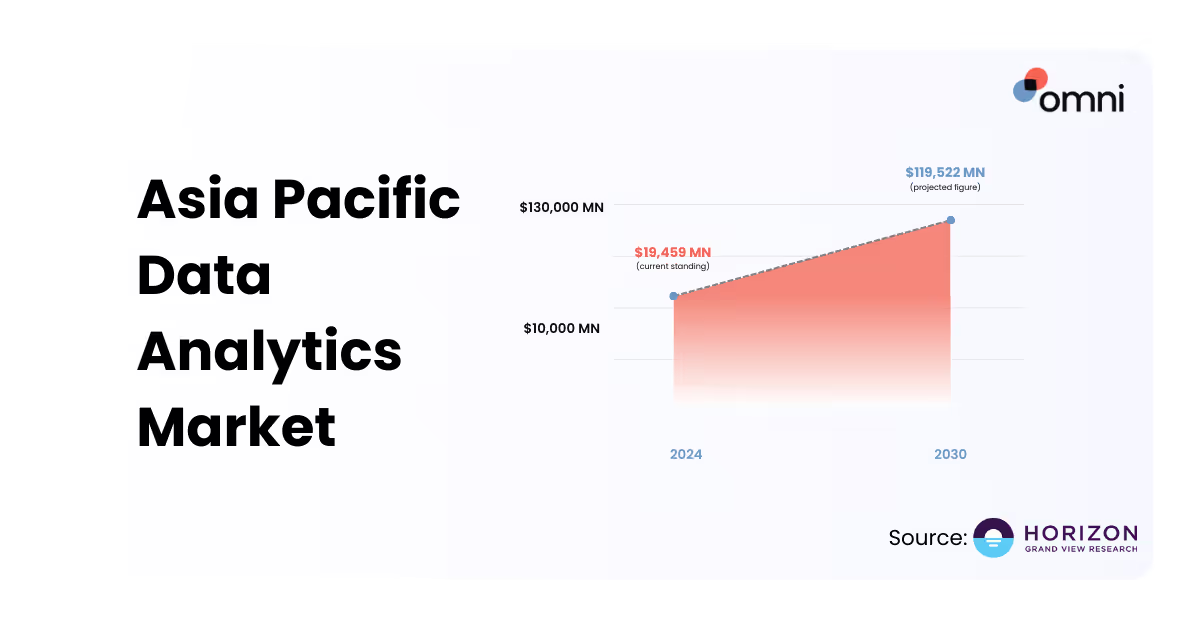
APAC business owners are starting to see just how important that is. According to Grand View Research, “The data analytics market in Asia Pacific is expected to reach a projected revenue of US$ 119,522.5 million by 2030. A compound annual growth rate of 36.4% is expected of the Asia Pacific data analytics market from 2025 to 2030.”
This being the case, it’s best to get started sooner rather than later. Read on to find out how to utilize HR metrics and analytics to gather strategic insights.
Why HR Metrics and Analytics Matter
What are HR metrics and analytics, you might ask? According to a paper by the International Journal of Management & Entrepreneurship Research, “HR analytics involves the systematic analysis of HR data to inform decision-making, enhance organizational performance, and optimize workforce management strategies.”
Some essential HR processes have been around since the 20th century (although under different titles), such as payroll processing, hiring, labor law compliance, record keeping, employee data management, and benefits administration.
With the introduction of HRIS, these technical and administrative functions are now fully or partly automated. Not to mention, the business landscape has evolved since then to include strategic HR.
According to SHRM, strategic HR “aligns human resources practices with the overall business goals to drive innovation and performance.” It includes practices to fulfill big business goals, such as retention, profitability, and productivity, to benefit the future of the organization.
Still, how can strategic HR metrics and analytics help achieve such goals? The key is analyzing data about employee engagement, performance metrics, and turnover rates to detect patterns and trends that influence organizational performance and employee satisfaction.
So, simply put, transactional HR ensures that you have enough employees and that they’re getting their salaries and benefits; strategic HR ensures that they’re qualified, invested in your business, happy with their work environment, and in it for the long run. And analytics step in as a powerful tool to achieve and maintain this strategic approach.
HR metrics and analytics are especially critical today because of the challenging economic climate. Many HR leaders are struggling to understand what employees want and need from HR, so they need the input.
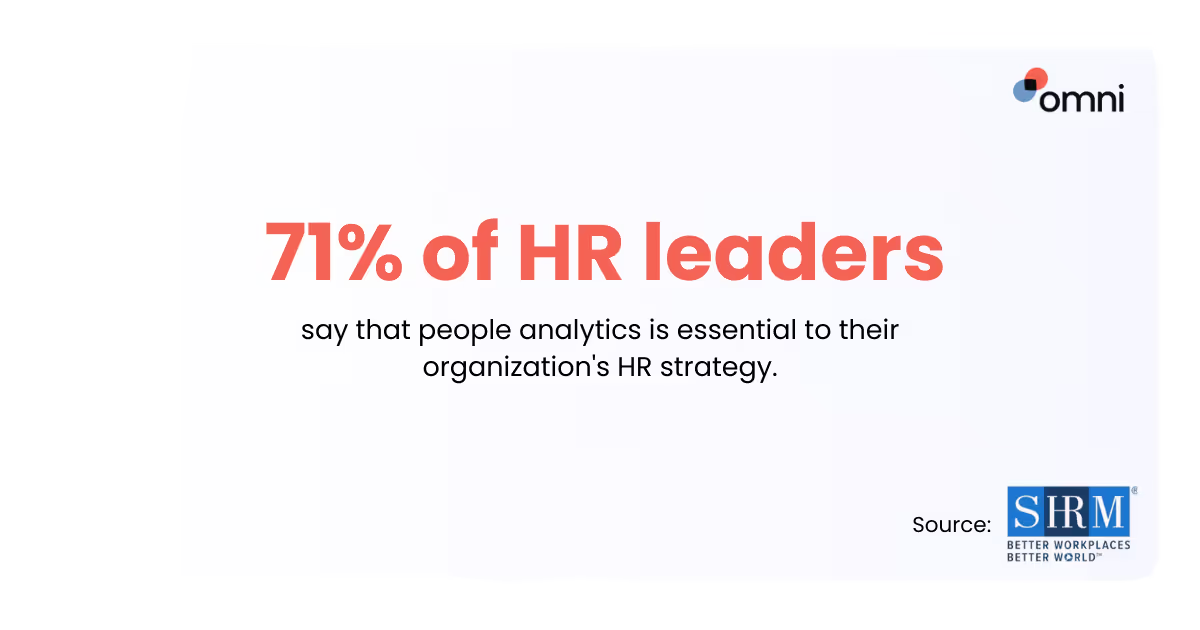
Alex Alonso, PhD, Chief Knowledge Officer, SHRM, says, “HR leaders are increasingly looking to people analytics as a tool to answer key business questions, as 71 percent of HR executives whose organizations use people analytics say that people analytics is essential to their organization's HR strategy."
Top 4 HR Metrics That You Should Monitor
While HR metrics and analytics can vary across organizations, there are four critical HR metrics every company should track to measure performance, guide strategy, and improve employee outcomes.
1. Employee engagement scores
Firstly, what are HR metrics and analytics without employee engagement scores? These are some common HR metrics that reflect productivity levels, employee morale, and overall job satisfaction. These scores can help you identify which employees are at risk of employee burnout or other mental health issues, which are key contributors to attrition.
To effectively measure employee engagement scores, here are some key HR metrics to track:
- Absenteeism levels
- Turnover rates
- Pulse survey results
- Employee Net Promoter score (eNPS)
Learn more: What is an eNPS Score and Why HR Should Advocate for One
A good example of companies using HR analytics is ScaleForge. The Singapore-based software development company struggled to make data-driven decisions and track key metrics for their globally distributed workforce due to scattered systems.
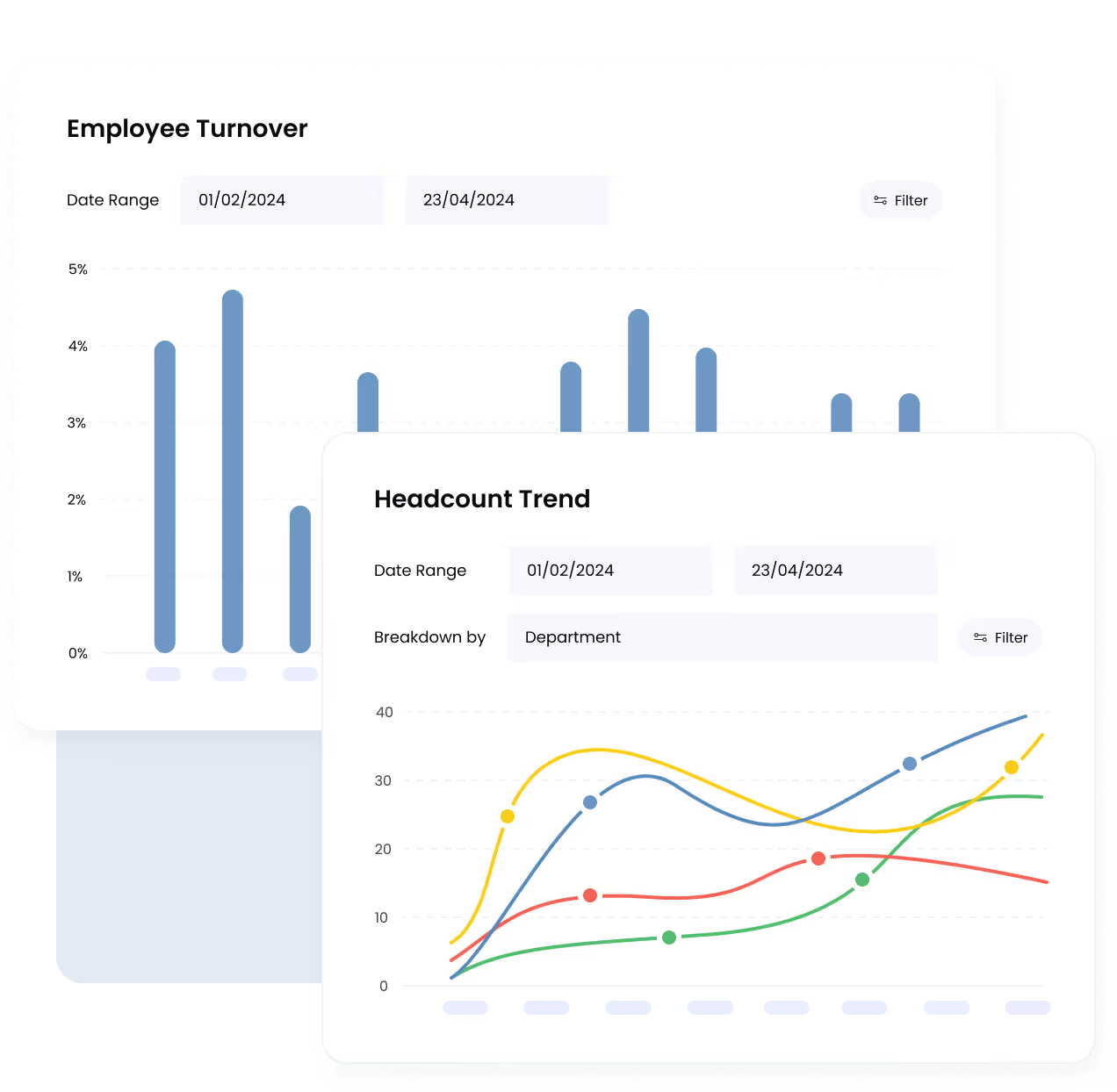
However, with Omni’s centralized data, the HR team has access to real-time data on employee metrics such as absenteeism, engagement and morale, and performance. By tracking leave patterns and absenteeism rates, ScaleForge can identify potential burnout or employee engagement concerns.
“By analyzing attendance data in Omni, we can pinpoint potential triggers for low employee morale, such as workplace stress, lack of recognition, or poor work-life balance.”
— Rhoanne Therese Jamelo, HR Generalist at ScaleForge
See how: ScaleForge masters global HR with Omni
2. Employee productivity rates
Another example of HR metrics to track is employee productivity rates. These metrics vary by organization, depending on how each defines output. However, measuring productivity is essential for linking HR performance to business results. One common HR metrics to consider is billable hours per employee.
Tracking this helps ensure employees are spending their time effectively and contributing directly to organizational goals.
3. Retention rate
Next up on the list of HR metrics to track is retention rate. It measures the percentage of employees who remain with your company over a given period. High employee retention reflects a stable, engaged workforce, which is critical for smooth operation and reduced recruitment costs.
Retention rate = (number of employees who stayed / total number of employees) x 100
The impact of such HR metrics and analytics on work trends can be seen across entire labor markets (not just companies). For example, when the Great Resignation hit in 2021, 47 million people quit, followed by 50 million in 2022, according to the U.S. Bureau of Labor Statistics. This trend forced companies to re-evaluate their approach to flexibility, compensation packages, and employee well-being programs, leading to the shift to People-first strategies.
Therefore, tracking and responding to retention metrics can help guide long-term improvements in company culture and overall performance.
Read next: Building Your Employee Wellbeing Program Through HR Analytics
4. Return on investment
Lastly, ROI is a core common HR metrics and analytics that evaluates the financial return of HR initiatives compared to their cost. It also helps HR leaders justify investment decisions in HR tools, training, and programs by showing tangible value.
Additional reading: HRIS ROI Calculator: Does Investing in HRIS Pay Off?
How to Stay Ahead with Predictive Analytics in HR
Predictive analytics in HR is slowly becoming a game-changer for HR teams hoping to move from reactive measures to proactive workforce strategies.
What is predictive analytics?
Investopedia defines predictive analytics as “the use of statistics and modeling techniques to forecast future outcomes. Current and historical data patterns are examined and plotted to determine the likelihood that those patterns will repeat.”
Predictive analytics in HR can help detect employee attrition and future performance patterns based on past records. This way, you can better plan for retention or predict and prepare for talent shortages.
Why predictive analytics matters now
In 2024, predictive analytics accounted for 42.55% of analytics revenue in the Asia Pacific, outperforming other analytics types. This trend signals a growing need for businesses to anticipate workforce trends and make proactive decisions, but why is that?
Britton Bloch, the VP of Global Talent Acquisition Strategy at Navy Federal Credit Union, explains,
“This proactive approach allows for strategic planning in recruitment, training and succession planning. For instance, artificial intelligence (AI)-driven tools can predict potential employee attrition and suggest targeted retention strategies.”
In other words, predictive HR metrics and analytics help organizations avoid surprises by spotting problems early, like potential resignations or skill shortages.
An example of companies using HR analytics is IBM with its patented attrition program that identifies workers about to leave their jobs with 95% accuracy. According to former CEO Ginni Rometty, the key lies in analyzing multiple data points early because, as she puts it, “the best time to get to an employee is before they go.” By acting proactively, IBM has saved an estimated $300 million in retention costs. It’s a clear reminder of how predictive analytics in HR can transform workforce planning.
Closing performance and skill gaps with predictive analytics
Another use case for predictive HR metrics and analytics is performance gap detection and identifying upskilling opportunities.
Take Norsk Hydro, a global aluminum and renewable energy company. They collaborated with a tech provider that uses HR metrics and analytics to support people-centric skills.
“We need better insights from data for workforce planning. To know the skills we need, we first need to understand the skills we already have.”
— Jeanine Fremstad, Global Lead for Skills and Learning, Norsk Hydro
With the help of its partner, Norsk Hydro was able to build a centralized skills library, create a unified skills model for recruiting, onboarding, learning and development, and streamline internal development processes to support ongoing workforce planning.
Building a Dashboard That Speaks to Every Executive
Once you understand the value of HR metrics and analytics, the next step is to effectively present the data in a way that drives impact. That’s where HR dashboards come in.
Why dashboards matter
HR dashboards are visual tools designed to deliver insights to stakeholders at a glance, unlike detailed reports. But what common HR metrics matter most? That depends on who’s looking. This same dashboard-first approach is used across other business systems. For example, telecom-focused CRM platforms use real-time dashboards to help leaders track customer engagement, sales performance, and operational efficiency alongside workforce data.
Tailoring dashboards to stakeholder needs
For CEOs
Pressed for time, CEOs want to see high-level data that aligns with the organizations’ long-term goals and strategic direction. Common HR metrics to track include:
- Cost per hire
- Time to hire
- Employee engagement scores
- Employee turnover rate
- Revenue per employee
For CHROs or Heads of People
These leaders need granular visibility into workforce trends and operational efficiency. The HR dashboard should give easy access to:
- Total headcount and net headcount change
- Succession coverage ratio
- Predicted resignation count
- Applicant-to-hire conversation ratio
- Employee Net Promoter Score (eNPS)
For finance teams
These professionals are interested in HR metrics and analytics that reveal workforce costs and productivity. Common HR metrics to track include:
- Total headcount
- Overtime expenses
- Absence costs
- Lost working days
Designing effective HR dashboards
With that in mind, it’s essential to design a dashboard for common HR metrics and analytics, adopting the following principles:
- Simplicity: The display should be simple, featuring only the key HR metrics and analytics so that your employees can easily and accurately process data and get insights.
- Relevance: The metrics featured in a dashboard should provide relevant information to each employee, which is why customization matters.
- Visual storytelling: Data visualization makes complex data digestible and interactive, allowing your employees to understand, explore, and gain insights easily.
Custom vs standard dashboards
We’ve briefly mentioned customization, so let’s talk about how customizable dashboards differ from standard ones.
Tips to make the most out of your HR metrics and analytics
- Invest in a quality HRIS to manage employee data.
- Define your organizational goals, and determine the HR metrics and analytics that best reflect them.
- Use predictive analytics in HR to detect workforce trends and make data-driven decisions.
- Review common HR metrics to track regularly, and adjust your HR strategy, policies, and practices accordingly so that they remain aligned with your business goals and the changing needs of your workforce.
Empower Your HR Teams with HR Metrics and Analytics
HR metrics and analytics are more important than ever for modern, growing teams, as they provide valuable insights into the workforce. These insights empower HR leaders to make strategic decisions that align closely with organizational goals.
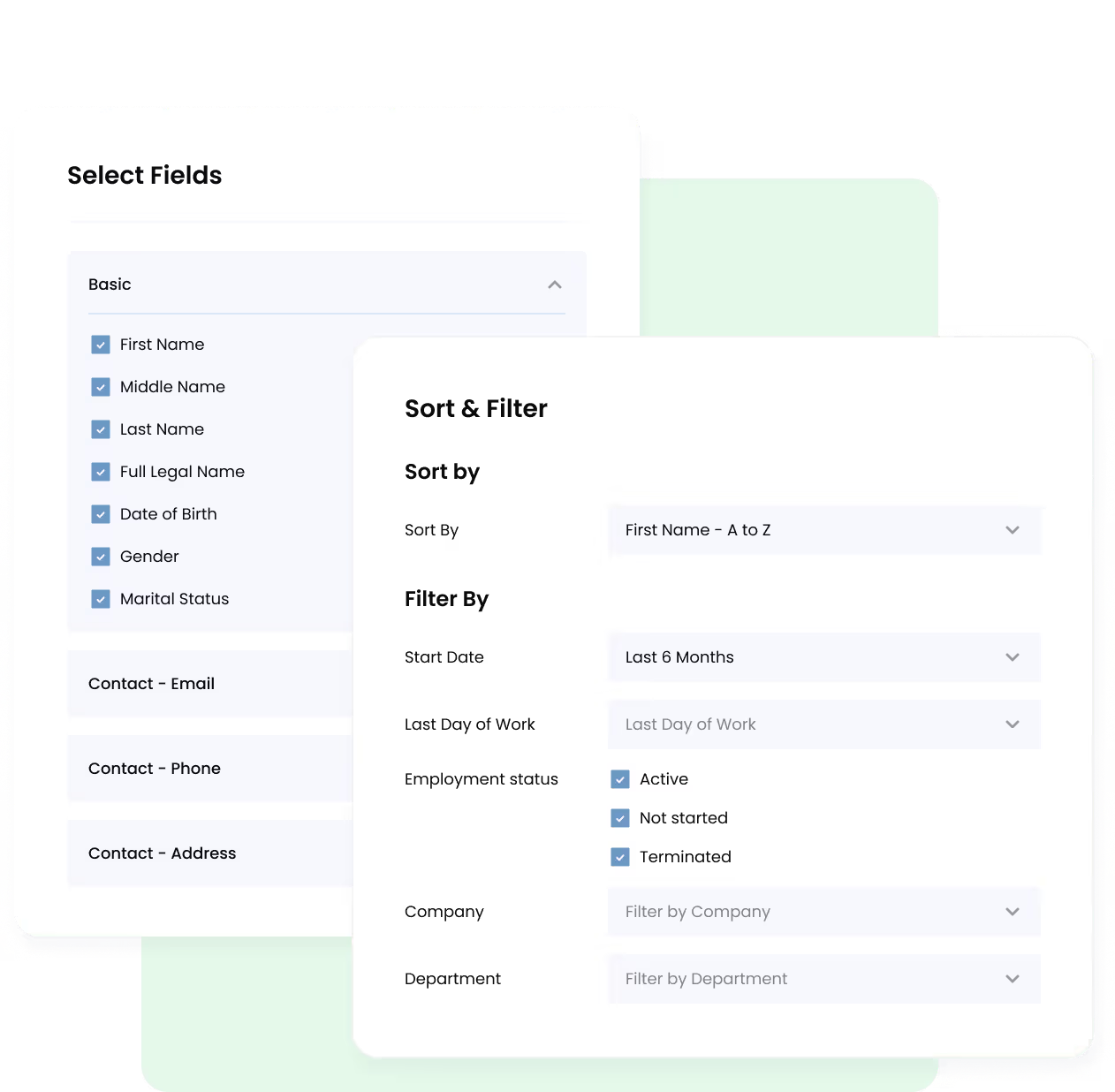
With modern HR automation tools like Omni, you gain access to data-driven insights that facilitate informed decision-making, as well as seamless integrations that effortlessly connect with your existing employee-favored systems, making your entire engagement process more efficient and modern.
Omni also offers real-time graphs and easily exportable reports, streamlining HR metrics and analytics and reducing calculation times and errors. This equips you with the necessary data to understand the trends within your organization. These tools empower HR teams to monitor trends over time, compare results across various departments, and proactively identify areas for improvement.
Read how: Animas leverages Omni to enhance its employee engagement
To join the 83% of Omni customers who have unlocked new, actionable insights after using our solution, book a free demo with our team today.
Strategic insights about workforce dynamics, employee engagement, and performance management result from accurate data, which is at the core of what’s known as HR analytics, workforce analytics, or people analytics. These analytics help you attract, manage, and retain talent, achieving workforce excellence and organizational success.
In short, HR analytics gives you a scientific, data-driven approach to workforce management. They’re full of opportunities if you know which metrics to track and how to turn them into actionable insights.
APAC business owners are starting to see just how important that is. According to Grand View Research, “The data analytics market in Asia Pacific is expected to reach a projected revenue of US$ 119,522.5 million by 2030. A compound annual growth rate of 36.4% is expected of the Asia Pacific data analytics market from 2025 to 2030.”
This being the case, it’s best to get started sooner rather than later. Read on to find out how to utilize HR metrics and analytics to gather strategic insights.
Why HR Metrics and Analytics Matter
What are HR metrics and analytics, you might ask? According to a paper by the International Journal of Management & Entrepreneurship Research, “HR analytics involves the systematic analysis of HR data to inform decision-making, enhance organizational performance, and optimize workforce management strategies.”
Some essential HR processes have been around since the 20th century (although under different titles), such as payroll processing, hiring, labor law compliance, record keeping, employee data management, and benefits administration.
With the introduction of HRIS, these technical and administrative functions are now fully or partly automated. Not to mention, the business landscape has evolved since then to include strategic HR.
According to SHRM, strategic HR “aligns human resources practices with the overall business goals to drive innovation and performance.” It includes practices to fulfill big business goals, such as retention, profitability, and productivity, to benefit the future of the organization.
Still, how can strategic HR metrics and analytics help achieve such goals? The key is analyzing data about employee engagement, performance metrics, and turnover rates to detect patterns and trends that influence organizational performance and employee satisfaction.
So, simply put, transactional HR ensures that you have enough employees and that they’re getting their salaries and benefits; strategic HR ensures that they’re qualified, invested in your business, happy with their work environment, and in it for the long run. And analytics step in as a powerful tool to achieve and maintain this strategic approach.
HR metrics and analytics are especially critical today because of the challenging economic climate. Many HR leaders are struggling to understand what employees want and need from HR, so they need the input.
Alex Alonso, PhD, Chief Knowledge Officer, SHRM, says, “HR leaders are increasingly looking to people analytics as a tool to answer key business questions, as 71 percent of HR executives whose organizations use people analytics say that people analytics is essential to their organization's HR strategy."
Top 4 HR Metrics That You Should Monitor
While HR metrics and analytics can vary across organizations, there are four critical HR metrics every company should track to measure performance, guide strategy, and improve employee outcomes.
1. Employee engagement scores
Firstly, what are HR metrics and analytics without employee engagement scores? These are some common HR metrics that reflect productivity levels, employee morale, and overall job satisfaction. These scores can help you identify which employees are at risk of employee burnout or other mental health issues, which are key contributors to attrition.
To effectively measure employee engagement scores, here are some key HR metrics to track:
- Absenteeism levels
- Turnover rates
- Pulse survey results
- Employee Net Promoter score (eNPS)
Learn more: What is an eNPS Score and Why HR Should Advocate for One
A good example of companies using HR analytics is ScaleForge. The Singapore-based software development company struggled to make data-driven decisions and track key metrics for their globally distributed workforce due to scattered systems.
However, with Omni’s centralized data, the HR team has access to real-time data on employee metrics such as absenteeism, engagement and morale, and performance. By tracking leave patterns and absenteeism rates, ScaleForge can identify potential burnout or employee engagement concerns.
“By analyzing attendance data in Omni, we can pinpoint potential triggers for low employee morale, such as workplace stress, lack of recognition, or poor work-life balance.”
— Rhoanne Therese Jamelo, HR Generalist at ScaleForge
See how: ScaleForge masters global HR with Omni
2. Employee productivity rates
Another example of HR metrics to track is employee productivity rates. These metrics vary by organization, depending on how each defines output. However, measuring productivity is essential for linking HR performance to business results. One common HR metrics to consider is billable hours per employee.
Tracking this helps ensure employees are spending their time effectively and contributing directly to organizational goals.
3. Retention rate
Next up on the list of HR metrics to track is retention rate. It measures the percentage of employees who remain with your company over a given period. High employee retention reflects a stable, engaged workforce, which is critical for smooth operation and reduced recruitment costs.
Retention rate = (number of employees who stayed / total number of employees) x 100
The impact of such HR metrics and analytics on work trends can be seen across entire labor markets (not just companies). For example, when the Great Resignation hit in 2021, 47 million people quit, followed by 50 million in 2022, according to the U.S. Bureau of Labor Statistics. This trend forced companies to re-evaluate their approach to flexibility, compensation packages, and employee well-being programs, leading to the shift to People-first strategies.
Therefore, tracking and responding to retention metrics can help guide long-term improvements in company culture and overall performance.
Read next: Building Your Employee Wellbeing Program Through HR Analytics
4. Return on investment
Lastly, ROI is a core common HR metrics and analytics that evaluates the financial return of HR initiatives compared to their cost. It also helps HR leaders justify investment decisions in HR tools, training, and programs by showing tangible value.
Additional reading: HRIS ROI Calculator: Does Investing in HRIS Pay Off?
How to Stay Ahead with Predictive Analytics in HR
Predictive analytics in HR is slowly becoming a game-changer for HR teams hoping to move from reactive measures to proactive workforce strategies.
What is predictive analytics?
Investopedia defines predictive analytics as “the use of statistics and modeling techniques to forecast future outcomes. Current and historical data patterns are examined and plotted to determine the likelihood that those patterns will repeat.”
Predictive analytics in HR can help detect employee attrition and future performance patterns based on past records. This way, you can better plan for retention or predict and prepare for talent shortages.
Why predictive analytics matters now
In 2024, predictive analytics accounted for 42.55% of analytics revenue in the Asia Pacific, outperforming other analytics types. This trend signals a growing need for businesses to anticipate workforce trends and make proactive decisions, but why is that?
Britton Bloch, the VP of Global Talent Acquisition Strategy at Navy Federal Credit Union, explains,
“This proactive approach allows for strategic planning in recruitment, training and succession planning. For instance, artificial intelligence (AI)-driven tools can predict potential employee attrition and suggest targeted retention strategies.”
In other words, predictive HR metrics and analytics help organizations avoid surprises by spotting problems early, like potential resignations or skill shortages.
An example of companies using HR analytics is IBM with its patented attrition program that identifies workers about to leave their jobs with 95% accuracy. According to former CEO Ginni Rometty, the key lies in analyzing multiple data points early because, as she puts it, “the best time to get to an employee is before they go.” By acting proactively, IBM has saved an estimated $300 million in retention costs. It’s a clear reminder of how predictive analytics in HR can transform workforce planning.
Closing performance and skill gaps with predictive analytics
Another use case for predictive HR metrics and analytics is performance gap detection and identifying upskilling opportunities.
Take Norsk Hydro, a global aluminum and renewable energy company. They collaborated with a tech provider that uses HR metrics and analytics to support people-centric skills.
“We need better insights from data for workforce planning. To know the skills we need, we first need to understand the skills we already have.”
— Jeanine Fremstad, Global Lead for Skills and Learning, Norsk Hydro
With the help of its partner, Norsk Hydro was able to build a centralized skills library, create a unified skills model for recruiting, onboarding, learning and development, and streamline internal development processes to support ongoing workforce planning.
Building a Dashboard That Speaks to Every Executive
Once you understand the value of HR metrics and analytics, the next step is to effectively present the data in a way that drives impact. That’s where HR dashboards come in.
Why dashboards matter
HR dashboards are visual tools designed to deliver insights to stakeholders at a glance, unlike detailed reports. But what common HR metrics matter most? That depends on who’s looking. This same dashboard-first approach is used across other business systems. For example, telecom-focused CRM platforms use real-time dashboards to help leaders track customer engagement, sales performance, and operational efficiency alongside workforce data.
Tailoring dashboards to stakeholder needs
For CEOs
Pressed for time, CEOs want to see high-level data that aligns with the organizations’ long-term goals and strategic direction. Common HR metrics to track include:
- Cost per hire
- Time to hire
- Employee engagement scores
- Employee turnover rate
- Revenue per employee
For CHROs or Heads of People
These leaders need granular visibility into workforce trends and operational efficiency. The HR dashboard should give easy access to:
- Total headcount and net headcount change
- Succession coverage ratio
- Predicted resignation count
- Applicant-to-hire conversation ratio
- Employee Net Promoter Score (eNPS)
For finance teams
These professionals are interested in HR metrics and analytics that reveal workforce costs and productivity. Common HR metrics to track include:
- Total headcount
- Overtime expenses
- Absence costs
- Lost working days
Designing effective HR dashboards
With that in mind, it’s essential to design a dashboard for common HR metrics and analytics, adopting the following principles:
- Simplicity: The display should be simple, featuring only the key HR metrics and analytics so that your employees can easily and accurately process data and get insights.
- Relevance: The metrics featured in a dashboard should provide relevant information to each employee, which is why customization matters.
- Visual storytelling: Data visualization makes complex data digestible and interactive, allowing your employees to understand, explore, and gain insights easily.
Custom vs standard dashboards
We’ve briefly mentioned customization, so let’s talk about how customizable dashboards differ from standard ones.
Tips to make the most out of your HR metrics and analytics
- Invest in a quality HRIS to manage employee data.
- Define your organizational goals, and determine the HR metrics and analytics that best reflect them.
- Use predictive analytics in HR to detect workforce trends and make data-driven decisions.
- Review common HR metrics to track regularly, and adjust your HR strategy, policies, and practices accordingly so that they remain aligned with your business goals and the changing needs of your workforce.
Empower Your HR Teams with HR Metrics and Analytics
HR metrics and analytics are more important than ever for modern, growing teams, as they provide valuable insights into the workforce. These insights empower HR leaders to make strategic decisions that align closely with organizational goals.
With modern HR automation tools like Omni, you gain access to data-driven insights that facilitate informed decision-making, as well as seamless integrations that effortlessly connect with your existing employee-favored systems, making your entire engagement process more efficient and modern.
Omni also offers real-time graphs and easily exportable reports, streamlining HR metrics and analytics and reducing calculation times and errors. This equips you with the necessary data to understand the trends within your organization. These tools empower HR teams to monitor trends over time, compare results across various departments, and proactively identify areas for improvement.
Read how: Animas leverages Omni to enhance its employee engagement
To join the 83% of Omni customers who have unlocked new, actionable insights after using our solution, book a free demo with our team today.
Full HR & Payroll coverage for Philippines, Singapore, Malaysia, Hong Kong, and Indonesia. Each market has local support teams and built-in compliance features.
Starting at $3/employee/month for core features. Volume-based discounts are available for growing teams. Book a demo for custom pricing.
Enterprise-grade security with ISO 27001, GDPR certifications, and local data residency options.
4 weeks average. Includes free data migration, setup, and team training. No hidden fees.
Built specifically for Asia with local payroll processing, same-day support in Asia time zones, and 40% lower cost than global alternatives.

.avif)
-min.avif)

