


.avif)


Summary. Over 50% of HR programs aren’t tied to a clear business outcome, and only 9% of teams understand what drives performance, highlighting the need for goal-setting systems that work. By aligning HR goals and objectives with corporate priorities and using proven frameworks like OKRs, SMART goals, and KPIs, HR can shift from process-driven tasks to real business impact. Take Dev Team, for example; they used Omni to implement a structured, OKR-based corporate goal-setting approach, improving visibility and accountability and completing performance reviews 80% faster. Whether you're pursuing quick wins or building a long-term goals list for work, having a system that connects people to purpose is essential. Explore HR goals and objectives examples that drive clarity, ownership, and measurable success.
Recently, modern HR teams are expected to do more than manage processes; they’re expected to drive real business results. Yet research finds that over 50% of organizations’ HR programs aren’t linked to any specific business purpose, and only 9% truly understand which factors drive performance.
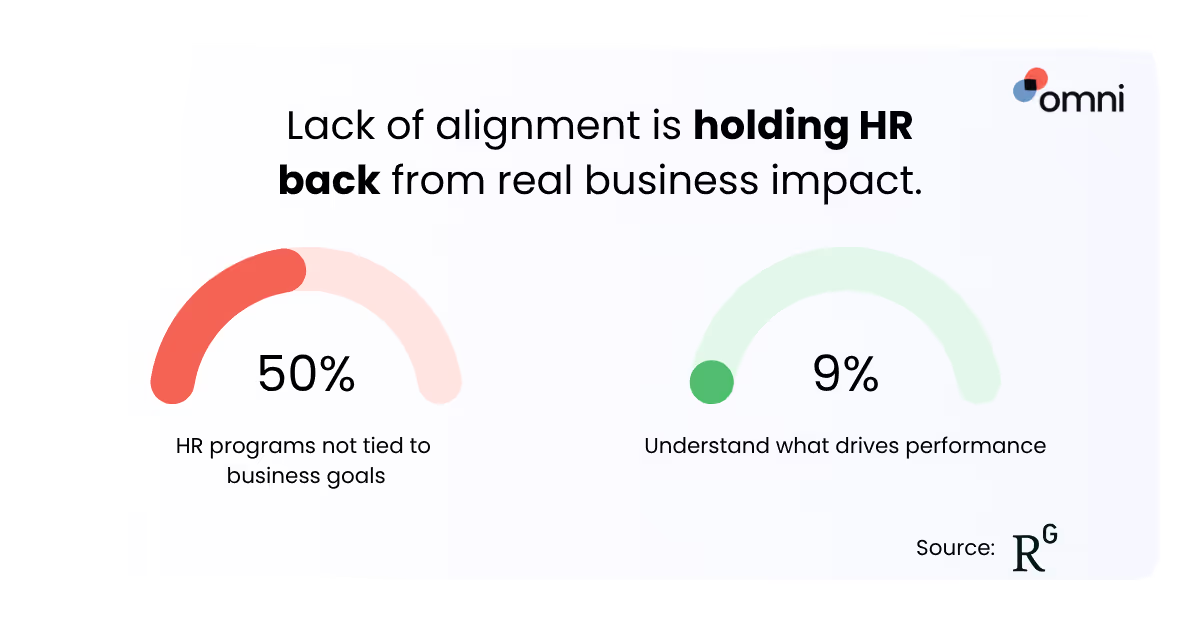
A good goal-setting system seeks to change this by bringing clarity, accountability, and alignment and actually supports how the business grows, how people work together, and the kind of culture you’re trying to build. Teams with clear goals don’t just perform better; they also know exactly what’s expected and feel more ownership in the work.
In this article, we’ll look at goal-setting systems that work and insights that can help you achieve HR goals and objectives.
What makes goal-setting systems that work?
Creating a goal-setting system that works requires you to follow a few core principles. Alignment is a top priority you should consider; your goals should clearly connect to company-wide objectives so that every team’s efforts contribute to building goal-setting systems that work.
Align goals with business priorities
One of the worst mistakes is setting goals that don’t ladder up to organizational priorities. Misaligned goals make it hard to prove HR’s value and can even slow overall growth. On the other hand, when HR goals are tightly aligned with business needs, they drive significantly higher business outcomes, improving metrics like revenue, profitability, customer satisfaction, and even shareholder returns.
Make objectives clear and measurable
Another hallmark of effective corporate goal setting is clarity and measurability. Vague objectives like “improve culture” or “be a better employer” are not actionable. You need to turn them into concrete targets with clear success criteria.
For example, instead of a vague goal to “improve performance,” you can set your specific outcome to “increase sales revenue by 15% in Q3.”
Use proven frameworks like SMART goals and OKRs
With the help of frameworks like SMART goals, you can guarantee that every target is Specific, Measurable, Achievable, Relevant, and Time-bound for individual work. Similarly, the Objectives and Key Results (OKRs) can help in the conversion of the blurred ideas into specific and measurable goals.
Learn more: OKRs for HR: Samples and Guide
Build accountability and visibility into your system
Accountability and transparency are also key. Goal-setting systems that work should make it crystal clear who owns each goal and how different teams depend on each other. When your employees know the bigger picture, it’s easier to collaborate, avoid overlap, and stay motivated.
Comparing Common Goal-Setting Frameworks
Many organizations use established frameworks to bring these principles to life. OKRs, SMART goals, and KPIs are the most common goal-setting systems that work in modern teams. Each has its own strengths and is suited for different situations.
Choosing the right framework
Each framework plays a valuable role in creating goal-setting systems that work. The key is choosing the right approach or combination for your team’s needs and company culture.
You can often use them together. For example:
- Set an OKR for the quarter (e.g., “Strengthen employer branding)
- Break it down into SMART goals for each team member (e.g., “Create and publish 1 LinkedIn post per week)
- Track progress with KPIs (e.g., “20% increase in LinkedIn followers)
While KPIs are not a standalone framework like OKRs or SMART goals, they are crucial for making goals measurable. In fact, a strong key result in an OKR should double as a KPI. That’s why it’s always good to include KPIs as part of your corporate goal setting.
Read also: OKR vs. KPI: What's the difference?
How Dev Team aligned performance goals to business outcomes with Omni
Prior to Omni, Dev Team’s performance reviews were inconsistent and time-consuming. Goals were vague, hard to track, and didn’t clearly tie back to corporate goal setting, making it difficult to highlight the impact of HR programs.
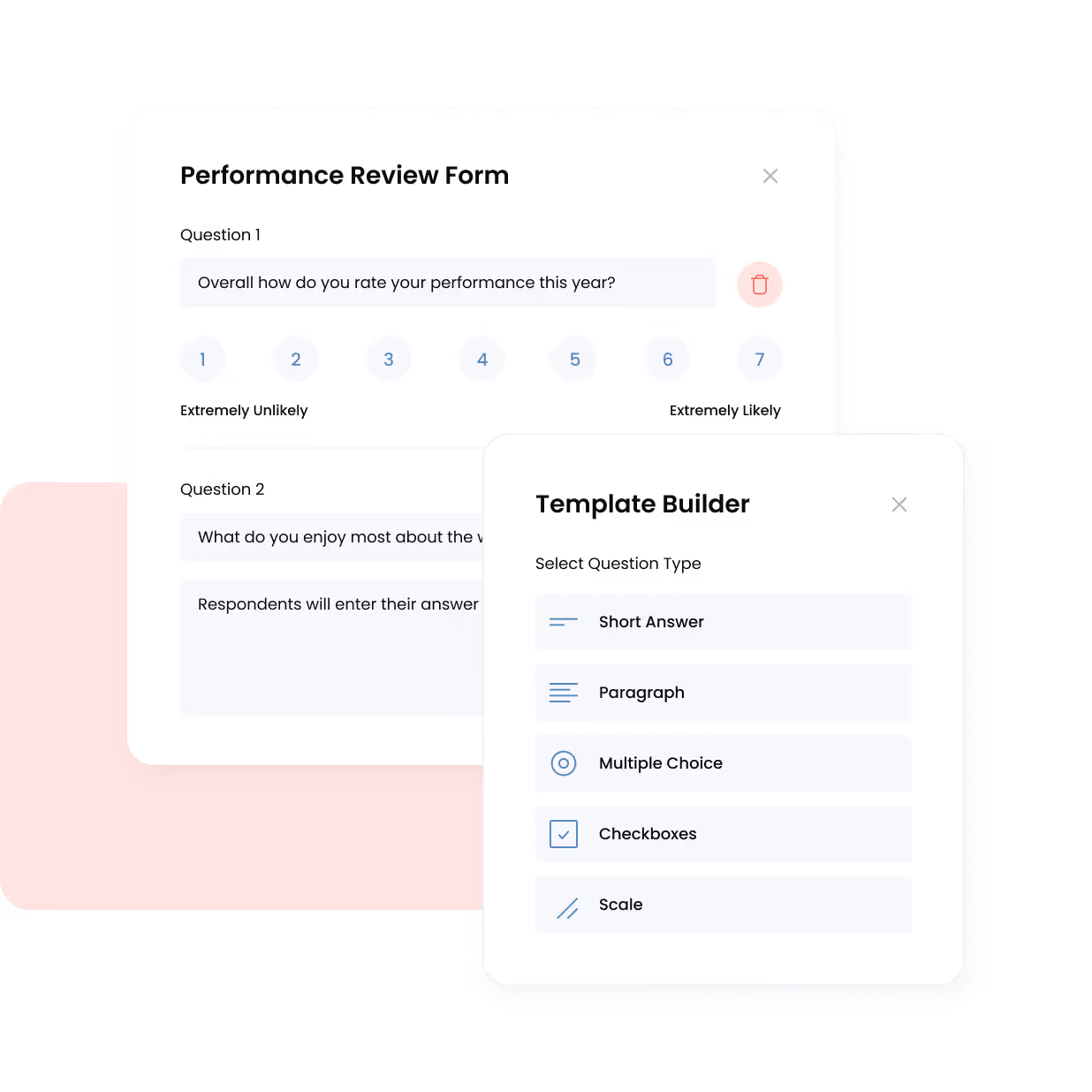
With Omni, the team was able to roll out an OKR-driven performance cycle that linked individual goals to company-wide objectives. Managers had real-time visibility into progress, while employees felt more accountable and driven.
“Since we started using Omni for our performance evaluations, tracking review progress has become much easier. Once an employee completes their review, it is automatically marked as completed, and we receive a status right away. This is a vast improvement compared to our previous process.”
— Kahtleen Kaye Casacop, HR & Admin Team Lead at Dev Team
With goal-setting systems that work, reviews were completed 80% faster, teams gained clearer direction, and leadership saw improved alignment between people performance and business outcomes. What started as a performance review refresh ultimately became a strategic driver of growth and culture.
Read Dev Team’s full story now
HR goals and objectives examples
HR goals come in all shapes and timelines, from quick wins to multi-year transformations. What matters most is that they’re aligned with the business, measurable, and scalable. Let’s break that down:
Short-term goals are usually quick wins that tackle immediate needs or lay the groundwork for bigger changes. These HR goals and objectives examples include:
- Simplify and improve the onboarding process within 30 days.
- Launch a 90-day pulse survey to capture honest employee feedback.
- Reduce hiring back-and-forth by 5% using standardized templates.
These are hands-on, doable goals that help you build trust and show fast impact and build goal-setting systems that work.
Long-term goals, on the other hand, are about building a better workforce for the future. The examples of long-term goals list for work can be:
- Build an internal leadership pipeline over the next 18 months.
- Reduce regrettable turnover by 15% within one year.
- Improving the employee engagement score by 15% in the next annual survey.
These HR goals and objectives examples require sustained effort, but they’re what move HR from operational to strategic.
The important thing is establishing goal-setting systems that work and HR goals and objectives that not only address problems at hand but also position them to attain success in the long run. This may translate to an investment in scalable areas such as effective L&D, day-to-day DEI and smart, evidence-based HR choices.
Long-Term Goal Planning for Sustainable Performance
If you’ve ever set a long-term goal and watched it slowly fade into the background, you’re not alone. Here’s how you can make sure your HR goals stay on track for sustainable performance:
- Set clear timelines and checkpoints for each goal: Don’t just write the goal; you should map it out. Divide it into milestones and set timelines on them so that you and your team know what and when you should aim at. It’s a simple way to keep progress moving without losing sight of the big picture.
- Use quarterly reviews, 1:1s, or employee engagement to evaluate progress: Build goal check-ins into your existing rhythms. It can be when you’re having a quarterly performance review or an informal one-on-one, but your regular chats will enable you to notice what is going well, what is going wrong, and what needs to change.
- Avoid common mistakes like too many goals, poor alignment, and unclear ownership: You don’t have to do everything at once. Pick a few high-impact goals that tie directly to business priorities while you build goal-setting systems that work, and make sure someone owns each one. If it’s not clear who’s responsible, it’ll likely fall through the cracks.
- Empower managers and individuals to create goals based on team strategy: You’ll get more traction when people help shape the goals they’re working toward. Give your managers and team members room to align their own objectives with your broader HR strategy; this can help you build ownership from day one.
- Make goals visible and actionable. company-wide: Keep your goals front and center. It could be a shared dashboard or a monthly update; visibility creates accountability. And when everyone sees how their work ladders up to something bigger, they stay more focused and motivated.
Build Goal-Setting Systems That Work with Omni
With Omni’s customizable performance review module, HR teams can set clear, measurable goals, link them to business outcomes, and streamline every part of the performance cycle.
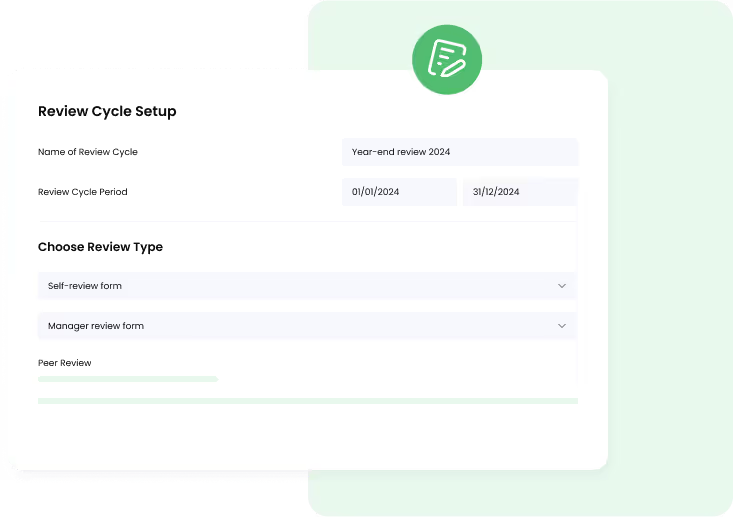
From applying tailored templates to tracking completion and gaining key insights, Omni makes it easier to manage and scale goal-setting across your organization. Paired with automated scheduling, reminders, and real-time progress tracking, HR professionals can focus on coaching and impact instead of chasing submissions.
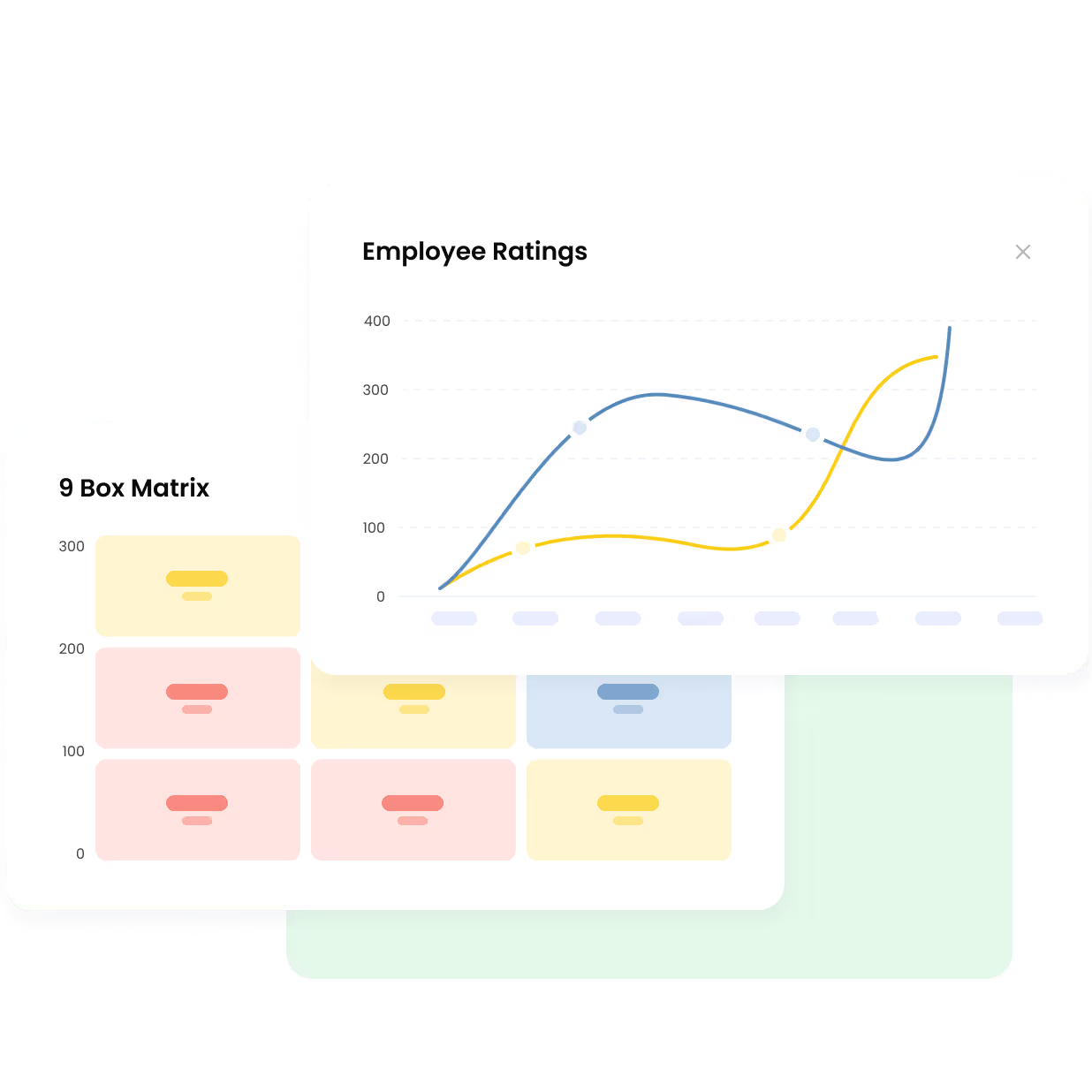
Join the 83% of Omni customers who uncovered actionable insights through our performance management tools. Book a demo and see how Omni helps turn goal-setting into growth.
Not ready to automate just yet? Get our free Performance Review Kit to access proven templates and tips that make your next corporate goal setting and review cycle more strategic and aligned.
Recently, modern HR teams are expected to do more than manage processes; they’re expected to drive real business results. Yet research finds that over 50% of organizations’ HR programs aren’t linked to any specific business purpose, and only 9% truly understand which factors drive performance.
A good goal-setting system seeks to change this by bringing clarity, accountability, and alignment and actually supports how the business grows, how people work together, and the kind of culture you’re trying to build. Teams with clear goals don’t just perform better; they also know exactly what’s expected and feel more ownership in the work.
In this article, we’ll look at goal-setting systems that work and insights that can help you achieve HR goals and objectives.
What makes goal-setting systems that work?
Creating a goal-setting system that works requires you to follow a few core principles. Alignment is a top priority you should consider; your goals should clearly connect to company-wide objectives so that every team’s efforts contribute to building goal-setting systems that work.
Align goals with business priorities
One of the worst mistakes is setting goals that don’t ladder up to organizational priorities. Misaligned goals make it hard to prove HR’s value and can even slow overall growth. On the other hand, when HR goals are tightly aligned with business needs, they drive significantly higher business outcomes, improving metrics like revenue, profitability, customer satisfaction, and even shareholder returns.
Make objectives clear and measurable
Another hallmark of effective corporate goal setting is clarity and measurability. Vague objectives like “improve culture” or “be a better employer” are not actionable. You need to turn them into concrete targets with clear success criteria.
For example, instead of a vague goal to “improve performance,” you can set your specific outcome to “increase sales revenue by 15% in Q3.”
Use proven frameworks like SMART goals and OKRs
With the help of frameworks like SMART goals, you can guarantee that every target is Specific, Measurable, Achievable, Relevant, and Time-bound for individual work. Similarly, the Objectives and Key Results (OKRs) can help in the conversion of the blurred ideas into specific and measurable goals.
Learn more: OKRs for HR: Samples and Guide
Build accountability and visibility into your system
Accountability and transparency are also key. Goal-setting systems that work should make it crystal clear who owns each goal and how different teams depend on each other. When your employees know the bigger picture, it’s easier to collaborate, avoid overlap, and stay motivated.
Comparing Common Goal-Setting Frameworks
Many organizations use established frameworks to bring these principles to life. OKRs, SMART goals, and KPIs are the most common goal-setting systems that work in modern teams. Each has its own strengths and is suited for different situations.
Choosing the right framework
Each framework plays a valuable role in creating goal-setting systems that work. The key is choosing the right approach or combination for your team’s needs and company culture.
You can often use them together. For example:
- Set an OKR for the quarter (e.g., “Strengthen employer branding)
- Break it down into SMART goals for each team member (e.g., “Create and publish 1 LinkedIn post per week)
- Track progress with KPIs (e.g., “20% increase in LinkedIn followers)
While KPIs are not a standalone framework like OKRs or SMART goals, they are crucial for making goals measurable. In fact, a strong key result in an OKR should double as a KPI. That’s why it’s always good to include KPIs as part of your corporate goal setting.
Read also: OKR vs. KPI: What's the difference?
How Dev Team aligned performance goals to business outcomes with Omni
Prior to Omni, Dev Team’s performance reviews were inconsistent and time-consuming. Goals were vague, hard to track, and didn’t clearly tie back to corporate goal setting, making it difficult to highlight the impact of HR programs.
With Omni, the team was able to roll out an OKR-driven performance cycle that linked individual goals to company-wide objectives. Managers had real-time visibility into progress, while employees felt more accountable and driven.
“Since we started using Omni for our performance evaluations, tracking review progress has become much easier. Once an employee completes their review, it is automatically marked as completed, and we receive a status right away. This is a vast improvement compared to our previous process.”
— Kahtleen Kaye Casacop, HR & Admin Team Lead at Dev Team
With goal-setting systems that work, reviews were completed 80% faster, teams gained clearer direction, and leadership saw improved alignment between people performance and business outcomes. What started as a performance review refresh ultimately became a strategic driver of growth and culture.
Read Dev Team’s full story now
HR goals and objectives examples
HR goals come in all shapes and timelines, from quick wins to multi-year transformations. What matters most is that they’re aligned with the business, measurable, and scalable. Let’s break that down:
Short-term goals are usually quick wins that tackle immediate needs or lay the groundwork for bigger changes. These HR goals and objectives examples include:
- Simplify and improve the onboarding process within 30 days.
- Launch a 90-day pulse survey to capture honest employee feedback.
- Reduce hiring back-and-forth by 5% using standardized templates.
These are hands-on, doable goals that help you build trust and show fast impact and build goal-setting systems that work.
Long-term goals, on the other hand, are about building a better workforce for the future. The examples of long-term goals list for work can be:
- Build an internal leadership pipeline over the next 18 months.
- Reduce regrettable turnover by 15% within one year.
- Improving the employee engagement score by 15% in the next annual survey.
These HR goals and objectives examples require sustained effort, but they’re what move HR from operational to strategic.
The important thing is establishing goal-setting systems that work and HR goals and objectives that not only address problems at hand but also position them to attain success in the long run. This may translate to an investment in scalable areas such as effective L&D, day-to-day DEI and smart, evidence-based HR choices.
Long-Term Goal Planning for Sustainable Performance
If you’ve ever set a long-term goal and watched it slowly fade into the background, you’re not alone. Here’s how you can make sure your HR goals stay on track for sustainable performance:
- Set clear timelines and checkpoints for each goal: Don’t just write the goal; you should map it out. Divide it into milestones and set timelines on them so that you and your team know what and when you should aim at. It’s a simple way to keep progress moving without losing sight of the big picture.
- Use quarterly reviews, 1:1s, or employee engagement to evaluate progress: Build goal check-ins into your existing rhythms. It can be when you’re having a quarterly performance review or an informal one-on-one, but your regular chats will enable you to notice what is going well, what is going wrong, and what needs to change.
- Avoid common mistakes like too many goals, poor alignment, and unclear ownership: You don’t have to do everything at once. Pick a few high-impact goals that tie directly to business priorities while you build goal-setting systems that work, and make sure someone owns each one. If it’s not clear who’s responsible, it’ll likely fall through the cracks.
- Empower managers and individuals to create goals based on team strategy: You’ll get more traction when people help shape the goals they’re working toward. Give your managers and team members room to align their own objectives with your broader HR strategy; this can help you build ownership from day one.
- Make goals visible and actionable. company-wide: Keep your goals front and center. It could be a shared dashboard or a monthly update; visibility creates accountability. And when everyone sees how their work ladders up to something bigger, they stay more focused and motivated.
Build Goal-Setting Systems That Work with Omni
With Omni’s customizable performance review module, HR teams can set clear, measurable goals, link them to business outcomes, and streamline every part of the performance cycle.
From applying tailored templates to tracking completion and gaining key insights, Omni makes it easier to manage and scale goal-setting across your organization. Paired with automated scheduling, reminders, and real-time progress tracking, HR professionals can focus on coaching and impact instead of chasing submissions.
Join the 83% of Omni customers who uncovered actionable insights through our performance management tools. Book a demo and see how Omni helps turn goal-setting into growth.
Not ready to automate just yet? Get our free Performance Review Kit to access proven templates and tips that make your next corporate goal setting and review cycle more strategic and aligned.
Full HR & Payroll coverage for Philippines, Singapore, Malaysia, Hong Kong, and Indonesia. Each market has local support teams and built-in compliance features.
Starting at $3/employee/month for core features. Volume-based discounts are available for growing teams. Book a demo for custom pricing.
Enterprise-grade security with ISO 27001, GDPR certifications, and local data residency options.
4 weeks average. Includes free data migration, setup, and team training. No hidden fees.
Built specifically for Asia with local payroll processing, same-day support in Asia time zones, and 40% lower cost than global alternatives.


