


-min.avif)


Summary. Understanding how to calculate daily salary in Singapore is essential for MoM compliance and payroll accuracy. Employers must use correct formulas based on employee type, salary (basic vs. gross), and work schedule. Accurate salary computation in Singapore also requires proper handling of prorated pay, unpaid leave, CPF contributions, and public holidays. Mistakes like using the wrong divisor or misapplying CPF can lead to penalties. Omni automates these calculations with MoM-compliant rules, real-time CPF updates, and built-in tools like the hourly rate calculator and CPF contribution calculator, ensuring accurate daily pay calculation for every employee.
Calculating payroll in Singapore can be tricky. While paying employees monthly may seem simple, real-world scenarios aren’t always straightforward. Hiring part-time workers, onboarding new hires mid-month, or processing early resignations often requires accurate prorated or daily salary calculations. Even minor oversights can lead to non-compliance with labor laws, costly penalties, legal action from employees, and reputational damage.
This article provides a step-by-step guide on how to calculate daily salary in Singapore. You’ll also gain insights into the Ministry of Manpower’s (MoM) requirements, common pitfalls to avoid, and practical examples to help you stay compliant with your payroll processes.
What does MoM say about daily salary and hourly pay?
Understanding how to calculate daily salary in Singapore starts by referring to the Ministry of Manpower’s (MoM) official guidelines. MOM outlines specific rules for salary computation in Singapore, including methods for calculating daily and hourly compensation for different employee types.
Here’s a breakdown of how salary per day and hourly pay are calculated according to the MoM salary calculator Singapore:
How to calculate employee salary?
MoM mandates all employers to pay salaries at least once a month, within seven days after the end of each salary period, and 14 days for overtime work.
To ensure daily pay calculation is fair and compliant, MoM recommends using a standard formula based on basic monthly salary. This formula is especially relevant when calculating pay for work on rest days, public holidays, unpaid leave, or in cases of early resignation.
Relevant reading: Singapore Public Holidays 2025
How to calculate salary per day (Basic pay rate)
MoM’s recommended formula for how to calculate 1 day’s salary for a monthly-rated employee is:
Daily Basic Pay = (12 × Monthly Basic Salary) ÷ (52 × Average Workdays per Week)
This method is used in the MoM salary calculator Singapore and aligns with its guidelines for a consistent daily rate.
For example:
If an employee earns S$5,000 per month and works 5 days per week, their daily pay calculation is:
12 × 5000 ÷ (52 × 5) = 60,000 ÷ 260 = S$230.77 per day
This formula excludes overtime, bonuses, allowances, Annual Wage Supplement (AWS), and other variable components. It’s commonly used for daily pay calculation for statutory entitlements like public holiday work or rest day compensation.
How to calculate salary per day (Gross pay rate)
When you need to calculate salary for public holidays, annual leave, salary in lieu of notice, or unauthorized absences, use monthly gross salary instead of basic salary. This method includes fixed contractual allowances but still excludes bonuses and incentives.
How to calculate 1 day's salary:
Daily Gross Pay = (12 × Monthly Gross Pay) ÷ (52 × Average Workdays per Week)
For example:
If an employee’s gross pay is S$7,000 per month and they work 6 days per week:
12 × 7000 ÷ (52 × 6) = 84,000 ÷ 312 = S$269.23 per day
This formula is reflected in both MoM hourly rate calculator and the daily wage calculator.
How to calculate hourly pay for part-time employees?
For part-time employees on a monthly salary, you’ll need to determine both daily and hourly pay using adjusted formulas. These help ensure accurate hourly compensation based on their work schedules.
Hourly basic rate = (12 × Monthly Basic Pay) ÷ (52 × Hours Worked per Week)
Daily basic rate = (12 × Monthly Basic Pay) ÷ (52 × Days Worked per Week)
For example:
A part-time employee earning S$3,000 per month who works 3 days a week:
12 × 3000 ÷ (52 × 3) = 36,000 ÷ 156 = S$230.77 per day
If they work 30 hours a week:
36,000 ÷ (52 × 30) = 36,000 ÷ 1560 = S$23.08/hour
To make it easier, you can use tools like the hourly wage calculator, wage per hour calculator, or hourly rate calculator to verify and streamline these calculations.
How to calculate salary per day for foreign domestic workers (FDWs)?
MoM mandates all employers to pay their FDWs' monthly salary no later than seven days after the end of their salary period. For FDWs, MoM uses 26 working days as a standard divisor, assuming 4 rest days per month.
To calculate a foreign domestic worker’s daily pay rate:
Daily salary = Monthly salary / 26 days
For example:
If your FDW earns S$650 per month,
Daily salary = S$650 / 26 = S$25 per day
If your FDW agrees to work on their rest days, MoM requires that they receive at least one extra day’s wage (S$25) per rest day worked, in addition to their monthly pay.
How to calculate prorated salary in Singapore?
Prorated salaries are calculated for an incomplete month of work, usually when an employee:
- Join after the 1st of the month
- Resigns before the end of the month
- Takes unpaid leave
Prorated pay = (Monthly gross salary / Total working days in month) x actual days worked
For example
If an employee earning S$3,000 per month is scheduled to work 20 days but only works 15 days, then:
Prorated salary = S$3,000 / 20 x 15 = S$2,250
When calculating prorated wages, remember that these adjustments also impact CPF contributions. Incorrectly calculating CPF for partial months can lead to noncompliance. While MoM provides guidelines on how to calculate salary from CPF contribution and how to calculate CPF contribution manually; this process can be time-consuming and error-prone.
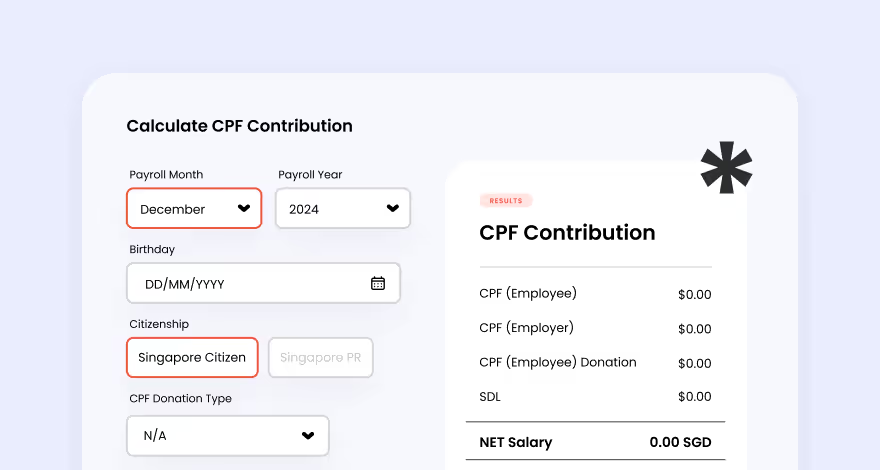
To simplify this, you can use Omni’s CPF calculator, which automates the complex math behind salary computation in Singapore. The calculator ensures accurate results based on MoM-compliant formulas and real-time workdays, helping HR teams stay compliant while saving valuable time.
Key Payroll Terms You Must Know for How to Calculate Daily Salary Accurately
To accurately determine how to calculate daily salary in Singapore, it’s important to understand several payroll-specific terms that directly influence the final calculation. Misinterpreting any of these can lead to incorrect payroll processing, CPF non-compliance, and penalties.
Divisors
The MoM recommends using a 12-month and 52-week divisor system when determining how to calculate salary per day for monthly-rated employees. This standardizes daily pay calculation across different months and ensures fair payouts.
Miscalculating can lead to an incorrect wage per hour or hourly compensation when using tools like an hourly pay calculator or MoM hourly rate calculator.
For foreign domestic workers (FDW), the MOM hourly rate calculator uses a fixed divisor of 26 working days, assuming four rest days per month. This is a separate consideration in any MoM salary calculator Singapore.
Working day vs. calendar day
Understanding the difference between working day and calendar day calculations is key for accurate salary computation in Singapore, especially when figuring out how to calculate 1 day's salary or processing unpaid leave.
- Calendar days include all days in the month, including weekends and public holidays. It’s used when calculating:
- Calculating prorated salary for daily-rated employees
- Making deductions for full-day absences, including weekends.
- Determining pay for employees paid by calendar month.
- Working days refers to days an employee is scheduled to work (typically Monday-Friday or Monday-Saturday). This distinction is key when using a MoM hourly rate calculator, calculating daily pay, or managing hourly wage calculator outputs for accurate payouts.
Basic salary vs. gross salary
Basic salary is the fixed amount an employee earns before any additions (overtime, benefits, and allowances) or deductions (tax, social security contributions, and dues) are applied.
Gross salary is the total amount of money an employee earns before deductions. It usually includes all forms of compensation, including basic pay, overtime pay, bonuses, allowances, and commissions.
When applying the MoM hourly rate calculator, basic salary is used for payments for work done on rest days and public holidays, while gross salary is used for calculating salary in lieu of annual leave, paid leave, and unauthorized absenteeism.
Work schedule: 5-day vs. 6-day workweek
In Singapore, employees typically work five days a week (Monday to Friday) or six days weekly (Monday to Saturday). This distinction directly affects hourly pay calculation and prorated daily rates.
Using the wrong work schedule during daily pay calculation can lead to payroll errors like over- or underpayments. To ensure accuracy when using the salary per day calculator, always consult the employee’s employment contract to confirm their agreed workweek before making any payroll adjustments.
Leave types: paid vs. unpaid
For paid leaves, employees receive their regular salary during their time off without any deductions. This applies to situations such as annual leave, maternity leave, and public holidays that fall on a working day. Such leaves are regarded as paid working days when calculating gross salary.
On the other hand, unpaid leave is time off taken without pay, typically when paid leave is exhausted or during personal emergencies. It should be taken into account and deducted when calculating pay.
Allowances and variable components
Allowances are fixed payments that compensate for specific needs, such as transportation, housing, or meals. Variable components, on the other hand, are additional payments, such as overtime, bonuses, and commissions, added to an employee’s basic salary. Allowances may or may not be included in gross salary, and not all are CPF-applicable.
CPF implications
In Singapore, all salaries, including prorated and partial-month pay, are subject to CPF contributions. Understanding how to calculate CPF contribution is crucial when determining net take-home pay and tax obligations.
Manual CPF calculations can be time-consuming and error-prone, especially when working with hourly rates or variable components. Omni’s MoM-compliant CPF calculator automates how to calculate salary from CPF contribution and ensures accuracy in every scenario, whether you’re processing new hires, early leavers, or unpaid leave adjustments.
Step-By-Step Guide on How To Calculate Daily Salary
Below, we break down how to calculate daily salary in Singapore:
1. Determine the monthly basic salary
Before figuring out how to calculate daily salary, you must first determine the employee's basic salary.
The basic salary is calculated by subtracting all allowances and benefits from the gross salary. Understanding the distinction between gross and basic salary is crucial, as MOM uses the basic rate for certain calculations, such as payment for work on rest days and public holidays.
2. Identify working days or calendar days in the month
Determine the employee’s total workdays in a month, depending on the agreed schedule in the employment contract. For example, they may work five days a week and have two rest days.
3. Apply the correct divisor
Once you’ve ascertained the employee’s total working days, apply the correct divisor according to the MoM salary calculator Singapore. Depending on the employment type, the divisor can be 12 months, 52 weeks, or 26 working days (for foreign domestic workers).
4. Multiply by the number of days worked/unpaid
Multiply the exact number of days worked by the basic salary, depending on the formula for how to calculate salary per day.
For example:
An employee earns a basic monthly salary of S$3,000 and is on a 5-day workweek.
To find their daily salary for unpaid leave or proration, you’ll use the formula:
Daily salary = (12 x Monthly salary) / (52 x Workdays per week)
- Daily salary = (12 x 3,000) / (52 x 5) = 36,000 / 260 = S$138.46 per day
So, if the employee takes 3 days of unpaid leave, the deduction would be:
- 3 x S$138.46 = S$415.38
Their adjusted salary for the month would be:
- S$3,000 - S$415.38 = S$2,584.62
If the employee resigned mid-month, having worked for 14 days, their prorated salary would be:
- 14 x S$138.46 per day = S$1,938.44 (prorated final salary)
Mistakes in Daily Pay Calculation and How to Fix Them
1. Applying the same daily rate for all employee types
Part-time and full-time employees have different working arrangements and should not be treated the same when calculating daily pay. While full-time staff typically work fixed hours each day, part-time employees work for fewer days a week and may be paid hourly. Using the same formula across both employment types can lead to inaccurate payouts.
To avoid this, use MOM’s recommended formula for monthly-rated employees:
12 x monthly basic pay/52 x workdays (or hours) per week.
2. Ignoring public holidays when counting working days
This can inflate the number of working days in a month, leading to overpayment or underpayment when prorating salary. To fix this, always exclude public holidays that fall on regular workdays from your working day count before calculating daily pay.
3. Using gross salary instead of basic salary for rest day pay
Using the gross salary instead of the basic salary is a common error when figuring out how to calculate daily salary for rest days or public holidays. Gross salary includes allowances, bonuses, and other variable components, while basic salary doesn’t. MOM requires that only basic salary be used for calculating rest day pay. To handle this correctly, always reference the employee’s basic monthly pay, excluding additional compensation.
4. Using the wrong divisor
When figuring out how to calculate daily salary, be careful not to divide the monthly salary by 30, 26, or the number of calendar days in the month without considering the employee’s work schedule or MOM’s daily pay calculation.
This oversight can lead to inaccurate prorated pay, especially for unpaid leave, new hires, or early leavers, giving room for employee grievances or noncompliance issues.

Omni’s comprehensive payroll feature automatically applies MoM-compliant divisors based on employee work schedules and contract types, removing guesswork and reducing the risk of human error in daily pay calculation.
5. Failing to include allowances or variable components when required
Allowances, commissions, or bonuses are crucial components of the gross salary, which is used when calculating paid leave, CPF contributions, or salary in lieu of notice. Overlooking them can lead to underpayment, incorrect tax and CPF filings, and noncompliance. To avoid this, specify the variable components of the contractual salary and capture all CPF-applicable and taxable items in payroll calculations.
6. Incorrect CPF computation for partial months
Inaccurate CPF computation for incomplete months often occurs when employees join or leave mid-month or take unpaid leave. For example, calculating CPF contributions based on the complete monthly salary when the employee actually worked for a portion of the month.
These errors can cause tax reporting difficulties and penalties from the CPF Board due to noncompliance. To stay compliant, prorate CPF contributions and partial months' salary based on actual days worked.
Omni automatically calculates CPF contributions based on actual working days and employee start and end dates, in full alignment with MoM CPF contribution requirements and guidelines, helping you avoid penalties and manual work.
7. Not updating calculations for February or public holidays
Using a standard 30-day divisor in February or ignoring a public holiday when figuring out how to calculate daily salary can lead to overpayment or underpayment. For accuracy, adjust the number of working or calendar days in February, especially when using a daily or hourly pay salary calculator Singapore.
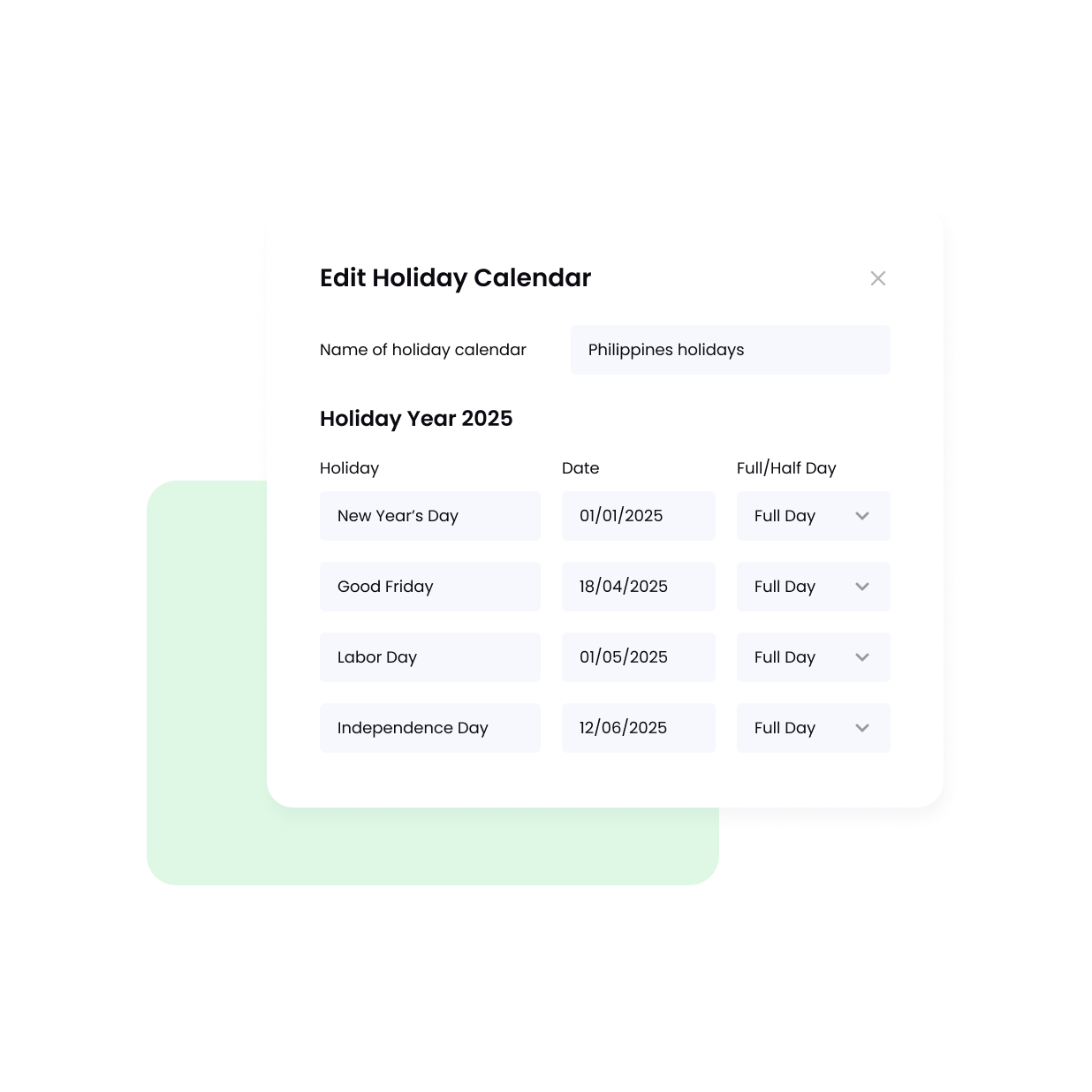
Omni’s built-in payroll calendars are customized for the APAC region, including Singapore, Malaysia, and Hong Kong. It automatically accounts for public holidays, varying month lengths (like February), and local workweek structures. Whether you’re calculating daily pay or using an hourly rate calculator, Omni ensures every payroll run is accurate and no manual calendar adjustments are needed.
Read next: Cloud Payroll Software: A Complete Guide for Singapore Businesses
Frequently Asked Questions
1. How to calculate daily salary for employees who take unpaid childcare or sick leave?
For these unpaid leave types, utilize the basic salary formula to determine daily deductions.
Daily Pay = (12 × Monthly Basic Salary) ÷ (52 × Workdays per Week)
2. What happens if an employee works an irregular number of days each week?
In cases where employees’ work schedules vary (e.g., shift-based employees), calculating the average workdays per week can be tricky. With Omni, you can track attendance and scheduled hours to calculate daily salary for more accurate pro-ration and CPF computation.
3. Can I use a standard daily rate for employees who switch roles mid-month?
No, role changes that involve salary adjustments require you to split the month into two salary segments. Each portion should reflect the rate and days worked at the respective salary.
4. Is there a difference in salary calculation for employees paid in multiple currencies?
Yes. Employers must calculate the SGD equivalent for CPF and tax purposes.
However, using mid-market exchange rates daily or monthly can potentially introduce inconsistency. Omni supports multi-currency payroll and automatically converts the pay to SGD using MoM-compliant daily or fixed exchange rates for CPF and IRAS reporting.
5. How can I prevent salary miscalculations during Singapore’s festive months?
Festive periods often come with multiple public holidays, shortened workweeks, or early releases. These factors can cause high payroll error rates.
Omni comes preloaded with statutory holidays and adjusts daily or hourly salary computations based on whether the employee works a full week, short week, or shift basis—ensuring you never miscalculate due to a holiday.
Automate Daily Salary and CPF Calculations with Omni Payroll
Knowing how to calculate daily salary in Singapore accurately is important for staying compliant with MoM guidelines and avoiding payroll errors. Whether you’re calculating unpaid leave or handling mid-month hires or resignations, accurate daily pay calculation and CPF reporting should be essential parts of your payroll processing.

With Omni, you get a comprehensive payroll solution built for enterprises like yours. Trusted by many Singaporean businesses, Omni helps to:
- Automate how to calculate salary per day as per MoM’s guidelines.
- Ensure accurate CPF reporting with auto-calculated contributions, including proration.
- Accurately handle various employment types such as full-timers, part-timers, and independent contractors.
- Streamline and optimize salary computation. Singapore processes with region-specific public holiday calendars and flexible workweek settings.
"Omni’s highly adaptable and customizable HRIS empowers us to easily manage our distributed workforce across existing and future countries of operation. The intuitive interface and automated workflows streamline our processes, saving us time and minimizing errors. I wholeheartedly recommend Omni to any HR team seeking a scalable solution for their growth journey."
— Lovely Tan, Philippines Country Head of People, Qashier
Learn how: Qashier boosts payroll processing speed by 4x with Omni!
Make the switch to Omni today and discover how it can help you save time, reduce payroll costs, and ensure payroll accuracy and compliance. Book a demo with our team today to learn more.
Full HR & Payroll coverage for Philippines, Singapore, Malaysia, Hong Kong, and Indonesia. Each market has local support teams and built-in compliance features.
Starting at $3/employee/month for core features. Volume-based discounts are available for growing teams. Book a demo for custom pricing.
Enterprise-grade security with ISO 27001, GDPR certifications, and local data residency options.
4 weeks average. Includes free data migration, setup, and team training. No hidden fees.
Built specifically for Asia with local payroll processing, same-day support in Asia time zones, and 40% lower cost than global alternatives.
.png)

.avif)

