





Summary. Manual employee attendance tracking no longer meets the needs of growing teams. Inaccuracies, compliance risks, and inefficiencies make it hard to scale, especially for remote or shift-based workforces. Modern attendance management software with features like geotagging, face attendance, and biometric attendance and payroll management systems offers accurate, secure, and automated tracking. Whether you're seeking an attendance system for a small business or integrated HR software for attendance, tools like Omni’s time and attendance management system software help streamline processes, boost compliance, and ensure payroll accuracy.
For HR teams, especially in growing SMEs, and operations managers in sectors like logistics, retail, or F&B, employee attendance tracking can feel like a constant battle between accuracy and trust. Traditional, manual methods often lead to headaches, while the rise of remote and hybrid work introduces new complexities like potential attendance fraud and inconsistent reporting.
The good news? Modern attendance management systems, especially those with advanced features like geotagging, are changing the game. In this article, we’ll show you how to solve common attendance issues without resorting to micromanaging, ultimately positioning your business to move from merely tracking attendance to truly optimizing your workforce.
The Real Cost of Poor Employee Attendance Tracking
Outdated, manual methods for employee attendance tracking might seem simple on the surface, but they hide a significant cost to your business. Relying on paper timesheets, shared spreadsheets, or even an honor system opens the door to numerous risks and inefficiencies that can directly impact your bottom line and employee morale.
Hidden drains to consider include:
Financial leakage: Inaccurate recording of work hours can lead to overpaying for time not worked or underpaying, which risks legal disputes. Time theft, even if minor per employee, can add up substantially across a larger workforce. Without precise employee attendance tracking, payroll discrepancies become a common occurrence, leading to hours spent on manual reconciliation by your HR or finance teams.
Compliance risks: Labor laws are strict about working hours, overtime, and breaks. Outdated systems make it difficult to prove compliance during audits, exposing your business to fines and legal penalties. Manual records are prone to human error and can be easily manipulated, making them unreliable evidence.
Operational inefficiencies: When you don't have real-time, accurate data on who's in and where, it directly impacts operations. Scheduling becomes a guessing game, project timelines can be missed, and staffing levels might be suboptimal, leading to reduced efficiency and service quality. For businesses with field-based staff or multiple retail locations, this lack of oversight is particularly damaging.
Erosion of trust and morale: While the aim is to avoid micromanaging, poor tracking often necessitates it, or worse, creates an environment where honest employees feel burdened by complex processes while others exploit loopholes. This fosters resentment and a lack of trust within the team.
Limited strategic insight: Beyond just tracking hours, effective employee attendance tracking should provide data for optimization. Outdated methods only offer fragmented, historical data, preventing HR from identifying patterns related to absenteeism, punctuality, or peak staffing needs. You move from a reactive state to a proactive one, but only if you have reliable data.
Common pitfalls faced by growing modern teams
As your business expands and adapts to modern work models like remote or hybrid arrangements, the limitations of traditional employee attendance tracking methods become glaring. What might have been a minor inconvenience for an attendance system for a small business with just a few employees can become a significant roadblock for a growing team. Here are some common pitfalls that plague modern organizations:
- Manual errors: Relying on spreadsheets or handwritten logs is inherently prone to human error. A simple typo can throw off payroll calculations, lead to compliance issues, or cause frustration for employees. These manual mistakes require precious HR time for reconciliation, pulling resources away from more strategic tasks.
- Inconsistent reporting: Without a standardized, automated system, data collection often varies across departments or locations. This leads to inconsistent reporting, making it incredibly difficult to get a unified, accurate view of attendance trends across the entire organization. Such inconsistency hinders effective workforce planning and strategic decision-making.
- Lack of oversight for remote teams: The shift to remote and hybrid work models introduces new challenges for tracking attendance effectively. It's difficult to verify work hours, ensure punctuality, or prevent potential "buddy punching" or time theft when employees aren't physically present. This lack of reliable oversight can foster distrust and reduce productivity.
- Remote attendance fraud: Specifically for remote or field-based teams, manual or easily manipulated check-in methods open the door to location spoofing or inaccurate time logging. This makes it challenging to ensure employees are genuinely working from their designated locations or for the hours they claim, impacting overall accountability and compliance. Remote employee monitoring systems help prevent such fraud by tracking activity and providing real-time visibility into work patterns.
- Inability to scale: Systems designed for a handful of employees quickly become overwhelmed as the workforce grows. Manual processes simply cannot scale efficiently to handle hundreds or thousands of employees across various shifts and locations. This creates bottlenecks in HR operations and delays critical payroll cycles.
- Limited Insights: Traditional methods only provide basic attendance data. They lack the ability to generate meaningful reports on absenteeism patterns, punctuality trends, or the impact of attendance on team productivity. This means HR and operations managers miss out on valuable insights needed to optimize staffing and improve overall workforce management.
These pitfalls highlight why a modern attendance system for small businesses and growing enterprises alike is no longer a luxury but a necessity for accurate tracking without resorting to micromanaging.
What to Look for in a Modern Attendance Management System
Choosing the right employee attendance tracking system goes beyond the basic clocking in and out. Today’s HR teams need tools that are accurate, automated, seamlessly integrated and scalable. Here are some must-have features to look for when evaluating solutions:
End-to-end automation

Manual attendance tracking can create unnecessary friction for HR teams and errors for payroll. Look for attendance management software like Omni that automates the entire attendance tracking process, from daily clock-ins to data consolidation, removing the need for manual timesheets or reconciliations. This ensures that data is captured at the source, reducing admin time and errors.
Robust reporting
A robust attendance system for small businesses and enterprises should offer comprehensive reporting capabilities. This goes beyond simple attendance logs to provide insights into absenteeism trends, punctuality rates, overtime hours, and even departmental attendance patterns.
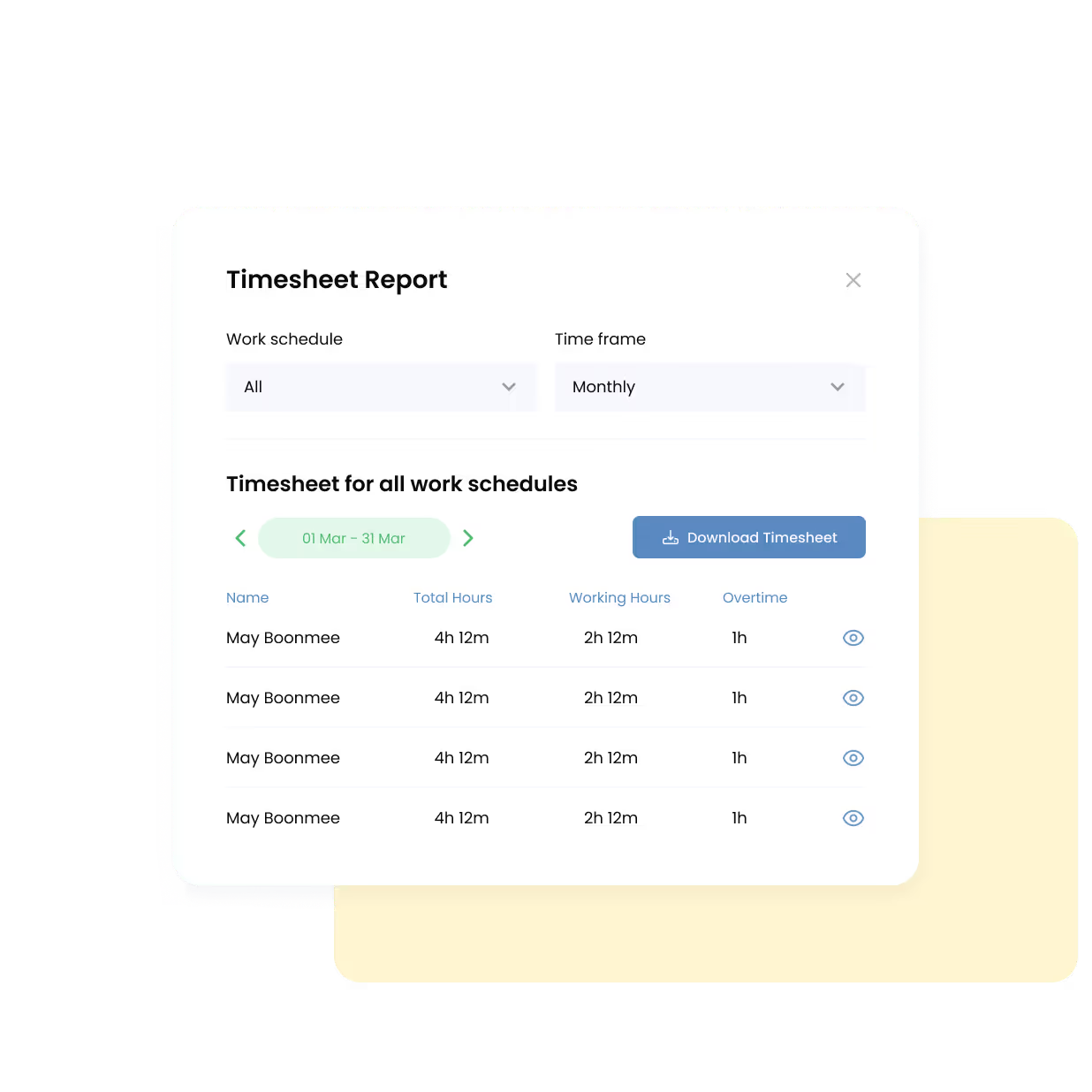
With Omni’s reporting tools, HR and operations managers can access these insights without spending hours building reports from scratch, allowing for faster and more informed decision-making.
Leave synchronization
Disjointed systems can cause discrepancies between leave and attendance data. To avoid this, look for platforms that seamlessly integrate with your leave management system. With Omni’s integrations, leave entries are reflected instantly, which helps maintain accurate records and reduces payroll errors.
Built-in compliance alerts
A sophisticated system should include compliance alerts to notify HR of potential labor law violations, such as excessive overtime, missed breaks, or insufficient rest days. This proactive flagging helps maintain adherence to regulations and avoids costly penalties but also plays a huge role in identifying and preventing employee burnout.
User-friendly interface
A complicated interface can hinder adoption. Prioritize employee attendance tracking systems that are easy to navigate, quick to access, and simple to use.

Unlike traditional, rigid systems that force you to adapt your processes, Omni molds to your organization's employee attendance tracking needs. Our interface design prioritizes clarity and efficiency, ensuring a consistently intuitive experience for all.
Advanced features: Geotagging, biometrics and facial recognition
To truly modernize employee attendance tracking and move beyond the limitations of manual systems, advanced features offer a powerful solution. Modern attendance management software now integrates sophisticated technologies like geotagging, biometrics, and facial recognition, fundamentally changing how businesses ensure accuracy and compliance, especially for distributed teams.
Geotagging
Geotagging allows employees to clock in and out from their mobile devices, with their location automatically recorded. This feature is a game-changer for remote, hybrid, or field-based staff, providing verifiable proof of location without invasive oversight.
Whether employees are working from home, at a client site, or on the go, solutions like Omni provide geotag-enabled clock-ins that ensure attendance records are accurate and trustworthy. By capturing location at the point of check-in, teams gain complete visibility into their distributed team, strengthening compliance and accountability across the board.
Biometrics and facial recognition for secure clock-ins
For on-site or designated locations, biometric attendance and payroll management systems offer unparalleled security and accuracy. Facial scan check-ins provide a secure, clock-free clock-in method, eliminating concerns like "buddy punching". This ensures that the person clocking in is indeed the employee.
These systems capture unique biological data, offering a high level of verification that traditional swipe cards or PINs cannot match.
Integrating Employee Attendance Tracking into Your HRIS
The real power of modern employee attendance tracking truly shines when it's seamlessly integrated into your broader HR ecosystem. Effective HR software for attendance acts as the central nervous system, connecting vital data points across various functions. When attendance data is synced with other HR tools, the benefits are immediate and substantial:
Streamlined leave management: Integrating attendance with leave management systems ensures that approved leave requests automatically update attendance records. This eliminates the need for manual cross-referencing and reduces discrepancies.
Accurate payroll processing: Perhaps the most significant benefit is the direct impact on payroll processing. Real-time attendance data, including regular hours, overtime, and leave, flows directly into your payroll system. This connection reduces manual reconciliation and payroll errors significantly, ensuring employees are paid correctly and on time, every time.
Enhanced compliance: Syncing attendance data with compliance tools allows for automated monitoring against labor laws regarding working hours, overtime limits, and break entitlements. This proactive approach helps identify potential compliance issues before they become problems.
Comprehensive reporting: When attendance data is part of a unified HRIS, it contributes to richer, more holistic HR analytics. This allows for comprehensive reporting that links attendance patterns to productivity, engagement, or even training needs, providing deeper insights for strategic decision-making.
Ditching Manual Tracking? See How Omni Can Help
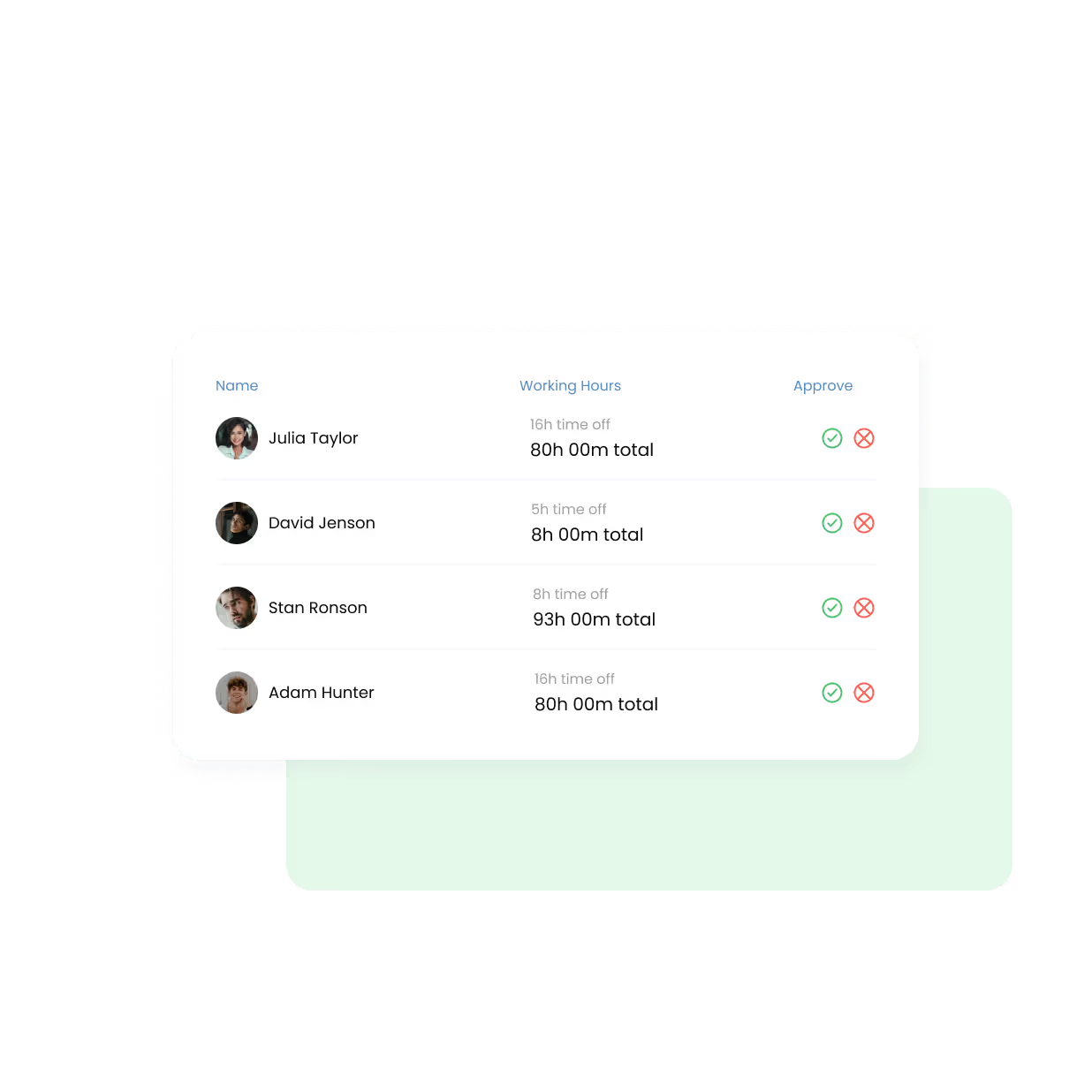
It’s clear that traditional attendance systems no longer make the cut in today’s workforce. Modern attendance tracking systems are designed to be automated, flexible, and integrated, capable of supporting everything from remote work environments to compliance requirements. They not only help reduce administrative burden but also ensure that attendance data flows directly into key HR processes like payroll and time-off management.
With Omni’s attendance module, teams can ditch manual tracking, generate insightful reports with a few clicks, and enable accurate and efficient payroll processes, regardless of where employees are stationed or how they’re scheduled.
For HR teams ready to move beyond outdated processes, book a demo with our team today to see how Omni can help you move towards smarter, more scalable attendance management.
For HR teams, especially in growing SMEs, and operations managers in sectors like logistics, retail, or F&B, employee attendance tracking can feel like a constant battle between accuracy and trust. Traditional, manual methods often lead to headaches, while the rise of remote and hybrid work introduces new complexities like potential attendance fraud and inconsistent reporting.
The good news? Modern attendance management systems, especially those with advanced features like geotagging, are changing the game. In this article, we’ll show you how to solve common attendance issues without resorting to micromanaging, ultimately positioning your business to move from merely tracking attendance to truly optimizing your workforce.
The Real Cost of Poor Employee Attendance Tracking
Outdated, manual methods for employee attendance tracking might seem simple on the surface, but they hide a significant cost to your business. Relying on paper timesheets, shared spreadsheets, or even an honor system opens the door to numerous risks and inefficiencies that can directly impact your bottom line and employee morale.
Hidden drains to consider include:
Financial leakage: Inaccurate recording of work hours can lead to overpaying for time not worked or underpaying, which risks legal disputes. Time theft, even if minor per employee, can add up substantially across a larger workforce. Without precise employee attendance tracking, payroll discrepancies become a common occurrence, leading to hours spent on manual reconciliation by your HR or finance teams.
Compliance risks: Labor laws are strict about working hours, overtime, and breaks. Outdated systems make it difficult to prove compliance during audits, exposing your business to fines and legal penalties. Manual records are prone to human error and can be easily manipulated, making them unreliable evidence.
Operational inefficiencies: When you don't have real-time, accurate data on who's in and where, it directly impacts operations. Scheduling becomes a guessing game, project timelines can be missed, and staffing levels might be suboptimal, leading to reduced efficiency and service quality. For businesses with field-based staff or multiple retail locations, this lack of oversight is particularly damaging.
Erosion of trust and morale: While the aim is to avoid micromanaging, poor tracking often necessitates it, or worse, creates an environment where honest employees feel burdened by complex processes while others exploit loopholes. This fosters resentment and a lack of trust within the team.
Limited strategic insight: Beyond just tracking hours, effective employee attendance tracking should provide data for optimization. Outdated methods only offer fragmented, historical data, preventing HR from identifying patterns related to absenteeism, punctuality, or peak staffing needs. You move from a reactive state to a proactive one, but only if you have reliable data.
Common pitfalls faced by growing modern teams
As your business expands and adapts to modern work models like remote or hybrid arrangements, the limitations of traditional employee attendance tracking methods become glaring. What might have been a minor inconvenience for an attendance system for a small business with just a few employees can become a significant roadblock for a growing team. Here are some common pitfalls that plague modern organizations:
- Manual errors: Relying on spreadsheets or handwritten logs is inherently prone to human error. A simple typo can throw off payroll calculations, lead to compliance issues, or cause frustration for employees. These manual mistakes require precious HR time for reconciliation, pulling resources away from more strategic tasks.
- Inconsistent reporting: Without a standardized, automated system, data collection often varies across departments or locations. This leads to inconsistent reporting, making it incredibly difficult to get a unified, accurate view of attendance trends across the entire organization. Such inconsistency hinders effective workforce planning and strategic decision-making.
- Lack of oversight for remote teams: The shift to remote and hybrid work models introduces new challenges for tracking attendance effectively. It's difficult to verify work hours, ensure punctuality, or prevent potential "buddy punching" or time theft when employees aren't physically present. This lack of reliable oversight can foster distrust and reduce productivity.
- Remote attendance fraud: Specifically for remote or field-based teams, manual or easily manipulated check-in methods open the door to location spoofing or inaccurate time logging. This makes it challenging to ensure employees are genuinely working from their designated locations or for the hours they claim, impacting overall accountability and compliance. Remote employee monitoring systems help prevent such fraud by tracking activity and providing real-time visibility into work patterns.
- Inability to scale: Systems designed for a handful of employees quickly become overwhelmed as the workforce grows. Manual processes simply cannot scale efficiently to handle hundreds or thousands of employees across various shifts and locations. This creates bottlenecks in HR operations and delays critical payroll cycles.
- Limited Insights: Traditional methods only provide basic attendance data. They lack the ability to generate meaningful reports on absenteeism patterns, punctuality trends, or the impact of attendance on team productivity. This means HR and operations managers miss out on valuable insights needed to optimize staffing and improve overall workforce management.
These pitfalls highlight why a modern attendance system for small businesses and growing enterprises alike is no longer a luxury but a necessity for accurate tracking without resorting to micromanaging.
What to Look for in a Modern Attendance Management System
Choosing the right employee attendance tracking system goes beyond the basic clocking in and out. Today’s HR teams need tools that are accurate, automated, seamlessly integrated and scalable. Here are some must-have features to look for when evaluating solutions:
End-to-end automation
Manual attendance tracking can create unnecessary friction for HR teams and errors for payroll. Look for attendance management software like Omni that automates the entire attendance tracking process, from daily clock-ins to data consolidation, removing the need for manual timesheets or reconciliations. This ensures that data is captured at the source, reducing admin time and errors.
Robust reporting
A robust attendance system for small businesses and enterprises should offer comprehensive reporting capabilities. This goes beyond simple attendance logs to provide insights into absenteeism trends, punctuality rates, overtime hours, and even departmental attendance patterns.
With Omni’s reporting tools, HR and operations managers can access these insights without spending hours building reports from scratch, allowing for faster and more informed decision-making.
Leave synchronization
Disjointed systems can cause discrepancies between leave and attendance data. To avoid this, look for platforms that seamlessly integrate with your leave management system. With Omni’s integrations, leave entries are reflected instantly, which helps maintain accurate records and reduces payroll errors.
Built-in compliance alerts
A sophisticated system should include compliance alerts to notify HR of potential labor law violations, such as excessive overtime, missed breaks, or insufficient rest days. This proactive flagging helps maintain adherence to regulations and avoids costly penalties but also plays a huge role in identifying and preventing employee burnout.
User-friendly interface
A complicated interface can hinder adoption. Prioritize employee attendance tracking systems that are easy to navigate, quick to access, and simple to use.
Unlike traditional, rigid systems that force you to adapt your processes, Omni molds to your organization's employee attendance tracking needs. Our interface design prioritizes clarity and efficiency, ensuring a consistently intuitive experience for all.
Advanced features: Geotagging, biometrics and facial recognition
To truly modernize employee attendance tracking and move beyond the limitations of manual systems, advanced features offer a powerful solution. Modern attendance management software now integrates sophisticated technologies like geotagging, biometrics, and facial recognition, fundamentally changing how businesses ensure accuracy and compliance, especially for distributed teams.
Geotagging
Geotagging allows employees to clock in and out from their mobile devices, with their location automatically recorded. This feature is a game-changer for remote, hybrid, or field-based staff, providing verifiable proof of location without invasive oversight.
Whether employees are working from home, at a client site, or on the go, solutions like Omni provide geotag-enabled clock-ins that ensure attendance records are accurate and trustworthy. By capturing location at the point of check-in, teams gain complete visibility into their distributed team, strengthening compliance and accountability across the board.
Biometrics and facial recognition for secure clock-ins
For on-site or designated locations, biometric attendance and payroll management systems offer unparalleled security and accuracy. Facial scan check-ins provide a secure, clock-free clock-in method, eliminating concerns like "buddy punching". This ensures that the person clocking in is indeed the employee.
These systems capture unique biological data, offering a high level of verification that traditional swipe cards or PINs cannot match.
Integrating Employee Attendance Tracking into Your HRIS
The real power of modern employee attendance tracking truly shines when it's seamlessly integrated into your broader HR ecosystem. Effective HR software for attendance acts as the central nervous system, connecting vital data points across various functions. When attendance data is synced with other HR tools, the benefits are immediate and substantial:
Streamlined leave management: Integrating attendance with leave management systems ensures that approved leave requests automatically update attendance records. This eliminates the need for manual cross-referencing and reduces discrepancies.
Accurate payroll processing: Perhaps the most significant benefit is the direct impact on payroll processing. Real-time attendance data, including regular hours, overtime, and leave, flows directly into your payroll system. This connection reduces manual reconciliation and payroll errors significantly, ensuring employees are paid correctly and on time, every time.
Enhanced compliance: Syncing attendance data with compliance tools allows for automated monitoring against labor laws regarding working hours, overtime limits, and break entitlements. This proactive approach helps identify potential compliance issues before they become problems.
Comprehensive reporting: When attendance data is part of a unified HRIS, it contributes to richer, more holistic HR analytics. This allows for comprehensive reporting that links attendance patterns to productivity, engagement, or even training needs, providing deeper insights for strategic decision-making.
Ditching Manual Tracking? See How Omni Can Help
It’s clear that traditional attendance systems no longer make the cut in today’s workforce. Modern attendance tracking systems are designed to be automated, flexible, and integrated, capable of supporting everything from remote work environments to compliance requirements. They not only help reduce administrative burden but also ensure that attendance data flows directly into key HR processes like payroll and time-off management.
With Omni’s attendance module, teams can ditch manual tracking, generate insightful reports with a few clicks, and enable accurate and efficient payroll processes, regardless of where employees are stationed or how they’re scheduled.
For HR teams ready to move beyond outdated processes, book a demo with our team today to see how Omni can help you move towards smarter, more scalable attendance management.
Full HR & Payroll coverage for Philippines, Singapore, Malaysia, Hong Kong, and Indonesia. Each market has local support teams and built-in compliance features.
Starting at $3/employee/month for core features. Volume-based discounts are available for growing teams. Book a demo for custom pricing.
Enterprise-grade security with ISO 27001, GDPR certifications, and local data residency options.
4 weeks average. Includes free data migration, setup, and team training. No hidden fees.
Built specifically for Asia with local payroll processing, same-day support in Asia time zones, and 40% lower cost than global alternatives.
.avif)

