.png)
Summary. Choosing the right HR software in Singapore means going beyond a feature checklist. A compliant HRMS must automate CPF, MOM, and IRAS obligations natively, integrate with your existing tools, and scale as your workforce grows. This guide walks you through a practical evaluation framework, covering compliance requirements, advanced capabilities, and a side-by-side comparison of the most widely used HRIS platforms in Singapore.
Many Singapore businesses are ramping up investment in HR technology, with the Singapore HR analytics market projected to grow by 16%, from USD 40.8 million in 2022 to USD 133.3 million by 2030. But whether these investments pay off depends on choosing the right HR system.
A Human Resource Information System (HRIS) is software that centralises employee data, automates payroll processing, and manages compliance filings. In Singapore, that specifically means handling Central Provident Fund (CPF) contributions, Ministry of Manpower (MOM) reporting, and Inland Revenue Authority of Singapore (IRAS) filings accurately, automatically, and without manual workarounds.
An HRMS SG that handles these requirements correctly saves your HR team hours each pay cycle and keeps you on the right side of Singapore's employment regulations. One that requires manual overrides for local compliance can expose your business to fines, missed deadlines, and payroll errors.
This guide covers what to look for, what separates strong platforms from average ones, and how the leading HR software options in Singapore compare on the criteria that matter most.
What is HRIS and why does the Singapore context matter?
An HRIS (Human Resource Information System) is the central platform your HR team uses to manage employee records, payroll, leave, compliance, and people operations. You may also see it referred to as an HRMS (Human Resource Management System) — the terms are used interchangeably in the Singapore market, though HRMS sometimes implies a broader scope that includes talent management and analytics.
Read next: The Difference Between HRIS vs HRMS
What separates a good HRIS evaluation in Singapore from a generic one is compliance specificity. Singapore has a distinct set of statutory obligations that your system needs to support out of the box:
- CPF (Central Provident Fund): Mandatory employer and employee contributions calculated on ordinary and additional wages, with rates that vary by age and residency status
- SDL (Skills Development Levy): Contributions payable by employers for all employees earning below a certain threshold
- IR8A and IR21: Annual income reporting and tax clearance forms filed with IRAS
- FWL (Foreign Worker Levy): Monthly levies on Work Permit and S Pass holders, managed through the MOM portal
- PDPA (Personal Data Protection Act): Data privacy obligations governing how you collect, store, and process employee information
A platform that automates all of the above natively is the baseline for any serious HRIS evaluation in Singapore.
The cost of choosing the wrong HR system
Researching compliance requirements may feel tedious, but skipping this step can be costly. Without them, you risk implementing a system that fails to support your core HR functions and payroll processes.
The result? Inaccurate payroll calculations, unpaid or delayed statutory contributions, or non-compliant tax forms result in compliance risks, fines, penalties, legal action, reputational damage, and lower employee satisfaction and retention rates.
With stakes this high, careful evaluation of HRIS options is critical. HRIS is never one-size-fits-all; the right choice depends on how well the system aligns and scales with your needs.
As Vinay Varma, Head of IT at Siemens, put it: emerging technology gives HR teams the tools to move from a one-size-fits-all approach to strategies that are genuinely built around their people.
Your HRIS evaluation should do the same. Identify not just the system with the most features, but the one that fits your workforce, your compliance obligations, and your growth plans.
Core HRIS Features Every Singapore Business Needs
Before assessing advanced capabilities, establish your non-negotiables. These are the features every Singapore-focused HRIS should handle reliably.
Regulatory compliance
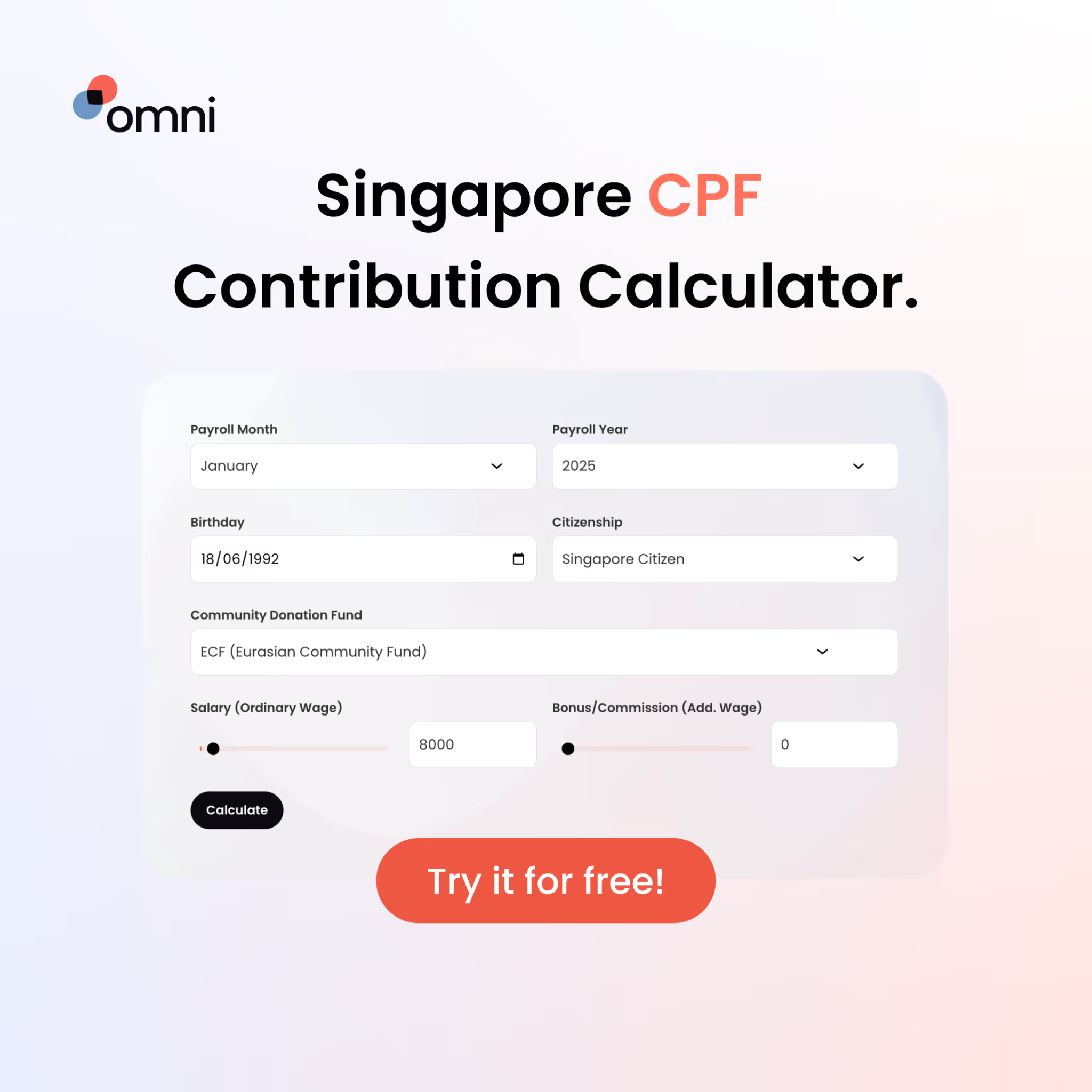
Your HR software should automate the statutory calculations and filings Singapore requires — not just offer them as optional add-ons. Look for built-in CPF, MOM, and IRAS support that updates automatically when contribution rates or filing requirements change.
With Omni, you get built-in Singapore compliance from the start, eliminating costly customizations and manual workarounds. We automate CPF and SDL calculations, generate IR8A forms, and handle FWL tracking without any custom configuration.
“We want HR to be innovative. Omni has evolved to allow HR to play around in the ‘HR software sandbox,’ yet keeping that compliance and governance in the system itself that’s so essential.”
— Wenna Lee, HR Manager at IHRP
Payroll integration
Payroll is the function where HRIS errors have the most direct consequences. Assess whether the system syncs employee data, leave balances, and statutory rates into payroll automatically.
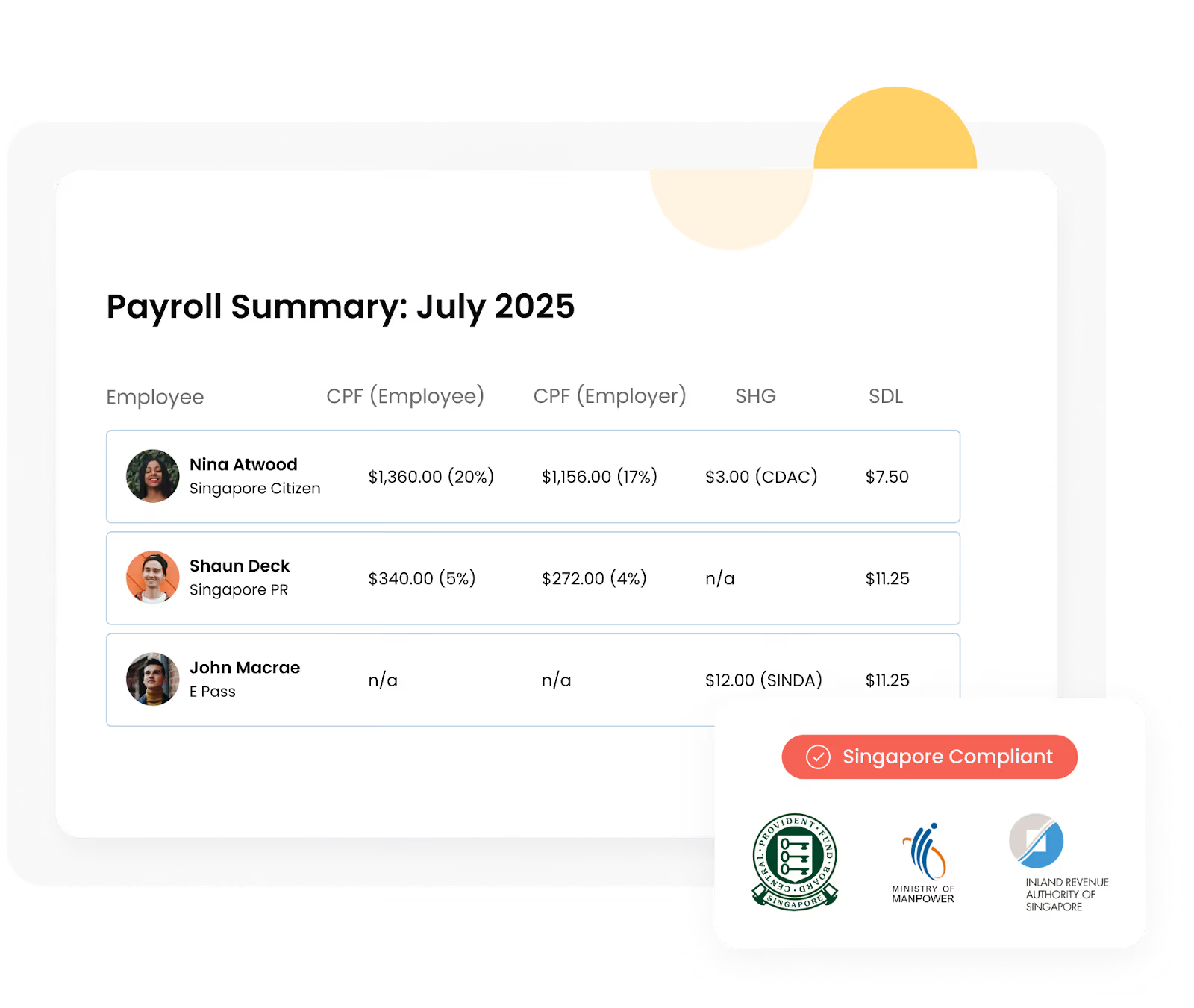
Omni’s payroll module automates statutory calculations and integrates directly with employee records, cutting payroll cycle time significantly.
"Payroll calculations that used to take three to five working days can now be done in half the time with Omni."
— Tengku Mohaizad, Group Head of HR Asia at Inspire Brands Asia
Multi-language and local support
Singapore's workforce is multilingual, and HR processes involving leave, payroll, and compliance need to be accessible to all employees. Look for a system that supports multiple languages and offers a local support team — one that works in your time zone and understands Singapore's regulatory landscape.
Omni supports 10+ languages, and our award-winning local support team operates within Singapore business hours, ensuring fast, accurate responses when you need them.
Singapore-specific reporting and analytics
Your HR analytics should go beyond headcount dashboards. Strong HRIS reporting in Singapore includes CPF contribution tracking, statutory submission status, leave liability, and workforce cost analysis, giving HR and finance a shared view of compliance and labour costs.
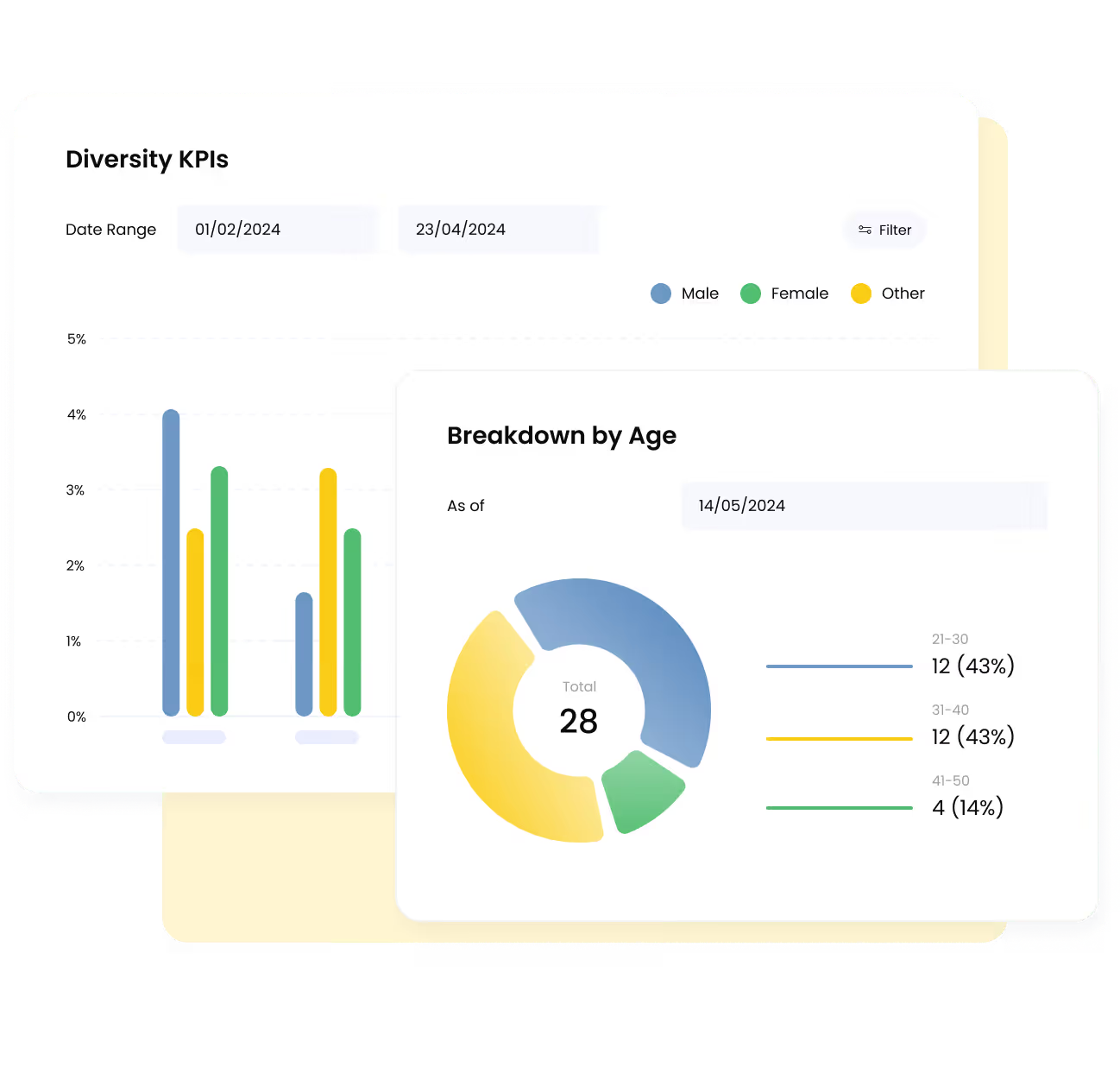
Omni’s report and analytics module tracks CPF and statutory data alongside standard workforce metrics like employee time-off usage and headcount, helping HR teams to identify patterns and prevent risks before they escalate.
“Reports that used to take 12 hours can now be generated in minutes.”
— Lovely Tan, Philippines Country Head of People at Qashier
Advanced Features That Separate Strong Platforms From Average Ones
Once your compliance baseline is covered, these capabilities determine whether your HRIS actually drives strategic value or just keeps the lights on.
Predictive analytics
The best HRIS platforms go beyond reporting historical data — they help you anticipate what's coming. Look for systems that surface turnover risk indicators, engagement signals, and workforce cost trends, giving your HR team time to act proactively rather than react.
Omni's analytics capabilities help HR teams spot early signs of disengagement and burnout before they become attrition events.
“Omni’s data allows us to be more proactive in identifying signs of burnout or disengagement.”
— Rhoanne Therese Jamelo, HR Generalist at ScaleForge
Employee experience capabilities
A strong HRIS is more than a database. It shapes how employees experience the company from day one. Look for systems that include self-service portals, onboarding workflows, pulse surveys, and performance tools in one place, rather than requiring separate platforms stitched together.
Omni unifies the full employee lifecycle with self-service portals, onboarding automation, pulse surveys, and performance reviews — all in one platform.
Integration capabilities
Your HRIS needs to connect with the tools your teams already use. Payroll integration is a given, but look further at communication tools, accounting software, and identity management. Poor HR software integration means your HR data lives in silos, which leads to errors and duplicated effort.
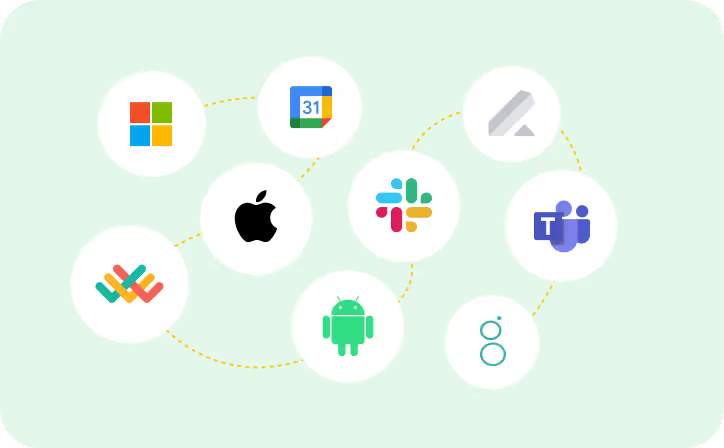
Omni integrates with Slack, Google Suite, Microsoft Teams, Xero, and 15+ other tools, so accurate HR data flows wherever your team works.
Check out Omni’s full integrations
Mobile-first design
Leave approvals, time and attendance tracking, and payslip access should be available on any device. A mobile-first HRIS removes friction for both employees and managers, especially in distributed or on-site teams.
“Once I get a notification, I can just approve from the app. Straight away, I click approve, and it’s done.”
— Wenna Lee, HR Manager at IHRP
Scalability
The HRIS you choose today should still be the right fit in three years. Assess whether the platform supports your expansion plans, including additional headcount, new countries, and more complex org structures, all without requiring a full system replacement.
Omni scales from startup to enterprise with customisable fields, automated workflows, and multi-country payroll across Singapore, Malaysia, the Philippines, Hong Kong, and Indonesia.
"What differentiates Omni is how tailored it is to Southeast Asian market needs. The platform's flexibility and the team's responsiveness have been crucial in supporting our growth journey. As we look toward expansion into the US and UK markets, we're confident that Omni will continue to evolve with us."
— Derek Tan, Head of HR at Milieu Insight
How Leading HR Software Platforms in Singapore Compare
To help you make an informed decision, here’s how Omni compares to the most commonly evaluated HRIS platforms in Singapore. Talenox, JustLogin, Info-Tech, and Payboy are among the most widely searched local providers, a useful benchmark for those evaluating Singapore HRIS.
The key differentiator is scope. Most Singapore-native HRIS platforms cover local compliance well, and that’s just the baseline. Where Omni stands apart is in covering the full employee lifecycle from recruitment to performance, and supporting multi-country operations in a single platform, at a price point built for growing APAC teams.
Find the perfect plan for your budget
Your HRIS Evaluation Framework
Use this checklist to assess any HR software platform systematically before committing to a demo or proposal.
HRIS Evaluation Checklist
Technical Capabilities
- Automates CPF, SDL, IR8A, IR21, and FWL natively
- Payroll syncs directly from employee records without manual export
- Leave, attendance, and claims are connected to payroll calculations
- Supports custom fields and configurable workflows
- Open API available for connecting to your wider tech stack
- Mobile app for both employees and managers
Compliance and Security
- PDPA-compliant data handling with audit trails
- Role-based access controls for sensitive employee data
- ISO 27001 certification or equivalent security standard
- Local data residency option available
Local Support
- Support team operates in Singapore business hours
- Response SLAs are clearly defined and contractually guaranteed
- Dedicated implementation specialist for onboarding
Track Record
- Customer case studies from Singapore businesses of similar size
- No public enforcement actions or compliance issues on record
- Recent reviews on G2 or Capterra (within the last 12 months)
Future-Proofing and Scalability
- Platform updates are regular and non-disruptive
- Configurable without vendor-side code changes
- Pricing scales affordably with headcount growth
- Multi-country support if expansion is on your roadmap
Vendor Stability
- Growing customer base with verifiable retention data
- Financial stability — look for the rule of 40 (revenue growth + profit margin > 40%)
- The product roadmap is clearly communicated and regularly updated
See why modern teams choose Omni
Why Singapore Teams Choose Omni
When you apply this framework to the available options, Omni holds up on every dimension. We are built specifically for Singapore and APAC — which means CPF, MOM, and IRAS compliance are native, not bolt-on. Our local support team knows Singapore's regulations and works in your time zone. And our platform scales across the full employee lifecycle, from onboarding through performance and payroll, without requiring separate tools.
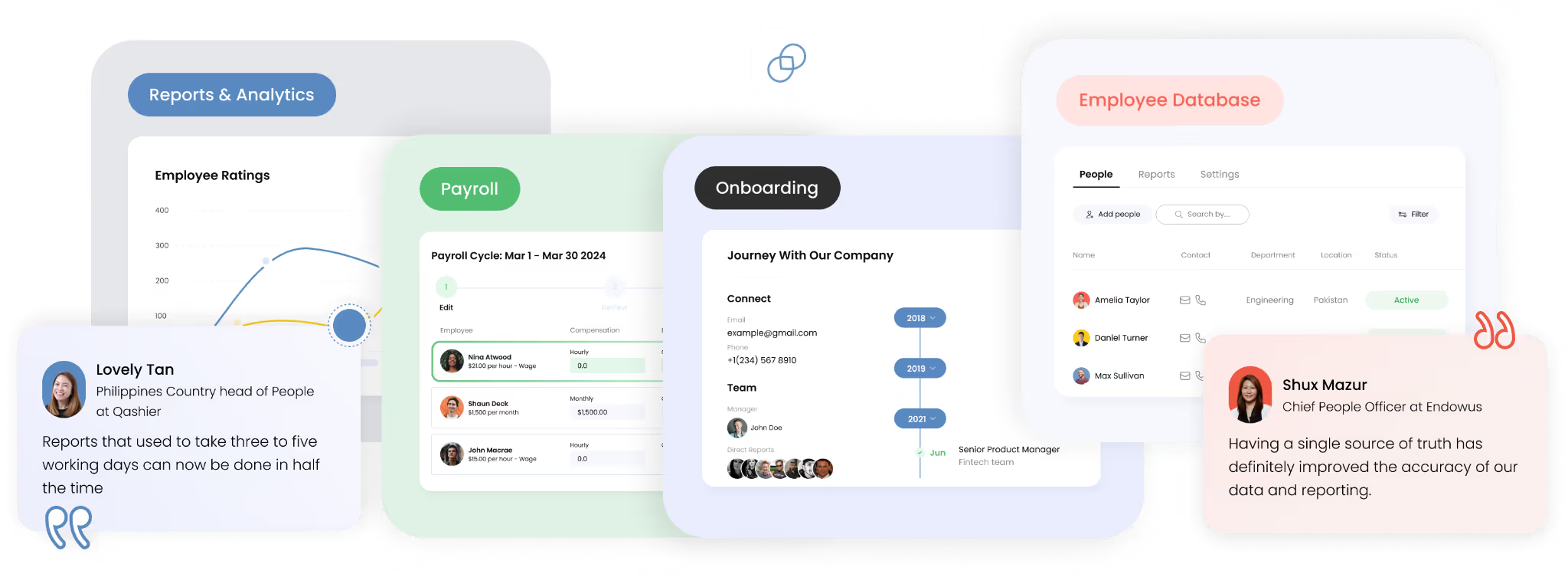
Our proven track record spans leading companies across Singapore and Asia — reducing payroll cycle time, cutting data errors, and giving HR teams the space to focus on people rather than process administration.
Ready to see Omni in action? Book a demo, and we'll walk you through exactly how we'd support your team's compliance and operational needs.
Frequently Asked Questions
1. What is HRIS, and how does it differ from HRMS?
An HRIS (Human Resource Information System) is software that centralises employee data, automates payroll, and manages compliance filings. HRMS (Human Resource Management System) is often used interchangeably, though HRMS sometimes implies a broader scope covering performance management and talent development. Most modern platforms, including Omni HR, cover both.
2. What should I look for in HR software for Singapore?
Prioritise native support for CPF, SDL, IR8A, IR21, and PDPA compliance first. From there, evaluate payroll integration, local support quality, mobile access, and scalability. A platform that handles these obligations natively saves significant time and reduces compliance risk compared to one that requires manual configuration.
3. How does a Singapore HRIS handle CPF contributions?
A compliant HRIS automatically calculates both employer and employee CPF contributions based on each employee's wage type, age band, and residency status. It generates the monthly CPF payment file for submission and updates contribution rates when the CPF Board makes changes, so your team always operates on current figures.
4. What are the most common HRIS evaluation mistakes?
The most common are evaluating on features alone without testing compliance depth, underestimating the importance of local support, and choosing a platform that fits today's headcount but lacks scalability for growth. A structured evaluation checklist covering compliance, support, track record, and future-proofing helps you avoid these gaps.
5. How long does HRIS implementation take in Singapore?
Implementation timelines vary by platform and team size. With Omni, most Singapore teams go live within four weeks, including data migration, configuration, and team training, with a dedicated implementation specialist supporting the process throughout.
6. Does Omni support multi-country HR and payroll beyond Singapore?
Yes. Omni provides full HR and payroll coverage for Singapore, Malaysia, the Philippines, Hong Kong, and Indonesia, with local support teams and built-in compliance features in each market. This makes Omni particularly well-suited for businesses expanding across APAC from a Singapore base.
.png)