.png)
Summary. In fast-growing startups, maintaining a strong feedback culture becomes increasingly difficult as teams scale, managers juggle competing priorities, and traditional reviews fail to keep up. Without structured systems, employee feedback is often inconsistent, disengagement goes unnoticed, and startup culture weakens over time. Building a scalable feedback culture requires embedding feedback into hiring and onboarding, replacing annual reviews with continuous feedback loops, enabling two-way and anonymous employee feedback, and using regular pulse surveys to track engagement. Supported by the right tools, like Omni HR, these practices help startups preserve transparency, strengthen startup culture, and turn feedback into an ongoing, actionable process rather than a one-off event.
In fast-growing SaaS startups, product velocity usually outpaces people processes. Teams expand rapidly, new hires are onboarded almost every week, and management energy is focused on shipping features. In this environment, many founders assume that company culture will materialize organically. Still, without deliberate systems, disengagement builds quietly without notice, and leaders are often blindsided by turnover that could have been prevented.
Yet as startups scale, traditional feedback approaches such as occasional check-ins or annual reviews simply cannot keep up. Leaders need consistent feedback loops, supported by tools that make it easy to collect, analyze, and act on real-time input.
This article explores how startups like yours can build a feedback culture that scales, and how platforms like Omni HR can empower teams to do this without slowing hiring or increasing the already heavy administrative burden that small HR teams face.
Why Feedback Culture Breaks During Rapid Growth
It’s very common for feedback culture to get lost or weakened as companies scale, often due to competing priorities and growing pressure.
You’re constantly hiring and onboarding new people to grow your teams. As such, your managers’ bandwidth gets stretched thin as they try to support a larger workforce. On top of that, your employees may be physically dispersed, with some working remotely and others in the office. Building a cohesive startup culture under these conditions isn’t easy.
Free resource: The Modern CEO’s Guide to Growth Through Company Culture
With these challenges, your HR team and managers are usually focused on day-to-day workforce management. As a result, they often neglect to collect early feedback from new hires and miss early signs of disengagement, which can undermine both confidence and productivity.
Instead, many teams rely on spot-check feedback and annual performance reviews. Spot-check feedback isn’t inherently bad, but because it’s spontaneous, it often leaves blind spots. Annual reviews are even less effective for fast-growing teams, where six months can feel like a lifetime. They’re simply too slow and infrequent.
Informal manager conversations and occasional check-ins aren’t enough to build a strong feedback culture in a growing startup. To scale effectively, feedback culture needs to evolve from ad hoc conversations into structured, systemized feedback loops.
Step 1: Start Feedback Before Day One
You want new hires to see feedback as expected, ongoing, and safe from the very beginning. To set that tone early:
- Introduce feedback philosophy during hiring: Explain what feedback means in your company and what it’s designed to achieve. Highlight how it balances autonomy and accountability, whether through self-evaluations, regular follow-ups, or structured check-ins that support growth rather than punishment.
- Explain feedback channels: Clearly show how feedback is exchanged at your company. This can include informal manager check-ins, one-on-one meetings, or automated pulse surveys. It’s important to test different feedback channels in advance (such as anonymous forms supported by HRIS platforms) so you can identify what works best and communicate those options clearly to new hires.
- Set the expectation: Make feedback part of the onboarding process by including it in offer letters and onboarding materials. New hires should understand your performance management approach, evaluation cycles, and what feedback will look like from the beginning.
Together, these actions help establish a feedback culture from day one by normalizing two-way feedback and reinforcing that feedback is reciprocal. This empowers both employees and managers to give and receive feedback with confidence.
In addition, positioning feedback as a core HR process prevents employees from feeling anxious or assuming they’ve done something wrong when performance conversations happen.
Step 2: Build Feedback into the Onboarding Process
When you embed the feedback culture into the onboarding process, your new hires receive real-time guidance during their ramp-up period (the time it takes them to move from new hire to full productivity).
To do this, you should:
- Schedule feedback check-ins: Plan feedback check-ins throughout onboarding, specifically at 30, 60, and 90 days. Make them part of the routine and automate them using an HRIS tool like Omni. This helps ensure onboarding goals stay on track.
- Use reflection questions: Include structured reflection questions for both managers and new hires. Managers can use these questions to guide conversations and help new hires reflect on their progress. New hires can also use them for self-reflection.
- Capture development goals early: Set clear direction from the start with structured development goals. This gives managers a baseline to compare performance against and allows them to track progress using KPIs.
Omni tip: Streamline your feedback process with ready-to-use templates. Start with Omni’s onboarding survey questions, 30-60-90 day plan template, and self-evaluation template to make collecting and giving feedback smooth and straightforward.
When feedback is consistent throughout onboarding, both managers and new hires benefit. New hires settle in faster and absorb your startup culture more smoothly, while managers can track performance, spot early warning signs, and prevent disengagement.
Clear development goals also boost motivation, shorten the learning curve, and reduce time-to-productivity, supporting continuous learning and protecting your workflow.
Step 3: Replace Annual Reviews with Continuous Feedback Loops
Rather than relying on annual employee performance reviews or rigid evaluation cycles, aim for ongoing performance conversations between employees, managers, and even peers. To build that continuous feedback loop, focus on these steps:
- Dissect goals: Break goals into achievable steps and quarterly milestones, or use sprint-based cadences. Sprint cadence is the rhythm of short, interactive cycles designed to deliver high-quality results quickly.
- Hold feedback sessions: Schedule lightweight monthly or bi-monthly one-on-one sessions. Keep them relaxed, two-way conversations that identify areas for improvement and growth.
- Diversify feedback: Avoid feedback flowing only from top to bottom. Feedback should move in all directions: upward, downward, and peer-to-peer, building a 360-degree feedback culture. Your HR tools should support this approach to assess employees across multiple perspectives.
Read more: Understanding and Implementing Stretch Goals for Employees
Continuous feedback ensures performance discussions reflect the fast-changing nature of roles in a growing startup.
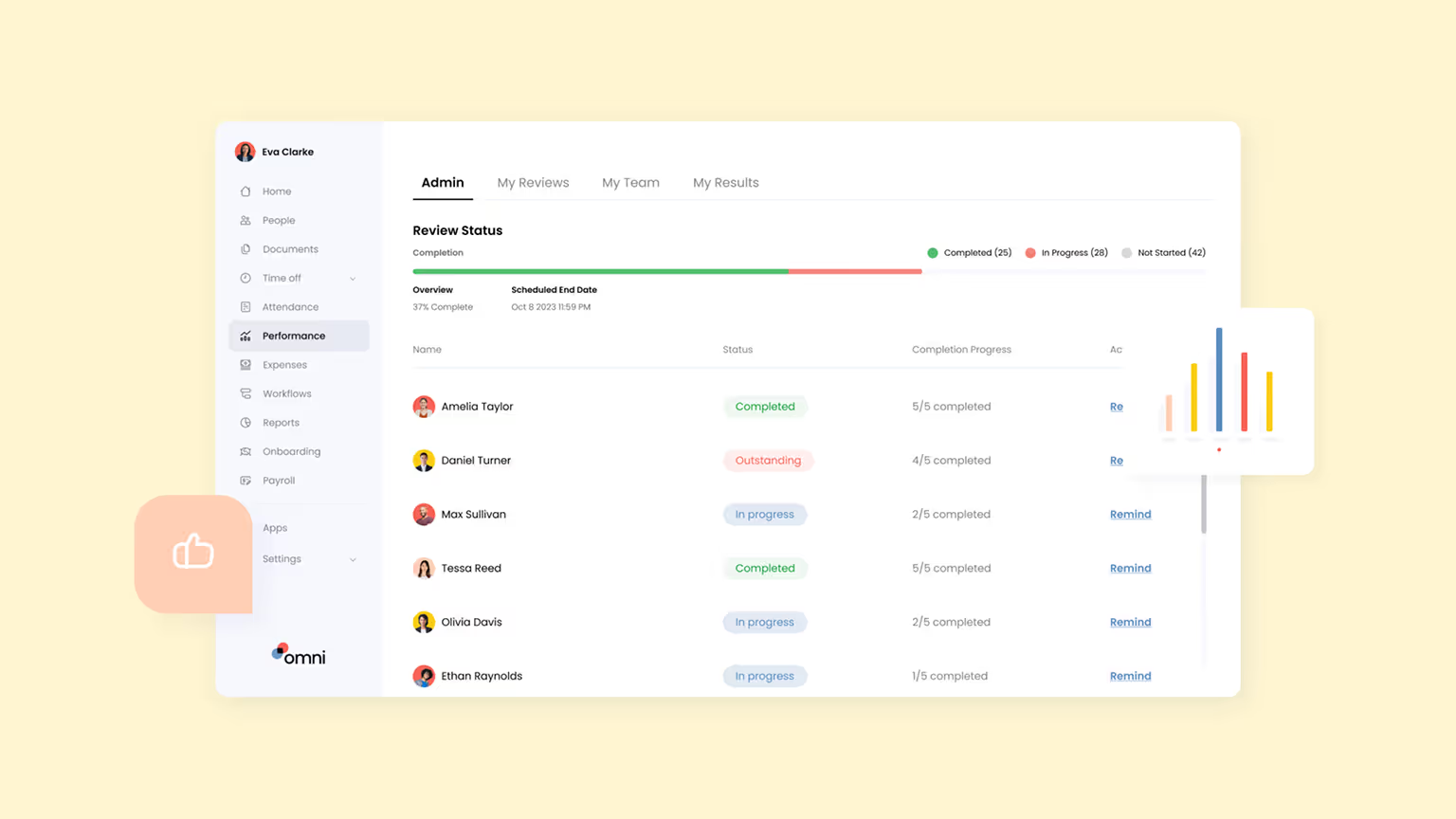
And with the help of performance management and analytics software like Omni, you get consistent updates and real-time guidance, creating a true feedback loop rather than relying on delayed evaluations. This allows check-ins to adapt as roles and company needs evolve.
Step 4: Train Managers to Deliver Actionable Feedback
To build a strong feedback culture, it’s not just about frequency. It’s also about quality. That means training managers to give actionable feedback through presentations, workshops, programs, or structured training that guide them to:
- Give specific, behavior-based feedback: Coach managers to base feedback on observable actions, behaviors, or outcomes rather than personality traits. This gives employees clear, actionable guidance for improvement.
- Frame feedback positively: Encourage managers to focus on growth opportunities rather than shortcomings, shifting the language from what employees lack to what they can improve.
- Manage difficult conversations: Provide your managers with scripts and frameworks to make difficult conversations constructive and less intimidating. This ensures managers don’t avoid giving honest feedback.
Learn more: How to Give Negative Feedback: 20 Tips That Make You a Better Leader
Along with coaching, it’s also valuable to provide discussion templates and prompts. These act as practical guides, helping managers stay on track during feedback conversations and making the process more consistent and actionable across the team.
Why does this matter? Well, untrained managers may avoid giving feedback, mishandle tough conversations, or phrase it negatively. That can damage employee morale, stall growth, and strain manager-employee relationships.
By coaching managers and standardizing the process, feedback culture programs guarantee consistency, fair treatment, and fewer unpleasant surprises for employees.
Step 5: Create an Environment for Employee Feedback
As mentioned earlier, feedback should flow both ways in a strong feedback culture. To make employees comfortable sharing their thoughts, try these strategies:
- Create anonymous feedback channels: Use anonymous forms, polls, pulse surveys, or physical and digital suggestion boxes. These create a sense of safety, prevent fear of retaliation, and encourage constructive criticism.
- Establish upward feedback: Normalize feedback from employees to managers. This can cover communication style, leadership strategies, or impact on performance, helping leaders uncover blind spots and grow.
- Reward contribution: Recognize and celebrate employees who actively participate in feedback initiatives. Highlight thoughtful input and questions to encourage others to model the behavior.
Promoting two-way communication is critical for a thriving feedback culture. A safe environment allows employees to share honest feedback without fear of repercussions. This, in turn, helps you catch disengagement early and take action, ultimately reducing turnover and boosting engagement.
Step 6: Use Satisfaction Surveys to Monitor Engagement
Long, heavy surveys can be a burden, but regular insights into engagement are critical. Short satisfaction surveys help you sense employee sentiment. Here’s how to make them effective:
- Issue pulse surveys: Send short surveys every four to eight weeks, a process that can be automated. These provide quick insights into engagement trends, inform discussion topics for check-ins, and are easy for employees to complete.
- Track trends: Use survey results alongside KPIs to analyze patterns rather than isolated data points. This allows for ongoing dialogue and helps guide decisions that improve employee satisfaction.
- Focus on actionable themes: Center surveys on areas where you can take clear action, such as manager support, workload clarity, and growth visibility.
- Manager support: Are managers providing the guidance, resources, and encouragement employees need?
- Workload clarity: Is the workload manageable, supporting work/life balance?
- Growth visibility: Are employees clear on performance metrics and growth opportunities.
Short pulse surveys can reveal morale dips early, allowing you to intervene before disengagement leads to turnover. Embedding this practice in your feedback culture ensures continuous engagement, monitoring, and timely action.
Step 7: Close the Feedback Loop with Visible Action
A feedback culture only succeeds long-term when employees see real change.
To keep them invested, make feedback lead to tangible results by doing the following:
- Share results: Highlight high-level feedback outcomes to show how employee input contributes to key goals and overall effectiveness. Tools like employee communication software and dashboards can make this visible.
- Assign ownership: Connect improvement initiatives to specific employees or teams. When employees see their contributions tied to tangible results, it motivates them and encourages others to follow suit.
- Provide updates: Use regular progress check-ins to show employees that actions are being taken based on their feedback.
Employees can disengage quickly if they feel their feedback is ignored. Closing the loop prevents feedback culture from becoming a meaningless routine.
By acting on feedback and showcasing results, employees feel heard, valued, and safe sharing their thoughts. This builds trust, reinforces engagement, and keeps teams invested in the success of your startup.
How Omni HR Supports the Process of Building a Feedback Culture
As startups scale, the challenge is rarely understanding the value of feedback; it’s maintaining consistency when teams, managers, and workflows multiply. Manual processes often break down quietly: onboarding check-ins get skipped, surveys lose momentum, and feedback becomes uneven across departments.
This is where HR infrastructure plays a supporting role. With the right systems in place, feedback stops being dependent on individual managers’ memory and becomes part of how the organisation operates day to day.
Omni HR helps startups sustain a feedback culture at scale by embedding feedback directly into core people processes:
Structured onboarding feedback workflows
Automate 30–60–90 day check-ins, self-evaluations, and manager feedback so early conversations happen on time, every time. This ensures new hires receive guidance during their most critical ramp-up period while managers gain early visibility into engagement and performance.
Always-on employee feedback and pulse surveys
Run short, automated pulse surveys to track engagement, manager support, workload clarity, and growth visibility. Omni consolidates responses into a single dashboard, making it easier for HR and leaders to spot trends, flag risks early, and prioritise action.
Flexible performance and feedback cycles
Support continuous feedback loops aligned with quarterly OKRs, sprint-based goals, or team-specific cadences, without forcing annual review structures that no longer match how startups operate.
Centralised feedback visibility
Keep onboarding feedback, survey insights, performance conversations, and development goals in one system. This reduces fragmentation and helps HR teams maintain consistency as headcount and management layers grow.
Importantly, Omni doesn’t replace leadership ownership of feedback. Instead, our platform provides the structure, automation, and visibility that make good feedback habits repeatable as your startup scales.
Without this foundation, growing teams often face:
- Late detection of disengagement
- Inconsistent manager feedback quality
- Slower employee development and higher attrition risk
A scalable feedback culture depends on both strong leadership behaviours and systems that support continuous listening, reflection, and action. For HR teams evaluating how to formalise feedback without adding administrative burden, platforms like Omni HR provide a practical way to turn feedback from intention into execution.
Book a demo with our team today to see how Omni supports your effort in building a feedback culture.