Summary. Succession planning prepares employees to step into critical roles, helping organizations maintain continuity when key people leave. It focuses on identifying high-potential talent, developing future-ready skills, and preserving institutional knowledge while supporting leadership transitions and employee growth. As businesses scale, visibility into roles, talent readiness, and development paths becomes more complex, making structured HR tools like Omni HR valuable for managing succession planning in a scalable and effective way.
At the core of any successful business are its people. Yet, key roles don’t stay filled forever. Employees move on, leadership changes, and resignations are a natural part of how organizations evolve.
At the same time, growth and organizational change can put pressure on teams and disrupt operations if they aren’t planned for. That’s where succession planning comes in. It’s a proactive way to prepare for change, fill critical positions, and maintain continuity.
In this article, we cover the succession planning definition, its importance, common misconceptions, and how to build an effective succession planning strategy.
What Is Succession Planning?

Succession planning is the process of preparing employees to step into critical roles (including leadership, technical, and specialist positions) when key people leave the organization due to retirement, resignation, or unforeseen circumstances.
Succession planning, meaning the deliberate preparation of future successors, involves:
- Identifying high-potential employees in advance
- Equipping them with the knowledge and experience needed to take on greater responsibility when the time comes
- Creating structured plans that support a smooth transition into key positions
Rather than reacting to sudden open vacancies, succession planning helps organizations prepare in advance, making transitions more structured and predictable.
Why Is Succession Planning Important?
The importance of succession planning becomes clear when considering the operational risks that arise when roles become vacant, as well as the opportunity to develop employees for future responsibilities.
A comprehensive succession plan can:
- Ensure business continuity: Even if your top employee leaves, other skilled team members are prepared to step in, allowing business to continue as usual without setbacks or reduced productivity.
- Reduce disruptions: Leadership transitions are easier to manage when successors are already trained and ready to assume their responsibilities, helping the transition remain smooth for the entire team.
- Protect institutional knowledge: When a senior manager leaves, succession planning helps preserve the institutional knowledge, expertise, and experience they’ve built, as this knowledge is passed on to employees being trained for future leadership roles.
- Improve employee engagement: When employees see clear opportunities for career growth within a succession plan, they’re more likely to feel motivated and engaged, which can also support retention.
- Supports long-term business growth: When leaders build on the work of those before them, your organization maintains continuity in values and direction, helping support and sustain long-term growth.
What Are the Key Elements of Succession Planning?
For a solid succession planning strategy, focus on the following elements:
Identifying critical roles
A strong succession plan starts with knowing which roles truly matter to business continuity.
Not every organizational position requires a succession plan, only the ones that would significantly affect operations if left vacant. Since some critical roles aren’t leadership positions, identifying them requires a structured approach:
- Consider the main challenges that may affect your business in the next few years
- Identify which positions and individuals support business continuity
- Determine which roles will be expected to maintain continuity during future challenges
- Use these insights to decide which roles to prioritize in your succession plan
Assessing internal talent and potential
Once critical roles are clear, the next step is identifying who has the potential to grow into them.
To do that, you can use evaluation methods such as:
- Simulations
- Cognitive testing
- Personality assessments
- Team-based interviews
These methods help you evaluate technical and leadership potential, assess the ability to handle complex responsibilities, and identify employees who can be mentored for key positions.
Developing future-ready skills
Identifying potential successors is only the beginning; preparing them for future responsibilities is what makes succession planning effective.
After identifying future challenges and the individuals best suited to address them, the next step is defining the capabilities they'll need.
Future-ready skills can be developed through:
- Learning and talent development programs
- Experiential strategies (such as job shadowing)
- Cross-functional moves
- Online courses and reading lists
- Approved classes or institutions
- Evaluation tasks
- Internal training materials
Knowledge transfer and mentoring
Experience and institutional knowledge often take years to build, which makes preserving them a key part of succession planning.
To protect institutional knowledge, succession planning should include:
- Collecting and documenting the expertise of key leaders and employees
- Incorporating this knowledge into training programs for potential successors
- Supporting mentoring relationships to guide skill development and readiness
Regular review and updates
Because organizations evolve, succession plans need to evolve with them.
Succession planning isn’t a one-and-done process. Plans should be reviewed and updated regularly based on:
- Organizational and business needs
- Changes in leadership roles
- The development and progress of high-potential employees
As your organization grows, development plans should expand to include a broader talent pool so the succession plan evolves alongside the business.
What Are the Key Elements of Succession Planning?
Although the terms are sometimes used interchangeably, succession planning and replacement planning describe two different approaches to managing talent and transitions.
Succession planning is a long-term, strategic, and developmental approach. Rather than reacting to vacancies, organizations identify potential successors early and support their growth over time so they’re prepared to take on key responsibilities when transitions occur. This allows leadership and operational changes to be more structured and predictable.
Replacement planning, by contrast, is a short-term, reactive approach. It focuses on filling a role as quickly as possible when it becomes vacant so that daily operations can continue. The priority is addressing the immediate gap, and there’s usually limited time to prepare or develop the replacement in advance.
Who Should Be Included in Succession Planning?
When people think about succession planning, they often picture executive, C-suite roles, but it applies to many critical positions across the organization, including:
- Senior leadership roles: Succession planning should cover CEOs, executive directors, board members, and other C-suite individuals. Filling these roles quickly with qualified leaders helps maintain employee confidence and can prevent instability that may affect company performance and investor confidence.
- Management and team leads: Critical managerial and leadership roles, unlike less essential ones, have a direct impact on daily operations and long-term goals. These positions often require specific know-how, awareness of legal and regulatory requirements, and a solid understanding of company culture and values.
- Critical technical or specialist positions: Looking across departments and levels of your organizational chart can help you spot technical or specialist roles that depend on niche skills or deep expertise. Preserving this knowledge helps maintain continuity and avoids knowledge gaps.
- High-potential employees: Identifying high-potential employees gives you a pool of people who can be developed for future key positions. These employees are often motivated to grow, understand how the organization works, and have the ability to take on more responsibility over time.
What Are Some Common Misconceptions About Succession Planning?
Succession planning is often misunderstood. Below are some of the most common misconceptions:
1. It’s only for large enterprises
Succession planning isn’t limited to large corporations. SMEs and growing businesses also depend on key individuals, and planning for transitions helps maintain stability and continuity.
For example, in a family-owned jewellery store, the business may rely heavily on long-standing customer relationships. A succession plan helps preserve those relationships when ownership or leadership transitions to the next generation.
2. It’s only an HR personnel’s job
While HR often coordinates succession planning, it requires buy-in from leaders and key employees across the organization as well. Those currently in critical roles are often best positioned to help identify and develop potential successors.
For instance, a senior manager being considered for promotion may recommend team members who can take on their responsibilities, allowing development plans to be created early.
3. It’s about finding a replacement
Succession planning goes beyond filling a vacancy. It focuses on preparing individuals over time so they’re ready to step into leadership or specialist roles when needed.
For example, when a tech startup founder identifies a potential successor, they may evaluate leadership ability, strategic thinking, and long-term readiness, not just technical skills.
4. It’s done before retirement
Waiting until retirement is near leaves little time for preparation and doesn’t account for unexpected departures.
For example, a long-tenured manager may need to leave earlier than planned. When a succession plan is already in place, trained candidates are ready to step in with minimal disruption.
5. It’s a game of speed
A fast handoff doesn't always lead to a successful transition. Identifying and developing successors early allows organizations to make more thoughtful decisions.
For instance, when a construction company executive director leaves, operations may continue smoothly, not because a replacement was found quickly, but because succession planning was in the works for two years prior.
When Should Companies Start Succession Planning?
There’s no single moment to begin succession planning, but certain signs often indicate it’s time to put a plan in place:
- Your business depends on key people: When critical responsibilities sit with a small number of employees, planning reduces the risk of disruption when those individuals move on.
- Leadership or specialised roles are hard to replace: Roles that rely on deep expertise or institutional knowledge benefit from structured knowledge transfer and preparation to avoid gaps.
- Your business is undergoing growth, expansion, or restructuring: Periods of change often create new responsibilities and leadership needs, making it important to prepare employees who can step into evolving roles.
Turning Succession Planning Into a Long-Term Strategy with Omni HR
Understanding what is succession planning goes beyond just a simple succession planning definition focused on replacing roles. At its core, succession planning meaning is about building long-term readiness by developing people, preserving organizational knowledge, and preparing the organization for change before it happens.
When used as a people-first strategy, succession planning becomes an ongoing process rather than a one-time exercise. It requires continuous visibility into key roles, employee potential, and development opportunities, especially as organizations grow and face new challenges.
However, this visibility can be difficult to maintain manually over time. As teams continue to expand and shift roles, tracking talent readiness and aligning development plans across the organization becomes increasingly complex. This is where the right HR tools make a difference.
With all-in-one HR solutions like Omni HR, teams can centralize employee and role data, obtain clear organizational insight, and support for a more structured and scalable succession planning effort as businesses grow.
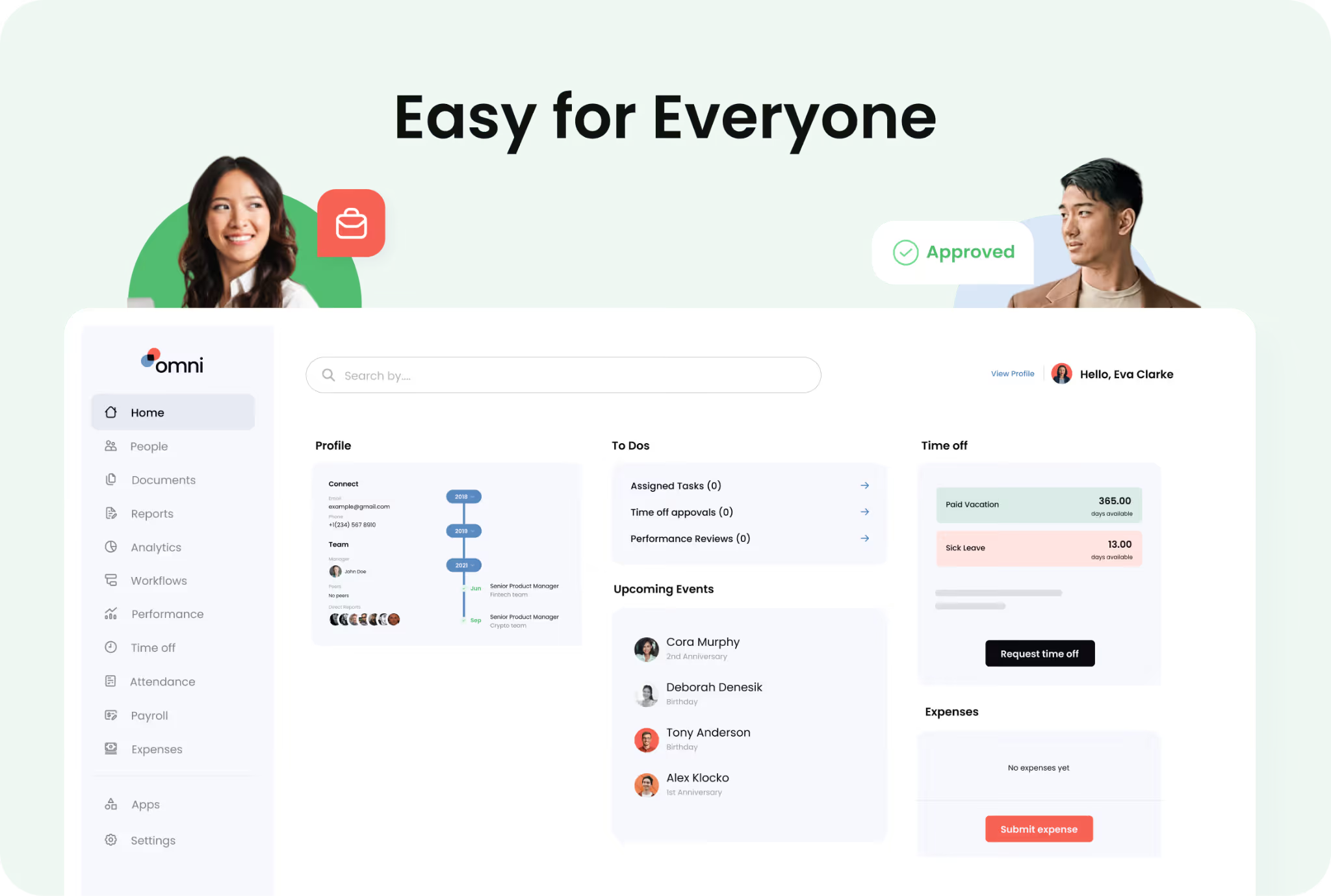
Ultimately, effective succession planning is more than just predicting who will leave, but ensuring your organization is always prepared. By combining a clear understanding of succession planning with the right HR tools like Omni HR, and a long-term mindset, organizations can build continuity, develop future leaders, and support sustainable growth. Book a demo with our team today to learn more.

At the core of any successful business are its people. Yet, key roles don’t stay filled forever. Employees move on, leadership changes, and resignations are a natural part of how organizations evolve.
At the same time, growth and organizational change can put pressure on teams and disrupt operations if they aren’t planned for. That’s where succession planning comes in. It’s a proactive way to prepare for change, fill critical positions, and maintain continuity.
In this article, we cover the succession planning definition, its importance, common misconceptions, and how to build an effective succession planning strategy.
What Is Succession Planning?

Succession planning is the process of preparing employees to step into critical roles (including leadership, technical, and specialist positions) when key people leave the organization due to retirement, resignation, or unforeseen circumstances.
Succession planning, meaning the deliberate preparation of future successors, involves:
- Identifying high-potential employees in advance
- Equipping them with the knowledge and experience needed to take on greater responsibility when the time comes
- Creating structured plans that support a smooth transition into key positions
Rather than reacting to sudden open vacancies, succession planning helps organizations prepare in advance, making transitions more structured and predictable.
Why Is Succession Planning Important?
The importance of succession planning becomes clear when considering the operational risks that arise when roles become vacant, as well as the opportunity to develop employees for future responsibilities.
A comprehensive succession plan can:
- Ensure business continuity: Even if your top employee leaves, other skilled team members are prepared to step in, allowing business to continue as usual without setbacks or reduced productivity.
- Reduce disruptions: Leadership transitions are easier to manage when successors are already trained and ready to assume their responsibilities, helping the transition remain smooth for the entire team.
- Protect institutional knowledge: When a senior manager leaves, succession planning helps preserve the institutional knowledge, expertise, and experience they’ve built, as this knowledge is passed on to employees being trained for future leadership roles.
- Improve employee engagement: When employees see clear opportunities for career growth within a succession plan, they’re more likely to feel motivated and engaged, which can also support retention.
- Supports long-term business growth: When leaders build on the work of those before them, your organization maintains continuity in values and direction, helping support and sustain long-term growth.
What Are the Key Elements of Succession Planning?
For a solid succession planning strategy, focus on the following elements:
Identifying critical roles
A strong succession plan starts with knowing which roles truly matter to business continuity.
Not every organizational position requires a succession plan, only the ones that would significantly affect operations if left vacant. Since some critical roles aren’t leadership positions, identifying them requires a structured approach:
- Consider the main challenges that may affect your business in the next few years
- Identify which positions and individuals support business continuity
- Determine which roles will be expected to maintain continuity during future challenges
- Use these insights to decide which roles to prioritize in your succession plan
Assessing internal talent and potential
Once critical roles are clear, the next step is identifying who has the potential to grow into them.
To do that, you can use evaluation methods such as:
- Simulations
- Cognitive testing
- Personality assessments
- Team-based interviews
These methods help you evaluate technical and leadership potential, assess the ability to handle complex responsibilities, and identify employees who can be mentored for key positions.
Developing future-ready skills
Identifying potential successors is only the beginning; preparing them for future responsibilities is what makes succession planning effective.
After identifying future challenges and the individuals best suited to address them, the next step is defining the capabilities they'll need.
Future-ready skills can be developed through:
- Learning and talent development programs
- Experiential strategies (such as job shadowing)
- Cross-functional moves
- Online courses and reading lists
- Approved classes or institutions
- Evaluation tasks
- Internal training materials
Knowledge transfer and mentoring
Experience and institutional knowledge often take years to build, which makes preserving them a key part of succession planning.
To protect institutional knowledge, succession planning should include:
- Collecting and documenting the expertise of key leaders and employees
- Incorporating this knowledge into training programs for potential successors
- Supporting mentoring relationships to guide skill development and readiness
Regular review and updates
Because organizations evolve, succession plans need to evolve with them.
Succession planning isn’t a one-and-done process. Plans should be reviewed and updated regularly based on:
- Organizational and business needs
- Changes in leadership roles
- The development and progress of high-potential employees
As your organization grows, development plans should expand to include a broader talent pool so the succession plan evolves alongside the business.
What Are the Key Elements of Succession Planning?
Although the terms are sometimes used interchangeably, succession planning and replacement planning describe two different approaches to managing talent and transitions.
Succession planning is a long-term, strategic, and developmental approach. Rather than reacting to vacancies, organizations identify potential successors early and support their growth over time so they’re prepared to take on key responsibilities when transitions occur. This allows leadership and operational changes to be more structured and predictable.
Replacement planning, by contrast, is a short-term, reactive approach. It focuses on filling a role as quickly as possible when it becomes vacant so that daily operations can continue. The priority is addressing the immediate gap, and there’s usually limited time to prepare or develop the replacement in advance.
Who Should Be Included in Succession Planning?
When people think about succession planning, they often picture executive, C-suite roles, but it applies to many critical positions across the organization, including:
- Senior leadership roles: Succession planning should cover CEOs, executive directors, board members, and other C-suite individuals. Filling these roles quickly with qualified leaders helps maintain employee confidence and can prevent instability that may affect company performance and investor confidence.
- Management and team leads: Critical managerial and leadership roles, unlike less essential ones, have a direct impact on daily operations and long-term goals. These positions often require specific know-how, awareness of legal and regulatory requirements, and a solid understanding of company culture and values.
- Critical technical or specialist positions: Looking across departments and levels of your organizational chart can help you spot technical or specialist roles that depend on niche skills or deep expertise. Preserving this knowledge helps maintain continuity and avoids knowledge gaps.
- High-potential employees: Identifying high-potential employees gives you a pool of people who can be developed for future key positions. These employees are often motivated to grow, understand how the organization works, and have the ability to take on more responsibility over time.
What Are Some Common Misconceptions About Succession Planning?
Succession planning is often misunderstood. Below are some of the most common misconceptions:
1. It’s only for large enterprises
Succession planning isn’t limited to large corporations. SMEs and growing businesses also depend on key individuals, and planning for transitions helps maintain stability and continuity.
For example, in a family-owned jewellery store, the business may rely heavily on long-standing customer relationships. A succession plan helps preserve those relationships when ownership or leadership transitions to the next generation.
2. It’s only an HR personnel’s job
While HR often coordinates succession planning, it requires buy-in from leaders and key employees across the organization as well. Those currently in critical roles are often best positioned to help identify and develop potential successors.
For instance, a senior manager being considered for promotion may recommend team members who can take on their responsibilities, allowing development plans to be created early.
3. It’s about finding a replacement
Succession planning goes beyond filling a vacancy. It focuses on preparing individuals over time so they’re ready to step into leadership or specialist roles when needed.
For example, when a tech startup founder identifies a potential successor, they may evaluate leadership ability, strategic thinking, and long-term readiness, not just technical skills.
4. It’s done before retirement
Waiting until retirement is near leaves little time for preparation and doesn’t account for unexpected departures.
For example, a long-tenured manager may need to leave earlier than planned. When a succession plan is already in place, trained candidates are ready to step in with minimal disruption.
5. It’s a game of speed
A fast handoff doesn't always lead to a successful transition. Identifying and developing successors early allows organizations to make more thoughtful decisions.
For instance, when a construction company executive director leaves, operations may continue smoothly, not because a replacement was found quickly, but because succession planning was in the works for two years prior.
When Should Companies Start Succession Planning?
There’s no single moment to begin succession planning, but certain signs often indicate it’s time to put a plan in place:
- Your business depends on key people: When critical responsibilities sit with a small number of employees, planning reduces the risk of disruption when those individuals move on.
- Leadership or specialised roles are hard to replace: Roles that rely on deep expertise or institutional knowledge benefit from structured knowledge transfer and preparation to avoid gaps.
- Your business is undergoing growth, expansion, or restructuring: Periods of change often create new responsibilities and leadership needs, making it important to prepare employees who can step into evolving roles.
Turning Succession Planning Into a Long-Term Strategy with Omni HR
Understanding what is succession planning goes beyond just a simple succession planning definition focused on replacing roles. At its core, succession planning meaning is about building long-term readiness by developing people, preserving organizational knowledge, and preparing the organization for change before it happens.
When used as a people-first strategy, succession planning becomes an ongoing process rather than a one-time exercise. It requires continuous visibility into key roles, employee potential, and development opportunities, especially as organizations grow and face new challenges.
However, this visibility can be difficult to maintain manually over time. As teams continue to expand and shift roles, tracking talent readiness and aligning development plans across the organization becomes increasingly complex. This is where the right HR tools make a difference.
With all-in-one HR solutions like Omni HR, teams can centralize employee and role data, obtain clear organizational insight, and support for a more structured and scalable succession planning effort as businesses grow.

Ultimately, effective succession planning is more than just predicting who will leave, but ensuring your organization is always prepared. By combining a clear understanding of succession planning with the right HR tools like Omni HR, and a long-term mindset, organizations can build continuity, develop future leaders, and support sustainable growth. Book a demo with our team today to learn more.
Full HR & Payroll coverage for Philippines, Singapore, Malaysia, Hong Kong, and Indonesia. Each market has local support teams and built-in compliance features.
Starting at $3/employee/month for core features. Volume-based discounts are available for growing teams. Book a demo for custom pricing.
Enterprise-grade security with ISO 27001, GDPR certifications, and local data residency options.
4 weeks average. Includes free data migration, setup, and team training. No hidden fees.
Built specifically for Asia with local payroll processing, same-day support in Asia time zones, and 40% lower cost than global alternatives.