
















.png)
Summary. Manual reporting and fragmented systems slow HR teams down, create costly errors, and prevent leaders from acting on critical workforce insights. With Omni’s HR data analytics software, you gain a single source of truth across payroll, performance, and headcount data; plus customizable dashboards and predictive people analytics that drive smarter decisions. Unlike legacy tools, Omni is built for modern, growing APAC teams, offering local compliance, same-day support, and scalable automation. Just like IHRP, which saved 48% on HR software costs and cut admin time by 30%, you can transform analytics into a competitive advantage. It’s time to move beyond spreadsheets and see how Omni helps with aligning talent strategy with business strategy while unlocking measurable ROI.
As an HR leader, you’re no stranger to challenges like low morale, performance gaps, and turnover. These trends signal deeper workforce issues that demand rapid attention. However, making sense of them through manual reporting is a Herculean task. Errors in payroll, headcount, or performance tracking can drain time, increase your workload, and also stall business growth.
Already, Paseur estimates manual data entry costs businesses an average of $28,500 per employee annually—a staggering financial risk. It’s no wonder more companies are turning to HR data analytics software, with the global market projected to reach $9.9 billion by 2032.
These platforms consolidate workforce data, deliver real-time insights, and track Key Performance Indicators (KPIs) to support better talent management decisions. If you’re weighing the move from spreadsheets to dedicated people analytics, this article shows you why the switch matters and how the right tools, like Omni, can help you with aligning talent strategy with business strategy.
Why Manual Analytics Fail Strategic Talent Alignment
Manual systems pose complex challenges for HR teams. Here’s a look at these pain points and their impact on business operations:
HR burnout
Manual systems create heavy, repetitive workflows that drain HR teams. Long hours spent juggling spreadsheets to track attendance, calculate payroll, update records, and review performance only increase this stress and the risk of errors. However, HR data analytics software alleviates this burden, enabling HR teams to shift their focus from repetitive tasks to strategic work.
Read next: Practical Approaches to Employee Burnout Signs
Slower decision-making
Manual HR analytics tools are time-consuming, slow, and make it difficult to track and analyze workforce data. This hinders productivity and delays workforce planning, as HR teams struggle to gather and share accurate insights with stakeholders. Without timely data on trends like turnover or performance, leaders are left guessing, which makes it harder to make strategic decisions or spot opportunities for improvement.
Costly errors
Manual processes for human capital management are error-prone, and even small mistakes in headcount, salary, or performance data can trigger costly issues like incorrect payments or compliance breaches. These discrepancies affect payroll, eat into your bottom line, and damage employee trust. For example, overpaying staff can lead to financial losses, while understaffing critical roles can slow business performance. And as your company expands across borders, manual processes become increasingly difficult to manage, creating more inefficiencies that can cost you.
Data silos
Manual analytics lack a centralized system for handling sensitive employee data, such as tax details, salaries, work hours, and payments. This forces HR teams to rely on multiple tabs, paperwork, or spreadsheets to track payslips, tax reports, and attendance. When data is spread across systems, it becomes a struggle to analyze and integrate them with payroll, HR, and accounting platforms.
These silos often lead to payment errors, duplicate entries, and missed talent insights into workforce trends. The impact goes beyond inefficiency—you risk incurring compliance fines, payroll disputes, aggrieved employees, and reputational damage, while your competitors gain a strategic advantage.
Security risks
Manual systems lack robust security measures, which leaves sensitive employee information vulnerable to data breaches, unauthorized access, and cyberattacks. They also put companies at risk of violating data protection laws such as Singapore’s Personal Data Protection Act (PDPA). The financial consequences—regulatory fines, lawsuits, and even fraud—can be severe.
Additional reading: Compliance Without Complexity: Managing Multi-Country HR Operations
How Modern Analytics Tools Enable Strategic Alignment
HR data analytics software supports strategic alignment by providing these perks:
Real-time reporting
HR data analytics software pulls data from integrated HR systems, such as payroll, ATS, and performance management tools, to provide insights into workforce needs. It also regularly updates dashboards as new information becomes available.
Instead of waiting weeks for manual compilation, HR leaders can instantly track key metrics like overtime, headcount, turnover, absenteeism, and employee satisfaction. This real-time visibility saves time, reduces errors, and aligns decision-making with business goals.
Automation
HR data analytics software saves time and reduces manual errors when processing employee data. For example, it keeps payroll calculations correct and aligned with the latest tax laws and regulations. HR analytics also have inbuilt legal updates, real-time compliance alerts, and automatically sync payroll activities with regulatory changes. This keeps current, so your team doesn’t have to update systems manually or incur fines and penalties.
Predictive insights
HR data analytics software uses statistical methods to analyze data, spot trends, and provide insights into workforce activities. For instance, by examining past performance and engagement data, your HR team can forecast employee performance, identify top performers, and detect issues like low morale or well-being challenges. These insights help you take proactive steps to close performance gaps before they escalate.
Improved company culture
Insights from HR data analytics software help to build a healthier, more productive workplace culture. You can identify issues like low morale and employee dissatisfaction before they lead to turnover or reputational damage. This proactive approach strengthens employee engagement, boosts productivity, and builds employee trust in the organization.
Choosing HR Data Analytics Software for Your Talent Strategy
When selecting HR data analytics software, the right features make all the difference in aligning talent strategy with business strategy. Today’s businesses need tools that do more than just automate processes. It should provide a deeper dive into people analytics and inform workforce planning and decision-making.
Here are the core features to look out for when choosing HR data analytics software:
- Unified data integration: Ensure the tool combines data from HR, payroll, ATS, and accounting systems into a single platform for accuracy and seamless flow.
- Real-time reporting and dashboards: Your people analytics must provide visibility into workforce metrics, such as time-to-hire, headcount, and cost-per-hire, for quicker decision-making.
- Predictive analytics: Use AI-driven insights to forecast workforce trends like skill gaps, attrition, or engagement levels. This supports both workforce planning and AI talent acquisition strategies.
- Performance management: The tool should help HR teams evaluate employee performance and link results to business outcomes, ensuring the right people are in the right roles.
- Compliance tracking: Look for built-in compliance alerts that flag discrepancies in payroll, tax, or other workforce activities to avoid regulatory risks.
- Local support: Look for HR data analytics software that offers dedicated account managers, localized training materials, and multi-language preferences for smooth adoption and timely issue resolutions.
How Omni Aligns Talent Strategy with Business Goals
Omni HR is a comprehensive HR data analytics software designed for modern, growing APAC teams, aligning talent strategy with business strategy. Where legacy systems feel clunky and separated, Omni brings together the entire employee lifecycle into one intuitive platform that scales alongside your needs.
Unified data for smarter decisions

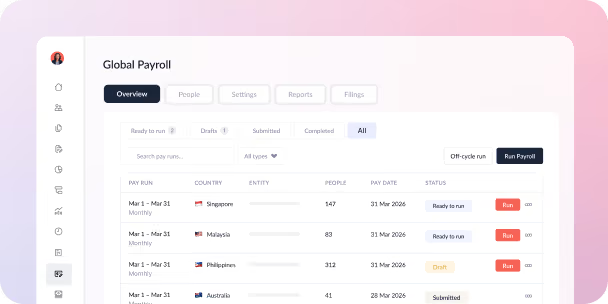
With Omni, you get payroll, attendance, performance data, and employee records in a single platform. Our centralized database creates a reliable source of truth for headcount, costs, and turnover metrics.
“Omni provided IHRP with a unified platform that integrated all essential HR functions into a single system. From employee profiles and performance management to leave tracking and payroll, all IHRP employee data now lives in one centralized and easily accessible location.”
— Wenna Lee, HR Manager at IHRP
Custom dashboards and real-time reporting
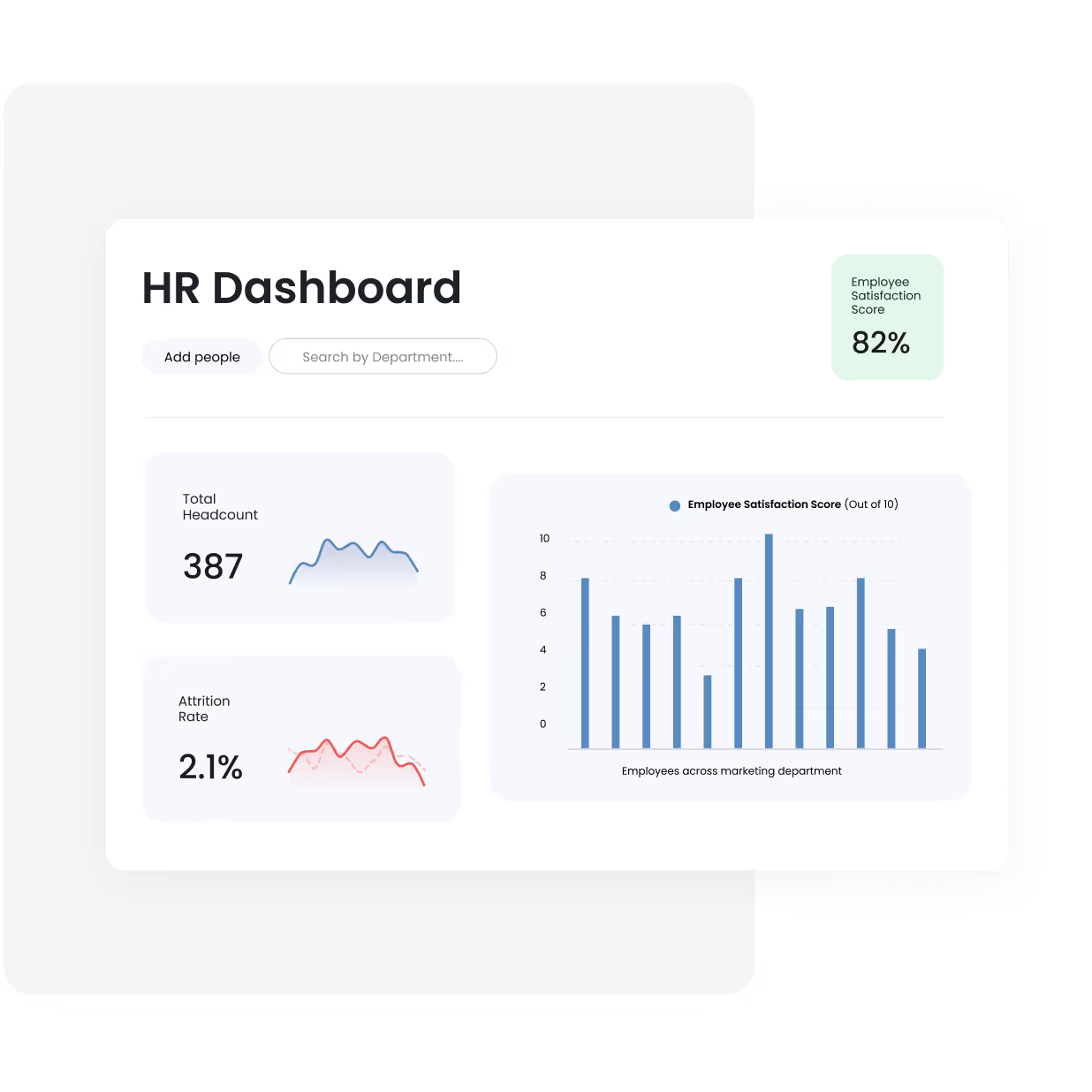
Omni makes reporting instant. Our reports and analytics empower HR leaders to generate insights in minutes with export-ready reports and customizable dashboards. Whether you need to track diversity KPIs, attrition, cost-per-hire, headcount or performance trends, Omni gets you the data when you need it.
“[With Omni,] reports that used to take 12 hours can now be generated in minutes.”
— Lovely Tan, Philippines Country Head of People at Qashier
Compliance and audit-ready analytics
Built for distributed teams, Omni automates payroll and statutory reporting for 190+ countries with support for 10+ languages. Audit-ready analytics ensure that every payroll cycle, tax filing, and benefit calculation meets local compliance requirements.
How IHRP Transformed HR with Omni
IHRP (Institute for Human Resource Professionals) struggled with fragmented systems that made the reporting process slow, rigid, and costly. HR data was spread across four platforms, preventing a unified and accurate view of employee performance, demographics, and compliance metrics.
By switching to Omni’s HR data analytics software, they:
- Consolidated all HR functions into one system, eliminating data silos and giving instant visibility into workforce data.
- Built flexible custom dashboards to track headcount, attrition, and DEI metrics without paying extra.
- Introduced continuous performance tracking, allowing managers to monitor OKRs and provide support when needed instead of waiting for year-end reviews.
- Saved 48% on HR software costs and cut admin time by 30% through automation and mobile approvals.
“Omni's flexible reporting capabilities empower IHRP to create custom analytics dashboards, pull employee demographic breakdowns, and generate performance trend analyses with just a few clicks. Unlike previous vendors that charged fees for every data modification or custom report request, Omni's flexible system allows unlimited reporting configurations without additional costs.”
— Wenna Lee, HR Manager at IHRP
Read more: IHRP Achieves 48% Cost Savings with Omni’s Streamlined HR Operations
Join our customers like IHRP and unlock success with Omni’s HR data analytics software. With Omni, you can move beyond multiple systems and gain a truly unified, real-time view of your workforce. From customizable dashboards to predictive people analytics, Omni helps you align talent strategy with business strategy while ensuring compliance across APAC and beyond.




.avif)
.avif)