.png)
Summary. Onboarding seasonal employees during peak travel seasons places intense pressure on hospitality HR teams due to short hiring timelines, large intake volumes, and inconsistent processes across outlets. Manual contracts, fragmented communication, and manager-led onboarding slow time-to-productivity and increase administrative burden. Streamlining onboarding through automated workflows, standardized checklists, mobile self-onboarding, and scalable digital training helps ensure consistent compliance and training quality while reducing HR and manager workload. Centralizing visibility into contract status, documentation, training completion, and staffing readiness enables hospitality teams to manage seasonal hiring surges more predictably and maintain service standards across all locations.
As hospitality businesses rapidly scale headcount for peak travel seasons, traditional onboarding processes often become a major operational bottleneck. Manual employment contracts, last-minute onboarding sessions, and poor communication across locations slow down time-to-productivity and create inconsistent employee experiences.
Efficiently onboarding seasonal employees requires more than just hiring quickly. It demands a consistent onboarding process that delivers paperwork, training, and workplace orientation at scale, without overwhelming the HR team or outlet managers.
In this article, we share five proven operational strategies that can help reduce onboarding time while maintaining quality training and creating positive new-hire experiences.
Unique Challenges of Onboarding Seasonal Employees
Hospitality seasonal hiring puts all the HR already has to work in a shorter, more unmanageable frame. The outcome varies from operational pressure to the actual danger of underprepared employees starting their shifts.
Here are some of the difficulties of onboarding seasonal employees:
- Short hiring windows to meet peak demand: Teams have to employ, check documents, and onboard within a short time to prevent staff shortage during peak times.
- Large volumes of new staff arriving simultaneously: Multiple outlets receive dozens of hires at once, which stretches HR and managers beyond capacity.
- Temporary workers unfamiliar with hospitality operations: A big number of seasonal workers are part-time employees or students who have little experience in the industry and would need more structured training.
- Variation between outlets causes inconsistent onboarding delivery: The process of running onboarding is varied in each outlet, and it is hard to make the expectations and quality of training.
- High administrative burden on HR and managers: Every piece of paperwork, contract, ID verifications, uniform distribution, schedule planning, and training placements pile up quickly and can burden the team involved in onboarding.
Learn more: 8 Key Onboarding Documents for Your New Hire Journey
5 Ways to Onboard Seasonal Employees
If you want faster onboarding of seasonal employees without sacrificing quality, we have 5 solid ways to guide you:
1. Automate candidate-to-contract workflows
Seasonal hiring usually happens under intense time pressure. HR teams are chasing contracts, answering repeated questions, or manually tracking who has submitted what. Automating this flow removes the friction that slows down hiring during peak periods.
Automation ensures every candidate moves from offer to contract to onboarding forms without HR having to push each step manually. Instead of printing contracts, scanning passports, emailing attachments, or fixing signature errors, everything becomes a guided, digital workflow. Seasonal employees receive their documents instantly, sign electronically, and submit what HR needs before their first shift.
This compresses turnaround time, reduces the chase in onboarding seasonal employees, and also ensures compliance because no one can skip mandatory documentation.
.avif)
Omni centralizes document management, automates contract issuance, and provides secure e-signatures. Every seasonal hire completes the required forms within a workflow, giving HR full visibility into who is ready to start and who still has outstanding requirements.
2. Build a standardized onboarding checklist across all locations
When onboarding varies from outlet to outlet, you lose control over training quality. One location might provide a safety briefing, while another forgets. Another might skip orientation entirely because of a busy lunch rush. Seasonal hires end up with wildly different levels of preparedness.
A standardized checklist for onboarding seasonal employees solves this by harmonizing how every new employee enters the business. A universal template can cover:
- Document submission and compliance checks
- Workplace and facilities orientation
- Access to internal systems (POS, time-tracking, scheduling tools)
- Mandatory safety and hygiene briefings
- Brand and service expectations
This structure protects training quality across locations while freeing outlet managers from reinventing the process every time a new cohort arrives.
Get my employee onboarding checklist
3. Enable mobile self-onboarding
Most seasonal workers are on the move; they are students, part-timers, temporary hires, or people juggling multiple commitments. Expecting them to print documents or come on-site only to fill out forms creates unnecessary delays.
Mobile self-onboarding shifts the workload away from HR by letting employees complete everything from their phones. They can:
- Upload IDs and certifications using their phone cameras
- Fill out personal data forms before Day 1
- Access welcome materials or training modules remotely
- Sign documents without visiting the office
For hospitality businesses, this removes long Day 1 queues and cuts down follow-up from HR. Employees arrive ready to work rather than spending the first morning on admin.
Employers can also better prepare for shifts and improve onboarding seasonal employees experience for younger, mobile-first workers.
With Omni’s mobile app, your seasonal employees can self-onboard independently. They can upload documents, view payslips, update personal information, apply for leave, and complete key tasks without relying on a laptop or HR administrator.
4. Scale training without overloading managers
During peak season, it’s not uncommon for a single outlet to onboard 20, 50, or even 100 new employees within a short time. Running repeated in-person training sessions becomes impossible. Managers become overstretched, and training quality suffers when onboarding seasonal employees.
Digitizing core training modules is the fastest way to scale. Short microlearning videos, role-specific induction content, and standard SOP walkthroughs help new hires ramp up quickly without needing a manager present each time.
Tracking training status then becomes important as managers and HR need to know who has completed mandatory modules before allowing them on the floor.
Omni helps HR track training completion and onboarding tasks in one place. Managers get a clear report of who has finished their required modules and who still needs follow-up, ensuring new hires are compliant and confident before their first shift.
“Once you have instituted it, it goes on autopilot. The next new hire that comes in gets added to the workflow, and that's it – everything is ready to run off autopilot through Omni.”
— Wenna Lee, HR Manager at IHRP
5. Centralize hiring and readiness tracking
When onboarding data lives in spreadsheets, email threads, or private chats, HR loses control. There’s no single source of truth for who has signed their contract, who has submitted their documents, who has completed training, or which outlet is fully staffed for the season.
Centralizing these insights is necessary for onboarding seasonal employees. A real-time dashboard helps HR and operations leaders see:
- Contract status for each new hire
- Outstanding documentation
- Training completion and compliance
- Outlet-level staffing readiness
- Bottlenecks slowing down deployment
This visibility enables faster decision-making and provides more predictable staffing as peak season approaches.
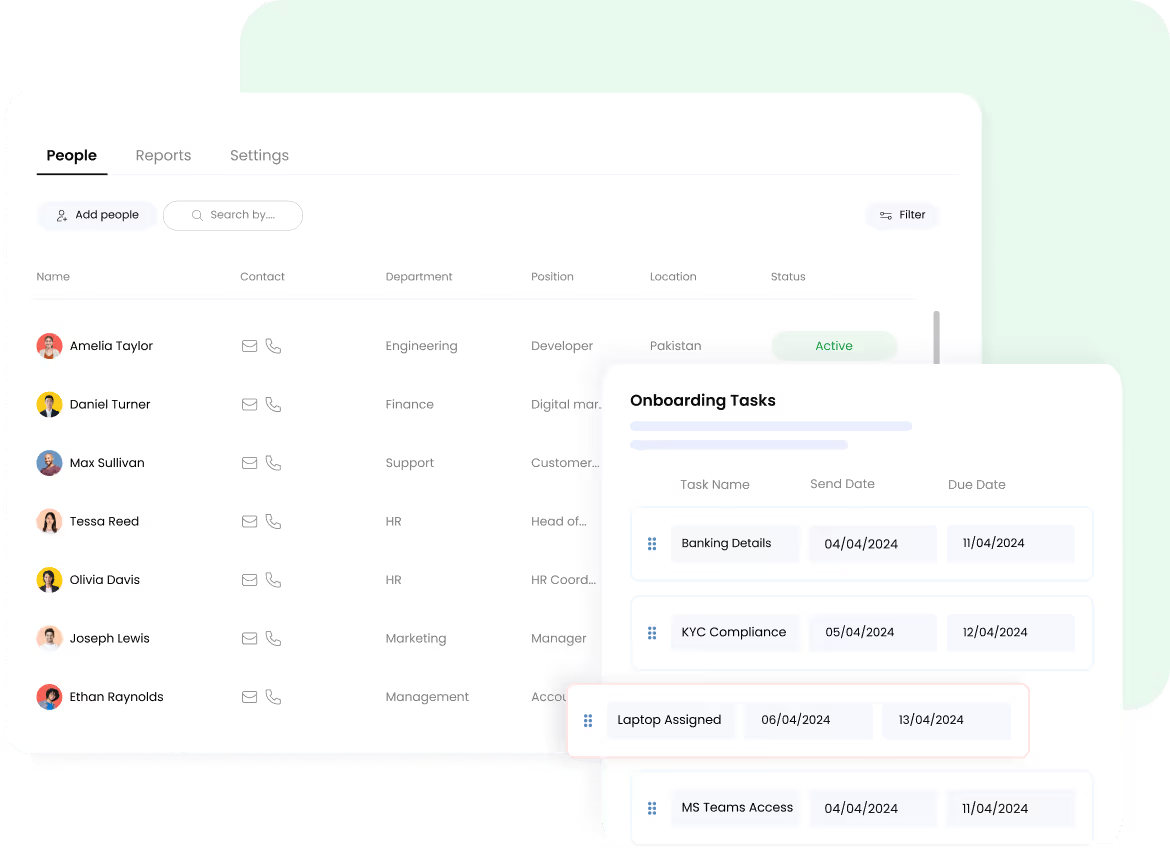
With Omni, you can consolidate all onboarding data in one dashboard. HR and outlet managers can track progress across locations, identify gaps, and ensure employee onboarding is accurately done. Your guesswork reduces, scheduling accuracy improves, and you can protect service quality across your entire hospitality network.
Framework for Onboarding Seasonal Employees
Day 0 (Pre-Start Preparation)
- Digitally issue contracts and onboarding forms
- Enable mobile self-onboarding for document submission
- Assign online induction modules
Day 1 (Operational Readiness)
- Confirm documentation completion
- Deliver short, standardized role orientation
- Provide system access and shift schedules
- Conduct on-site safety briefings
Day 2–7 (Training & Integration)
- Complete required training modules
- Pair new hires with shift buddies
- Track progress via centralized dashboards
- Validate job readiness across outlets
Free resource: New Hire Training Plan Template
Preparing Your HR Team for the Next Peak Travel Season
Preparing for peak travel seasons highlights the clear difference between reactive onboarding and system-driven onboarding when onboarding seasonal employees at scale. Manual processes may work during off-peak periods, but they can quickly break down under hiring surges, creating delays, inconsistent training, and unnecessary strain on HR and outlet managers.
Investing in scalable, standardized onboarding processes delivers long term value by reducing admin burden, improving training consistency, and accelerating time-to-productivity for seasonal staff.
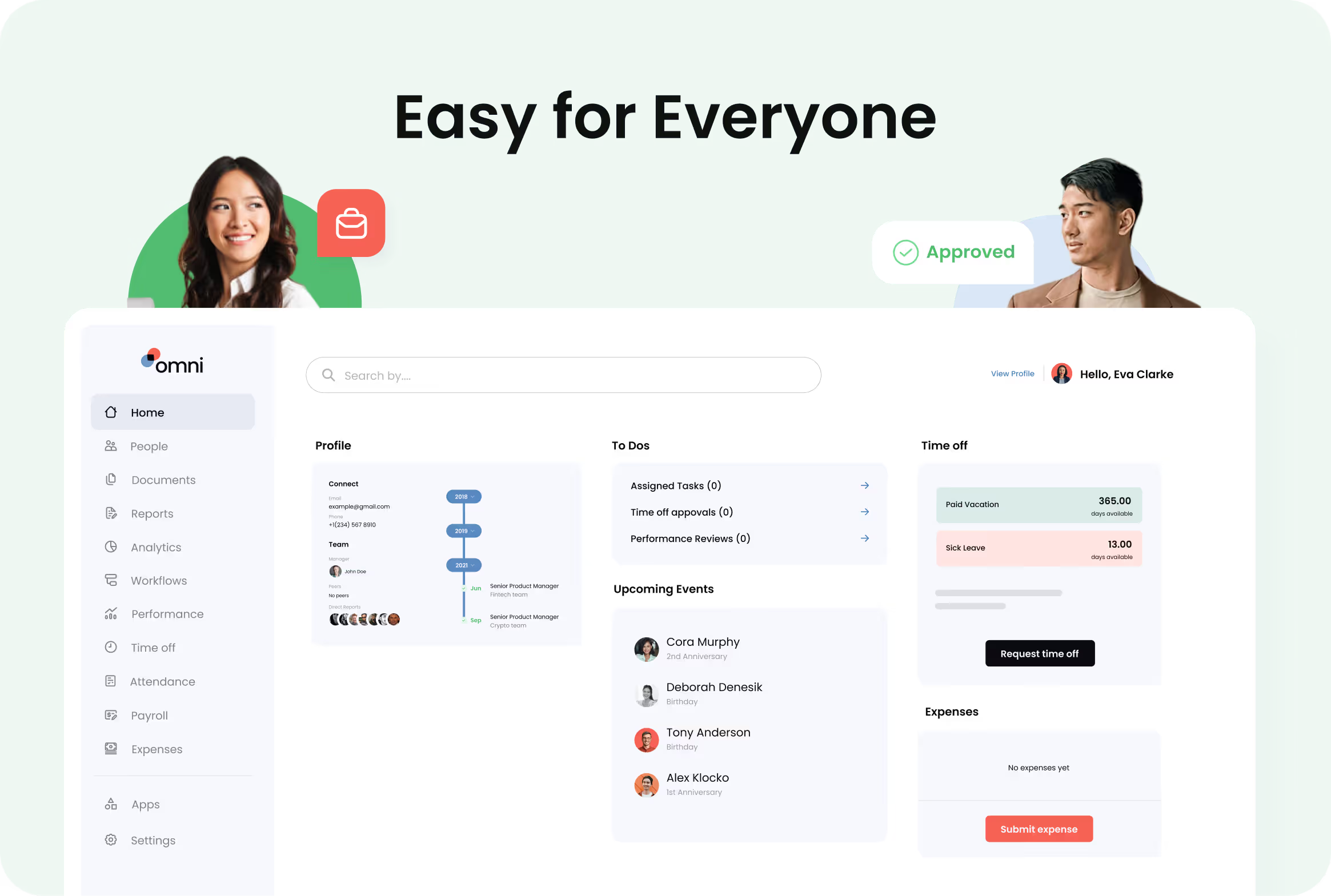
Hospitality teams onboarding seasonal employees can rely on platforms like Omni HR to manage seasonal hiring surges confidently by centralizing onboarding workflows, documentation, and staff training under one system. See how Omni helps onboard seasonal employees faster without sacrificing quality.
.png)


.png)