














.png)
Summary. Malaysia's evolving labour laws — from EPF and SOCSO obligations to the 2022 Employment Act amendments — have made compliance increasingly complex for HR teams relying on spreadsheets and disconnected tools. A modern HR system in Malaysia automates statutory contributions, manages the full employee lifecycle, and supports hybrid workforces from a single platform. This guide explains what separates HR software, HRIS, and HRMS, covers why Malaysian businesses need a modern system, and compares the top six options for 2027 — with an honest look at features, pricing, and who each platform is best for.
An HR system is a software platform that centralizes and automates the core functions of managing your workforce — from hiring and onboarding to payroll, compliance, leave, performance, and analytics. In Malaysia, that comes with a specific statutory layer that trips up a lot of growing businesses. Every employer is legally required to calculate and remit contributions to EPF, SOCSO, EIS, and HRDF each month, on top of PCB — the monthly income tax deduction that goes directly to LHDN. Get any of these wrong and the consequences are real. A 2025 report by YYC Advisors found that nearly 20% of audited Malaysian SMEs faced PCB-related penalties averaging RM10,000 per case.
At the same time, Malaysia's Employment Act 1955 — which governs leave entitlements, overtime, and termination requirements — was significantly updated in 2022, changing overtime eligibility thresholds, extending paternity leave, formalizing flexible work arrangements, and strengthening protections for employees on maternity leave. Businesses that haven't updated their policies and payroll systems to reflect these amendments are operating with compliance gaps they may not even be aware of.
Beyond compliance, 92% of companies globally now run hybrid work programmes. For Malaysian HR teams, that means managing attendance, leave, and payroll accurately across multiple locations — which is nearly impossible without the right system.
Research and Markets projects Malaysia's core HR software market will grow 9.7% annually through 2030. Whether you're evaluating your first proper HR system or outgrowing the one you have, here's an honest look at what the market actually offers in 2027.
What is an HR System? HR Software, HRIS, and HRMS Explained
The terms HR software, HRIS, and HRMS are often used interchangeably — but they mean different things, and the distinction matters when you're evaluating what your business actually needs.
HR software
HR software is the umbrella term for any digital tool that manages HR-related tasks. It covers everything from standalone payroll apps and leave tracking tools to recruitment platforms and attendance systems. HR software can be single-purpose or all-in-one. A dedicated payroll tool is HR software. So is a full platform that manages your entire workforce. The category is broad — what matters is whether a given tool covers the specific functions your team needs.
HRIS (Human Resources Information System)
An HRIS focuses on administrative efficiency and data management. It acts as a centralized employee database — storing employment contracts, salary records, leave balances, statutory contribution histories (EPF, SOCSO, EIS, PCB), and personal information in one secure, accessible place. Most HRIS platforms also handle payroll processing and basic leave management. If your primary need is clean, accurate employee records and reliable statutory compliance, an HRIS is the right category to evaluate.
HRMS (Human Resource Management System)
An HRMS is a more comprehensive, strategically capable system. It includes everything an HRIS does, plus advanced functionality: performance management, goal tracking, employee engagement surveys, learning and development, and workforce analytics. If you need a platform that supports not just HR operations but HR strategy — helping you develop people, manage performance, and make data-driven decisions — an HRMS is what you're looking for.
So which do you actually need? If you're a growing Malaysian business that primarily needs payroll compliance, leave management, and clean employee records, an HRIS covers you. The moment you need performance management, recruitment tools, and workforce analytics in the same system — that's when you're looking at an HRMS. Omni HR is built as a full HRMS, combining all of the above in one platform designed specifically for the APAC market.
Read next: How HRIS Supports Compliance and Risk Management for FinTechs →
Why Malaysian Companies Need a Modern HR System
Switching from spreadsheets and disconnected tools to a proper HR system is fundamentally a risk management decision — the efficiency gains are the bonus.
Statutory compliance is too complex to manage manually
Every Malaysian employer must accurately calculate and remit contributions for EPF, SOCSO, EIS, HRDF, and PCB every single month. Rates change. Employee statuses change. Regulatory requirements change. The 2022 Employment Act amendments alone introduced five significant changes to leave entitlements, overtime eligibility, and flexible work obligations.
Modern HR software Malaysia platforms include built-in compliance settings and localized templates that update automatically when regulations change — so you're always calculating at current rates, not last quarter's. They handle the EA form, Borang E, and CP39 generation automatically, and support LHDN e-Filing readiness without manual document assembly.
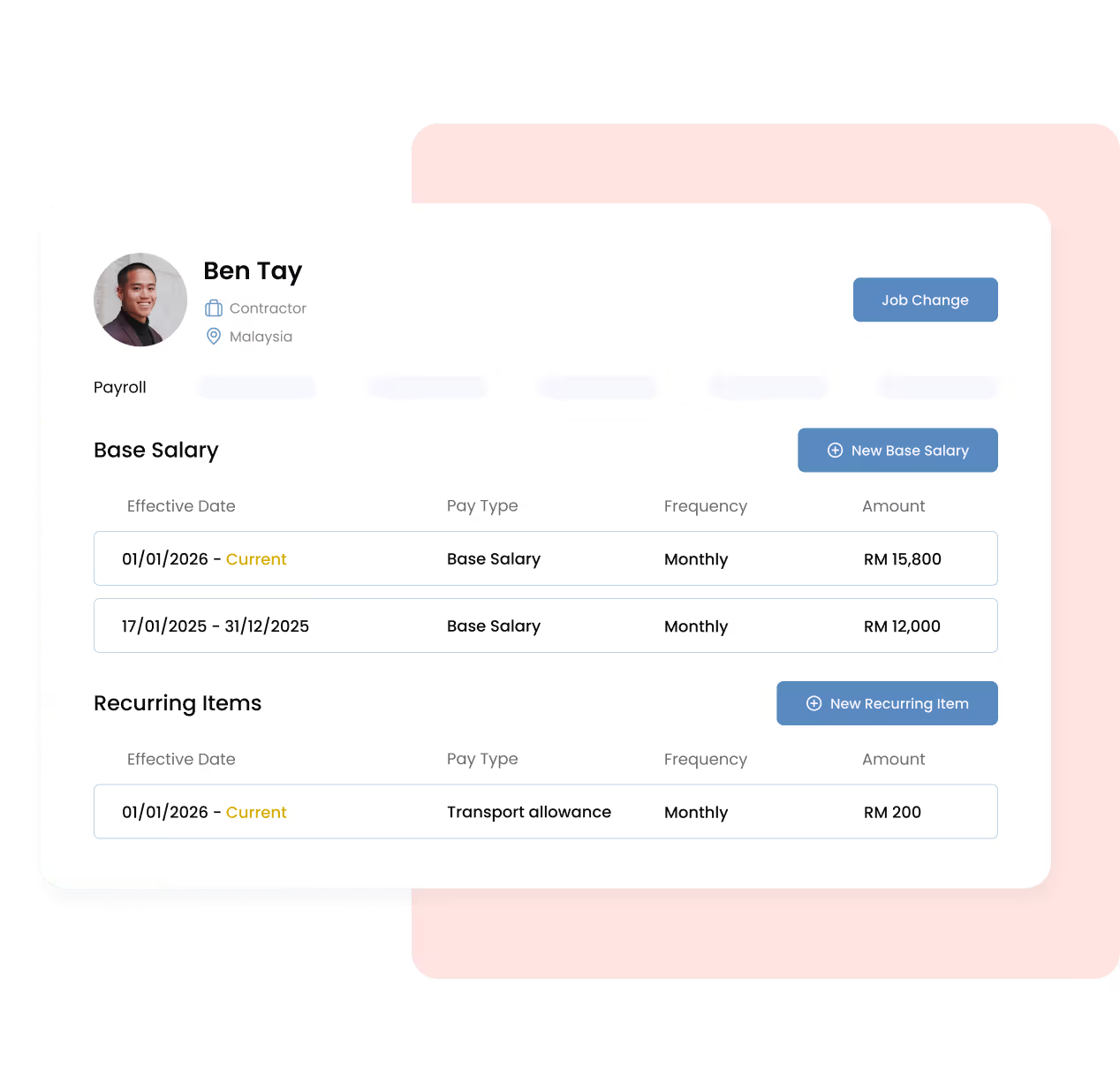
Omni HR comes pre-configured with Malaysia-specific statutory settings, ensuring accurate payroll calculations and employee records stay aligned with current legislation. Automatic updates reduce manual checks and give HR teams the confidence that compliance requirements are consistently met.
"Now we literally run payroll in no more than two hours. Before it was two days."
— Elena Argyriou, Chief of Staff at Snappymob
Manual processes break down as teams grow
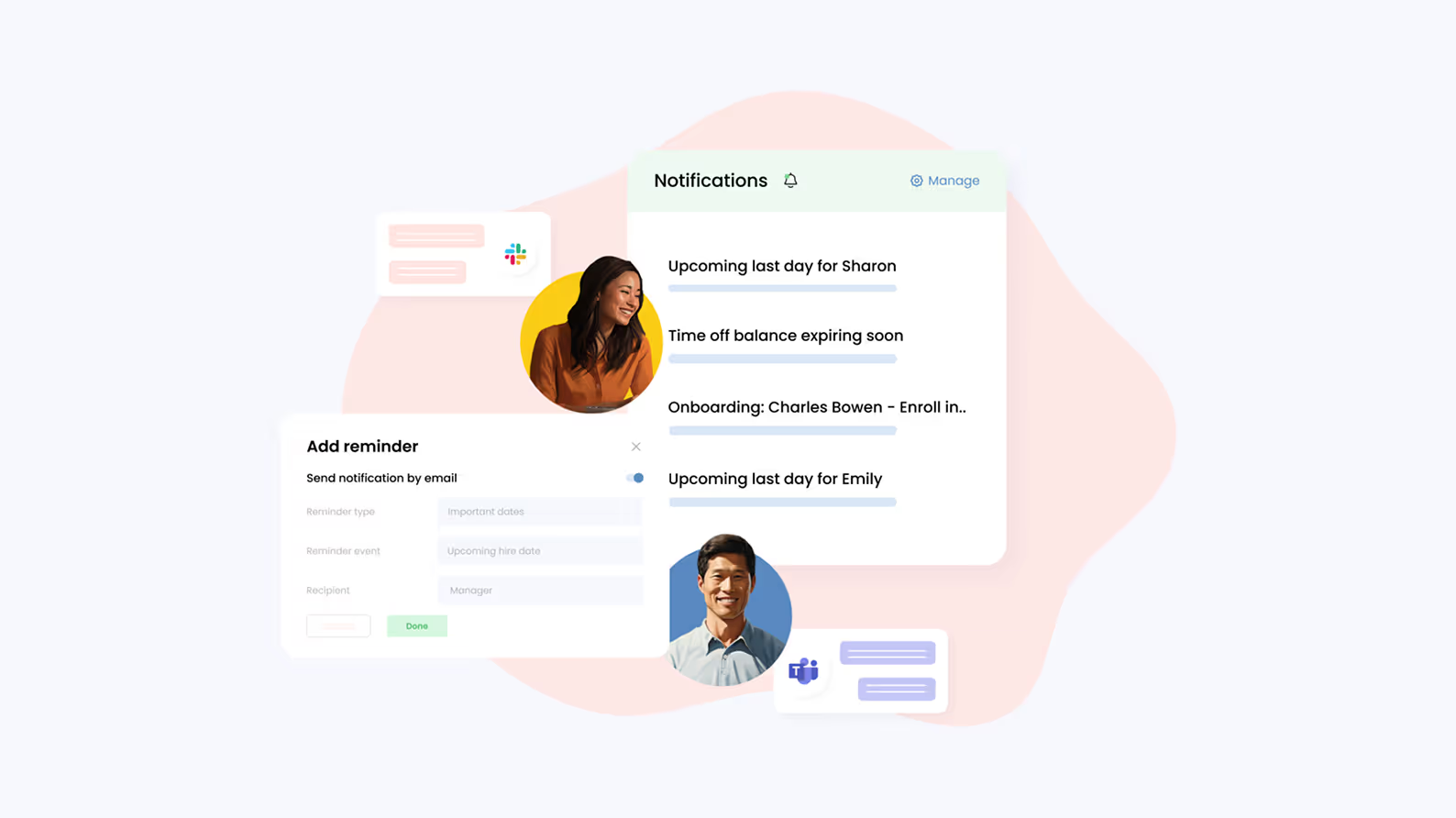
Routine HR tasks — attendance tracking, payroll processing, employee data management, leave approvals, expense claims — are manageable at 20 people. At 60, they're a liability. Most HR teams don't realize how far behind they've fallen until something breaks — a missed payroll deadline, a wrong statutory deduction, a leave balance that doesn't add up.
Robust HR software in Malaysia allows your HR team to support headcount growth without expanding the team to match it. By centralizing employee data and automating repetitive workflows, you save time, reduce errors, and keep your team focused on the work that actually requires human judgment.
Hybrid work requires centralized, cloud-based systems
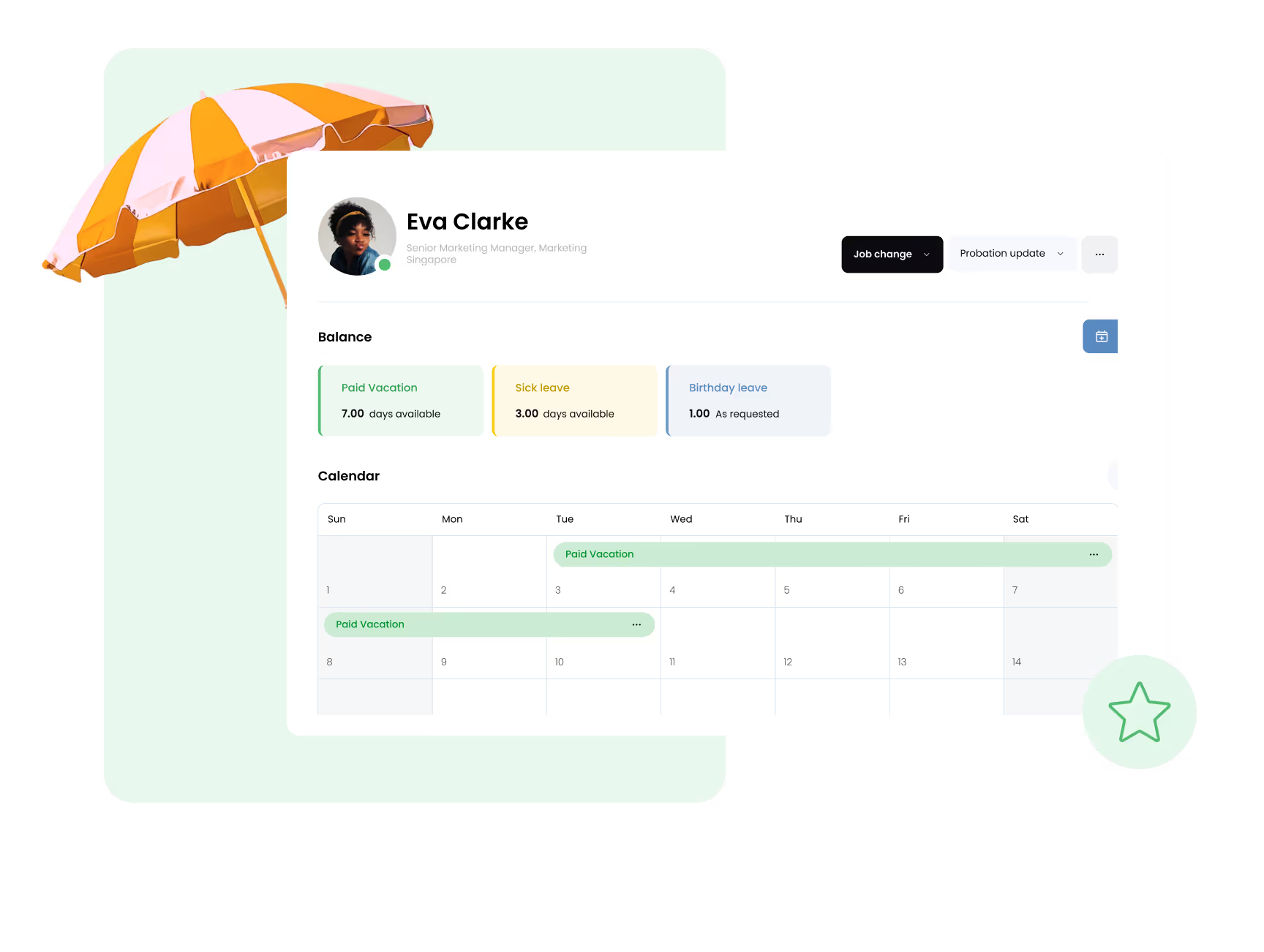
The 92% hybrid adoption figure is impressive until you're the HR manager trying to reconcile leave across three locations in different states, or chasing down a timesheet from someone working remotely. A cloud-based HRIS Malaysia like Omni HR centralizes everything in one secure platform — employees submit leave requests, update personal details, and access payslips through self-service portals, while managers approve requests and monitor attendance in real time, from anywhere.
Data-driven HR decisions require actual data
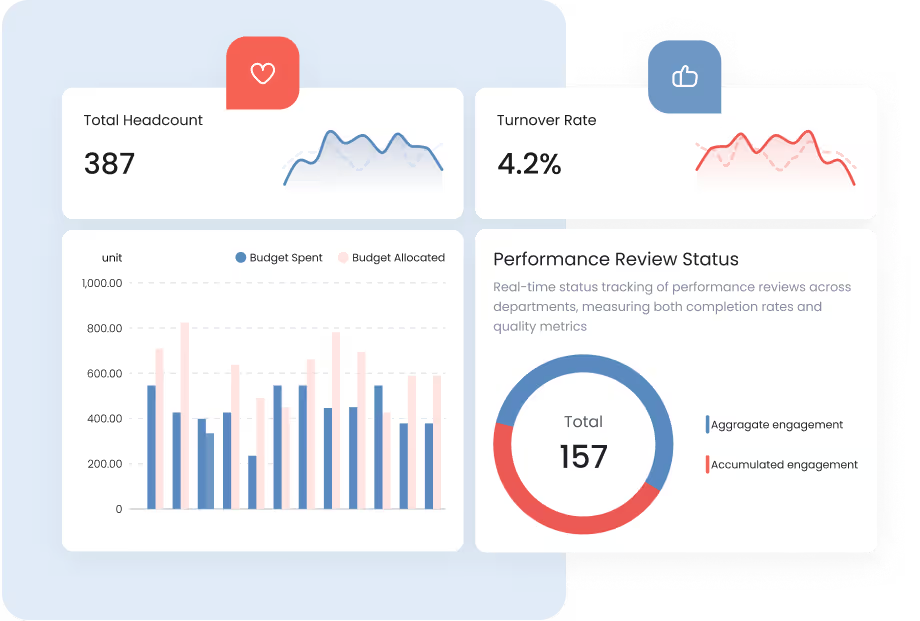
Beyond day-to-day operations, a modern HR system turns workforce data into strategic insight. Payroll costs, overtime trends, headcount changes, attrition signals, and performance patterns all become visible — giving HR and finance leaders the information they need to plan headcount, allocate budgets, and catch retention issues before they become departures.
Employment Act 2022 Amendments: What Your HR System Needs to Reflect
Malaysia's Employment Act 1955 was significantly updated in 2022, and any HR system you're evaluating should already reflect these changes in its leave calculations, payroll settings, and policy templates. The key amendments:
- Paternity leave increased to 7 consecutive days for married male employees
- Maternity leave protection extended for the full 98-day leave period — employees cannot be dismissed during this time
- Flexible work arrangements formalized — employees have the right to request flexible working; employers must respond within 60 days
- Overtime eligibility extended to employees earning up to RM4,000/month (previously RM2,000)
- Sexual harassment provisions strengthened, with new employer obligations to investigate complaints
If your current payroll or HR system hasn't been updated to reflect these changes, your leave entitlement calculations and compliance reporting may already be out of date. Ask any vendor you're evaluating directly: does your system reflect the 2022 Employment Act amendments?
Best HR Software Malaysia: Top 6 Platforms for 2027
Omni HR
Omni HR is an all-in-one HRMS built for fast-growing companies across the APAC region. For Malaysian businesses, it combines deep local statutory compliance with a complete suite of HR modules — meaning payroll, leave, performance, recruitment, attendance, and analytics all live in one system, rather than across fragmented tools.
Key features:
- Automated compliance for EPF, SOCSO, EIS, HRDF, and PCB with real-time regulatory updates
- EA form, Borang E, and CP39 auto-generation; LHDN e-Filing support
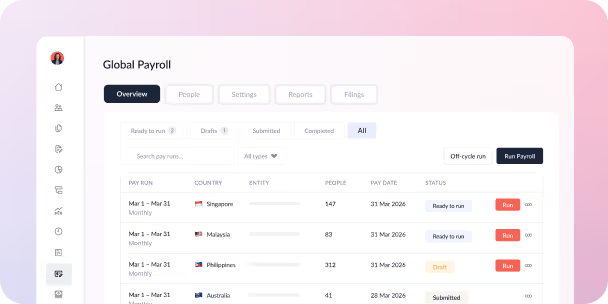
- Multi-country payroll across 10+ countries in the region, including Singapore, Philippines, Hong Kong, and Indonesia
- Full HRIS: leave management, performance reviews, recruitment and ATS, attendance, expense management, and document management
- Employee self-service portal and mobile app for payslips, leave, claims, and personal data
- Real-time reporting and analytics covering payroll costs, headcount trends, and pay equity
- Native integrations with Xero, Slack, Google Calendar, Microsoft Teams, and more
- Dedicated local support team operating in your timezone
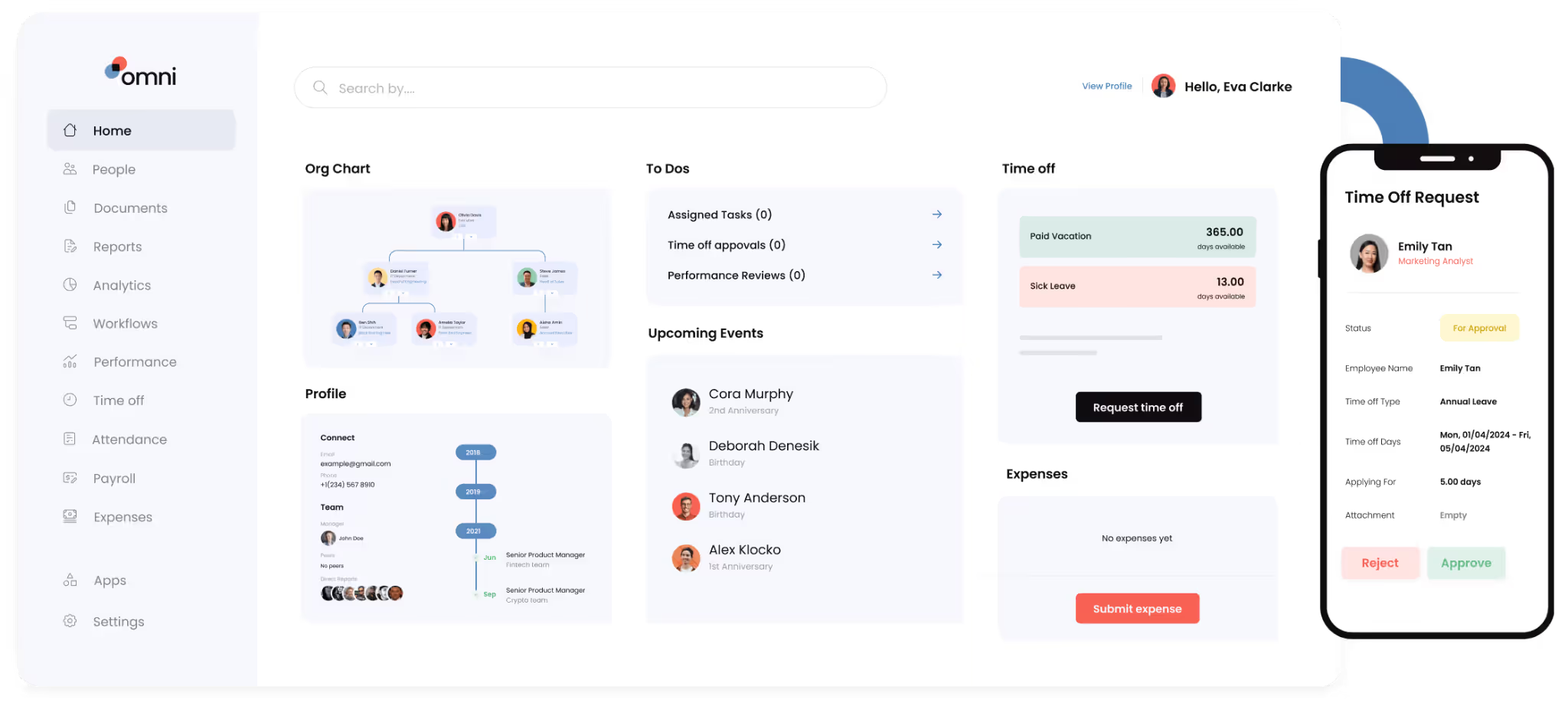
Pricing: Starts from S$3 per employee per month (pricing in SGD; MYR equivalent varies by exchange rate). Explore plans →
Best for: Mid-sized and growing companies in Malaysia that need reliable statutory compliance, want to consolidate HR tools into a single platform, and plan to expand regionally.
2. PayrollPanda
PayrollPanda is a cloud-based HR and payroll platform purpose-built for the Malaysian market. It focuses on payroll accuracy and statutory compliance rather than offering a full HRMS, which makes it a practical option for teams that need a dedicated payroll solution without the overhead of a broader platform.
Key features:
- Automated payroll with accurate EPF, SOCSO, EIS, and PCB calculations at current rates
- Payslip generation and government form output including CP39 and EA forms
- Leave management and basic attendance tracking
- Employee self-service for payslips and leave balances
- LHDN-approved software
Pricing: Free tier available for unlimited employees with basic features; paid plans vary by feature set. Visit the PayrollPanda website for current pricing.
Best for: SMEs that need straightforward, reliable Malaysia payroll compliance and don't yet require a full HRIS suite.
3. Swingvy
Swingvy is a user-friendly HR and payroll platform with a strong focus on employee experience and day-to-day HR operations. Its mobile-first design suits teams where employees regularly submit leave, claims, or check payslips from their phones.
Key features:
- Automated payroll with EPF, SOCSO, EIS, and PCB compliance
- Mobile-enabled leave and claims management with multi-level approvals
- Time and attendance tracking
- Employee directory, calendar sync, and HR reporting
- Self-service mobile app
Pricing: Tiered plans; free trial available. Visit the Swingvy website for current pricing.
Best for: Growing SMEs that prioritize a clean employee experience and mobile accessibility for daily HR operations.
4. AgileHRMS
AgileHRMS is an HR and payroll solution covering core HR modules for Malaysian businesses, with a focus on larger organizations and enterprises that need structured workflows.
Key features:
- Payroll processing and salary automation
- Leave management and attendance tracking
- Employee records and HR data management
- Performance evaluation workflows
Pricing: Not publicly available — contact vendor directly.
Best for: Larger enterprises or organizations seeking a structured HRMS with performance and payroll modules.
5. HReasily
HReasily is a regional HR platform covering payroll, leave, claims, and time and attendance. It supports multi-country deployments across Southeast Asia, making it relevant for companies with regional operations beyond Malaysia.
Key features:
- Payroll and statutory compliance automation
- Leave and claims management
- Time and attendance with scheduling and reporting
- Employee records and cloud-based HR access
- Multi-country support across APAC
Pricing: Starts at approximately RM4 per employee per month for basic modules; full suite pricing varies. Contact HReasily for current plan details.
Best for: Companies managing teams across multiple countries in Southeast Asia who need lightweight HR automation with regional coverage.
6. PeopleHum
PeopleHum is a global HRMS focused on end-to-end HR workflows covering the full employee lifecycle from hiring to offboarding.
Key features:
- Recruitment and ATS
- Core HRIS with employee database, leave, and attendance
- Performance management and employee engagement tools
- Workforce analytics and reporting
- Employee self-service portal
Pricing: Not publicly available — contact vendor directly.
Best for: Businesses seeking a full HRMS with recruitment, performance, and analytics capabilities, not just payroll.
Malaysia HR Systems Quick Comparison
How to Choose the Right HR System in Malaysia for 2027
With six platforms on the table, the right choice comes down to three questions asked in the right order.
Start with compliance. Every Malaysian employer needs accurate, automated calculations for EPF, SOCSO, EIS, HRDF, and PCB. This isn't a differentiator — it's the floor. If a platform doesn't handle all five reliably and update automatically when rates change, it's not a serious option for a Malaysian business. Ask any vendor directly: does your system reflect the 2022 Employment Act amendments?
Then define how much HR you actually need. Some teams genuinely just need payroll done right and basic leave management. Others need recruitment, performance reviews, expense management, and analytics — all connected in one system. Be honest about where you are today and what you'll need at twice your current headcount.
Factor in where you're going. If regional expansion into Singapore, the Philippines, Indonesia, or Hong Kong is on the roadmap in the next few years, a Malaysia-only tool will eventually become a blocker. Starting with a platform built for multi-country operations from day one prevents a painful migration later.
Use this checklist when evaluating vendors:
- Does it automate EPF, SOCSO, EIS, HRDF, and PCB at current rates — and update automatically when regulations change?
- Does it reflect the 2022 Employment Act amendments in leave calculations and overtime settings?
- Does it support LHDN e-Filing and generate EA forms, Borang E, and CP39?
- Does it cover the HRIS modules your team actually needs — leave, performance, attendance, recruitment?
- Does it support multi-country payroll if regional expansion is on your roadmap?
- Is there a mobile app and employee self-service portal?
- Does it comply with Malaysia's Personal Data Protection Act (PDPA) and store data securely?
- Is local support available in your timezone, with people who understand Malaysian statutory requirements?
- Is pricing transparent — with a clear picture of what's included and what costs extra?
- Is there a free trial before commitment?
Additional reading: Key Features Every Modern HR Software Should Have →
Choosing the Best HR System in Malaysia
The right HR system in Malaysia does more than automate payroll — it keeps you compliant with EPF, SOCSO, EIS, HRDF, PCB, and the Employment Act (including the 2022 amendments that plenty of businesses still haven't fully reflected in their processes), supports your hybrid workforce, and gives HR and finance leaders actual visibility into what's happening with their people and costs.
For growing Malaysian companies, an all-in-one HRMS like Omni HR offers a genuine advantage: built-in Malaysia compliance, full HRIS capabilities, and multi-country payroll for when you're ready to expand across Southeast Asia — all without needing to migrate to a new system when you outgrow your current one.
The best time to get the right system in place is before you need it. Book a demo with the Omni team → to see how we handle Malaysian payroll compliance end-to-end.
Frequently Asked Questions
What is the best HR system in Malaysia?
It depends on what you actually need — which sounds like a cop-out but genuinely matters here. An SME that needs payroll and statutory compliance handled reliably doesn't need to pay for a full HRMS. A company with 80 people managing performance cycles, regional expansion, and multi-country payroll does. The baseline for any Malaysian business: the platform should automate EPF, SOCSO, EIS, HRDF, and PCB accurately and already reflect the 2022 Employment Act amendments. Beyond that, match the feature set to where you are now and where you'll be in two years.
Is HR software mandatory in Malaysia?
Legally, no. But tell that to the 20% of Malaysian SMEs who got hit with PCB penalties last year. The Employment Act is updated regularly, statutory rates change, and the 2022 amendments alone introduced five compliance obligations that many businesses still haven't reflected in their processes. A modern HR system that updates automatically means you're not manually tracking every LHDN circular or cross-referencing rate tables before each payroll run.
What is the difference between HRIS and HRMS?
An HRIS focuses on employee data management and administrative tasks — records, payroll, and statutory contributions. An HRMS includes everything an HRIS does, plus strategic functionality like performance management, analytics, goal tracking, and employee engagement. If you need the full picture — not just accurate records but actionable insights and people development tools — an HRMS is the right category.
What did the Employment Act 2022 amendments change in Malaysia?
The 2022 amendments to Malaysia's Employment Act 1955 introduced several changes that directly affect HR and payroll: paternity leave increased to 7 days; maternity leave protection was extended for the full leave period; employees gained the right to formally request flexible work arrangements (employers must respond within 60 days); overtime eligibility was extended to employees earning up to RM4,000/month; and sexual harassment obligations for employers were strengthened. HR systems should reflect all of these changes in leave calculations, payroll settings, and policy templates.
How much does an HR system cost in Malaysia?
Pricing varies widely by platform and feature set. Dedicated payroll tools like PayrollPanda offer free tiers for basic features. Full HRMS platforms typically price per employee per month — most reputable options in the Malaysian market price in SGD and range from S$3–S$15 per employee per month depending on modules included (MYR equivalent varies by exchange rate). Always probe for setup fees, customization costs, and what support tier is included — headline prices rarely reflect the full cost of ownership.
Can an HR system support hybrid or remote teams in Malaysia?
Yes, and honestly this is where a good HR system earns its keep for a lot of Malaysian teams. When employees are split across the office, home, and different states, the manual version of leave tracking and payroll reconciliation gets painful fast. A cloud-based platform lets employees submit leave and access payslips from their phones, managers approve requests in real time, and HR sees the full picture from one dashboard — regardless of where anyone is sitting that day.
How long does it take to implement an HR system in Malaysia?
Implementation timelines depend on company size and system complexity. Simple payroll tools can be operational within days. A full HRMS implementation for a mid-sized Malaysian business typically takes four to six weeks, covering configuration, data migration, user training, and parallel payroll testing. Platforms with dedicated onboarding support, pre-built Malaysia compliance templates, and clean data migration tools get teams live faster with fewer errors.
Does HR software in Malaysia comply with PDPA?
Reputable providers build to PDPA standards and hold certifications like ISO 27001 — but it's worth asking specifically rather than taking it on trust. When you're evaluating vendors, ask where employee data is physically hosted, what encryption standards apply to data in transit and at rest, and how role-based access is controlled. Omni HR uses AES-256 encryption (the same standard banks use) and hosts data in ISO 27001-certified facilities.
Related reading:



.avif)
.avif)