

















.png)
Summary. Expanding into Asia requires navigating complex labor laws, payroll rules, and statutory compliance, which is why many businesses rely on global EOR companies. Top providers, including Omni HR, offer comprehensive EOR services that handle legal employment, payroll, benefits, and compliance, enabling fast, efficient, and low-risk hiring across multiple Asian markets.
Expanding into Asia is not hard because talent is scarce. It is mostly limited by employment complexity.
Every country comes with its own labor laws, payroll rules, tax systems, and termination requirements. For example, the mandatory 13th-month salary in the Philippines, CPF contributions in Singapore, and many others.
Managing those differences internally is slow and risky, especially when you are hiring across multiple markets at once. This is why many companies turn to global EOR companies when entering Asia. For teams without local entities, EOR services provide a faster and lower-risk way to hire across the region.
This guide breaks down the top employer of record companies operating in Asia in 2027. It deals with what is really important: coverage, the depth of compliance, and what types of teams each provider has been constructed to operate in.
What is an employer of record (EOR)?
An employer of record (EOR) is a third-party organization that legally hires employees in a given country on behalf of another company. Employment contracts, payroll, taxes, benefits, and statutory compliance are handled by global EOR companies, and the hiring company dictates the day-to-day work and performance of the employee.
This creates a clear split between legal employment and operational control. The legal employer under the local authorities is the EOR; it becomes liable to adhere to labor laws and ultimately assumes employer liability.
The role, however, is controlled by the hiring company, including the amount of work and the business performance. It is this distance that enables the global teams to work without the local organizations.
Difference between EOR, PEO and local entity hiring
EOR services are often confused with PEO models, but they are not the same. A professional employer organization (PEO) typically operates through co-employment and usually requires the company to have a registered local entity. An employer of record, on the other hand, does not require entity setup. The EOR becomes the sole legal employer in the country, making it a more practical option for cross-border hiring.
Local entity hiring sits at the other end of the spectrum. While it provides full control, it also comes with incorporation costs, ongoing compliance management, local accounting, and legal exposure. For many companies, especially those expanding into Asia, this overhead is unnecessary in the early stages.
Companies typically use global EOR companies when they need to hire quickly in a new country, test a market, or employ talent without taking on the cost and risk of setting up a local entity.
Learn more: Key Differences Between PEO vs EOR: Which Is Best for Your Organization?
Why do companies use global EOR companies to expand in Asia?
Here are a few reasons why global EOR companies are often used as the entry point for regional expansion:
- Speed of hiring: Global EOR companies allow businesses to hire in days rather than months, avoiding entity setup delays and local registration processes.
- Compliance handling: EOR service deals with country-specific payroll rules, taxes, statutory benefits, and labor laws across Asian markets, especially platforms like Omni HR that are built for APAC.
- Complexity of hiring across Asia: Employment laws, termination rules, and contribution schemes vary widely by country, making centralized hiring difficult without local expertise.
- Challenges without EOR: In the absence of an employer of record, companies intending to grow are at risk of being misclassified, facing compliance issues, and facing fines or disagreements.
- Benefits compared to entity setup and PEO models: EOR companies provide a more flexible and less risky entry point in regional expansion than either entity establishment or using PEOs.
Top 6 Global EOR Companies in Asia
Not all global EOR companies operate in Asia with the same depth or intent. Some are global platforms that happen to support Asian countries, while others are built around the region’s regulatory realities from day one. The difference shows up quickly in compliance handling, payroll accuracy, support quality, and overall risk exposure.
The table below provides a comparison of the top employer of record companies operating in Asia.
Omni HR
Omni HR is an Asia-first global EOR company, built to handle the complexities of local payroll, statutory contributions, and labor law compliance. Our platform is tailored to regional nuances, ensuring accuracy, compliance, and fast hiring across multiple Asian regions. With this, HR teams can onboard employees quickly, maintain full compliance, and provide a seamless employee experience.
Local payroll and statutory compliance
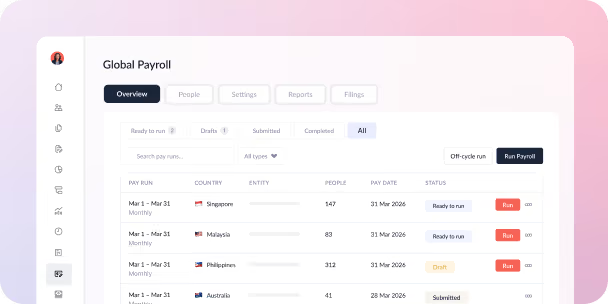
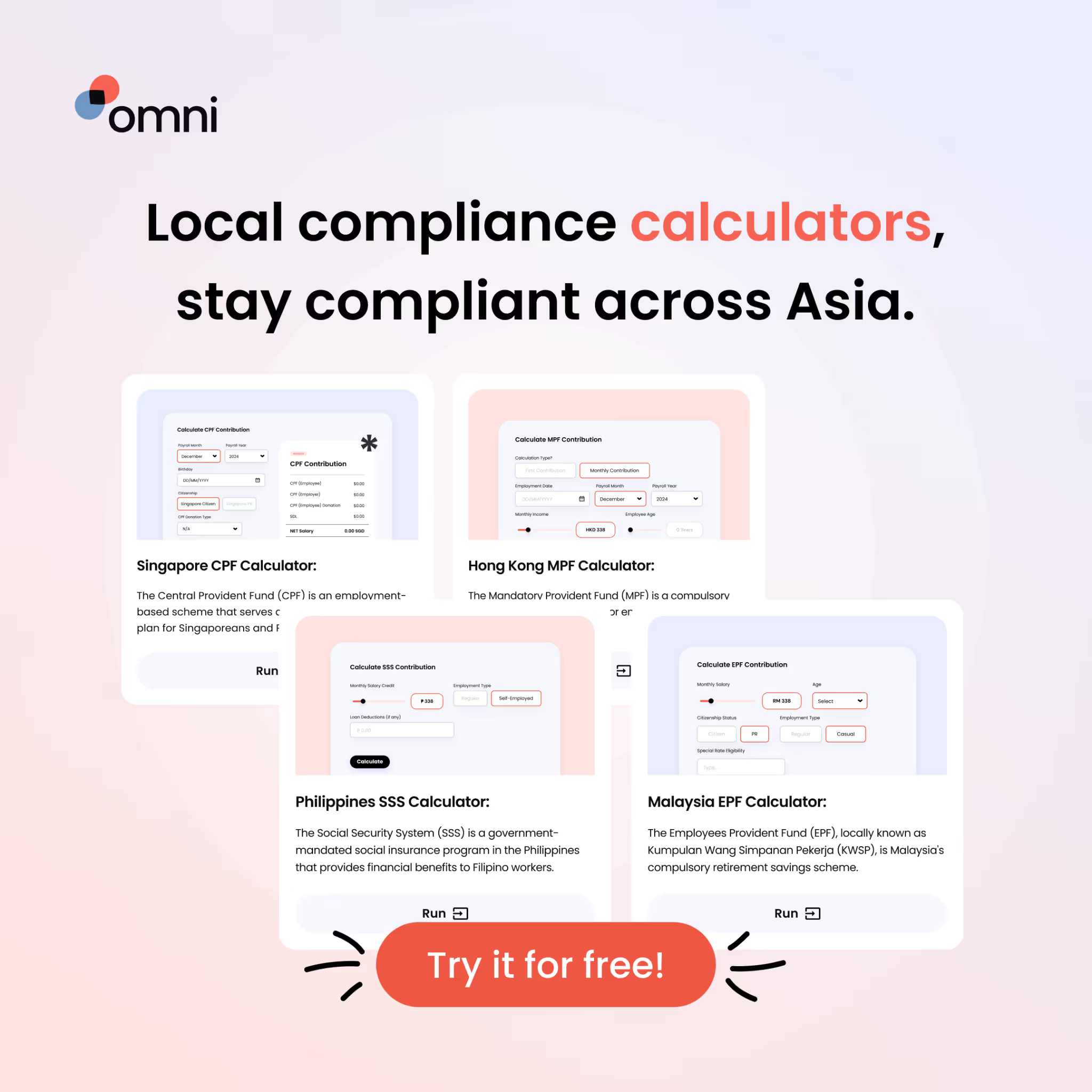
Omni HR manages payroll, tax filings, and statutory contributions across Asia, including Singapore’s CPF, Malaysia’s EPF, the Philippines’ SSS, Hong Kong’s MPF, and more. These EOR services reduce the risk of compliance issues and allow companies to focus on growth.
Fast onboarding and hiring
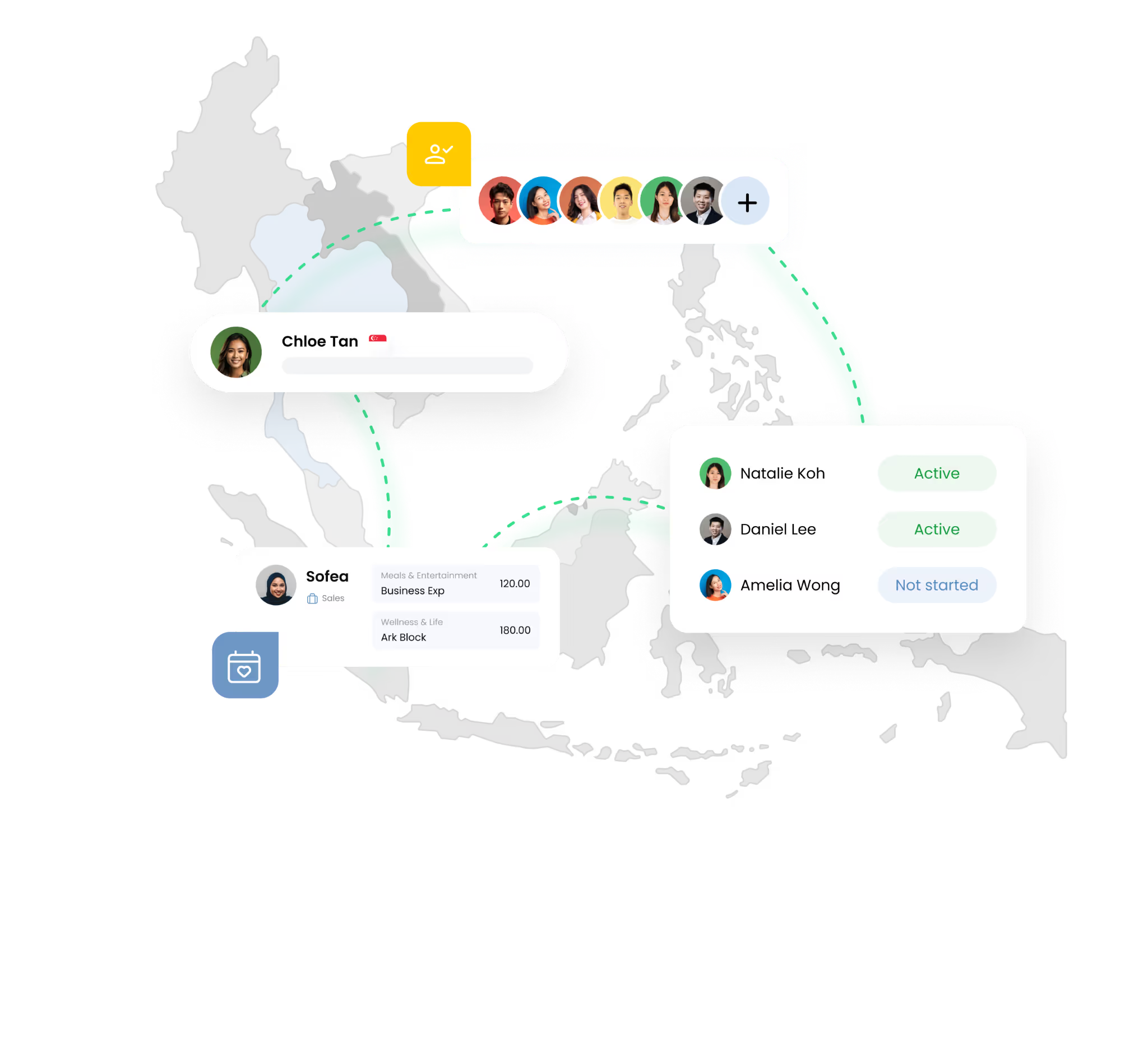
Hire employees in days rather than months with Omni HR’s EOR services. Streamline onboarding, employment contracts, and payroll setup all in one place, making global hiring faster and simpler than setting up local entities.
Seamless employee experience
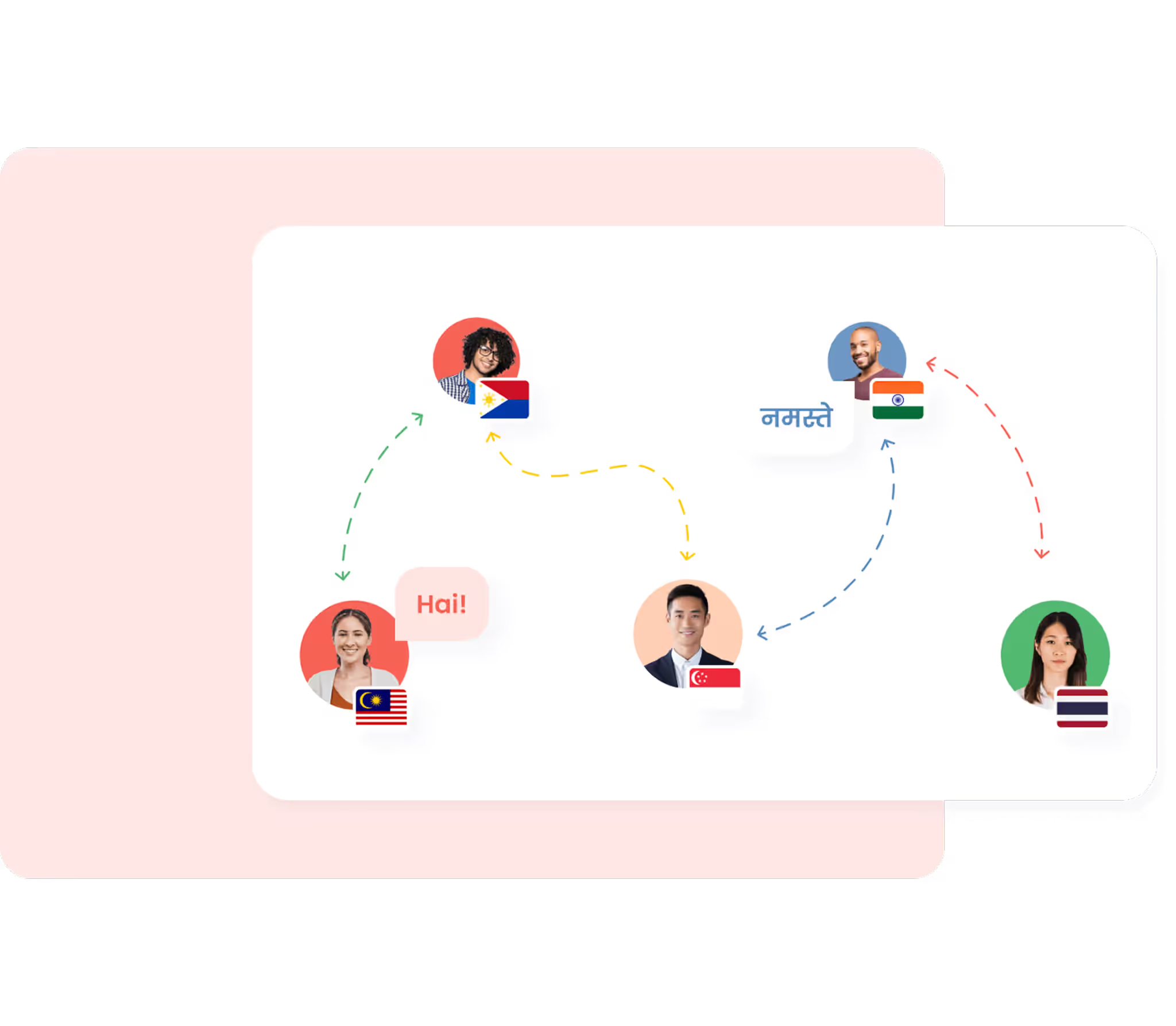
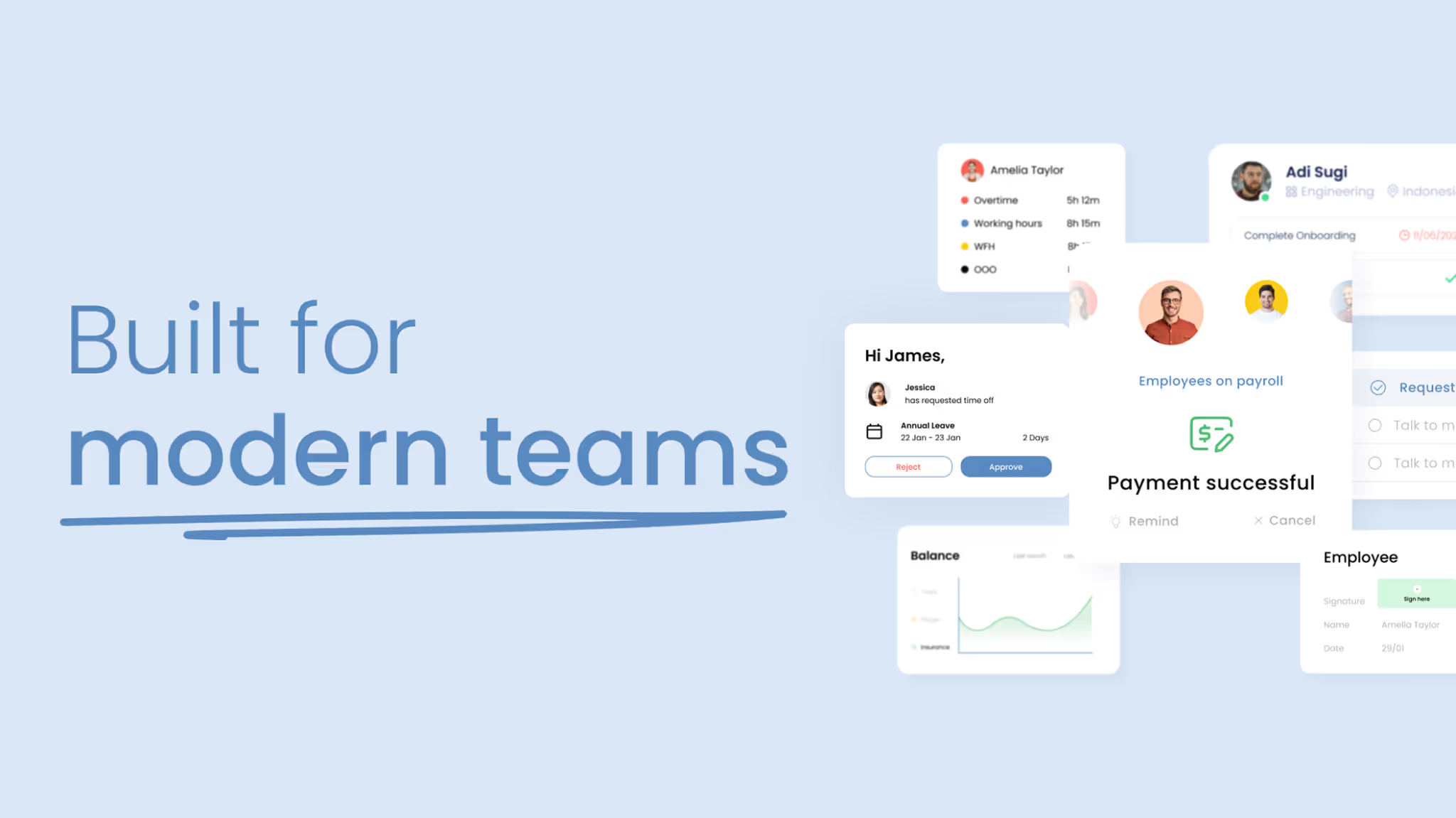
Employees can access payslips, leave requests, and claims through an intuitive portal. This user-friendly experience improves employee satisfaction and retention, one of the key benefits of working with top employer of record companies.
Best for: Businesses expanding across Asia who need speed, local accuracy, and lower compliance risk without setting up local entities. Omni HR is among the top employer of record companies in Asia, offering specialized EOR services designed for the region.
Deel
Deel is a global-first EOR provider with coverage across most Asian countries, but its real strength is scale rather than regional depth. It works well for companies that want one system to hire in many markets at once, with quick onboarding and a smooth product experience.
The trade-off is that Asia is not their core focus. Compliance handling and local support can feel uneven depending on the country, and costs tend to rise as teams grow or require more tailored support.
Best for: Startups and scaleups hiring across multiple regions at the same time, where global reach matters more than Asia-specific nuance.
Remote
Remote is one of the EOR companies operating in several Asian markets through its own entities rather than external partners. This gives teams clearer employment ownership and fewer handoffs when dealing with payroll, benefits, and local labor requirements. That structure also means less flexibility in some countries and a higher baseline cost, which may not suit companies that are still testing the region or hiring at smaller volumes.
Best for: Companies that want a controlled, compliance-first approach to EOR services in Asia and prefer predictable processes over rapid market experimentation.
Glints TalentHub
Glints TalentHub helps companies scale teams across Southeast Asia through Employer of Record (EOR) services, without the need to set up local entities. Beyond compliance and payroll support, Glints combines regional hiring expertise with end-to-end talent operations, helping businesses source, hire, onboard, and manage talent faster across the region. As Glints expands into Australia, it is strengthening its position as an EOR partner for companies building teams across the wider APAC region.
Best for: Startups and SMEs looking to expand across Southeast Asia and Australia with faster, compliant hiring, strong local expertise, and integrated recruitment plus EOR support in one place.
Velocity Global
Velocity Global is also one of the global EOR companies chosen when hiring in Asia involves complexity rather than speed. It supports employment across many Asian countries and is typically used for roles with stricter compliance requirements, long-term placements, or layered workforce structures.
The approach leans more toward guided, hands-on support than self-serve tooling, which can feel slow for lean teams but useful when employment risk needs closer oversight.
Best for: Established companies that need EOR services in Asia for complex hiring situations and are comfortable with a more involved, consultative setup.
Aniday
Aniday offers EOR, headhunting, and payroll services across markets including Vietnam, Singapore, Malaysia, Indonesia, India, and the Philippines, making it a viable option for companies that want to handle both hiring and employment compliance in one place.
Best for: Startups, SMEs, and enterprises hiring mid-to-C-level roles across Southeast Asia that need to fill multiple positions across multiple markets simultaneously. Also suits foreign companies entering markets like Vietnam that want to compliantly build a team from day one.
How to Choose EOR Global Companies
Most people don’t choose the wrong global EOR companies because they skipped a feature. They chose the wrong one because they didn’t ask the right questions early enough, or they didn’t connect their use case to the risks hiding underneath.
Use this section as a quick filter when choosing the top employer of record companies. You should be able to read it once, go into a sales call, and know exactly what to listen for.
Must-ask questions (before you go any further)
These questions save you from problems that only show up months later:
- Do you hire through your own entities in this country, or through local partners?
- Who is legally responsible if there is a compliance issue, audit, or employee dispute?
- How do you keep up with local payroll and labor law changes, and how often are updates applied?
- What happens during termination in this country, and what costs should we expect?
- Is pricing fixed per employee, or does it change by country, role, or support level?
- Who will we speak to when something goes wrong: a local specialist or a general support team?
Match the EOR to your use case (and what to watch out for)
If you are expanding mainly into Asia
You need an EOR that understands local payroll timing, statutory filings, and country-specific labor rules. Global coverage matters less than regional depth.
Watch out for: providers that list many Asian countries but cannot clearly explain how compliance is handled in each one.
If you are hiring across several regions at once
Global EOR companies with broad coverage can reduce operational overhead, especially for standard roles.
Watch out for: pricing that increases quietly as headcount grows or as add-ons are introduced.
If legal and compliance risk is a top concern
Choose EOR services that can walk you through termination rules, notice periods, and employee protections without hesitation.
Watch out for: the same contract template being used across very different countries.
If you are testing a market or hiring fast
Speed and flexibility matter more than long-term structure. The right global EOR companies should let you enter and exit cleanly.
Watch out for: long lock-in periods, unclear exit terms, or slow onboarding processes.
If payroll accuracy and cost predictability matter
Finance and payroll teams should be able to forecast costs without surprises.
Watch out for: unclear pricing logic or delayed payroll timelines in certain countries.
Choosing the Right Global EOR Companies in Asia
When evaluating global EOR companies for international expansion, it is important to consider more than coverage alone. The right top employer of record companies provides local compliance expertise, transparent EOR services, and scalable solutions tailored to your needs.
Not all EOR companies offer the same level of regional depth or support, which can impact your hiring speed and compliance management. For companies looking to hire across Southeast Asia and APAC, Omni HR stands out among global EOR companies.
Our EOR services, strong local compliance knowledge, and unified HR platform enable businesses to hire confidently without setting up local entities.
Frequently Asked Questions
Yes. Omni HR offers Employer of Record services across Asia, allowing companies to hire employees in countries where they do not have a legal entity. Omni HR also offers contractor payment management across the region. BrioHR offers limited EOR and contractor payment services.
Yes. Omni HR offers Employer of Record services across Asia, allowing companies to hire employees in countries where they do not have a legal entity. Omni HR also offers contractor payment management across the region. BrioHR offers limited EOR and contractor payment services.
An Employer of Record (EOR) legally hires employees on behalf of your company, handling payroll, taxes, statutory compliance, and benefits. You retain operational control of the employee. A Professional Employer Organization (PEO) typically requires a registered local entity and operates under co-employment, sharing employer responsibilities. EOR services are ideal for businesses expanding quickly into Asia without setting up local entities.
The cost of EOR services varies depending on the provider, country, and level of support needed. Many top employer of record companies charge a per-employee monthly fee, often including payroll, statutory contributions, and compliance management. Providers like Omni HR offer transparent pricing across Southeast Asia, helping companies forecast costs without surprises while reducing legal and operational risks.
Yes. Many global EOR companies, including Omni HR, provide EOR services that cover both full-time employees and contractors. This includes employment contracts, tax handling, and statutory compliance where applicable. Using EOR for contractors allows businesses to manage cross-border teams legally and efficiently without setting up local entities.
Hiring through EOR services is significantly faster than establishing local entities. With platforms like Omni HR, onboarding in Southeast Asia can happen in days rather than months. EOR providers handle payroll, contracts, and statutory filings immediately, enabling teams to start working quickly while ensuring full compliance.
If your focus is on Southeast Asia, Omni HR is a leading choice among global EOR companies. Its platform is built specifically for the region, handling local payroll, statutory filings, and labor law compliance. Omni HR’s EOR services provide speed, legal assurance, and a seamless employee experience—ideal for SMEs and regional teams expanding across Asia.
No. One of the main benefits of working with top employer of record companies like Omni HR is that you do not need to establish a local entity. The EOR becomes the legal employer while your company retains day-to-day control, allowing you to enter new markets faster and with lower risk.
Without an EOR, companies risk misclassification, non-compliance with local labor laws, fines, and disputes. Managing payroll and statutory contributions manually across multiple countries is complex and prone to error. Global EOR companies provide structured EOR services that reduce these risks and ensure businesses remain compliant in each jurisdiction.



.avif)
.avif)