
















.png)
Summary. Global HR software is a system that manages employee lifecycles and automates payroll compliance across multiple countries. It is a critical tool for teams operating across Southeast Asia, where statutory requirements, tax rules, and leave entitlements differ significantly between Singapore, Malaysia, the Philippines, and beyond. This guide explains what global HR software actually does, how to evaluate your options, and which platforms are best suited for multi-country teams in SEA.
Managing a multi-country team in Southeast Asia is fundamentally different from running a single-market operation. Each country has its own payroll rules, statutory contribution schemes, tax filing deadlines, and labor regulations.
That's why growing companies across the region turn to global HR software: a single system that handles the complexity of multi-country HR, payroll, and compliance without requiring a separate tool or specialist for every market.
This guide explains what global HR software is, why multi-country teams in SEA need it, and how to choose the right system, whether you're managing payroll in Singapore, Malaysia, the Philippines, or all three.
What is global HR software?
Global HR software is a platform designed to manage employee lifecycles across multiple countries while automating compliance with local payroll rules, tax regulations, and labor laws. Unlike a standard HRIS (Human Resource Information System) built for a single market, global HR software is architected around country-specific rules — meaning statutory contribution rates, leave entitlements, and reporting obligations are built directly into the system rather than managed through manual workarounds.
In practical terms, a global HR system brings together:
- Multi-country payroll processing in local currencies
- Automatic calculation of statutory contributions (CPF, EPF, SSS, PhilHealth, Pag-IBIG, and others)
- Country-specific leave policies and public holiday calendars
- Centralized employee records accessible across jurisdictions
- Approval workflows that function across time zones
- Consolidated reporting for HR and finance leadership
The core difference between a global HR system and a regional HR tool is this: regional tools assume similarity across markets. Global HR software is built around the fact that they are not similar at all.
Why multi-country teams in Southeast Asia need global HR systems?
Once your team spans more than one country, standard HR processes stop being manageable at scale. What feels workable with a small headcount breaks quickly during payroll cycles, statutory reporting windows, or when you add a new market.
Here are the specific challenges that push growing teams toward global HR systems:
Static spreadsheets don't scale. Manual updates and shared files become unreliable as headcount and countries grow. Every payroll run becomes a reconciliation exercise, and compliance errors are often caught after the fact rather than prevented.
Payroll rules are genuinely different across SEA. Tax rates, statutory contribution ceilings, payroll cut-off dates, and employee classification rules vary significantly between Singapore, Malaysia, and the Philippines. Managing these manually means your payroll team spends most of their time on exception handling rather than strategic work.
Local compliance changes regularly. Leave entitlements, public holidays, and statutory contribution rates are updated by government bodies — sometimes mid-year. When compliance is tracked outside your core system, your team is always playing catch-up.
Multi-currency workflows add reconciliation overhead. Processing payroll in SGD, MYR, and PHP while producing consolidated reports in a single currency requires either a robust multi-currency system or significant manual effort. Global HR software eliminates the latter.
Here's a simplified view of what changes when you move from manual workflows to an integrated global HR system:
A global HR system that handles SEA payroll correctly has these rules embedded in the platform — not managed through a compliance team updating spreadsheets each month. For example, we automatically calculate CPF contributions by employee age band and residency status in Singapore, process EPF and SOCSO contributions in Malaysia according to the correct tier, and remit SSS and PhilHealth contributions in the Philippines within the required deadlines.
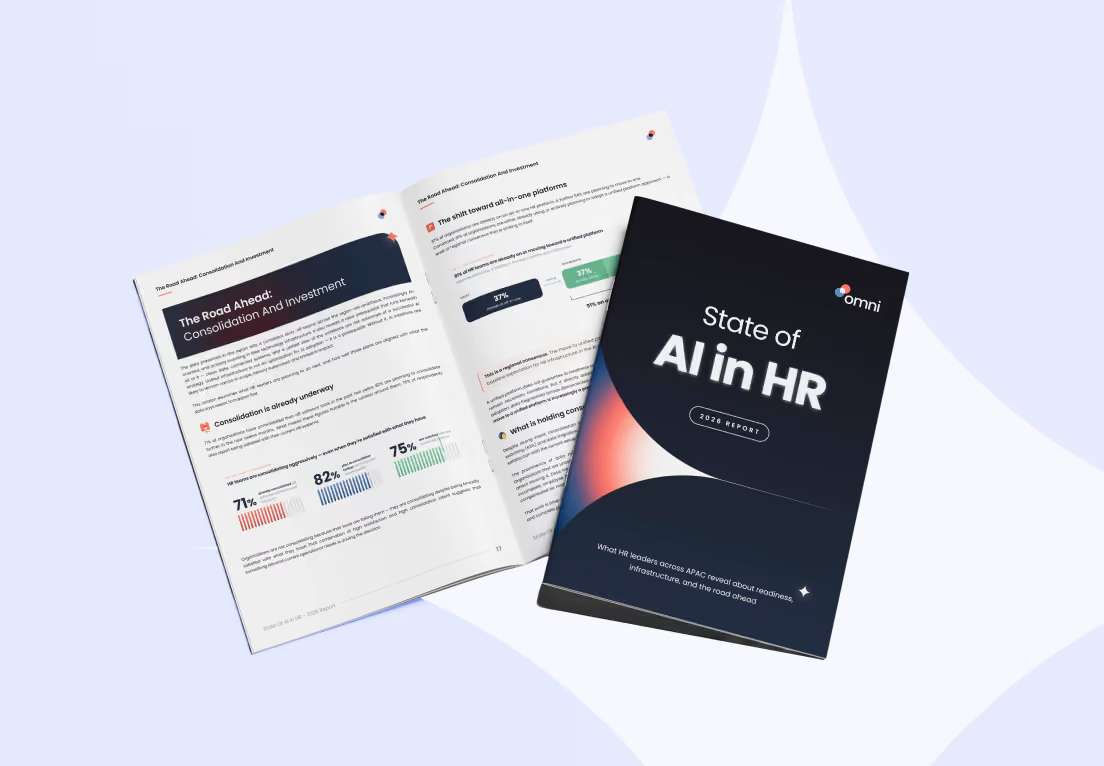
Want to see how HR leaders across APAC are approaching automation and AI readiness in 2026? Download the State of AI in HR report.
How does global HR software handle Southeast Asian compliance?
One of the most practical reasons to invest in global HR software is compliance automation — and this is where the difference between a generic HRIS and a purpose-built global HR system becomes most visible.
Across Singapore, Malaysia, and the Philippines, employers are responsible for calculating and remitting a specific set of statutory contributions every payroll cycle. Getting these wrong — even by a small margin — creates downstream risk with government bodies and employees alike.
Here's a summary of what your global HR software needs to handle in each market:
What to look for in global HR software for Southeast Asia teams?
When evaluating global HR software for teams operating across SEA, a few capabilities matter more than everything else, especially for companies deciding which HR software is best for global payroll and long-term regional growth.
Payroll accuracy at the country level
A global HR system must automate payroll calculations based on each country's specific tax rules, statutory contribution rates, and pay schedules. This means the system does more than store employee data. It should actively apply the correct deductions, rates, and employer contributions per jurisdiction, per payroll cycle.
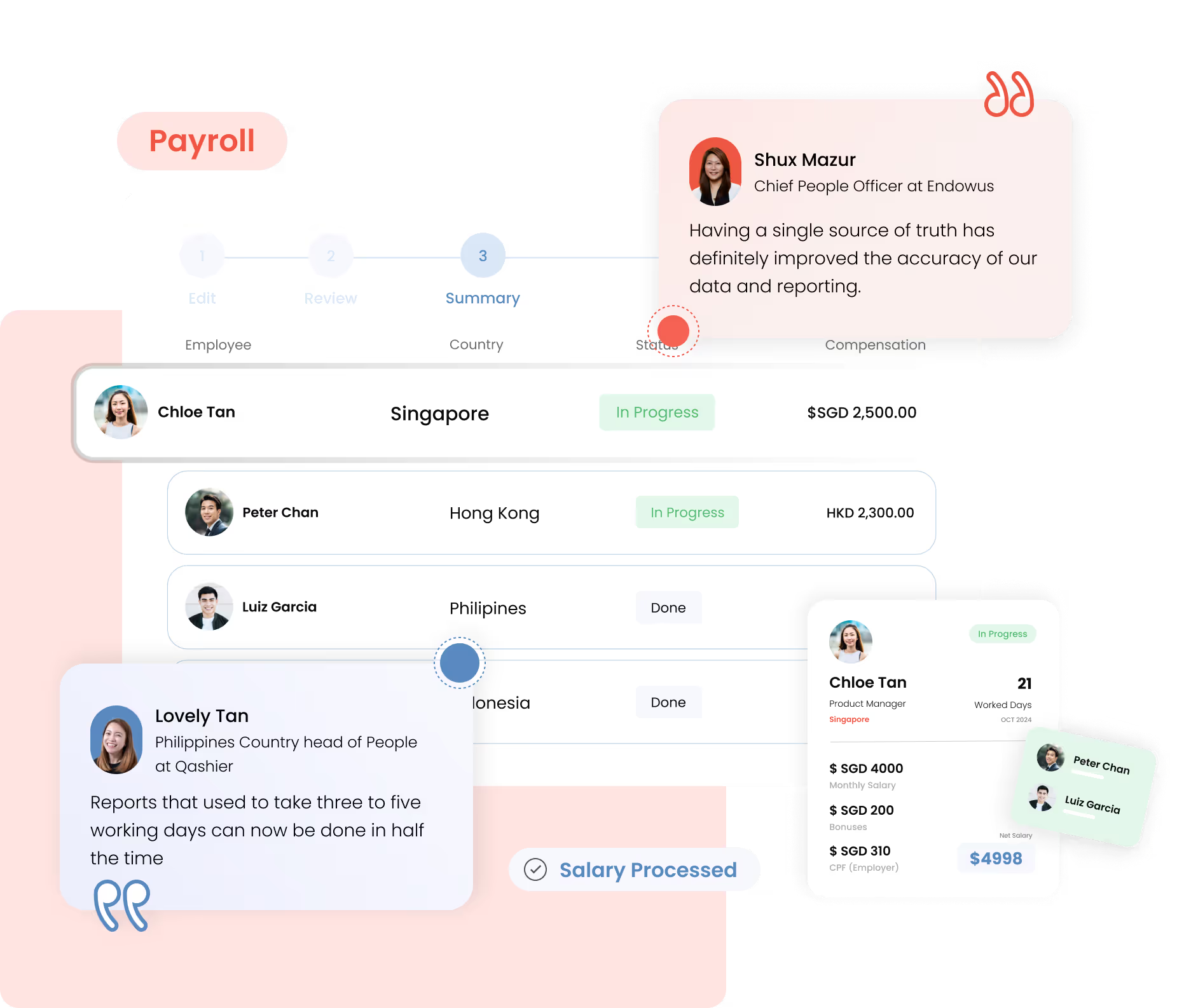
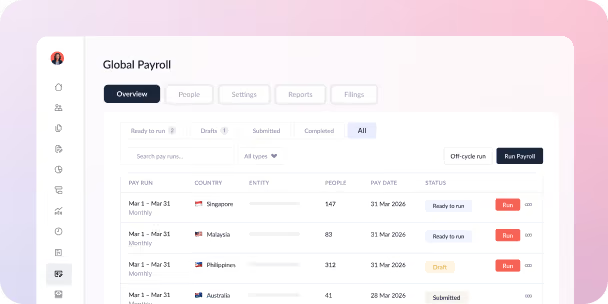
Platforms like Omni apply local payroll rules per country while maintaining consistent payroll processes across the region. Payroll inputs flow from approved attendance, leave, and salary data, so distributed teams can run payroll with confidence rather than checking each cycle manually.
Built-in compliance, not add-on
The most effective global HR systems incorporate regulatory requirements directly into their workflows rather than relying on manual trackers or compliance team interventions. That means leave entitlements, public holidays, statutory contribution calculations, and reporting obligations are part of how the system operates.
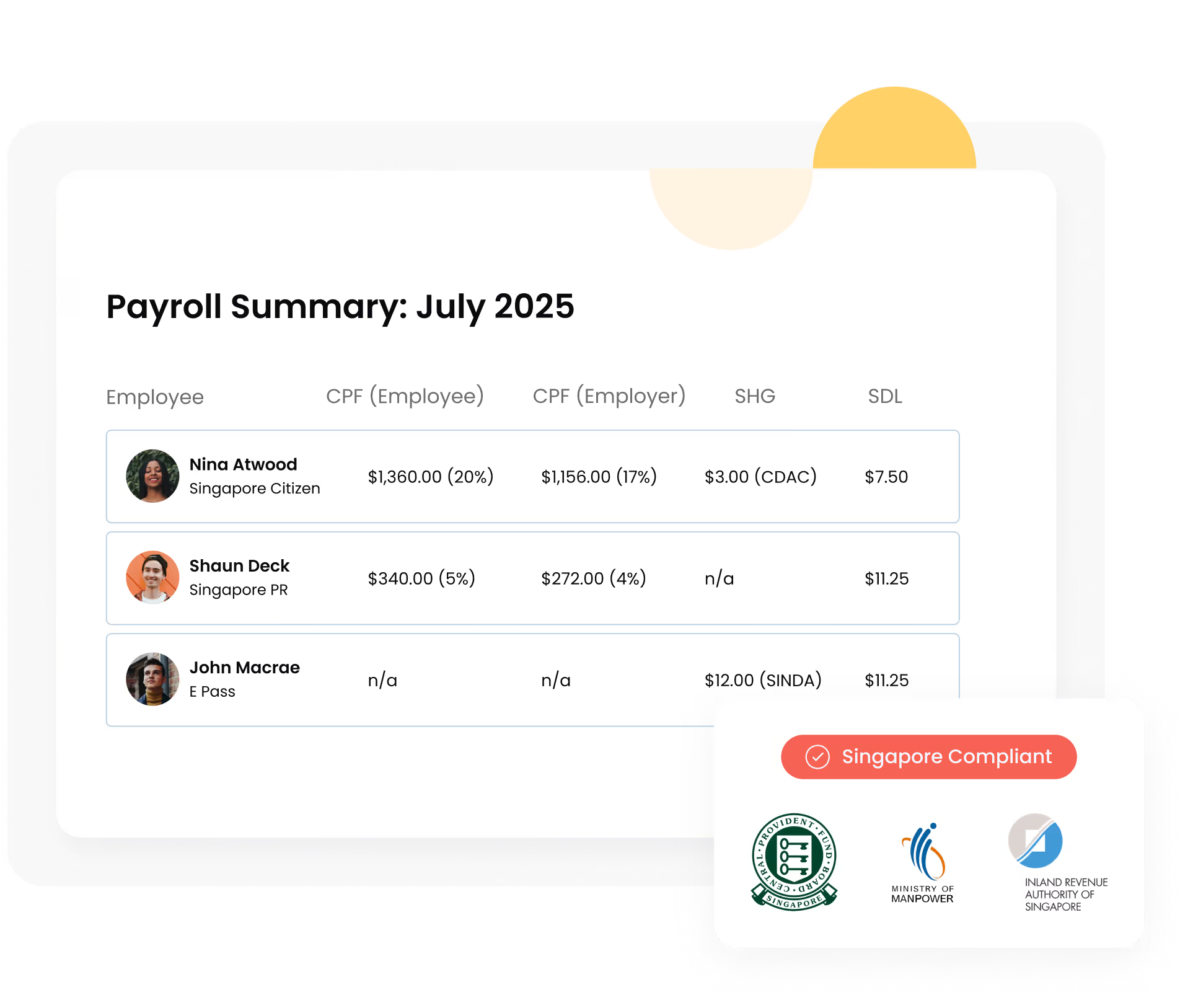
With Omni HR, compliance is integrated into daily operations. Localized leave policies, statutory contribution calculations, and employee lifecycle changes such as probation completion or salary adjustments should automatically reflect across the system without requiring manual updates.
Multi-currency payroll and consolidated reporting
Operating across SEA means processing payroll in local currencies while giving HR and finance leaders a consolidated view of workforce costs. Built-in multi-currency support reduces reconciliation time, improves payroll accuracy, and supports better regional workforce planning.
Look for a system that handles both local-currency payroll processing and cross-currency reporting in a single platform rather than requiring your finance team to reconcile manually.
Full HRIS, not just payroll
Beyond payroll, global HR software should function as a complete HRIS — handling onboarding, employee records, approvals, leave management, and offboarding. Fragmented systems, where payroll lives in one tool and employee records live in another, create data inconsistencies that show up as compliance gaps or payroll errors downstream.
Omni centralized employee data and automates HR workflows, meaning information flows seamlessly from onboarding through to payroll and statutory reporting. Employee self-service tools, manager approvals, and real-time data updates ensure regional teams operate from a single, reliable source of truth.
AI-powered workforce insights
As your team grows across markets, leadership needs answers faster than a manual report can produce them. Look for a platform where an AI agent can pull from your live payroll and headcount data to answer questions like "what's our cost per market this quarter" in plain language, without your team building a report from scratch."
.avif)
Scalability as you enter new markets
Global HR software should grow with your team without requiring processes to be rebuilt when you enter a new country. Integrations with finance, ATS, and benefits platforms also matter for maintaining continuity between HR and payroll functions as the business scales.
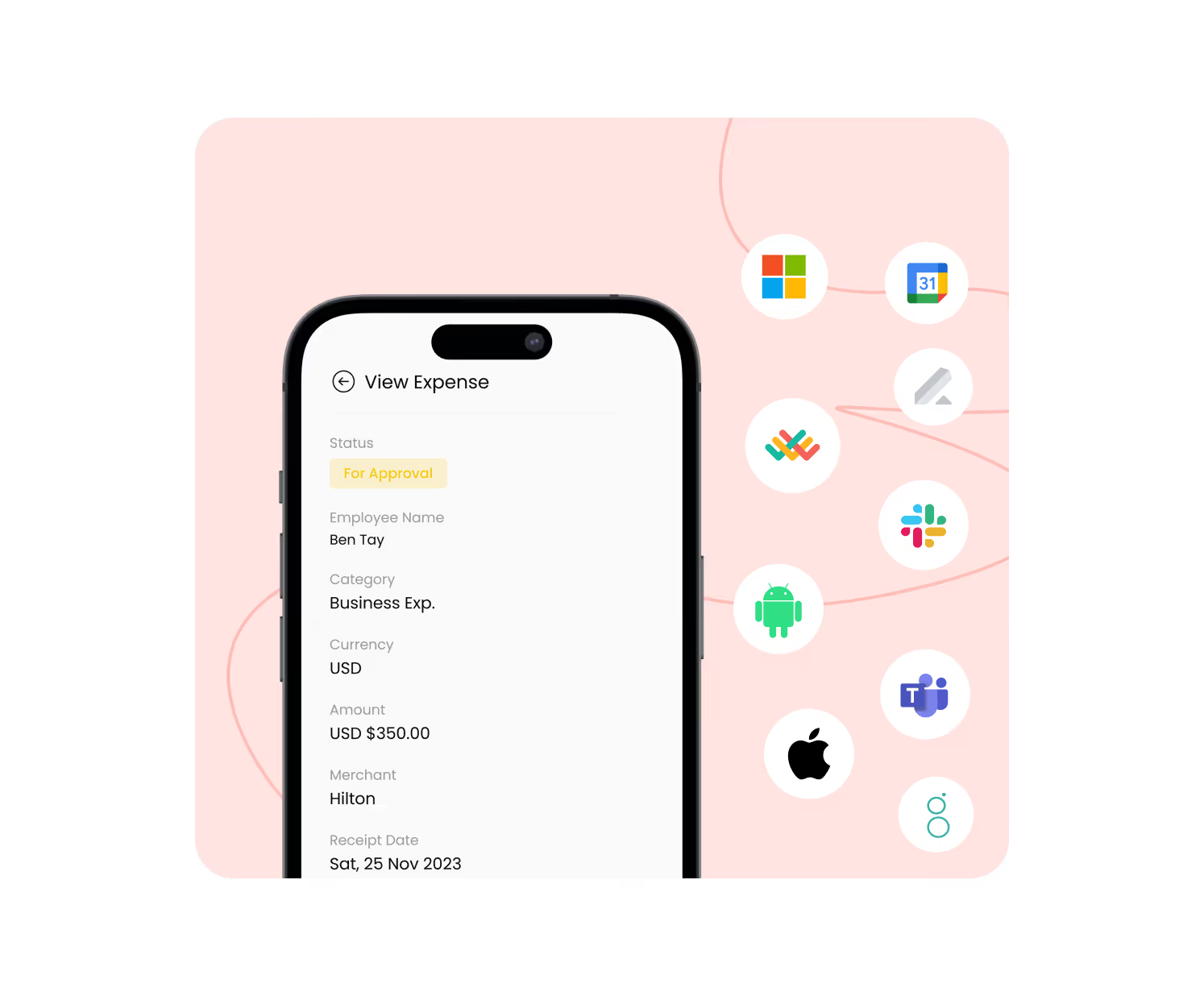
As companies expand into new markets, global HR systems must scale without requiring processes to be rebuilt. Omni HR integrates with well-loved tools like Slack, Microsoft Teams, Xero, and more, and supports multi-country growth across Southeast Asia. This makes it easier for companies evaluating which HR software is best for global payroll to expand into new markets while maintaining consistent HR, payroll, and compliance standards.
Best Global HR Software for Multi-Country Teams Operating in Southeast Asia
Omni HR
Best for: Fast-growing teams managing employees across multiple SEA countries who want direct control of in-country payroll, compliance, and HR workflows from a single platform.
Omni HR is global HR software purpose-built for companies operating across Southeast Asia. Rather than relying on third-party payroll partners or regional integrations, we embed country-specific payroll rules directly into the platform — meaning CPF calculations and IR8A in Singapore, EA form, EPF and SOCSO contributions in Malaysia, and SSS, PhilHealth, BIR form 2316 and Pag-IBIG remittances in the Philippines are handled automatically within your payroll workflow.
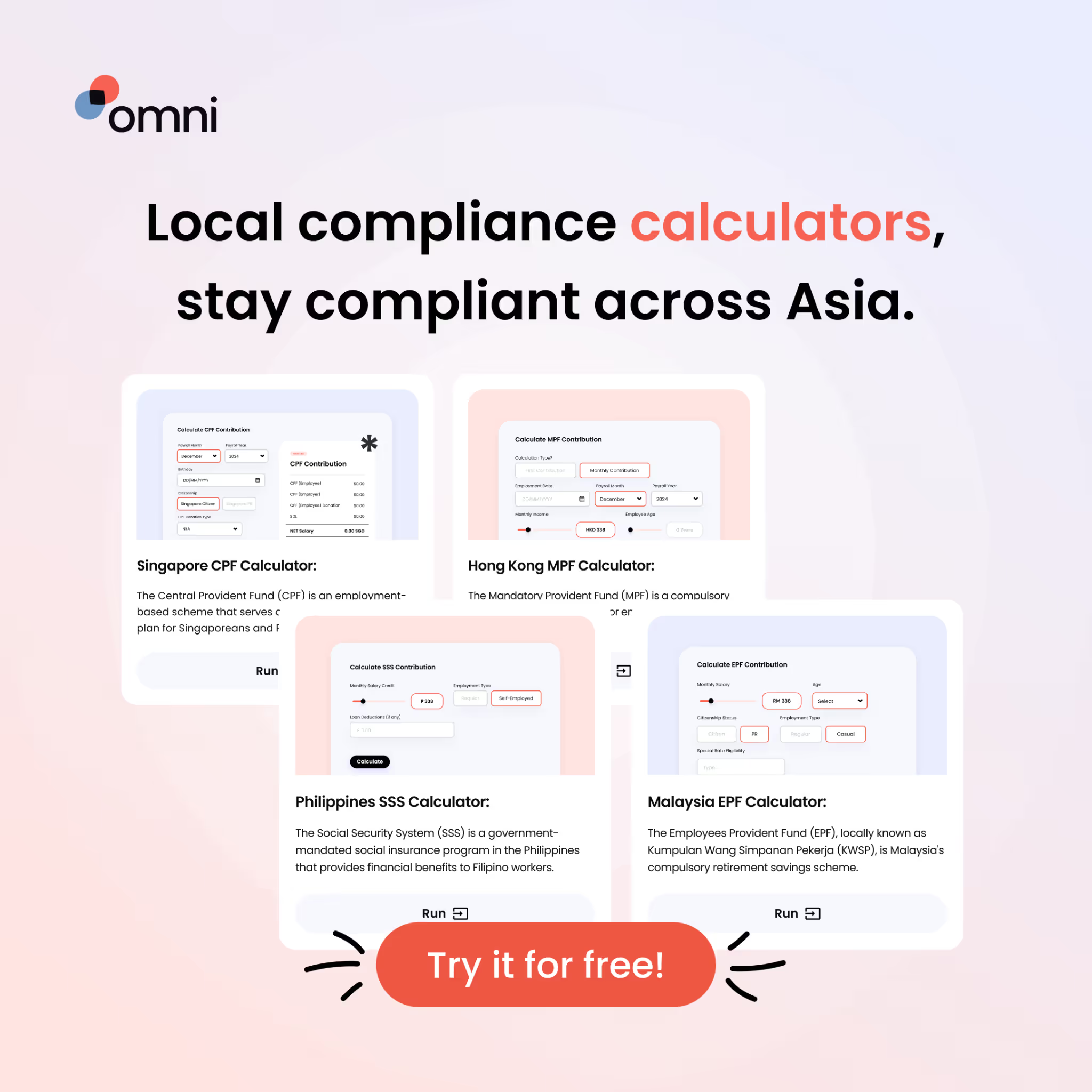
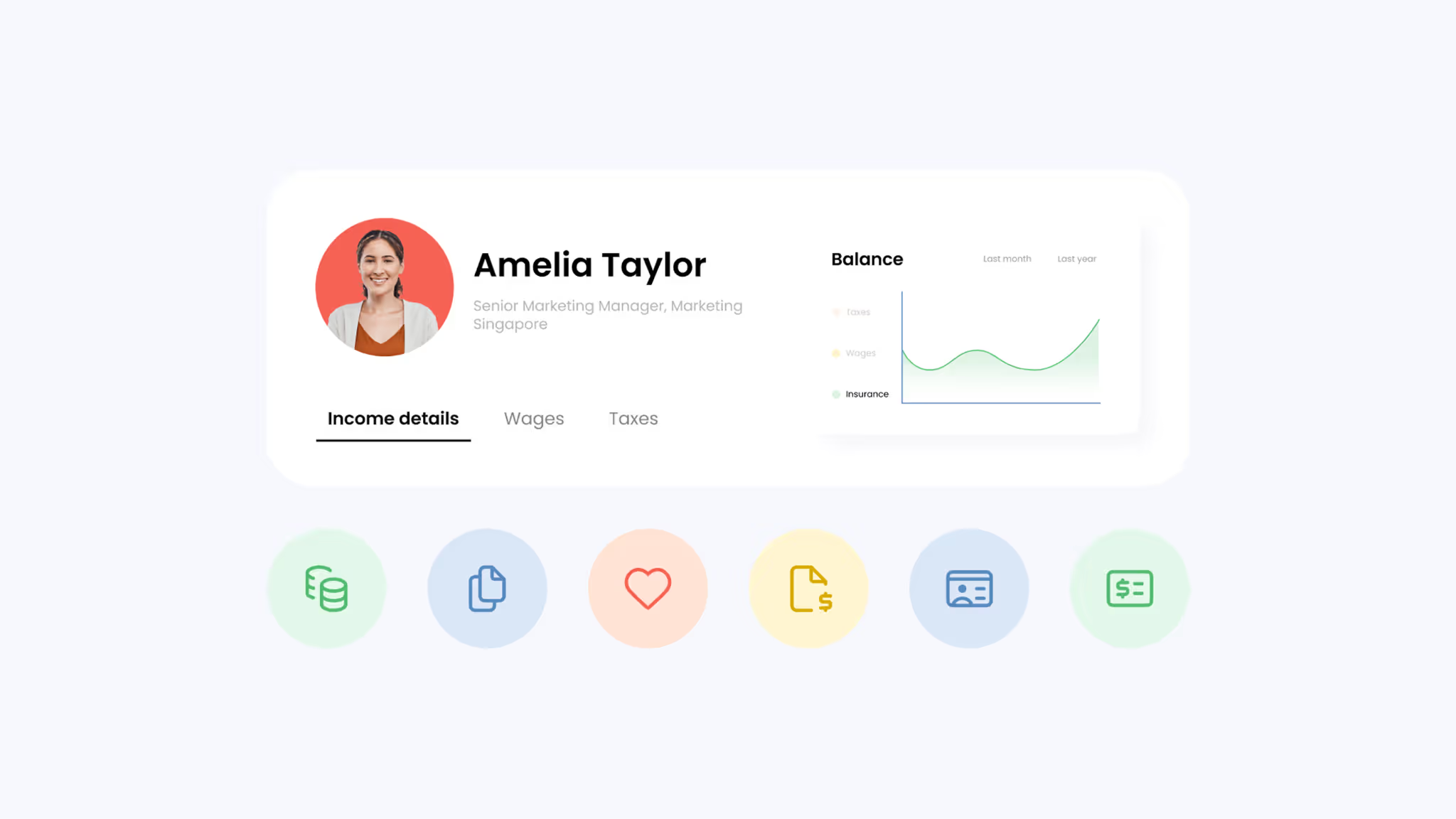
Beyond payroll, Omni HR functions as a full global HR system and HRIS, centralizing recruitment, onboarding, leave management, attendance tracking, employee records, and offboarding in a single integrated system. Any changes to employee data flow directly into the necessary workflows and modules, eliminating duplicate updates across the systems.
For leadership teams, Omni provides real-time reporting and workforce analytics, giving HR and finance visibility into payroll costs, headcount, and regional workforce trends as the business scales across markets.
Strengths:
- Strong SEA payroll automation and compliance coverage across SG, MY, and PH
- Unified HRIS and payroll workflows in one system — no fragmented tools
- Built specifically for regional expansion, not retrofitted for APAC
- AI-native platform, Mino answers workforce and payroll questions in plain language, scoped to each user's existing permissions
Considerations:
- Less suited for contractor-heavy operating models
- Complex multi-entity setups may require longer onboarding
Deel
Best for: Global teams prioritizing compliant international hiring and payments over direct control of in-country payroll.
Deel is global HR software commonly used by companies that need to hire and pay employees or contractors across multiple countries without establishing local entities. Its core strength is in Employer of Record (EOR) and contractor management — Deel becomes the legal employer and handles statutory deductions and compliance on your behalf.
Deel integrates with HR and finance tools for reporting and payments, but it is a less comprehensive fit when you want to manage locally employed payroll within your own entities across multiple countries.
Strengths: Fast international hiring via EOR; strong compliance coverage for remote and distributed teams
Considerations: Limited flexibility for locally employed, multi-country payroll setups; less suitable for companies seeking direct payroll ownership
Rippling
Best for: Companies that want HR, payroll, and IT tightly integrated and can manage variable payroll coverage by country.
Rippling is a global HR system designed for teams that want to manage HR, payroll, and IT operations within a single platform. It supports multi-country payroll through a combination of direct processing and regional payroll partners, with strong workflow automation across HR and IT.
Payroll localization depth and compliance coverage vary by country and typically require more configuration than region-specific platforms.
Strengths: Advanced workflow automation; tight integration between HR, payroll, and IT systems
Considerations: Uneven international payroll depth by country; higher complexity for smaller or non-technical teams
Remote
Best for: Companies hiring internationally without establishing local entities.
Remote is a global HR software platform primarily used by organizations that want to employ and pay workers across multiple countries through an EOR model. Remote becomes the legal employer and manages payroll, statutory deductions, benefits, and compliance within its own legal entities in each country.
This removes the need for in-house expertise on local labor regulations but limits flexibility for companies that want to manage their own in-country payroll or customize HR workflows.
Strengths: Strong compliance handling across countries; predictable, low-maintenance EOR payroll
Considerations: Limited flexibility for locally employed payroll; less customization for internal HR processes
HREasily
Best for: Small to mid-sized SEA-based teams with straightforward HR administration and payroll needs.
HREasily is widely used by SMBs across Southeast Asia that need a straightforward system for HR administration and payroll. It covers essential functions — employee records, leave management, attendance tracking, and basic payroll — aligned with local statutory requirements.
Strengths: Simple setup; strong familiarity with ASEAN payroll requirements
Considerations: Limited scalability and automation for complex multi-country operations
Choose the Right Global HR Software for Your Team
The right global HR software depends on how your business is structured and how much control you want over payroll and compliance. If you run in-country payroll across multiple SEA markets and want direct visibility into every statutory calculation, you need a system with deep regional payroll logic built in — not a generalist tool with APAC as an afterthought.
If you're expanding internationally without establishing local entities, an EOR-first platform like Deel or Remote may be a better starting point. As you establish local operations, the case for a full global HR system with in-country payroll capabilities — and a complete HRIS to manage the employee lifecycle around it — becomes increasingly clear.
For organizations managing or planning to manage local payroll across Singapore, Malaysia, and the Philippines, Omni combines global payroll capabilities with local compliance expertise and a unified HRIS, making it easier to manage employees across multiple countries from a single platform.
Book a demo with our team to see how we handle multi-country payroll, compliance, and AI-powered workforce insights in practice.
Frequently Asked Questions
Global HR software is a platform that helps companies manage employees across multiple countries while automating payroll, statutory contributions, taxes, and compliance with local labor laws. It centralizes HR processes — payroll, leave, approvals, and employee records — across different jurisdictions in one system, rather than requiring a separate tool for each country.
A standard HRIS (Human Resource Information System) is typically built for a single market and assumes consistent rules across locations. Global HR software is architectured around country-specific payroll laws, statutory contribution schemes, leave policies, and compliance requirements. This makes it significantly more suitable for multi-country teams, particularly in Southeast Asia where regulations differ substantially between markets.
In-country payroll means your company runs payroll through its own legal entity in each country. An Employer of Record (EOR) uses a third-party platform that becomes the legal employer and handles payroll and compliance on your behalf. Global HR software like Omni supports in-country payroll, giving you direct control. EOR models reduce setup complexity but offer less flexibility for customizing HR workflows.
For companies managing local payroll across these three markets, the best fit is a platform with CPF, EPF, SOCSO, EIS, SSS, PhilHealth, and Pag-IBIG calculations built natively into the payroll engine. Omni HR handles all of these within a single system, alongside full HRIS functionality. For EOR-based hiring without local entities, Deel and Remote are strong options.
The most important capabilities are: accurate multi-country payroll with local statutory compliance, multi-currency support, centralized HRIS for employee records and workflows, leave management aligned to country-specific rules, and scalability to add new markets without rebuilding your processes. Real-time consolidated reporting across markets is also a strong differentiator for HR and finance leaders.
Yes. Modern global HR systems apply country-specific tax rates, statutory contribution tiers, leave entitlements, and public holiday calendars automatically as part of the payroll workflow. This reduces manual checks, prevents calculation errors, and ensures your team stays aligned with regulatory requirements in each market — including when those requirements change mid-year.
Yes. Global HR software is designed to scale as you enter new countries. You can add markets progressively without rebuilding your HR or payroll processes from scratch, which makes it a sound infrastructure investment for businesses that are expanding — not just those that have already expanded.



.avif)
.avif)