.png)
Summary. Business mistakes often begin quietly in early-stage startups, especially when founders move fast to pursue business ideas and build a startup business without structured HR processes. Common startup mistakes include hiring mistakes such as recruiting too quickly without role clarity, inconsistent onboarding, relying on verbal agreements, ignoring company culture, overloading founders with HR admin, and failing to plan scalable processes early. These common small business mistakes lead to productivity loss, poor retention, compliance risks, and burnout—even among successful startups. By putting simple, repeatable HR processes in place and using lightweight HR tools like Omni HR, founders can avoid costly business mistakes and build a stronger foundation for growth, regardless of the best business to start or the stage of the startup business.
Early-stage startups move fast as they build products, hire people, ship new features, and grow revenue. In that rush, many founders may inevitably treat HR with casual disregard or ignore it entirely.
But beneath the surface, what looks like a “small admin task” can quickly become a major business mistake when you are under pressure: hired too quickly, poor onboarding processes, unclear job scope, hiring mistakes, and poor retention.
In this article, we outline the 7 most common HR-related business mistakes that early-stage founders make, mistakes that are often overlooked and avoidable with a bit of discipline and the right HR tool by your side. By avoiding them early, you can build a stronger foundation for growth without needing to hire a full HR team.
Mistake #1 - Hiring Too Quickly Without Clear Roles
This is one of the severe business mistakes because it may seem harmless and even productive initially. A lot of founders think that higher headcount means improved efficiency and growth.
But this is only true when done correctly. Hiring too quickly leads to duplicated roles, unclear day-to-day responsibilities, weak accountability from a disorganized hierarchy, and rushed or missing onboarding that leaves new hires confused.
The result of this common business mistake is the gradual depletion of financial resources without a clear return. When HR processes are fragmented or overly manual, productivity losses add up quickly.
In Singapore alone, workplace inefficiencies caused by disconnected tools and poor workflows are estimated to cost the economy up to US $85 billion annually, with employees losing over an hour each day on low-value tasks. For early-stage founders, these hidden productivity losses often surface as missed deadlines, slower onboarding, and leadership time drained by admin, long before they show up clearly on a balance sheet.
How to solve:
To avoid this hiring mistake, ensure to recruit with intention. Avoid hiring in panic or because your competitors are doing so, both globally and locally. Decide if you need to hire. Sometimes, you don't need an extra employee; rather, you need to train an existing one. If you decide to hire, define a clear job description, required skills, and deliverables for each position.
Mistake #2 - Inconsistent Onboarding Process
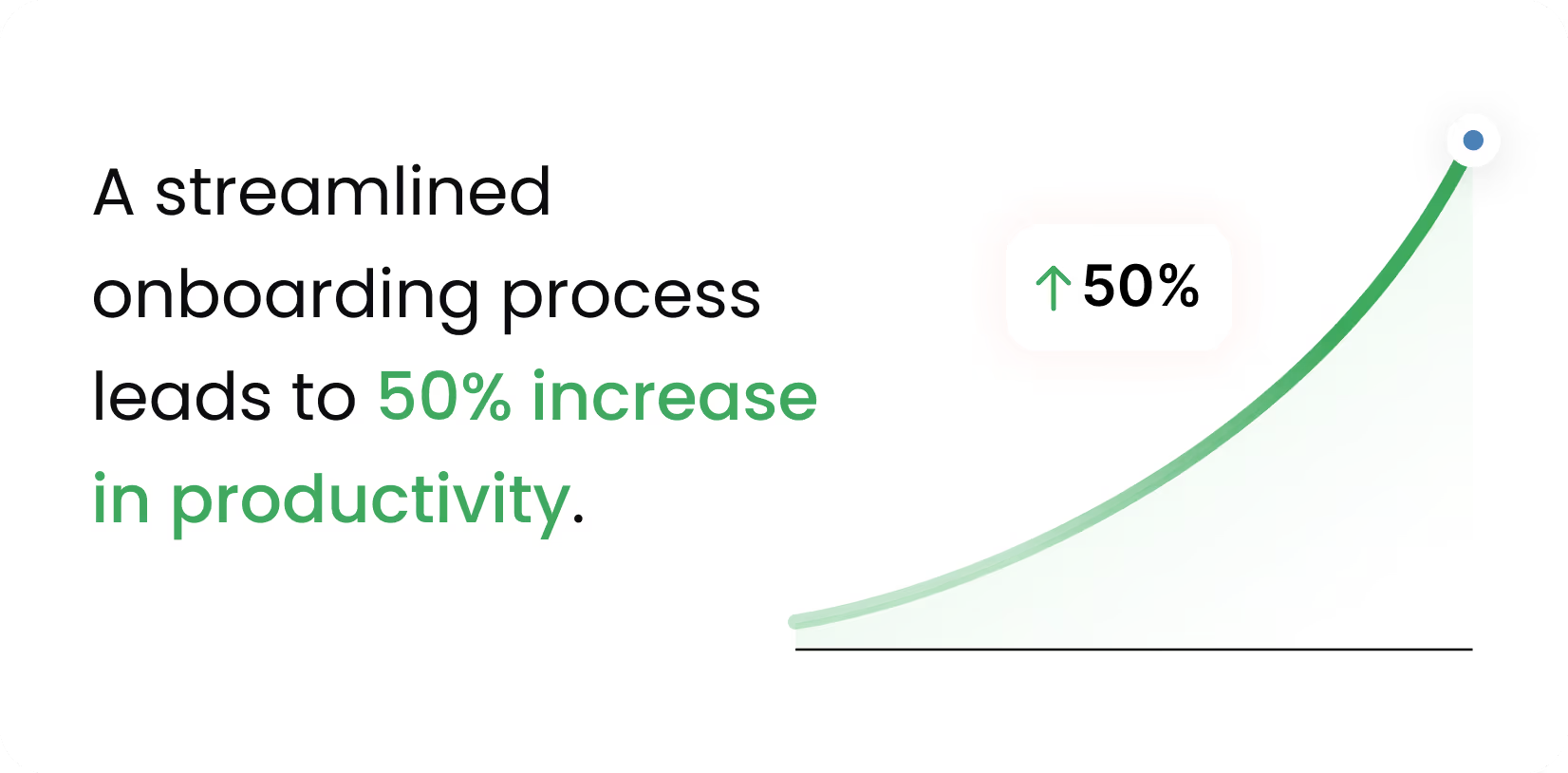
Organizations with standard onboarding processes experience a 50% increase in productivity. This demonstrates that productivity and a standard onboarding process are inseparable for successful startups.
Your onboarding procedure is your chance to make a lasting first impression on your new hire regarding your company culture. It is an opportunity to set expectations and to create an environment where your new hire can thrive. Still, startup businesses often struggle with documenting SOPs that ensure consistent and adequate onboarding experiences across the board.
This is a common small business mistake driven by the belief that scaling only requires hiring talented employees who can work with minimal supervision. But successful startups know that employees can only work with proper guidance and deliver results when they are rightly equipped and trained.
How to solve:
Determine what impression you want your startup business to have on your new hires. Then build your own onboarding process around such an experience. Next, prepare a simple onboarding checklist. You don’t need a 20-step checklist from the start. All you need is a guide, which can look something like this:
- Pre onboarding: Offer acceptance, onboarding email, and relevant paperwork.
- First work day: Warm welcome, introduction, brief office tour, allocate access, and finish up paperwork.
- First week: Check-in, 1-on-1 meetings, offer support, and keep communication lines open.
Free resource: The Comprehensive 30-60-90 Day Plan Template
Mistake #3 - Treating Hiring as Cost Instead of Investment
On average, it costs $4,700 to hire an employee, and this can be slightly higher depending on the industry.
When budgets are lean, and you're looking to maximize every dollar, it is easy to make this startup mistake and hire cheaper or less experienced candidates to reduce recruitment costs. But this hiring mistake increases your chances of a bad hire, and they cost your startup business more in the long term.
This cost is not only financial. It impacts your company culture, team morale, productivity, and client trust. Client trust is hard to measure because dissatisfied clients often don’t complain—they simply switch to a competitor.
How to solve:
Evaluate candidates for attitude, adaptability, qualifications, and cultural fit. Learn the skills required to properly assess candidates. You can also look up interview questions for inspiration. Avoid emotional hiring decisions, and if bias creeps into your judgment, step back and let a neutral party take over.
Mistake #4 - Relying on Informal Agreements or Verbal Promises
Startup businesses often assume that written contracts and documented agreements are only necessary for large teams. Many founders believe that shared vision and trust are enough to keep everyone aligned.
This business mistake tends to boomerang quickly, and successful startups understand this early. People interpret information differently, and verbal communication is distorted over time. Without clear documentation, communication barriers widen, leading to misunderstandings and avoidable disputes. Productivity suffers, and operational efficiency declines.
How to avoid it:
Document all agreements, decisions, and expectations. Avoid relying on verbal instructions for official tasks or responsibilities. Clearly outline requirements in writing and use structured communication tools to ensure clarity and accountability.
Learn more: What to Include in an Employment Contract
Mistake #5 - Ignoring Company Culture and Employee Experience
Early start-up founders could fall for the business mistake of hiring candidates based on charm and charisma alone. While these qualities matter, they're not the major criteria for finding the right fit.
The right fit is a candidate who values company culture, workplace ethics, and has the requisite skills and experience to execute the job. But, with an excessive focus on product growth and scalability, startup businesses may hire individuals who have the knowledge but are a poor cultural fit, or vice versa.
How to solve:
Define the core values and company culture of your startup business. Ensure to review your company culture before each hiring round and hold your new hires to those standards. Lead interviews with curiosity, not assumption to avoid this hiring mistake. Verify fit by speaking with past employers about work ethic and performance.
Free resource: The Modern CEO’s Guide to Growth Through Company Culture
Mistake #6 - Over-relying on Founders
With no HR staff and a small number of employees, founders or early team leads often end up handling hiring, payroll, onboarding, and administrative tasks. This research by Sifted shared that 85% of founders experienced high stress in the past year, while 75% had anxiety in the same period.
This business mistake slows down operations, drains energy, leaves HR tasks incomplete or inconsistent, and increases the risk of avoidable errors.
How to solve:
Use automated HR software to reduce workload. Systems like Omni HR handle repetitive and time-consuming tasks, such as onboarding and its associated paperwork, payroll, and learning management for employees. Also, ditch the hero founder mentality and delegate more to capable employees.
Mistake #7 - Not Planning Scalable Processes Early On
Many founders make this common small business mistake of focusing entirely on the business idea while delaying HR and administrative processes, assuming structure can wait until the team is larger.
While this may work briefly, growth quickly exposes the cracks. As teams expand, manual operations lead to inefficiencies, errors, and internal confusion. Without scalable systems in place, startups experience inconsistent onboarding, blurred roles, contract issues, and payroll errors.
How to solve:
Avoid this business mistake by starting with simple, documented workflows from day one. Focus on core processes that affect people and operations, such as:
- Hiring: Use a standard hiring checklist for every role. Document interview criteria and interview scorecard to reduce hiring mistakes.
- Onboarding: Create a short onboarding guide. Outline tools, expectations, and company values.
- Role setup: Define responsibilities and expected outcomes clearly. Review roles as the company grows.
- Contracts: Use standard contract templates. Store signed agreements in one central location.
- Payroll basics: Set clear pay schedules. Document how payments are tracked and approved for accuracy, timeliness, and compliance using a simple checklist.
If you’re building a team and want a clearer way to document these processes without hassle, download our HR Practices and Policies for Scaling Startups guide for inspiration.
Why These Business Mistakes Matter for Early-Stage Startups
Time and resources
Time and resources are scarce, especially for startup businesses. So, making these business mistakes repeatedly can lead to business bankruptcy. After a funding round, founders make the common small business mistake of hiring too quickly and with too little scrutiny. So, they soon have a team full of the wrong people and depleted finances.
Team cohesion, morale, culture, retention
The difference between a team that stays coherent till the end is in things like hiring the right people, upholding the right culture, and demanding accountability.
When business mistakes such as hiring an individual who is not culture fit occur, it affects every teammate eventually. Even if such candidates are experienced, their poor attitude toward teamwork, feedback, and learning will ultimately destroy the culture.
Instability and uncertainty
Ignoring foundational processes or team alignment is a common business mistake that creates instability. In a startup business, this uncertainty affects decision-making, team cohesion, and daily operations, making it harder to stay on track.
Makes scaling harder later
Failing to address these business mistakes early makes scaling more difficult. Without clear processes, role clarity, and structured communication, a growing startup business struggles to replicate success, onboard new hires efficiently, and maintain productivity.
How Omni HR Can Help
For startups without a dedicated HR team and a limited budget, it may be overkill to go for heavy HR software, but so is manually dealing with spreadsheets and emails. This is where a lightweight, affordable, startup-friendly HRIS can help you avoid these common business mistakes from the start.
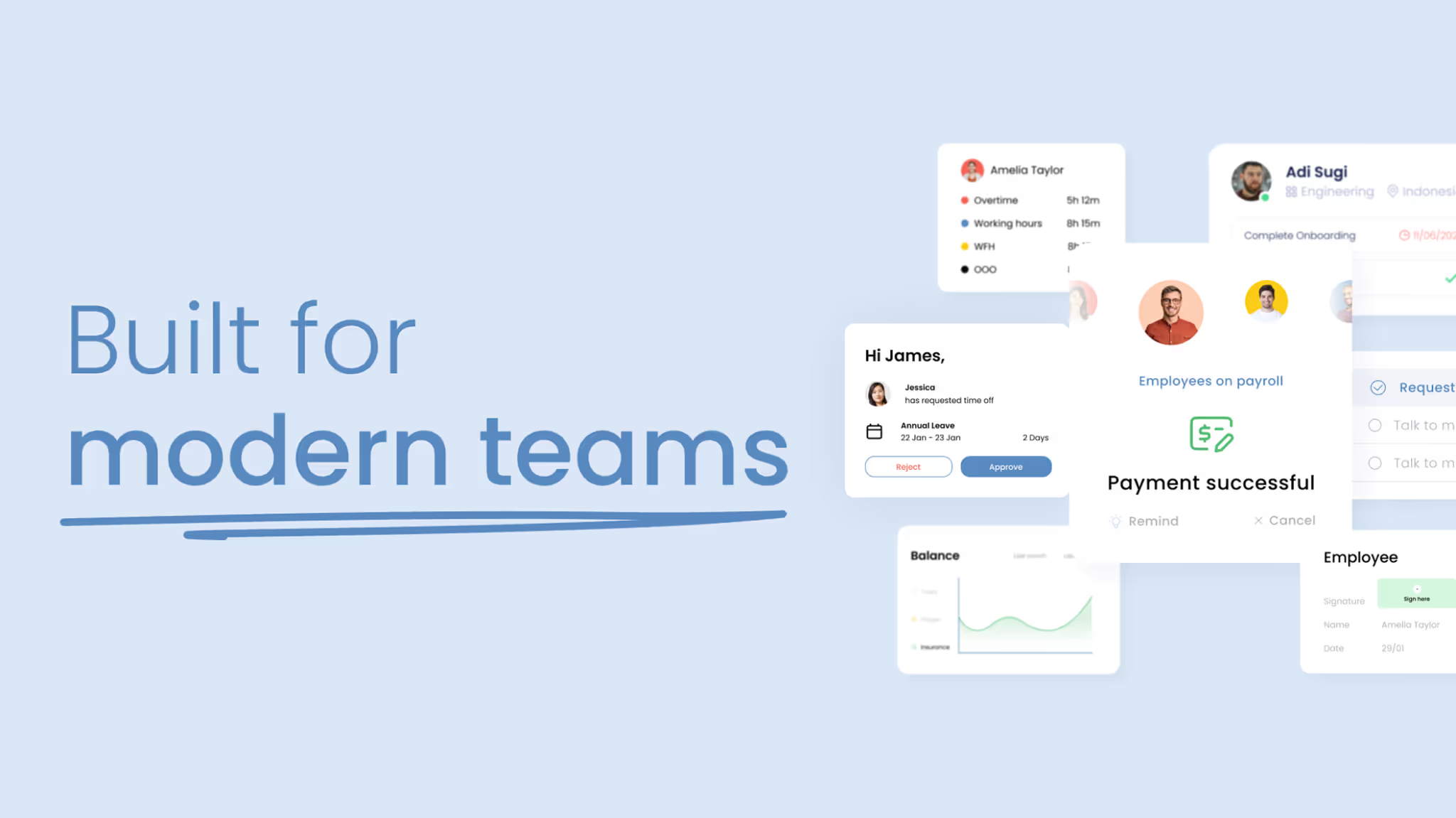
Here’s why early-stage startup founders love Omni HR:
- Simple, core HRIS functionality without the complexity.
- Scales as the team grows, so you don’t need to switch systems later.
- Transparent pricing with no hidden setup fees that bust your budget.
- Local support within your time zone because early-stage founders often need quick help.
- Helps formalize hiring, onboarding, contracts, documentation, and employee tracking so you avoid the business mistakes we covered above.
With Omni HR, you can keep your operations lean yet structured, enabling you to focus on what truly matters: building your product and growing your business instead of your to-do list. Book a demo with our team today and learn more.
.png)


.png)