.png)
Summary. Managed payroll services let businesses outsource payroll processing, tax compliance, and reporting to a specialized provider. While payroll may seem simple, it involves complex calculations, shifting regulations, and multi-jurisdiction requirements that can overwhelm internal teams. Payroll managed services from Omni HR streamline workflows, reduce errors, and ensure compliance, while fully managed payroll services offer scalability and operational clarity. Growing companies or those operating across multiple locations can free HR and finance teams from administrative tasks, allowing them to focus on strategic initiatives that support sustainable business growth.
Payroll looks simple from the outside. Employers pay out salaries, the payslips are sent, and employee taxes are filed.
It may seem like simple steps, but anyone who has actually run payroll knows it’s rarely that straightforward. Most of the time, regulations shift, headcount grows, and different employee types require different tax treatments; one miscalculation can lead to late filings and potential penalties. That’s why many HR and finance leaders are looking into managed payroll services not as a shortcut, but as a strategic operational decision.
In this guide, we go through what managed payroll is, how it works, and when it makes sense to outsource your payroll function compared to running it internally.
Understanding Managed Payroll Services
Managed payroll services involve outsourcing your organization’s payroll function, including calculation, tax compliance, and reporting, to a specialized third-party provider.
Instead of your internal HR or finance team calculating deductions, filing statutory reports, and managing payroll cycles manually (or through payroll software), a payroll partner runs the process on your behalf.
The difference between payroll managed services and in-house payroll goes beyond who presses the “run payroll” button to lean more on accountability.
With in-house payroll, your team:
- manages calculations
- tracks compliance updates
- handles reporting and audits
With managed payroll services:
- A dedicated provider oversees payroll processing
- Compliance checks are built into the workflow
- Reporting, documentation, and audit trails are handled systematically
Some organisations opt for fully managed payroll services, where the provider handles the entire payroll lifecycle, from data validation to payment distribution and statutory submissions, to reduce operational risks.
How Managed Payroll Services Work
Understanding the workflow helps demystify what you’re actually paying for. Here’s how most managed payroll services operate in practice:
Data collection
Your HR team submits payroll inputs like new hires, salary adjustments, bonuses, overtime, leave records, and terminations. In more advanced setups, these inputs sync directly from your HRIS or time-tracking system into the provider’s platform. The provider validates the data before processing. This is where many payroll errors are caught early.
Salary and tax calculations with compliance checks
With payroll managed services, the provider calculates:
- Gross pay
- Tax deductions
- Statutory contributions
- Benefits and allowances
- Net pay
Compliance checks are integrated into the process. If a regulation changes, for example, contribution thresholds or reporting requirements, the managed payroll services provider updates calculations accordingly.
This is one of the major reasons companies adopt payroll managed services, as they reduce their dependency on internal teams that constantly track regulatory updates.
Payment distribution and electronic payslip delivery
Once everything is reviewed and approved, salaries are released through secure banking integrations, ensuring accurate and timely payments. At the same time, with managed payroll services, payslips are automatically generated and shared with employees, and payment confirmations are recorded for internal tracking.
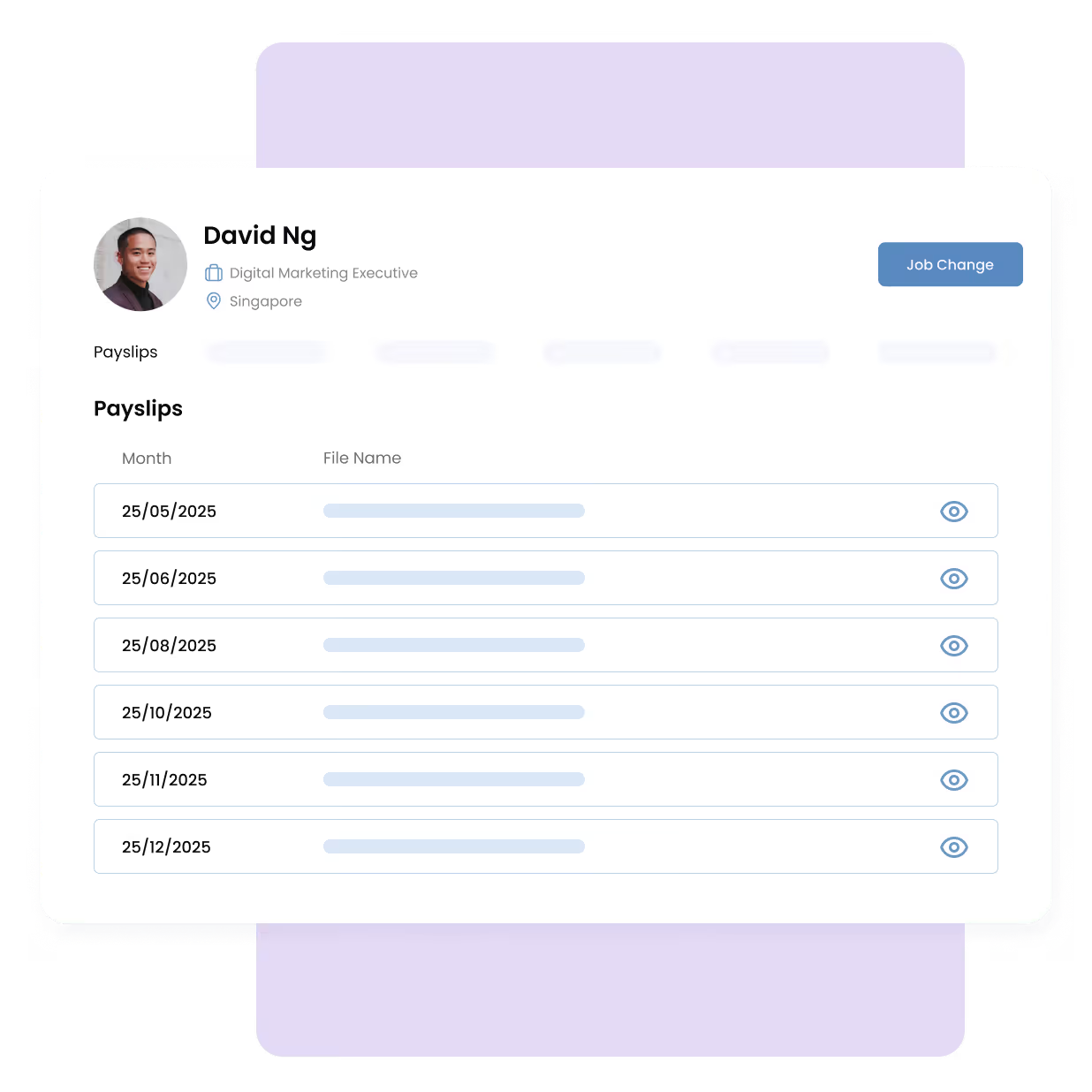
For employees, this means no surprises and no delays. For HR, it means no more manually sending files or responding to repeated queries.
Reporting and record-keeping for audits
Managed payroll providers also handle the reporting side of things. They prepare monthly payroll summaries, generate tax filing reports, produce year-end statements, and maintain documentation that is ready if an audit ever comes up.
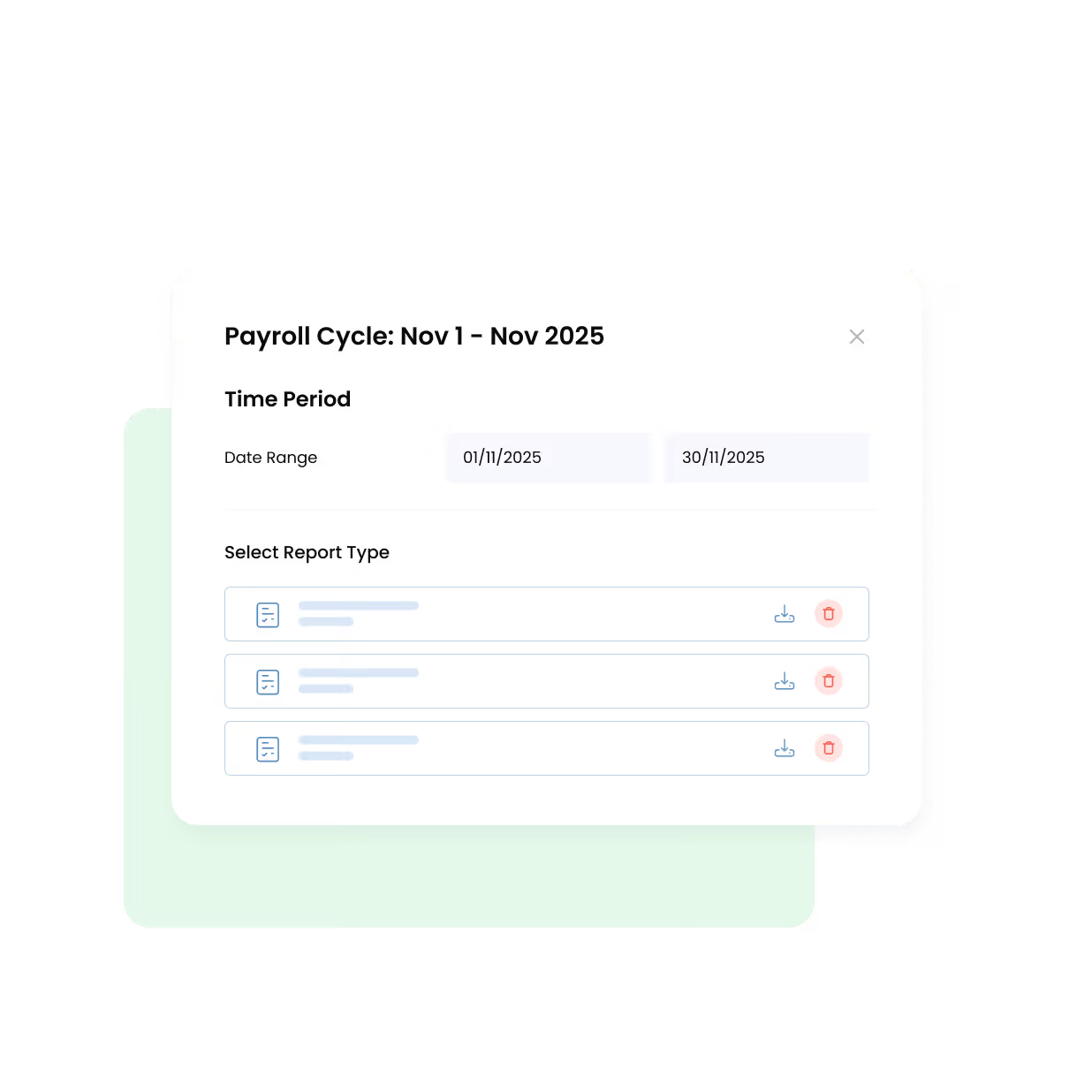
This makes reconciliation far more straightforward and also removes the last-minute pressure of gathering documents and double-checking records when compliance reviews happen.
Top Benefits for Modern Businesses
Companies don’t switch to managed payroll because it sounds innovative. They make the move when running global payroll in-house starts to feel fragile and difficult to sustain.
Here are some practical advantages of managed payroll services:
- Saves time and reduces admin burden: Payroll stops eating up your team’s week. Instead of pursuing spreadsheets and correcting manual mistakes, HR will be able to concentrate on people and planning.
- Improves accuracy and reduces risk: Structured validation checks using managed payroll services reduce costly mistakes like miscalculations or missed deductions. Fewer errors mean fewer last-minute corrections and penalties.
- Ensures compliance: Tax regulations and other rules are adhered to and implemented properly, instead of having an individual employee to keep track of all the regulatory changes. This is especially beneficial for global teams dealing with multiple labor laws.
- Better cost control: Payroll becomes a predictable operating cost instead of a mix of hidden admin time, software fees, and possible fines on non-compliance.
- Scalability for growth: With headcount growth or entering new markets, payroll processes do not fall under the strain. Your laid-down structure with managed payroll services grows as you grow.
- Enhanced security: Sensitive payroll data is handled through secure systems with controlled access, reducing the risk of internal leaks or data exposure.
- Access to expertise and support: You have the support of payroll experts who are involved in compliance and dealing with complex situations on a day-to-day basis, not when a problem pops up.
Managed Payroll vs In-House Payroll
Now that you know what managed payroll services have to offer, let’s do a side-by-side comparison to in-house payroll:
Is Fully Managed Payroll Services The Right Fit for You?
Not every organisation needs to outsource payroll. But certain scenarios make managed payroll a strong consideration. Here are a few reasons you should consider managed payroll services as a right fit:
Fast-growing businesses
If your headcount is growing rapidly, in-house payroll may struggle to keep up with the change. What was originally satisfactory with 30 employees might not come close to meeting your needs at 150.
Fully managed payroll services are built to scale, easing the administrative burden on your HR and finance teams.
Multi-jurisdiction payroll requirements
Businesses that operate across multiple countries or states deals means dealing with different tax regulations, statutory contributions, and reporting requirements. Managed payroll helps lighten the load of navigating several compliance systems at the same time.
Limited internal payroll expertise
Some firms may rely on a single in-house payroll administrator, which can create risk. If that person leaves or makes a mistake, the organization bears the impact. Managed payroll services on the other hand, spreads the responsibility across a coordinated provider team.
Strategic focus on core HR initiatives
HR leaders are increasingly focused on employee engagement, performance management, retention, and workforce planning. When payroll administration takes up a huge amount of time, outsourcing it to fully managed payroll services can allow leadership to focus on more strategic priorities that drive organizational growth.
How Managed Payroll Services Support Sustainable Business Growth
Sustainable business growth is rarely just about hiring faster or entering into new markets. It is about building operational systems that can scale with your business, without putting pressure on the team. Payroll is one of the systems.
As you scale, headcount expands, regulations change, and payroll complexity increases quietly in the background. What once felt manageable by your in-house team slowly begins to consume more time, introduce compliance risk, and limit your HR and finance team from focusing on strategic initiatives. This is where managed payroll services can introduce much-needed structure, accountability, and expert oversight into a function that directly affects every employee.
For businesses operating across Asia, the need for consistency and local compliance expertise is paramount as ever. Different statutory requirements, tax regulations, and reporting standards demand a solution that goes beyond just basic payroll software.
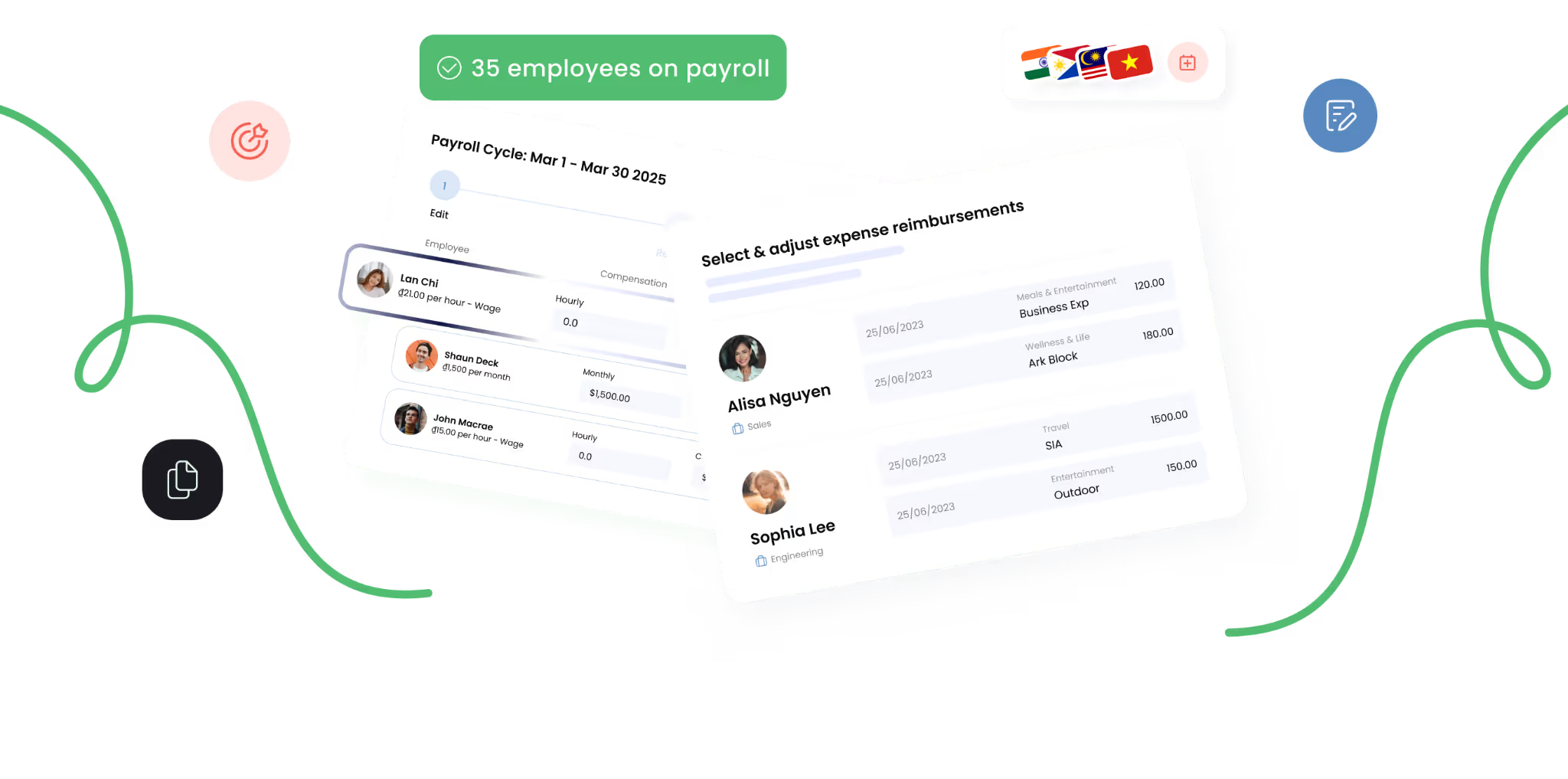
Omni HR combines HRIS and managed payroll services into a single, unified system. By creating a single source of truth for employee data, integrating payroll processing with automated HR workflows, and providing dedicated local payroll support, businesses gain both operational clarity and long-term scalability.
If you’re feeling the increasing pressure of managing payroll in-house, or weighing whether managed payroll services are the right move for your business, book a demo with our team to explore your options.