.png)
Summary. For early-stage founders, HR processes often start as spreadsheets and Slack messages, but this scrappy approach quickly creates admin overload, onboarding friction, and compliance risks. Strong HR processes, covering onboarding, payroll, leave tracking, and offboarding, help standardize, centralize, automate, and scale people operations without a full HR team. When manual systems break down, HR automation software and top HRIS systems for improving HR processes save time and reduce errors. Omni HR is one of the best HR software for startups and among the recommended HR platforms for startups, ideal for founders asking what’s the leading HR software for startups that scales affordably and efficiently.
For most early-stage founders, HR is something that happens in the tiny moments between product sprints and investor meetings. You’re hiring your first five, ten, or fifteen employees, and for now, a few spreadsheets and a Slack channel seem to do the trick.
However, there is a hidden cost to this scrappy approach. As you grow, those informal habits become "people debt"—a tangle of manual tasks, compliance risks, and onboarding chaos that slows down your entire organization.
The truth is, you don’t need a dedicated HR Director to have professional HR processes. You just need a scalable foundation. This guide will show you how to formalize your core people workflows leanly, ensuring your team can scale without the administrative overhead breaking your momentum.
Why HR Processes Matter for Startups
In the startup world, HR processes are often misunderstood as "corporate bureaucracy." In reality, HR is about operational efficiency.
When you have a strong foundation of processes, you aren't just following rules—you are removing friction from your team's day-to-day life. A strong foundation ensures that:
- Talent is utilized: People aren't waiting around for access to tools or clarity on their roles.
- Compliance is invisible: You aren't waking up at 2 AM wondering if you filed the right tax forms for your first foreign hire.
- Culture is consistent: Onboarding isn't a "roll of the dice" based on how busy a founder is that week.
Without these processes, startups face common growth blockers: admin overload for founders, "onboarding debt" where new hires take months to become productive, and a total lack of centralized data, which makes strategic planning impossible.
Learn more: How Does HR Contribute to Business Success? Strategies for Growth
What are core HR Processes?
Startups don't need the complex enterprise frameworks used by Fortune 500 companies. You need well-defined, lightweight workflows for the foundational moments in an employee's lifecycle:
- Onboarding: The journey from signed offer to productive team member.
- Employee data management: A single, secure source of truth for personal details, contracts, and emergency contacts.
- Payroll & compensation: Ensuring everyone is paid accurately, on time, and in compliance with local regulations.
- Leave & attendance: A clear way to request time off and track who is "in the office" (virtual or physical).
- Offboarding: A standardized way to revoke access and handle final payments when someone moves on.
Common HR Process Mistakes in Early-Stage Startups
Most startups begin with manual workarounds. While these work for the first three hires, they become dangerous liabilities by hire number ten.
Relying on spreadsheets and email chains: Storing sensitive employee data in a "People" Google Sheet or tracking address changes via email is a major security risk. It’s also prone to version control issues—if the founder has one version and the accountant has another, payroll errors are inevitable.
No standardized onboarding process: If your onboarding consists of "here is a laptop, ask John if you need anything," you are burning money. Poor onboarding leads to higher turnover and significantly longer "time-to-productivity" for new hires.
Manual payroll processing: Calculating taxes, leave encashment, and bonuses by hand in a spreadsheet is a recipe for disaster. One misplaced decimal point can lead to legal disputes or a very unhappy team.
Fragmented attendance tracking: Tracking leave through Slack messages or "out of office" calendar invites makes it impossible to track leave balances or spot burnout trends.
5-Step Framework to Build Scalable HR Processes
You can build a professional HR engine without a massive budget. Follow this five-step framework to formalize your people operations.
1. Standardize before automating
Before you buy any software, write down the steps for your core processes. What exactly happens when someone is hired?
- Who signs the contract?
- Who sets up their email?
- What documents do they need to provide?
Standardizing the steps ensures that once you do automate, you aren't just automating a messy, broken process.
2. Centralize employee data
Get your data out of scattered folders and into a central database. This includes digital copies of signed contracts, identification documents, and bank details. Having a single source of truth is the most important step toward scaling.
How Omni can help:
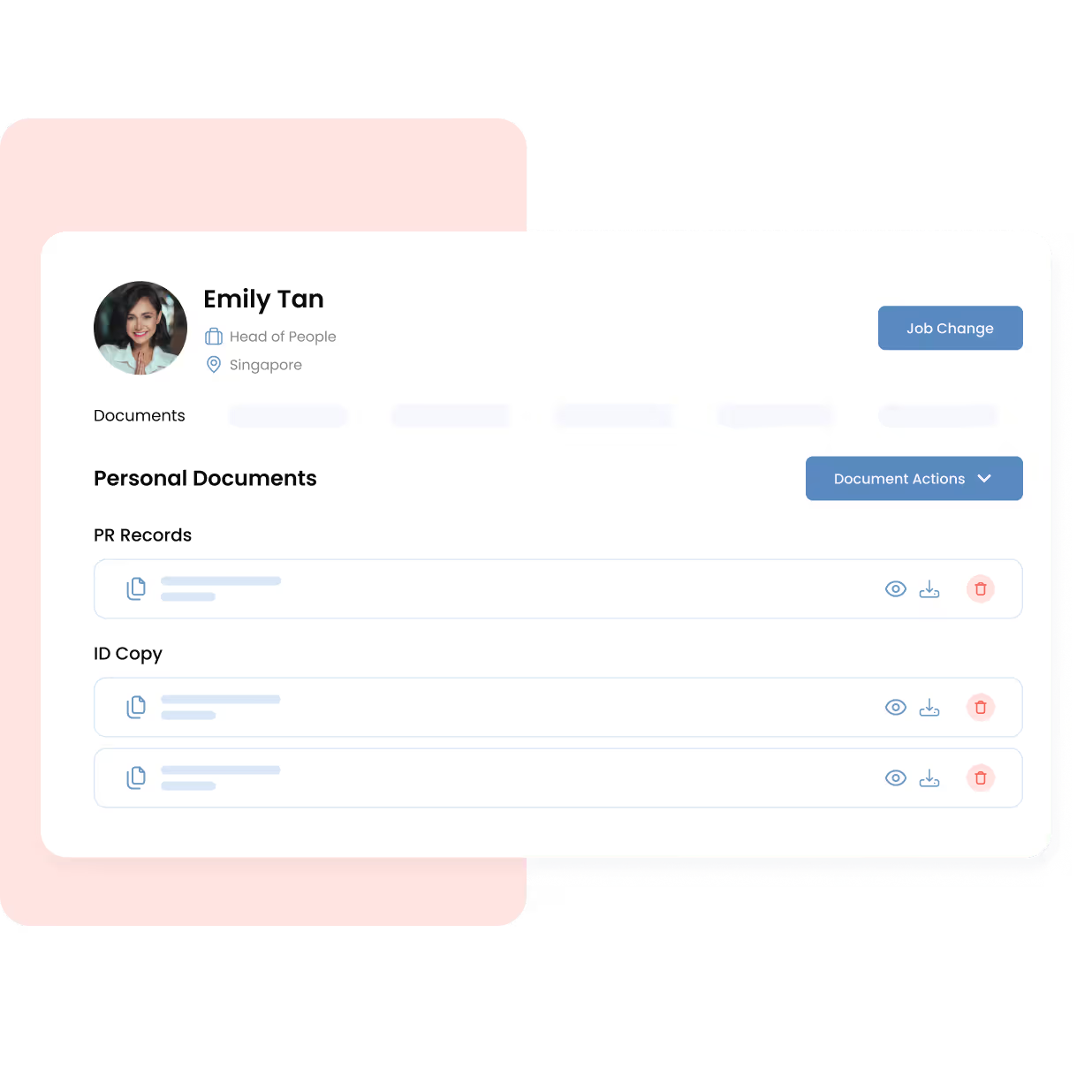
Omni’s centralized document management stores all documents, personal details, and employment records in one place. HR teams can easily access up-to-date information without having to dig through multiple folders and spreadsheets or chase people over email threads.
3. Simplify the onboarding process
Create a "New Hire Checklist" that is the same for every person. This should include a welcome sequence, a standard set of introductory meetings, and a clear list of the tools they need access to on day one.
How Omni can help:
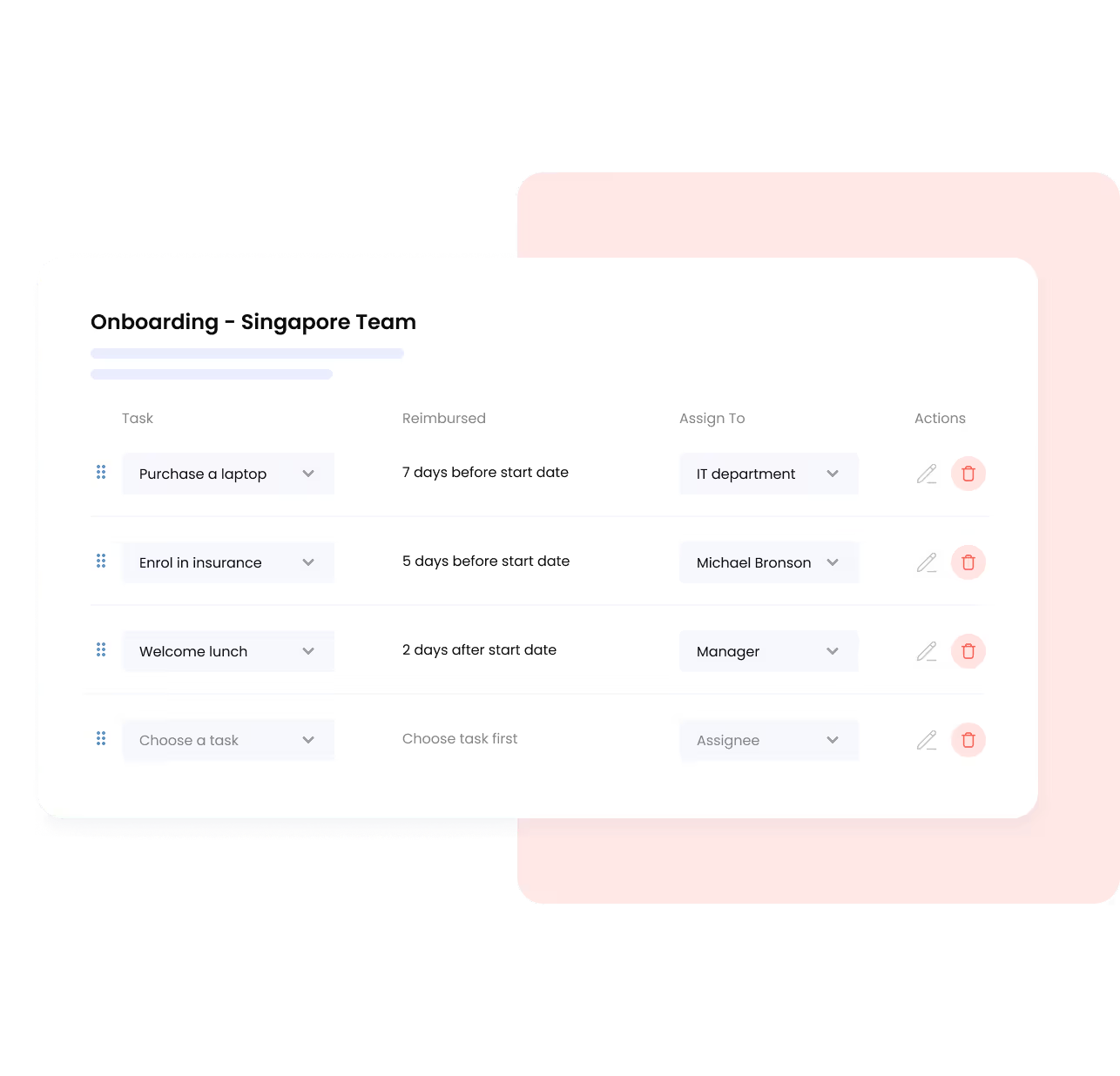
Omni lets you standardize onboarding with automated workflows, so every new hire gets a consistent experience right from the beginning. Tasks are assigned automatically to HR, managers, and IT, keeping everyone on the same page.
Get my free onboarding resources
4. Automate repetitive admin tasks
Identify tasks you do every month that take more than 30 minutes. This usually includes generating payslips, calculating leave balances, or collecting signatures. These are prime candidates for HR automation software.
How Omni can help:
Our platform automates recurring HR admin tasks so your team spends less time on manual work and more time supporting your employees. Payroll, leave tracking, performance management, and more all happen automatically.
"Omni's holistic system has allowed our HR functions to move towards digitization, where traditional manual tasks are now being automated. It's helped save a lot of time for our team to now work on more tangible and relationship-building activities."
— Jack Ang, Head of People at Lucence
5. Build processes that can scale
Ask yourself: "Will this process work when we are 50 people?" If the answer is no because it requires a founder's manual approval for every small thing, you need to build in more delegation or automation now.
How Omni can help:
Omni helps you design scalable HR processes with configurable approval flows and clear role ownership. As your team grows, processes can continue to run smoothly, without becoming a bottleneck for leadership.
Free resource: HR Practices and Policies for Scaling Startups
When You Should Consider HR Automation Software
Manual systems have a specific expiration date: usually right around your 10th or 15th hire. Up until that point, you can just barely keep your head above water with spreadsheets. But eventually, the "admin tax" becomes too high to ignore.
If you are experiencing any of the following warning signs, it is time to move beyond manual entry:
- Founder burnout: You are spending more than one full day a month on payroll, leave tracking, and contract admin.
- Onboarding friction: New hires are starting their first day without the proper equipment, software access, or signed documentation.
- Compliance anxiety: You aren't 100% certain that every employee has a valid, signed contract stored in a secure location.
- Information silos: You have to check three different places (email, Slack, and a spreadsheet) just to find out if an employee is taking leave next week.
When you reach this tipping point, the conversation usually shifts toward finding the best HR software for startups. Many founders find themselves asking, "What's the leading HR software for startups?" or searching for recommended HR platforms for startups that won't require a dedicated IT team to implement.
The transition to modern HR automation software is designed to remove this friction. Unlike enterprise-grade tools, startup-friendly solutions don't require heavy configuration or massive upfront costs. Instead, they act as a silent partner that handles the repetitive people admin in the background.
Integrating top HRIS systems for improving HR processes into your workflow is often the single biggest productivity win an early-stage team can have. It allows you to shift your focus from chasing signatures and calculating leave balances back to what really matters: building your product and scaling your team.
What To Look For in Top HRIS Systems for Improving HR Processes
When evaluating recommended HR platforms for startups, don't get distracted by flashy features you won't use for three years. Focus on these criteria:
- Simple user experience: If it’s too hard to use, your team won't update their info, and you’ll be back to manual data entry.
- Startup pricing models: Look for "pay-as-you-grow" models rather than massive upfront annual contracts.
- Scalable architecture: Can the system handle multiple entities or different currencies as you expand?
- Automation-focused workflows: Does it actually do the work (like digital signatures and payroll sync), or is it just a digital filing cabinet?
- Transparent fees: Avoid systems with "hidden" implementation or setup fees.
- Support availability: When payroll is due, and you have a question, you need an answer today, not next week.
Questions to ask vendors:
- How long does the average startup take to go live on your platform?
- Does your payroll module automatically sync with leave and attendance?
- Can I customize the onboarding checklist for different roles (e.g., Eng vs. Sales)?
How Omni HR Supports Scalable HR Processes
Well-defined HR processes are critical for startups that want to grow without operational friction. When HR is managed through spreadsheets, email threads, and disparate tools, small inefficiencies can quickly turn into bottlenecks.
Omni HR helps founders and growing teams put the right structure in place early, without introducing unnecessary complexity. Built for HR for startups, Omni is a simple and affordable core HRIS designed to support teams from their first hires and beyond. No hidden setup fees or heavy implementation requirements, our platform is the practical solution for companies that need to move fast while staying organized.
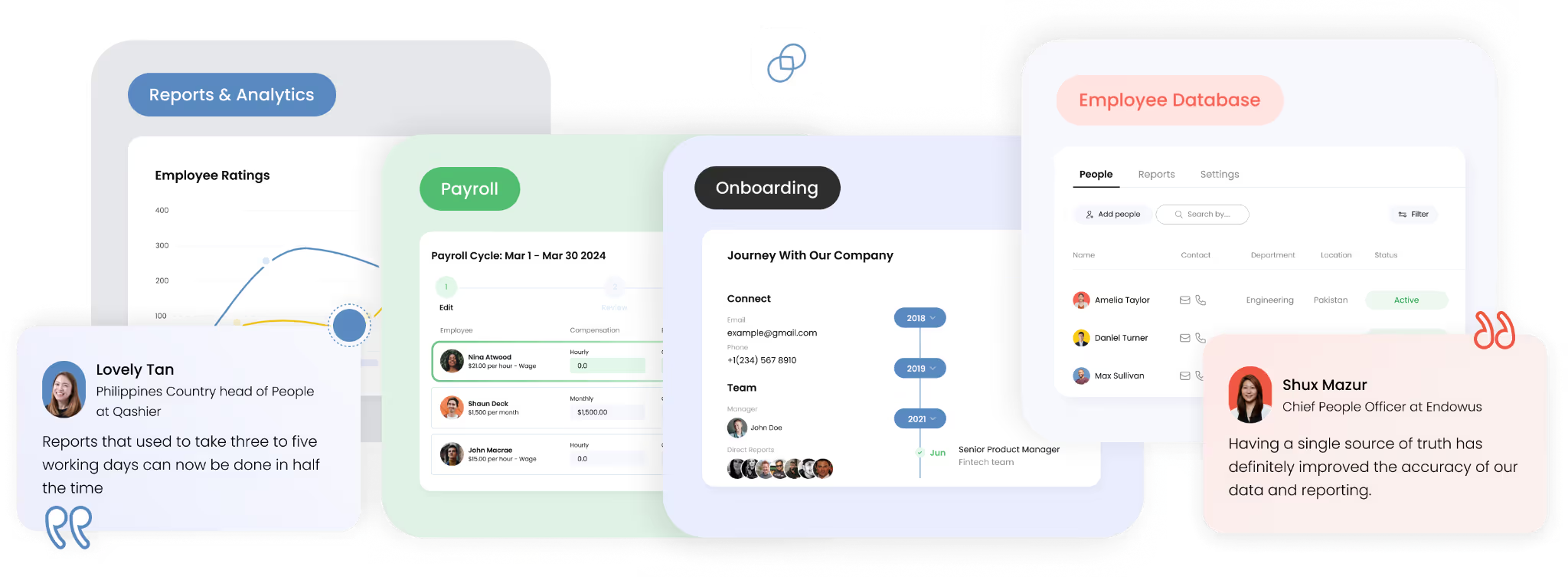
As one of the top HRIS systems for improving HR processes, Omni brings all essential workflows into a single platform, including:
- Digital onboarding, enabling up to 5× faster employee setup.
- Centralized document storage for contracts, IDs, and employee records.
- Automated payroll to reduce manual work and errors.
- Leave and attendance tracking that scales as headcount grows.
Unlike traditional tools, Omni scales alongside your business. Our same platform supports early hires, growing teams, and expanding operations across multiple regions, making it a strong contender among the best HR software for startups and one of the most recommended HR platforms for startup looking for long-term fit.
For founders without an in-house HR team, Omni provides local support that works within your timezone, ensuring critical HR processes stay on track. Explore how HR automation software like Omni HR helps startup founders like you to build scalable HR processes from day one, without heavy implementation, high cost, or complex setup. Schedule your product tour with us today!