.png)
Summary. In today’s competitive talent landscape, Singapore employers must look beyond salaries and design holistic compensation strategies where employee benefits Singapore offerings, particularly benefit-in-kind (BIK), play a decisive role. Far from being just compliance with benefit-in-kind IRAS rules, well-structured in-kind benefits strengthen employer branding, optimize the employee benefit budget, and create lasting value for both organizations and employees. By embracing modern HR tools like Omni, companies can elevate their approach to BIK meaning, turning benefits into a strategic advantage that attracts, retains, and empowers top talent.
Singapore’s attractive talent pool is undoubtedly a draw for businesses, which, in turn, has implications for employee benefit budgets and offerings. In a 2024 CIPD study analyzing the biggest trends impacting organizations’ approaches to employee benefits, 47% of respondents highlighted competition for talent as the most significant.
As such, when talent competition is this strong, companies can’t rely on salary alone; employees are evaluating the entire package. This is where employee benefit Singapore offerings play a decisive role, not just in attracting candidates but also in retaining them. Among these, Benefits-in-Kind (BIK) stand out as a critical part of total compensation, making your benefit packages more appealing.
In this article, we help you understand BIK, their tax treatment, reporting obligations, and the best practices for managing them effectively in Singapore. We also explain how you can automate many of your compliance processes (like benefit administration and IRAS reporting) to lessen your HR workload and make HR processes more efficient with a trusted partner and all-in-one platform like Omni.
Keep reading to learn all about BIK.
What are benefit-in-kind (BIK)?
To clarify the BIK meaning, it refers to the non-cash perks that employees receive in addition to their regular salary, which still carry a monetary value.
While they may seem like “extras,” BIK play a far more significant role in the workplace.
For one, employee benefits are critical for labor law compliance, as outlined in the Employment Act. More than that, in a competitive market, providing employee benefits Singapore further boosts the competitiveness of your compensation packages, attracting the best talent. Some common types of benefit-in-kind are as follows:
- Accommodations
- Company cars or vehicles
- Health insurance
- Childcare support
- Recreational facilities
- Meals & food
- Childcare support
Advantages of offering employee benefits-in-kind
When companies think about benefit-in-kind, the focus is often in compliance and reporting, such as meeting benefit-in-kind IRAS requirements in Singapore.
But beyond ticking regulatory boxes, the advantages of offering employee benefits in kind are highly strategic. Far from being just an additional overhead in your employee benefit budget, they can create long-term value for both employers and employees.
1. Stronger employer branding
Offering well-designed BIK packages signals to potential candidates and existing employees that your organization cares about employee well-being beyond salaries. In competitive markets like employee benefits Singapore, this employer branding helps position your organization as a top place to work.
2. Tax efficiency and optimization
Among the many advantages of offering employee benefits, tax optimization is one of the most overlooked. Depending on the benefit-in-kind that you offer, some options can be more tax-efficient than others, helping stretch the employee benefit budget further.
3. Customization and flexibility
Another of the advantages of offering employee benefits is that, in some cases, employees may see them as more personal and impactful than common salary adjustments or increments. In-kind benefits can be easily customized to meet the diverse needs of your workforce, whether it be healthcare, wellness perks, or lifestyle allowances. This customization and flexibility result in a higher perceived value of employee benefits Singapore provides without significantly impacting your employee benefit budget.
4. Improved work-life balance
BIKs like childcare support, wellness memberships, or meal allowances directly improve employees’ daily lives. This eventually translates to lower stress levels and burnout, fewer absences, and higher employee engagement.
5. Boost to productivity and creativity
When employees feel cared for through meaningful BIK, they bring more energy and creativity into their work. For example, wellness benefits or flexible learning allowances can foster a culture of continuous learning and innovation by encouraging employees to stay mentally and physically sharp. This is one of the most practical advantages of offering employee benefits for businesses who are looking to boost innovation.
6. Reduced recruitment and training costs
Meaningful benefit-in-kind offerings result in lower employee turnover, which in a way reduces the hidden costs of constant rehiring, onboarding, and retraining. This reduces the overall cost of employment over time.
Read next: The Cost of Recruitment: HR's Guide to Creating, Tracking and Implementing a Salary Budget
7. Appeal to a multigenerational workforce
A good benefit-in-kind program addresses different employee life stages, from fresh graduates seeking career development opportunities to working parents needing family support and older employees valuing healthcare coverage. This inclusivity is yet another advantages of offering employee benefits that companies can leverage to gain a competitive edge in retaining talent across multiple generations.
8. Future-proofing against workforce trends
Looking ahead, the advantages of offering employee benefits extend beyond current needs as well. As hybrid and flexible work become the norm, employee benefits Singapore, such as digital allowances, coworking space passes, or mental wellness apps, prepare organizations for the future of work.
What are the examples and categories of benefit-in-kind?
Benefit-in-kind can take many different forms, ranging from practical allowances to lifestyle perks. Below are some common examples and categories that employers in Singapore may offer:
- Accommodations-related benefits: Accommodations, housing, and furnishing
- Air passage: Beneficial for workers traveling back and forth for work
- Awards: For occasions like retirement or passing exams
- Corporate event benefits: Like overseas dinners or door gifts
- Loan-related benefits: Including subsidized or interest-free loans
- Car-related benefits: Provided transportation, paid mileage, and maintenance expenses
- Childcare subsidy: For childcare or student care
- Central Provident Fund (CPF) contributions: Employer's contributions for employment in Singapore
- Gifts: For special and festive occasions like birthdays and New Years
- Insurance premium: Including personal insurance policies, group insurance policies, travel insurance policies, and workman's compensation
- Lump sum payment: Can be gratitudes, retrenchment payments, and retirement benefits
- Meals & food: Free food or meal allowances
- Medical and dental care: Medical insurance and benefits
- Holiday trips: Reimbursement for holidays and overseas holiday trips
- Overtime payments: Overtime allowances or claims
- Per diem: Daily allowances for work travel-related expenses
- Social and recreational facilities: Corporate passes to places like gyms, BBQ pits, and chalets
- Staff discounts: Discounts for staff, their families, and their friends
- Stock options: ESOP or ESOW plans
- Subscriptions: To clubs, gyms, cable for TV, and internet reimbursements
- Training: Including training, courses, and scholarship programs
- Transport: Reimbursements and allowances for business trips
- Tax borne by employer: Income taxes that you fully or partially bear
In-kind benefits are generally taxable, but there are exemptions and concessions. Non-taxable benefits include medical and dental benefits (provided under a company-wide plan), job-related training courses, and business travel expenses.
Tax Treatment for Benefit-in-Kind
According to the IRAS, “all gains and profits derived by an employee in respect of his employment are taxable, unless they are specifically exempt from income tax or are covered by an existing administrative concession.”
So when it comes to the default setting for employee benefits, Singapore renders them taxable. However, as mentioned earlier, these are the benefit-in-kind exemptions and concessions:
- Benefits for fostering goodwill and building company culture (e.g., team outings)
- Employee health benefits or perquisites
- Benefits/ perquisites to promote creativity and innovation
- Benefits/ perquisites for skills development and knowledge building
- Gifts
- Childcare subsidies
- Death gratuities/Disability payments/Workmen's compensation
- Entrance fees for club memberships
- Insurance premium or group medical insurance
- Interest-free or subsidised interest loans
- Electronic devices and notebooks are provided for business purposes
- Awards
- Staff uniforms
- Overtime meal allowance and reimbursement
- Transportation-related payments
- Private benefits (like reimbursement of car parking charges and petrol for transportation from and to work)
- Staff discounts
How tax value is determined
The taxable value of a benefit depends on the type of benefit provided. For example:
- Company cars: Calculated using a fraction of the car’s cost or lease, plus running and maintenance expenses.
- Housing: Based on the actual rent paid (minus any rent recovered from employees).
- Medical insurance and childcare subsidies: Generally not taxable when provided under company-wide plans or approved exemptions.
Employer obligations
It’s important to note that it is the employer’s responsibility to file these taxes.
According to the IRAS, “Employers are required by law (S68(2) of the Income Tax Act) to prepare Form IR8A and Appendix 8A, Appendix 8B or Form IR8S (where applicable before YA 2026) for employees.”
In addition, businesses with more than five employees are required to register for the Auto-Inclusion Scheme (AIS) and submit employee income information electronically to IRAS. Submissions must be made accurately and on time to avoid legal action, fines of up to $50,000, and reputational damage.
Employer and Employee Obligations for BIK
When it comes to benefit-in-kind, IRAS sets out clear responsibilities for both employers and employees.
Employers
- Annual declaration: Employers must declare all benefit-in-kind as part of employees’ annual income. This is done through the required tax forms mentioned earlier.
- Submission via AIS: These forms must be submitted electronically to the IRAS through the AIS scheme, with the deadline being 1 March of the year following the reporting period.
- Record-keeping: Employers must maintain detailed records of all benefit-in-kind for payroll and IRAS reporting. MoM also requires employment records, including salaries and allowances, to be retained for at least two years.
- Audits and accuracy: Regular audits are encouraged to identify errors early, minimize risks, and demonstrate proactive compliance.
Employees
While employers handle the submission, employees are the ones who complete the forms. Therefore, employers must clearly communicate and raise awareness about the tax implications of benefits-in-kind provided.
Educating employees ensures they complete their forms accurately and on time, reducing the likelihood of errors, penalties, or compliance issues.
Best Practices for Employee Benefits Singapore Administration
Managing employee benefit-in-kind requires more than just compliance. It’s about designing programs that attract top talent, streamline HR processes, and maximize the value of your employee benefit budget. To achieve this, HR leaders must plan carefully around issuance, tax filing, record-keeping, and recruitment strategies.
Automate core processes with HR software
Technology can transform how organizations manage in-kind benefits. With an intuitive, all-in-one HR platform like Omni, HR teams can automate form generation and submission, benefit issuance, and payroll calculations. This reduces repetitive work while ensuring compliance with benefit-in-kind IRAS requirements.
Centralize document and policy management
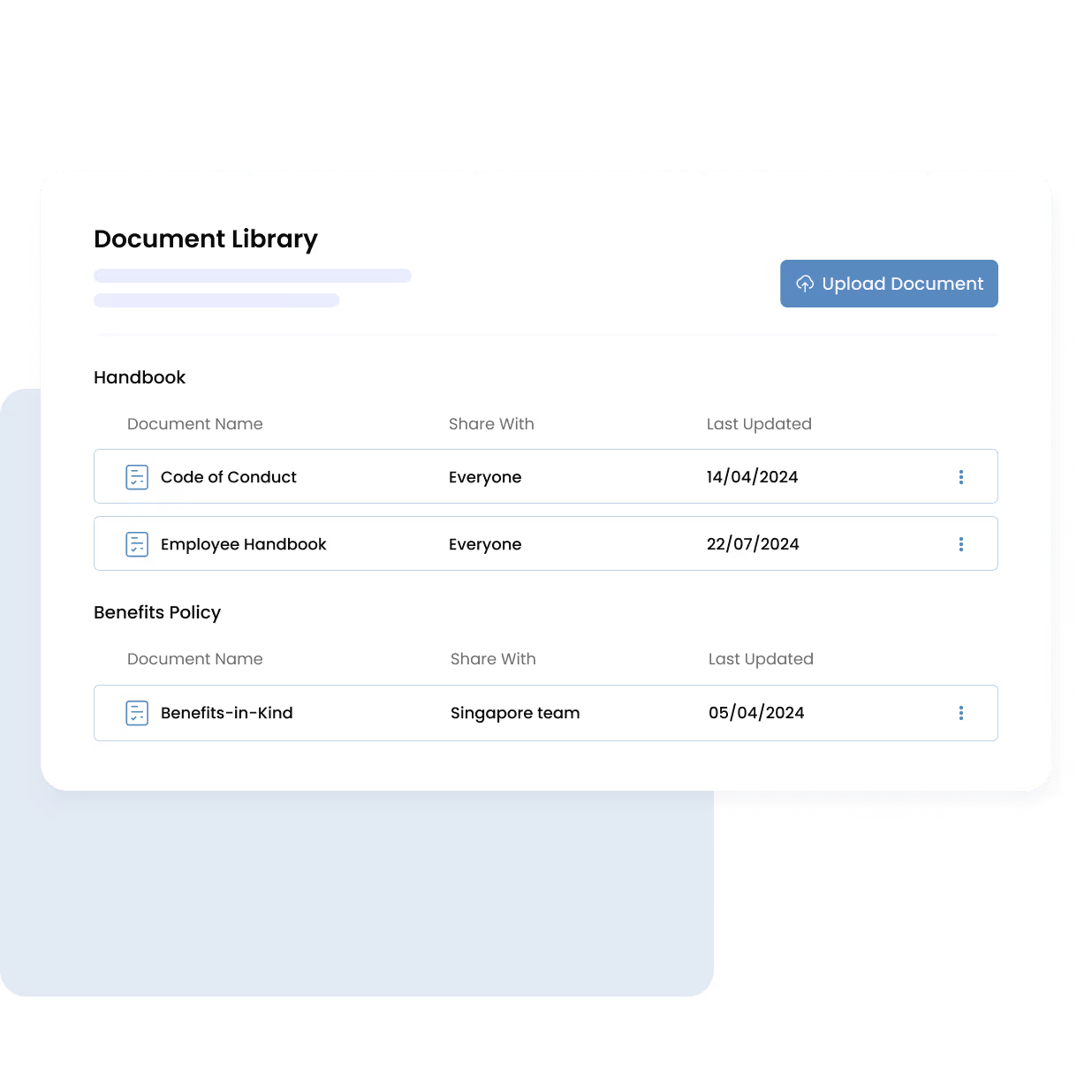
Strong documentation is essential for effective benefit-in-kind policies. Omni’s centralized document management enables secure storage of employee records, salary details, and benefit-in-kind policies, ensuring transparency and accuracy at every step. With multi-role access controls and automated reminders for documents such as work permits or employment contracts, HR managers can stay compliant with benefit-in-kind IRAS requirements while eliminating the need for manual tracking.
"With Omni HR, I uploaded all those documents in 30 minutes max, which was extremely fast.”
— Andrei Perevalovi, Head of People Products at Virtual Internships
Customize benefits to meet diverse needs
No two companies are the same. Omni empowers organizations to create tailored employee benefits Singapore packages that reflect local regulations and cultural nuances. This flexibility is especially valuable for fast-growing, multi-country organizations.
Ensure seamless payroll and HR integration
Integration across systems can significantly reduce errors and maintain consistent records. Omni’s integration syncs payroll, attendance, and benefit data in real-time, freeing HR teams to focus on strategic work instead of admin.
"Omni allows us to extract accurate data, which makes it a great platform for timekeeping and payroll."
— Iron Mike Minguez, HR Admin Assistant at Dev Team
Strengthen employee communication and transparency
Clear communication helps employees better understand their BIK meaning and tax responsibilities.
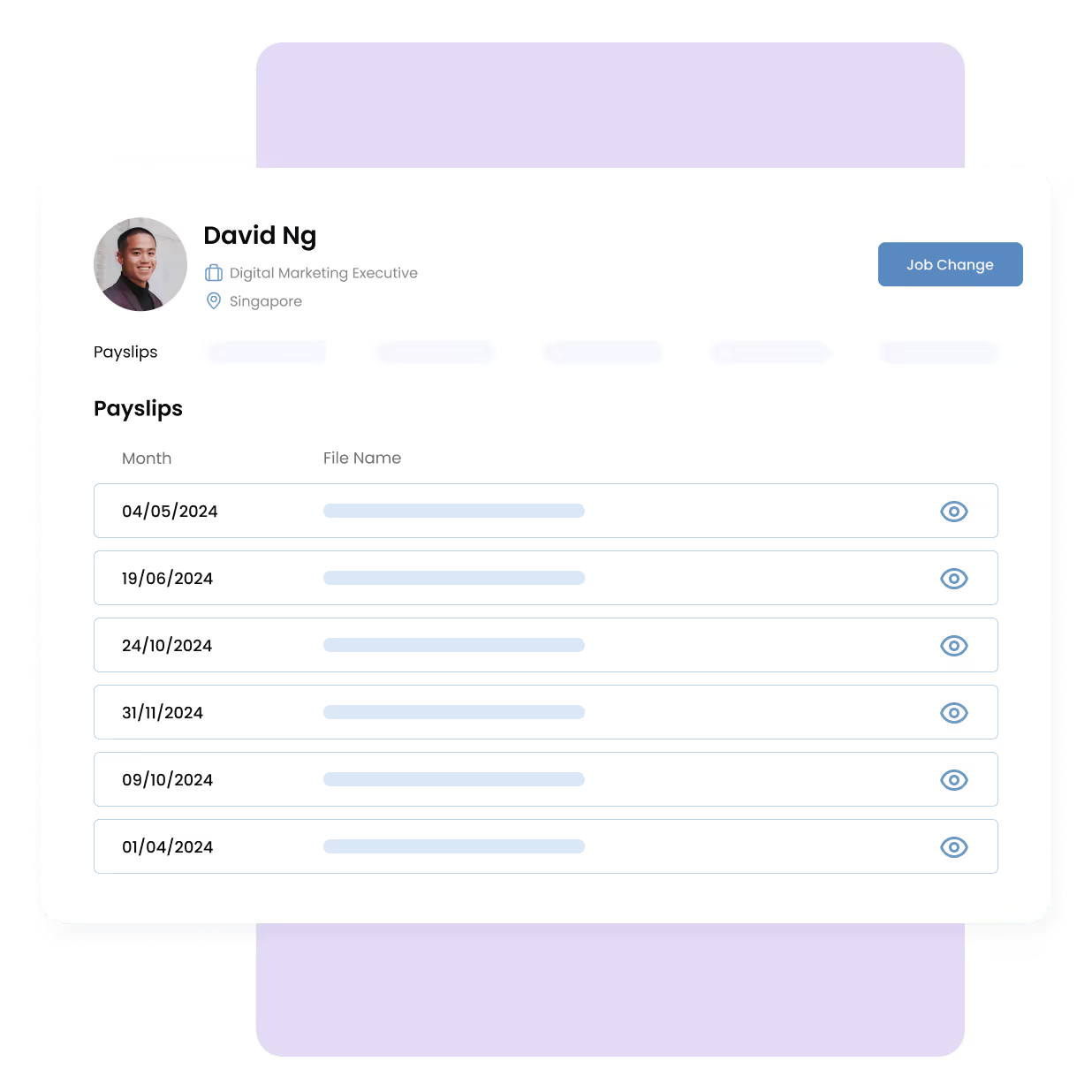
Omni’s self-service portal and easy-to-use mobile app allow employees to access payslips, leave balances, and benefit-in-kind policy documents anytime and anywhere, reducing dependency on HR.
“By having systems like Omni in place, our employees can be more resourceful and know exactly where to find the information they need.”
— Roxanne McGovern, Chief Culture Officer at NightOwl Consulting
Continuously improve with data and KPI
To maintain an effective benefit-in-kind strategy, it’s important to constantly evaluate and improve using data. By setting key performance indicators (KPIs) such as cost efficiency, employee engagement, and satisfaction, HR leaders can track impact and refine BIK policies over time.
Omni’s report and analytics make it simple to measure outcomes and identify opportunities for improvement.
Frequently Asked Questions
1. What does benefit-in-kind mean in Singapore?
The BIK meaning refers to the non-cash benefits provided by an employer that have monetary value alongside basic salary.
2. Which employee benefits are taxable and non-taxable?
All in-kind benefits are taxable, except for those covered under income tax exemptions or by an existing administrative concession listed on the benefit-in-kind IRAS website.
3. How do I report BIK to IRAS?
To meet benefit-in-kind IRAS requirements, employers must electronically submit Form IR8A and Appendix 8A, Appendix 8B, or Form IR8S (where applicable, before YA 2026) through the AIS scheme, following the tax form reporting structure outlined by IRAS.
4. What are the penalties for incorrect BIK reporting?
Penalties and fines depend on the circumstances, but they can reach up to 400% of the tax undercharged or as much as S$50,000. In serious cases, offenders may also face imprisonment of up to five years.
5. How can HR software help streamline BIK administration?
HR software like Omni simplifies benefit-in-kind administration by automating time-consuming tasks such as benefit issuance, payroll calculations, and tax form generation. It centralizes employee data, reduces manual errors, and ensures compliance with reporting requirements set by the IRAS. With everything stored in one place, HR teams can focus more on strategy rather than paperwork.
Why Singapore Companies Choose Omni to Manage Benefit-In-Kind
Managing benefit-in-kind in Singapore can be complex due to evolving IRAS reporting requirements and regulations, but it remains a crucial part of your compensation package to attract and retain talent in this competitive landscape. That’s why leading companies choose Omni to simplify their approach.
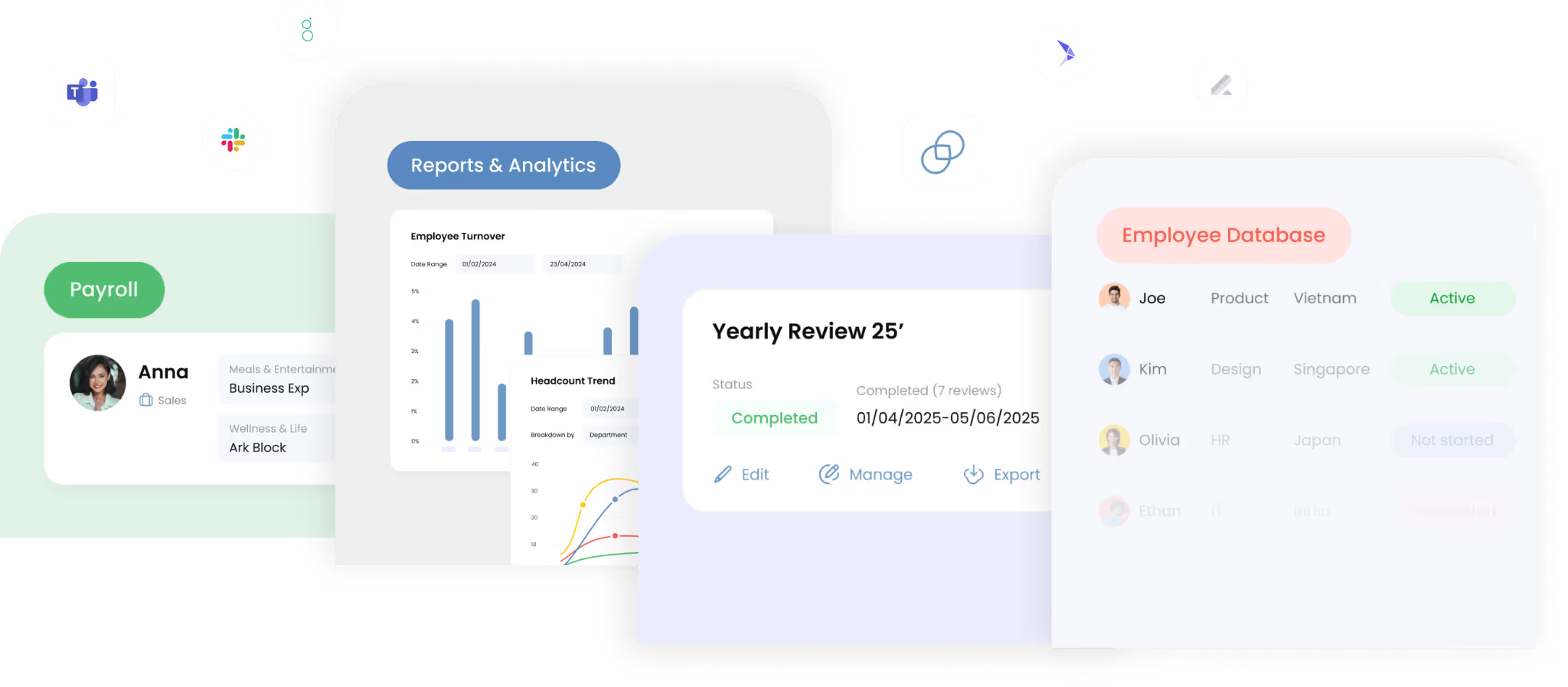
With Omni, you can:
- Ensure IRAS compliance with payroll and benefits built to meet reporting standards.
- Automate BIK calculation and reporting, reducing manual work and risk of errors.
- Manage benefits planning and employee benefit budgets through a centralized employee dashboard.
- Stay future-ready with regional expertise, automatic updates, and the flexibility to customize in-kind benefits for diverse workforces.
Omni transforms employee benefit Singapore administration from a compliance burden into a competitive advantage. By streamlining and consolidating the process, Singapore businesses can focus on what truly matters, supporting employees to build an engaged, high-performing workforce.