





















.png)
Summary. Hiring or managing employees in Taiwan involves navigating mandatory statutory programs, including National Health Insurance (NHI Taiwan) and Labor Insurance (LI). These programs form the backbone of the Taiwan healthcare system, providing medical coverage, income protection, and social security benefits to virtually all employees, including local and foreign. For HR teams, compliance requires accurate registration, contribution calculation, monthly reporting, and timely payroll processing. Missteps can lead to penalties, back payments, and administrative scrutiny. Platforms like Omni HR simplify these responsibilities by centralizing payroll, statutory contributions, and tax reporting, allowing employers to manage compliance efficiently as their teams scale.
Hiring or managing employees in Taiwan comes with a specific set of statutory responsibilities that HR teams cannot afford to misunderstand. At the center of these obligations is the National Health Insurance (NHI Taiwan), supported by Labor Insurance (LI) and other social protection programs that together form the backbone of the Taiwan healthcare system.
For local companies, these requirements are familiar but still easy to misapply. For international employers entering Taiwan for the first time, the rules can be confusing and surprisingly strict.
This guide breaks down how the NHI Taiwan and Labor Insurance systems work, what employers and employees are required to contribute, and how HR teams can stay compliant without overcomplicating payroll operations.
What is NHI Taiwan and the National Health Insurance System?
NHI Taiwan (全民健康保險) refers to Taiwan’s National Health Insurance program, a government-run system introduced in 1995 to provide comprehensive medical coverage to nearly all residents.
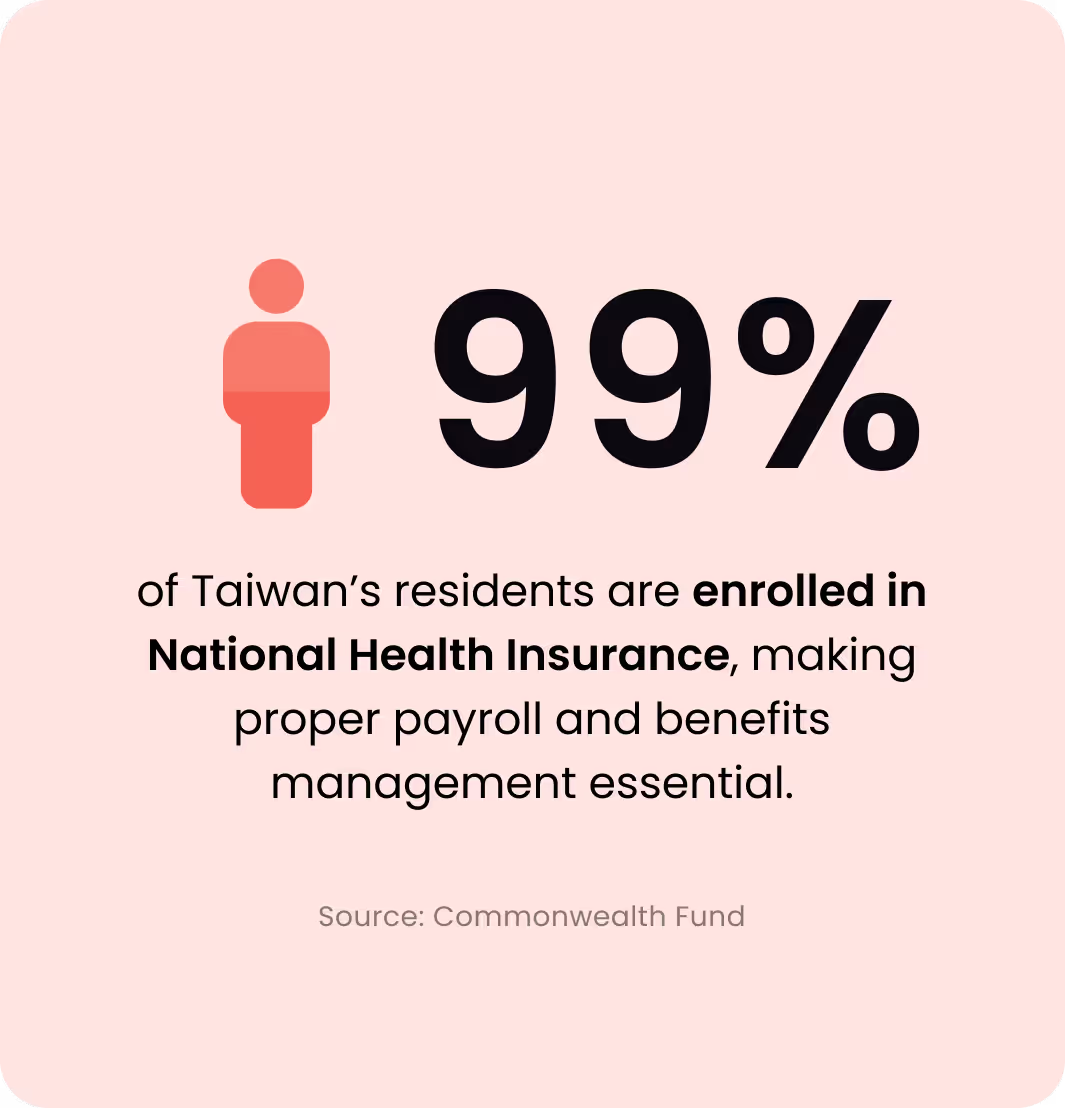
If you are asking, does Taiwan have universal healthcare? The answer is yes. Taiwan operates one of the most comprehensive universal healthcare systems in the world. Over 99% of residents are enrolled, including local employees, foreign workers, and long-term residents.
The goal of National Health Insurance in Taiwan is simple. Everyone should have access to essential healthcare regardless of income, employment status, or health condition. The system is funded through shared contributions from employees, employers, and the government.
From an HR perspective, NHI Taiwan is mandatory as eligible employees and employers are legally responsible for registration, contribution calculation, and monthly reporting. With virtually the entire workforce covered, even small errors in administration can result in fines, back payments, and compliance inspections, making proper payroll and benefits management essential for teams.
The Taiwan healthcare system offers broad medical coverage under NHI. Employees enrolled in the insurance can access:
- Outpatient and inpatient medical care
- Prescription medications
- Preventive care and health screenings
- Maternity-related medical services
- Dental and traditional Chinese medicine services
Because the system is centralized, employees can visit most hospitals and clinics across Taiwan using a single NHI card. Costs are heavily subsidized, and out-of-pocket payments are generally low compared to private healthcare systems in other countries.
Read next: Employee Financial Wellness Programs & Benefits
Understanding Labor Insurance (LI) in Taiwan
Labor Insurance (勞工保險), often referred to as LI, provides income protection and social security benefits related to employment risks. It is separate from National Health Insurance, but both are mandatory for most employees. Together, they form the foundation of employee welfare under Taiwan’s labor framework.
Taiwan Labor Insurance protects employees against a range of work-related and life-related risks, including:
- Sickness and injury
- Maternity benefits
- Occupational accidents and disabilities
- Old age and retirement benefits
- Survivor benefits in the event of death
Unlike NHI, which focuses on medical access, LI is concerned with income replacement and long-term protection. For HR teams, this distinction is important because contribution rates, benefit eligibility, and reporting requirements vary.
So, who must be enrolled in labor insurance?
Most full-time employees in Taiwan must be enrolled by their employer. This includes:
- Local Taiwanese employees
- Foreign workers
- Certain categories of contract workers
In most cases, foreign employees with valid work permits are enrolled under the same National Health Insurance and Labor Insurance rules as local employees. Nationality does not change employer obligations, and eligibility is determined by employment status rather than citizenship.
Failing to enroll eligible employees in LI is considered a serious compliance violation and can trigger penalties, back payments, and inspections.
Employer and Employee Contribution Obligations
One of the most common areas of confusion for HR teams is how contributions for NHI Taiwan and Labor Insurance are calculated and split between employers and employees.
For National Health Insurance, contributions are shared across three parties:
- Employer
- Employee
- Government
The contribution amount is calculated as a percentage of the employee’s insured salary, which is capped at a statutory maximum set by the authorities.
So employers typically bear the largest share of NHI contributions, while employees contribute a smaller percentage deducted from their monthly salary.
For Labor Insurance contributions, the employer share is also significantly higher. Contribution rates may vary depending on the type of insurance coverage and industry risk classification.
Employers are responsible for:
- Registering employees under the correct insured salary bracket
- Calculating contributions accurately
- Submitting payments on time
- Reporting changes such as salary adjustments or employment termination
Exact percentages are updated periodically by Taiwanese authorities, so HR teams should always verify current rates before payroll processing.
Also, employers in Taiwan are required to remit both NHI and LI contributions every month. Payments must be made within prescribed deadlines, and accurate reporting is mandatory. Missed deadlines or incorrect filings can result in fines, interest charges, and administrative scrutiny.
Example:
To make this more tangible, consider a full-time employee in Taiwan earning a monthly insured salary of TWD 40,000.
For this employee, both National Health Insurance and Labor Insurance contributions are calculated based on the insured's salary level set by the authorities.
Each month, the employer pays the larger share of both NHI Taiwan and Labor Insurance contributions, while a smaller portion is deducted from the employee’s salary. The government also contributes to certain portions of these programs, which helps reduce the overall burden on employees.
Based on that insured salary, the breakdown for:
National Health Insurance (NHI Taiwan)
- Total premium at 5.17%: TWD 2,068
- Employer pays 60% × TWD 2,068 = TWD 1,241
- Employee pays 30% × TWD 2,068 = TWD 620
- Government pays 10% × TWD 2,068 = TWD 207
Labor Insurance (LI)
- Total premium at ~11%: TWD 4,400
- Employer pays ~70% × TWD 4,400 = TWD 3,080
- Employee pays ~20% × TWD 4,400 = TWD 880
- Government pays ~10% × TWD 4,400 = TWD 440
The table below shows how contribution responsibility is typically split, using indicative percentages rather than fixed amounts.
Contribution rates are set by Taiwanese authorities and may be adjusted periodically. Employers should always confirm current rates when processing payroll.
Benefits of NHI and Labor Insurance for Employees
From an employee standpoint, the Taiwan healthcare system and labor protections are a major benefit of working in the country.
The employees under NHI Taiwan are privileged to take advantage of the universal healthcare that is continuous and portable. It is not employer-based coverage where the employee can be denied healthcare services at the time of transitioning to a different employer unless he/she makes payments. There is a high availability of medical services, the waiting period tends to be short, and the prices are predictable.
Labor Insurance is a financial safety net that supplements National Health Insurance because it offers income protection in sickness or injury, maternity allowances, disability benefits, and retirement and survivor benefits.
For employees to access these benefits efficiently, HR teams should make sure they:
- Receive their NHI card promptly after enrollment
- Understand which clinics and hospitals accept NHI
- Know how to file Labor Insurance claims correctly
- Keep personal information updated with the authorities
Clear onboarding education reduces confusion and unnecessary HR inquiries.
Common NHI Taiwan Compliance Mistakes to Avoid
Even experienced HR teams make avoidable mistakes when managing these employee benefits, and the errors often stem from assumptions rather than regulatory gaps. Here are common mistakes to be aware of:
- Late registration or contribution payments: Delaying NHI or LI registration after an employee starts work is a frequent issue, especially for fast-growing teams. Taiwan’s authorities expect immediate compliance, and late registration can trigger retroactive payments and penalties.
- Miscalculating employer vs employee contributions: Incorrect salary brackets or outdated contribution rates can result in underpayment or overpayment. Both scenarios create compliance risks and payroll reconciliation headaches.
- Overlooking foreign employees or temporary staff: Foreign employees are not exempt from National Health Insurance or Labor Insurance. Employers sometimes assume that short-term contracts or expatriate status change obligations. In most cases, they do not.
How Omni HR Manages NHI Taiwan
Managing NHI Taiwan and Labor Insurance is a core responsibility for employers in Taiwan. While the rules are well-established locally, it may be too complex for fast growing teams or companies hiring in Taiwan for the first time.
As headcount increases, manual payroll processes and disparate tools can make it harder to manage these compliance obligations consistently. This is where Omni HR comes in.
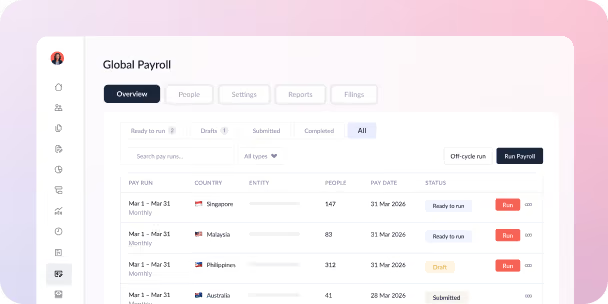
Omni HR helps HR teams reduce administrative burden by centralizing payroll and statutory workflows in a way that aligns with Taiwan’s regulatory requirements. Omni’s managed payroll services help businesses with:
- Payroll administration aligned with Taiwan's statutory requirements, covering monthly payroll calculations, bank file preparation, and digital payslip distribution.
- Administration and submission of mandatory statutory contributions, including national health insurance premiums, labor insurance (LI), employment insurance, and labor pension contributions under Taiwan’s New Labor Pension Scheme.
- Preparation and submission of payroll-related tax filings, including monthly withholding tax statements and annual withholding and non-withholding tax declarations.
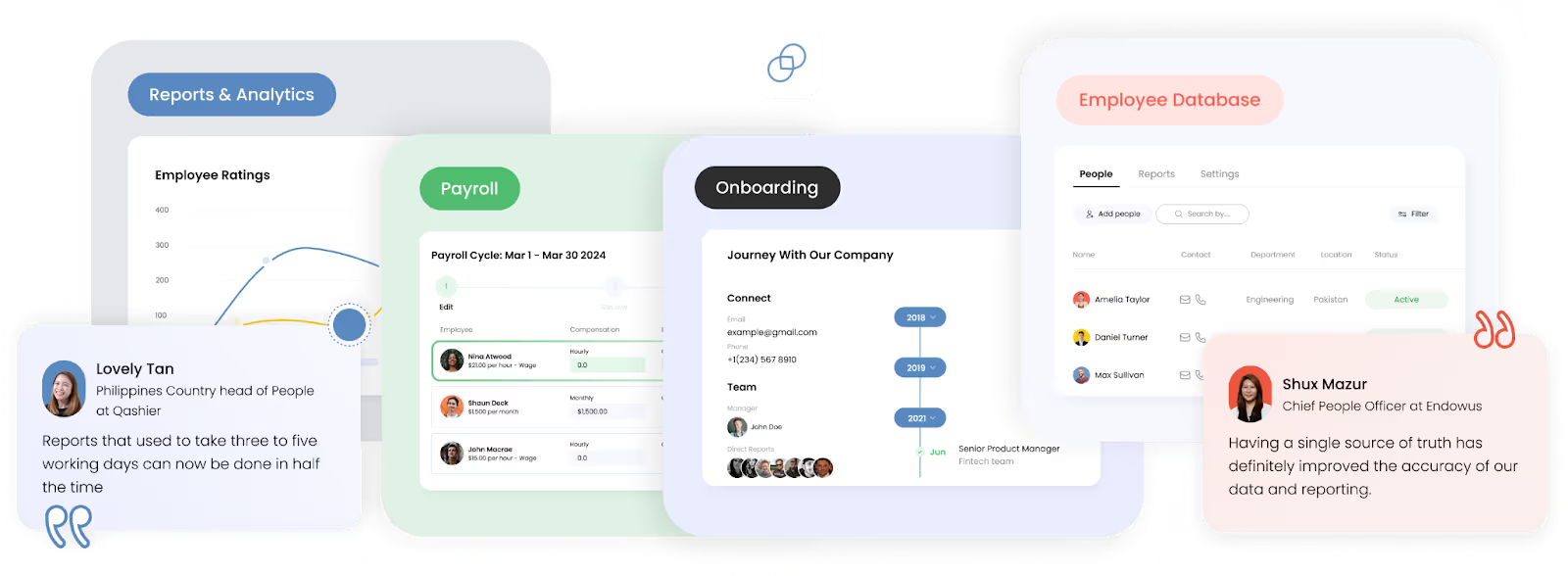
By consolidating payroll, national health insurance, labor insurance, and tax reporting into one system, Omni HR helps reduce operational friction and compliance risk as teams scale. Book your product tour with our team today and learn more about our managed payroll services.
Frequently Asked Questions
1. What is NHI Taiwan?
NHI Taiwan (全民健康保險) is Taiwan’s National Health Insurance program, a government-run system providing comprehensive healthcare coverage to nearly all residents, including local employees, foreign workers, and long-term residents. It forms a core part of the Taiwan healthcare system.
2. Does Taiwan have universal healthcare?
Yes. Over 99% of residents are enrolled, meaning almost all employees are covered. This ensures access to outpatient care, inpatient care, preventive screenings, maternity services, dental care, and traditional Chinese medicine.
3. What is Labor Insurance (LI) in Taiwan?
LI (勞工保險) provides income protection and social security benefits for employees, covering sickness, injury, maternity, occupational accidents, disability, retirement, and survivor benefits. It is mandatory for most full-time employees, separate from NHI.
4. Who must be enrolled in NHI Taiwan and LI?
Most full-time employees in Taiwan—both local and foreign—must be enrolled in both programs. Eligibility is determined by employment status, not nationality. Employers are responsible for registration, contribution calculation, and monthly reporting.
5. How are contributions calculated for NHI and LI?
- NHI Taiwan: Contributions are based on insured monthly salary and split among the employer (~60%), employee (~30%), and government (~10%).
- Labor Insurance (LI): Contributions are typically split ~70% employer, ~20% employee, and ~10% government. Contribution rates are updated periodically.
6. What are common HR responsibilities for NHI and LI?
HR teams must:
- Register employees under the correct salary brackets
- Accurately calculate contributions for both NHI and LI
- Submit payments on time
- Report changes such as salary adjustments, employment termination, or new hires
7. What are the risks of mismanaging NHI and LI contributions?
Late registration, miscalculations, or missed payments can lead to fines, back payments, and compliance inspections. Proper payroll and benefits management is critical to avoid penalties.
8. Can Omni HR help manage NHI and LI compliance?
Yes. Omni HR centralizes payroll, NHI Taiwan, Labor Insurance, and tax reporting in one platform. This ensures accurate registration, contribution calculations, and monthly submissions, reducing HR administrative burden and helping teams remain fully compliant.
9. Can NHI and LI benefits be used nationwide?
Yes. Employees can access care and file claims at most hospitals and clinics across Taiwan. NHI covers most medical costs with low out-of-pocket expenses, while LI provides income protection for sickness, maternity, disability, and retirement.



.avif)
.avif)