




















.png)
Summary. In Singapore, the Central Provident Fund Act mandates precise and timely CPF contributions, which are essential for retirement, healthcare, housing, and education savings. Employers must understand Singapore CPF contribution rates 2025, which vary by age, income, and residency status, including phased contributions for permanent residents. Adhering to the CPF submission deadline and CPF payment due date is critical to avoid CPF late payment penalties, fines, or prosecution. Using a reliable payroll system can automate calculations of the employer CPF contribution percentage, answer questions like how much is CPF contribution and how much is CPF deduction, and simplify CPF e-submission and CPF employer submission through platforms such as CPF EzPay and One-Stop Payroll integration. Integration with the CPF Auto Inclusion Scheme further streamlines tax reporting. Implementing compliant payroll systems like Omni reduces errors, ensures timely payments, and helps businesses stay fully compliant with the Central Provident Fund Act’s evolving requirements.
In Singapore, the financial wellness of citizens is a national priority, enforced through strict regulatory frameworks. One critical aspect of this is the management of CPF contributions by employers, which must be handled with precision and timeliness.
For HR and finance teams, understanding the requirements set by the Central Provident Fund Act and leveraging an effective payroll system are essential to maintaining compliance. This article explores the key points employers need to know about CPF obligations, submission processes, and how technology can streamline these tasks to ensure accuracy and efficiency.
What is the Central Provident Fund Act?
The Central Provident Fund Act is the law governing the establishment, administration, and regulation of the Central Provident Fund (CPF) in Singapore. It provides the legal framework that ensures the CPF operates as a compulsory savings and social security system for working Singaporeans and permanent residents.
Specifically, the Central Provident Fund Act:
- Establishes and empowers the CPF Board to manage and administer the fund.
- Specifies mandatory contributions from both employers and employees.
- Details the permissible uses of CPF savings, including retirement income, housing, healthcare, and education.
- Enforces compliance through legal penalties and prosecution for non-compliance or misuse.
This Act ensures that CPF operates in a structured, transparent, and accountable manner, supporting long-term financial security for citizens. Additionally, the law outlines the employer’s legal responsibility to make timely and accurate CPF contributions for their employees through approved CPF e-submission platforms. Failure to comply with the Central Provident Fund Act may result in penalties, fines, or prosecution, reinforcing the importance of consistent and lawful contribution practices.
Function of the CPF
The Central Provident Fund Act was originally created as a compulsory savings scheme to help workers save for retirement. Over time, it has evolved to address more than just retirement needs; it has expanded to healthcare, housing and education.
- The Central Provident Fund Act helps members accumulate savings for retirement through the Ordinary, Retirement, and Special Accounts.
- Funds in the Medisave account can be used for medical expenses, hospital stays, and health insurance like MediShield Life.
- The CPF contributions can be used to buy property, pay for housing loans, and cover related expenses.
What are the Singapore CPF contribution rates 2025?
Under the Central Provident Fund Act, CPF contributions are dependent on the employee’s age, income level, and residency status, whether they are a Singapore Citizen or a permanent resident.
These contributions are calculated based on two types of wages:
- Ordinary Wages (OW): Monthly salary, up to a cap of S$7,400/month.
- Additional Wages (AW): Bonuses or variable payments, with a yearly cap of S$102,000 minus total Ordinary Wages subject to CPF for that calendar year.
If you’re wondering, “How much is CPF contribution?” and “How much is CPF deduction?” it varies by age. The table below shows the total CPF contribution rate by age group, including the percentage contributed by the employer and the percentage deducted from the employee's salary.
CPF contribution rates changes in 2026
It is worth noting that the contribution rates will be updated effective 1 January 2026. Here’s what you need to know:
- Additional contributions for those aged 55-65 will go entirely to the Retirement Account (RA), up to the Full Retirement Sum.
- Transition offset: Government will co-fund 50% of the employer’s increased CPF contribution in 2026 to ease the adjustment.
- Higher CPF Ordinary Wage ceiling. increased from S$7,400 to S$8,000 per month.
- Increased CPF contribution rates for employees earning more than S$750 per month.
Calculate CPF contributions with our free CPF Calculator
What about permanent residents (PRs)?
New PRs in Singapore contribute to CPF at lower rates during their first two years under a phased contribution scheme.
In Phase 1 (the first year), the employer contributes at a reduced percentage of 5% of monthly wages, and the employee’s contribution is optional. This helps ease the financial impact for both parties as they adjust to CPF obligations.
In Phase 2 (the second year), CPF contributions increase for both employer and employee, and the employee’s contribution becomes mandatory. Employers contribute 15% of monthly wages, while employees contribute 5% of their monthly wages in this phase.
From the third year onwards, PRs contribute at the same CPF rates as Singapore citizens, based on their age group. This gradual adjustment allows a smoother financial transition for both employers and employees.
When are the CPF submission deadlines, and what are the late penalties?
Understanding the CPF submission deadline and CPF payment due date is essential for employers to avoid penalties and stay compliant. The official CPF due date is the last day of each calendar month; for example, CPF contributions for June are due on 30 June.
However, employers are given a grace period until the 14th of the following month to make the payment. If the 14th falls on a weekend or public holiday, the deadline shifts to the next working day.
What happens if I miss out on the CPF submission deadline?
Missing the CPF deadline can result in enforcement actions and financial penalties.
A CPF late payment penalty of 1.5% per month is charged, calculated daily, starting from the first day after the official due date, not after the grace period. For instance, if an employer fails to pay $5,000 in CPF contributions on time, the interest could amount to $75 per month, with the amount increasing the longer the delay continues.
If you deduct your employee's share of CPF contributions but fail to pay the contributions to the CPF board, you could receive a fine of up to S$10,000, 7 years of jail time, or both. Additional consequences include fines, prosecution, disqualification from government grants, and the possibility of audits or corrective actions.
To avoid these issues, many businesses rely on a payroll system to manage CPF compliance.
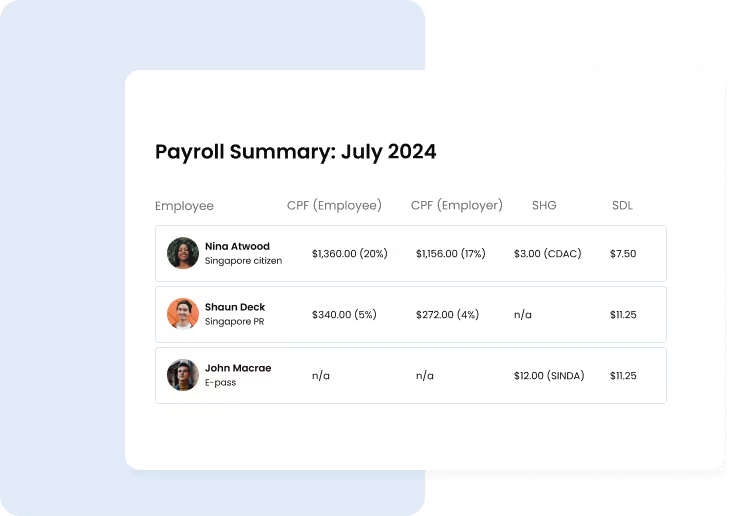
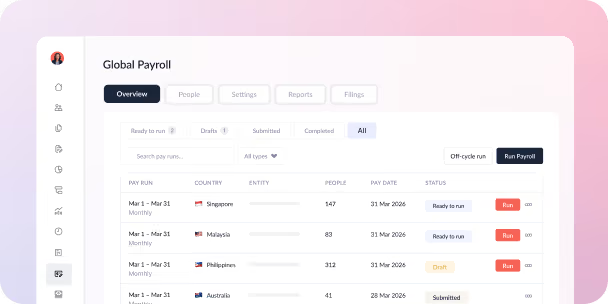
A payroll system like Omni can help automate CPF calculations based on employee wages, send automated reminders before the CPF submission deadline, and even submit contributions directly to the CPF Board through integrated services like the One-Stop Payroll system. This automation reduces the risk of errors, ensures timely payments, and protects businesses from incurring CPF late payment penalties.
What are the documents needed for CPF e-submission?
Besides submitting CPF contributions on time, it’s equally important to do it accurately. Errors in employee details or contribution amounts can result in penalties or delays in processing. First, you’d have to start by gathering the files needed for CPF e-submission.
- Employee details, including:
- Full name (as per NRIC)
- NRIC/FIN number
- Date of birth
- Nationality
- CPF contribution status (e.g., citizen, permanent resident, etc.)
- Wage details for each employee:
- Ordinary wages (e.g., monthly salary)
- Additional wages (e.g., bonuses, commissions)
- Total wages for the month
- Contribution amounts:
- Employer and employee CPF contribution rates (based on age group and wage levels)
- Any voluntary or additional contributions, if applicable
- Payroll records to support the figures submitted
- Company details:
- UEN (Unique Entity Number)
- CPF Submission Number (CSN)
- Contact information for follow-up, if needed
How to submit CPF contributions digitally?
The CPF board has provided two ways companies can ensure CPF employer submission for their employees: CPF EzPay and CPF EzPay Mobile.
CPF EzPay (web-based)
An online portal for employers to submit monthly CPF contributions. It can be accessed through the CPF Board website with CorpPass login.
CPF EzPay Mobile
The mobile app version of the portal is designed for on-the-go submissions. It offers the same functionality as the web version but is optimized for mobile devices, making it convenient for employers who need flexibility.
The Central Provident Fund Act has also included a One-Stop Payroll (OSP) Method, which is a direct integration system that connects a company’s payroll software to government agencies such as the CPF Board, IRAS, and MOM.
To use this method, employers must have a payroll system that is certified for One-Stop Payroll and supports direct integration with these agencies. Once set up, payroll data is automatically transmitted from the software to the respective agencies. This streamlines compliance by combining CPF contributions, tax filings, and employment records into a single submission. It reduces errors, saves time, and simplifies statutory reporting for employers.
What is the CPF Auto Inclusion Scheme (AIS)?
The CPF Auto-Inclusion Scheme (AIS) is a system where employers electronically submit their employees’ income information directly to the Inland Revenue Authority of Singapore (IRAS). This data is used to pre-fill employees’ tax returns, helping ensure accurate and timely tax assessments.
Employers participating in AIS must submit salary and CPF-related information to IRAS by 1 March each year. This includes details submitted through CPF employer submission and CPF e-submission. When a payroll system integrates CPF submissions with tax reporting, the process becomes more efficient. Monthly CPF e-submissions can be linked to year-end AIS reporting, allowing payroll data to be used consistently across both platforms.
This integration reduces manual work, lowers the risk of errors, and helps companies stay compliant without the stress of managing separate tax and CPF reporting processes.
How a Payroll System Helps You Stay Compliant with the Central Provident Fund Act
Staying compliant with the Central Provident Fund Act is a non-negotiable responsibility for employers in Singapore. But with changing rates, tight timelines, and detailed submission requirements, doing it all manually can be time-consuming and error-prone. That’s where a robust payroll system becomes essential.
A payroll system like Omni automates CPF-related tasks so you don’t miss a beat. It uses built-in CPF rate tables for 2025 to calculate the correct employer CPF contribution percentage based on employee age, wages, and employment status. This ensures accuracy and eliminates the guesswork involved in contribution calculations.

The system also helps you stay on top of the Central Provident Fund Act submission deadline by sending automated reminders ahead of each due date. Missing a submission can lead to penalties, but with alerts and scheduling features, your team is less likely to fall behind.
What’s more, most modern payroll systems like Omni support CPF e-submission, allowing you to generate and export files that meet the Central Provident Fund Board’s technical requirements. This not only speeds up the submission process but also reduces the chance of file rejections due to formatting issues.
Additional features like audit trails, compliance checks, and auto-generated reports provide further peace of mind. If you're ever audited or need to trace a discrepancy, your payroll system should offer full visibility and documentation.
In short, using a payroll system to manage CPF contributions helps you avoid compliance risks, reduce manual errors, and streamline your HR and finance operations.
Avoid CPF Penalties with Compliant Payroll Systems like Omni
It’s clear that the CPF is an important part of every Singaporean business’s payroll process. What's more, the Central Provident Fund Act is ever-evolving yet mandatory for all businesses to adhere to. Navigating it can be challenging, and staying up to date with the latest regulations is crucial for HR teams to remain compliant.

Omni helps HR teams stay up to date with the latest laws and regulations while streamlining the end-to-end employee management lifecycle. Our comprehensive payroll solution is tailored to Singapore’s specific requirements. With features like support for SGD, automated tax and CPF calculations, and instant payroll reports, Omni can help HR teams simplify their payroll processing while ensuring compliance.
Chat with our team to learn more!
Start your 7-days free trial today and see how Omni can simplify the intricacies and complexities of Singapore’s CPF contribution process and minimize the costs associated with common errors.



.avif)
.avif)