.png)
Summary. Managing employees in Singapore involves more than just paying salaries. HR teams must also stay compliant with statutory contributions like the Skills Development Levy (SDL). Mandated under the Skills Development Levy Act, the SDL requires employers to make monthly contributions for all local and foreign employees, helping fund national upskilling programs through the Skills Development Fund (SDF) under SkillsFuture Singapore (SSG). While the SDL rate is only 0.25% of monthly wages (with a minimum of S$2 and a maximum of S$11.25), even small miscalculations or late payments can lead to costly penalties. Understanding how SDL works, who it covers, and how to calculate it accurately or streamlining with HR software like Omni, is essential for maintaining compliance and supporting workforce development from day one.
Managing employees in Singapore goes beyond paying salaries on time. HR teams also handle several statutory contributions, each with its own rules and rates, and the Skills Development Levy (SDL) is one of them.
Under the Skills Development Levy Act, employers must pay a monthly SDL contribution for all local and foreign employees in Singapore, except domestic workers, gardeners, and chauffeurs. However, even small miscalculations, late payments, or mismatches with SkillsFuture Singapore (SSG) records can result in costly penalties.
In this guide, we’ll explore what SDL means for your HR operations, who it covers, and how to use the SDL calculator to stay compliant with ease.
What is the Skills Development Levy (SDL)?
The Skill Development Levy is a mandatory contribution all employers in Singapore must pay on behalf of their local and foreign employees to support national skills development programs. It’s paid in addition to Central Provident Fund (CPF) contributions and collected by the CPF Board on behalf of SkillsFuture Singapore (SSG).
The funds are then channeled into the Skills Development Fund (SDF) to finance workforce training and upskilling initiatives under the national Continuing Education and Training (CET) system.
Ultimately, the Skill Development Levy helps companies strengthen their workforce. It promotes long-term employee development, ensuring workers stay adaptable and equipped for the evolving labor market.
Read next: CCP Singapore Guide: Career Conversion Programme for HR
Who needs to pay SDL in Singapore?
Employers are required to pay Skills Development Levy contributions for all employees rendering services in Singapore, including:
- Singaporean Citizens (SC), Permanent Residents (PR), and foreigners
- Full-time, casual, part-time, or temporary workers
However, some employees are exempted from SDL contribution:
- Domestic servants, gardeners, or chauffeurs are fully and exclusively employed outside of the employer’s trade, business, profession, or vocation.
- Employees who do not work in Singapore for an entire month, including those on leave.
- Employees working overseas.
If your business falls under these exemptions, you’ll need to log in to the SDL system and declare to SSG that you’re not liable to pay the Skill Development Levy for those employees.
Skills Development Levy Rate & Calculation
The Skills Development Levy is set at 0.25% of an employee’s monthly salary, with a minimum of S$2 (for earnings below S$800) and a maximum of S$11.25 (for wages above S$4,500). Once you’ve computed the SDL for each employee, add them all up and round the total amount down to the nearest dollar.
Example:
A manufacturing company has four workers earning S$650, S$2,000, S$4,550, and S$10,000, respectively. Their SDL contributions will be:
How to Pay SDL in Singapore
You can pay your employees’ skill development levy alongside their monthly CPF contributions through CPF EZPay. The system automatically calculates the SDL payable for Singapore Citizens and Permanent Residents based on their salary information.
However, for foreign employees, you’ll need to input their SDL amount manually in CPF EZPay. Also, if you hire only foreign employees, you must pay their Skills Development Levy directly to SSG.
Each CPF EZPay transaction covers one month of payment only, and payments made through the CPF Board are typically reflected in SSG’s records within two months.
Timeline
All liable employers must pay their SDL contribution within 14 days after the end of the month. Late payment attracts a 10% annual penalty on outstanding amounts.
Paying outstanding SDL
If you miss an SDL payment or underpay, you can make a back payment to SSG via the GoBusiness dashboard. This also applies if you hire only foreign employees.
When submitting an outstanding payment, carefully select the "Relevant Month(s)" to ensure your contributions are credited accurately.
SDL refund
To request a skill development levy refund, log in to the SDL system and submit a request via the E-Refund module. Specify the amount and period, and attach these supporting documents:
- Application for Interbank Giro Form
- SDL payment receipts
- Payroll report of all the employees
Using the SDL Calculator vs Automation
The SDL calculator helps you estimate Skill Development Levy contributions for smooth compliance with the SDL Act. All you need to do is fill in the necessary figures (relevant year and month, head count, and salary amount), and you’ll know the SDL payable for both local and foreign employees without having to do the math yourself.
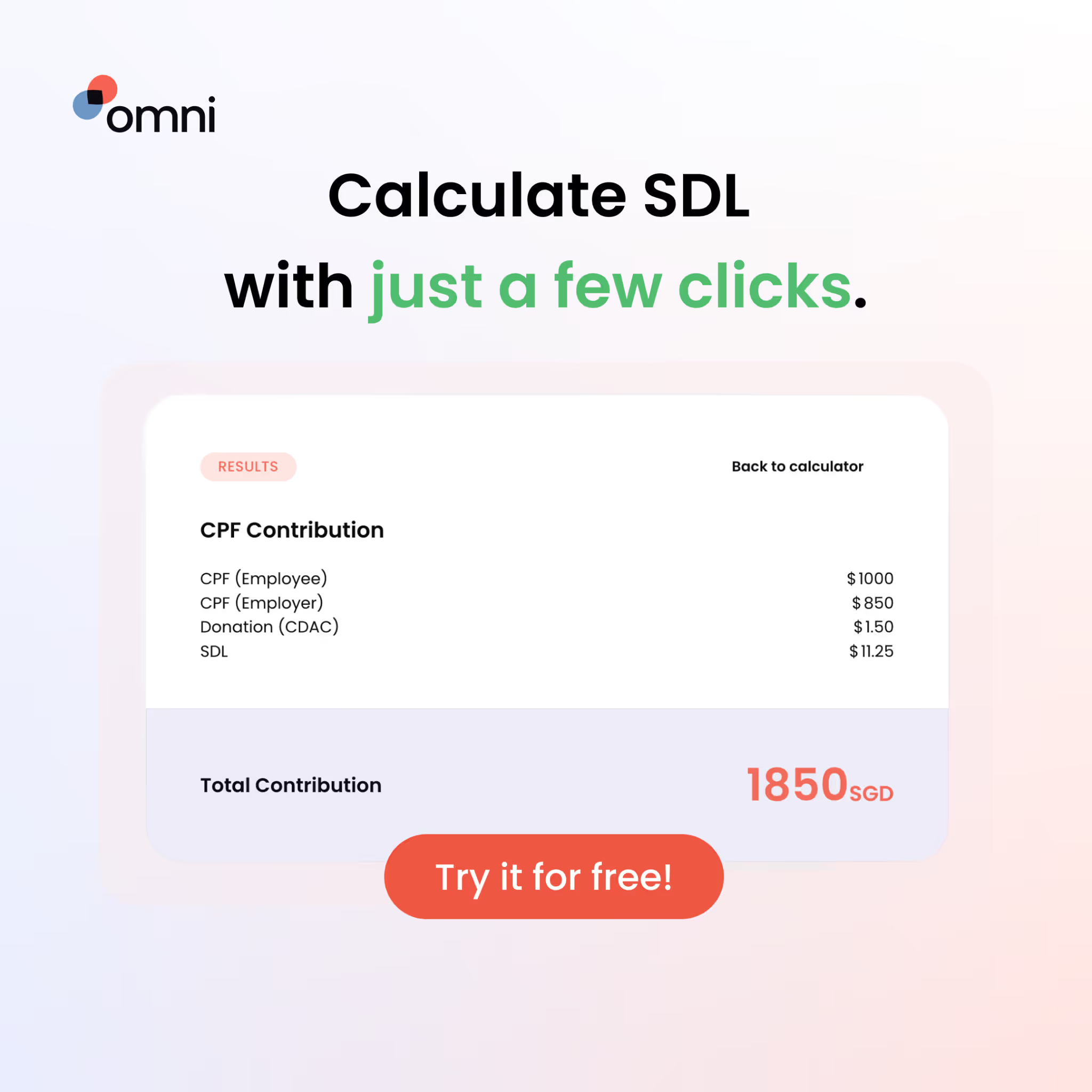
Although the SDL calculator can be helpful for quick calculations, it still involves manual processes that can be tedious, especially for larger teams. For instance, you must first calculate your total salaries and then enter each employee’s details manually, which can be time-consuming and lead to duplicate entries or missed employees. Additionally, the calculator does not integrate with other payroll tasks, such as CPF contributions, tax deductions, and payslip generation, which results in increased administrative work.
Automating SDL contributions with Omni
That’s where an automated payroll system like Omni becomes imperative. Built for growing teams across APAC, Omni automates SDL calculations using pre-set salary details and statutory rates, ensuring full compliance with local requirements, including CPF, tax, and other statutory contributions.

With Omni’s localized payroll, HR teams can:
- Easily calculate and include SDL in each pay run.
- Generate instant, compliant payroll reports.
- Sync payroll with time-tracking and attendance data for error-free calculations.
- Integrate seamlessly with accounting tools like Xero and government systems for submission.
- Set and receive automated notifications before payment deadlines.
- Access multi-country payroll coverage across 190+ countries for distributed teams.
“Payroll calculations that used to take three to five working days can now be done in half the time with Omni.”
— Tengku Mohaizad, Group Head of HR Asia at Inspire Brands Asia
Why the Skills Development Levy Compliance Matters
Contributing to the Skill Development Levy goes beyond meeting another legal requirement. It offers several perks for businesses, including:
Support workforce development
SDL supports Singapore’s national goal of continuous learning and upskilling. The funds serve as training grants to help employees hone their skills and stay competitive in an evolving economy. Contributing to the scheme helps employers build an agile workforce that can respond effectively to evolving business and market demands.
Learn more: Top SME Grants in Singapore for 2025: PSG, BGP and More Explained
Avoid penalties
Late payments, underreporting, or failing to declare SDL liabilities can lead to costly fines and interest charges that can eat into your company’s bottom line in the long run. As such, it’s not just enough to make timely SDL payments; you also need to keep accurate payment records to avoid hefty fines, protect your company’s reputation, and focus on more strategic business needs.
Payroll accuracy
Complying with SDL requirements helps maintain accurate payroll records void of discrepancies or incorrect payments. This consistency supports smooth audits, easy reconciliations, and builds trust with employees and regulatory bodies. Ultimately, it improves your employer branding as one that values employee development and compliance with national initiatives.
Audit readiness
Maintaining well-documented SDL data keeps your company ready for compliance audits or verification requests from SkillsFuture Singapore (SSG). Proper recordkeeping helps you avoid last-minute reconciliations and easily prove that your company adheres to regulatory standards.
Scalability issues
As your organization grows, SDL compliance becomes increasingly complex when managing more employees and higher payroll volumes. Manual errors can quickly multiply, bogging your HR team with time-consuming adjustments that can distract from strategic initiatives. Automating SDL processes ensures continued accuracy, efficiency, and compliance, regardless of your business size.
Frequently Asked Questions
1. What is the Skills Development Levy (SDL) in Singapore?
The Skill Development Levy (SDL) is a mandatory monthly contribution that all employers in Singapore must make for each employee. The levy funds the Skills Development Fund (SDF), which supports workforce training and upskilling programs under SkillsFuture Singapore (SSG).
In short, the SDL meaning refers to an employer’s statutory obligation to contribute toward national skills development initiatives.
2. Who is exempted from paying SDL?
Not all workers are covered under the SDL Singapore scheme. Employers do not need to pay SDL for:
- Domestic workers (e.g., maids or helpers)
- Gardeners
- Chauffeurs
- Employees posted overseas who do not render services in Singapore.
All other employees, including part-time, temporary, and contract workers, are subject to SDL contributions.
3. Is SDL part of CPF contributions?
No, the Skill Development Levy is not part of CPF contributions.
While CPF payments go to employees’ retirement and social security savings, SDL contributions go to the Skills Development Fund (SDF) administered by SkillsFuture Singapore (SSG).
Employers typically pay both CPF and SDL together each month through the CPF submission system for convenience.
4. How do I calculate SDL for part-time employees?
To calculate the SDL contributions for part-time employees, apply the same SDL contribution rate as for full-time staff:
- 0.25% of the employee’s monthly wages (including bonus, allowances, and overtime pay).
- Minimum payment: S$2 per employee per month (for wages ≤ S$800).
- Maximum payment: S$11.25 per employee per month (for wages ≥ S$4,500).
Employers can use an SDL calculator (available on CPF website) to ensure accurate computation or streamline the process with HR software like Omni.
5. What is the minimum and maximum SDL payment?
Under the SDL Singapore framework, the minimum SDL payment is S$2 per employee per month, and the maximum is S$11.25 per employee per month.
These limits ensure that SDL contributions are proportional and capped at reasonable levels, regardless of employee income.
6. How often should SDL be paid?
Employers must pay the Skill Development Levy (SDL) monthly, along with CPF contributions. The SDL contributions are collected by the CPF Board on behalf of SkillsFuture Singapore (SSG) and credited to the Skills Development Fund (SDF).
7. What happens if I miss an SDL payment?
If you fail to pay the Skill Development Levy (SDL) on time, you may face:
- Late payment penalties of 10% per annum on the unpaid amount.
- Possible enforcement actions or interest charges from SkillsFuture Singapore (SSG).
Employers should monitor and reconcile their SDL contributions regularly to avoid non-compliance risks.
8. Can HR software help with SDL calculations?
Yes, HR software solutions in Singapore, like Omn,i include built-in SDL calculators that automatically compute SDL contributions based on salary data and the SDL contribution rate.
This automation can help ensure timely payments, accurate submissions, and integration with other statutory obligations such as CPF, IRAS, and Skills Development Fund (SDF) records.
Stay Compliant with Skills Development Levy Using Omni’s Payroll
The Skills Development Levy (SDL) is a mandatory contribution for all employers in Singapore, which means getting it right from day one is crucial.
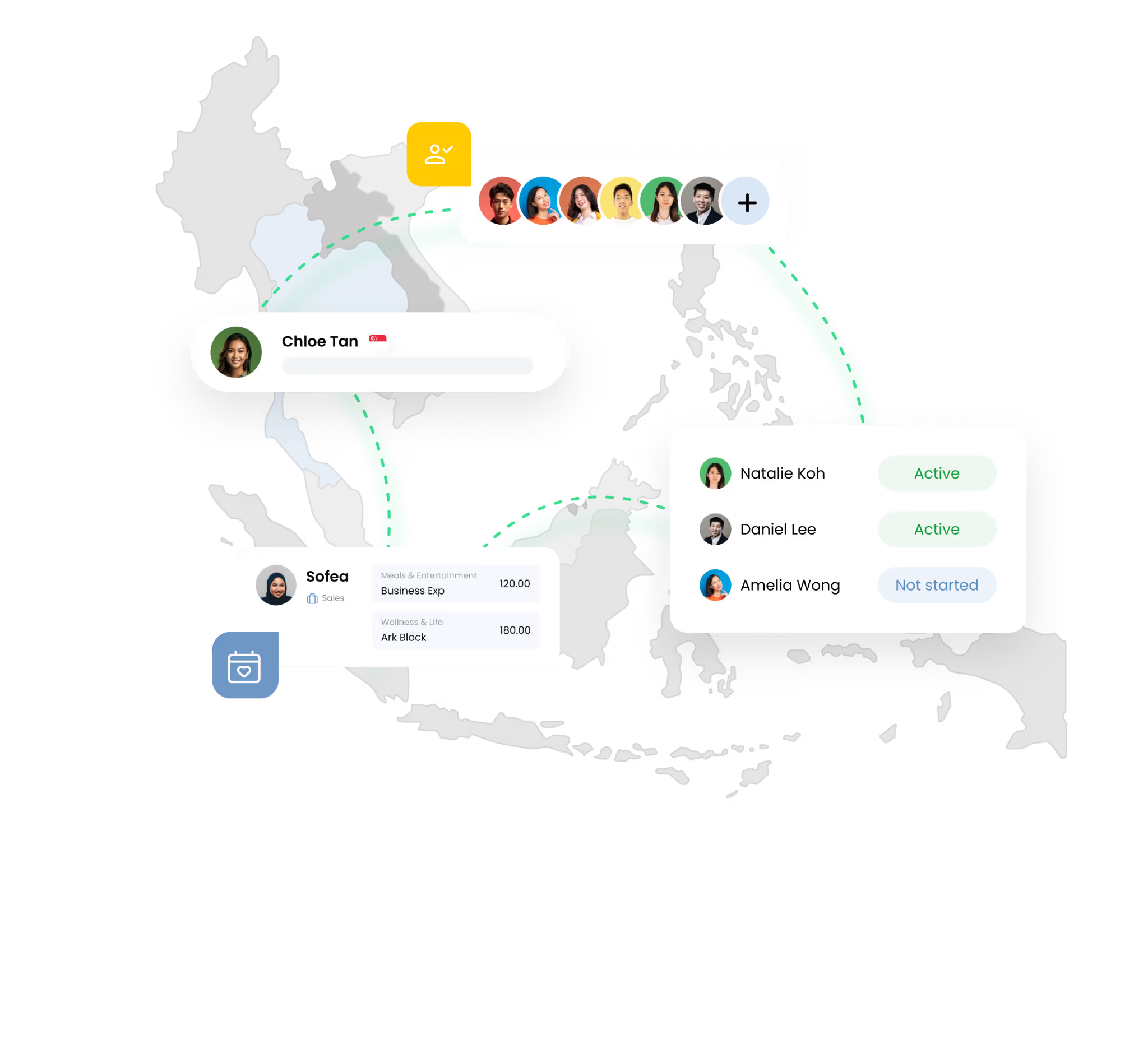
With Omni’s payroll automation, you can simplify compliance by automating SDL and CPF calculations, generating accurate statutory reports, and receiving timely reminders before payment deadlines.
Book a demo today to see how Omni can help you save time, stay compliant, and focus on growing your team instead of your to-do list.
.png)