.png)
Summary. Understanding childcare leave entitlements Singapore is essential for HR professionals managing benefits for working parents. Under MOM guidelines, eligible parents of Singaporean children under 7 are entitled to 6 days of paid childcare leave each year: 3 paid by the employer and 3 reimbursed by the government. For non-citizen children or those aged 7 to 12, parents may receive 2 days of leave annually. These entitlements apply to both full-time and part-time employees and are capped at 42 days per parent across the eligible years. Eligibility depends on the child’s age and citizenship, as well as the employee having at least three months of continuous service. The entitlement is granted per parent, not per child. Leave is also prorated for mid-year hires or exits, based on the number of months worked in the calendar year. To stay compliant, HR teams must track changes such as children aging out of eligibility or employee departures. Manual tracking can lead to payroll errors and non-compliance, making it crucial to adopt tools like Omni’s HRIS, which automates entitlement calculations, document collection, and real-time tracking to streamline childcare leave management.
Working parents in Singapore enjoy statutory childcare leave entitlement provisions that help them balance work and family responsibilities. Recently, the Singaporean government has continued to enforce rules ensuring eligible parents can take paid time off to care for young children.
Both HR managers and payroll teams need to stay on top of these entitlements, especially when it comes to who qualifies, how to handle prorated leave for mid-year hires or exits, and how to track and approve leave accurately.
In this guide, we will educate you on the current childcare leave entitlement Singapore rules and all you need to know about this type of leave management.
What is childcare leave entitlement Singapore?
Part of the country’s broader effort to support family-friendly workplaces, childcare leave entitlement Singapore gives working parents a set number of paid days off each year to care for their young children, with the rules being overseen by the Ministry of Manpower (MOM).
In Singapore, eligible working parents are entitled to 6 days of paid childcare leave per year per parent until their child turns 7 years old.
- The first 3 days are paid by the employer.
- The remaining 3 days are paid by the government, reimbursable at up to S$500 per day, including CPF contributions.
These childcare leave entitlement Singapore rules apply to both full-time and part-time employees (with pro-rated leave for part-timers) and are capped at 42 days per parent over the child’s eligible years.
According to the official MOM childcare leave entitlement guidelines, parents can take childcare leave for doctor visits, school events, or emergency care needs, and claims can be submitted via the governmental portal.
Who is eligible for childcare leave entitlement Singapore?
Under MOM childcare leave entitlement rules, working parents in Singapore are eligible for paid time off to care for their young children. Eligibility for childcare leave entitlement Singapore depends on three major things:
- The child’s citizenship status
- The child’s age
- The employee’s length of service with the company
To qualify for childcare leave entitlement Singapore, the employee must be the parent (biological, adoptive, or step-parent) of a child under 7 years old who is a Singapore citizen. The employee must also have worked for the same employer for at least three continuous months.
In this case, eligible parents are entitled to six days of paid childcare leave per year. The entitlement is granted per parent, not per child. So even if an employee has more than one child under seven, they will still receive a total of six days annually. These rules apply to both mothers and fathers, as long as they meet the criteria.
Once the youngest Singaporean child turns seven, the childcare leave entitlement Singapore shifts. Parents may then claim two days of extended childcare leave per year until the child turns 13, provided they have worked with the company for at least three months. While this is fewer days, it’s still a meaningful way to continue supporting working parents beyond the early years.
For parents of non-citizen children like permanent residents or foreigners, the entitlement works a bit differently. If the child is under seven and the parent has been employed for three months or more, they’re still eligible for two days of childcare leave each year under the Employment Act. This applies regardless of how many children they have.
Also, childcare leave entitlement is tied to the parent, not shared between spouses. Each eligible parent can claim their entitlement separately, as long as they meet other conditions. This applies to married couples, single parents, and even guardians or foster parents, provided they can show legal caregiving responsibility for the child.
The childcare leave entitlement Singapore is carefully structured to support working parents based on the child’s age and citizenship while ensuring that employers apply consistent eligibility checks across the board.
As an HR professional, you should always verify both employee tenure and the child’s status before granting leave under the MOM childcare leave entitlement rules.
Is childcare leave prorated?
A common question HR teams get is, “Is childcare leave prorated?” And the answer is yes, but only in specific situations.
Under the MOM childcare leave entitlement rules, prorated childcare leave applies based on how long the employee has worked with the company during the calendar year. It doesn’t depend on when the child was born or how many children the parent has.
- Prorated childcare leave for new hires
If an employee joins mid-year and meets the minimum three months of continuous service, their childcare leave entitlement is prorated based on how many full months they’ve worked by the end of the year.
Let’s say the employee joins in May and completes 8 months of service by December. Based on MOM’s guidelines, they’ll be entitled to four days of childcare leave that year instead of the full six.
- Prorated childcare leave for resignations or end of contract
The same prorating applies when an employee resigns or leaves before year-end. The company should calculate how many months they’ve worked in the current year and adjust their childcare leave entitlement Singapore accordingly.
For example, an employee who resigns in July (after six full months of work in that year) will only be entitled to three days of childcare leave for that year. If they’ve already used more than that, HR may deduct the extra days from their final paycheck.
- A clause for late-year births
If a child is born late in the year, say November or December, childcare leave is not prorated based on the child’s birth month. Once the child is born and eligibility is met, the parent technically qualifies for the full 6 days that year. However, they can choose to start claiming from the following year to avoid wasting unused days.
A good example is if a baby is born on December 10 and their parent is already eligible, they could use the full 6 days in that year (if time allows) or opt to start from January the following year, extending their childcare leave entitlement Singapore period by a year.
How to calculate and track childcare leave entitlements Singapore accurately?
Tracking childcare leave entitlement Singapore is less about admin and more about risk management. Miss a prorated calculation or let someone exceed their entitlement, and you’re looking at payroll errors or, worse, non-compliance. The challenge? These changes often happen quietly in the background, unless your system flags them.
As an HR or payroll lead, you’re responsible for ensuring every eligible employee gets the correct number of leave days based on MOM guidelines.
- Tracking eligibility changes across calendar years, like when a child turns 7 or 13 and the employee’s entitlement drops or ends altogether.
- Prorating entitlements correctly when someone joins mid-year, goes on extended leave, or resigns.
- Making sure no one exceeds their annual cap (6 days or 2 days, depending on the category).
- Keeping records of how much leave has been used and what’s left accurately and in real time.
Also, managing childcare leave manually leaves too much room for error. One wrong formula or a missed update can lead to over- or under-granting childcare leave entitlement, costly payroll mistakes during offboarding, or audit issues if MOM requests employee records.
That’s why modern HR teams now use integrated systems like Omni that sync leave with payroll. A good HRIS automatically calculates prorated childcare leave, updates entitlements when a child ages out or a new one is added, flags mismatches, and gives real-time visibility to both HR and employees.
With automated workflows, it enforces the rules so you don’t have to. The moment a leave request comes in, the system checks eligibility, updates balances, and reflects the updates immediately.
Best Practices for Childcare Leave Entitlements Approval and Documentation
Childcare leave is easy to approve but easy to mess up too, especially if you’re not keeping track properly. Here’s how to keep things clean and compliant without overthinking it:
1. Gather essential documents.
Before you approve any childcare leave, a good practice is to request essential documents like the child’s birth certificate and proof of Singapore citizenship, as MOM requires this.

Omni’s centralized document management makes gathering the necessary documents required to apply for childcare leave entitlement in Singapore seamless and timely. With customized workflows and automated reminders, HR can help empower employees to manage the deadlines and documentation requirements for applications. And centralized documents and real-time data make it easy for employees to access employee information and produce reports and documents necessary for verification.
2. Recheck eligibility yearly.
As mentioned, childcare leave entitlement Singapore differs based on the child’s age, citizenship status, and the employee’s start date. Make it a habit to review eligibility at the start of each year so your records stay current.
3. Utilize HR or payroll systems to track leave.
It can be a hassle if you are tracking eligibility and applications manually, as this will result in human errors or miscommunication. With an HR or payroll system, the leave is automatically tracked and calculated based on MOM childcare leave entitlement eligibility criteria.
Omni’s time-off management system makes it easy for HR teams to manage childcare leave in Singapore with full compliance. With flexible leave policy configurations, employers can set up childcare leave entitlements based on employee eligibility, ensuring alignment with both MOM childcare leave entitlement rules and company policies.
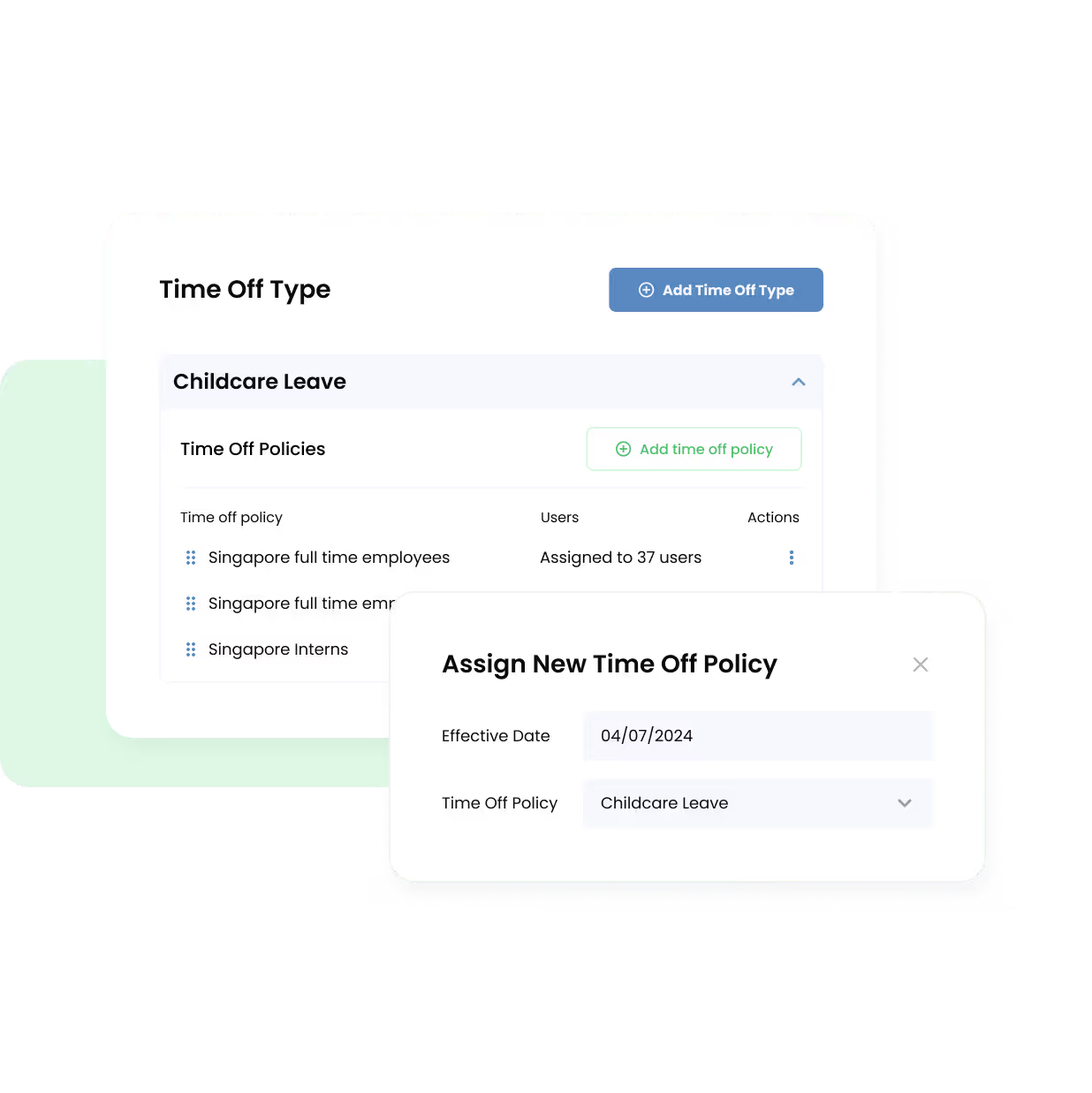
Automated tracking simplifies application workflows, monitors usage across teams, and supports timely reimbursement for government-paid childcare leave. This helps HR professionals reduce manual work while giving working parents the support they need to care for their child.
Automate Your Leave Compliance in 2026 with Omni
Childcare leave entitlement Singapore plays a crucial role in supporting working parents navigating work-life balance. Understanding the policies and ensuring compliance is essential for organizations to create a supportive work environment, boosting morale and employee engagement. Addressing these childcare leave challenges requires HR professionals to invest in modern leave management systems.
Read next: The 7 Best HR Software Singapore Has to Offer
Omni’s all-in-one HRIS makes it possible to manage the entire end-to-end employee life cycle in one platform. Our robust time-off management capabilities allow HR teams to streamline the management process of childcare leave in accordance with MOM childcare leave entitlement guidelines.
With customizable leave allowances, employers can set childcare leave criteria based on Singapore standards, company policies, or individual eligibility, simplifying compliance efforts and standardizing benefit allocation for their teams. These automated processes help HR professionals track eligibility, manage childcare leave applications, and ensure proper reimbursement with ease, while ensuring employees get the time they need to recover and return to work productive and engaged.
Omni also seamlessly integrates with your team’s most loved work tools, such as Slack, enabling managers to receive and manage time-off approvals directly within the messaging platform, removing time-consuming steps from leave management with a quick push of a button. With automated calculations, employees and managers can easily view childcare leave balances in real time without the intervention of HR.
Our employee self-service portal empowers employees to swiftly submit their maternity leave requests, automatically routing them to the appropriate managers with customizable approval workflows. And our user-friendly mobile application allows for on-the-go approvals and communication, so you can manage leave balances and employee benefits from anywhere.
Our localized solutions and unified system merge your childcare leave entitlement Singapore management efforts and payroll processing, facilitating automatic, accurate calculations and compliance with local regulations.
Book a demo with us today to learn more about how Omni can transform your leave management processes, saving you time, reducing administrative burdens, and enhancing overall efficiency.