.png)
Summary. Compensation software is becoming essential for Asian businesses as they navigate multi-currency payroll, fast-changing labor laws, and intense talent competition. Relying on spreadsheets creates costly errors and compliance risks, while modern compensation management tools streamline salary reviews, automate benefits, and ensure regulatory peace of mind. Among the top compensation management software, Omni stands out with Asia-first design—offering localized compliance, scalable automation, and seamless integrations—making it the leading compensation management system for simplifying compensation and benefits and supporting sustainable growth.
Compensation management software is a platform that centralizes salary planning, bonus administration, benefits management, and pay equity analysis — giving HR teams a single system for managing how employees are paid, fairly and compliantly. The rise of compensation software across Asia highlights how organizations are rethinking the way to manage complex compensation and benefits structures. The Asia-Pacific market for compensation management software is projected to grow at a strong 13.2% CAGR over the coming decade. Yet, many businesses still rely on manual spreadsheets and fragmented compensation tools instead of implementing a dedicated compensation management system.
The challenge is that businesses often overlook critical requirements, such as multi-currency planning, local benefits integration, cost-of-living adjustments, and regional talent market analytics, which are essential for effective compensation management software. Instead, they tend to focus solely on basic salary adjustments.
This article provides a comprehensive framework for evaluating compensation management tools in Asia, compares the top compensation management software, and demonstrates why Omni stands out as a market leader.
Read next: Global HRIS System Guide | Enterprise HR Software Guide | Cloud HR Software Guide
What is compensation management software?
Compensation management software is a category of HR technology that helps organizations plan, administer, and optimise how employees are paid. Where payroll software processes payments, compensation management software sits upstream — it handles the decisions that feed into payroll: salary structures, bonus cycles, benefits administration, and pay equity analysis. For businesses operating across Asia, the most important distinction is that a good compensation management system also handles the compliance layer: statutory contribution rules, country-specific pay regulations, and multi-currency pay structures across all the markets you operate in.
Best Compensation Management Software for Asian HR Teams (2026)
Before we take a detailed look at the comparison between the top compensation management software, here's a table that summarizes their key differences.
Omni HR
Overview: Omni HR is purpose-built for growing companies across the Asia Pacific. Unlike legacy platforms, Omni is designed with local compliance, multi-currency payroll, and regional market support at our core.
Our compensation software consolidates costs, automates workflows, and keeps HR teams ahead of rapidly changing regulations in Singapore, Hong Kong, Malaysia, Indonesia, the Philippines, and more. Omni empowers HR to scale across multiple markets without losing visibility or control.
Multi-country payroll and local compliance
Omni’s compensation management system automates payroll in accordance with country-specific statutory requirements, including Singapore’s CPF, Malaysia’s EPF, Hong Kong’s MPF, the Philippines’ SSS contributions, and others. With this, HR teams no longer need to scramble over last-minute regulatory changes.

Smart automation and scalability
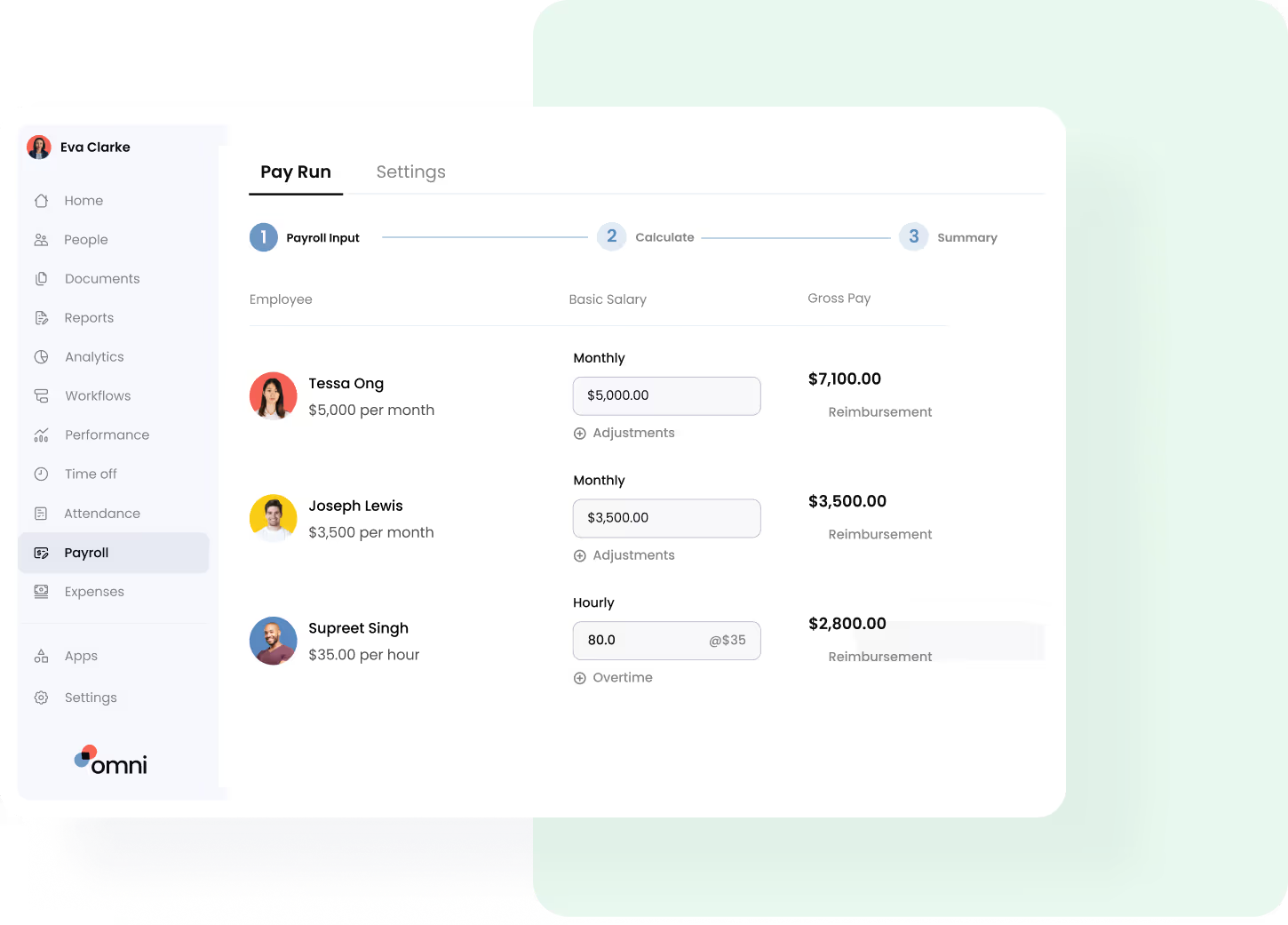
Our automated workflows replace the need for manual spreadsheets when it comes to salary adjustments, bonus approvals, and performance-linked pay. This allows HR to scale operations across multiple countries without creating more administrative burden.
Mobile-friendly, employee-centric design

Omni’s self-service portal empowers employees to access payslips, submit expense claims, and check leave balances without having to go through HR. Similarly, managers can approve claims or leaves on the go. This reduces admin burden while boosting transparency and employee satisfaction.
“Once I get a notification, I can just approve from the app. I don’t even have to log into the website – straight away I click approve, and it’s done.”
— Wenna Lee, HR Manager at IHRP
Free trial/demo: 7-day free trial included
Pricing:
- Growth – US$3/employee/month
- Essential – US$7/employee/month
- Pro – US$9/employee/month
Pros: Intuitive, customizable, and all-in-one HR solution with strong automation, reporting, and excellent customer support.
Cons: May not meet the complex needs of large, multinational enterprises.
Workday
Overview: Workday is a leading enterprise software platform known for its comprehensive HR, finance, and planning solutions.
Free trial/demo: Demo available on request (no free trial)
Pricing: Custom pricing (typically high-tier; enterprise-level plans only)
Pros: Comprehensive, cloud-based platform with advanced HR and financial features, customizable workflows, and an intuitive user experience.
Cons: High cost, complex implementation, occasional performance issues, and some module limitations compared to specialized third-party solutions.
HiBob
Overview: A user-friendly platform that transforms how organizations manage the entire employee lifecycle. It is designed for mid-sized to larger companies looking to scale their HR operations and maintain an engaged workforce. Its features are especially valuable for organizations with distributed or hybrid teams, supporting international collaboration and streamlined HR management.
Free trial/demo: Free version available
Pricing: Typically costs $16–$25 per employee/month plus a one-time setup fee.
Pros: All-in-one HR platform with a modern, intuitive interface, strong analytics, global/hybrid support, and tools for engagement and culture.
Cons: Can be complex for smaller teams, customization may be limited for complex workflows, occasional support delays, pricing/reporting transparency issues, and Western design may not fully suit Asia, with limited integrations and timezone support.
Rippling
Overview: Rippling is a highly-rated, all-in-one workforce management platform that centralizes HR, payroll, benefits, and IT management. Its intuitive interface, automation capabilities, and scalability make it ideal for medium to large businesses looking to streamline operations and manage distributed teams efficiently. However, the platform is primarily designed for Western markets and may not fully cater to the needs of Asian businesses.
Free trial/demo: No free trial available
Pricing: Starts from $8 per employee/month (it increases with added features)
Pros: All-in-one workforce management platform with an intuitive interface, strong automation, integrated HR/IT management, scalability, and customizable reporting.
Cons: Opaque pricing, occasional slow support, steep learning curve, potentially overwhelming dashboard, and limited depth for highly specialized needs.
PerformYard
Overview: PerformYard is a user-friendly performance management platform that helps organizations set goals, track progress, and gather 360-degree feedback. Some users report that while it excels at performance-focused workflows and offers strong customization and dedicated support, its broader HR features and integrations are limited, and it lacks a mobile app for on-the-go access.
Free trial/demo: Demo available
Pricing: PerformYard’s pricing is feature-based, with costs depending on the specific functionalities a company selects.
Pros: User-friendly, flexible performance management software with strong customization, 360-degree feedback, and dedicated customer support.
Cons: Performance-focused with basic compensation features, limited broader HR functions, minimal expertise for Asian markets, and no mobile app.
Why Businesses Need Modern Compensation Software
Regional complexity
The Asia-Pacific region is a mosaic of diverse and rapidly evolving regulatory environments. Countries frequently enact sweeping reforms that fundamentally alter compensation and payroll obligations. For instance:
- Singapore: The progressive increase of the CPF Ordinary Wage ceiling significantly raises employer contribution obligations and changes the structure of total rewards planning.
- Hong Kong: The abolition of the MPF offsetting mechanism will increase employers’ severance and long-service payment liabilities, forcing organizations to revisit their long-term compensation management systems.
- Malaysia: The increase in minimum wage to RM1,700, alongside higher salary ceilings for social security contributions, creates added pressure on payroll budgets and requires more accurate compensation management software to stay compliant.
- Indonesia: The Omnibus Law overhauled severance pay and unemployment insurance, reshaping employer cost structures and requiring more flexible compensation management tools to model liabilities.
- Philippines: The increase in SSS contribution rates to 15% raises both employer and employee deductions, complicating payroll and benefits calculations.
With modern compensation software, it becomes easy to track these changes across multiple jurisdictions. Asian businesses can also avoid the risk of non-compliance, such as severe financial penalties, legal challenges, and reputational damage.
Hidden costs
The hidden costs of using manual systems are immense, as research shows that 90% of spreadsheets contain errors. Additionally, managing compensation manually consumes significant time and increases the risk of compliance issues.
Compensation management systems have been built with automation, accuracy, and compliance in mind, helping organizations reduce errors, save time, and ensure fair and transparent pay practices.
Market pressure
The battle for talent in Asia is more intense than almost anywhere else in the world. In this environment, speed and precision in making offers are critical. To stay ahead, companies seek solutions that enable competitive, strategic offers that secure top talent without overspending. Modern platforms integrate with live market data feeds, empowering managers to make offers calibrated to the current market, location, and skillset.
Spreadsheets fail
A City University of Hong Kong study found that 94% of business spreadsheets used in decision-making contain critical errors, underscoring just how risky it is to rely on manual tools.
This is particularly critical in a compensation management system, as a decimal point error in a bonus formula or miscalculation of a statutory contribution can affect hundreds of employees and cost millions to correct. Spreadsheets may also contain sensitive employee salary data, which can be easily duplicated and shared via email, posing a significant breach risk under strict data privacy laws like Singapore's or Thailand's PDPA (Personal Data Protection Act).
Modern solutions
Modern compensation software is not an IT expense; it is a critical investment in risk mitigation, operational efficiency, and talent acquisition. It provides the governance, agility, and insight necessary to not only survive but thrive in the Asian century. The question for leaders is not whether they can afford to implement this technology, but whether they can afford the escalating risks and hidden costs of continuing without it.
Key Features to Look for in Compensation Software
Multi-currency and multi-entity support for Asian markets
If you're going to hire employees or independent contractors from Asian countries, you should look for compensation software that can support making payments in multiple currencies.
The compensation software should be able to:
- Display, plan, and calculate pay in local currencies.
- Convert between currencies automatically using up-to-date exchange rates.
- Report and benchmark compensation across currencies for fair comparisons.
Being able to calculate salaries, bonuses, and equity in local currencies removes friction and enables employees to receive their salary in their home currency.
Additionally, many companies in Asia establish separate legal entities in each country to comply with local regulations. With dozens of countries, each with distinct tax, payroll, and compensation requirements, it’s essential to choose a compensation management software like Omni that can seamlessly manage pay across multiple entities and subsidiaries within a single platform.
Automated salary review cycles and approval workflows
The right compensation software should be able to streamline and improve the salary review process by automating review cycles, routing approvals to the right managers, and providing data-driven insights. It should centralize compensation and benefits data, allow scenario planning for raises and bonuses, ensure fairness and compliance, and offer transparency to both HR teams and employees, making the entire process faster, more accurate, and strategically aligned with business goals.
Integration with performance management and payroll
The compensation software should seamlessly connect with performance management systems to ensure that salary adjustments, bonuses, and promotions are directly linked to employee performance metrics. Integration with payroll ensures that approved compensation changes are accurately and automatically reflected in employees’ pay, reducing manual errors and administrative workload.
Pay equity reporting and analytics
A robust compensation platform should provide in-depth analytics, including pay equity audits to identify and address disparities, compensation benchmarking against market standards, and predictive modeling to help HR and leadership make strategic pay decisions. These insights help maintain fairness, attract top talent, and optimize compensation budgets.
Read more: The Pay Parity Guide for HR
Compliance-ready reporting for audits and tax filing
The compensation software should simplify compliance with local and international labor laws by generating accurate, audit-ready reports. It should support tax filings, internal audits, and regulatory reviews, ensuring that compensation practices meet all legal requirements and reducing the risk of penalties.
Employee self-service portals
Employees should have access to intuitive portals where they can view their total compensation, including base salary, bonuses, benefits, and equity. These portals can also allow employees to track changes, request clarifications, and understand how their pay aligns with company policies, fostering transparency, trust, and engagement.
Frequently Asked Questions
1. What is compensation software, and why is it essential in Asia?
Compensation software is a tool that manages salaries, bonuses, and benefits. For growing Asian companies, a compensation management system is essential to handle diverse pay structures, local labor laws, and multiple currencies efficiently. By using the right compensation tools, businesses can simplify compliance while staying competitive in the Asian markets.
2. How does compensation software differ from payroll systems?
Payroll systems mainly process salaries, taxes, and statutory deductions. Compensation management software goes further by helping HR teams design pay structures, performance rewards, and incentives that drive retention.
3. Can compensation tools handle multiple countries and currencies?
Yes. Modern compensation management software is built for regional and global scalability. The top compensation management software supports multiple currencies, local tax rules, and country-specific compliance requirements, making it easier for Asian companies to expand across borders without complexities.
4. How does compensation software improve retention and pay equity?
By ensuring fair, transparent pay aligned with performance, it boosts employee satisfaction, reduces turnover, and promotes equitable treatment. A strong compensation and benefits strategy backed by compensation software helps growing companies retain top talent.
5. How does compensation software integrate with existing HR and payroll systems?
Top compensation management software integrates smoothly with existing HRIS and payroll platforms. This allows HR teams to manage compensation and benefits in one place. With the right compensation management system, setup can be completed quickly without disruption.
6. What ROI can companies expect from compensation management software?
Organizations using top compensation management software often see reduced administrative workload, better compliance with Asian labor regulations, and stronger employee retention. By automating compensation planning, companies save time, reduce risks, and create fairer pay practices.
Why Growing Asian Companies Trust Omni for Compensation and Benefits Management
Growing companies across Asia are choosing Omni as their trusted partner in building scalable, compliant, and future-ready people operations. More than a basic compensation software, Omni provides automated compliance updates, seamless integrations, and tailored local support, ensuring your team can focus on what matters most: your people.
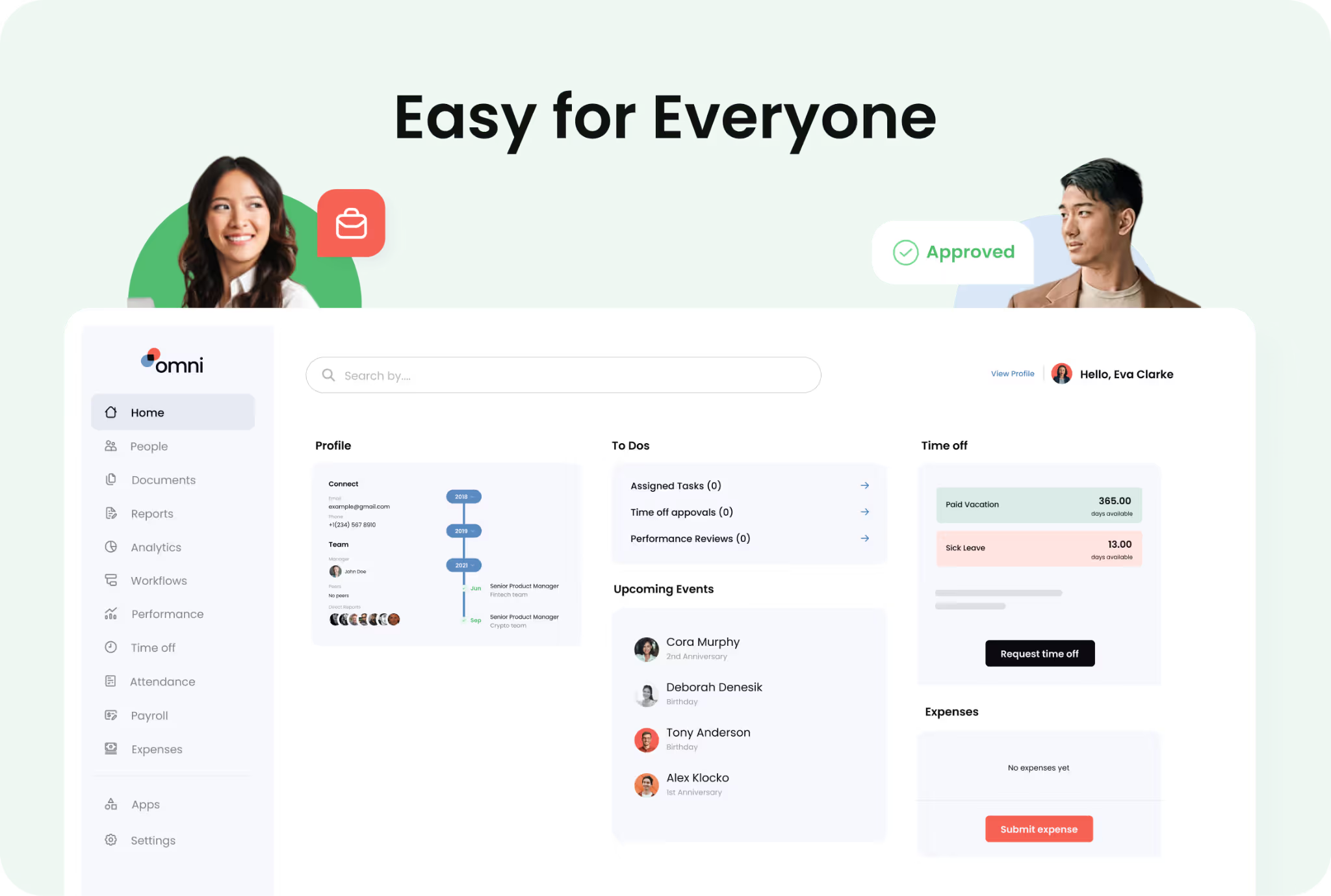
Our customers have already seen measurable ROI in time savings, productivity, and employee satisfaction.
Bring clarity, control, and confidence to your compensation and benefits management. Book a demo with our team today and see how Omni can grow with you.