






















.png)
Summary. Australia offers a stable and business-friendly environment, but managing payroll and superannuation comes with regulatory nuances that businesses must navigate carefully. Superannuation in Australia, or super, is a retirement savings program where employers contribute a set percentage of employees' earnings to a super fund, with the Superannuation Guarantee Contribution (SGC) currently set at 12%. From 1 July 2026, the way super is paid changes fundamentally under the Payday Super reform: employers must pay contributions alongside every pay run, within 7 business days of payday, rather than quarterly. Employers are responsible for calculating and submitting contributions for full-time, part-time, and eligible casual employees, while employees can make voluntary contributions to boost their savings. Integrating super payments into payroll ensures accuracy, compliance, and timely reporting to the Australian Taxation Office (ATO), reducing errors and penalties. Automated payroll solutions like Omni HR simplify the management of what is superannuation in Australia, handling payroll calculations, payslip distribution, pay-aligned SGC contributions, and tax reporting, so businesses can focus on growth while safeguarding their employees' retirement savings.
Australia boasts a stable and business-friendly economy, with a skilled and diverse workforce. However, doing business and hiring in Australia has regulatory nuances that you should be aware of to avoid consequences.
One of such processes with heavy regulation is payroll and superannuation. If you're self-employed, this is easy to manage, but as your business scales, you must learn to handle these processes for your business. And that's why we are here. In this blog, we will show you how to navigate payroll and superannuation in Australia, superannuation guarantee contributions (SGC), the new Payday Super requirements effective 1 July 2026, employer and employee obligations, and how you can simplify compliance.
What is superannuation in Australia?
Superannuation, or super as it's commonly called, is a pension program designed to enable Australian workers to save up for retirement. In this program, employers contribute a set percentage of employees' earnings to a super account. The programme began in 1992 to provide financial security in retirement and reduce reliance on government pensions. The government regulates the system by setting contribution rates, tax rules, and access conditions, while authorities such as the Australian Taxation Office (ATO) ensure employers comply with the law and that super contributions are properly managed and protected.
Understanding the Superannuation Guarantee Contribution (SGC)
The Superannuation Guarantee Contribution (SGC) is a mandatory contribution that employers in Australia must pay into an eligible employee's super fund. It is designed to ensure that employees accumulate retirement savings throughout their working lives. Under the SGC system, the responsibility to make super contributions lies entirely with the employer, not the employee, although employees may choose to make additional voluntary contributions if they wish.
Employers are required to pay super for most employees, including full-time, part-time, and casual workers, as long as they are 18 years or older (or under 18 and working more than 30 hours per week). The contribution is calculated as a percentage of an employee's qualifying earnings (QE), not their take-home pay.
What changed: From 1 July 2026, the contribution base moves from "Ordinary Time Earnings (OTE)" to a new, broader concept called Qualifying Earnings (QE), which combines OTE with certain other payments. This change is tied directly to the move to pay-aligned super under Payday Super — see below. Employees, on the other hand, are not obligated to contribute, but they are responsible for choosing a super fund and monitoring their account.
For superannuation in Australia, the Superannuation Guarantee (SG) rate is 12%, meaning employers must contribute at least 12% of an eligible employee's qualifying earnings to their chosen super fund. The A$450 monthly income threshold that previously had to be met before super was payable has been removed, so employers must pay the Superannuation Guarantee on all eligible earnings regardless of how little an employee earns, provided the employee meets the relevant age and work-hours criteria.
Payday Super: How Super Payments Work in Payroll From 1 July 2026
Superannuation payment timing in Australia is changing significantly. Until 30 June 2026, employers could pay SGC contributions quarterly. From 1 July 2026, under the Payday Super reform, employers must pay super at the same time as wages — every pay run, not quarterly.
Here's what employers need to know about Payday Super:
- Payment window: Contributions must reach the employee's nominated super fund within 7 business days of payday.
- New hires: For an employee's very first super payment with a new employer, the window extends to 20 business days, giving payroll teams time to receive the employee's chosen fund details.
- Qualifying Earnings (QE): The calculation base shifts from OTE to the broader QE definition — payroll teams should confirm their payroll provider has updated this calculation.
- SBSCH closure: The ATO's free Small Business Superannuation Clearing House (SBSCH) closed on 30 June 2026. Businesses that relied on it must migrate to a commercial clearing house or a payroll provider with integrated super processing before that date.
- Stronger penalties: The Superannuation Guarantee Charge (SGC) penalty regime for late or missed payments has been strengthened, with penalties of up to 25–50% of the unpaid contribution amount on top of the original shortfall, in addition to interest.
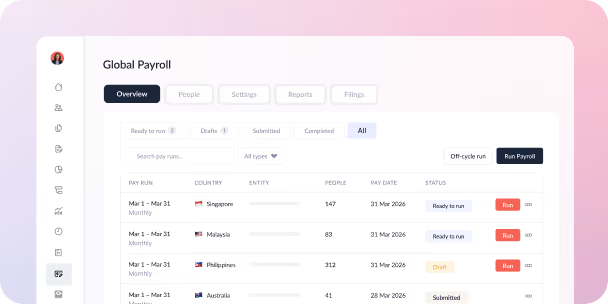
Integrating payments into payroll is now more than a convenience — it's the only practical way to stay compliant with the 7-day window. Employers are required to calculate the superannuation contribution and include it alongside every salary payment, not just at quarter-end. Payments must be made within the statutory window to the employee's chosen super fund, and employers are also responsible for reporting these contributions in their payroll records and to regulatory authorities such as the Australian Taxation Office.
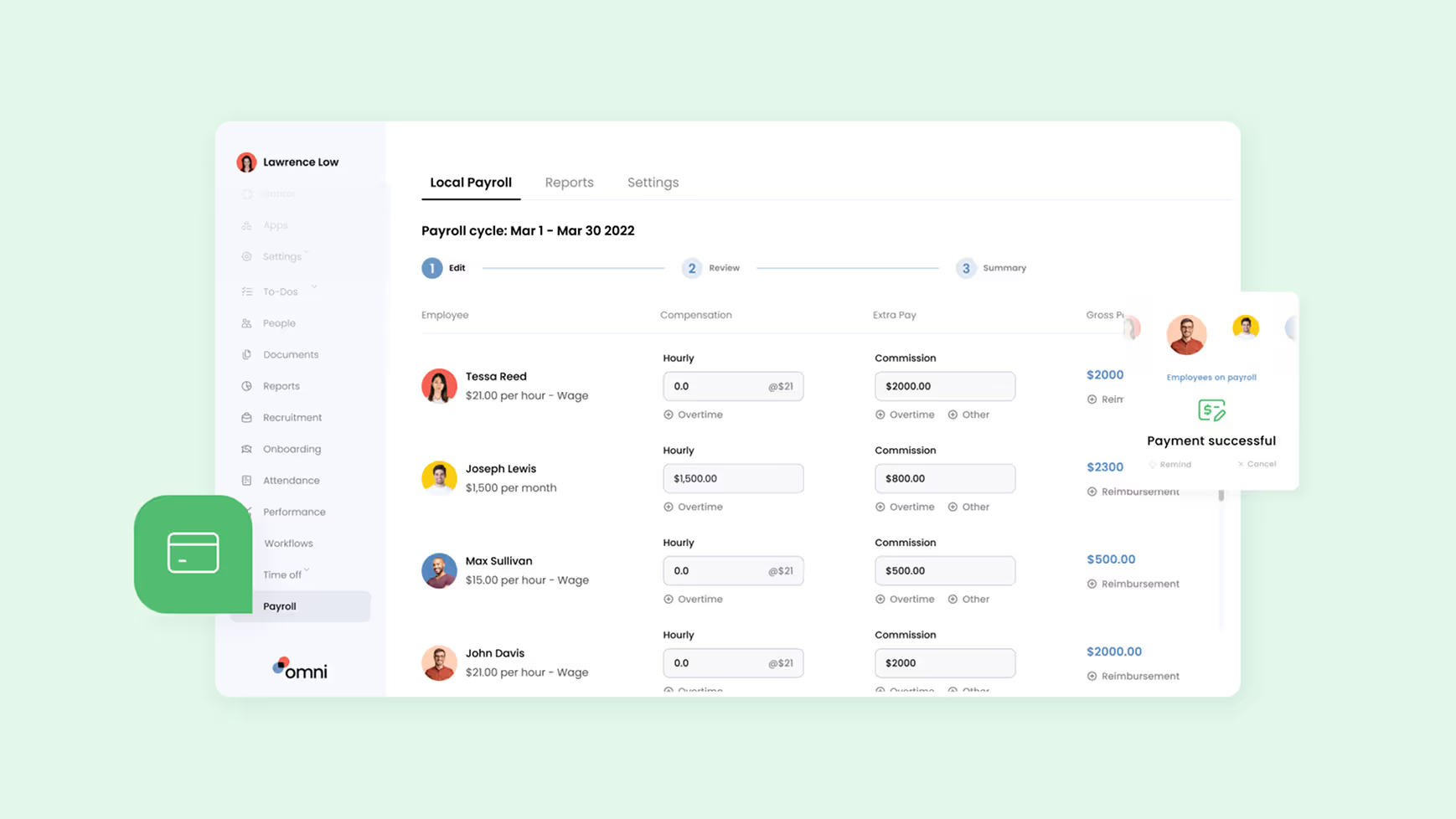
Common errors, like miscalculating the contribution amount, missing the new 7-business-day payment window, or failing to include certain types of earnings under the QE definition, can lead to penalties, so it's important to use reliable payroll software like Omni HR that has already adapted to pay-aligned super, and to regularly reconcile contributions. By integrating superannuation payments smoothly into every pay cycle, employers not only stay compliant but also ensure that employees' retirement savings continue to grow without disruption.
Superannuation Compliance for Employers
Employers have a legal responsibility to comply with superannuation obligations, and failing to meet these requirements can result in significant penalties, including the Superannuation Guarantee Charge, interest charges on late payments, and employee dissatisfaction. Non-compliance not only affects your business financially but can also damage its reputation, employee trust, and company culture.
To avoid these issues, employers must maintain accurate and thorough records of all superannuation contributions. Records like employee details, contribution amounts, payment dates, and fund information ensure that documentation is readily available for audits or regulatory checks.
For superannuation in Australia, keeping manual records of employee details and financial information can expose your business to human error and penalties — and with contributions now due every pay run rather than quarterly, the margin for error is smaller. As such, many businesses now use automated payroll systems or Human Resource Information Systems (HRIS) software to simplify record keeping and compliance. These tools can calculate contributions correctly, schedule pay-aligned payments within the 7-business-day window, generate reports, and store records securely.
Leveraging such systems reduces the risk of errors, ensures adherence to the new payment deadlines, and helps employers consistently meet their obligations while safeguarding employees' retirement savings.
Read next: Why HR Should Invest in Financial Education for Employees
What Australian Employees Need to Know
Australian employees must understand the difference between employer and employee superannuation contributions to make the most of their retirement savings. Employer contributions are mandatory under the Superannuation Guarantee and are paid as a percentage of an employee's eligible earnings, while employee contributions are voluntary and can be made as personal contributions to boost retirement savings.
From 1 July 2026, employees should also notice their super landing in their fund much faster and more regularly — with each payday rather than once a quarter — under Payday Super.
Employees can access their super accounts through their chosen super fund to check balances, track contributions, and review investment options, making it easier to stay informed about how their money is growing. Regular contributions, even small ones, combined with long-term investing and compounding returns, can significantly increase the value of super over time, helping employees build stronger financial security and a more comfortable retirement.
How Omni HR Manages Superannuation in Australia
Managing superannuation in Australia requires accuracy, consistency, and a clear understanding of payroll and statutory obligations. As businesses grow, keeping up with changes to super — including the shift to Payday Super — can quickly become complex, especially for employers who are new to superannuation in Australia.
Omni HR helps simplify how superannuation is managed by integrating compliant payroll processes into everyday operations. With our managed payroll services:
- Payroll calculations are prepared accurately for weekly, fortnightly, or monthly cycles, fully compliant with Australian regulations.
- Bank files are generated, and payslips are sent securely to employees via email and Omni's employee portal.
- Super contributions, including SGC, are calculated on the Qualifying Earnings base and submitted within the Payday Super 7-business-day window, ensuring employees' retirement savings are protected.
- All payroll reporting, including PAYG withholding and ATO submissions, is handled automatically and on schedule.

See how Omni HR can simplify superannuation and payroll for your team, ensuring compliance with Payday Super, saving time and give your employees peace of mind about their retirement savings. Book a demo to learn more about our managed payroll services today.
Frequently Asked Questions
Superannuation, or super, is a retirement savings program where employers contribute a percentage of an employee's earnings to a super fund. Introduced in 1992, it is designed to provide financial security for employees in retirement and reduce reliance on government pensions. Employees can also make voluntary contributions to boost their savings.
Employers in Australia must pay super for most employees, including full-time, part-time, and casual workers who are 18 years or older (or under 18 and working more than 30 hours per week). Contributions are based on qualifying earnings, not take-home pay.
The Superannuation Guarantee Contribution (SGC) rate is currently 12%. Employers must calculate and pay this percentage of an eligible employee's qualifying earnings into their super fund.
No. The previous A$450 monthly income threshold has been removed, so employers must pay super on all eligible earnings, provided the employee meets age and work-hour requirements.
Payday Super is a reform that takes effect on 1 July 2026. It requires employers to pay super contributions at the same time as wages — within 7 business days of each payday — instead of quarterly. New employees' first super payment has a 20-business-day window. The ATO's free clearing house (SBSCH) closed on 30 June 2026, so businesses must use a commercial clearing house or an integrated payroll provider going forward.
Super payments are integrated into payroll. Employers calculate SGC on Qualifying Earnings, include it alongside every pay run, and submit it to the employee's chosen fund within 7 business days of payday. Using automated payroll systems, like Omni HR, ensures contributions are accurate, pay-aligned, and compliant with the Payday Super regulations.
Non-compliance with superannuation in Australia rules can result in the Superannuation Guarantee Charge — including penalties of up to 25–50% of the unpaid amount — interest charges, and damage to employee trust. Accurate records and automated systems help prevent errors and missed payments, which is especially important now that contributions are due every pay cycle rather than quarterly.
Employees can access their super accounts to check balances, track contributions, and review investment options. With Payday Super, employees should see contributions appear in their fund shortly after each payday rather than once a quarter.
Omni HR's managed payroll services simplify superannuation management by:
- Preparing compliant payroll calculations
- Generating bank files and distributing payslips via email and the employee portal
- Calculating SGC contributions on Qualifying Earnings and submitting within the Payday Super window
- Handling PAYG withholding and ATO reporting automatically
This reduces errors, saves time, and ensures employees' retirement savings are protected.



.avif)
.avif)