.png)
Summary. Malaysia's enhanced ePPAx system, launched in December 2024, requires employers to obtain prior approval from the Director General of Labor before hiring foreign workers. The system features a multi-tiered levy structure and streamlined application process under Section 60K of the Employment Act 1955. Employers must demonstrate compliance with labor laws, maintain clean employment records, and follow specific application procedures, with approvals valid for 12 months.
Hiring foreign workers requires most companies to stay up-to-date with changes in specific countries they are looking at. If you’re planning on hiring foreign workers in Malaysia, there’s been new updates to the ePPAx system that you need to be aware of. Let’s get right into it.
What is Section 60K of the Employment Act 1955?

Section 60K of the Employment Act 1955 is a known regulation for employers who are hiring foreign workers in Malaysia. It creates a mandatory rule that employers must obtain prior approval from the Director General of Labor before employing workers, regardless of their wages or job position.
To obtain this approval, employers must meet specific conditions such as:
- The employer must not have any outstanding issues related to employment decisions, orders, or directives.
- They must comply with labor laws related to social security, minimum wages, and minimum housing standards.
- The employer must not have been convicted of any offenses related to human trafficking or forced labor.
The validity period for Section 60K approval is 12 months for all categories of foreign workers or non-citizen employees managed by JTKSM, and this was effective from 1 October 2024. This period excludes approvals issued under the Special Employer Change Process (PTM Khas).Also, there are exemptions from needing prior approval for employers with no outstanding legal issues related to labor laws or social security.
What is the enhanced ePPAx system?
The enhanced Integrated Foreign Workers Management System (ePPAx) went live on 2 December 2024. It includes upgraded modules and new functions to improve the hiring process for foreign workers in Malaysia.
Key updates to the ePPAx system involve the multi-tiered levy (MTL) system. You can think of it as a way to organize levies based on things like the industry of the worker, the skill level of the worker, and how well employers have followed labor regulations in the past.
The main goal of the enhancement is to improve efficiency and streamline the application process, enhance transparency and accountability, strengthen enforcement of labor laws, and finally, support the government’s efforts to manage foreign worker employment.
Now, how does this affect applications for foreign workers? The MTL changes the levy rates depending on those factors mentioned. This can impact the overall cost of bringing in foreign talent, which in turn influences whether companies decide to hire them or not.
The recent changes to the ePPAx system in Malaysia also focus on how new foreign hires get approved. Basically, the new processes and compliance checks are compulsory for new applications for foreign worker passes. If you’re already employing foreign workers and just renewing their passes, you won’t have to deal with these new protocols.
How does that affect employers?
If you’re an employer navigating the recent changes to the ePPAx system, here’s how these updates can affect you and your hiring process:
- Ensure compliance with the new system. First off, you’ll need to make sure you’re up to speed with the new protocols for hiring foreign workers. As we’ve stated earlier, getting prior approval for new hires is mandatory under Section 60K of the Employment Act. This also includes submitting your applications through the ePPAx system; we will explain how you can do that in the next section.
- Consider the potential impact on the recruitment process: These new changes are aimed at improving the approval process, which could help speed up hiring timelines for new foreign workers. However, this also means you’ll need to carefully plan your recruitment strategies to align with the new requirements.
- Using HR tech to streamline the hiring process: To stay ahead of the curve, you can consider using HR tools to make this transition easier. Pick an HR tool that can help ease your hiring processes, manage applications and ensure you’re compliant with hiring foreign workers in Malaysia. Alternatively, consider using an EOR Malaysia to simplify the process while ensuring compliance.
Steps to Applying for Foreign Worker Approval Under ePPAx
If you’re a new employer filing for foreign worker approval for the first time, you should pay attention to these steps to help you apply under the ePPAx system:
1. Access the ePPAx system
Start by logging into the ePPAx platform using your company’s registered account credentials. This ensures that you have the necessary access and permissions to initiate and manage the application process for foreign worker approvals.
2. Select the correct sub-module
Once you’re logged in, navigate to the specific sub-module that pertains to foreign worker applications. You’ll need to be careful here because this is where you get the relevant section of the system where you can input details specific to the type of work permit or pass you are applying for.
For expatriates, you can check out the sub-module expatriate. For those involved with foreign fishermen, foreign security guards, ship crew members, residence pass holders, RP-T holders, student pass holders, professional visit pass (PVP) holders, professional pass holders, and construction employers in categories G1, G2, and G3, the sub-module: other passes 1 is where to go.
3. Input company and worker information
Enter detailed information about both your company and the prospective foreign worker. This includes compulsory data like company registration details, the worker’s personal identification information, and contact details. You should accurately enter both company and employee data to prevent any processing delays.
4. Specify worker’s category and wage information
Next, identify the employment category of your foreign workers, such as skilled or semi-skilled, and provide the proposed wage details. As you enter this information, make sure that the wage information complies with the minimum requirements and aligns with the guidelines set by the Multi-Tiered Levy (MTL) system.
5. Submit required documents
The next step is to upload all necessary documents to support the application. These typically include employment contracts, copies of identification documents, and any other required certifications depending on the role.
6. Review and confirm application
Also, you have to carefully review the entire application to ensure all information is accurate and complete. This step is important for you to catch any potential errors or omissions before final submission, as any mistake can lead to delays or rejections.
7. Monitor application status
After submission, you must regularly check the application status through the ePPAx system application check screen. Monitoring allows you to stay informed about the progress of the application and to respond promptly to any additional requests or notifications from the authorities.
8. Receive and print approval documents
Once the application is approved, proceed to download and print the necessary approval documents from the system. These documents are needed for record-keeping and may be required for future compliance checks or audits.
9. Post-approval requirements
After receiving approval, you also have to ensure that all post-approval requirements are met. This includes notifying the worker of their start date, arranging for their arrival, and ensuring compliance with any ongoing regulatory obligations related to their employment.
Special Requirements for Construction Sector Employers
If you're in the construction sector in Malaysia, there are specific requirements for your application regarding the ePPAx system and project declaration.
Before you submit any applications through ePPAx, you need to declare your projects in the CIMS CIDB system. This integration helps ensure that your applications are processed more smoothly by linking your construction project data directly with ePPAx.
You must complete your project declarations online within 14 days of being awarded the contract or before starting any work. This includes uploading necessary documents like acceptance letters or signed contracts.
Following these requirements helps with the efficient processing of your applications and staying compliant with Malaysia’s Employment Act regulations.
Simplify Foreign Worker Hiring with Omni
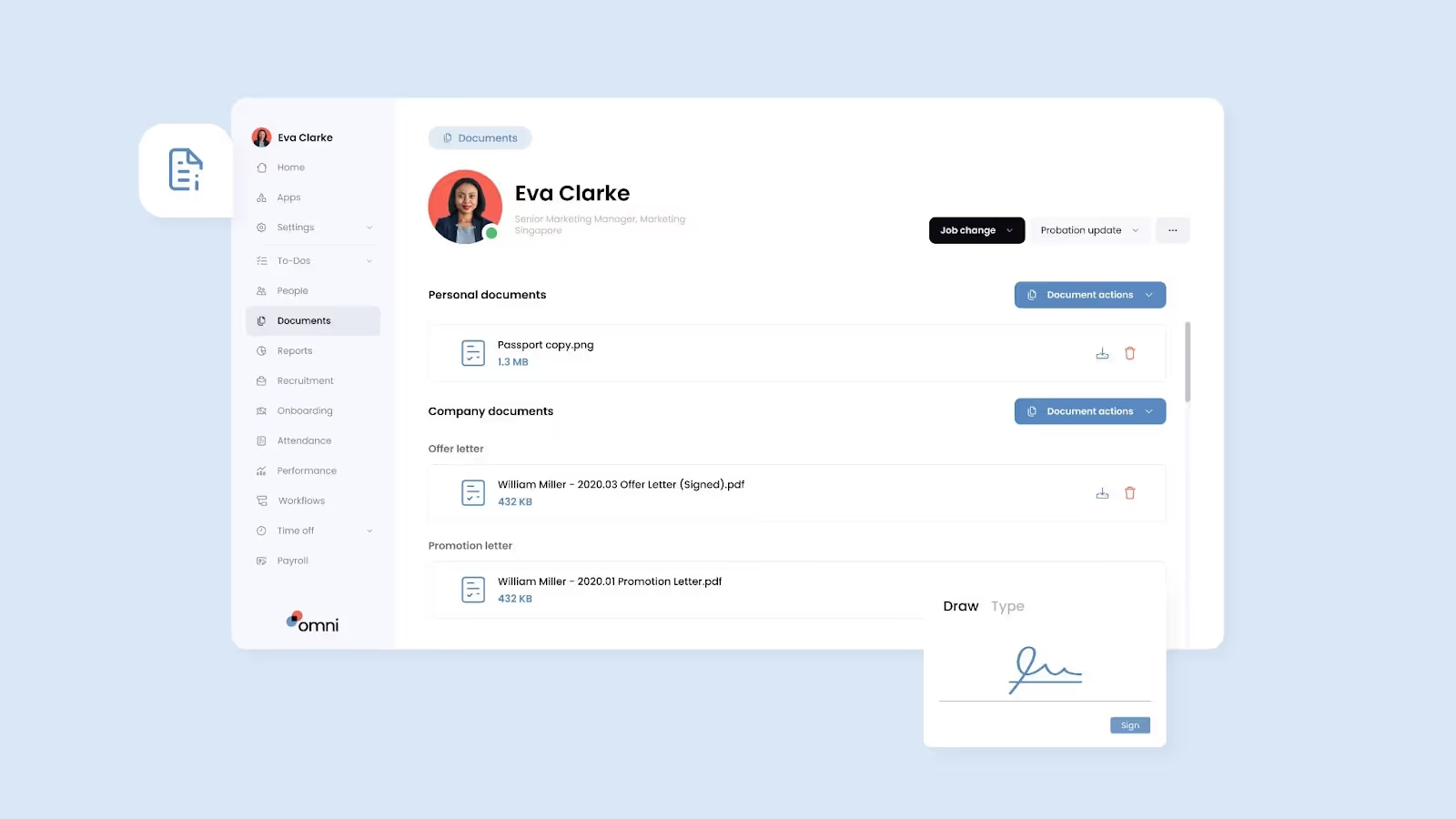
Omni makes it easier than ever to support foreign worker hiring under the new ePPAx system.
Our centralized document management solution makes gathering the necessary data required to apply for foreign worker approval seamless and timely. With customized workflows and automated reminders, HR can help empower employees to manage the deadlines and documentation requirements for foreign worker applications. And centralized documents and real-time data make it easy for employees to access employment contracts, salary information and produce reports and documents necessary for verification.
Offering a comprehensive payroll solution tailored to Malaysia’s specific requirements with features like support for MYR and automated tax calculations, Omni can help HR teams simplify their payroll processing and ensure compliance with ease.
Book a demo with our team to learn more about how Omni can support your foreign worker hiring under the enhanced ePPAx system.
.png)