.png)
Summary. An applicant tracking system (ATS) is recruiting software that automates and manages the entire hiring process — from posting jobs and screening resumes to scheduling interviews, collaborating on decisions, and handing off new hires to onboarding. Modern ATS software offers customizable pipelines, AI-assisted screening, real-time analytics, and seamless HRIS integration, helping HR teams hire faster and more consistently. For Singapore-based teams, the right applicant tracking system also handles MOM compliance requirements, supports multi-channel local job board posting, and connects directly to payroll — eliminating the manual handoffs that slow down high-volume hiring. Whether you're evaluating your first ATS or replacing a tool you've outgrown, this guide covers what to look for, what separates a strong system from a weak one, and the key questions to ask before you sign.
Every time you post a role, the same problem surfaces. Resumes pile up faster than you can open them. Qualified candidates sit in a queue while you're chasing feedback from three different hiring managers. And the candidate who would have been a great hire accepted somewhere else two weeks ago because nobody followed up.
An applicant tracking system (ATS) — also called recruitment software or hiring software — is the tool that fixes this. It centralises every stage of the recruitment process: creating job descriptions, posting to multiple platforms simultaneously, collecting and screening applications, scheduling interviews, gathering team feedback, and converting accepted offers directly into employee records. The right ATS brings structure to a process that's easy to lose control of, and ensures no candidate slips through the cracks.
In this guide, we'll walk you through what an ATS actually is, how it differs from your HRIS, what features to prioritise when evaluating options, and what to look for specifically if you're hiring in Singapore.
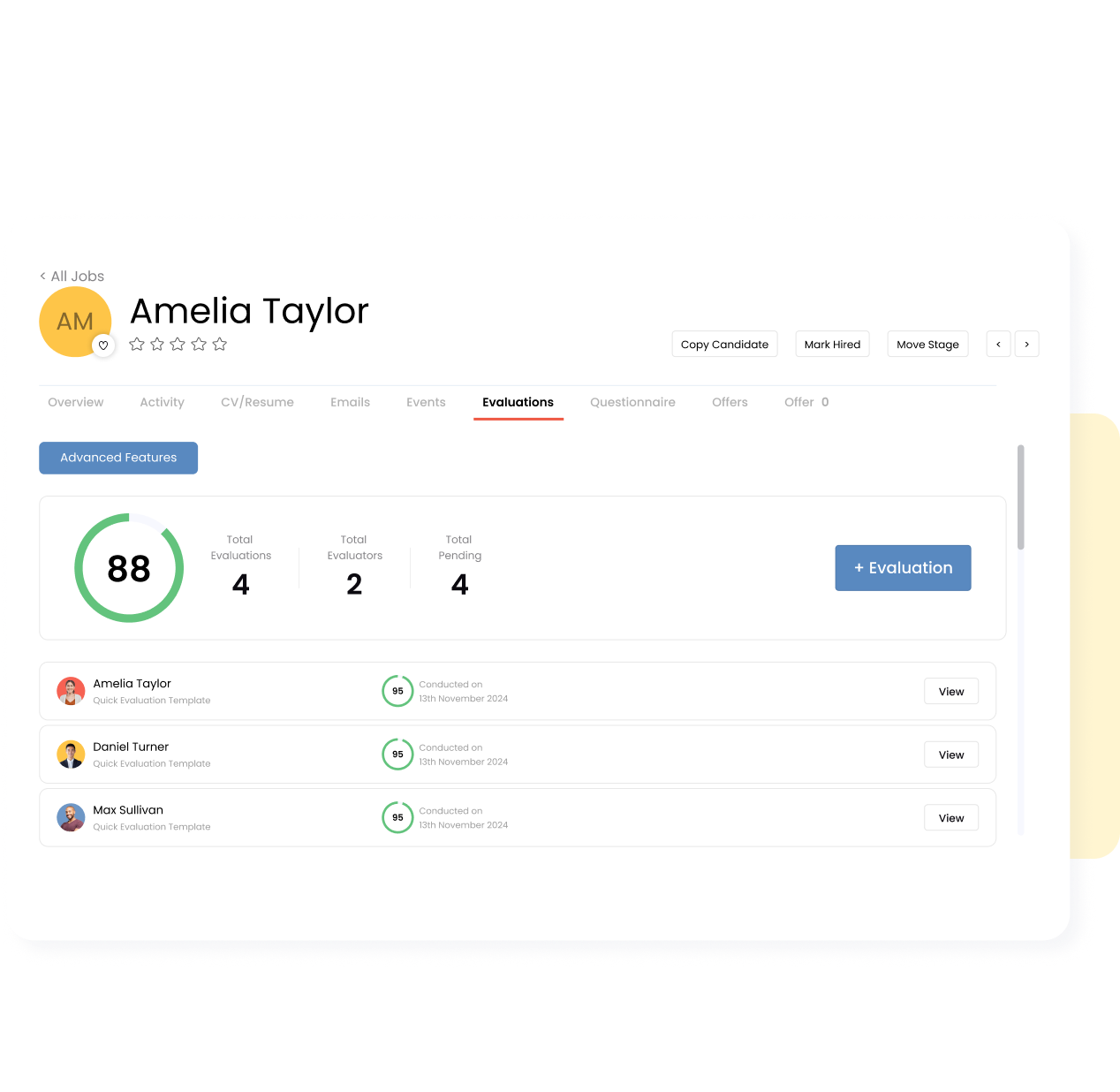
Looking to upgrade your hiring process? Discover how Omni's ATS can help streamline your recruitment and deliver a seamless candidate experience.
What is an Applicant Tracking System (ATS)?
An applicant tracking system (ATS) is software that automates and organises the hiring process from job posting to offer acceptance. It acts as a central hub for all recruitment activity — storing candidate profiles, tracking application status, enabling team collaboration, and maintaining a searchable database of past and present applicants.
The term is sometimes used interchangeably with "recruitment software" or "hiring software," but the defining characteristic of an ATS is tracking: every candidate's journey through your pipeline is logged, visible to the whole hiring team, and auditable.
More than 98% of Fortune 500 companies use an applicant tracking system. Adoption among mid-market and growth-stage companies in Asia has accelerated significantly over the past three years, driven by rising hiring volumes, distributed teams, and pressure to reduce time-to-fill without growing the HR headcount.
According to Research and Markets, the global ATS software market is projected to reach $5.48 billion by 2030 — reflecting how central these tools have become to modern talent acquisition.
ATS vs HRIS: What's the difference?
This is one of the most common questions HR teams ask when evaluating software — and the confusion is understandable, because the two systems increasingly overlap.
The distinction matters because the handoff between them is where data gets lost. When a candidate accepts an offer, their record needs to move cleanly from the ATS into the HRIS — carrying contract details, start date, compensation, and role information — without anyone having to re-enter it manually.
Modern platforms like Omni combine both in a single system: the ATS handles the full recruitment workflow, and when a candidate is marked as hired, they're automatically converted into an employee record in the HRIS. No duplicate data entry, no information gaps on day one.
Why growing companies need an ATS?
Manual recruitment doesn't break immediately — it breaks gradually. The cracks show up as missed follow-ups, slow-moving pipelines, inconsistent evaluation criteria, and candidates who drop out because communication went quiet.
Here are the six recruitment challenges that drive most teams toward an applicant tracking system.
1. Resume overload
High-volume roles can generate hundreds or thousands of applications. An effective ATS filters non-qualifying applicants automatically and ranks candidates based on pre-defined criteria, so your team focuses time on the candidates who actually fit the role — not on sorting through applications that never stood a chance.
2. Disorganised workflow
When applications arrive across email, LinkedIn, job boards, and referrals simultaneously, tracking everything in a spreadsheet becomes a liability. An applicant tracking system consolidates all incoming applications into a single, real-time dashboard, regardless of source.
3. Poor candidate experience
As many as 92% of candidates abandon applications halfway through due to complex or lengthy submission processes. And 81% of candidates expect continuous communication throughout the hiring process — yet the reality is that close to 60% of applicants report being left without any update during or after the interview stage.
An ATS addresses both sides: simpler application flows reduce drop-off, and automated status updates and interview reminders keep candidates informed without manual effort from your team.
4. Hiring bias
Without standardised screening criteria, evaluation tends to drift toward subjective preferences. ATS software enforces structured assessment at each stage — consistent questions, shared scorecards, documented rationale — helping every candidate get a fair evaluation and giving you a defensible audit trail.
5. No visibility into hiring performance
Recruitment metrics like time-to-fill, cost-per-hire, source of hire, and candidate drop-off rates are impossible to track reliably without a system. An ATS generates these automatically, turning your hiring process into something you can actually optimise rather than just react to.
Access my free Hiring KPI Checklist
6. Siloed decision-making
Executive and senior hires involve multiple stakeholders across departments — each with different priorities and schedules. Without a shared space to review candidates, compare notes, and align, decisions slow down or go sideways. ATS software brings everyone into the same pipeline, with the same information.
Key Features to Look For When Evaluating ATS Systems
The ATS market has grown to the point where most tools cover the basics. What separates a strong applicant tracking system from a mediocre one is how well it handles the edges: complex multi-stage pipelines, multi-platform posting, team collaboration at scale, and the handoff into onboarding. Here's what to evaluate.
Centralized job posting
Every role has a different hiring process. A VP of Engineering and a junior customer support hire don't go through the same stages, and your ATS shouldn't force them to. Customisable pipelines let each team define their own workflow — application review, skills assessment, first-round interview, panel, offer — and give recruiters the flexibility to adapt when processes change.

Omni’s multi-channel posting allows you to post job listings across multiple platforms to reach relevant candidates on top job boards such as Glassdoor and LinkedIn.
For more targeted HR roles, Omni’s job board is a great place to start. Submit your job listing today.
Customizable hiring pipelines
Every role has a different hiring process. A VP of Engineering and a junior customer support hire don't go through the same stages, and your ATS shouldn't force them to. Customisable pipelines let each team define their own workflow — application review, skills assessment, first-round interview, panel, offer — and give recruiters the flexibility to adapt when processes change.
Resume parsing and candidate data management
Intelligent resume parsing extracts key information — experience, education, certifications, contact details — from uploaded resumes and structures it into a searchable database. This eliminates manual data entry and makes it easy to filter, compare, and revisit candidates across roles.
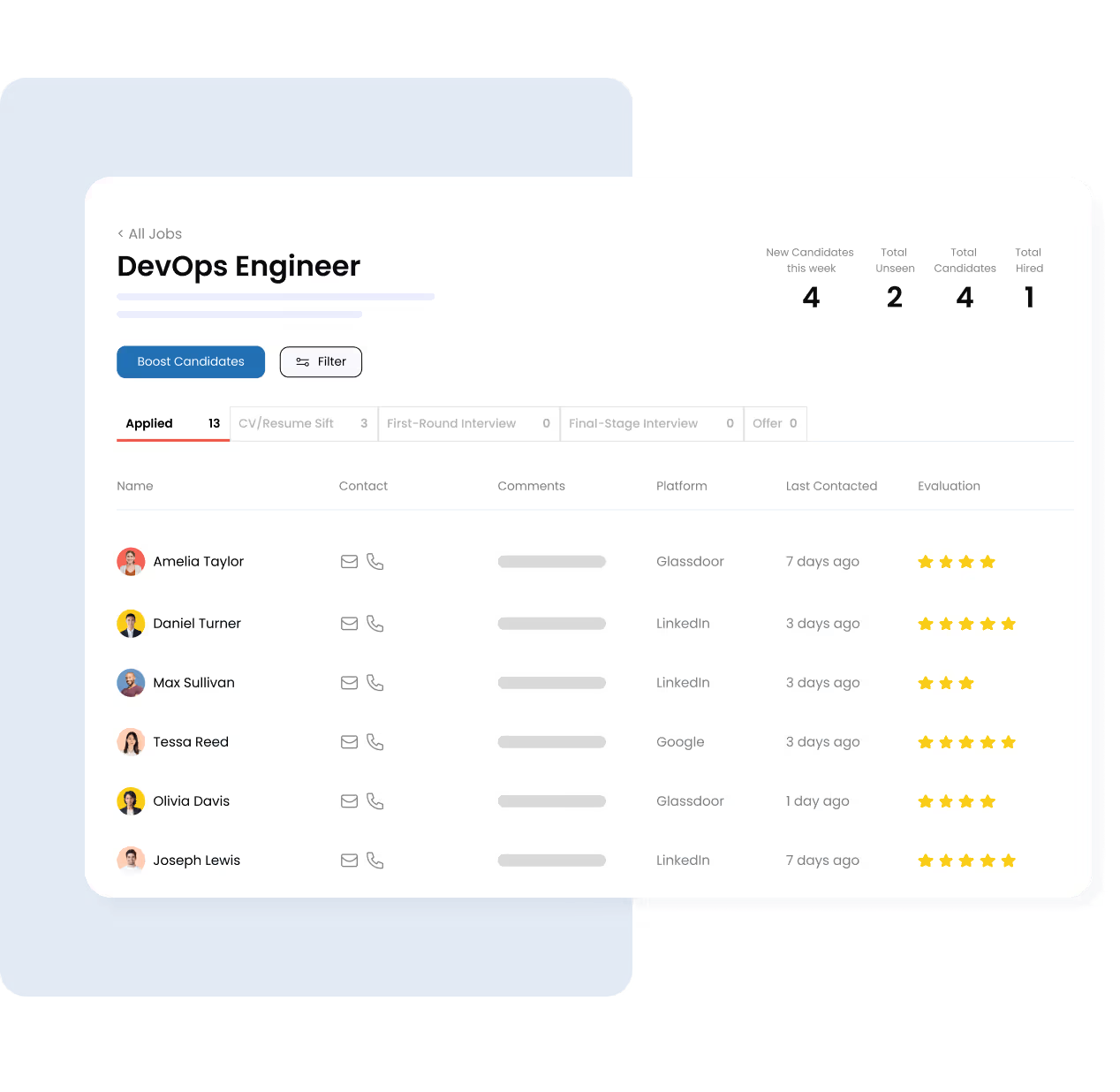
Omni's smart candidate tracking lets recruiters filter profiles based on defined criteria, track status across every stage, and maintain a searchable talent pool for future roles — reducing the cost of re-sourcing for similar positions.
Interview scheduling and automated candidate communication
Back-and-forth email coordination for interviews is one of the most time-consuming and error-prone parts of hiring. A modern ATS automates the entire scheduling flow: candidates receive a link to self-schedule based on interviewer availability, confirmations and reminders go out automatically, and calendar integrations (Google Calendar, Outlook) keep everyone synchronised.

Omni handles all candidate communication automatically — status updates, next steps, interview reminders — reducing no-shows and keeping the experience consistent across every applicant regardless of role or stage. For panel interviews with multiple stakeholders, Omni's calendar sync coordinates availability across the full team without manual back-and-forth.
Hiring team collaboration
Strong hiring decisions are team decisions. Your ATS should make it easy for recruiters, hiring managers, and other stakeholders to review candidates together, share structured interview feedback, and align on a final decision — without the conversation spilling across email threads and Slack messages.
Key collaboration features to look for:
- Shared candidate profiles visible to all stakeholders
- Structured interview scorecards with rating scales
- Inline commenting and @mentions for async feedback
- Real-time pipeline status visible to all team members
Get your Interview Scorecard Template
Reporting and analytics dashboards
Visibility into your hiring funnel is what turns recruitment from a reactive function into a planned one. Modern ATS software surfaces recruitment KPIs including:
- Time-to-fill and time-to-hire by role and department
- Source of hire (which channels produce the best candidates)
- Candidate drop-off rates by pipeline stage
- Cost per hire
- Diversity and demographic data across your applicant pool
- Offer acceptance rates
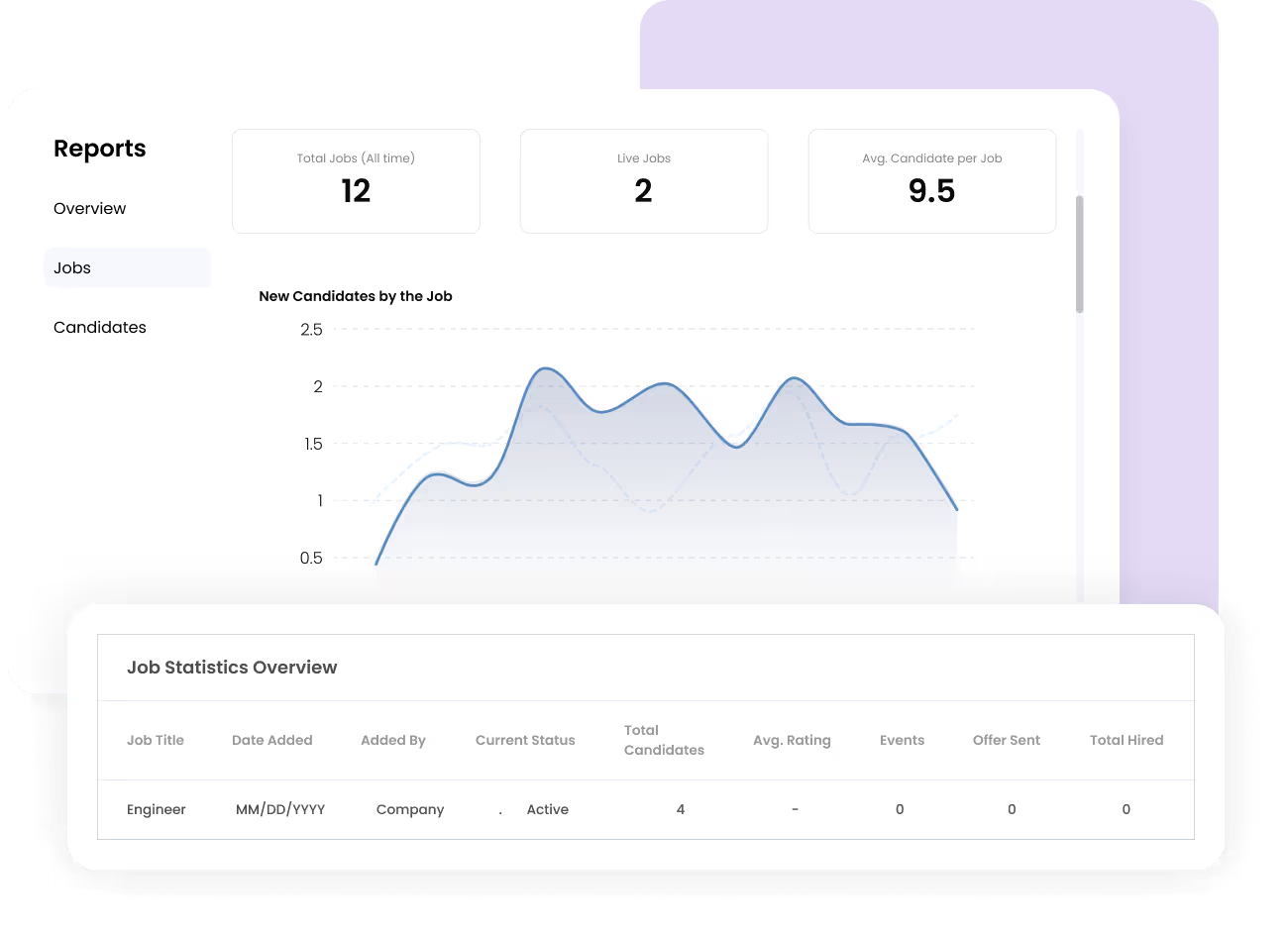
Omni's reporting dashboards let you track these metrics in real time and export data for workforce planning — giving you the evidence base to forecast future hiring needs and make the case for additional resources.
HRIS, payroll and onboarding integration
This is where many ATS tools fall short, and where the cost of a weak integration shows up most clearly. When a candidate accepts an offer, their data — name, role, start date, compensation, contract terms — needs to move into your HRIS, payroll system, and onboarding workflow without anyone typing it in again.
A disconnected ATS creates a data entry bottleneck on every single hire. An integrated one — or a platform that combines ATS and HRIS natively — eliminates it entirely. Omni automatically converts accepted candidates into employee profiles and triggers onboarding workflows the moment a hire is confirmed, keeping the experience seamless from application to day one.
Role-based permissions and compliance tracking
Drata reports that 75% of organizations say continuous compliance supports business goals, and 91% plan to invest in it further. If compliance is part of your hiring strategy, your ATS must support key employment regulations and data protection laws.
With regulations like GDPR in Europe or PDPA in Singapore, your chosen ATS should support:
- Candidate consent collection
- Data anonymization and retention rules
- Access logs and audit trails
- Role-based permissions for secure data handling
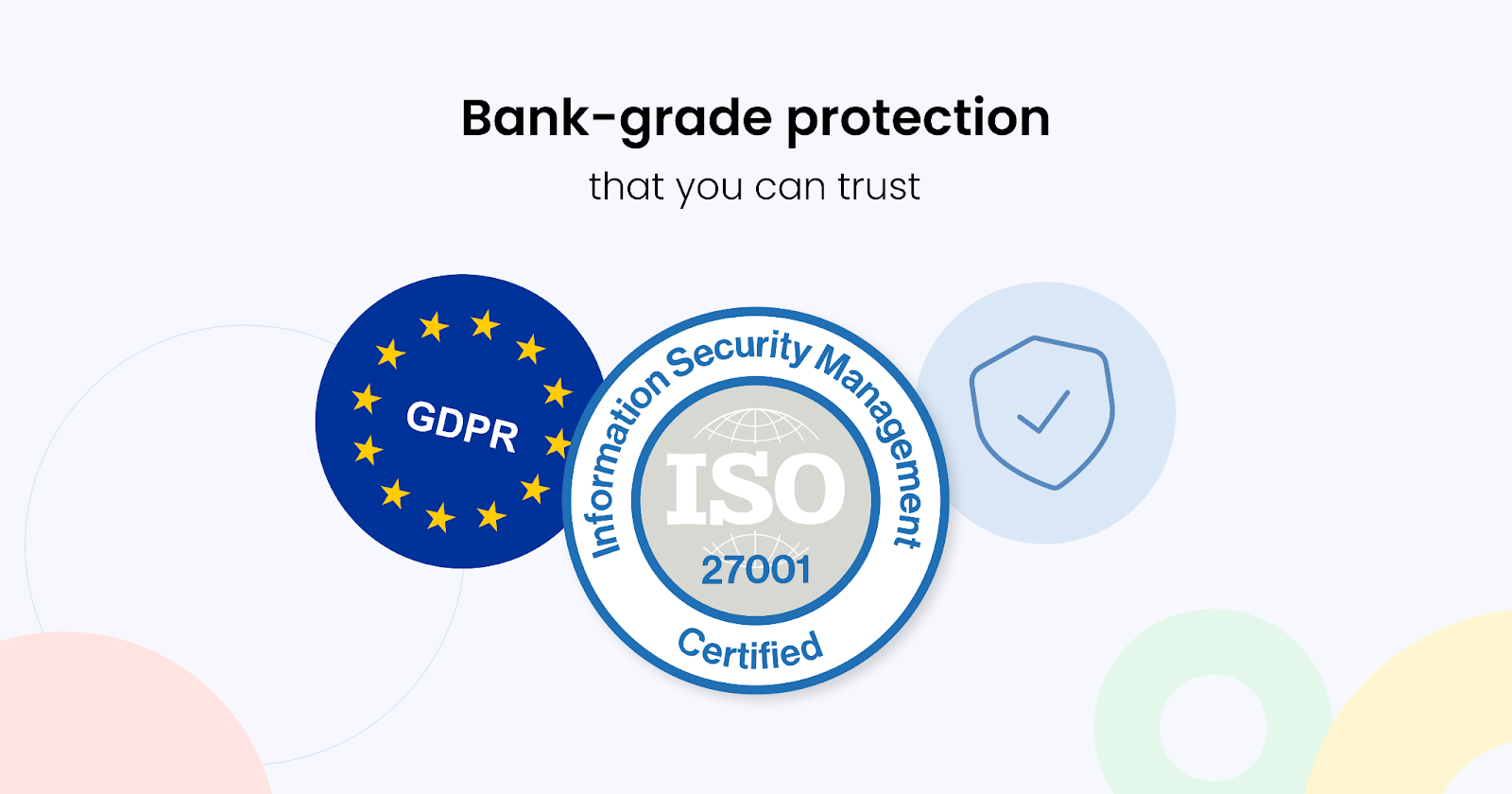
Omni goes further by offering customizable access controls, allowing you to define exactly who can view, edit, or delete specific datasets. On top of that, Omni is built with enterprise-grade security, including AES-256 (the same as what banks use!) to secure data both at rest and in transit. We’re also ISO-27001 certified, highlighting our commitment to rigorous data security standards. With Omni, you can rest assured that your employee data is managed compliantly without compromising on security.
AI-powered recruitment features
AI-assisted functionality has moved from a differentiator to a baseline expectation in modern ATS software. When evaluating platforms, look for:
- AI resume screening — automatically scores and ranks applicants against role requirements, reducing the time spent on initial sifting
- AI-generated job descriptions — drafts role postings based on title and department inputs, reducing the time from "we need to hire" to "the role is posted"
- Predictive candidate scoring — ranks candidates based on historical hiring data and role success patterns
- Automated outreach personalisation — tailors candidate communications based on stage and profile rather than sending generic templates
For a deeper look at how AI is reshaping HR functions including talent acquisition, see our guide to AI in human resources.
To help you shortlist options, here's how the most commonly evaluated ATS platforms compare:
What to Look For in an ATS for Singapore-Based Teams
Singapore's hiring environment has specific requirements that generic ATS platforms aren't always built to handle. If you're hiring in Singapore, these are the capabilities that matter most.
Fair Consideration Framework (FCF) compliance
MOM's Fair Consideration Framework requires employers with 25 or more employees to advertise roles on MyCareersFuture for at least 14 days before submitting an Employment Pass application. Your ATS should support FCF-compliant job posting workflows, ideally with direct integration to MyCareersFuture, so compliance is built into the process rather than added as a manual step.
Local job board integrations
Singapore candidates use a different mix of platforms than markets like the US or UK. Look for ATS software that supports direct posting to SGJobsFinder, JobsDB, JobStreet, and MyCareersFuture, in addition to global platforms like LinkedIn and Glassdoor. Multi-channel posting that excludes local boards forces your team to manage those channels separately.
Payroll and CPF integration
The handoff from ATS to payroll matters more in Singapore because CPF contributions begin from the first paycheck. When a hire is confirmed, their compensation and start date need to flow into payroll with no manual re-entry. An ATS that integrates natively with your payroll system eliminates a common source of compliance errors on new hires.
Multi-language and multi-entity support
Singapore-based companies frequently hire across the region — teams in Malaysia, Philippines, Indonesia, or Vietnam alongside their Singapore headcount. An ATS designed for APAC handles multi-language applications, multi-currency offer letters, and multi-entity compliance rather than forcing everything through a Singapore-centric workflow.
Does Singapore use ATS?
Yes, and adoption is accelerating. ATS usage in Singapore has grown significantly among mid-market companies over the past three years, driven by rising hiring volumes and pressure to compete with larger employers on candidate experience. The shift to hybrid and distributed work has also made centralised candidate tracking a necessity rather than a convenience, since hiring managers and HR teams often aren't in the same location.
Key Questions to Ask Before Choosing an ATS
Before committing to a platform, use these questions to cut through the feature lists and get to what actually matters for your team.
On implementation:
- How long does setup typically take, and what does the onboarding process look like?
- Do you provide data migration support if we're moving from another system?
- What does the first 30 days look like for a new customer your size?
On fit with your workflow:
- Can we customise the hiring pipeline for different role types and departments?
- How does the ATS handle requisition approvals if we need sign-off before posting?
- What does the handoff to onboarding look like — is it automatic or manual?
On integrations:
- Does it integrate natively with our HRIS and payroll system, or does it require a third-party connector?
- Which job boards does it post to directly, and does that include Singapore-specific platforms?
- How does it handle MOM compliance requirements like Fair Consideration Framework advertising?
On analytics:
- Which recruitment metrics are tracked out of the box, and which require custom setup?
- Can hiring managers access their own dashboards, or does all reporting go through HR?
On support and pricing:
- How is pricing structured — per user, per job posting, or flat rate?
- What support is available during implementation and after go-live?
- Are compliance updates (new job board requirements, FCF changes) rolled out automatically?
ATS Systems Buyer’s Checklist: Choose the Right System for Your Team
Use this checklist to evaluate applicant tracking systems based on the features that truly impact your hiring speed, quality, compliance, and scalability.
How Omni's ATS Supports the Full Hiring Lifecycle
Omni's applicant tracking system is built for HR teams in Asia that need to manage high-volume, multi-country hiring without adding administrative overhead.
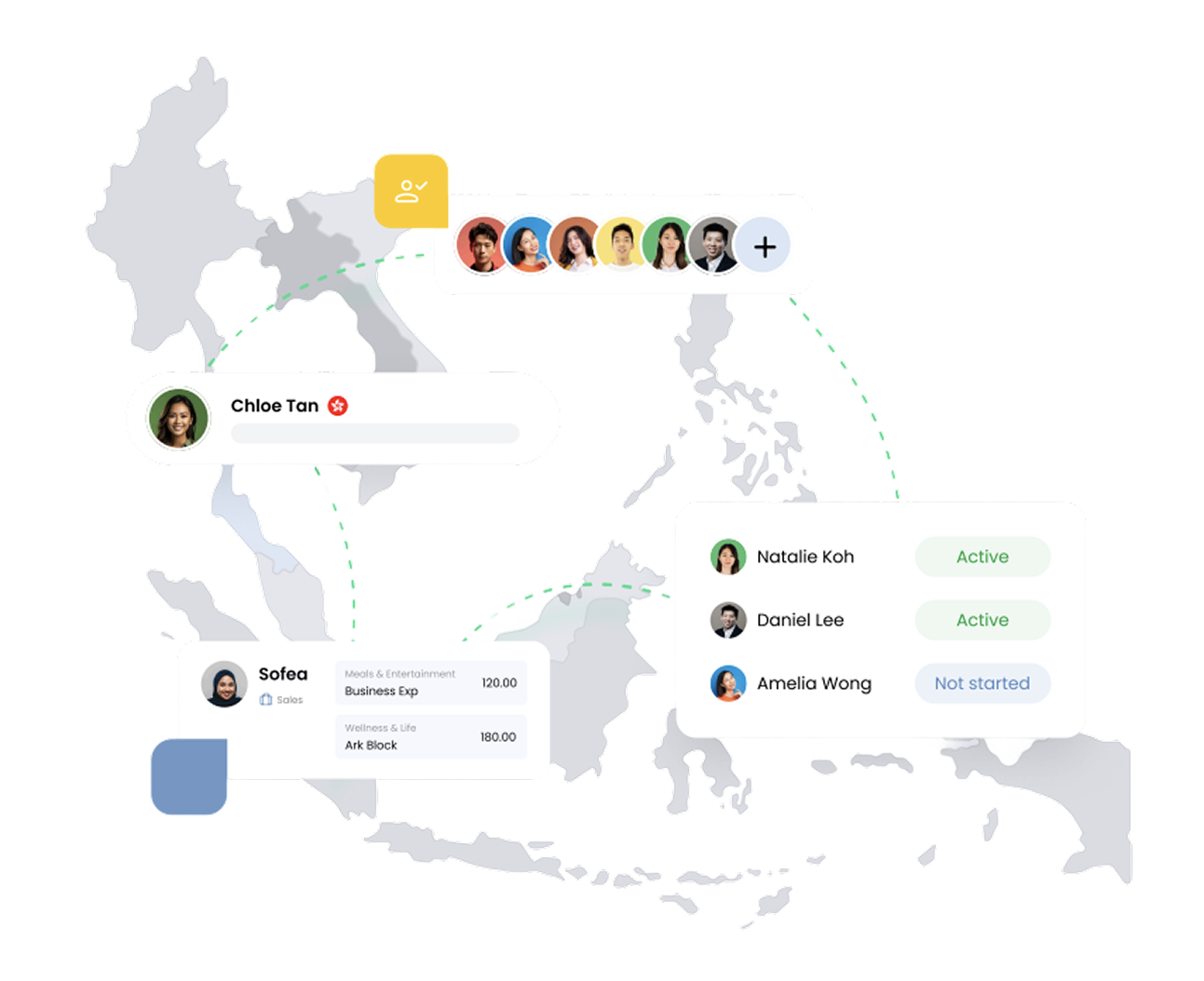
From a single platform, your team can:
- Post roles to multiple job boards simultaneously, including Glassdoor and LinkedIn, from one dashboard
- Build customisable pipelines for different role types and seniority levels
- Screen and filter candidates using structured criteria with Omni's smart candidate tracking
- Automate all candidate communication — confirmations, reminders, status updates — from application to offer
- Collaborate with hiring managers and stakeholders through shared candidate profiles, @mentions, and structured scorecards
- Track recruitment KPIs in real time across your full hiring funnel
- Convert accepted candidates into employee records automatically, triggering onboarding workflows without any manual data transfer
"[With Omni], we've been able to reduce our onboarding time from one week to three days."
— Arissa Wong, People Operations at Endowus
See how: Endowus Uses Omni to Optimize Global Workforce Management
Because Omni combines ATS and HRIS in a single platform, the handoff from recruitment to onboarding and payroll is seamless — no re-entering data, no information gaps, no day-one surprises for new hires or for HR.
Book a personalized demo today to see how Omni’s APAC-ready ATS can help you attract top talent, promote collaboration, and accelerate your time-to-hire, all while staying compliant and connected across the entire employee lifecycle.
Frequently Asked Questions
An applicant tracking system is software that automates and manages the hiring process from job posting to offer acceptance. It centralises candidate data, tracks application status across pipeline stages, enables team collaboration on hiring decisions, and connects to onboarding and HRIS systems once a hire is confirmed. ATS software is used by HR teams to reduce manual administration, improve candidate experience, and make hiring decisions more consistent and data-driven.
An ATS manages the pre-hire process — sourcing, screening, interviewing, and offering. An HRIS manages the post-hire employee lifecycle — records, payroll, leave, and compliance. The two systems should integrate so that candidate data moves automatically into employee records when a hire is confirmed. Some platforms, like Omni, combine both in a single system.
Yes. ATS adoption in Singapore has grown significantly among companies with 25 or more employees, particularly in industries with high-volume hiring such as tech, professional services, and BPO. The Fair Consideration Framework's job advertising requirements — which mandate advertising on MyCareersFuture before EP applications — have also increased the value of ATS platforms that support compliant multi-channel posting workflows.
Core features include multi-channel job posting, customisable hiring pipelines, resume parsing, automated interview scheduling, team collaboration tools, reporting dashboards, and integration with HRIS and payroll systems. More advanced platforms add AI-assisted screening, predictive candidate scoring, and AI-generated job descriptions. For Singapore-based teams, FCF-compliant posting workflows and local job board integrations are also essential.
Implementation time varies by platform complexity and team size. Cloud-based SaaS ATS solutions typically take two to four weeks for setup, configuration, and team training. Platforms that combine ATS with HRIS — where data migration is also involved — may take four to eight weeks, depending on the volume of existing employee records. Look for vendors who provide dedicated onboarding support rather than leaving setup to your team.
Standard ATS software manages high-volume, repeatable hiring pipelines. Executive search software is designed for senior and specialised roles where the process is longer, involves more stakeholders, and requires more nuanced candidate relationship management. Many modern ATS platforms — including Omni — support both through customisable pipeline configurations, allowing teams to run standard roles and executive searches in the same system with different workflows.
An ATS improves candidate experience by simplifying the application process (reducing drop-off from complex forms), keeping candidates informed with automated status updates and interview reminders, and reducing the delays caused by manual coordination. Candidates who receive consistent, timely communication are more likely to complete the process, accept offers, and speak positively about your employer brand — regardless of the outcome.
.png)