

















Summary. In 2027, globalization in human resource management means more than hiring overseas. It's about navigating compliance, culture and technology to manage distributed teams effectively. Scaling requires a trusted global HR partner that provides an integrated HR system with strong data protection, local expertise and multi-country reach. For companies in Asia, platforms like Omni HR bring payroll, onboarding, Employer of Record (EOR) and compliance into one system, combining regional coverage with local guidance to help modern HR teams grow across borders.
In 2027, the meaning of globalization in human resource management has evolved far beyond simply hiring employees in different countries. The traditional HR tools and processes that once sufficed for a domestic workforce struggle to keep up with the complexities of a modern, borderless team.
Scaling a business today means navigating a new landscape defined by global reach, local compliance and a distributed workforce. Regulations are also moving fast: in Asia alone, Malaysia's minimum wage rises to RM2,000 in June 2027, Singapore's CPF rates for senior workers rise in January 2027, and Singapore's Workplace Fairness Act takes effect at the end of 2027. This requires a strategic shift in how HR is managed, with solutions that are both comprehensive and adaptable. This guide helps HR leaders and growth-stage companies understand the evolving demands of globalization in HR, from compliance and systems integration to effective workforce management across borders. If you're planning your first move into the region, start with why companies expand into Asia and what it costs to hire in Asia.
We'll look into the core challenges and what to look for in a modern globalization partner, and show how Omni HR helps you manage global HR operations with the local expertise each market requires.
Understanding Globalization in Human Resource Management
Globalization in human resource management is the process of adapting HR strategy, policies and systems to hire, pay, manage and retain employees across multiple countries. It covers everything from cross-border recruitment and payroll to local labor law compliance, data protection and building one culture across many locations.
At its core, globalization in human resource management involves adapting HR practices to accommodate international hiring and operations. It's driven by several key factors that have accelerated in recent years. The rise of remote work has made talent acquisition a global endeavor, allowing companies to find the best talent regardless of location, and building global teams is now a growth strategy for companies of every size.
Similarly, the drive to expand technologically and enter new markets calls for a presence in different countries. This has given rise to new challenges, from managing cross-border payroll and ensuring compliance with a myriad of local laws to maintaining high levels of employee engagement and a cohesive company culture across diverse regions.
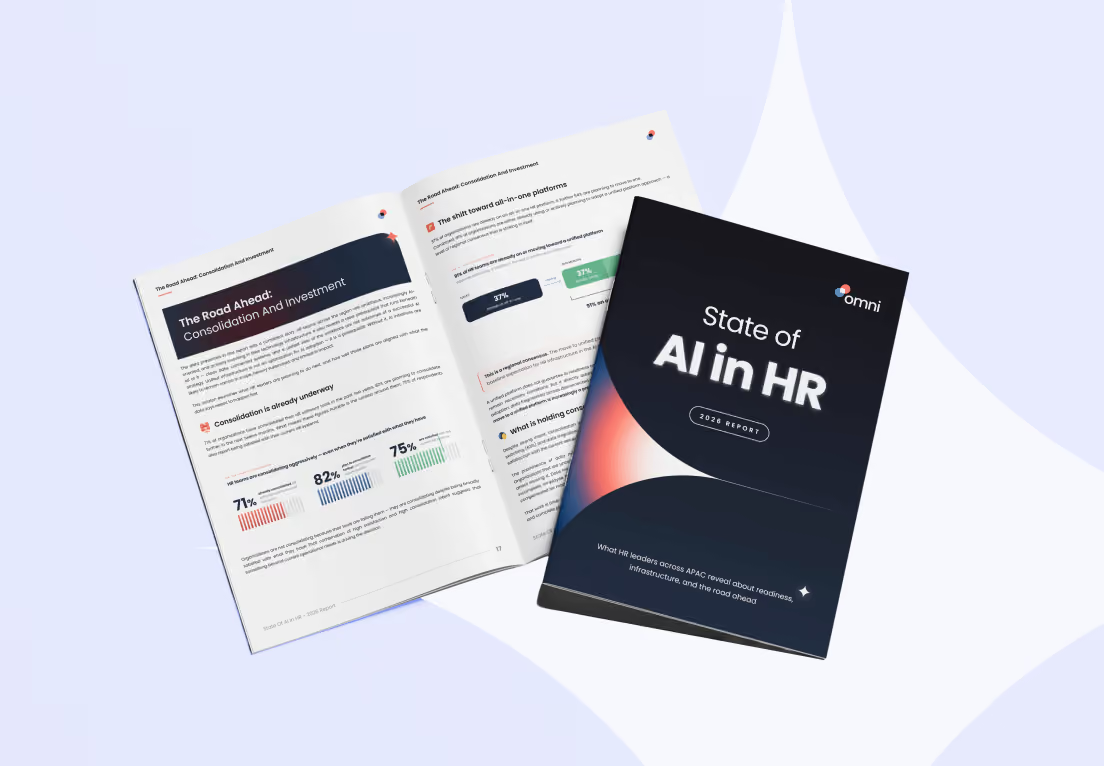
For HR and operations leaders at scaling companies, the stakes are higher than ever. They need to move away from a fragmented approach and embrace a single, robust solution that supports their international ambitions. Omni HR's State of AI in HR 2026 report, based on a survey of more than 400 HR leaders, found that 71% of organizations have already consolidated their HR tools and 82% plan to go further. Firms managing remote, hybrid or distributed teams are on the front lines of this change, looking for tools that keep international payroll, compliance and costs under control. This is where a modern globalization partner like Omni HR becomes indispensable.
Key Challenges in Global HR Management
Expanding globally presents a unique set of challenges that can trip up even the most prepared organizations. The biggest are data privacy, cultural differences and multi-country statutory compliance. Effective globalization in human resource management requires both strategic planning and the right HR technology partner. For a broader view, see our guide to global HR compliance.
Data privacy
One of the most significant hurdles is managing data privacy across different legal jurisdictions. Regulations like the European Union's General Data Protection Regulation (GDPR) and Singapore's Personal Data Protection Act (PDPA) set strict rules for how employee data is collected, stored and processed. In Asia, these rules keep tightening: Malaysia's amended PDPA has required Data Protection Officer appointments and data breach notifications since 1 June 2025.
For modern HR systems, this means making sure every piece of employee information, from personal details to performance reviews, is handled securely and in line with local laws. This is more than a box-ticking exercise; a single data breach can lead to severe penalties and a loss of trust. For this reason, HR leaders need to carefully vet any HR system they consider, checking its security architecture, certifications and data handling policies. Read more on HR data security, and see how Move Ahead Media manages PDPA compliance with Omni HR.
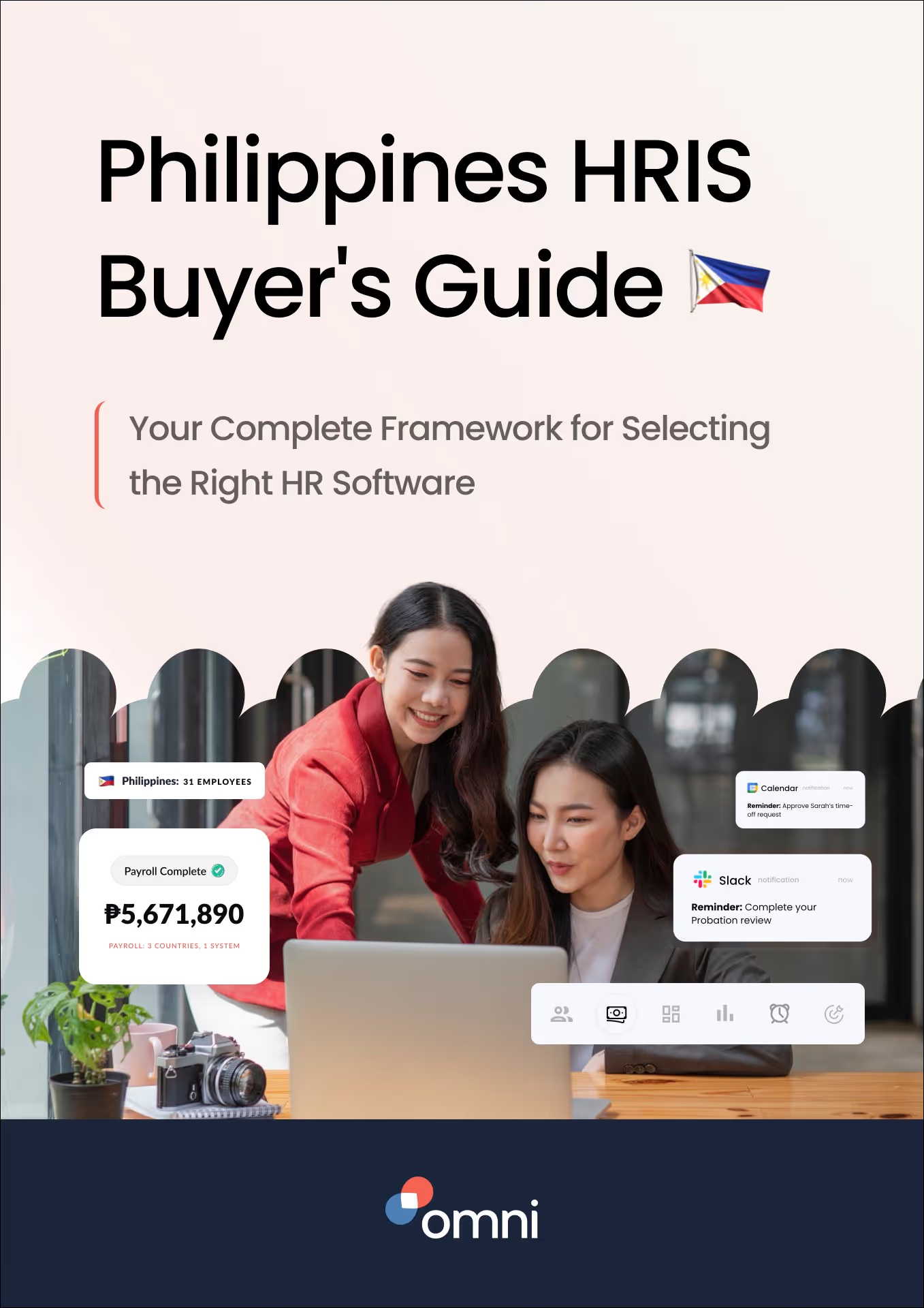
Get our free HR Software Buyer's Guide
Cultural differences and workforce diversity
A global workforce is inherently diverse, with people from various cultural backgrounds, each with unique communication styles, work ethics and expectations. What works in one country may not work in another, and communication barriers multiply across time zones.
A key challenge for HR is to manage and celebrate this diversity while maintaining a cohesive corporate culture. This involves everything from adapting feedback processes to designing benefits packages and a global compensation strategy that are relevant and appealing to a diverse group of employees. Fair treatment is increasingly a legal requirement too: Singapore's Workplace Fairness Act, expected to take effect at the end of 2027, makes workplace discrimination a legal contravention and requires a written grievance-handling process. Relying on global HR experts can be invaluable here, but a smart HR system should also provide the flexibility to adapt to these nuances. Learn more about diversity management.
Managing benefits, taxes, and statutory compliance
The complexity of cross-border operations is most evident in payroll, benefits and statutory compliance. Every country has its own laws governing taxes, social security contributions and employee benefits. For a business expanding from Singapore, for example, navigating the rules of CPF and IRAS is one thing, but understanding the equivalent systems in Malaysia, the Philippines and beyond is an entirely different challenge.
This demands a system that is both globally aligned and locally compliant. Managing benefits, taxes and statutory compliance in multiple countries makes a regionally experienced global HR partner essential, replacing disparate spreadsheets and local vendors that can introduce errors and inefficiencies. Dig deeper into CPF contributions, EPF contributions, SSS contributions and our HR compliance checklist for 2027.
What to Look for in a Globalization Partner
For HR and operations leaders seeking a solution to these challenges, the role of a globalization partner becomes important. But what exactly makes a good partner? They need to be more than a vendor: a strategic ally that simplifies globalization in human resource management. The five things to look for are integration, compliance and data security, scalability, real-time insights and employee-centric features. Our guides to global HR software and global HRIS systems compare options in more detail.
Integration across HR functions
The first thing to look for is an integrated platform that handles all core HR functions. A good globalization in human resource management system should serve as a single source of truth for everything from onboarding to performance management, leave and payroll. This removes manual data re-entry, reduces the risk of human error and gives employees and managers a consistent experience wherever they are. It also matters for what comes next: in Omni HR's State of AI in HR 2026 report, 1 in 2 HR leaders said fragmented data is already limiting their ability to adopt AI.
Compliance and data security
Compliance is non-negotiable, so a partner must be equipped to handle it from day one. A good system should be PDPA-compliant and provide built-in support for local requirements, such as Singapore's MOM, CPF and IRAS rules, Malaysia's EPF, SOCSO and LHDN requirements, and the Philippines' SSS, PhilHealth, Pag-IBIG and BIR obligations, as well as international standards like GDPR. Look for recognized security certifications such as ISO 27001 and SOC 2 Type II. Local expertise is particularly important for companies operating across Asia, which makes a regionally focused partner an attractive option. See our guide to HR software for multi-country compliance.
Scalability
Whether you are a small team making your first international hire or a large enterprise with hundreds of employees across multiple countries, scalability is key. The best globalization partners offer a modular system that grows with your business, so you can activate features as you expand without a complete overhaul. Many companies start with an Employer of Record or independent contractors before setting up a local entity; your HR system should support each stage.
Real-time insights and automation
Managing a distributed team is difficult without visibility. A strong globalization partner should provide real-time dashboards and HR analytics that give a centralized view of your global workforce, so you can make data-driven decisions on headcount, payroll costs and turnover. Workflow automation is also crucial, from sending reminders for performance reviews to generating compliance reports on time in every market.
Employee-centric features
In a world of remote and hybrid work, employee experience is paramount. Leading globalization partners provide intuitive, mobile-friendly self-service tools that let employees manage their own data, view payslips and request leave from any location. This improves engagement and keeps employee records accurate across countries. Read more about the employee self-service portal and HR mobile apps.
Why Omni HR Is the Ideal Globalization Partner for Modern HR Teams
Omni HR is a globalization in human resource management platform built to help modern HR teams stay compliant, scale across borders and deliver a great employee experience. Unlike legacy HR tools, Omni HR is a true partner, trusted by scaling companies across Singapore, APAC and beyond. StoreHub runs HR across 5 countries, SleekFlow cut payroll processing time by 40% across four countries, and Execo cut data errors by 67% after unifying multi-country operations on Omni HR.
Hire anywhere with EOR
Expanding into new markets often means navigating complex employment laws, setting up local entities and managing compliance risk. Omni HR's Employer of Record (EOR) removes these barriers by letting you hire talent compliantly without establishing a local entity. Our EOR covers 10+ countries across Asia Pacific, as well as the US and UK, and we can typically onboard your first employee within 5 to 7 business days.
Through Omni HR's EOR, you can:
- Legally hire and onboard employees in your target country.
- Manage compliant payroll, benefits and tax contributions.
- Stay aligned with local labor laws while offering competitive, localized employee benefits.
- Scale into new regions rapidly with lower cost and risk than setting up an entity.
Learn more in our guides to EOR in Asia Pacific, EOR in Singapore, Malaysia and the Philippines, how to use an EOR and PEO vs EOR.
Stay compliant, wherever you grow

As mentioned, compliance is at the core of global expansion. With Omni HR, you can pay employees in 19 countries across Asia Pacific, the UK, the US and the UAE from one platform. Our security is backed by ISO 27001 certification, SOC 2 Type II compliance and AES-256 encryption; see our Trust Center for details.
Omni HR has built-in compliance for statutory bodies and mandatory contributions like Singapore's CPF, Malaysia's EPF and SOCSO, Hong Kong's MPF, and the Philippines' SSS, PhilHealth and Pag-IBIG contributions, with rules updated when regulations change. This keeps you compliant with local laws wherever you operate, and meets both local and international standards as you expand.
Our focus on data protection, from Singapore's and Malaysia's PDPA to GDPR, gives HR leaders peace of mind when managing employee data securely.
An all-in-one HR that’s built to scale
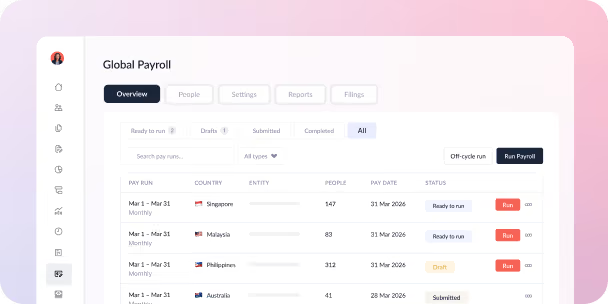
Omni HR is an all-in-one HR solution for managing your global workforce. With a modular setup that combines payroll, onboarding, performance management, leave and benefits in a single system, scaling from a 10-person startup to an enterprise with thousands of employees becomes straightforward. Employees can also choose their preferred language, keeping HR processes consistent no matter where your team is.

Paired with our advanced analytics and reporting, you gain real-time insights into crucial metrics like headcount trends, payroll costs, turnover and compliance risks that help leaders make data-driven decisions. With Mino, Omni HR's AI agent, you can ask questions about your multi-country workforce in plain language; see how HR teams in Asia use Mino.
HR that works across borders
Designed for modern remote and distributed teams, Omni HR gives employees a mobile-friendly, self-service platform. With this, employees can edit their personal details, access payslips, track CPF contributions, manage leave and more.

Omni HR's automated workflows handle compliance reporting and performance review reminders, and HR leaders can customize onboarding workflows for each country. This keeps processes consistent and compliant across every market you operate in. See our guide to remote onboarding.
"Thanks to Omni, our onboarding process has become quick and easy! The automated workflows and streamlined data management have made our HR procedures seamless, and we can manage employee records with just a few clicks."
— Wiji Mulyati, Engagement & Experience Lead at Ajaib
Local expertise and dedicated support
What sets Omni HR apart from other globalization partners is our combination of regional reach and local expertise. With a local implementation team and dedicated account manager support, recognized with G2's Best Support badge, companies receive hands-on guidance tailored to their specific needs and markets. Omni HR helps you navigate not just compliance but also cultural nuances and benefit structures in each target market, making us a trusted global HR partner for companies scaling from Singapore across Asia.
If you're expanding into specific markets, see our hiring guides for Malaysia, the Philippines and hiring across Asia, market by market.
"The support that comes from the Omni team is unmatched. As a company that is quickly growing, there are constantly new features and functions that we require to serve our mission. Having access to a quick and dedicated chat with Omni's team members in our same time zone helps us make the changes we need to get the most out of our HRIS."
— Trevor Lim, Head of Operations at Capital Club
See why modern teams choose Omni
Seamless integrations and future-ready HR

Omni HR also connects with popular ATS, accounting and collaboration tools such as Slack, Microsoft Teams and Google Calendar, keeping HR connected to the wider business. With the Omni MCP, you can also bring live HR data into AI assistants like Claude and ChatGPT within your existing permissions. Paired with customizable onboarding workflows, performance management tools and career development planning, you can support talent while maintaining a consistent culture across locations.
"I'm blown away by Omni's commitment to building better HR software to help businesses resolve their HR challenges. We are able to customize the system based on our company's needs, which I can't say would have been possible with other bigger players in the market. For any fast-growing companies out there, Omni is the HR system for you."
— Sally Fu, Operations & Finance Manager at Reap
Get Globalization in Human Resource Management Right in 2027
With new minimum wages, contribution rates and fairness laws arriving across Asia in 2027, globalization in human resource management rewards companies that consolidate early. Map the markets you plan to enter, decide whether to hire through an EOR or a local entity, and choose one platform that keeps payroll, compliance and employee data consistent across every country.
With Omni, HR leaders can be confident that they are choosing a globalization partner that is built to manage today’s workforce complexity while also preparing for tomorrow’s opportunities. With Omni HR, HR leaders can be confident they are choosing a globalization partner built to manage today's workforce complexity while preparing for tomorrow's opportunities.
For a step-by-step view of expanding into the region, download our guide to doing business in Asia.
See how Omni HR brings EOR, multi-country payroll and compliance into one platform. Book your demo today!
Frequently Asked Questions
Globalization in human resource management is the process of adapting HR strategy, policies and systems to hire, pay, manage and retain employees across multiple countries. It covers cross-border recruitment, multi-country payroll, local labor law compliance, data protection and building a consistent culture across locations.
Globalization widens the talent pool, but it also multiplies HR's obligations. Teams must run payroll and statutory contributions in several countries, follow different labor and data protection laws, manage employees across time zones and cultures, and keep employee data consistent in one system. Read more in our guide to global HR compliance.
The main challenges are data privacy across jurisdictions, cultural differences and communication across time zones, and statutory compliance for payroll, taxes and benefits in every market. Fragmented tools add to the problem: 1 in 2 HR leaders in Omni HR's State of AI in HR 2026 report said fragmented data limits their ability to adopt AI.
International human resource management traditionally focuses on managing people who work across borders, such as expatriates and overseas subsidiaries. Global HRM takes a broader view, aligning HR strategy, policies and systems across every country a company operates in, so the whole workforce is managed as one.
Not always, but an Employer of Record (EOR) is often the fastest way to hire in a country where you have no legal entity. The EOR employs your hire locally and handles payroll, taxes and compliance. Once headcount grows, many companies set up their own entity. Learn more about EOR and global EOR companies.
The three main types of globalization are economic, political and cultural globalization. For HR, all three matter: economic globalization drives cross-border hiring, political globalization shapes the labor and data protection laws you follow, and cultural globalization influences how you build an inclusive, connected workforce.