.png)
Summary. Expanding into Southeast Asia requires navigating complex labor laws and employment strategies. Businesses can leverage two primary solutions: employer of record (EOR) and professional employer organization (PEO). An EOR acts as the legal employer, enabling rapid market entry without establishing a local entity and assuming most employment-related liabilities. A PEO operates through a co-employment relationship, requiring an existing legal entity and sharing employment responsibilities. The choice between EOR and PEO depends on factors such as market entry speed, desired operational control, workforce scale, budget, and risk tolerance. Each approach offers unique benefits in addressing the region's diverse regulatory landscape, cultural complexities, and talent acquisition challenges, with countries like Thailand and the Philippines presenting specific employment considerations that require tailored strategies.
Expanding your business into Southeast Asia? Navigating the complexities of local labor laws and regulations can be daunting. There are multiple solutions for this, including hiring a professional employer organization (PEO) or an employer of record (EOR). In this comprehensive guide, we’ll dive into the nuances of each and help you determine what’s best for your organization.
What is EOR vs. PEO?
Understanding the fundamental differences between an EOR and a PEO is important for making the right decisions about your employment strategies in Southeast Asia. Here’s what defines each approach:
What is an EOR?
An EOR is a third-party organization that acts as the legal employer of your workforce in a foreign country. The EOR handles all employment-related responsibilities, including payroll, taxes, benefits, and compliance with local labor laws. This allows you to hire employees in a new market without establishing a local legal entity.
What is a PEO?
A PEO enters into a co-employment relationship with your company. You retain control over day-to-day management and business operations, while the PEO handles administrative HR tasks, such as payroll, benefits administration, and compliance. PEOs are typically used when you have an established legal entity in the country.
Key differences between EOR and PEO
The core differences between EOR and PEO solutions lie in their legal structures and the distribution of responsibilities. Here’s a table that outlines the key differences:
When to use an EOR vs. PEO?
The decision between using an EOR or a PEO depends on your company's specific needs and goals. Here's a summary of when each solution is most appropriate:
Speed of entry
If you need to quickly establish a presence in Southeast Asia without the time and resources required to set up a legal entity, an EOR is the faster solution. PEOs are better suited for companies with an existing legal entity or those planning a more gradual expansion.
Control
If you prefer to maintain significant control over all aspects of employment, including hiring, firing, and performance management, a PEO might be a better fit. EORs handle legal employment, but you retain day-to-day operational control.
Scale
For small teams or short-term projects, an EOR provides a flexible and cost-effective solution. PEOs are more suitable for companies with a larger workforce and long-term plans for expansion in the region.
Budget
EORs can be more cost-effective for initial market entry, especially when considering the costs of setting up a legal entity. PEOs involve ongoing co-employment costs but may offer economies of scale for larger workforces.
Risk tolerance
EORs assume a greater share of employment-related liabilities, reducing your company's risk. PEOs involve shared liability, requiring a higher risk tolerance.
Regional Considerations for Southeast Asia
Expanding into Southeast Asia requires a nuanced understanding of the region's diverse markets and unique challenges.
Overview of Southeast Asia market trends
Rapid economic growth: Southeast Asia is a dynamic and rapidly expanding economic region. Driven by a young and growing population, increasing urbanization, and a burgeoning middle class, the region presents substantial opportunities for businesses across diverse sectors.
Digital transformation: The region is undergoing a significant digital transformation. High mobile phone penetration rates and a growing e-commerce sector are driving this change, creating new opportunities for businesses in FinTech, e-commerce, and digital services.
Growing talent pool: Southeast Asia boasts a large and increasingly skilled workforce, particularly in technology and manufacturing. This talent pool is attracting multinational companies seeking to establish regional hubs and leverage local expertise.
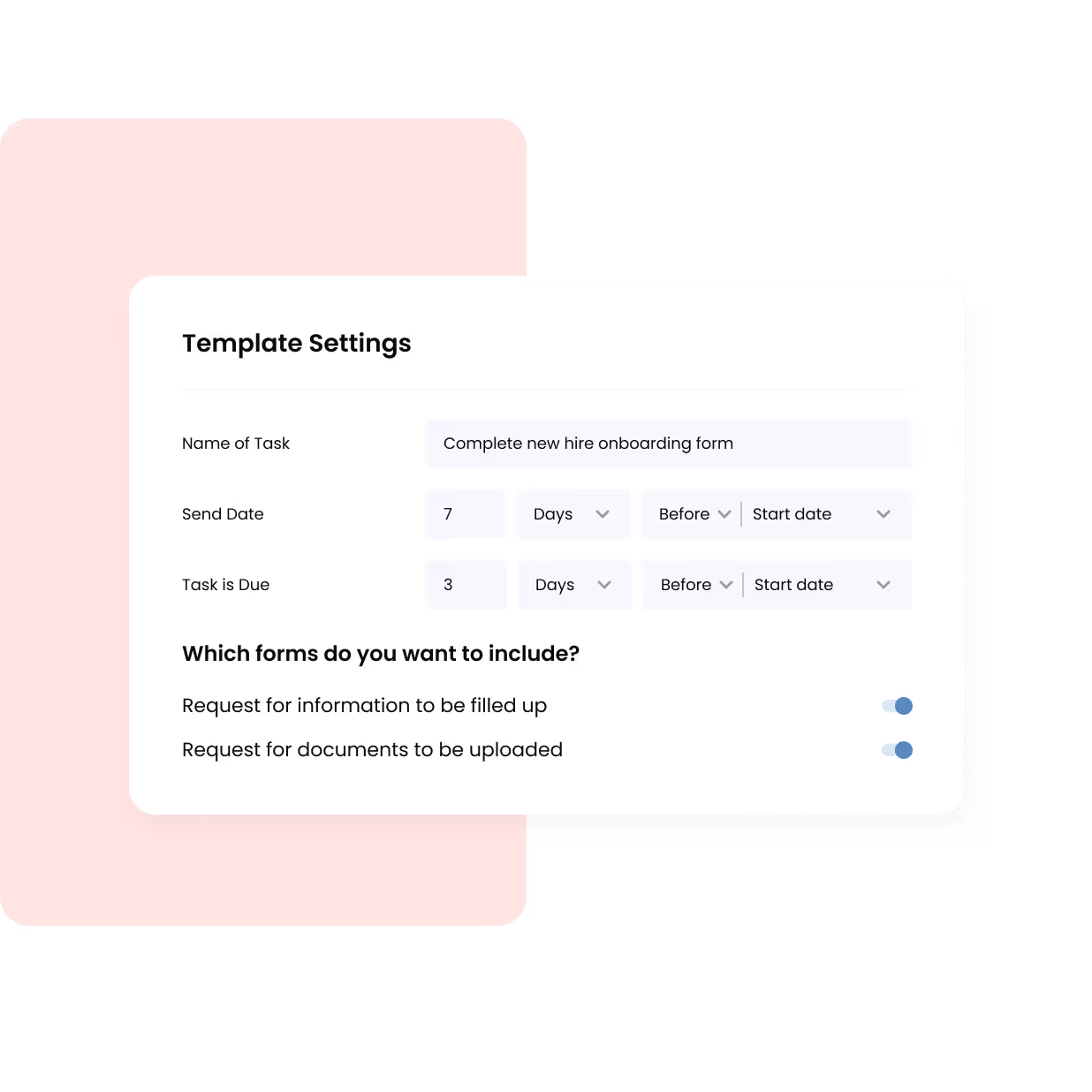
Omni equips you with automated workflows that accelerate the hiring process, allowing you to reach and track qualified talent through multi-channel posting and a centralized platform, digital document management for faster offer processing, and structured onboarding programs that can be customized by technical role. Our intuitive integration with technical assessment tools and background verification services equips your team with real-time collaboration for critical hiring decisions. And multi-language support for 10+ languages means you can expand the available talent pool into your target markets across Southeast Asia.
Increased regional integration: Initiatives such as the ASEAN Economic Community are fostering greater regional integration by reducing trade barriers and facilitating the movement of goods, services, and capital. This integration is creating a more unified and attractive market for businesses.
Learn more: How Businesses Can Prepare for the Johor-Singapore Special Economic Zone (JS-SEZ)
Rise of the consumer: The region's expanding middle class is fueling consumer demand, creating opportunities for businesses in sectors such as retail, consumer goods, and hospitality.
Challenges in Southeast Asia
Diverse regulatory landscape: Southeast Asia comprises 11 countries, each with its own distinct set of labor laws, tax regulations, and business practices. Navigating this complex regulatory environment can be challenging and time-consuming.
Cultural and linguistic diversity: The region is home to a multitude of cultures and languages, requiring businesses to adapt their communication and marketing strategies to local preferences. This diversity can also pose challenges for HR management and employee relations.
Infrastructure gaps: While infrastructure is improving in many parts of the region, gaps remain, particularly in rural areas. This can pose challenges for logistics, supply chain management, and overall business operations.
Political and economic instability: Some countries in the region may experience political or economic instability, creating uncertainty for businesses. It's crucial to conduct thorough due diligence and assess the risks associated with operating in specific markets.
Bureaucracy and corruption: Bureaucracy and corruption can be challenges in some countries, requiring businesses to navigate complex administrative processes and ensure compliance with anti-corruption laws.
Talent acquisition challenges: While the region has a growing talent pool, finding and retaining skilled talent in specific sectors, such as technology, can be competitive.
Varying levels of digital adoption: While digital adoption is growing rapidly, levels of digital literacy and internet access vary across the region, impacting e-commerce and digital marketing strategies.
Data privacy and security: The region's data privacy regulations are evolving, requiring businesses to stay informed and comply with local requirements such as PDPA and cybersecurity laws.
Omni guarantees bank-grade data protection you can trust. Omni implements an AES-256 encryption standard (same as what banks use) to protect the transmission of data to our site. Our servers are located in physically secure, ISO 27001-certified data centers, and we apply end-to-end encryption to ensure maximum protection to your employee data.
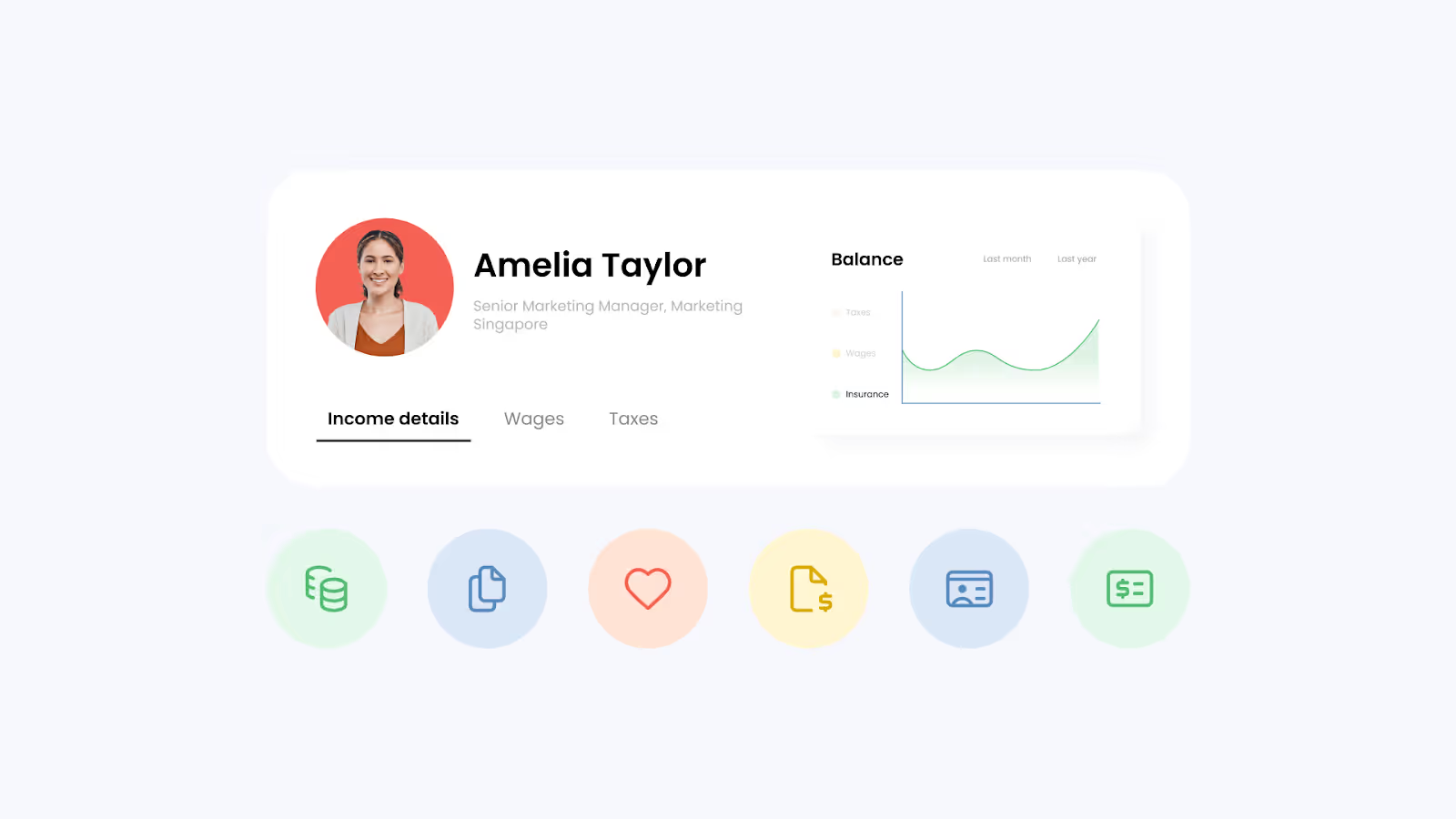
Our compliance-ready features make keeping your data secure from an employee level seamless. Regular compliance reporting, access controls, and consent management capabilities ensure your data is secure at every level.
Benefits and Drawbacks of EOR and PEO in Southeast Asia
Choosing between an EOR and PEO requires a clear understanding of the advantages and disadvantages each model offers your organization. Here's a comparative overview:
Let’s take a look into how EOR and PEO work in different regions of Southeast Asia with examples below.
Professional Employer Organization in Thailand
Thailand, with its vibrant economy and skilled workforce, is an attractive destination for businesses seeking to expand in Southeast Asia. However, navigating the complexities of Thai tax laws and labor regulations can be challenging. This is where a professional employer organization Thailand can be a valuable partner.
A PEO in Thailand provides co-employment services, sharing employer responsibilities with your company. This allows you to leverage local expertise while maintaining control over your employees' day-to-day activities. The PEO typically handles tasks such as:
- Payroll processing and tax withholding
- Social security and benefits administration
- Compliance with Thai labor laws
- HR administration and support
Thailand-specific regulations
Thailand has specific labor laws and regulations that businesses must comply with, including:
- Labor Protection Act: This act governs various aspects of employment, including working hours, overtime pay, holidays, and termination procedures.
- Social Security Act: This act mandates social security contributions for employees, covering areas like healthcare, sickness benefits, and retirement pensions.
- Workmen's Compensation Act: This act provides compensation to employees who suffer work-related injuries or illnesses.
- Tax Laws: Thailand has specific tax laws and regulations that govern income tax, corporate tax, and value-added tax (VAT).
Compliance with social security, tax, and mandatory benefits
A professional employer organization Thailand ensures your company complies with all mandatory social security, tax, and benefit requirements, including:
- Social Security Fund (SSF): The PEO will register your employees with the SSF and manage monthly contributions.
- Withholding tax: They will calculate and withhold income tax from employee salaries and remit it to the Revenue Department.
- Mandatory Benefits: The PEO will ensure you provide mandatory benefits like health insurance, severance pay, and paid holidays.
Read next: Understanding Thailand's Employee Welfare Fund
Importance of understanding Thai work culture and maintaining compliance
Thai work culture emphasizes respect, hierarchy, and harmony. A professional employer organization Thailand can help you understand these cultural nuances and ensure your management practices align with local expectations. Maintaining compliance with Thai labor laws and regulations is crucial for avoiding penalties and fostering a positive work environment.
EOR Service Providers in the Philippines
The Philippines, with its largely English-speaking workforce, is another prime location for businesses looking to expand in Southeast Asia. But navigating the intricacies of the Philippine labor market can be challenging, especially for companies seeking rapid expansion. An EOR service provider Phillipines can be a valuable asset in this context.
Philippines-specific requirements
The Philippines has unique labor laws and regulations that businesses must adhere to, including:
- Labor Code of the Philippines: This comprehensive code governs various aspects of employment, including working conditions, wages, and termination procedures.
- Social Security System (SSS): Mandatory contributions for employees covering social security benefits.
- Philippine Health Insurance Corporation (PhilHealth): Mandatory health insurance coverage for employees.
- Home Development Mutual Fund (Pag-IBIG): Mandatory savings program for housing loans and other benefits.
- Bureau of Internal Revenue (BIR): Responsible for tax collection and compliance.
Laws Related to termination, severance pay, 13th-month pay
- Termination: Termination procedures are strictly regulated under the Labor Code. Just causes for termination must be proven, and due process must be followed.
- Severance pay: Severance pay is mandatory in certain termination scenarios, such as redundancy or retrenchment. The amount varies based on the reason for termination and the employee's length of service.
- 13th-month pay: All employees are entitled to a 13th-month pay, equivalent to one month's salary, to be paid on or before December 24th.
Market implementation considerations
An EOR service provider Philippines acts as the legal employer of your workforce, handling all employment-related responsibilities, including:
- Payroll processing and tax withholding
- Compliance with Philippine labor laws and regulations
- Benefits administration (SSS, PhilHealth, Pag-IBIG)
- Onboarding and offboarding procedures
- Contract management
Grow your team without the hassle or cost of a business entity set up with Omni’s Employer of Record (EOR) features, pay contractors and employees across borders with our managed payroll and integrate with your favorite tools for seamless communication as you grow.
How EOR can help businesses navigate the complexities of the Philippine labor market
- Rapid expansion: An EOR service provider Philippines allows companies to quickly establish a presence without setting up a local legal entity, significantly reducing time and costs.
- Compliance expertise: EOR service providers Philippines have in-depth knowledge of Philippine labor laws and regulations, minimizing the risk of non-compliance and legal issues.
- Reduced administrative Burden: By outsourcing HR and payroll functions to an EOR service provider Philippines, businesses can focus on their core operations and strategic goals.
- Access to local talent: EOR service provider Philippines can assist with talent acquisition and recruitment, leveraging their local networks and expertise.
Local considerations
- Cultural sensitivity: Understanding and respecting Philippine work culture, which emphasizes respect for authority and strong interpersonal relationships, is essential.
- Language proficiency: While English is widely spoken, some employees may prefer communication in Tagalog.
- Technology infrastructure: Ensure reliable internet connectivity and technology infrastructure to support remote work and communication.
- Due diligence: Carefully vet your EOR service provider Philippines to ensure they have a strong track record and a thorough understanding of Philippine labor laws.
Omni offers a global solution tailored for Southeast Asian businesses. Our expert, country-specific support helps you manage your distributed workforce efficiently, ensuring engagement and clarity in 190+ countries and 10+ languages. User-level language preferences and mobile accessibility in all supported languages mean your employees can easily access essential information from anywhere, in the language they need. Our multi-language notification systems and localized training materials boost clarity and accountability for your teams.
“Omni's uniquely flexible features allow us to customize HR operations for each country we operate in, ensuring we meet regional requirements. They impressed us with their exceptional customer service and proactive approach to gathering client feedback.”
- Shux M., Chief People Officer at Endowus
Read more to: Learn how Omni improved Endowus’ employee experience with 40% faster onboarding processes
Find the Best Fit for Your Business with Omni
With Omni, it’s easy to support your workforce across multiple countries, time zones, and currencies across Southeast Asia. Whether you’re managing employees through PEO or handling full-time employees via EOR, our comprehensive solutions are tailored to various countries’ specific requirements.
With features like support for HKD, SGD, and MYR; automated tax calculations; and managed contributions, Omni can help HR teams simplify their payroll processing and ensure compliance with ease.
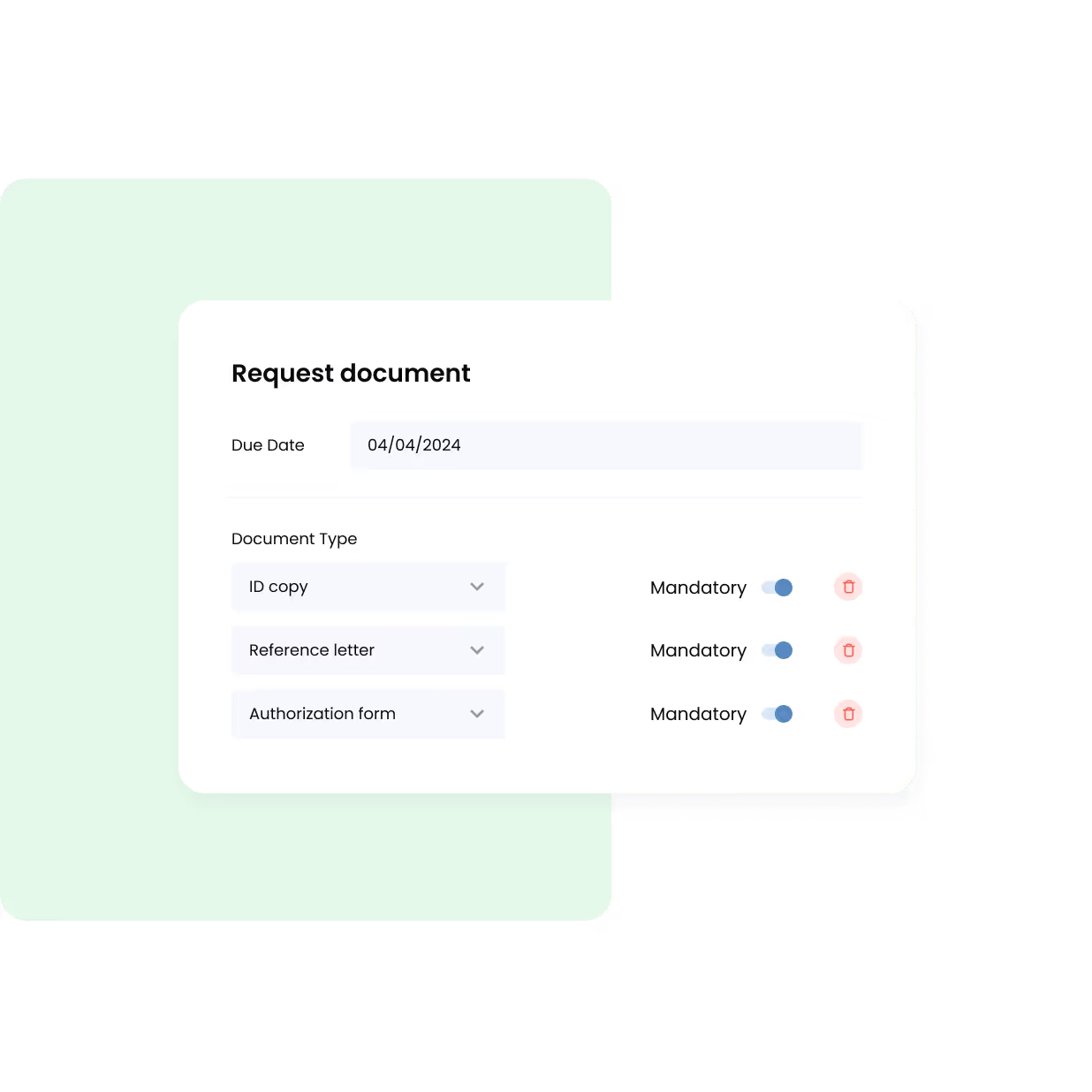
Our centralized document management solution makes gathering the necessary data required to apply for employment passes, rental schemes, and other country-specific initiatives seamless and timely. With customized workflows and automated reminders, HR can help empower employees to manage the deadlines and documentation requirements for applications. And centralized documents and real-time data make it easy for employees to access salary information and produce reports and documents necessary for verification.
Additionally, Omni's customizable dashboard allows your teams to set and manage calendars pre-loaded with country- or region-specific holidays and time zones, seamlessly onboarding individuals in various locations.
With plans starting at just USD $3 per month per employee, discover how Omni's all-in-one HR software can support your Southeast Asian workforce. Book your product tour with our team today to learn more!
.png)