.png)
Summary: Hospitality businesses rely on HR and payroll systems for hospitality to manage one of the fastest-moving workforces of any industry, shaped by seasonal peaks, shift-based operations, and turnover rates that often exceed 100% annually. Without clear and consistently applied HR policies, these conditions lead to slow onboarding, scheduling conflicts, payroll errors, data privacy risks, and heavy administrative workloads, especially across multiple outlets. While defining policies is essential, their real value comes from consistent execution at scale, which is where modern HR and payroll systems for hospitality play a critical role. By centralizing recruitment, onboarding, scheduling, attendance, payroll, performance management, and compliance in one platform, solutions like Omni HR help hospitality businesses reduce manual work, protect employee data, and maintain accuracy and efficiency even during peak demand periods.
Hospitality businesses operate with one of the fastest-moving workforces of any industry. Seasonal peaks, shift-based rosters, and frontline turnover rates that regularly exceed 100% each year mean teams are constantly recruiting, onboarding, training, and paying new staff.
Without well-defined and well-managed HR policies, this velocity creates predictable issues such as slow onboarding, inconsistent scheduling, payroll errors, privacy lapses, and heavy administrative burdens for HR teams that are already stretched thin.
Having the right policies is just the first step. The greater challenge lies in implementing these policies consistently across hundreds of employees and multiple outlets. That’s where HR and payroll systems for hospitality provide real value, acting as the central platform that connects policy communication, payroll management, scheduling practices, and workforce documentation.
In this article, we share seven must-have HR policies every hospitality business should formalize, alongside how modern systems like Omni HR enable fast, compliant, seamless implementation without adding admin work.
Why HR Policies Matter More in Hospitality
Effective HR policies are particularly critical in the hospitality sector because of its unique workforce characteristics and operational challenges, including:
- 100%+ annual staff turnover: Demanding work environments, unclear policies, and payment issues lead many employees to leave in dissatisfaction.
- Seasonal hiring peaks: During busy periods, HR teams must onboard staff in bulk, often slowing the process when demand is highest.
- Shift-based workforce: Tracking attendance, coordinating shifts, and calculating pay for largely shift-based frontline teams can be particularly challenging.
- Decentralized staffing: Multiple locations often place staffing responsibilities on local managers, creating a decentralized approach to workforce management.
Given these characteristics and the challenges they create, having unclear, inconsistent, or nonexistent HR policies introduces several significant risks.
For one, without an effective recruitment process, onboarding becomes slow and inefficient, directly impacting productivity during peak periods. This is often compounded by scheduling conflicts and shift disputes when there’s no clear system for attendance tracking.
Additionally, HR teams may also be forced to calculate salaries manually and manage physical or scattered timesheets, increasing the likelihood of payroll discrepancies, errors, and delayed payslips. These issues frustrate employees and contribute to lower retention rates.
Lastly, the absence of clear privacy policies puts both employee and financial information at risk, especially when sensitive data is shared through paper-based or unsecured methods instead of dedicated HR and payroll systems for hospitality.
Adopting strategic HR practices inevitably helps attract and retain talent, but policies are only effective when supported by HR and payroll systems for hospitality; systems that enable consistent execution at scale, reduce administrative burden, and protect employee data.
Learn more: How HRIS Supports Employee Data Management
Policy #1 - Recruitment and Onboarding Policy
Since onboarding in hospitality is often slow and manual, especially during hiring surges, it’s essential to adopt an onboarding policy that clearly addresses the following areas:
- Standard hiring criteria: Establish clear, standardized assessment criteria to simplify resume filtering and enable fair candidate evaluation.
- Consistent onboarding: Implement a clearly defined onboarding process that promotes fairness, protects operational workflows, and gives new employees a strong first impression.
- Documentation processes: Adopt a structured, digital approach to managing documents and employment contracts, consolidating everything in one place and supporting smoother new hire integration.
But how do HR and payroll systems for hospitality support these policy areas? Through digitizing onboarding by centralizing documents, standardizing workflows, and reducing manual administrative tasks.
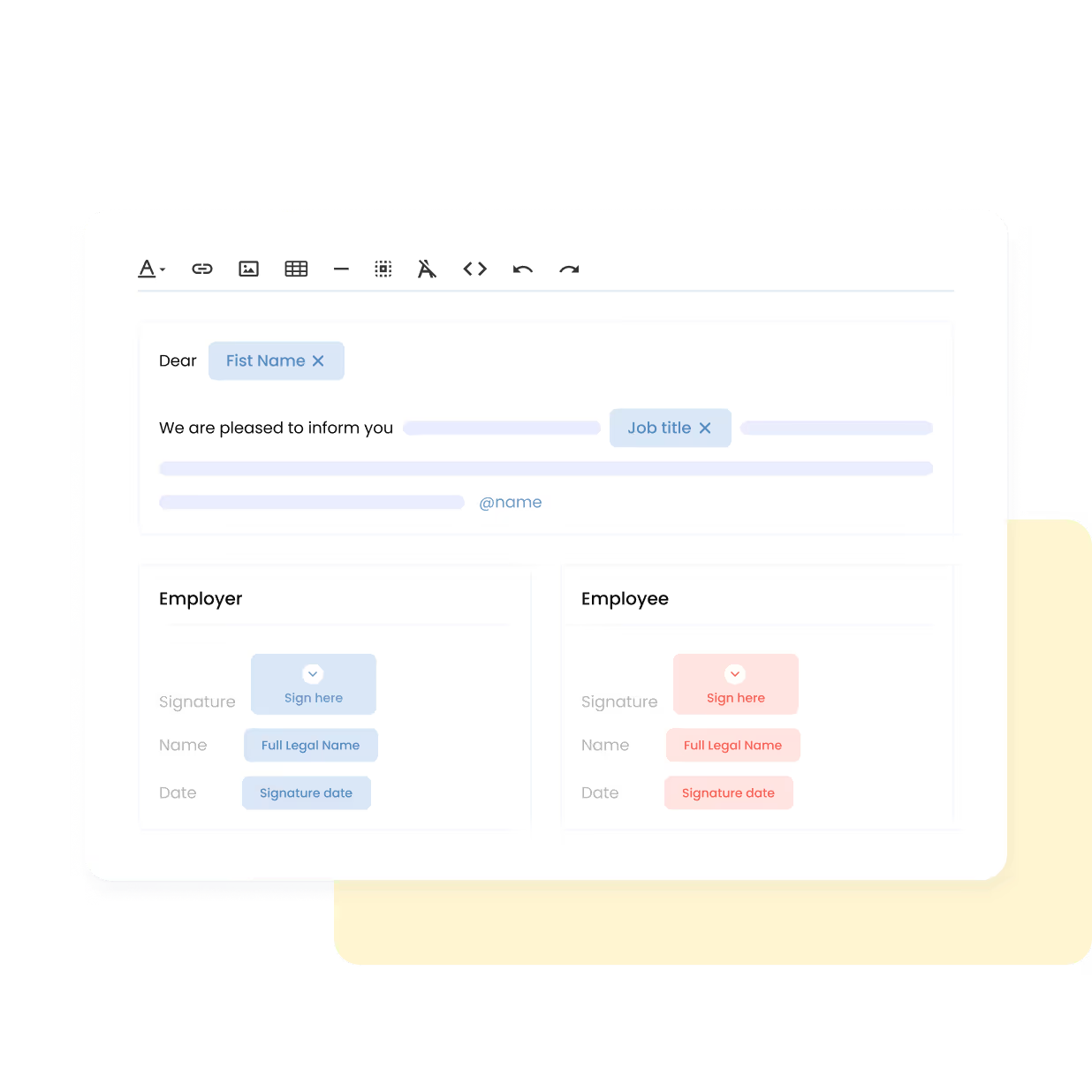
For example, Omni offers a built-in document editor that lets HR teams create, distribute, and collect onboarding forms and documents digitally. New hires can complete and upload their documents via our mobile app and self-service portal for review and approval.
As such, with Omni, onboarding workflows can be automated and tracked end to end, helping businesses accelerate the process (sometimes by as much as 5x) while maintaining consistency and accuracy.
“Once you have instituted it, it goes on autopilot. The next new hire that comes in gets added to the workflow, and that's it – everything is ready to run off autopilot through Omni.”
— Wenna Lee, HR Manager at IHRP
Read more: 8 Key Onboarding Documents for Your New Hire Journey
Policy #2 - Working Hours and Scheduling Policy
In a primarily shift-based system, mix-ups and overtime disputes are common, but a clear policy with the following regulations can help prevent them:
- Roster planning rules: Define rules for shift assignments, time-off requests, and overtime eligibility to create fair, predictable schedules aligned with business needs.
- Break standards: Develop clear guidelines for breaks and rest periods to protect employee well-being and maintain compliance with labor laws.
- Shift-swapping procedures: Document rules for shift-swapping between coworkers prevent understaffing, scheduling conflicts, and interpersonal issues.
HR and payroll systems for hospitality help bring these policies to life in day-to-day operations.
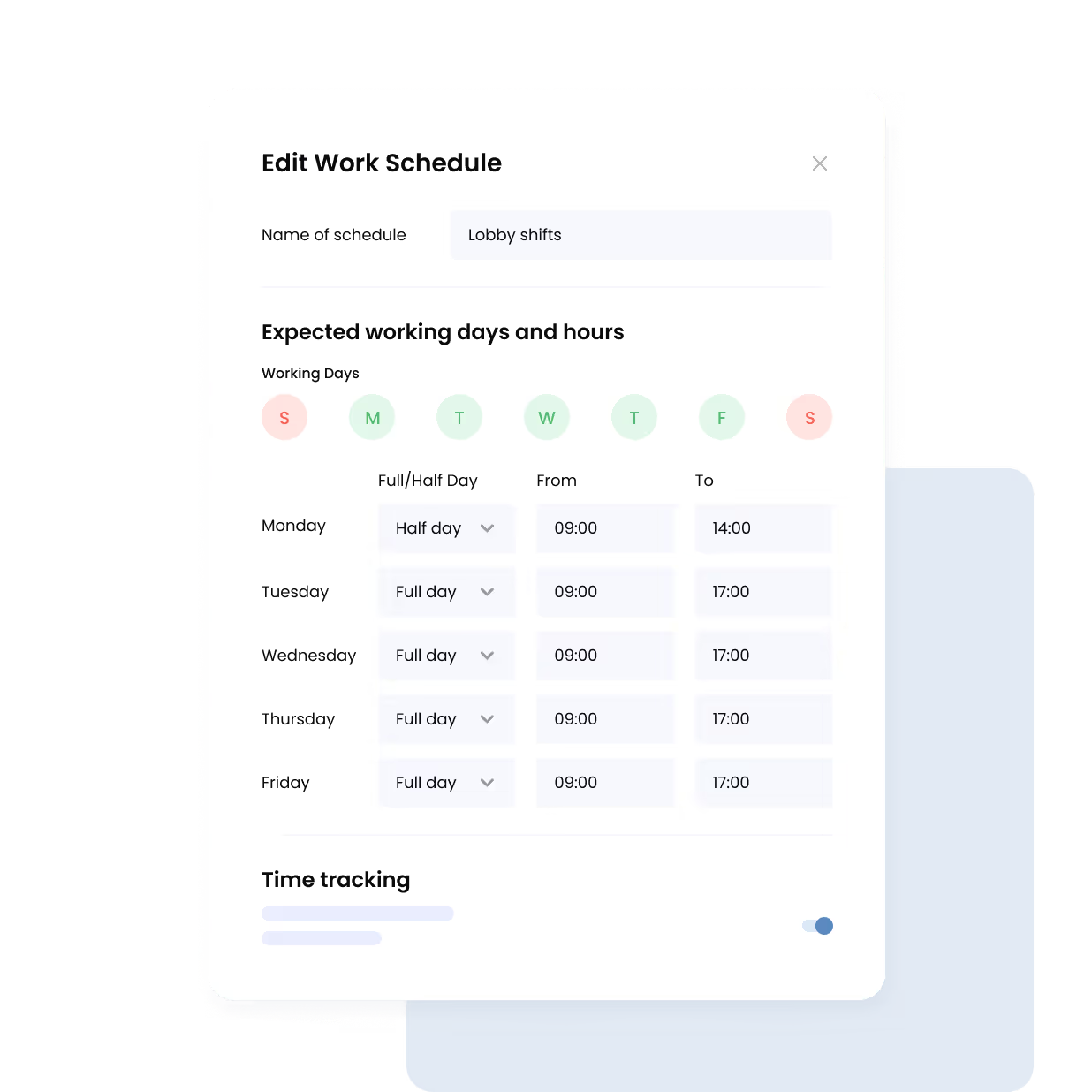
For instance, Omni’s attendance module lets you configure timesheets in line with your roster planning rules, break standards, and specific business needs. Our platform also supports digital scheduling, so updates to shifts automatically reflect in timesheets and across all locations, reducing errors, preventing conflicts, and guaranteeing accurate tracking of hours worked.
"Omni allows us to extract accurate data, which makes it a great platform for timekeeping and payroll."
— Iron Mike Minguez, HR Admin Assistant at Dev Team
Policy #3 - Payroll and Compensation Policy
To save your HR team time on administrative tasks and minimize costly pay errors, it’s important to have a payroll and compensation policy covering the following areas:
- Pay cycle timelines: Define whether shift workers are paid weekly, monthly, or on another schedule, and specify when each pay cycle begins.
- Wage calculations: Outline how pay is calculated in your shift-based system, including any allowances, base pay uplifts, or other schemes.
- Overtime structures: Clearly state how employees are compensated for hours worked beyond their regular shifts.
- Tip distribution practices: Specify who receives customer tips and which system is used, such as tip pooling, tip-outs, or a combination of both.
Read next: Compensation Management Software & Tools for Growing Asian Companies
HR and payroll systems for hospitality can help you automate these wage calculations.
Omni’s payroll module integrates with attendance software for customised calculations. Our platform cross-checks payments based on approved timesheets. Workers can then access their payslips through the self-service portal, giving them visibility into their pay while centralizing payroll management across all outlets.
Policy #4 - Leave and Attendance Policy
In shift-based work, tracking time off while managing shifts and payroll can be challenging. A clear leave and attendance policy should cover the following areas:
- Leave application: Explain how employees can request leave and outline the workflow for submission and review. For sick leave, specify the required documentation and the types of entitlements available.
- Attendance reporting: Detail how attendance is recorded and tracked to ensure accuracy and compliance.
- Absence escalation procedures: Define the steps to follow when an employee is absent without notice, including formal warnings and disciplinary actions.
Implementing this policy becomes easier with HR and payroll systems for hospitality that include a self-service portal like Omni’s.
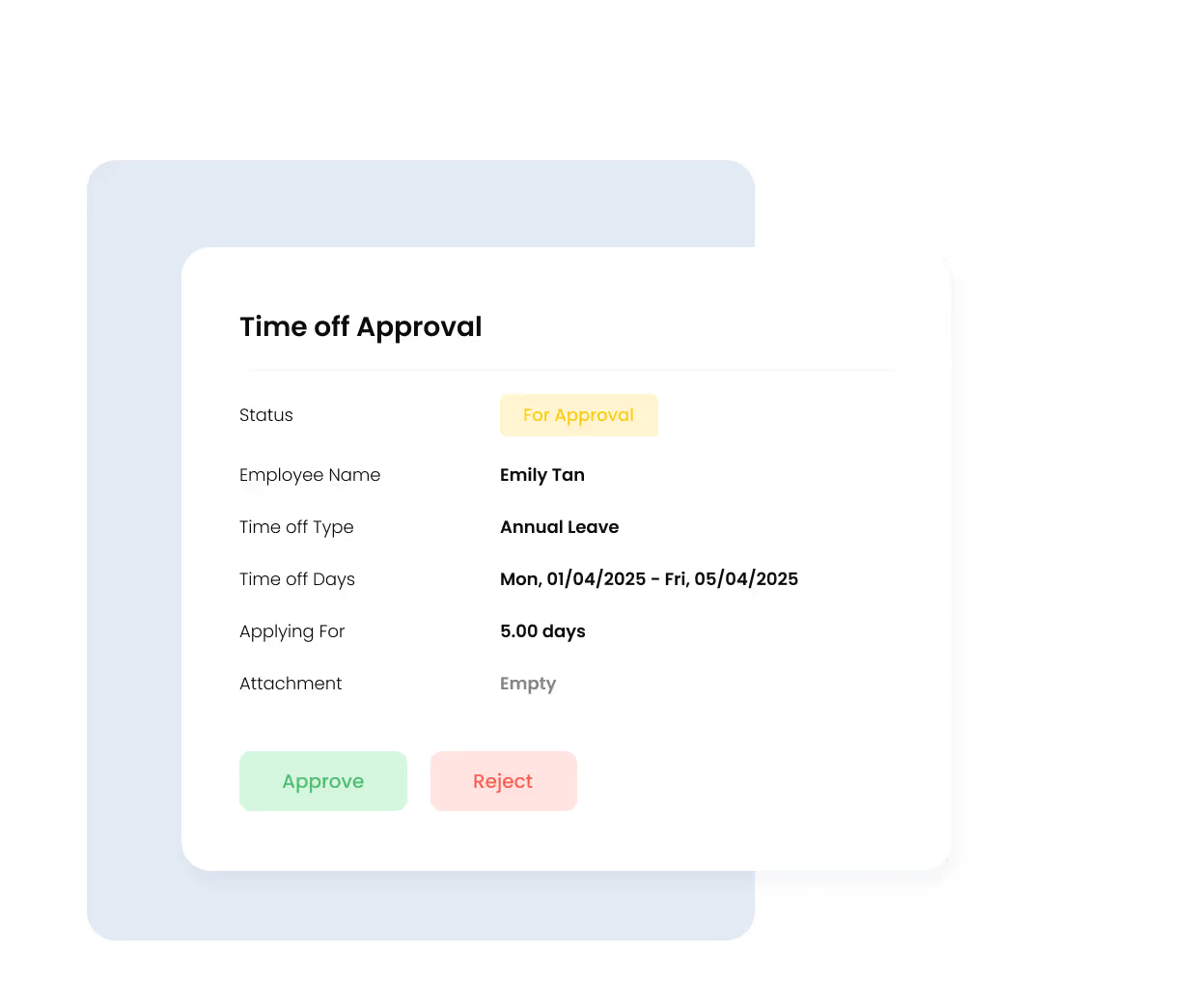
With an employee portal, employees can submit leave requests directly without HR assistance, while managers receive notifications and review applications efficiently. If approved, the leave is reflected in attendance and payroll data in real time through the time-off policies setup.
Policy #5 - Code of Conduct and Workplace Behavior
In workplaces where rules are applied inconsistently or employee information isn’t protected, distrust can quickly build. That’s why a clear code of conduct policy is mandatory and should cover the following areas:
- Professional behavior standards: Define the standards of workplace culture you want to cultivate, such as respect, communication, and generosity.
- Guest interaction guidelines: Outline the behaviors that help deliver the desired guest experience, including active listening and attentiveness.
- Harassment prevention guidelines: Clearly define prohibited behaviors and establish reporting channels for incidents.
- Disciplinary frameworks: Specify the procedures and consequences for violations of any of the above guidelines.
HR and payroll systems for hospitality automate many aspects of policy management.
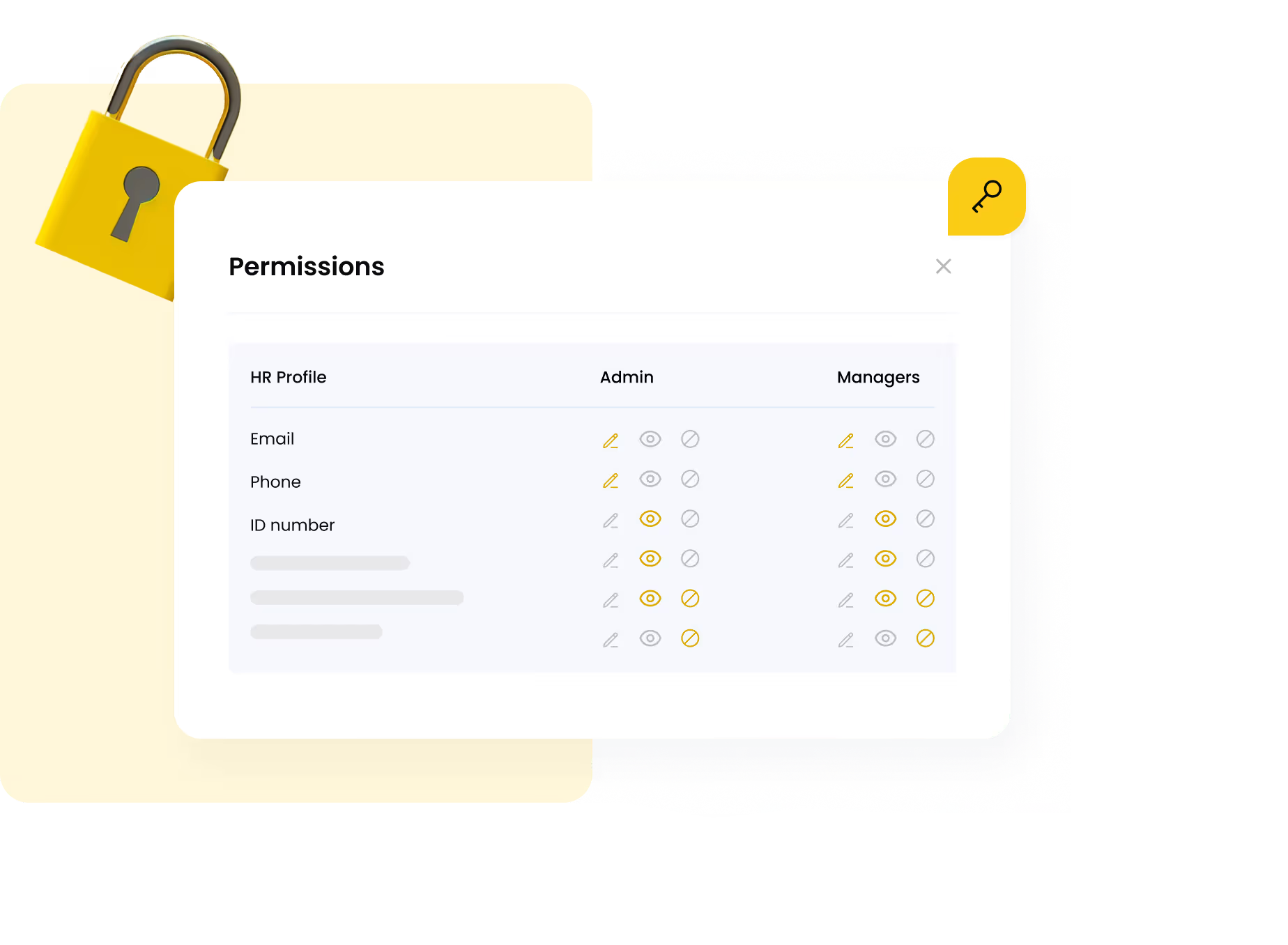
With Omni HR, HR teams can easily distribute policies and encryption features ensure that employee data is safe and secure. Role-based access further protects sensitive data by controlling who can view or edit specific information, safeguarding employee privacy across the organization.
Policy #6 - Training and Performance Policy
With multiple outlets, managers often train frontline staff in their own way. This inconsistency is why a clear training and performance policy is essential, covering the following areas:
- Onboarding training standards: Establish how new hires are introduced to your business, including tools, systems, and company culture.
- Certifications: Define role-specific certifications and development programs to support employee growth.
- Performance review frequency: Determine how often performance reviews are conducted to monitor and support employee progress.
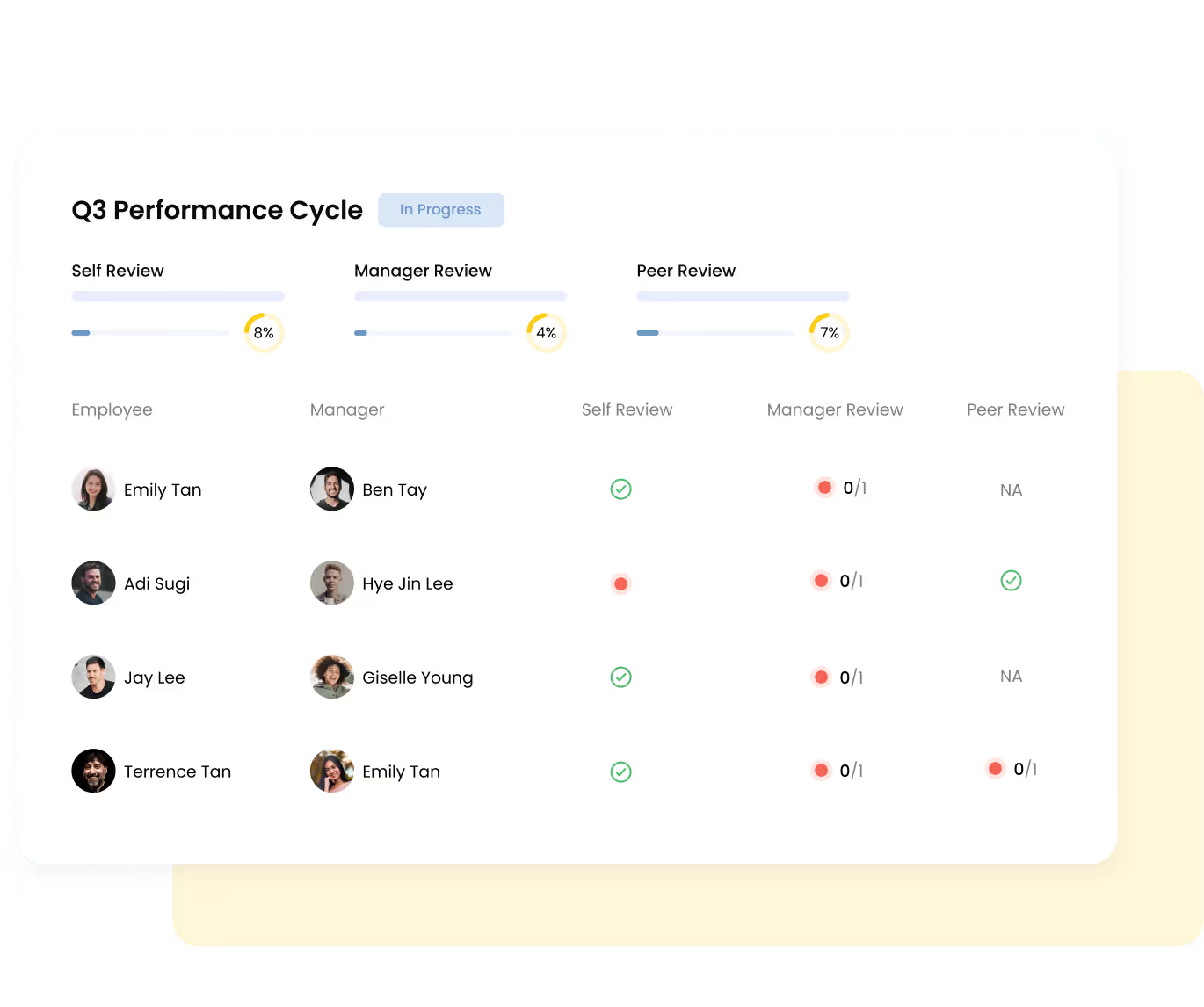
Managing employee development across locations can be complex, but HR and payroll systems for hospitality make it easier. Omni, for one, can assign, manage, and track training materials, monitor certifications, and link performance records to employee profiles for a holistic view of employee growth.
Policy #7 - Health, Safety, and Incident Reporting
When injuries or hazards occur, and managers handle each case manually, the process can be slow and inconsistent. A standardized incident reporting policy can address this, covering the following areas:
- Safety protocols: Establish workplace safety measures to maintain compliance and protect your workforce.
- Emergency reporting: Clarify how managers and employees should respond to and report incidents promptly.
- Incident documentation: Set procedures for thoroughly recording incidents to assess risks, determine causes, and prevent future occurrences.
HR and payroll systems for hospitality with a centralized database like Omni make it easier to track incidents, generate actionable insights, and take proactive steps to improve workplace safety using digital reporting forms. This allows managers to quickly review past incidents, identify patterns, and implement preventive measures across all locations.
Bringing Policies to Life with HR and Payroll Systems for Hospitality
Implementing policies across multiple outlets can feel overwhelming.
How do you make sure everyone is informed? What if you can’t locate signed policy acknowledgments? What if an employee’s payroll transaction doesn’t align with your policies? How do you securely store employee information? And can your HR team realistically handle all this administrative work?
These are all valid concerns, but they can be addressed through HR and payroll systems for hospitality, such as Omni HR.
HR and payroll systems for hospitality support instant policy distribution to all staff via mobile apps, track employee acknowledgments (useful for audits), link digital timesheets to payroll rates, and provide outlet-level dashboards to monitor shift overages and readiness. They also allow you to customize access controls by role, keeping sensitive staff information secure.
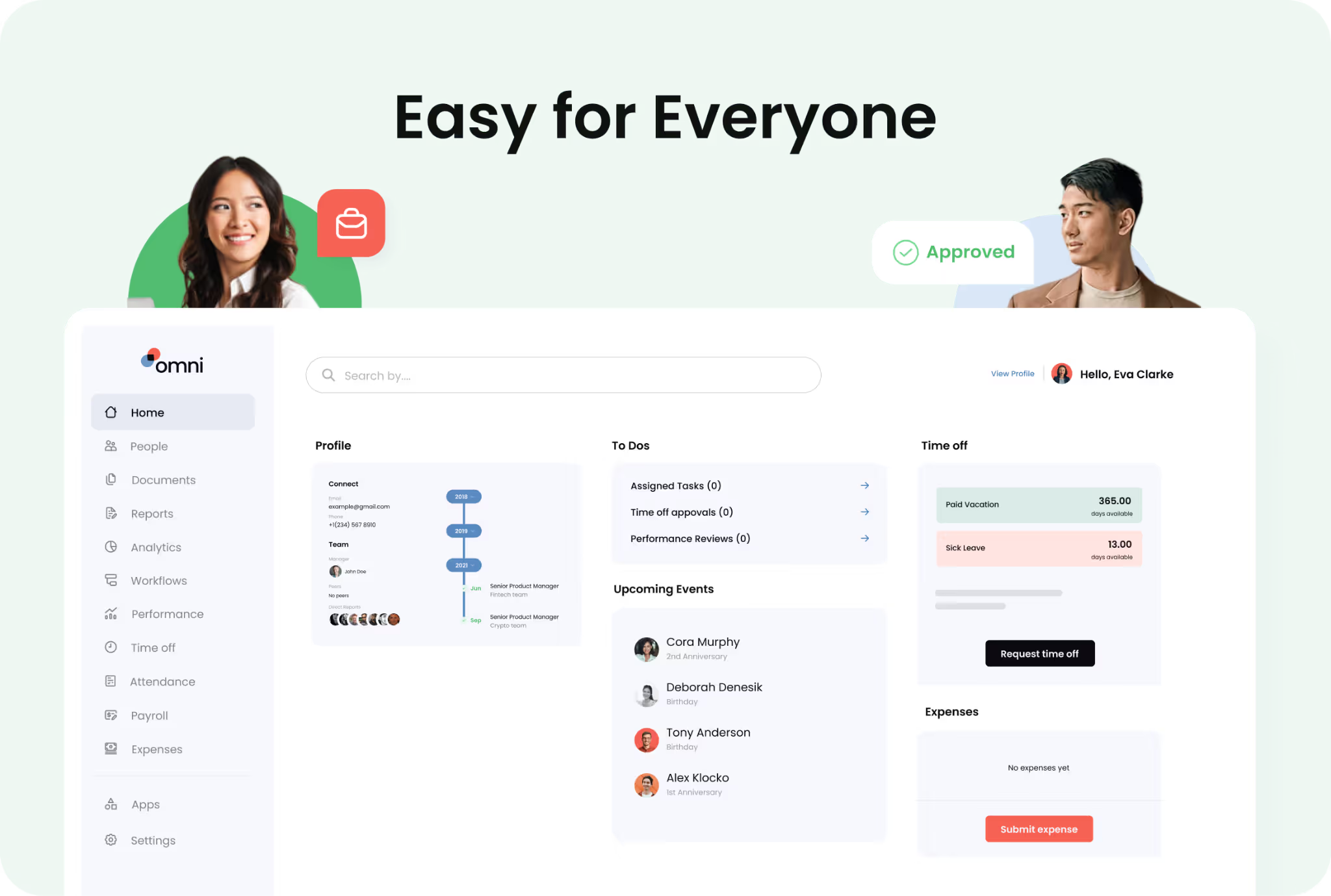
Instead of juggling multiple HR and payroll systems for hospitality, a single, centralized system like Omni combines policy management, workforce scheduling, payroll processing, and training tracking in one platform, streamlining HR operations and reducing administrative burden.
Book a demo now, and set your hospitality business up to win.