




















Summary. HR software for BPO companies needs to handle what generic HR tools struggle with: bulk hiring for client ramps, 24/7 shift attendance, high agent attrition and statutory payroll across every delivery market. This guide covers the features to prioritise, the questions to ask vendors, the pitfalls to avoid and a shortlist of platforms for APAC BPOs, with examples from Singapore, Malaysia and the Philippines.
HR software for BPO is a system that runs the full employee lifecycle for outsourcing and contact center operations, from bulk onboarding and shift-based attendance to payroll, attrition tracking and compliance across delivery markets.
The stakes keep rising. The Philippine IT-BPM industry alone is forecast to reach US$45 billion in revenue and 1.99 million workers in 2027, according to the IT and Business Process Association of the Philippines (IBPAP). Every new client contract means another hiring wave, and agent turnover remains high: the Contact Center Association of the Philippines recorded 45% total attrition in its 2022 survey. Across Omni HR's own customer base, one in three employees leaves within the first year.
At that scale, the wrong HR software shows up as late payroll, compliance gaps and onboarding delays that clients notice. Use this guide to evaluate your options before you sign.
What Makes HR Software for BPO Different?
BPOs need HR software built for volume, shifts and multiple delivery markets, because their workforce behaves differently from a typical company's. Five requirements set BPO HR apart:
- Hiring and onboarding at client-ramp speed. A single new contract can mean hundreds of agents to hire, onboard and provision within weeks. Manual paperwork and one-by-one onboarding become a bottleneck that delays go-live.
- 24/7 shifts and complex pay rules. Round-the-clock coverage means rotating shifts, night work and overtime, each with its own statutory rules. In the Philippines, for example, work between 10pm and 6am earns a night shift differential of at least 10% under the Labor Code.
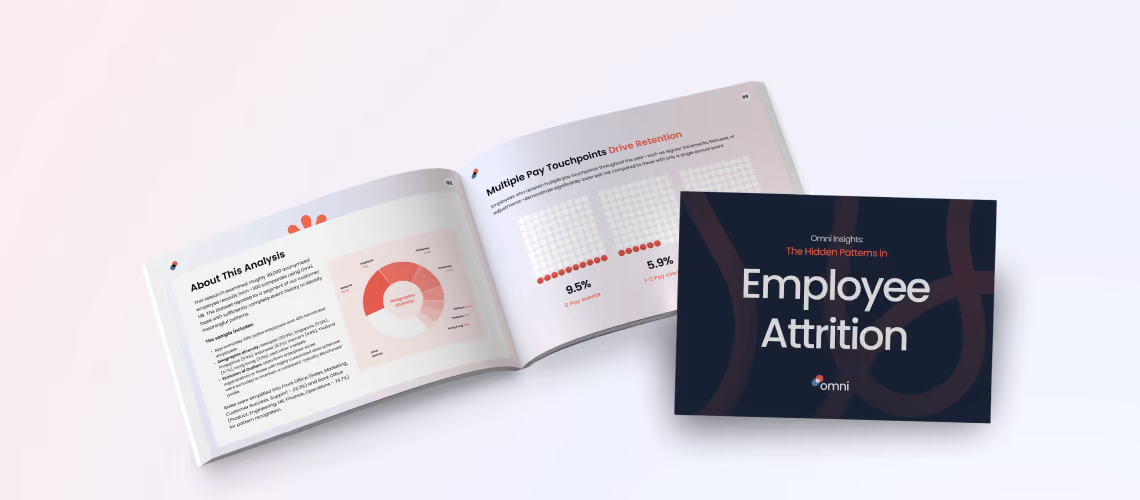
- High, early-tenure attrition. In Omni HR's attrition analysis of around 30,000 employee records, front-office roles (including customer support) showed 37.6% attrition by month 12, compared with 31.7% for back-office roles. BPOs need to spot exit risk early, not after the resignation lands. Read more on attrition in BPOs.
- Statutory compliance in every delivery market. A BPO with sites in Manila, Kuala Lumpur and Singapore runs SSS, PhilHealth and Pag-IBIG; EPF, SOCSO and EIS; and CPF at the same time, each with different rates, ceilings and deadlines.
- Client-level data and security. Clients expect workforce data and reporting segmented by account, plus strong controls over who can see employee and client information, especially with hybrid and work-from-home teams.
What's Changing for BPO HR Teams in 2027?
Several regulatory changes in 2026 and 2027 affect BPO payroll and HR directly. Your HR software should handle each of these without manual workarounds.
Key Features to Look for in HR Software for BPO
The must-have features of HR software for BPO are bulk onboarding, shift-based attendance, multi-country statutory payroll, attrition analytics, client-level reporting, mobile self-service and strong data security. Use the third column to test each one in a demo.
Overtime and shift premiums vary by market
Overtime and shift premiums are where BPO payroll most often goes wrong, because the rules differ across delivery markets:
- Philippines: overtime on ordinary days is paid at least 25% above the regular hourly rate, and work between 10pm and 6am earns a night shift differential of at least 10%.
- Malaysia: overtime under the Employment Act is paid at 1.5 times the hourly rate on normal working days, with overtime generally capped at 104 hours a month.
- Singapore: employees covered by Part IV of the Employment Act receive overtime at 1.5 times the hourly basic rate, capped at 72 hours a month.
Your HR software should apply these rules automatically from attendance data, rather than relying on manual adjustments before each payroll run. Read more on attendance management.
How to Choose HR Software for Your BPO: 6 Steps
To choose HR software for your BPO, start from your delivery footprint and peak headcount, then test vendors against real BPO scenarios rather than a generic demo. Follow these six steps:
- Map your delivery footprint. List every country where you employ agents today and plan to within three years. This decides whether you need a single-country platform or one with native payroll across several APAC markets.
- Define your must-haves. Rank the features above by impact on your operation. A voice BPO running night shifts will weight attendance and payroll premiums higher than a back-office processing center.
- Shortlist three to four vendors. Filter by native statutory payroll in your markets, BPO customer references and pricing that works at your peak headcount. Our vendor shortlist below is a starting point.
- Run scripted demos. Give every vendor the same scenarios: onboard a batch of agents for a new client, run payroll with night differential and overtime, and pull attrition by client account. Compare what each platform does natively versus with workarounds.
- Check security and data privacy. Confirm certifications, data hosting location and how the vendor supports your obligations under Singapore's and Malaysia's Personal Data Protection Acts and the Philippines' Data Privacy Act.
- Model total cost at peak headcount. Price the platform at your highest expected headcount, including payroll, implementation and support, not just today's team size.
For a structured evaluation, use our Payroll RFP Template for APAC or the Philippines HRIS Buyer's Guide.
Questions to Ask HR Software Vendors Before You Buy
The right questions separate platforms built for BPO operations from general HR tools with a BPO landing page. Ask every vendor on your shortlist:
Common Pitfalls When Choosing HR Software for BPO
Most failed BPO HR software projects come down to choosing for today's headcount and one market. Avoid these five pitfalls:
- Buying for one country when you operate in several. A platform with strong Philippine payroll but no native coverage in Malaysia or Singapore forces you to run a second system as soon as you add a site.
- Relying on integrations for statutory payroll. HR tools without native payroll in your markets depend on a separate payroll provider, which adds reconciliation work and another place for errors.
- Ignoring shift and premium rules in the demo. If a vendor cannot show night differential and overtime flowing from attendance into payroll, expect manual fixes every cut-off.
- Underestimating total cost at scale. Per-employee pricing that looks affordable at 300 agents can look very different at 3,000. Model your peak headcount, not your current one.
- Skipping BPO references. Vendors without high-volume, high-turnover customers often lack the bulk onboarding, offboarding and attrition tools BPOs rely on.
Read next: HR Software Pricing and Cost: Factors to Consider
Top 3 HR Software BPO Options in 2027
Omni
Best for: Modern, fast-growing BPOs in APAC managing high-volume hiring and distributed teams, looking for a flexible, scalable HR platform with strong, dedicated localization, automation, and analytics capabilities.
Scalable applicant tracking system for high-volume BPO hiring

Omni helps BPOs hire quickly without sacrificing quality. Our automated hiring workflows built for bulk recruitment, empowering your team to source, screen, and onboard large volumes of candidates with ease. With centralized multi-channel postings, real-time collaboration, and seamless integration with technical assessment tools and background checks, track and manage qualified talents and accelerate your time-to-hire even during peak periods.
With Omni’s digital document management, manage offer letters, employment contracts, and other documentation all in one place, reducing manual errors and speeding up onboarding across multiple roles and regions. Our structured onboarding templates can be tailored to different campaign or client needs. And with multi-language support for 10+ languages, you can tap into multilingual talent pools across APAC with ease.
Why modern BPO teams choose Omni
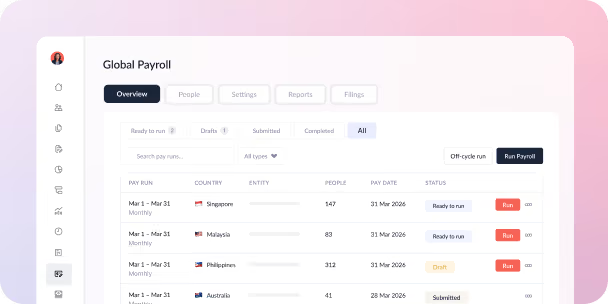
Shift scheduling and attendance tracking

As highlighted above, 24/7 operations and multi-timezone coverage are the norm for many BPOs. Omni’s integrated scheduling and attendance tools help managers to assign shifts, track employee hours in real-time, and ensure compliance with region-specific labor laws. This helps reduce absenteeism and simplifies payroll processing, keeping your workforce agile across all campaigns.
Reports and workforce analytics
Hiring the right people is the first defense against high attrition in BPO. If you can identify candidates who are not only qualified but also likely to stay longer, you reduce future turnover.

Omni’s reports and analytics don’t just show who’s leaving; they tell you why. Get insights based on historical headcount trends, turnover rates, and candidate traits to identify the attributes of loyal agents and flag high-risk hires during the recruitment stage.
For BPOs that are struggling with churn, this translates to smarter hiring decisions, higher retention, and a more stable workforce.
Scalability:
Most HRIS are built to be rigid, forcing organizations to bend their processes to fit the limitations of their software. Omni does the opposite; we designed our platform to mold to your organization’s specific and unique functions, growing and scaling alongside your team and adapting to your evolving needs. As your team gets bigger, Omni keeps up. We fit how you work, not the other way around.
Whether you’re setting up a new delivery center or managing remote teams across multiple regions, Omni simplifies your HR processes with:
- Regional expertise and localized compliance support
- Seamless integration with your payroll, EOR, and benefits systems
- Customizable policies and notifications in 10+ languages
- Mobile-friendly employee self-service platform across 190+ countries
With Omni, your BPO can scale without constraints and stay compliant at every step of the process and deliver a smooth employee experience, no matter where you are.

"Omni has been a game changer for our HR team. It’s a fantastic system that frees our HR department to spend more time with our employees on a personal level and enables us to focus on employee development. We’ve been blown away by the responsiveness Omni’s customer support team has provided us since day one."
— Roxanne McGovern, Chief Culture Officer at NightOwl Consulting
See how: Philippine-founded BPO, NightOwl Consulting streamlined HR with Omni
Support:
Our award-winning support team is readily available to guide you through necessary software updates, resolve issues, and ensure compliance with regulatory requirements so that you can focus on your business and initiatives that truly matter.
BambooHR
Best for: Smaller to mid-sized BPOs primarily operating within a single region or with less complex international needs, looking for a user-friendly platform for core HR functions.
Core features relevant to BPOs:
- Core HR Management: Centralized employee records, document management, and basic workflow automation.
- Onboarding: Tools for managing new hire paperwork and basic onboarding tasks.
- Time-Off Management: Self-service portal for leave requests and approvals.
- Performance Management: Basic goal-setting and performance review features.
Scalability: Can scale with growth but may require additional modules or integrations for complex global operations and high hiring volumes.
Support: Generally offers responsive customer support, but localization and deep expertise in complex international BPO compliance may vary.
Darwinbox
Best for: Mid-sized to larger BPOs, particularly those with a strong presence in Asia, seeking a comprehensive HR suite with a focus on employee engagement and talent management alongside core HR functions.
Core features relevant to BPOs:
- Core HR, Payroll (often with a regional focus), Leave & Attendance Management.
- Talent Management Suite: Includes recruitment, onboarding, performance, and learning modules.
- Employee Engagement Tools: Features for surveys, feedback, and communication.
- Analytics and Reporting: Provides insights into various HR metrics.
Scalability: Designed to scale with growing organizations, particularly within the Asian market.
Support: Offers customer support with regional expertise, which can be beneficial for BPOs operating in Asia. However, the depth of global compliance support may vary.
Run a Smarter BPO HR Operation With Omni
With the high demands of the BPO industry, Omni stands out as the HRIS built to handle your unique operational challenges. From managing rapid onboarding cycles with automated workflows to ensuring labor law compliance across multiple regions, Omni centralizes and automates your core HR processes. With bank-grade AES-256 encryption, ISO 27001 certified data centers, and end-to-end encryption, we provide the robust security infrastructure essential for protecting your sensitive financial and employee data.
Why modern BPO teams choose Omni
For BPO organizations looking to scale while maintaining compliance, Omni offers more than just an HRIS platform—we provide a strategic partnership that supports your growth while safeguarding your organization against compliance risks. As testified by our BPO customers across the region, Omni's customizable platform adapts to your unique organizational needs while ensuring consistent compliance standards across operations.

Frequently Asked Questions
The best HR software for BPO companies depends on your delivery footprint. Multi-country APAC BPOs benefit from a platform like Omni HR with native payroll in the Philippines, Malaysia and Singapore. Philippines-only BPOs often shortlist Sprout Solutions, and large enterprise BPOs often consider Darwinbox.
HR software for BPO should include bulk onboarding, shift-based attendance, statutory payroll with overtime and night differential rules, attrition analytics, client-account reporting, mobile self-service and strong data security. Test each feature with real BPO scenarios during vendor demos.
Pricing varies by vendor, modules and headcount. Most platforms charge per employee per month, while enterprise suites usually quote custom pricing. Because BPO headcount grows quickly, model costs at your peak expected headcount, including payroll, implementation and support. See Omni HR pricing.
HR software helps reduce attrition by showing who is likely to leave before they resign. Omni HR's attrition data shows one in three employees exits within the first year, and unpaid leave is linked to nearly three times higher exit risk. Tracking these signals lets team leads intervene early.
Yes, if the platform has native statutory payroll in each market. Omni HR, for example, runs payroll natively in the Philippines, Malaysia, Singapore and Hong Kong, so a BPO with sites across these countries can manage HR and payroll in one system.
Night shift differential is extra pay for work performed between 10pm and 6am. Under the Philippine Labor Code, employees receive at least 10% of their regular wage for each hour worked in that period. BPO HR software should calculate it automatically from attendance data.