



















.png)
Summary. Performance measurement frameworks are essential for senior HR leaders seeking to evaluate complex, non-sales roles with clarity and fairness. In knowledge-driven organizations, where value is created by engineers, product managers, and specialists, robust non-sales performance metrics ensure that assessments capture both impact and expertise. Proven HR frameworks, from the Impact-Output-Behavior Model to the Competency Progression Matrix and Portfolio Review, combine quantitative outcomes with qualitative insights, track growth and collaboration, and support transparent, actionable performance management. Leveraging platforms like Omni HR enables executives to operationalize these frameworks efficiently, reducing administrative burden while linking individual contributions directly to organizational goals.
In a modern, growing company, the majority of value creation happens outside of the sales floor. It happens in the quiet focus of engineers, the strategic planning of product managers, and the deep expertise of HR specialists. Yet, when it comes time for performance reviews, HR leaders and team managers struggle with a fundamental problem: how to measure performance fairly and objectively when there’s no clear revenue number or quota to track.
Relying on subjective “gut feelings” introduces bias, erodes employee trust, and makes career progression feel arbitrary. The solution is not to force sales targets onto product teams; the solution is to adopt specialized performance measurement frameworks designed to capture impact, expertise, and collaboration.
This guide provides five tactical, ready-to-use HR frameworks and non-sales performance metrics you can implement immediately to create fairness and transparency in every role.
Framework 1: The Impact-Output-Behavior Model
Best for: Individual contributor (IC) roles in product, engineering, design, and research—roles that deliver tangible work products but whose ultimate success is indirect.
How It Works
This three-layer approach breaks down an individual's contribution into distinct, measurable categories, balancing what they produce with how it matters and how they execute the work.
- The three-layer approach:
- Impact (40%): The business outcomes their work drives.
- Output (30%): The tangible work products they deliver.
- Behavior (30%): How they work and collaborate.
Why this works: This performance measurement framework ensures the employee is measured holistically, balancing what they tangibly produce (Output), the measurable value that work creates (Impact), and the essential qualities of collaboration and culture (Behavior).
Layer 1: Impact Metrics
This layer connects individual work directly to high-level business results (KPIs). The goal is to define metrics that answer the question: Did this person’s work change the business outcome? Some examples of how to measure performance include:
- Engineer: Features shipped that increased user engagement by X%.
- Product Manager: Products launched that drove X revenue or reduced churn by Y%.
- Designer: Design improvements that increased conversion rates or reduced support tickets.
How to track: You track Impact by linking the individual’s project contribution (e.g., a specific feature ID or campaign name) directly to the broader KPI data. For example, use project documentation in tools like Jira or Asana to tag which features contributed to a measured increase in user engagement tracked in Amplitude or Google Analytics. This ensures that the metric reflects true business value, not just activity.
Layer 2: Output Metrics
This layer measures the volume and quality of the tangible work delivered. Examples include:
- Number of projects completed on time
- Quality indicators (bug rates, rework needed, design iterations)
- Collaboration outputs (documentation created, knowledge sharing sessions led)
How to track: Tracking output involves pulling data directly from production systems. You can measure feature completion speed using data from project management software, while technical quality indicators (like bug rates or Mean Time to Recovery - MTTR) are pulled from systems like GitHub or Jenkins.
Design and content output volume can be measured within Figma or your Content Management System (CMS), providing objective evidence of delivered work. Make sure to augment hard numbers with peer review to get a holistic picture of an employee's output.
Layer 3: Behavior Metrics
This layer assesses how someone works and collaborates, which is crucial for cross-functional roles. Examples include:
- Collaboration: Cross-functional project involvement, helping team members.
- Communication: Documentation quality, presentation effectiveness.
- Growth mindset: Skills developed, feedback incorporated, initiative taken.
How to track: Behavior is measured through structured 360-degree feedback and peer reviews. The HRIS system should prompt reviewers to rate competencies using a defined rubric and mandate that they provide specific, documented examples of the behavior to minimize subjective bias.
Implementation steps
- Define 2-3 key metrics for each layer specific to the role.
- Set clear targets or standards for each metric (e.g., “Target 90% completion rate for low-risk projects”).
- Establish data collection methods (automated where possible).
- Review quarterly and adjust annually.
- Make metrics visible to the employee from day one.
Learn more: How to Set Key Performance Indicators for Employees
How Omni Support HR Teams
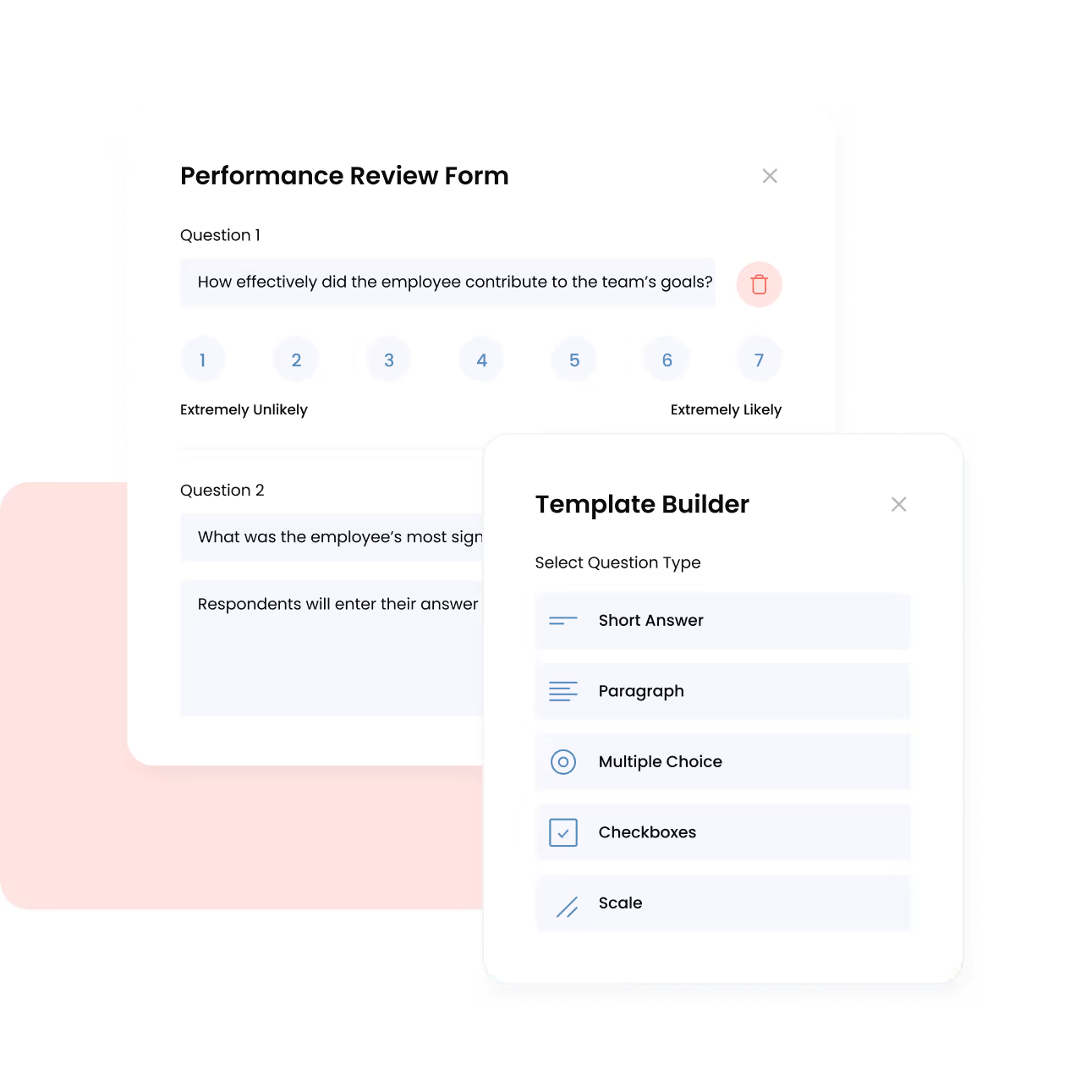
With Omni HR, teams can turn the I-O-B model into a repeatable, evidence-based process. Our customizable review templates help segment impact, output, and behavioral criteria clearly, while 360° feedback adds peer-verified examples. Automated reminders and task workflows ensure every contribution is captured before calibration.
Framework 2: The Competency Progression Matrix
Best for: Roles with clear skill requirements but varied responsibilities (technical specialists, senior ICs, managers).
How It Works
This performance measurement framework shifts the focus from purely current output volume to skill level and growth over time. It creates a transparent map for career progression, making it an ideal solution for how to measure the performance of technical teams where depth of expertise compounds.
Why this works: This performance measurement framework removes the pressure to constantly increase output volume, instead rewarding the deepening of expertise and creating clear, transparent paths for long-term career growth in technical and specialist fields.
Building Your Matrix
Identify 5–7 core competencies: These should be universal across the role family (e.g., Technical Architecture, Stakeholder Management, Mentorship). They should include collaboration competencies such as teamwork and communication, as well as leadership competencies like mentoring and decision making.
Define 4-5 proficiency levels for each competency:
- Developing: Learning and requires frequent guidance.
- Proficient: Executes work independently and reliably.
- Advanced: Guides others and handles complex assignments.
- Expert: Shapes strategic direction and sets organizational standards.
Measuring against the matrix
Performance ratings are based on evidence of operating at a certain level:
Evidence-based ratings: A rating of "Advanced in Technical Architecture" must be backed by concrete examples: “Led 3 architecture reviews for mission-critical projects, created reusable system design docs, and identified 2 scalability issues before they became problems.”
Progression tracking: The review focuses on whether the employee is growing over time and moving from one proficiency level to the next, reducing the pressure to simply produce more volume.
How to track: Measurement is conducted primarily through regular skill assessments (quarterly or biannually) within the HRIS or performance management platform. The manager records evidence points (specific projects, documents, or mentor relationships) against the matrix levels. This historical record allows both the manager and the employee to visually track proficiency growth and complexity handled across multiple review cycles.
Why this works:This framework removes the pressure to constantly increase output volume, instead rewarding the deepening of expertise and creating clear, transparent paths for long-term career growth in technical and specialist fields where expertise compounds.
Implementation steps
- Start with standard competency frameworks for your role type (many are available online).
- Customize for your organization's specific needs.
- Calibrate with team members: Do these levels make sense?
- Conduct initial assessments to baseline everyone.
- Review quarterly, looking for evidence of growth.
How Omni Support HR Teams
Omni enables systematic tracking of competencies and skill progression using customizable performance management templates and our employee database. Managers can log evidence, monitor growth over time, and use 360° feedback to validate proficiency levels.
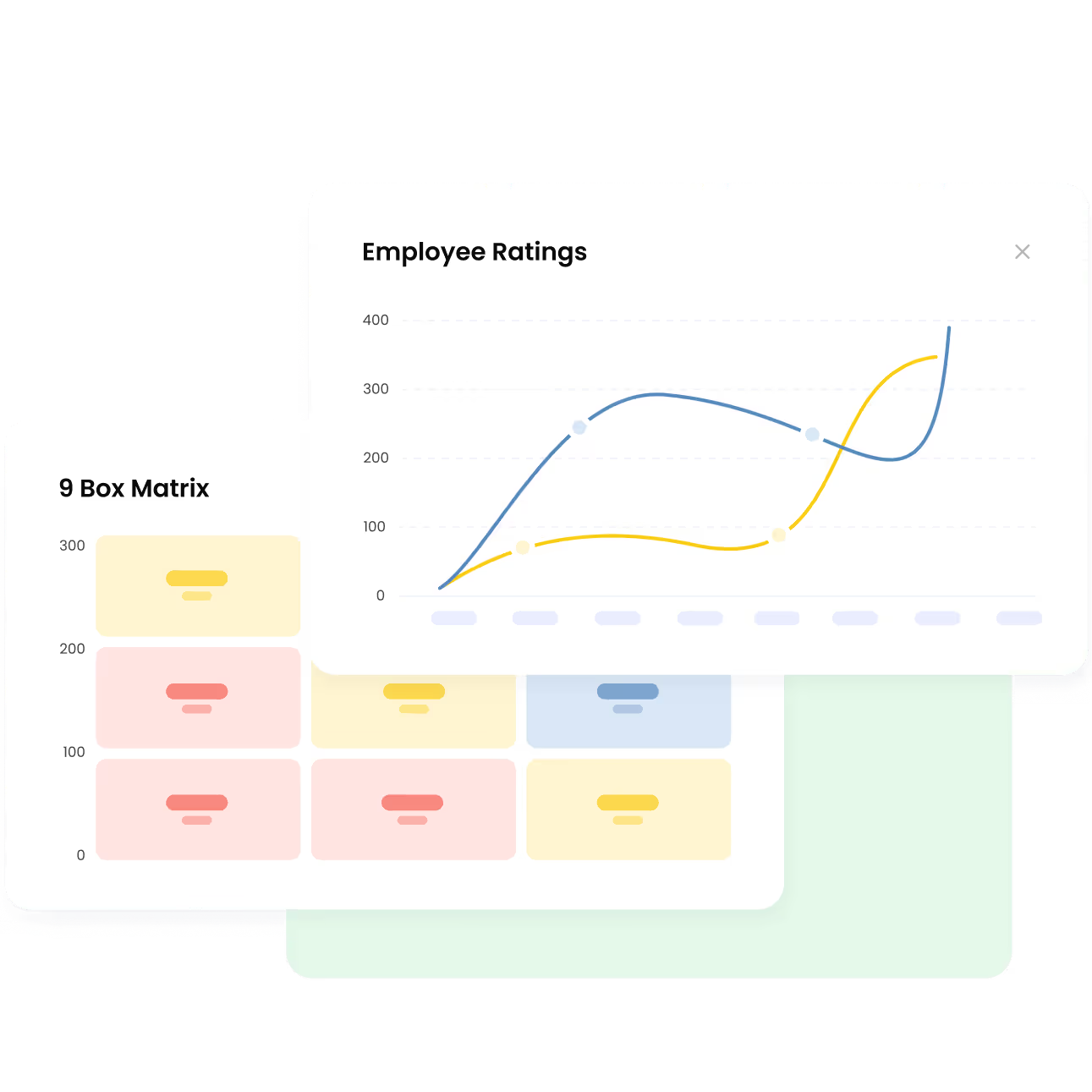
Reports and analytics allow HR to visualize performance gaps and identify high-potential talent, while workflow automation helps keep review cycles consistent and timely each time.
"Performance management cannot be just a once-a-year check-in – it has to be a regular conversation. We want to drive IHRP to be a more performance-driven culture, and with a good system like Omni that can track and allow employees to see their progress, it's fantastic."
— Wenna Lee, HR Manager at IHRP
Framework 3: The OKR-Based Performance System
Best for: Roles focused heavily on discrete projects and strategic initiatives rather than day-to-day responsibilities, such as Product Managers, Operations Managers, and other strategic functions.
How It Works
This performance measurement framework ties individual performance directly to organizational priorities. It measures both the achievement of measurable targets and the quality of execution.
Why this works: It provides a direct line of sight between the individual's work and the company's highest priorities, measuring success not just by goal achievement, but also by the quality, efficiency, and effectiveness of the execution.
Read next: 6 Step OKR Implementation Guide
Structure
- Objectives: 2–4 big-picture goals per quarter. These define what the person aims to achieve (e.g., "Launch V2 of the APAC client portal").
- Key results: 3–5 measurable outcomes per objective. These define how success will be quantified (e.g., "Increase daily active users in the portal by 25%").
- Performance Score: This comprehensive score is based on a combination of KR achievement and structured feedback on the quality and efficiency of execution.
Measuring performance through OKRs
Performance review ratings are derived from two primary data sources: the objective achievement rate and the qualitative execution quality.
- Achievement rate: What % of key results were accomplished? Since OKRs should be ambitious stretch goals, the scoring is not linear:
- 70%+ = exceeds expectations. This signals success, as the goals were designed to be challenging.
- 50–70% = meets expectations. This is generally a strong performance score, indicating significant contribution.
- <50% = needs improvement. This prompts a crucial discussion about roadblocks, priorities, or potential adjustments needed for the next quarter.
- Execution quality: This assesses the how of the work, often gathered through peer feedback and manager observation:
- Were deadlines met? This checks adherence to project timelines and commitments.
- Was cross-functional collaboration effective? This measures the ability to work smoothly with other teams (e.g., Engineering or Marketing).
- Were resources used efficiently? This addresses fiscal responsibility and time management.
- What did others say about working with this person? This incorporates essential peer feedback on communication and support.
The performance review formula
The final performance rating thoughtfully blends objective data with subjective context:
- 60%: OKR achievement scores (averaged across quarters). Prioritizes tangible results linked to strategic goals.
- 20%: Execution quality ratings. Assesses process and collaborative effectiveness.
- 20%: Behavioral competencies (collaboration, communication, growth). Focuses on long-term skill development and cultural alignment.
Making it work
- OKRs must be truly measurable: Avoid vague language like "improve X." Instead, ensure all KRs are quantifiable and time-bound (e.g., "increase X by Y%" or "reduce Z to Q").
- Regular check-ins to adjust OKRs if business priorities shift: OKRs are not fixed contracts; they are dynamic targets. If the market changes mid-quarter, managers must update goals to reflect current priorities.
- Don't punish people for missing stretch goals: The focus should be on effort, learning, and systemic roadblocks identified during the process, not punitive measures for aiming high.
- Look at trends over multiple quarters, not single-quarter performance: Evaluate long-term patterns (e.g., three quarters of solid performance) to build a stable and fair performance history.
Implementation Steps
- Establish company and department-level OKRs first: Individual goals must directly support the overall organizational strategy.
- Have individuals create OKRs that ladder up: Ensure every individual goal clearly contributes to a team or departmental objective.
- Review and align in planning sessions: Dedicate time for cross-functional alignment to prevent conflicting priorities or resource overlap.
- Check in monthly on progress: Use monthly 1:1s to actively track progress, identify roadblocks, and document required adjustments.
- Score quarterly and look for patterns: At the end of each quarter, formally score KRs and use this data to inform the annual or bi-annual performance review.
How Omni Support HR Teams
With Omni HR, OKRs can be linked directly to employee reviews through goal tracking and performance scoring features. Progress updates are captured automatically and feed into review cycles.
HR teams can also trigger monthly check-ins and quarterly reviews based on schedule, giving managers real-time visibility on OKR achievement and performance trends.
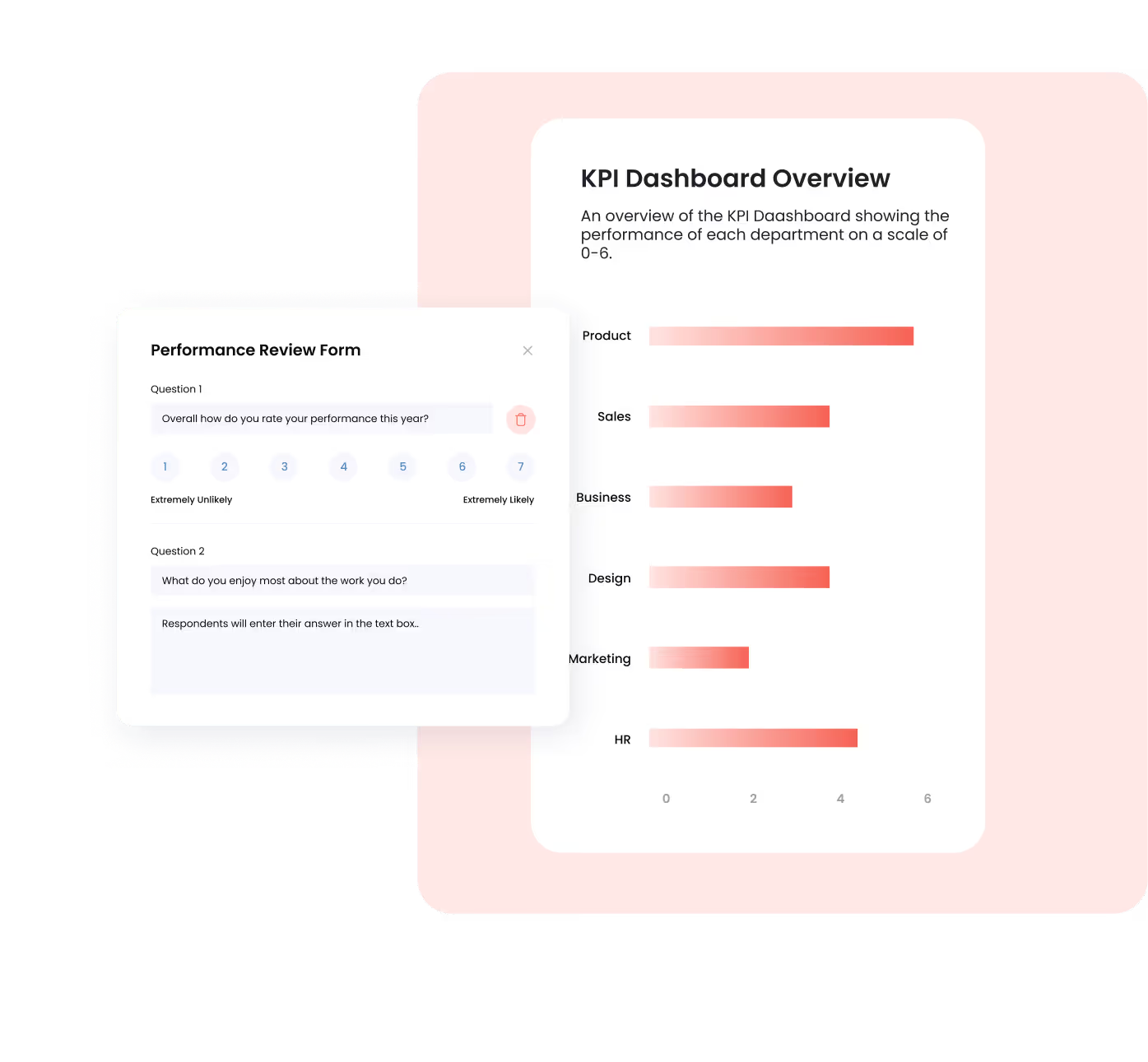
"Because Omni has the progression visualization in OKRs, we can actually go in at a quarter or even a midpoint review before the final review to take a look at where help is needed. We’re able to easily track and notice when an employee is not hitting a KPI and check in to see if they’re facing some barriers."
— Wenna Lee, HR Manager at IHRP
Framework 4: The Peer Impact Rating System
Best for: Highly collaborative roles where success depends on teamwork (cross-functional roles, support functions, enablement teams).
How It Works
Performance is measured by how much someone enables others to succeed. This performance measurement framework combines self-reported contributions with peer validation and is particularly effective for roles where individual output is hard to isolate.
The Three-Part Assessment
Part 1: Contribution tracking (ongoing): The individual logs key contributions monthly, focusing on activities that enabled the success of colleagues or other departments:
- Projects supported: Specific initiatives where their input was critical to another team's success.
- Problems solved for teammates: Documented instances of mentorship, code review, or troubleshooting.
- Knowledge shared: Training sessions led, documentation written, or internal wiki contributions.
- Cross-functional collaboration: Successful coordination across different departments (e.g., helping Engineering finalize marketing copy).
Part 2: Peer impact survey (quarterly): A short, structured survey is sent to collaborators. The survey goes to 5–8 regular collaborators chosen collaboratively by the employee and their manager.
- "How much did working with [Name] help you achieve your goals?" (1-5 scale). This provides a quick quantitative rating of utility.
- "What specific contribution did they make that had the most impact?" This provides qualitative evidence to support the rating.
- "What could they do to be even more helpful?" This serves as forward-looking, constructive coaching feedback.
Part 3: Impact score calculation: The final performance score is calculated using this blend:
- Average peer ratings (40%): The quantifiable measure of helpfulness.
- Quantity of logged contributions (30%): Measures the volume of enablement activities.
- Quality of contributions based on peer examples (30%): The qualitative depth and significance derived from written peer feedback.
Why this works: By incorporating structured feedback from multiple collaborators, this system reduces manager bias and formally recognizes that much of a modern knowledge worker's value comes from enabling the success of others.
Avoiding Pitfalls
- Keep surveys short (5 questions max): High participation rates rely on minimizing the time commitment.
- Make them easy to complete (mostly ratings, minimal written feedback): Rely on ratings for the quantitative score and specific examples for the qualitative narrative.
- Ensure anonymity in aggregated results: Protect the identity of feedback providers when sharing results with the employee to encourage candidness.
- Don't make this a popularity contest: Focus questions strictly on specific impact and measurable outcomes, not general personality traits.
Implementation steps
- Create a contribution logging template: Design a lightweight, easy-to-use system for employees to document their enablement efforts.
- Design peer survey with 3–5 focused questions: Keep the survey concise and impact-driven.
- Identify review partners collaboratively (employee suggests, manager approves): This ensures the partners chosen are relevant cross-functional stakeholders, not just friends.
- Run quarterly surveys: Consistency helps capture performance accurately throughout the year.
- Review results in 1-on-1s, focusing on trends and themes: Use the data to coach the employee, looking at patterns in the feedback rather than isolated comments.
How Omni Support HR Teams
Omni HR helps capture collaborative impact using performance management and employee self-service tools.
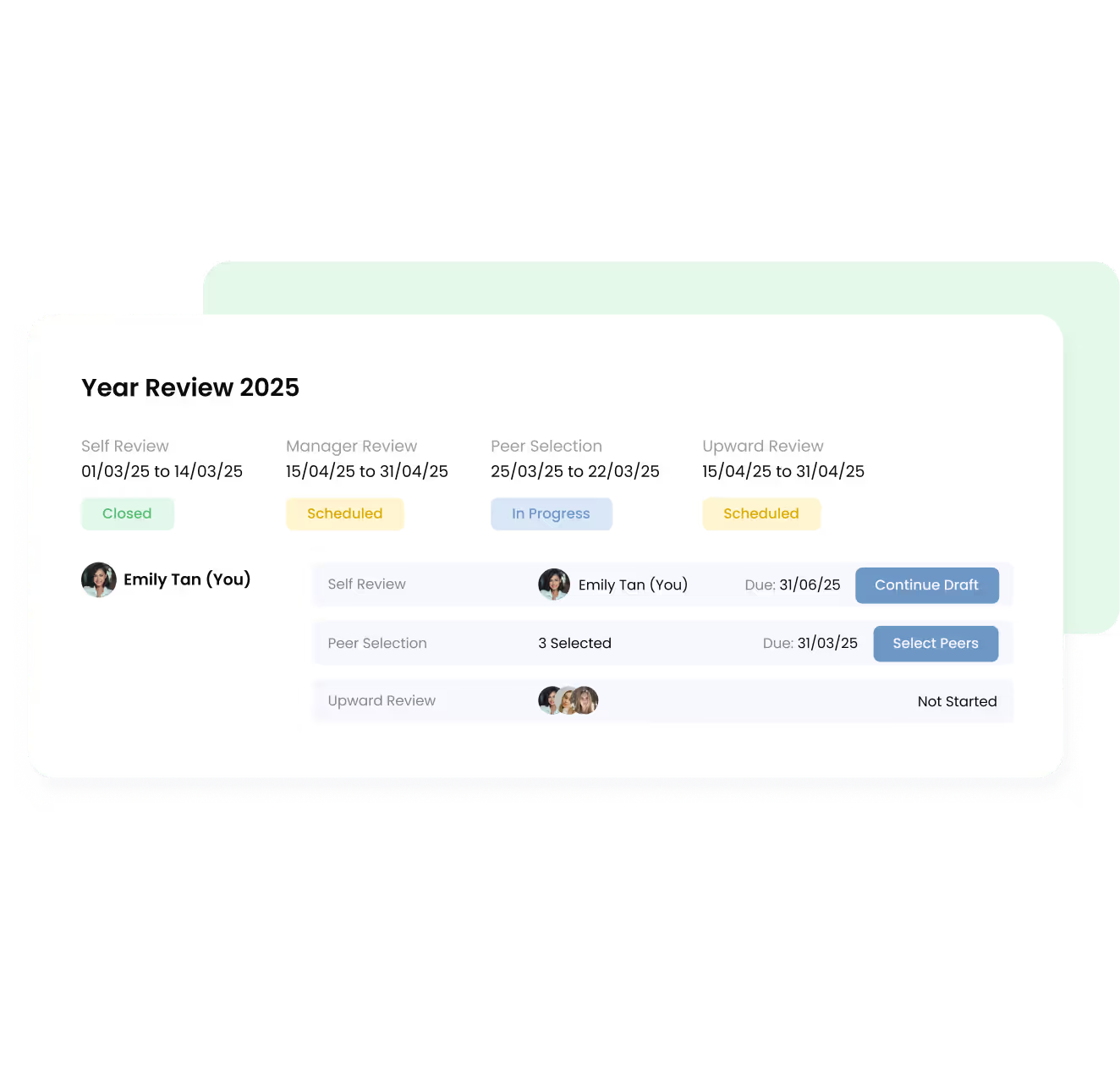
Employees can log contributions, peers provide feedback, and Omni consolidates the results, helping managers identify relevant patterns and coach employees effectively.
Framework 5: The Portfolio Review Method
Best for: Creative and strategic roles with long-term, qualitative outputs (marketing, design, content, strategy).
How It Works
Performance is evaluated through a curated portfolio of work. This method combines objective quantitative metrics (where available) with expert qualitative assessment, focusing the conversation on the strategic thinking, growth trajectory, and long-term impact of the employee's contributions.
Why this works: This performance measurement framework respects the complex, long-term nature of creative and strategic work, allowing for expert qualitative assessment and focusing the review discussion on strategic thinking and growth trajectory.
Building the portfolio system
- Portfolio contents: The employee curates 5–8 key projects from the review period. For each project, the employee must provide the following essential context:
- The challenge or opportunity: Why was this project necessary? What was the business context?
- The approach taken: The strategic, design, or tactical decisions made.
- The outcome (metrics if available, qualitative impact if not): Document any quantifiable results (e.g., A/B test results), or provide narrative evidence of success (e.g., "Led the strategic shift in brand voice").
- What they learned: Demonstrates a crucial growth mindset and reflection.
- Supporting artifacts: This includes the final designs, documents, internal presentations, or recordings that prove the work was done.
- Evaluation criteria: The review is scored against three weighted criteria:
- Quality (40%): Expert assessment of work quality against defined industry standards. This input should be gathered from peer reviews by senior practitioners, cross-functional stakeholders, and alignment with established best practices.
- Impact (30%): The tangible business outcomes driven by the work, encompassing both quantitative data (engagement rates, conversion improvements, cost savings) and qualitative value (stakeholder satisfaction, strategic value, brand impact).
- Growth (30%): The employee's development trajectory over time, assessed by skills acquired, the complexity of challenges tackled, and demonstrated increased autonomy and scope since the last review.
The review process
- Employee curates portfolio quarterly: This ensures the workload is manageable and performance documentation is continuous.
- Manager reviews with input from senior practitioners or stakeholders: The manager acts as a facilitator, synthesizing feedback from various experts.
- Rating scale applied to each evaluation criterion: This adds necessary objectivity to the qualitative assessment.
- Discussion focuses on both achievements and development areas: The portfolio serves as the anchor for a rich, constructive coaching conversation.
Implementation steps
- Create a portfolio template with a standardized format: Using a consistent digital template ensures fairness and makes it easier for managers to compare performance.
- Define quality standards and examples for each role type: Clearly articulate what "Advanced Quality" looks like for a Content Strategist versus a Brand Designer.
- Identify stakeholders who'll provide assessment input: Select reviewers who have direct, recent experience with the employee's work and can speak to its strategic value.
- Schedule portfolio reviews quarterly or biannually: Choose a frequency that matches the cadence of project completion.
- Build a library of strong examples to calibrate expectations: Use top-performing portfolios from previous cycles to help managers and employees understand the standard for "Exceeds Expectations."
How Omni Support HR Teams
Omni supports creative and strategic roles by combining qualitative and quantitative assessment. Managers can gather feedback from employees, peers, and stakeholders via 360° reviews and visualize quality, impact, and growth through reporting dashboards.
Choosing and Adapting Your Performance Measurement Frameworks
You don't have to choose a single framework for your entire company. The most effective organizations use a hybrid approach tailored to each role family.
Picking the right performance measurement frameworks
Selecting the right framework starts with understanding the primary function and core challenge of the role. Use this quick guide to determine the best fit:
Adapting performance measurement frameworks to your needs
You will rarely use a single framework in its pure form. Successful performance systems often rely on hybrid approaches that leverage the strengths of multiple models.
- Example: Quarterly goals & skills: You can use the OKR-Based System for an employee's quarterly project goals, but use the Competency Progression Matrix to measure their long-term growth and skill development.
- Example: ICs and collaboration: Implement the Impact-Output-Behavior Model for individual performance, but supplement the 30% "Behavior" score using data gathered via the Peer Impact Rating system for highly collaborative roles.
Making it work at scale
To ensure fairness and reduce management overhead across a growing company, you must create consistency across departments.
- Start with role families, not individuals: Apply the selected framework consistently across an entire role family. All engineers should use the same framework (though their specific metrics will vary), and all customer-facing roles should use a parallel system. This reduces complexity while maintaining fairness.
- Build metric libraries: Create a centralized resource containing standard metrics for common role types and documented customization options for unique responsibilities. This provides managers with reliable guidance on how to measure similar outcomes in different contexts.
Successfully rolling out a new performance management system requires meticulous planning and manager support.
- Pilot before you scale: Test the chosen framework with one team first. Gather feedback on the user experience and metric effectiveness, refine the process, and then scale.
- Train your managers: New frameworks require new skills, specifically in delivering structured qualitative feedback and leading objective-driven conversations. Invest heavily in manager training and calibration sessions.
- Make it transparent: Share the framework and metrics with employees well before their review cycle begins. Transparency builds trust and allows employees to focus their efforts where they know they will be measured.
- Start simple: Avoid complexity initially. It is always better to measure three things well than ten things poorly.
- Iterate: Performance management is not static. Review the framework's effectiveness annually (not just the results) and adjust based on manager feedback and turnover data.
Getting Buy-In
Adoption requires enthusiastic support from every level of the organization:
- From employees: Involve them in defining their own metrics and standards. When they help build the system, they own the outcome.
- From managers: Reduce administrative burden with automated templates and integrated tools. Show them how the system saves time and improves coaching quality.
- From leadership: Demonstrate how better measurement improves retention, ensures compensation equity, and helps the company develop top talent effectively.
Read next: Your Guide to Successfully Pitching HR Software to Leadership
Turn Performance Measurement Frameworks into Action with Omni HR
Measuring performance in non-sales roles isn’t about adding more metrics, but measuring what truly matters in a fair, structured, and actionable way.
These five performance measurement frameworks prove that every role can be evaluated meaningfully, as long as you combine objective data with structured qualitative insight.
Key success factors:
- Choose HR frameworks tailored to each role type.
- Customize non-sales performance metrics to reflect your organization's reality.
- Make measurement transparent and collaborative.
- Use HR technology to reduce administrative burden and human error.
- Review and refine regularly.
Next steps to implement:
- Identify the roles that are hardest to measure.
- Select performance measurement frameworks that fit each role’s core challenge.
- Adapt the framework with input from employees and managers.
- Pilot with a small group, gather feedback, and refine.
- Scale what works across teams and departments.
Why Omni HR Helps
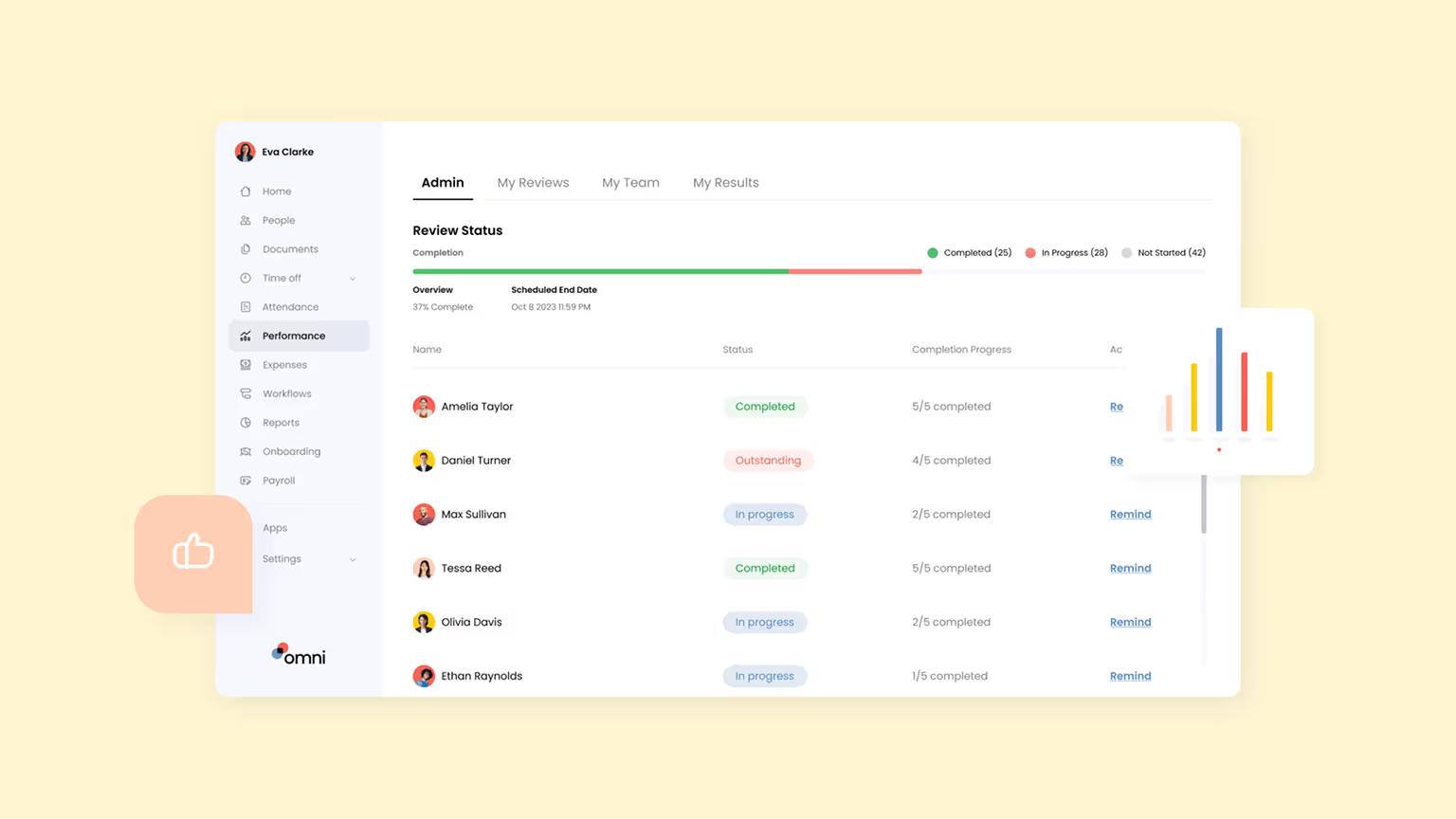
Omni HR transforms these performance measurement frameworks from theory into practice. With our customizable performance templates, automated workflows, and real-time dashboards, your team can evaluate employees without drowning in spreadsheets. Managers gain visibility, employees get clear expectations, and HR can track impact, growth, and collaboration effortlessly.
Get started today:
- Download our Performance Metrics Builder Template
- Book a demo with our team to see how you can transform your performance management.



.avif)
.avif)