




















.png)
Summary. Understanding your PhilHealth contribution 2025 is essential to staying compliant and ensuring uninterrupted healthcare coverage for employees. With the rate set at 5% of monthly salary (within PHP 10,000–100,000), employers, HR teams, and freelancers alike must know how to compute PhilHealth contributions 2025 accurately. The PhilHealth table 2025 applies to all employment categories, including formal workers, OFWs, and self-employed PhilHealth rates 2025, with equal contribution sharing between employers and employees. Timely and accurate payment of the PhilHealth monthly premium 2025 prevents costly penalties and benefit disruptions. To simplify compliance, Omni’s payroll software automatically calculates premiums, tracks remittances, sends deadline alerts, and offers local support in the Philippines, making PhilHealth compliance seamless across all employee types.
As of 2026, PhilHealth continues to provide medical coverage to over 69 million Filipinos, maintaining the same figure reported in 2022. This reflects the ongoing universal coverage under the National Health Insurance Program mandated by the Universal Health Care Act, which effectively includes all Filipinos in the system.
With updated contribution rates and regulations, it’s more important than ever to stay on top of your PhilHealth contribution 2026. Whether you’re an employee, HR manager, freelancer, or employer, understanding your PhilHealth monthly premium 2026 is essential to avoid fines and ensure access to quality healthcare.
What is PhilHealth, and why does it matter?
PhilHealth, fully known as the Philippine Health Insurance Corp., is a government agency that provides universal health coverage to all Filipinos. Established under the National Health Insurance Program, PhilHealth ensures accessible and affordable medical services, including
- Inpatient and outpatient care
- Preventive health services
- Financial risk protection for serious illnesses
PhilHealth contribution 2026 are funded by employees, employers, self-employed individuals and government subsidies.
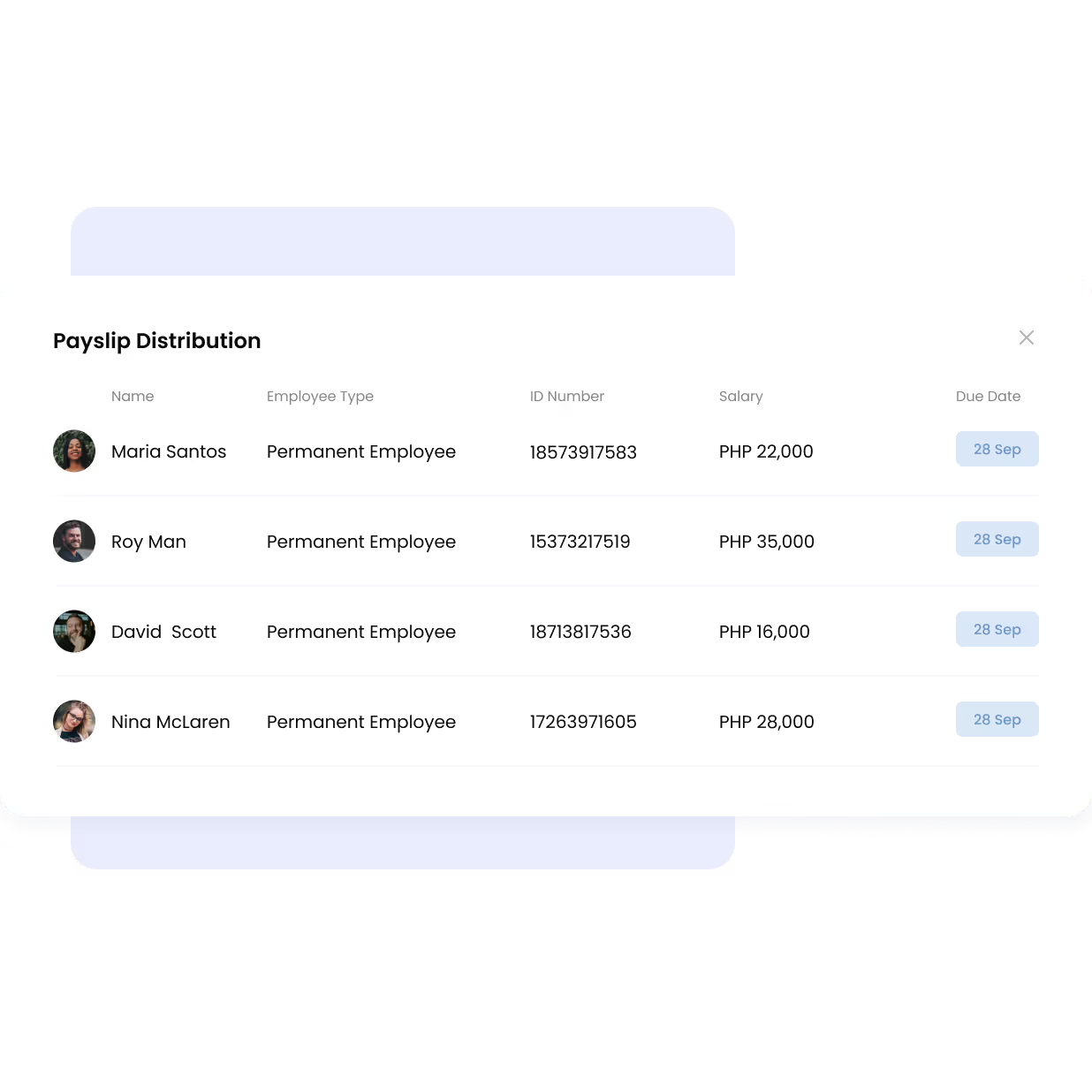
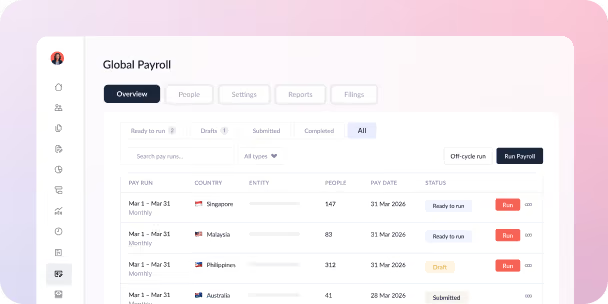
Omni supports this with localized payroll configurations for the Philippines, allowing HR teams to track, report, and process PhilHealth compliance with ease.
Who needs to pay PhilHealth contributions in 2026?

If you’re working or residing in the Philippines, chances are you fall under these categories:
1. Formal sector employees
Some of these are people working in private companies or government offices. PhilHealth requires employers to register the names of their employees and pay the premium contributed to the insurance.
2. Self-employed individuals
They are professionals, freelancers and business owners who have to enroll themselves and pay their PhilHealth contribution 2026 directly to PhilHealth.
3. Overseas Filipino Workers (OFWs)
This is the category of people who are Philippine citizens and are looking to maintain their PhilHealth coverage while working abroad, ensuring they and their dependents have access to health services when needed.
4. Indigent members
These are people the government identifies who simply cannot afford health insurance. Often, they are subsidized by the government so they have access to healthcare.
5. Sponsored members
This category of people has their PhilHealth contribution 2026 premiums paid by some other party, such as state or local government units, private organizations, or by individuals who sponsor their coverage.
6. Lifetime members
They are retirees and pensioners who have made at least 120 monthly contributions while still at work. Lifetime coverage for them is enjoyed without any need to provide any more contributions.
7. Senior citizens
The Expanded Senior Citizens Act automatically covers senior citizens in the Philippines under PhilHealth. All Filipinos aged 60 and above are entitled to benefits, even if they are not formally registered or have not made previous PhilHealth contributions.
The government helps to tide them over by giving them the right to pay where they otherwise couldn't afford to pay, including inpatient care, outpatient consultations, and preventive health measures. This automatic coverage relieves the elderly of healthcare costs so that they get the medical attention they need.
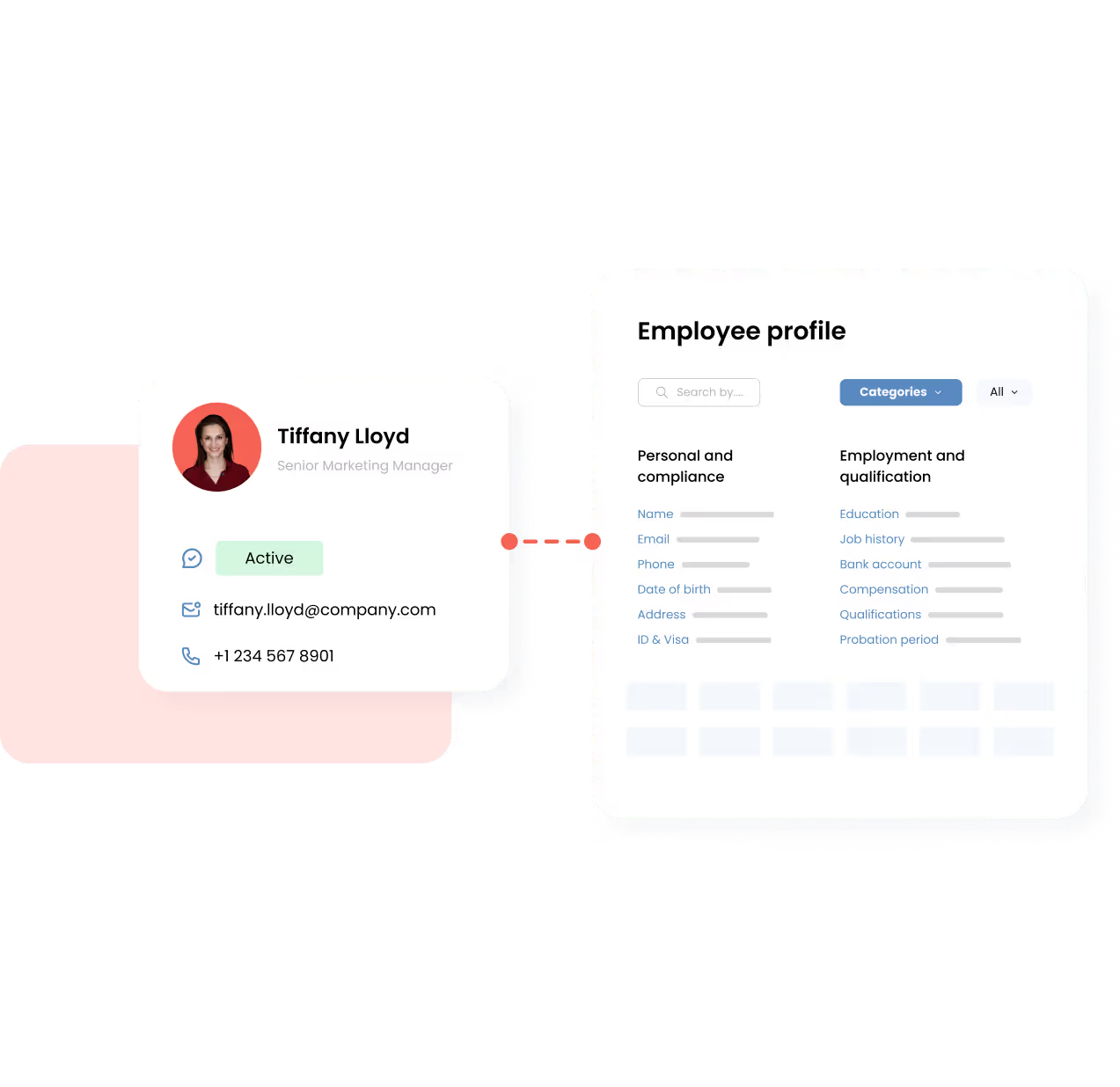
With Omni, HR teams can manage diverse employee profiles, including OFWs, independent contractors, and retirees, all in a centralized employee database with contribution history tracking.
What are the updated PhilHealth contribution rates for 2024 and 2025?
From 2024 onwards, the PhilHealth contribution rate is fixed at 5% of the monthly salary.
The higher contribution rate means that members will be required to put a small part of their income into health insurance. However, this is designed to raise the level of sustainability and quality of healthcare services that PhilHealth provides.
The adjustment for the PhilHealth contribution 2025 is oriented towards making the health insurance system more robust; it will be able to continue providing comprehensive and quality healthcare services to members while ensuring compliance.
Omni ensures accurate PhilHealth premium deductions and splits employee and employer contributions automatically, regardless of salary adjustments or fluctuations. Also compute your SSS contribution using our free SSS calculator.
Here is the PhilHealth contribution table 2025:
How to easily compute PhilHealth contribution 2026?
How to calculate PhilHealth monthly premium 2026 requires you to separate from the standard rate and limit 12% to the set contribution rate and salary brackets.
Here’s a step-by-step guide to calculating your contribution:
1. Identify your monthly basic salary.
- Example: PHP 30,000
2. Apply the 5% contribution rate.
- PHP 30,000 x 5% = PHP 1,500
3. Check income limits.
- Minimum salary = PHP 10,000
- Maximum salary = PHP 100,000
- Salaries outside this range will be adjusted to the nearest cap.
4. Split the contribution.
- Employers and employees each pay 50%.
- Example: PHP 1,500 / 2 = PHP 750 each.
How to pay PhilHealth contribution 2026?
In order for employees and employers to follow the specific procedures for PhilHealth contribution 2026, both employers and individual contributors must pay the contribution once hiring is done. Contributions are calculated by employers (who may handle the contribution for their employees) by applying a 5% rate to each employee’s monthly salary.
The cost is equally split between the employer and the taxed employee. It's the employer’s responsibility to deduct the employee's percentage and add the employer part to the total contribution. Payments can be made through online banking like GCash, over the counter from accredited banks, or through PhilHealth's Electronic Premium Remittance System (EPRS).
For voluntary and self-employed members, the contribution is worked out on the basis of the declared monthly income, using a 5% rate within fixed levels of income. When paid through PhilHealth-accredited collecting agents like banks, other remittance centers or online payment platforms, most people use GCash because PhilHealth supports GCash updates; the employees can then pay the contributions they've earned.
Following these steps provides contributors security for their payment as well as their access to PhilHealth’s healthcare benefits.
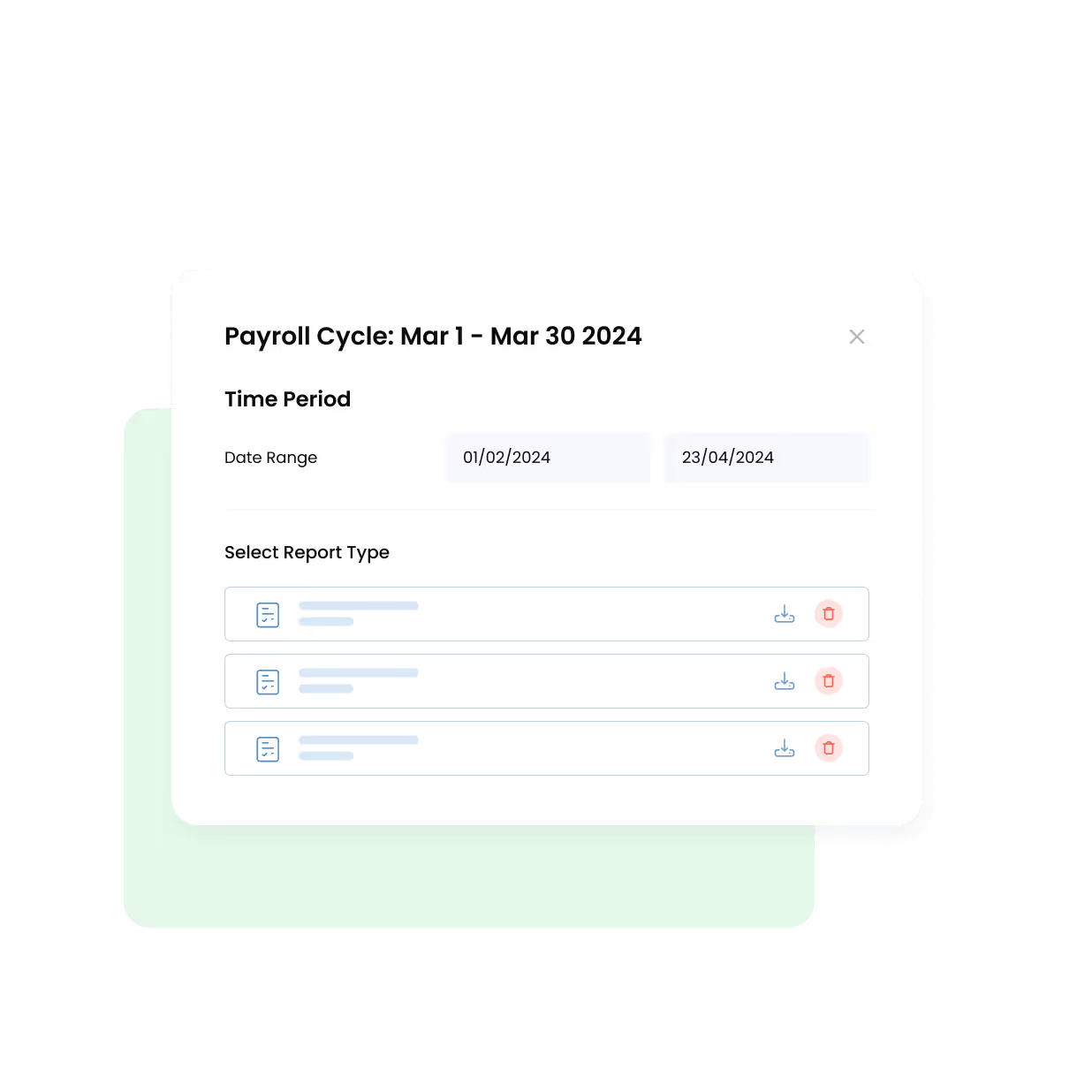
Omni supports a wide range of export file types and allows you to generate payroll reports for auditing and remittance tracking, all in one unified platform.
What are the penalties for not adhering to the PhilHealth regulations?
Violations of PhilHealth regulations may lead to penalties that are punitive, founded to boost the course of action and uphold the integrity of the health insurance system.
Here are some of the penalties:
- Interest and surcharges: If contributions aren’t remitted on time, employers can be subject to interest and surcharges. This generally requires an employer to continue to repay a percentage of the unremitted amount, and that percentage increases as time passes.
- Legal action: Noncompliance can end up in legal proceedings. At the same time, PhilHealth can file cases against the employers who are neglecting their obligations, thus landing in court and incurring further costs in legal trouble.
- Fines: PhilHealth regulations require employers or individuals to pay a monetary fine in case they do not comply. Often these fines are dictated by the severity and duration of noncompliance.
- Suspension of benefits: In some cases of non-compliance, members may be faced with suspension of PhilHealth benefits.
Never miss a deadline—Omni sends real-time reminders so your HR team knows exactly when to deduct and submit PhilHealth contributions, helping you stay compliant and avoid costly penalties.
Frequently Asked Questions
1. How do I calculate my PhilHealth contributions 2026?
Multiply your monthly salary (within PHP 10,000 to PHP 100,000) by 5%. Divide the result equally between employer and employee.
2. How do I pay my PhilHealth contributions 2026?
You may pay PhilHealth contributions through several channels, such as online banking, actual accredited bank transactions, or PhilHealth's Electronic Premium Remittance System (EPRS) for companies. Accredited collecting agents or online payment platforms are available to self-employed and voluntary members.
3. How to check PhilHealth contributions 2026 online?
The PhilHealth Member Portal allows you to check your PhilHealth contributions 2026 online. After logging in using your PhilHealth Identification Number (PIN) and password, you can check your contributions history and general member information.
Get your PhilHealth Member Registration Form here!
3. What benefits does PhilHealth offer?
Benefits under PhilHealth include inpatient care, outpatient care, preventive services, and catastrophic coverage for major illnesses. All of these benefits are meant to offset the cost burden of the health care expenses for members.
4. Can my family get benefits from my PhilHealth membership?
Yes, PhilHealth members can enjoy the benefits with their eligible dependents (either their spouse, children below 21 years old, or parents older than 60 years old).
5. Can members continue paying into PhilHealth even after retiring?
Once retired, members can still pay into PhilHealth as a voluntary or lifelong member. This ensures continuous coverage and access to health benefits.
Ensure PhilHealth Compliance with Omni
Navigating the ever-evolving regulations when it comes to PhilHealth contributions in 2026 can be challenging, and staying up to date with the latest mandates is crucial for HR teams to remain compliant. That’s why it’s important to have the right tools by your side.
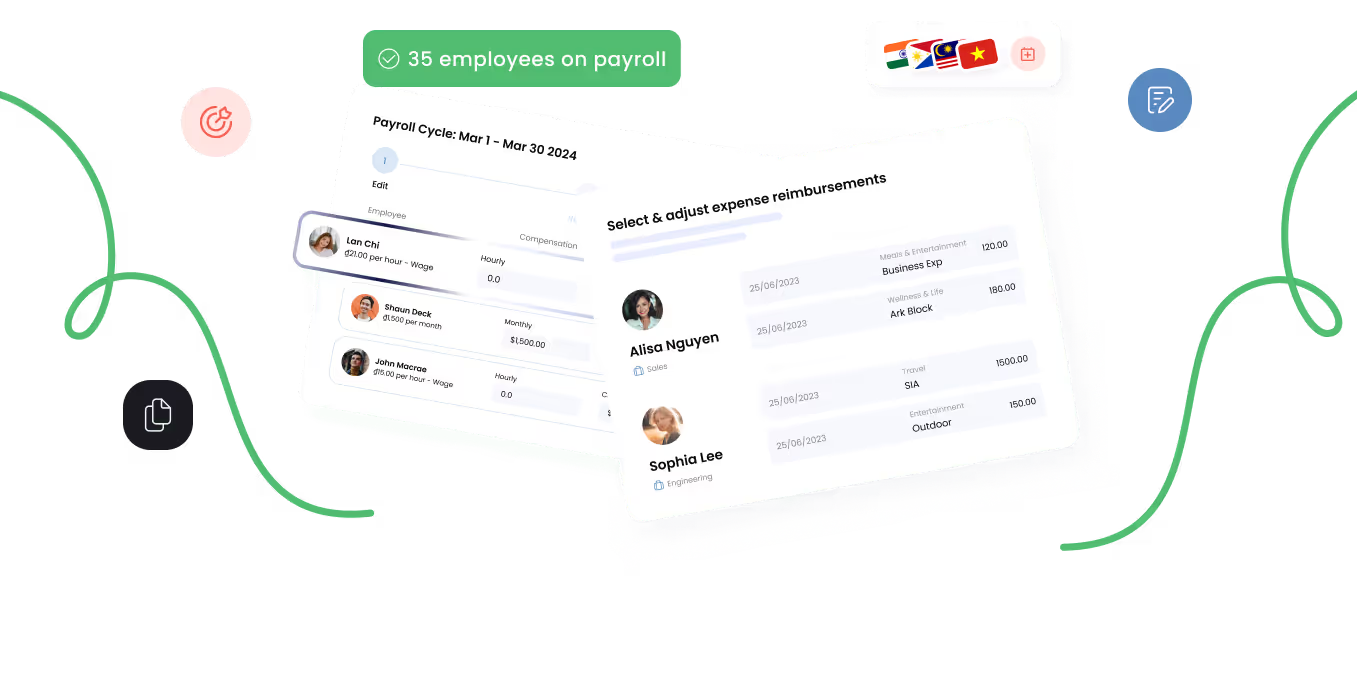
Omni’s all-in-one HR software makes it easy to manage employee benefits and stay compliant with Philippine labor regulations.
- Automatically calculates PhilHealth contributions based on the latest rates and salary caps.
- Supports the Philippine peso and built-in tax compliance.
- Instant, downloadable payroll reports for audits and government remittances.
- Sends timely notifications and reminders so your HR team never misses a contribution deadline.
- Local support based in the Philippines, ready to assist your team no matter the timezone.
Book a demo with our team today to learn how Omni’s payroll software can streamline your PhilHealth contributions.



.avif)
.avif)