






















.png)
Summary. Managing payroll in Vietnam means navigating SHUI, which includes Social Insurance, Health Insurance, and Unemployment Insurance. Understanding SHUI Vietnam and the specific Vietnam SHUI contribution requirements is essential for compliance and ensuring employees receive retirement, healthcare, and unemployment benefits. With Omni HR, HR teams can automate payroll calculations, track both local and foreign employee contributions, and file all Vietnam social insurance and statutory reports accurately, reducing errors and saving time. From automated SHUI calculations to payslip distribution and off-cycle payruns, Omni HR helps businesses stay compliant while simplifying the complexity of SHUI Vietnam management.
Managing payroll in Vietnam means dealing with SHUI: Social Insurance, Health Insurance, and Unemployment Insurance. These aren't optional benefits; they're mandatory contributions that every employer must handle correctly. Understanding SHUI is critical for compliance and employee protection. With tools like Omni HR, HR teams can ensure contributions are calculated correctly and filed on time.
If you're running a business in Vietnam or managing HR for a company with Vietnamese employees, understanding SHUI Vietnam is essential. Getting it right keeps you compliant with the law and ensures your employees get the protections they need. This guide explains how SHUI works, what you need to pay, and how to avoid common mistakes.
What is SHUI Vietnam and Why It Matters
SHUI stands for the three types of insurance that all Vietnamese employers must provide: Social Insurance, Health Insurance, and Unemployment Insurance. When someone asks "shui là gì", they're talking about this mandatory insurance system.
Here's what each type covers:
- Social Insurance provides retirement pensions, maternity leave payments, sick leave benefits, and support for families when a worker passes away.
- Health Insurance gives employees access to medical care at public hospitals and clinics across Vietnam.
- Unemployment Insurance offers temporary financial support and job training when workers lose their jobs.
Both employers and employees pay into the system, but employers pay the larger share. The Vietnam Social Security agency manages these contributions and enforces the rules.
For employees, the Vietnam SHUI contribution taken from their monthly salary provides real benefits. If they get sick, they receive paid sick leave. When they have a baby, they get maternity benefits. After years of working, they'll receive a monthly pension in retirement.
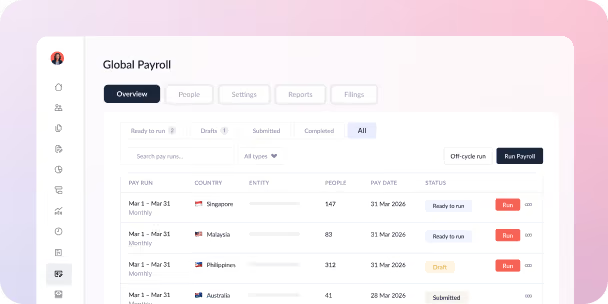
With Omni HR, we handle the calculation and filing of monthly SHUI contributions, including monthly increases or decreases, and closing SHUI with the Social Security Department at year-end, reducing compliance risk for employers.
SHUI Contributions: Employer vs Employee
SHUI costs are split between employer and employee, though employers pay more. Here are the current rates for 2025:
Updates for 2026:
- Social Insurance and Health Insurance rates remain the same.
- Unemployment Insurance (UI) rules may change in 2026: employers and employees contribute ~1% each, but the state may now also contribute up to1%. So, the total UI could be slightly higher if state contribution is counted.
- Foreign employees still do not pay UI.
These percentages apply to the employee's gross monthly salary, but there are limits. Vietnam's social insurance law sets maximum amounts (called ceilings) to cap how much you pay.
For social insurance and unemployment insurance, the maximum contribution base is 20 times the regional minimum wage. Depending on where your business is located, this ranges from about 44.8 to 71.6 million VND per month.
Health insurance has its own ceiling of 36 million VND per month. This means if an employee earns 100 million VND monthly, you only calculate their health insurance on 36 million VND.
These ceilings matter for high earners. Even if your manager earns 150 million VND per month, Vietnam SHUI contribution calculations use the capped amounts, not their full salary.
There's also a minimum: you must calculate contributions based on at least the regional minimum wage. Vietnam has four wage regions, with Region 1 (Hanoi and Ho Chi Minh City) having the highest minimum wage at 4.96 million VND monthly in 2025.
Omni tip: The minimum wage may increase slightly in 2026; check the official government table for your region.
How to Register and Manage SHUI for Employees
Before hiring your first employee, you need to register with your local Vietnam Social Security office. This gives you an employer code for all future filings.
You'll need these documents to register:
- Business registration certificate
- Tax identification number
- Company seal
- Legal representative's ID
Registration usually takes 5 to 10 business days.
When you hire someone new, you have 30 days to register them with Social Security. You'll submit their name, ID number, salary, and contract details. They'll receive a social insurance book that tracks their contributions throughout their career in Vietnam.
Every month, you must report your payroll and pay Vietnam SHUI contributions by the 20th of the following month. For example, January payroll contributions are due by 20 February.
Omni HR helps manage monthly payroll reporting and SHUI filings on your behalf, including generating and submitting all necessary bank files, tax forms, and payslips for employees.
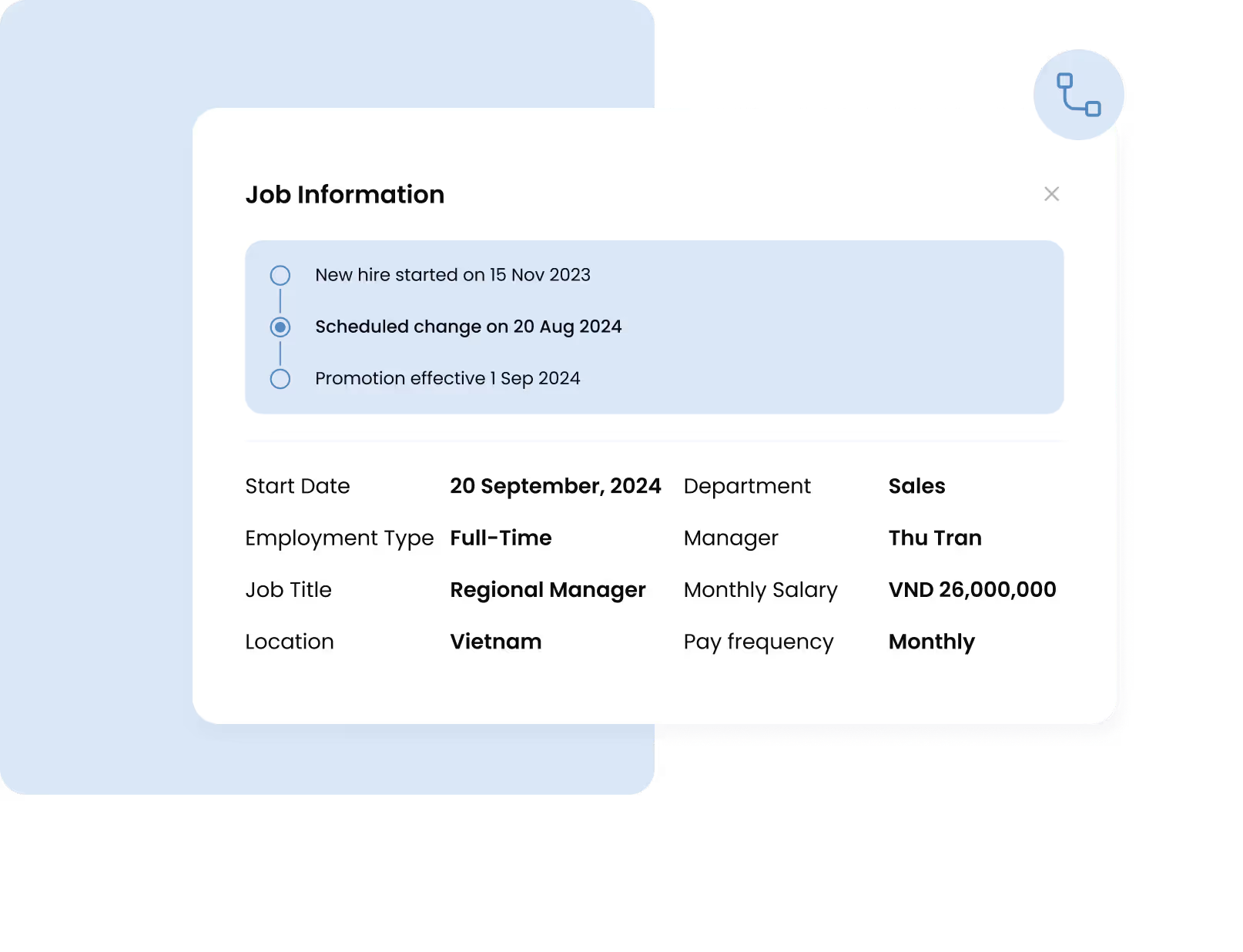
Your monthly report must include each employee's name, social insurance code, working days, gross salary, and contribution amounts. Most companies file these reports online through the Vietnam Social Security portal. And when an employee leaves, you must file final SHUI reports within seven days of their last working day and update their social insurance book.
SHUI Vietnam for Foreign Employees
Since January 2022, most foreign employees working in Vietnam must pay into the social insurance system. This was a major change from previous rules.
Foreign workers who need to participate include those with:
- Valid work permits
- Practicing certificates or licenses
- Work permit exemptions under specific conditions
If a foreign employee has a contract lasting one year or longer with a Vietnamese company, they must participate in SHUI Vietnam.
However, some foreign workers are exempt. The main exemption applies to foreigners already paying into another country's social security system. Vietnam has agreements with several countries (including Germany and South Korea) to prevent workers from paying twice.
Foreign employees pay the same rates as Vietnamese workers: 8% for social insurance and 1.5% for health insurance. Their employers pay 17.5% and 3%. Unemployment insurance typically doesn't apply to foreign workers, and this exemption continues in 2026.
A common mistake is thinking all foreigners are exempt. They're not. You need proof that they're contributing to another country's social security system. Simply being a foreigner doesn't qualify for exemption.
Foreign employees who participate in the Vietnam Social Insurance can access benefits like sick leave pay, maternity benefits, and healthcare. When they permanently leave Vietnam, they can receive a one-time payment of their Vietnam SHUI contribution instead of a monthly pension.
Common SHUI Mistakes to Avoid
Many companies make the same SHUI errors. Here are the most common ones to watch out for:
- Using the wrong salary amount: Some employers only calculate SHUI on basic salary, leaving out allowances and bonuses. Vietnam regulations say you must include regular allowances like position allowances and seniority allowances. Missing these creates problems later.
- Missing the deadline: You face penalties of 0.05% per day on late payments, plus possible fines. The 20th of the month deadline comes quickly, especially if you're coordinating payroll across departments or locations.
- Not updating contributions after raises: When an employee gets a raise, their SHUI must increase from that month forward. The same applies when salaries decrease. Some payroll systems don't update automatically, so check manually.
- Misclassifying workers: Calling employees "contractors" to avoid SHUI might seem like a cost-saver, but it's risky. Vietnamese authorities are cracking down on fake contractor relationships. If they reclassify workers as employees, you'll owe backdated SHUI plus penalties.
- Getting confused about foreign employee rules: Don't assume all foreign passport holders are exempt, or that all must participate. Each foreign employee needs an individual assessment based on their work permit, contract length, and whether they contribute to another country's system.
- Poor record-keeping: Keep all payroll records, contracts, and contribution receipts. If authorities have questions, you need to show proof. Companies without good documentation face problems in disputes.
With Omni HR’s managed payroll services, we prevent these errors by automating payroll calculations, filing all statutory contributions, and keeping accurate tax and SHUI records for your company in a centralized database.
How Omni HR Manages SHUI Vietnam Compliance
Managing SHUI Vietnam compliance can be complex, especially with strict deadlines, contribution ceilings, and foreign employee rules to follow.
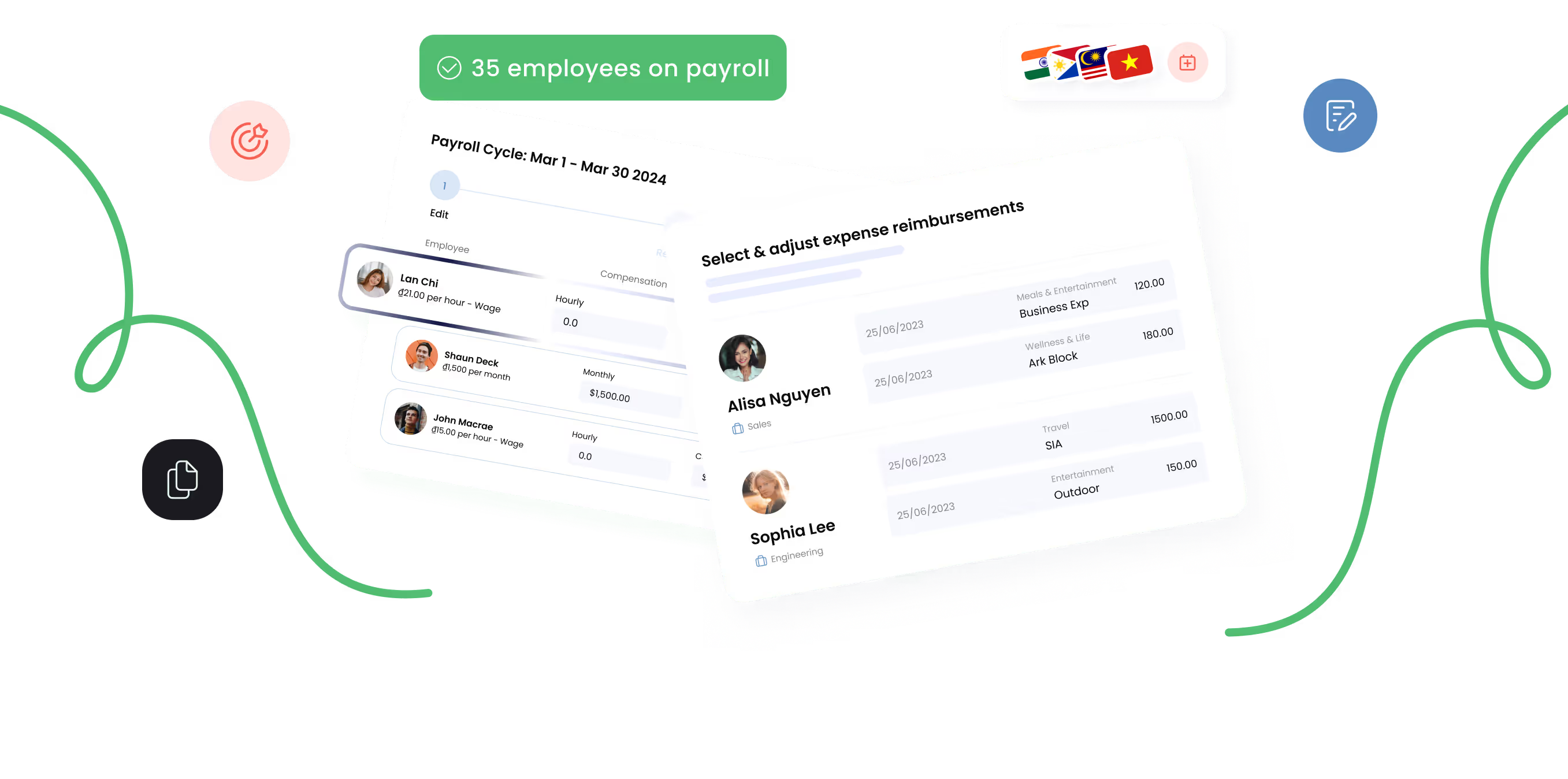
Omni HR simplifies this by providing end-to-end managed services that handle monthly payroll calculations, statutory contributions, and filings with the Vietnam Social Insurance agency. From automated SHUI calculations to payslip distribution and off-cycle payruns, Omni HR ensures your company stays compliant while giving employees the benefits they are entitled to.
Whether it’s Vietnam SHUI contribution tracking for locals or foreign employees, our services help HR teams reduce errors, save time, and maintain full compliance with Vietnamese labor laws. Book a demo with our team today to explore our managed payroll services.
Frequently Asked Questions
1. What is SHUI Vietnam?
SHUI Vietnam stands for Social Insurance, Health Insurance, and Unemployment Insurance. These are mandatory contributions that employers and employees must pay to ensure workers receive retirement pensions, healthcare, maternity benefits, and unemployment support. If you’re asking “shui là gì”, this is the system you need to understand for compliance in Vietnam.
2. Who must pay Vietnam SHUI contributions?
All Vietnamese employees are required to contribute to SHUI, while foreign employees with work permits and contracts longer than one year also participate in Vietnam SHUI contributions, unless they are already covered by another country’s social security system. Employers pay the larger share of contributions, and failure to comply can result in penalties.
3. How are SHUI contributions calculated?
Vietnam SHUI contribution rates in 2026 are:
- Social Insurance: Employer 17.5%, Employee 8%
- Health Insurance: Employer 3%, Employee 1.5%
- Unemployment Insurance: Employer 1%, Employee 1% (foreign employees are usually exempt)
Contributions are based on the employee’s gross salary plus statutory allowances and are subject to regional minimum and maximum wage ceilings.
4. How does Omni HR help manage SHUI compliance?
Omni HR offers managed services to handle all aspects of SHUI Vietnam compliance, including:
- Monthly payroll calculations are compliant with statutory requirements.
- Payslip distribution and bank file preparation.
- Tracking and filing Vietnam SHUI contributions for both local and foreign employees.
- Closing SHUI with the Social Security Department.
- Managing increases or decreases in contributions.
This reduces human errors, ensures timely filing, and keeps HR teams focused on strategic tasks.
5. Can Omni HR manage SHUI for foreign employees?
Yes. Omni HR tracks which foreign employees are required to contribute to Vietnam SHUI and identifies exemptions for those already covered by another country’s social security system. This ensures accurate calculation and filing without manual checks.
6. What are the benefits of using Omni HR for SHUI Vietnam compliance?
Using Omni HR helps companies:
- Stay fully compliant with Vietnamese labor laws.
- Reduce errors in Vietnam SHUI contribution calculations.
- Automate payroll and reporting tasks.
- Ensure employees receive proper social, health, and unemployment benefits.



.avif)
.avif)