























.png)
Summary. Growing your team in Singapore means making strategic choices about the benefits of employee vs contractor. With 13.3% of the workforce self-employed in 2023 and 31% of employers increasing reliance on contract, part-time, and freelance talent in 2025, companies are turning to independent contractors to access specialized skills, scale quickly, and manage costs efficiently. Meanwhile, full-time employees provide stability, deep company knowledge, and cultural continuity. Understanding how to hire a contract employee legally ensures compliance, protects intellectual property, and maximizes the benefits of using contractors. For fast-growing teams, balancing employees and contractors isn’t just smart; it’s essential. Platforms like Omni simplify this process, giving HR teams the tools to onboard, manage, and pay both employees and contractors from a single, intuitive system—helping your workforce grow smarter, faster, and fully compliant.
The employee vs contractor decision is one of the most consequential workforce choices a growing business makes — affecting compliance obligations, total costs, flexibility, and how quickly you can scale. Growing your team is exciting, but it comes with big decisions. One of the most important choices you'll face is: should you hire employees or work with independent contractors? This isn't just about filling a role. It's about building your team the right way.
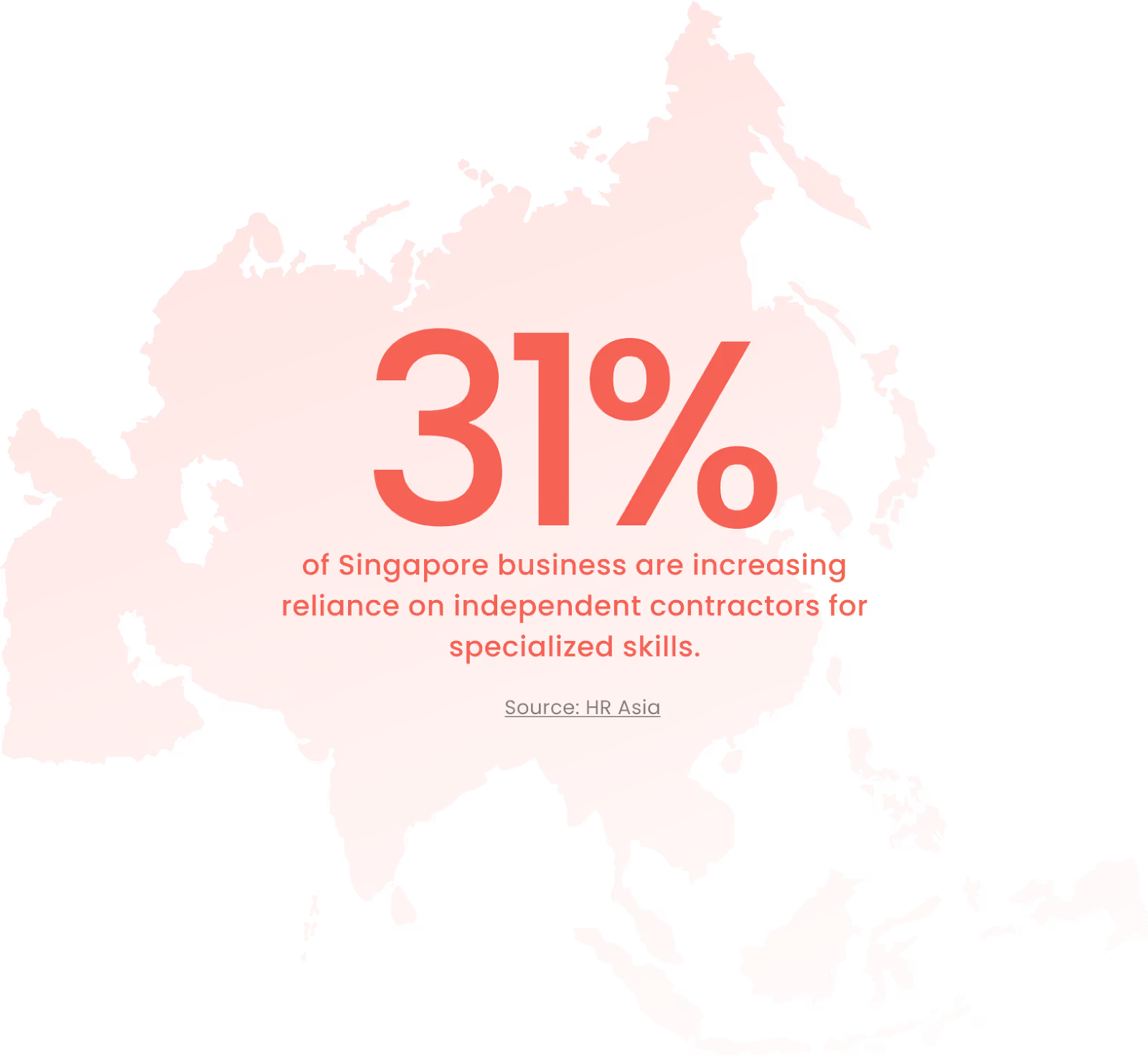
While the number of self-employed workers in Singapore continues to grow, both employees and contractors have their place. 31% of employers in Singapore are increasing their reliance on contract, part-time, and freelance workers in 2025, more than double the 15% who did so in 2024. This trend is largely driven by SMEs seeking adaptable talent and specialized skills. Similarly, US companies are increasingly looking beyond their borders, with many discovering that hiring contractors across Asia offers access to world-class talent at competitive rates. For both Singapore-based companies expanding regionally and US companies building Asian contractor teams, understanding both the benefits and hidden costs of contractor management becomes critical.
In Singapore, making the choice of hiring independent contractors or employees also comes with legal and financial considerations you need to understand. Getting it wrong can cost money and create compliance problems. For example, misclassifying an employee as a contractor to avoid statutory obligations like CPF contributions can lead to severe penalties, including fines of up to S$10,000 and imprisonment for up to 12 months for repeat offenders. Furthermore, the employer is liable to pay all outstanding CPF contributions and late payment interest.
US companies hiring contractors in Asia on the other hand, face different but equally important compliance requirements such as proper IRS documentation (like W-8BEN forms for foreign contractors), understanding tax treaties between countries, and ensuring contractor agreements comply with local labor laws in each Asian country where they hire.
When evaluating the benefits of employee vs contractor options, you also need to understand how to hire a contract employee properly. In this article, we will be breaking down everything you need to know about the benefits of employee vs contractor arrangements, so you can make smart hiring decisions that support your growth, whether you are based in Singapore, the US, or anywhere else.
Read next: Contractor Payroll Services Guide | Paying International Contractors Guide | Independent Contractor Payroll Guide
What's the difference between employees and contractors?
When comparing the benefits of employee vs contractor models, it's important to understand what each relationship means legally.
An employee works for your company under an employment contract. They get a regular salary, work set hours (usually), and are part of your team long-term.
In Singapore, hiring employees comes with specific obligations for your business:
- You must contribute to their CPF (Central Provident Fund).
- They get statutory benefits like annual leave and sick leave.
- They're protected under Singapore's Employment Act.
- You handle their income tax through payroll.
- They might need work passes if they're foreign nationals.
For US companies, hiring employees domestically means:
- Withholding federal and state income taxes, Social Security, and Medicare.
- Providing workers' compensation insurance and unemployment insurance.
- Complying with federal labor laws (FLSA, ADA, FMLA).
- Offering benefits that may be required by state law or expected by the market.
- Managing I-9 employment eligibility verification.
Employees typically work from your office (or designated workspace), use your equipment, and follow your company processes. They're integrated into your company culture and usually stay for months or years.
An independent contractor, on the other hand, works with your company under a contract for services. They're essentially running their own business, and you're their client. Contractors are different because:
- They invoice you for work completed.
- They handle their taxes and CPF in Singapore, or self-employment taxes in the US and most other countries.
- They're not entitled to employee benefits.
- They usually have more control over how they do their work.
- They might work with multiple clients at once.
The key difference comes down to control and integration. In Singapore, if a person operates like an employee but is classified as a contractor, authorities may reclassify them, resulting in penalties and back-pay obligations. Similarly, the US IRS and Department of Labor use strict tests to determine worker classification, and misclassifying them can result in significant penalties, back taxes, and legal liability. This is why understanding the implications and benefits of proper employee vs contractor classification is important regardless of where your company is based.
Benefits of using contractors for business agility
The benefits of using contractors go beyond saving money. Here's why growing companies in Singapore, the US, and globally find them invaluable when weighing the benefits of employee vs contractor approaches:
Get expert skills fast
Need a mobile app developer, digital marketer, or graphic designer? The benefits of using independent contractors include instant access to specialized skills without hiring full-time. You get experts who have mastered their expertise and can start delivering results immediately. This works especially well for projects you need occasionally, like quarterly video editing. Instead of navigating the complexities of how to hire a contract employee, you can bring in flexible talent exactly when needed.
Scale up and down easily
Your business needs evolve quickly. Sometimes you need more help, sometimes less. Contractors make it easy to adjust team size. Launching a product? Add extra developers and marketers. Entering a slow season? Scale back hours without the risk of layoffs. This flexibility is one of the standout benefits of using contractors, particularly for startups or fast-growing businesses where demands change quickly.
Access global talent
Contractors allow you to tap into specialized expertise worldwide without dealing with legal complications such as work pass applications. For Singapore companies, this means accessing regional talent without work pass applications. For US companies, this opens doors to highly skilled contractors across Asia, from software developers in the Philippines and India to designers in Vietnam and customer support specialists in Indonesia, all without requiring a local entity or navigating complex international employment laws.
This global reach means finding niche skills, collaborating across different time zones, and accelerating growth. The Philippines alone has become a talent hub for US tech companies, offering English-fluent developers, designers, and digital marketers at rates 60-70% lower than US equivalents. India provides deep technical expertise across software engineering, data science, and IT infrastructure. Vietnam and Indonesia offer emerging talent pools in creative services and specialized tech skills.
This is one of the biggest benefits of employee vs contractor decisions for businesses in Singapore, the US, and beyond.
Lower total costs
While independent contractors may charge higher hourly rates, total costs are often lower. For Singapore companies, contractors eliminate CPF contributions, annual leave, medical benefits, training, and severance costs. For US companies, you avoid payroll taxes (15.3% for Social Security and Medicare), health insurance (averaging US$7,000+ per employee annually), 401(k) matching, paid time off, and other benefits that can add 30-40% to base salary costs.
You only pay for results, not office time. However, the contractor management platform that you choose to use matters significantly, especially if you are hiring across multiple Asian countries. For US companies building contractor teams in Asia, choosing a contractor management solution that matches your hiring markets rather than one priced for expensive Western markets can help you save thousands annually.
This cost efficiency is a major factor in the benefits of employee vs contractor comparison, making independent contractors a strategic choice for businesses with resource constraints.
Benefits of hiring full-time employees for stability
While the benefits of using contractors focus on flexibility, hiring full-time employees provides long-term stability that balances the benefits of employee vs contractor strategy, whether you are building a team in Singapore, the US, or distributed globally. Here’s why building an employee base is equally important:
Build deep company knowledge
Employees stick around long enough to understand your business. They learn about customers, workflows, and challenges. This deep institutional knowledge allows them to spot patterns, improve processes, and make meaningful contributions that independent contractors, who may only engage for short-term projects, might miss.
Create a strong culture
Company culture is built by people who are present day after day. Employees establish values, traditions, and standards that drive satisfaction, productivity, and retention. While contractors can contribute, they usually are not embedded long enough to shape it significantly. For businesses in Singapore, exploring how to hire a contract employee versus investing in full-time staff, this cultural continuity is a key differentiator. For US companies with distributed teams, having acore employee base creates cultural anchors that contractors can align with during engagements.
Invest in long-term growth
Hiring employees allows you to invest in training, certifications, and professional development with confidence that you will see returns over time. Employees also build relationships with customers and partners. These become valuable business assets. The junior developer you hire today might become your CTO in five years.
How to Hire a Contract Employee in Singapore and Beyond
If your business is ready to leverage the benefits of using contractors, it’s important to know how to hire a contract employee legally and compliantly, whether you are based in Singapore, the US, or hiring across multiple countries. Proper agreements not only protect your company but also clarify the working relationship, ensuring it remains an independent contractor arrangement rather than being misclassified.
Start with a solid contractor agreement
A well-drafted contractor agreement safeguards both parties. Be sure to include:
- Clear work scope: Define exactly what the contractor will deliver. Be specific about deliverables, timelines, and quality standards.
- Payment terms: Outline fees, payment schedules, and invoicing processes. Most independent contractors expect payment within 30 days.
- Independence clauses: Make it clear that they are hired as an independent contractor, not an employee. Note that they control their work methods and provide their tools.
- Intellectual property (IP): Assign ownership of all work created for your business.
- Confidentiality: Use clear non-disclosure terms to safeguard sensitive business information.
- Termination: Explain how either party can end the arrangement.
- Governing law: Specify which country's laws govern the agreement, especially important for US companies hiring contractors in Asian countries.
Protect your IP
Always include IP assignment clauses that ensure ownership of code, content, designs, and processes is transferred to your company once work is completed and paid for. Consider what happens if a project were to end earlier; you don’t want to lose rights to partially completed work as well.
For highly sensitive projects, consider signing non-disclosure agreements (NDA) before contractors gain access to confidential details.
Understand tax considerations
In Singapore, independent contractors manage their taxes. Businesses should keep in mind:
- Contractors with revenue exceeding S$1M must charge GST.
- Keep accurate payment records for your business tax filings.
- In general, there is no withholding tax for Singapore-based contracts.
- CPF contributions do not apply to genuine independent contractor relationships.
For US companies hiring foreign contractors:
- Request Form W-8BEN from contractors to document their foreign status and claim tax treaty benefits if applicable.
- Generally, no US tax withholding is required for services performed outside the US by foreign contractors.
- Keep detailed records of all contractor payments for IRS reporting (Form 1099-NEC may not be required for foreign contractors, but documentation is essential).
- Understand that contractors are responsible for their own tax obligations in their home countries.
- Check if tax treaties exist between the US and the contractor's country to prevent double taxation.
Know when to do background checks
Background checks are worth considering when contractors will:
- Access sensitive company or customer data.
- Handle financial information.
- Work on long-term projects (6 months and more).
- Take on roles that could affect your brand reputation.
The True Cost of Managing Contractors Across Asia
As Singapore companies increasingly tap into talent pools across Asia, and US companies discover the advantages of hiring foreign independent contractors, one often overlooked expense emerges: contractor management platform costs. While hiring contractors in these markets offer salary savings compared to Singapore or US rates, many businesses may unknowingly surrender those savings to platforms that charge premium prices regardless of where you are actually hiring.
Platform costs that don't match your markets
Most global contractor management platforms use flat-rate pricing designed for Western markets. Whether you are hiring a developer inManila or London, you are paying the same hefty per-contractor fee. For Singapore companies building teams primarily in Asia, or for US companies specifically targeting Asian talent, this approach makes little financial sense.
The math is straightforward. If you are a US company managing 20 contractors across Asia on a platform that charges US$49/month per contractor, you are essentially spending US$11,760 annually on the platform alone. A solution priced appropriately for Asian markets at US$15/month would cost just US$3,600, saving you over S$8,000 per year that could be reinvested in talent or growth. For a Singapore company with 10 foreign Asian contractors, that's still a savings of over S$4,000 annually.
Compliance complexity across Asia
Each Asian country has its own unique tax requirements, documentation standards, and regulatory framework. Managing contractors across these countries mean juggling different obligations. For US companies, this also includes ensuring proper IRS documentation for each foreign contractor to maintain tax compliance.
The wrong contractor management platform can leave you exposed to misclassification risks or missing critical tax forms, while the right one automates compliance across all Asian countries. When compliance is handled on autopilot, you eliminate the risk of costly mistakes that can freeze operations or trigger penalties.
Payment friction that costs time and money
When your foreign independent contractors are losing money due to high transfer fees, unfavorable exchange rates, or delayed payments, it can impact satisfaction and retention. The hidden cost shows up when you find yourself constantly recruiting and onboarding replacements instead of maintaining a stable contractor base.
On the flip side, contractors who receive fast payments (ideally within 48 hours), keep more of their earnings, and access useful financial tools like USD wallets and virtual cards tend to stay engaged longer.
For Singapore companies serious about building efficient, Asia-focused contractor teams, and for US companies looking to gain a competitive advantage by tapping into Asian talent markets, choosing a platform that is purpose-built for Asian markets can make or break your strategy.
Why Fast-Growing Teams Are Choosing a Blended Approach
The best workforce strategy is not about choosing between employees or contractors—it’s about knowing when to use both. More fast-growing companies in Singapore, the US, and globally are building blended teams that strategically combine the benefits of employee vs contractor arrangements to maximize flexibility, efficiency, and growth.
When to use independent contractors
The benefits of using contractors are clear when projects require more specialized expertise, flexible timelines, or short-term commitments. For example:
- Design work like website redesigns, logos, and branding projects with a defined set of deliverables.
- Tech development, including app builds or software integrations that require niche expertise temporarily.
- Content creation involving video production, photography, or other work that needs specialized equipment.
- Marketing campaigns that benefit from independent specialists who stay current with industry trends.
The important factor here is knowing when to hire a contract employee allows businesses to scale rapidly without the burden of long-term costs of full-time staff, making this approach especially valuable for companies in early growth stages.
When to rely on employees
Employees provide consistency and stability in areas that demand long-term involvement, trust, and deep business knowledge. Some examples include:
- Sales teams building ongoing customer relationships.
- Operations roles require a deep understanding of the company’s processes.
- Customer service that relies on product knowledge and consistent availability.
- Finance functions handle sensitive data and compliance.
Finding the right mix that works for your business
The ideal workforce strategy often evolves as a company grows. That’s why it’s important to find the right balance:
- Startups may lean heavily on contractors to save costs and access expertise on demand.
- Established businesses typically rely on employees for core functions while outsourcing specialized projects to independent contractors.
- Seasonal companies benefit from hiring independent contractors during peak periods to stay agile without permanent overhead costs.
Omni tip: If most of your contractors are based in Asia, ensure your contractor management platform pricing reflects this reality.
By understanding the benefits of employee vs contractor structures, you can plan a workforce strategy that delivers both stability and flexibility, helping your hybrid team grow smarter, faster, and more sustainably.
Choosing the Right Talent Model for Your Growth Stage
So how do you decide between the benefits of employee vs contractor when building your team? The right choice often depends on your company’s growth stage, priorities, and the type of work involved. Here are four factors to guide your decision when considering how to hire a contract employee versus hiring someone on as permanent staff.
1. Duration of work
For projects under six months, independent contractors are often the better choice. They provide specialized skills without long-term commitments.
On the other hand, ongoing roles that span a few years, such as sales or operations, are better suited for full-time employees, where your investment in hiring and training pays off over time.
Auria Heanley, co-founder of Oriel Partners, a temping agency, believes that for roles where long-term demand isn’t yet clear, a structured temp-to-perm pathway lets you assess cultural fit and performance before committing—typically over a three-to-six-month window. Done well, it reduces mis-hire risk and boosts retention because both sides opt in based on evidence rather than hope.
2. Budget considerations
Can you afford full-time employee costs, including benefits, insurance, and overhead? Companies with stable budgets often prefer hiring full-time employees because they can support the long-term financial commitment.
However, if you’re operating with tight cash flow—as is common with early-stage startups—working with independent contractors allows you to preserve capital while maintaining flexibility. This is particularly advantageous for US startups that can hire senior-level contractors in Asian markets for a fraction of what equivalent US-based employees would cost.
3. Skill availability
Specialized or rare skills may be easier to access through contractor networks, especially when you are unable to offer competitive full-time packages in the meantime. US companies often find that specialized skills like mobile development, UI/UX design, or DevOps expertise are readily available among Asian contractors at highly competitive rates.
Conversely, skills that are readily available in your local job market may be more cost-effective to hire as employees.
4. Level of control
If you need control not just over outcomes but also the entire process, employees are typically a better fit. But if your priority is on results, contractors may provide better value with less oversight.
Scale Smart with Omni for Contractors and Employees
As you now know, a blended approach might be the right talent model for your business. Managing a hybrid workforce often means balancing the benefits of employee vs contractor models while also keeping operations compliant and efficient, whether you are based in Singapore, the US, or managing teams across different countries. That is where Omni comes in.
For US and Singapore companies hiring contractors across Asia
If your contractor base spans the Philippines, India, Vietnam, Indonesia, Thailand, or other Asian countries, Omni offers a specialized contractor management solution at just $15 per month per contractor, designed specifically for businesses that recognize the difference between hiring in London or San Francisco versus hiring in Manila or Bangalore.
Why US and Singapore companies choose Omni:
- Market-matched pricing: Pay $15/month per contractor (vs. $49–$99 on Western platforms). Pricing reflects Asian market economics, not Western costs.
- US tax compliance made easy: Automated W-8BEN generation for every foreign contractor ensures IRS compliance. All tax docs are securely stored and audit-ready.
- Singapore & regional compliance: Handles GST, contractor classification, and compliance tracking across 30+ Asian countries, with automatic reminders for deadlines.
- Lightning-fast payments: Onboard and pay within 48 hours. Contractors get USD wallets, virtual cards, and zero transfer fees.
- Flexible payment options: Set up monthly, milestone-based, or one-time payments, customized per contractor or project.
- Same-day local support: Timezone-aligned support for US and Singapore. Payment issues resolved same-day via email, chat, or call.
Most companies switch their contractor management to Omni in less than 48 hours. Let us handle the entire transition so that you can focus on building your team.
Omni's All-in-One Platform for Your Full Team
Beyond contractor management, Omni's all-in-one HR platform makes managing employees and independent contractors a breeze. You don't have to sacrifice flexibility for control. Here's how:
Streamline onboarding for employees and contractors
An efficient onboarding process sets the tone for both employees and independent contractors since day one. Omni provides customizable onboarding workflows tailored to any role, making it easy to create a consistent and standardized onboarding experience.
.avif)
Whether you are learning how to hire a contract employee for short-term projects or onboarding a permanent staff, Omni automates critical functions like document collection, task management, and e-signatures in a centralized location.
“[With Omni], we’ve been able to reduce our onboarding time from one week to three days.”
— Arissa Wong, People Operations at Endowus
Centralized compliance and documentation
Keeping track of contractor agreements, non-disclosure agreements, W-8BENforms for US companies, work visas, and other essential documents can be overwhelming without the right system in place, especially when you are managing both employees and contractors across multiple countries.

Omni’s secure, centralized document management guarantees access to important documents, with expiry tracking, automated reminders, and multi-role-based permissions for added security. This empowers HR teams to unlock the full benefits of using contractors while staying compliant across jurisdictions.
Automated payroll and attendance management
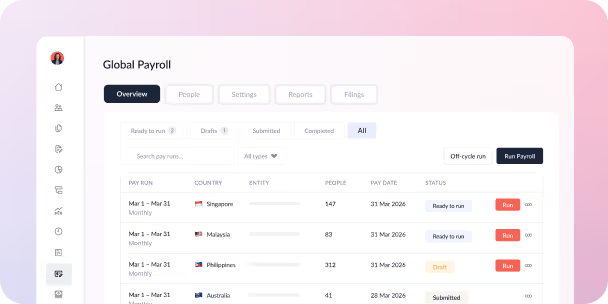
When juggling between full-time employees and independent contractors across Singapore, the US, and Asian markets, payroll can be complex, but Omni simplifies it. Omni automates time-tracking, local statutory contributions, and multi-country payroll, ensuring accurate and timely payroll processing for your team.
“Payroll calculations that used to take three to five working days can now be done in half the time with Omni.”
— Tengku Mohaizad, Group Head of HR Asia at Inspire Brands Asia
Empower managers with real-time visibility
Omni equip managers with actionable insights into employee and contractor performance through task tracking, review cycles, and analytics dashboards that are populated in real-time.
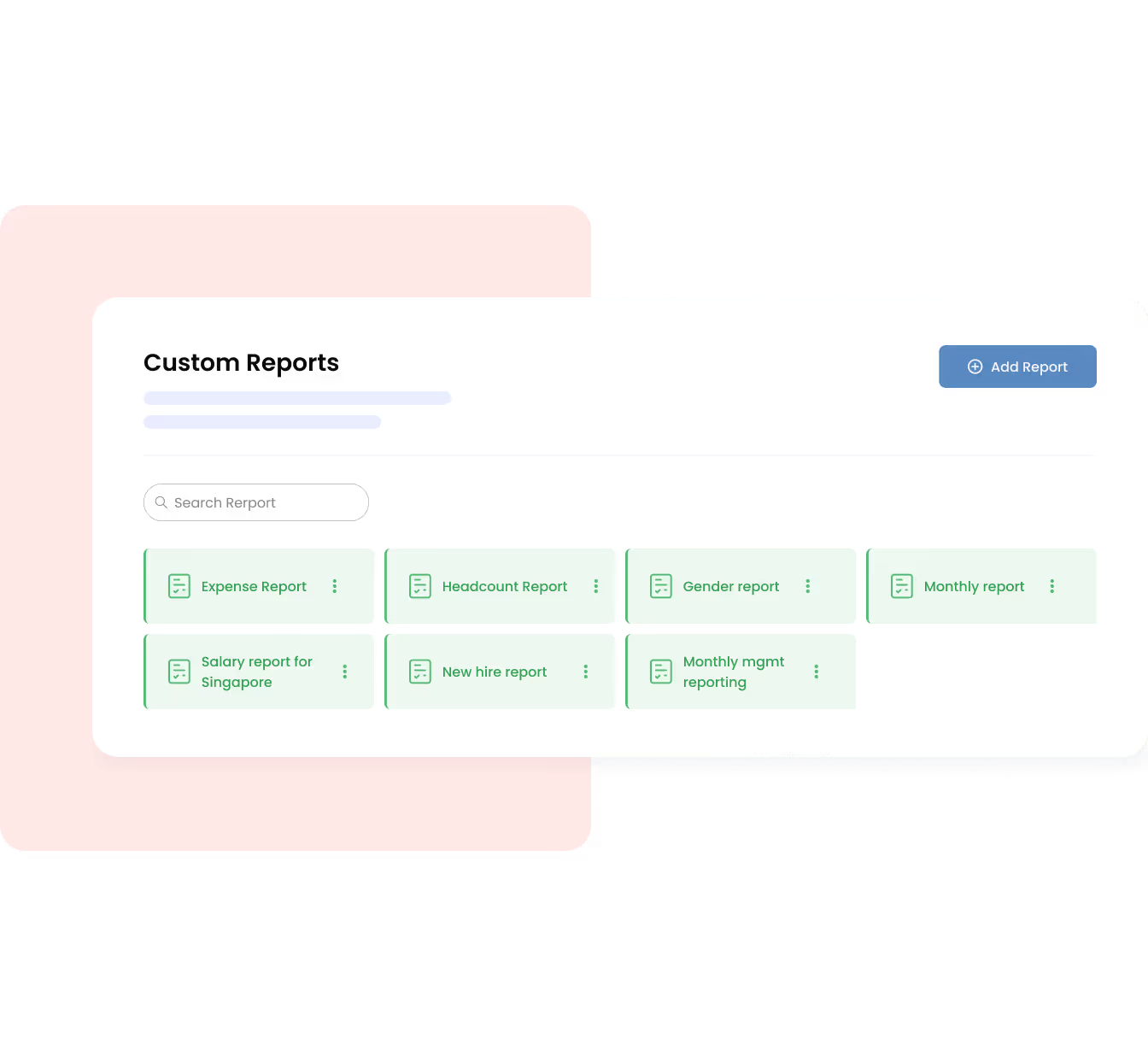
Armed with these insights, managers can make informed workforce planning decisions and have a clear understanding of the benefits of employee vs contractor in different roles. With customizable reporting, managers can also monitor progress, identify any bottlenecks, and make smarter, timely decisions.
.avif)
Unlike legacy HR systems, Omni was built for modern, growing teams across Asia—with intuitive designs, workflow automation, and local support within your region. Whether you’re a Singapore company expanding regionally, a US company building contractor teams in Asia, or managing distributed teams globally, Omni is the HR partner that gives you flexibility without losing control.
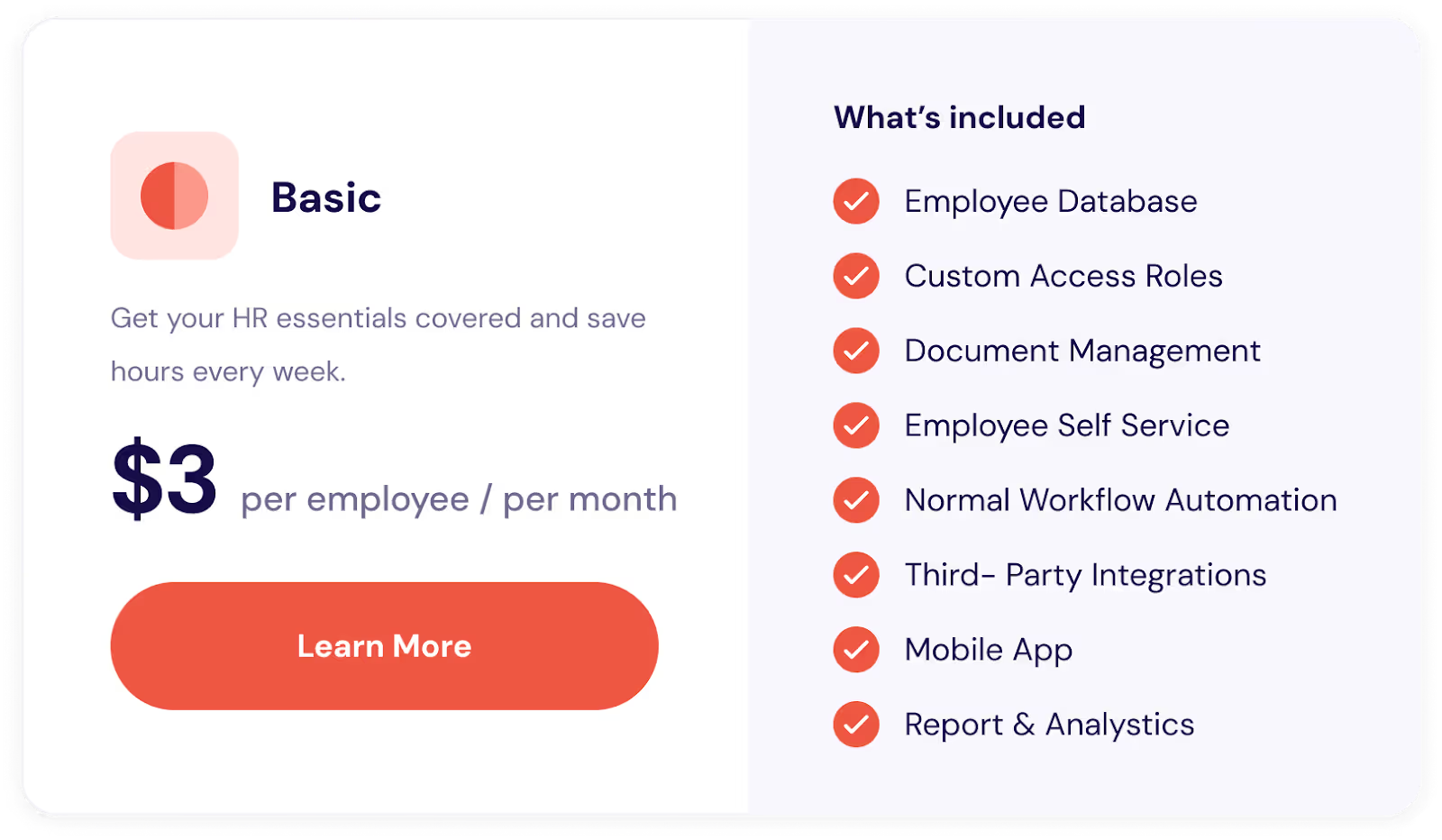
For full HR platform, plans start at just US$3 per employee per month, making enterprise-grade HR accessible for all. Book a demo with our team today to explore how Omni can help you scale smarter and manage your blended workforce, whether you need contractor management, full HR capabilities, or both.
Frequently Asked Questions
An employee works under an employment contract, receives a regular salary, and is entitled to statutory benefits — the employer withholds taxes and contributes to statutory funds like CPF (Singapore) or Social Security (US). A contractor is self-employed, invoices for work completed, manages their own taxes, and is generally not entitled to employee benefits. The key distinction is control and integration: employees work under the direction of the employer; contractors control how and when they deliver their work.
Often yes, but not always. Contractors eliminate costs like statutory contributions, benefits, and office overheads — but may charge higher day rates than an equivalent employee salary. The real cost comparison depends on engagement length, contractor day rate vs. fully-loaded employee cost (salary plus 30–40% in benefits and statutory obligations), and the platform costs of managing contractors at scale. For short-term or specialist work, contractors are typically more cost-effective. For long-term, core-function roles, employees usually offer better ROI.
Misclassification can result in back payment of statutory contributions, penalties, and legal liability. In Singapore, misclassifying a worker to avoid CPF obligations can result in fines of up to S$10,000 and imprisonment for repeat offences. In the US, the IRS and Department of Labor impose significant financial penalties. Always classify based on the actual nature of the working relationship — not the label on the contract.
Hire an employee when the role is ongoing and core to the business, requires deep company knowledge or long-term relationship-building, involves access to sensitive data requiring stronger control, or when your jurisdiction's laws effectively require it based on the actual working relationship. Hire a contractor when the work is project-based or time-limited, requires specialist skills you don't need permanently, or when flexibility and speed of onboarding are the priority.
Genuine independent contractors in Singapore are not subject to CPF contributions — they manage their own Medisave and tax obligations. However, if the actual working relationship resembles employment (the company controls how and when work is done, the worker is economically dependent on one client), CPF authorities may reclassify the relationship as employment. Document your classification decision carefully and ensure contractor agreements reflect genuine independence.
A blended workforce combines full-time employees and independent contractors — employees for core, ongoing functions and contractors for specialist, project-based, or flexible work. Managing both requires a platform that handles different onboarding workflows, pay structures, compliance requirements, and documentation for each worker type. Omni supports both employees and contractors from a single platform, starting at $3/employee/month for HR and $15/contractor/month for contractor management.



.avif)
.avif)