Heading

12
min Read
12
min Read
Save this article for future use
Download PDF

Heading 1

Heading 2

Heading 3

Heading 4

Heading 5
Heading 6

Lorem ipsum dolor sit amet, consectetur adipiscing elit, sed do eiusmod tempor incididunt ut labore et dolore magna aliqua. Ut enim ad minim veniam, quis nostrud exercitation ullamco laboris nisi ut aliquip ex ea commodo consequat. Duis aute irure dolor in reprehenderit in voluptate velit esse cillum dolore eu fugiat nulla pariatur.

Block quote

Ordered list

  1. Item 1
  2. Item 2
  3. Item 3

Unordered list

  • Item A
  • Item B
  • Item C

Text link

Bold text

Emphasis

Superscript

Subscript

Heading 1

Heading 2

Heading 3

Heading 4

Heading 5
Heading 6

Lorem ipsum dolor sit amet, consectetur adipiscing elit, sed do eiusmod tempor incididunt ut labore et dolore magna aliqua. Ut enim ad minim veniam, quis nostrud exercitation ullamco laboris nisi ut aliquip ex ea commodo consequat. Duis aute irure dolor in reprehenderit in voluptate velit esse cillum dolore eu fugiat nulla pariatur.

Block quote

Ordered list

  1. Item 1
  2. Item 2
  3. Item 3

Unordered list

  • Item A
  • Item B
  • Item C

Text link

Bold text

Emphasis

Superscript

Subscript

An HR payroll system is a unified software platform that automates payroll calculations, statutory deductions, and core HR operations — from leave management to employee records — in a single system. For mid-sized companies in Malaysia, the right platform handles mandatory contributions like EPF, SOCSO, EIS, and PCB automatically, so your team spends less time on manual calculations and more time on work that actually moves the business forward.

As your team grows, the tools that worked at 30 employees start to buckle at 80. Manual processes introduce errors. Disconnected systems create data gaps. Compliance deadlines get harder to track. Choosing the right HR payroll system in Malaysia is no longer a matter of convenience — it's a foundational decision for accuracy, efficiency, and staying on the right side of LHDN.

This guide walks HR and finance leaders through the top platforms, what sets each apart, and how to match the right solution to where your company is headed.

Why Mid-Sized Companies Need a Modern HR Payroll System Malaysia

Mid-sized business owners, HR managers, and payroll specialists are often bogged down by complex administrative tasks associated with HR payroll system Malaysia. The shift from a simple spreadsheet to an integrated Human Resources Information System (HRIS) and payroll software is critical to support growth and stability.

The challenges of scaling HR payroll system Malaysia

Growing companies in Malaysia commonly struggle with:

  • Manual statutory calculations: Ensuring accurate and timely contributions for EPF, SOCSO, EIS, HRDF, and PCB (Potongan Cukai Bulanan) is highly time-consuming and prone to human error.
  • Multi-entity payroll complexity: Managing payroll for different entities or subsidiaries within the country adds layers of administrative difficulty.
  • Disconnected HR tools: Using separate, non-integrated tools for different functions (e.g., one for leave, one for payroll) causes significant workflow delays and data discrepancies.
  • High admin load: Daily tasks like processing claims, managing attendance, and tracking leave consume too much time that could otherwise be spent on strategic planning.
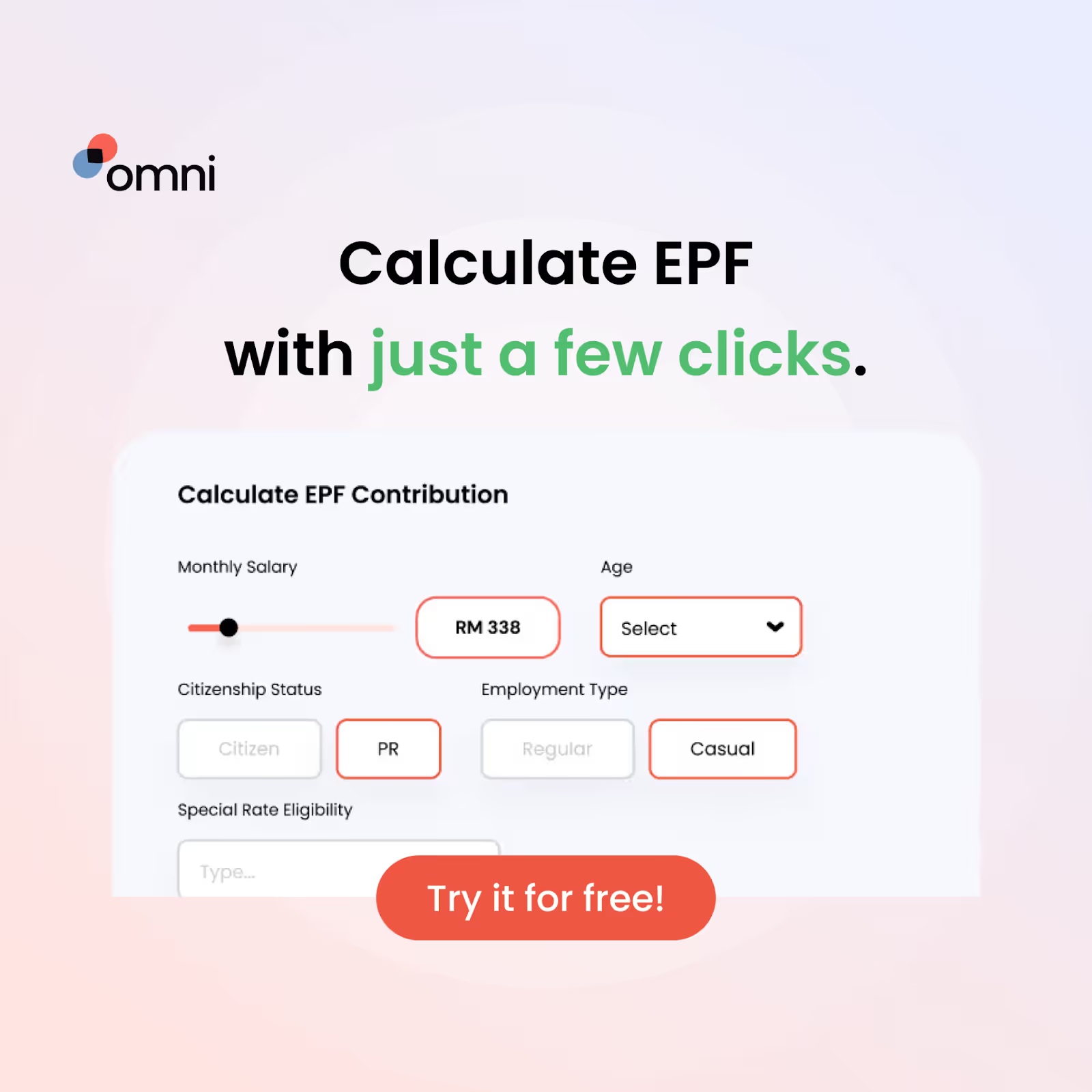
hr payroll system malaysia

The essential benefits of integrated HRIS and payroll software

A modern, integrated solution helps solve these challenges by offering:

  • Automated statutory compliance: Systems automatically calculate and process contributions for all mandatory Malaysian statutes (EPF/SOCSO/EIS/HRDF, PCB).
  • More accurate PCB tax calculations: Automated systems drastically improve the accuracy of monthly tax deductions and annual statutory filings, supporting requirements like LHDN e-filing.
  • Audit-ready payroll reports: Centralized data and automated processes provide clear, traceable payroll reports, making internal and external audits simple and stress-free.
  • Employee self-service access: Employees can manage their own leave applications, view payslips, and submit claims via mobile or web, significantly reducing the administrative load on HR.
  • Centralized data: All HR and payroll data is stored in one system, enabling better decision-making through comprehensive reports and analytics.
What changed under Malaysia's Employment Act 2022 amendments?

Malaysia updated the Employment Act 1955 in 2022 with several changes that directly affect payroll and HR operations:

  • Paternity leave increased to 7 consecutive days for married male employees
  • Maternity leave protection extended — employees are protected from dismissal for the full 98-day maternity leave period
  • Flexible work arrangements — employees now have the right to formally request flexible working arrangements; employers must respond within 60 days
  • Overtime eligibility extended to employees earning up to RM4,000/month (previously RM2,000)
  • Sexual harassment provisions strengthened, with new employer obligations

If your HR system hasn't been updated to reflect these changes, your policies and payroll calculations may be out of compliance. Omni's platform is updated in line with regulatory changes, so you're always working with current rules — not last year's.

Why Omni HR is the Ideal HR Payroll System for Malaysia Companies

If you’re a growing or mid-sized company in Malaysia managing complex payroll requirements, statutory contributions, or planning global expansion, choosing the right HR payroll system Malaysia businesses can rely on is crucial. 

Omni HR is built specifically for Asian companies, with Malaysia statutory compliance built into payroll and HR workflows. As a modern payroll management system Malaysia teams trust, Omni reduces manual work while ensuring accuracy at every step. Here’s what sets Omni apart: 

Automated statutory compliance

Omni automates core Malaysia payroll obligations, including EPF, SOCSO, EIS, and PCB calculations. Our platform supports accurate reporting and readiness for LHDN e-filing, helping teams stay compliant with tax requirements while reducing errors and last-minute corrections.

With real-time updates aligned with regulatory changes, payroll stays accurate without relying on manual tracking or spreadsheets.

For Snappymob, a Malaysia-based technology company, the impact was immediate. After moving to Omni, their payroll run dropped from a two-day process to under two hours — a change that freed the operations team to focus on work that actually required their attention.

"Now we literally run payroll in no more than two hours. Before it was two days." 
— Elena Argyriou, Chief of Staff at
Snappymob

Multi-country payroll support for SEA expansion 

For companies operating beyond Malaysia, Omni supports compliant payroll across Singapore, the Philippines, Hong Kong, Indonesia, and other regional markets. With localized tax rules, statutory contributions, and multi-currency payments, Omni enables seamless regional payroll from a single platform.
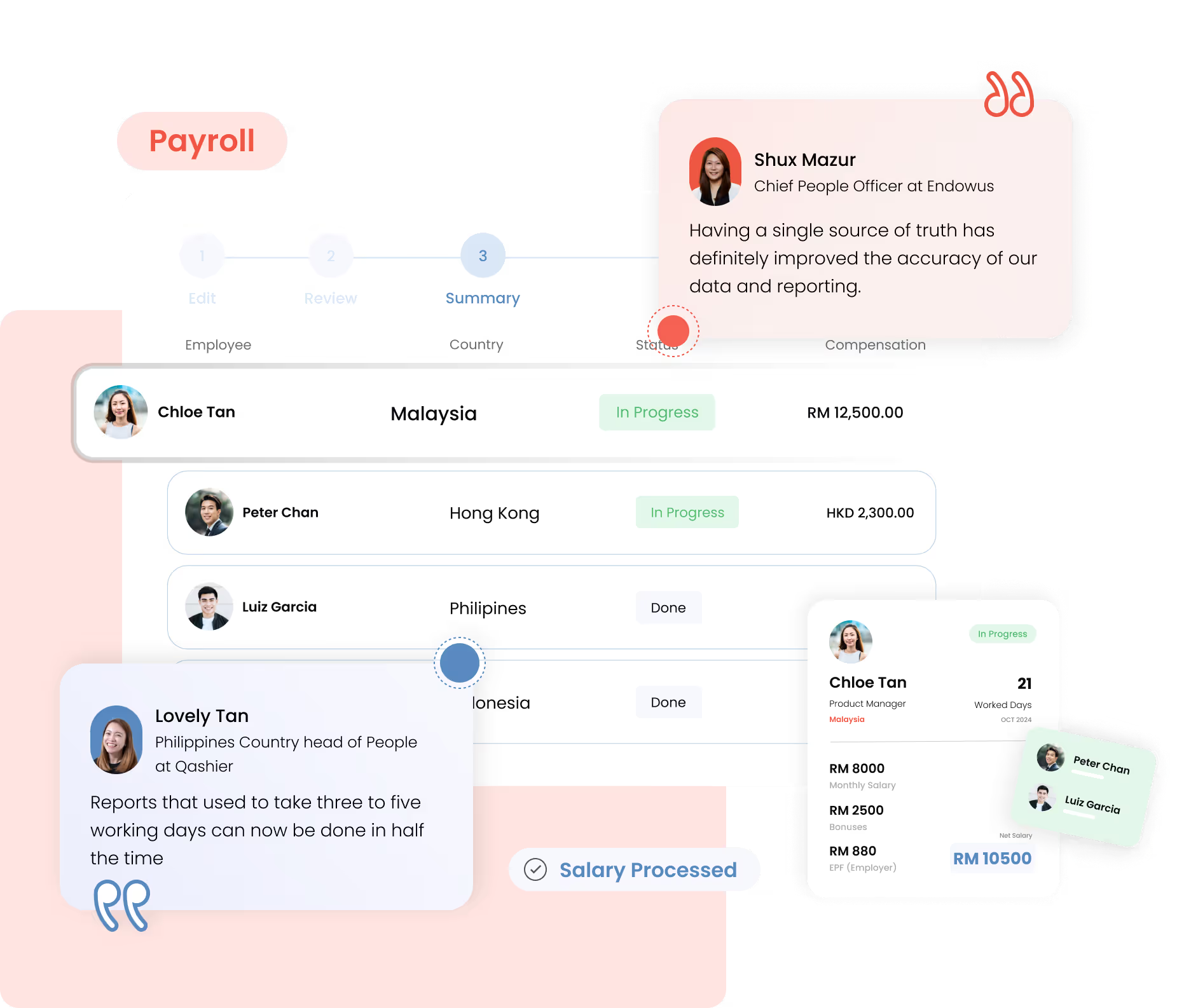
payroll management system malaysia

This makes Omni a scalable HR payroll system Malaysia companies can continue using as they expand across Southeast Asia.

Employee self-service and mobile experience 
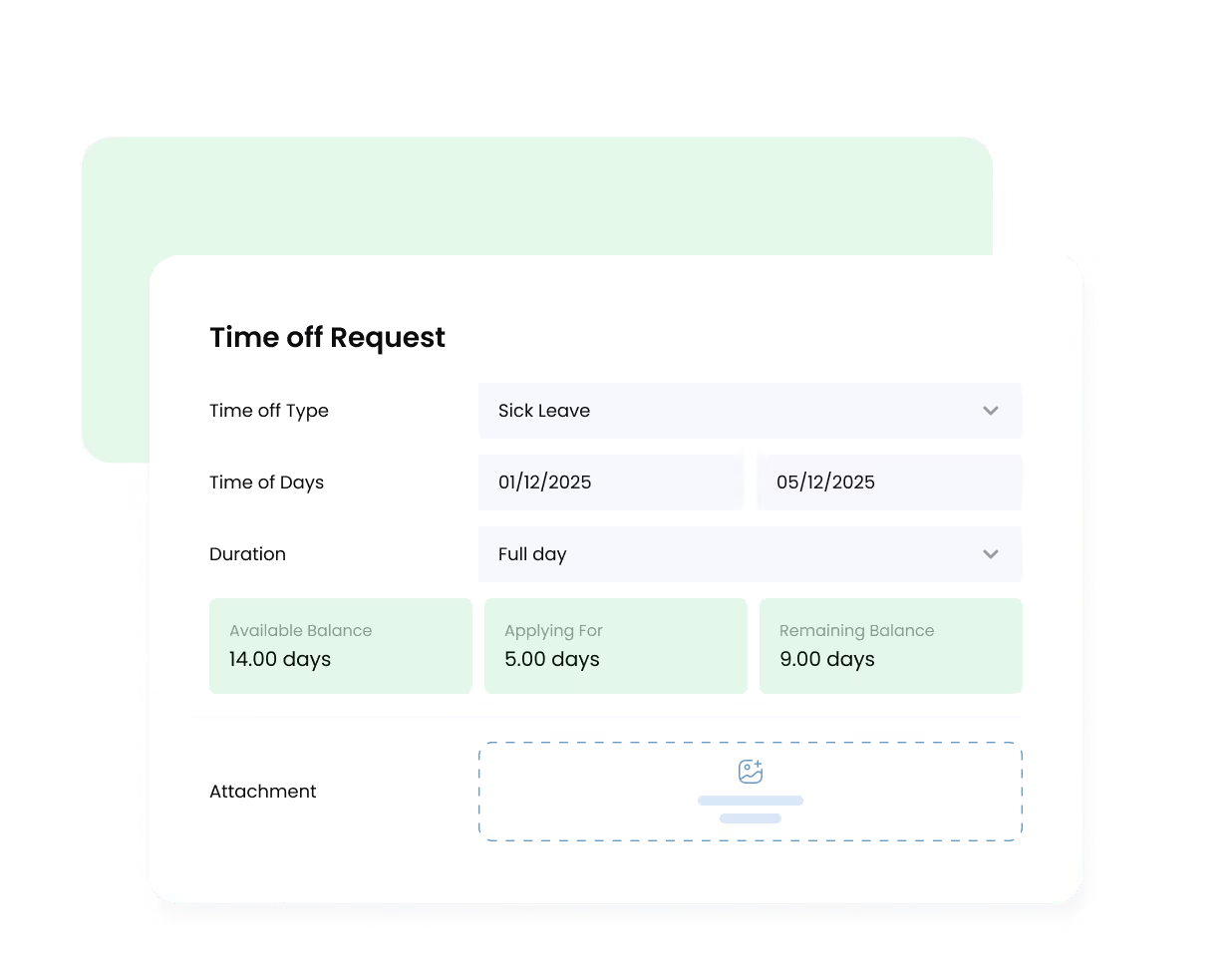
payroll management system malaysia

Omni’s employee self-service portal and mobile app reduce HR workload by enabling employees to manage routine tasks independently. Payslips, leave applications, claims submissions, and personal information updates are all accessible in one place, improving transparency and employee experience.

Complete HRIS: leave, performance, attendance, recruitment 

Omni is more than a payroll tool. It’s a complete payroll management system Malaysia teams can integrate with daily HR operations. 

See Omni integrations

Manage leave, performance reviews, attendance, employee records, and more in one centralized system, eliminating fragmented tools and manual handoffs.

"Omni's holistic system has allowed us to be more action driven rather than process driven. It's 100% worth the investment, I'm quite confident we can grow across Southeast Asia with Omni." 
— Jack Ang, Head of People at
Lucence

Advanced reporting & analytics
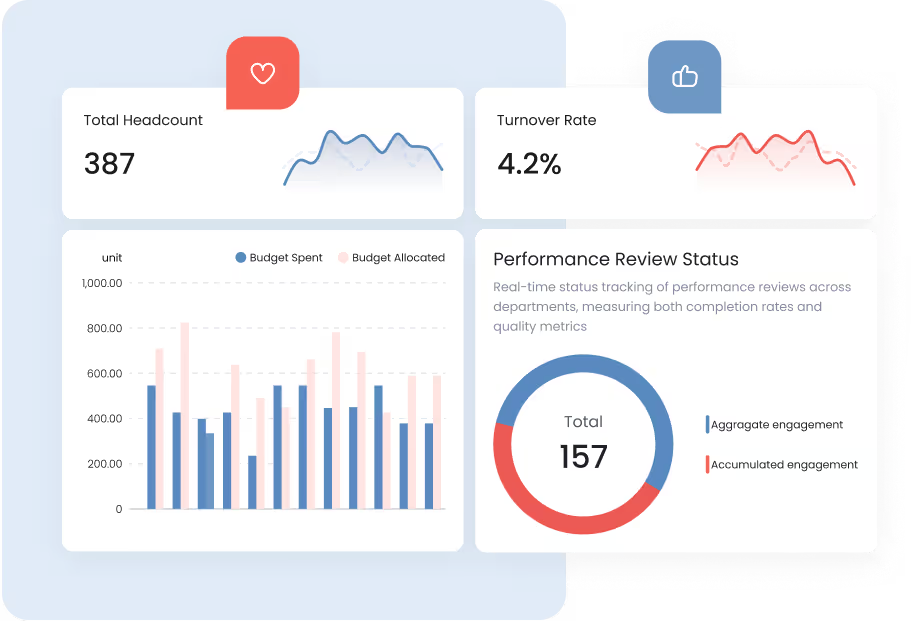
hr payroll system malaysia

Omni provides real-time dashboards covering payroll costs, statutory contributions, headcount, and leave trends. Customizable reports support internal audits, budgeting, and payroll reconciliation, while giving finance and HR leaders clearer visibility into workforce data.

Local support for Malaysian customers 

With dedicated local support, Malaysia-based teams receive timely assistance from specialists who understand local payroll regulations, statutory contributions, and LHDN e-Filing requirements, ensuring issues are resolved quickly and accurately.

"The support from Omni over Slack has been fantastic. Having the team right here in the region means they understand our needs and can respond quickly. It's a completely different experience from raising a ticket and waiting 24-48 hours for a response." 
— Derek Tan, Head of HR at
Milieu Insight

Best HR and Payroll Systems for Mid-Sized Companies in Malaysia

1. Omni HR

Omni HR is an all-in-one HR and payroll platform designed for Asia’s fast-growing companies. It combines Malaysia statutory compliance with multi-country payroll capabilities, making it ideal for businesses managing both local and regional workforces.

Key features:

  • Automated compliance for EPF, SOCSO, EIS, HRDF, PCB, and readiness for LHDN e-Filing
  • Full HRIS modules, including leave, performance, recruitment, claims, and time-off
  • Multi-country payroll for regional expansion across Southeast Asia
  • Real-time analytics and customizable reporting
  • Employee self-service portal and mobile app

Strengths:

  • Simplifies Malaysia payroll compliance without manual work
  • Replaces multiple HR tools with one unified platform
  • Scales easily for regional expansion in Southeast Asia
  • Gives leadership real-time visibility into workforce data
  • Reduces HR admin through employee self-service
  • Backed by responsive, Malaysia-based support

Best for:
Mid-sized companies that need a reliable HR payroll system Malaysia businesses trust for local statutory compliance and scalable multi-country payroll.

Pricing: Starts from $3 per employee per month. Find the perfect pricing plan for your budget.

2. Deel

Deel is a strong HR payroll system Malaysia for companies whose growth strategy involves hiring global or remote talent.

Key features: 

  • Global payroll for employees and contractors across multiple countries
  • Contractor management with localized contracts and payments
  • Comprehensive multi-country compliance support
  • Fast, compliant onboarding for international hires

Strengths: 

  • Simplifies global hiring and contractor management
  • Strong compliance coverage across multiple jurisdictions
  • Well-suited for distributed and remote-first teams

Best for: 

Companies hiring international or remote teams in Malaysia and managing global contractors.

Pricing: Varied pricing based on modules.

3. BrioHR

BrioHR provides a cloud-based HRIS primarily catering to SMEs looking to digitize core HR processes.

Key features: 

  • Core HR modules, including leave, performance, and attendance tracking
  • Basic payroll functionality
  • Intuitive dashboards and reporting tools
  • Cloud-based system for centralized HR management

Strengths: 

  • Easy to use and quick to adopt
  • Covers essential HR needs in one platform
  • Suitable for teams prioritizing simple HR digitization

Best for:

SMEs seeking a complete, cloud-based HRIS platform that includes simple payroll functionality.

Pricing:

Available on vendor website (often tiered based on the number of employees and modules used).

4. PayrollPanda

PayrollPanda specializes in straightforward, compliant HR payroll system Malaysia. 

Key features:

  • Automated EPF, SOCSO, and EIS calculations
  • Accurate PCB tax calculations
  • Payslip generation and basic payroll reporting
  • Focused payroll-only functionality

Strengths:

  • Simple and reliable payroll processing
  • Strong focus on Malaysia statutory compliance
  • Minimal setup and low operational complexity

Best for:
Companies looking for a dedicated, Malaysia-compliant payroll solution without needing a full HRIS.

Pricing: 

Available on the vendor website (usually based on a monthly fee per employee).

5. Swingvy

Swingvy focuses on providing a user-friendly and mobile-accessible HR payroll system Malaysia for day-to-day use.

Key features:

  • Payroll automation with statutory compliance (EPF, SOCSO, EIS)
  • Mobile-enabled leave and claims management
  • Employee self-service tools for daily HR tasks
  • Focus on ease of use and accessibility

Strengths:

  • Strong employee experience and mobile usability
  • Easy adoption for day-to-day HR operations
  • Suitable for teams prioritizing usability over complexity

Best for:
Companies needing a mobile-enabled HR and payroll system for daily operational management.

Pricing: 

Available on vendor website (typically a tiered monthly subscription).

Comparison Table

Feature Omni HR Deel BrioHR PayrollPanda Swingvy
Local statutory compliance Automated (EPF, SOCSO, EIS, PCB) Limited (focus on multi-country, not Malaysia-specific) Simple payroll (supports statutory compliance) Dedicated (EPF, SOCSO, EIS, PCB) Yes (EPF, SOCSO, EIS)
Multi-country payroll Yes (Built for SEA expansion, 190+ countries) Yes (Global payroll management) No (Focus on local SME) No (Malaysia payroll only) No (Local operations only)
HRIS modules Full (Leave, Performance, Recruitment, Claims) Contractor Management Leave, Performance, Attendance Limited (Basic reporting/payslips) Leave & Claims Management
Employee self-service Yes (Portal and mobile app) Yes (Fast onboarding, limited self-service) Yes (Cloud-based access) Yes (Payslips and basic submissions) Yes (Mobile access for daily HR tasks)
Reporting and analytics Advanced real-time analytics and customizable reports Global reporting dashboards Basic reporting dashboards Basic payroll reporting Daily operations and limited HR analytics
Best for Mid-sized companies needing local compliance and multi-country payroll Companies hiring international or remote teams SMEs seeking cloud-based HRIS Companies needing simple, statutory-compliant payroll Companies wanting user-friendly, mobile HR and payroll for daily operations

How to Choose the Right HR Payroll System in Malaysia

There's no shortage of options — which means the real challenge isn't finding a system, it's finding the right one for where your company is now and where it's going in the next three to five years.

Here's how to think through it:

Start with compliance requirements. Every Malaysian employer needs accurate, automated calculations for EPF, SOCSO, EIS, HRDF, and PCB, plus support for LHDN e-Filing. This isn't a differentiator — it's the baseline. If a platform doesn't handle all five reliably, it's not a serious contender for a Malaysian business.

Then ask how much HR you actually need. Some teams just need payroll done right. Others need a full HRIS — leave management, performance reviews, recruitment, attendance, and document management all connected. Be honest about where you are today and what you'll need at twice the headcount.

Factor in regional growth plans. If you're likely to expand into Singapore, the Philippines, Indonesia, or Hong Kong in the next few years, a Malaysia-only payroll tool will become a liability. Look for platforms built for multi-country payroll from the start, not ones that bolt it on later.

Employee experience matters more than it used to. The best HR software gives employees visibility into their own data — payslips, leave balances, claims — through a self-service portal or mobile app. This reduces the volume of admin requests hitting your HR team every week.

Don't evaluate on price alone. A platform that costs slightly more but saves five hours of payroll processing per month, eliminates one compliance error per quarter, and reduces HR admin by 20% pays for itself quickly. Use Omni's ROI calculator to run the numbers for your team size.

Use this quick checklist when evaluating vendors:

  • Does it automate EPF, SOCSO, EIS, HRDF, and PCB accurately?
  • Does it support LHDN e-Filing with real-time regulatory updates?
  • Does it cover the HRIS modules your team actually needs?
  • Does it support multi-country payroll if you plan to expand regionally?
  • Does it offer employee self-service via web and mobile?
  • Does it provide reporting and analytics your finance and HR leaders can act on?
  • Is there local support — people who understand Malaysian compliance and can respond quickly?

Choosing the Best HR Payroll System in Malaysia for Mid-Sized Teams

Mid-sized companies in Malaysia face increasing payroll and compliance challenges, from EPF, SOCSO, EIS, to PCB and multi-entity management. Modern HR payroll management system Malaysia are essential for accuracy, efficiency, and compliance. 

While systems like Deel, BrioHR, PayrollPanda and Swingvy offer strong features, Omni HR delivers the most complete and scalable platform for modern, mid-sized teams, with automated statutory compliance and multi-country payroll built in. Book a demo with our team today and see why Omni is the HR payroll system Malaysia for you. 

Frequently Asked Questions

1. What is an HR payroll system, and why does my mid-sized company need one?

An HR payroll system in Malaysia is a comprehensive software platform that automates payroll processing, employee management, and compliance with local regulations such as EPF, SOCSO, EIS, HRDF, and PCB. Unlike basic payroll tools, it integrates leave management, performance reviews, recruitment, and attendance tracking into a single system.

Mid-sized companies in Malaysia need this because manual payroll and HR processes become unsustainable as teams grow. An automated HR and payroll system eliminates errors, saves time, and ensures statutory compliance.

2. Can Omni HR handle Malaysia payroll tax and multi-country payroll simultaneously?

Yes. Omni HR manages both Malaysia payroll compliance and multi-country payroll operations at the same time.

For Malaysia, the platform automates EPF, SOCSO, EIS, HRDF, and PCB calculations and supports LHDN e-Filing with real-time regulatory updates. For regional expansion, Omni supports compliant payroll across Singapore, the Philippines, Hong Kong, Indonesia, and other countries, with multi-currency payments and localized statutory contributions. This makes it ideal for mid-sized companies scaling across Southeast Asia.

3. How does HRIS and payroll software simplify leave, performance, and recruitment management?

An HRIS and payroll system like Omni HR consolidates all HR functions into a single platform.

  • Leave management: Employees submit leave requests via a self-service portal or mobile app. Managers approve with one click, and leave balances update automatically.
  • Performance management: Set up customizable review templates, automate appraisal cycles, and track employee progress.
  • Recruitment: Omni’s built-in ATS posts jobs to multiple boards, tracks candidates, and streamlines onboarding with e-signatures. All employee data integrates with payroll automatically for seamless setup.

This reduces administrative work and ensures compliance with Malaysia labor regulations.

4. What is the difference between a basic payroll app and a full HR payroll system?

A basic payroll app only handles salary calculations and payslips.

A full HR payroll system Malaysia like Omni HR offers:

  • Complete HRIS functionality (recruitment, onboarding, time tracking, performance, leave, document management)
  • Advanced compliance automation for EPF, SOCSO, EIS, HRDF, PCB, and LHDN e-Filing
  • Multi-country payroll capabilities
  • Integrations with accounting and communication tools
  • Advanced analytics and real-time reporting
  • Scalability for teams of 30–200+ employees

For mid-sized companies, a full system eliminates manual data entry and allows HR teams to focus on strategic initiatives.

5. Is my employee data secure in an HRIS payroll system?

Yes. Modern HRIS payroll systems use enterprise-grade security measures, including AES-256 encryption, ISO 27001-certified data centers, PDPA compliance, role-based access controls, and audit trails.

At Omni HR, all sensitive employee data is protected with these security protocols, ensuring compliance with Malaysia’s PDPA and safeguarding confidential information.

6. Can an HR payroll system integrate with my existing accounting software?

Yes. Modern HR payroll systems integrate seamlessly with popular accounting platforms. These integrations sync payroll data, expense claims, and employee costs automatically, reducing errors and eliminating double data entry.

Omni HR integrates with Xero, Slack, Google Calendar, and other essential business tools, keeping your financial and HR data synchronized without additional cost.

7. What is PCB (Potongan Cukai Bulanan)?

PCB, or Potongan Cukai Bulanan, is Malaysia's mandatory monthly tax deduction system. Employers are required to calculate and deduct PCB from each employee's salary every month and remit it to the Inland Revenue Board (LHDN / IRB) on their behalf. The deduction amount varies based on the employee's monthly earnings, tax residency status, and any applicable tax reliefs.

Getting PCB wrong — even by a small margin — can trigger penalties from LHDN and create significant year-end reconciliation headaches. A modern HR payroll system in Malaysia like Omni automates PCB calculations in real time and generates the documentation needed for LHDN e-Filing, so there's no manual math and no missed deadlines.

8. What are the mandatory payroll contributions for employers in Malaysia?

Malaysian employers are required to make contributions to four statutory schemes on behalf of their employees:

  • EPF (Employees Provident Fund / KWSP): A retirement savings fund. Employer contribution rates vary based on the employee's age and citizenship status, ranging from 12–13% of monthly wages.
  • SOCSO (Social Security Organisation / PERKESO): Provides social insurance for work-related injuries and disabilities. Employer contributions are approximately 1.75% of monthly wages.
  • EIS (Employment Insurance System): Provides financial assistance to employees who lose their jobs. Both employer and employee contribute 0.4% of monthly wages each.
  • HRDF (Human Resources Development Fund): A levy for employee training and development, generally applicable to companies with 10 or more employees. Contribution is 1% of monthly wages for most sectors.

In addition, employers must calculate and remit PCB (monthly tax deductions) to LHDN on behalf of each employee. A modern HR payroll system in Malaysia automates all five of these obligations, reducing the risk of errors and penalties.

9. What is the difference between EPF, SOCSO, and EIS in Malaysia?

EPF (Employees Provident Fund), SOCSO (Social Security Organisation), and EIS (Employment Insurance System) are three separate mandatory statutory schemes in Malaysia, each serving a different purpose:

EPF is a long-term retirement savings fund. Both employer and employee contribute a percentage of monthly wages into the employee's EPF account, which the employee accesses upon retirement.

SOCSO is a social insurance scheme that covers employees in the event of work-related injury, disability, or death. It has two schemes: the Employment Injury Insurance Scheme (work accidents) and the Invalidity Pension Scheme (non-work-related disability or death).

EIS is a more recent scheme that provides short-term financial assistance to employees who have been retrenched, helping them cover expenses while they search for new employment.

All three are mandatory for most private sector employees in Malaysia, and employers are responsible for calculating, deducting, and remitting contributions each month.

10. What changes did Malaysia's Employment Act 2022 amendments introduce?

Malaysia's Employment Act 1955 was significantly amended in 2022 with changes that affect payroll calculations, leave policies, and HR compliance obligations. Key updates include: paternity leave increased to 7 days for married male employees; maternity leave protection extended for the full leave period; flexible work arrangement requests formalized, with employers required to respond within 60 days; overtime eligibility extended to employees earning up to RM4,000 per month; and strengthened sexual harassment provisions with new employer obligations.

HR and payroll teams should ensure their systems and policies reflect these changes. Platforms like Omni are updated in line with regulatory revisions, so payroll calculations and leave entitlements stay current without requiring manual updates.

No items found.
No items found.
Which countries do you support?

Full HR & Payroll coverage for Philippines, Singapore, Malaysia, Hong Kong, and Indonesia. Each market has local support teams and built-in compliance features.

How does pricing work as we scale?

Starting at $3/employee/month for core features. Volume-based discounts are available for growing teams. Book a demo for custom pricing.

How do you handle security?

Enterprise-grade security with ISO 27001, GDPR certifications, and local data residency options.

How long is implementation?

4 weeks average. Includes free data migration, setup, and team training. No hidden fees.

What makes Omni different from global HR platforms?

Built specifically for Asia with local payroll processing, same-day support in Asia time zones, and 40% lower cost than global alternatives.

HRIS

HR Payroll System Malaysia: Best Options for Mid-Sized Teams (2026)

Table of Contents
>
See OmniHR in action
Schedule a personalized demo today to see how we help mid- market teams.
Get a Demo

Summary. Mid-sized companies in Malaysia face challenges with statutory compliance (EPF, SOCSO, EIS, HRDF, PCB), multi-entity payroll, and high administrative workload. A modern HR payroll system Malaysia like Omni HR automates compliance, supports LHDN e-Filing, and integrates leave, performance, attendance, and recruitment, while offering employee self-service via mobile and web. As a complete payroll management system Malaysia, Omni HR centralizes data, provides advanced reporting, supports multi-country payroll, and delivers responsive local support, helping companies save time, reduce errors, and scale efficiently.

See OmniHR in action
Schedule a personalized demo today to see how we help mid- market teams.
Get a Demo

An HR payroll system is a unified software platform that automates payroll calculations, statutory deductions, and core HR operations — from leave management to employee records — in a single system. For mid-sized companies in Malaysia, the right platform handles mandatory contributions like EPF, SOCSO, EIS, and PCB automatically, so your team spends less time on manual calculations and more time on work that actually moves the business forward.

As your team grows, the tools that worked at 30 employees start to buckle at 80. Manual processes introduce errors. Disconnected systems create data gaps. Compliance deadlines get harder to track. Choosing the right HR payroll system in Malaysia is no longer a matter of convenience — it's a foundational decision for accuracy, efficiency, and staying on the right side of LHDN.

This guide walks HR and finance leaders through the top platforms, what sets each apart, and how to match the right solution to where your company is headed.

Why Mid-Sized Companies Need a Modern HR Payroll System Malaysia

Mid-sized business owners, HR managers, and payroll specialists are often bogged down by complex administrative tasks associated with HR payroll system Malaysia. The shift from a simple spreadsheet to an integrated Human Resources Information System (HRIS) and payroll software is critical to support growth and stability.

The challenges of scaling HR payroll system Malaysia

Growing companies in Malaysia commonly struggle with:

  • Manual statutory calculations: Ensuring accurate and timely contributions for EPF, SOCSO, EIS, HRDF, and PCB (Potongan Cukai Bulanan) is highly time-consuming and prone to human error.
  • Multi-entity payroll complexity: Managing payroll for different entities or subsidiaries within the country adds layers of administrative difficulty.
  • Disconnected HR tools: Using separate, non-integrated tools for different functions (e.g., one for leave, one for payroll) causes significant workflow delays and data discrepancies.
  • High admin load: Daily tasks like processing claims, managing attendance, and tracking leave consume too much time that could otherwise be spent on strategic planning.
hr payroll system malaysia

The essential benefits of integrated HRIS and payroll software

A modern, integrated solution helps solve these challenges by offering:

  • Automated statutory compliance: Systems automatically calculate and process contributions for all mandatory Malaysian statutes (EPF/SOCSO/EIS/HRDF, PCB).
  • More accurate PCB tax calculations: Automated systems drastically improve the accuracy of monthly tax deductions and annual statutory filings, supporting requirements like LHDN e-filing.
  • Audit-ready payroll reports: Centralized data and automated processes provide clear, traceable payroll reports, making internal and external audits simple and stress-free.
  • Employee self-service access: Employees can manage their own leave applications, view payslips, and submit claims via mobile or web, significantly reducing the administrative load on HR.
  • Centralized data: All HR and payroll data is stored in one system, enabling better decision-making through comprehensive reports and analytics.
What changed under Malaysia's Employment Act 2022 amendments?

Malaysia updated the Employment Act 1955 in 2022 with several changes that directly affect payroll and HR operations:

  • Paternity leave increased to 7 consecutive days for married male employees
  • Maternity leave protection extended — employees are protected from dismissal for the full 98-day maternity leave period
  • Flexible work arrangements — employees now have the right to formally request flexible working arrangements; employers must respond within 60 days
  • Overtime eligibility extended to employees earning up to RM4,000/month (previously RM2,000)
  • Sexual harassment provisions strengthened, with new employer obligations

If your HR system hasn't been updated to reflect these changes, your policies and payroll calculations may be out of compliance. Omni's platform is updated in line with regulatory changes, so you're always working with current rules — not last year's.

Why Omni HR is the Ideal HR Payroll System for Malaysia Companies

If you’re a growing or mid-sized company in Malaysia managing complex payroll requirements, statutory contributions, or planning global expansion, choosing the right HR payroll system Malaysia businesses can rely on is crucial. 

Omni HR is built specifically for Asian companies, with Malaysia statutory compliance built into payroll and HR workflows. As a modern payroll management system Malaysia teams trust, Omni reduces manual work while ensuring accuracy at every step. Here’s what sets Omni apart: 

Automated statutory compliance

Omni automates core Malaysia payroll obligations, including EPF, SOCSO, EIS, and PCB calculations. Our platform supports accurate reporting and readiness for LHDN e-filing, helping teams stay compliant with tax requirements while reducing errors and last-minute corrections.

With real-time updates aligned with regulatory changes, payroll stays accurate without relying on manual tracking or spreadsheets.

For Snappymob, a Malaysia-based technology company, the impact was immediate. After moving to Omni, their payroll run dropped from a two-day process to under two hours — a change that freed the operations team to focus on work that actually required their attention.

"Now we literally run payroll in no more than two hours. Before it was two days." 
— Elena Argyriou, Chief of Staff at
Snappymob

Multi-country payroll support for SEA expansion 

For companies operating beyond Malaysia, Omni supports compliant payroll across Singapore, the Philippines, Hong Kong, Indonesia, and other regional markets. With localized tax rules, statutory contributions, and multi-currency payments, Omni enables seamless regional payroll from a single platform.

payroll management system malaysia

This makes Omni a scalable HR payroll system Malaysia companies can continue using as they expand across Southeast Asia.

Employee self-service and mobile experience 

payroll management system malaysia

Omni’s employee self-service portal and mobile app reduce HR workload by enabling employees to manage routine tasks independently. Payslips, leave applications, claims submissions, and personal information updates are all accessible in one place, improving transparency and employee experience.

Complete HRIS: leave, performance, attendance, recruitment 

Omni is more than a payroll tool. It’s a complete payroll management system Malaysia teams can integrate with daily HR operations. 

See Omni integrations

Manage leave, performance reviews, attendance, employee records, and more in one centralized system, eliminating fragmented tools and manual handoffs.

"Omni's holistic system has allowed us to be more action driven rather than process driven. It's 100% worth the investment, I'm quite confident we can grow across Southeast Asia with Omni." 
— Jack Ang, Head of People at
Lucence

Advanced reporting & analytics

hr payroll system malaysia

Omni provides real-time dashboards covering payroll costs, statutory contributions, headcount, and leave trends. Customizable reports support internal audits, budgeting, and payroll reconciliation, while giving finance and HR leaders clearer visibility into workforce data.

Local support for Malaysian customers 

With dedicated local support, Malaysia-based teams receive timely assistance from specialists who understand local payroll regulations, statutory contributions, and LHDN e-Filing requirements, ensuring issues are resolved quickly and accurately.

"The support from Omni over Slack has been fantastic. Having the team right here in the region means they understand our needs and can respond quickly. It's a completely different experience from raising a ticket and waiting 24-48 hours for a response." 
— Derek Tan, Head of HR at
Milieu Insight

Best HR and Payroll Systems for Mid-Sized Companies in Malaysia

1. Omni HR

Omni HR is an all-in-one HR and payroll platform designed for Asia’s fast-growing companies. It combines Malaysia statutory compliance with multi-country payroll capabilities, making it ideal for businesses managing both local and regional workforces.

Key features:

  • Automated compliance for EPF, SOCSO, EIS, HRDF, PCB, and readiness for LHDN e-Filing
  • Full HRIS modules, including leave, performance, recruitment, claims, and time-off
  • Multi-country payroll for regional expansion across Southeast Asia
  • Real-time analytics and customizable reporting
  • Employee self-service portal and mobile app

Strengths:

  • Simplifies Malaysia payroll compliance without manual work
  • Replaces multiple HR tools with one unified platform
  • Scales easily for regional expansion in Southeast Asia
  • Gives leadership real-time visibility into workforce data
  • Reduces HR admin through employee self-service
  • Backed by responsive, Malaysia-based support

Best for:
Mid-sized companies that need a reliable HR payroll system Malaysia businesses trust for local statutory compliance and scalable multi-country payroll.

Pricing: Starts from $3 per employee per month. Find the perfect pricing plan for your budget.

2. Deel

Deel is a strong HR payroll system Malaysia for companies whose growth strategy involves hiring global or remote talent.

Key features: 

  • Global payroll for employees and contractors across multiple countries
  • Contractor management with localized contracts and payments
  • Comprehensive multi-country compliance support
  • Fast, compliant onboarding for international hires

Strengths: 

  • Simplifies global hiring and contractor management
  • Strong compliance coverage across multiple jurisdictions
  • Well-suited for distributed and remote-first teams

Best for: 

Companies hiring international or remote teams in Malaysia and managing global contractors.

Pricing: Varied pricing based on modules.

3. BrioHR

BrioHR provides a cloud-based HRIS primarily catering to SMEs looking to digitize core HR processes.

Key features: 

  • Core HR modules, including leave, performance, and attendance tracking
  • Basic payroll functionality
  • Intuitive dashboards and reporting tools
  • Cloud-based system for centralized HR management

Strengths: 

  • Easy to use and quick to adopt
  • Covers essential HR needs in one platform
  • Suitable for teams prioritizing simple HR digitization

Best for:

SMEs seeking a complete, cloud-based HRIS platform that includes simple payroll functionality.

Pricing:

Available on vendor website (often tiered based on the number of employees and modules used).

4. PayrollPanda

PayrollPanda specializes in straightforward, compliant HR payroll system Malaysia. 

Key features:

  • Automated EPF, SOCSO, and EIS calculations
  • Accurate PCB tax calculations
  • Payslip generation and basic payroll reporting
  • Focused payroll-only functionality

Strengths:

  • Simple and reliable payroll processing
  • Strong focus on Malaysia statutory compliance
  • Minimal setup and low operational complexity

Best for:
Companies looking for a dedicated, Malaysia-compliant payroll solution without needing a full HRIS.

Pricing: 

Available on the vendor website (usually based on a monthly fee per employee).

5. Swingvy

Swingvy focuses on providing a user-friendly and mobile-accessible HR payroll system Malaysia for day-to-day use.

Key features:

  • Payroll automation with statutory compliance (EPF, SOCSO, EIS)
  • Mobile-enabled leave and claims management
  • Employee self-service tools for daily HR tasks
  • Focus on ease of use and accessibility

Strengths:

  • Strong employee experience and mobile usability
  • Easy adoption for day-to-day HR operations
  • Suitable for teams prioritizing usability over complexity

Best for:
Companies needing a mobile-enabled HR and payroll system for daily operational management.

Pricing: 

Available on vendor website (typically a tiered monthly subscription).

Comparison Table

Feature Omni HR Deel BrioHR PayrollPanda Swingvy
Local statutory compliance Automated (EPF, SOCSO, EIS, PCB) Limited (focus on multi-country, not Malaysia-specific) Simple payroll (supports statutory compliance) Dedicated (EPF, SOCSO, EIS, PCB) Yes (EPF, SOCSO, EIS)
Multi-country payroll Yes (Built for SEA expansion, 190+ countries) Yes (Global payroll management) No (Focus on local SME) No (Malaysia payroll only) No (Local operations only)
HRIS modules Full (Leave, Performance, Recruitment, Claims) Contractor Management Leave, Performance, Attendance Limited (Basic reporting/payslips) Leave & Claims Management
Employee self-service Yes (Portal and mobile app) Yes (Fast onboarding, limited self-service) Yes (Cloud-based access) Yes (Payslips and basic submissions) Yes (Mobile access for daily HR tasks)
Reporting and analytics Advanced real-time analytics and customizable reports Global reporting dashboards Basic reporting dashboards Basic payroll reporting Daily operations and limited HR analytics
Best for Mid-sized companies needing local compliance and multi-country payroll Companies hiring international or remote teams SMEs seeking cloud-based HRIS Companies needing simple, statutory-compliant payroll Companies wanting user-friendly, mobile HR and payroll for daily operations

How to Choose the Right HR Payroll System in Malaysia

There's no shortage of options — which means the real challenge isn't finding a system, it's finding the right one for where your company is now and where it's going in the next three to five years.

Here's how to think through it:

Start with compliance requirements. Every Malaysian employer needs accurate, automated calculations for EPF, SOCSO, EIS, HRDF, and PCB, plus support for LHDN e-Filing. This isn't a differentiator — it's the baseline. If a platform doesn't handle all five reliably, it's not a serious contender for a Malaysian business.

Then ask how much HR you actually need. Some teams just need payroll done right. Others need a full HRIS — leave management, performance reviews, recruitment, attendance, and document management all connected. Be honest about where you are today and what you'll need at twice the headcount.

Factor in regional growth plans. If you're likely to expand into Singapore, the Philippines, Indonesia, or Hong Kong in the next few years, a Malaysia-only payroll tool will become a liability. Look for platforms built for multi-country payroll from the start, not ones that bolt it on later.

Employee experience matters more than it used to. The best HR software gives employees visibility into their own data — payslips, leave balances, claims — through a self-service portal or mobile app. This reduces the volume of admin requests hitting your HR team every week.

Don't evaluate on price alone. A platform that costs slightly more but saves five hours of payroll processing per month, eliminates one compliance error per quarter, and reduces HR admin by 20% pays for itself quickly. Use Omni's ROI calculator to run the numbers for your team size.

Use this quick checklist when evaluating vendors:

  • Does it automate EPF, SOCSO, EIS, HRDF, and PCB accurately?
  • Does it support LHDN e-Filing with real-time regulatory updates?
  • Does it cover the HRIS modules your team actually needs?
  • Does it support multi-country payroll if you plan to expand regionally?
  • Does it offer employee self-service via web and mobile?
  • Does it provide reporting and analytics your finance and HR leaders can act on?
  • Is there local support — people who understand Malaysian compliance and can respond quickly?

Choosing the Best HR Payroll System in Malaysia for Mid-Sized Teams

Mid-sized companies in Malaysia face increasing payroll and compliance challenges, from EPF, SOCSO, EIS, to PCB and multi-entity management. Modern HR payroll management system Malaysia are essential for accuracy, efficiency, and compliance. 

While systems like Deel, BrioHR, PayrollPanda and Swingvy offer strong features, Omni HR delivers the most complete and scalable platform for modern, mid-sized teams, with automated statutory compliance and multi-country payroll built in. Book a demo with our team today and see why Omni is the HR payroll system Malaysia for you. 

Frequently Asked Questions

1. What is an HR payroll system, and why does my mid-sized company need one?

An HR payroll system in Malaysia is a comprehensive software platform that automates payroll processing, employee management, and compliance with local regulations such as EPF, SOCSO, EIS, HRDF, and PCB. Unlike basic payroll tools, it integrates leave management, performance reviews, recruitment, and attendance tracking into a single system.

Mid-sized companies in Malaysia need this because manual payroll and HR processes become unsustainable as teams grow. An automated HR and payroll system eliminates errors, saves time, and ensures statutory compliance.

2. Can Omni HR handle Malaysia payroll tax and multi-country payroll simultaneously?

Yes. Omni HR manages both Malaysia payroll compliance and multi-country payroll operations at the same time.

For Malaysia, the platform automates EPF, SOCSO, EIS, HRDF, and PCB calculations and supports LHDN e-Filing with real-time regulatory updates. For regional expansion, Omni supports compliant payroll across Singapore, the Philippines, Hong Kong, Indonesia, and other countries, with multi-currency payments and localized statutory contributions. This makes it ideal for mid-sized companies scaling across Southeast Asia.

3. How does HRIS and payroll software simplify leave, performance, and recruitment management?

An HRIS and payroll system like Omni HR consolidates all HR functions into a single platform.

  • Leave management: Employees submit leave requests via a self-service portal or mobile app. Managers approve with one click, and leave balances update automatically.
  • Performance management: Set up customizable review templates, automate appraisal cycles, and track employee progress.
  • Recruitment: Omni’s built-in ATS posts jobs to multiple boards, tracks candidates, and streamlines onboarding with e-signatures. All employee data integrates with payroll automatically for seamless setup.

This reduces administrative work and ensures compliance with Malaysia labor regulations.

4. What is the difference between a basic payroll app and a full HR payroll system?

A basic payroll app only handles salary calculations and payslips.

A full HR payroll system Malaysia like Omni HR offers:

  • Complete HRIS functionality (recruitment, onboarding, time tracking, performance, leave, document management)
  • Advanced compliance automation for EPF, SOCSO, EIS, HRDF, PCB, and LHDN e-Filing
  • Multi-country payroll capabilities
  • Integrations with accounting and communication tools
  • Advanced analytics and real-time reporting
  • Scalability for teams of 30–200+ employees

For mid-sized companies, a full system eliminates manual data entry and allows HR teams to focus on strategic initiatives.

5. Is my employee data secure in an HRIS payroll system?

Yes. Modern HRIS payroll systems use enterprise-grade security measures, including AES-256 encryption, ISO 27001-certified data centers, PDPA compliance, role-based access controls, and audit trails.

At Omni HR, all sensitive employee data is protected with these security protocols, ensuring compliance with Malaysia’s PDPA and safeguarding confidential information.

6. Can an HR payroll system integrate with my existing accounting software?

Yes. Modern HR payroll systems integrate seamlessly with popular accounting platforms. These integrations sync payroll data, expense claims, and employee costs automatically, reducing errors and eliminating double data entry.

Omni HR integrates with Xero, Slack, Google Calendar, and other essential business tools, keeping your financial and HR data synchronized without additional cost.

7. What is PCB (Potongan Cukai Bulanan)?

PCB, or Potongan Cukai Bulanan, is Malaysia's mandatory monthly tax deduction system. Employers are required to calculate and deduct PCB from each employee's salary every month and remit it to the Inland Revenue Board (LHDN / IRB) on their behalf. The deduction amount varies based on the employee's monthly earnings, tax residency status, and any applicable tax reliefs.

Getting PCB wrong — even by a small margin — can trigger penalties from LHDN and create significant year-end reconciliation headaches. A modern HR payroll system in Malaysia like Omni automates PCB calculations in real time and generates the documentation needed for LHDN e-Filing, so there's no manual math and no missed deadlines.

8. What are the mandatory payroll contributions for employers in Malaysia?

Malaysian employers are required to make contributions to four statutory schemes on behalf of their employees:

  • EPF (Employees Provident Fund / KWSP): A retirement savings fund. Employer contribution rates vary based on the employee's age and citizenship status, ranging from 12–13% of monthly wages.
  • SOCSO (Social Security Organisation / PERKESO): Provides social insurance for work-related injuries and disabilities. Employer contributions are approximately 1.75% of monthly wages.
  • EIS (Employment Insurance System): Provides financial assistance to employees who lose their jobs. Both employer and employee contribute 0.4% of monthly wages each.
  • HRDF (Human Resources Development Fund): A levy for employee training and development, generally applicable to companies with 10 or more employees. Contribution is 1% of monthly wages for most sectors.

In addition, employers must calculate and remit PCB (monthly tax deductions) to LHDN on behalf of each employee. A modern HR payroll system in Malaysia automates all five of these obligations, reducing the risk of errors and penalties.

9. What is the difference between EPF, SOCSO, and EIS in Malaysia?

EPF (Employees Provident Fund), SOCSO (Social Security Organisation), and EIS (Employment Insurance System) are three separate mandatory statutory schemes in Malaysia, each serving a different purpose:

EPF is a long-term retirement savings fund. Both employer and employee contribute a percentage of monthly wages into the employee's EPF account, which the employee accesses upon retirement.

SOCSO is a social insurance scheme that covers employees in the event of work-related injury, disability, or death. It has two schemes: the Employment Injury Insurance Scheme (work accidents) and the Invalidity Pension Scheme (non-work-related disability or death).

EIS is a more recent scheme that provides short-term financial assistance to employees who have been retrenched, helping them cover expenses while they search for new employment.

All three are mandatory for most private sector employees in Malaysia, and employers are responsible for calculating, deducting, and remitting contributions each month.

10. What changes did Malaysia's Employment Act 2022 amendments introduce?

Malaysia's Employment Act 1955 was significantly amended in 2022 with changes that affect payroll calculations, leave policies, and HR compliance obligations. Key updates include: paternity leave increased to 7 days for married male employees; maternity leave protection extended for the full leave period; flexible work arrangement requests formalized, with employers required to respond within 60 days; overtime eligibility extended to employees earning up to RM4,000 per month; and strengthened sexual harassment provisions with new employer obligations.

HR and payroll teams should ensure their systems and policies reflect these changes. Platforms like Omni are updated in line with regulatory revisions, so payroll calculations and leave entitlements stay current without requiring manual updates.

Frequently Asked Questions

Which countries do you support?

Full HR & Payroll coverage for Philippines, Singapore, Malaysia, Hong Kong, and Indonesia. Each market has local support teams and built-in compliance features.

How does pricing work as we scale?

Starting at $3/employee/month for core features. Volume-based discounts are available for growing teams. Book a demo for custom pricing.

How do you handle security?

Enterprise-grade security with ISO 27001, GDPR certifications, and local data residency options.

How long is implementation?

4 weeks average. Includes free data migration, setup, and team training. No hidden fees.

What makes Omni different from global HR platforms?

Built specifically for Asia with local payroll processing, same-day support in Asia time zones, and 40% lower cost than global alternatives.

Future-proof your leadership bench.
Stop guessing who is ready for promotion. Use OmniHR to identify, nurture, and retain your top performers with data-driven succession planning.
Book a Demo