.png)
Summary. AI tools for HR are changing how organizations manage the employee lifecycle, from recruitment to payroll, by automating manual tasks, improving decision-making, and enhancing employee experience. As HR teams face growing complexity, distributed workforces, and evolving compliance demands, adopting scalable, intelligent HR tech has become essential. A future-proof HR system powered by automation and AI tools enables greater efficiency, real-time insights, and agility, allowing HR to shift from administrative support to strategic leadership. By investing in flexible platforms like Omni, organizations can reduce costs, improve retention, and build a resilient workforce ready for what’s next.
There's a new dilemma approaching the world of work. HR leaders are under mounting pressure to navigate a landscape marked by global expansion, shifting employee expectations, and relentless technological change.
Traditional HR systems, often siloed, manual, and slow to adapt, are struggling to keep up with the demands of a distributed workforce and increasingly complex environments. As a matter of fact, only 35% of HR leaders are confident their approach to technology is helping them achieve business goals.
Against this backdrop, a new era of HR tech is emerging. With the global HR technology market projected to grow from US$ 40.45 billion in 2024 to US$ 81.84 billion by 2032, the message is clear: future-proof your HR operations for whatever comes next. The next frontier of that shift is agentic HR — where AI doesn't just automate tasks but actively answers questions, surfaces insights, and coordinates workflows on demand. Omni HR recently launched Mino, the first AI agent built on unified APAC HR data, letting HR teams ask workforce questions in plain language and get back live dashboards and analytics instantly.
.avif)
Automation, artificial intelligence, and adaptable platforms are changing the ways HR teams operate, streamlining workflows, improving decision-making, and enhancing overall employee experience. In this article, we explore how forward-thinking organizations can harness the latest AI tools for HR to build a resilient workforce that is ready to thrive in a world where change is the only constant.
Why You Should Future-Proof Your HR Tech
The business world isn’t just changing; it’s being completely redefined. Remote and structured hybrid work have become standard practice, with over 60% of companies in Asia Pacific achieving stable office attendance, reflecting widespread acceptance of hybrid work models. Today’s teams are spread across different time zones, and employment models are more flexible than ever. At the same time, shifting regulations and rising employee expectations, paired with constant disruption in HR, are reshaping how organizations operate.
To keep up, HR must evolve and so must the technology behind it.
Outdated systems slow teams down, create friction for employees, and leave organizations vulnerable in a fast-moving environment. That’s why future-proofing your HR tech isn’t just a smart investment; it’s a strategic necessity.
Here’s why you need to act now.
1. HR is now a strategic powerhouse.
HR has moved far beyond its administrative roots. Today, it’s expected to drive growth, shape culture, and inform big-picture decisions. This shift requires better tools, smarter systems, and real-time access to data like:
- From task-oriented to insight-driven: Strategic HR teams need more than forms and workflows; they need intelligent insights to guide decision-making.
- From firefighting to forecasting: With AI-powered analytics — and AI agents like Mino — HR can ask workforce questions in plain language, spot issues before they become problems, and plan for the future with confidence.
- From scattered tools to seamless systems: Integrated tech reduces friction, improves employee experience, and allows HR to operate as a unified force.
Read next: How Does HR Contribute to Business Success? Strategies for Growth
2. The workforce has changed and will keep changing.
Legacy HR systems were built for a world that no longer exists. Today’s workforce looks dramatically different:
- Distributed teams working remotely or in hybrid setups.
- Global hires spread across multiple countries and legal systems.
- Freelancers, independent contractors, and gig workers are integrated into core projects.
- Agile, cross-functional teams that shift and scale quickly.
Each of these realities introduces new complexity, from global HR compliance to communication. Systems that can’t flex with these needs create bottlenecks and employee burnout. Modern HR tech must be built to handle this variety without adding extra admin work.
3. Outdated systems are more than just inconvenient; they’re also expensive.
Sticking with outdated HR tools doesn’t just create inefficiencies; it creates measurable losses. Organizations that rely on rigid, legacy platforms often face
- Higher overhead from manual tasks and disconnected tools.
- Lower employee satisfaction due to clunky self-service and poor experiences.
- Wasted time on compliance tasks and reporting.
- Increased risk of errors in critical areas like payroll and benefits.
As companies scale or face market shifts, these problems only get worse. In times of uncertainty, the ability to pivot quickly isn’t a luxury; it’s a survival skill. And your HR systems need to support that.
Empower Your HR Teams with Automation
HR automation represents the foundation of future-proofed HR systems, freeing professionals from repetitive tasks while improving accuracy and compliance.
Modern AI tools for HR automation can streamline key HR processes, including:
Recruitment and onboarding
Recruitment often involves posting jobs, screening resumes, and scheduling interviews. Without automation, HR teams spend hours doing this manually. Onboarding also benefits from automation. Instead of sending forms and welcome emails one by one, HR teams can use workflows that deliver documents, assign tasks, and set up systems for new hires.
Self-service portals
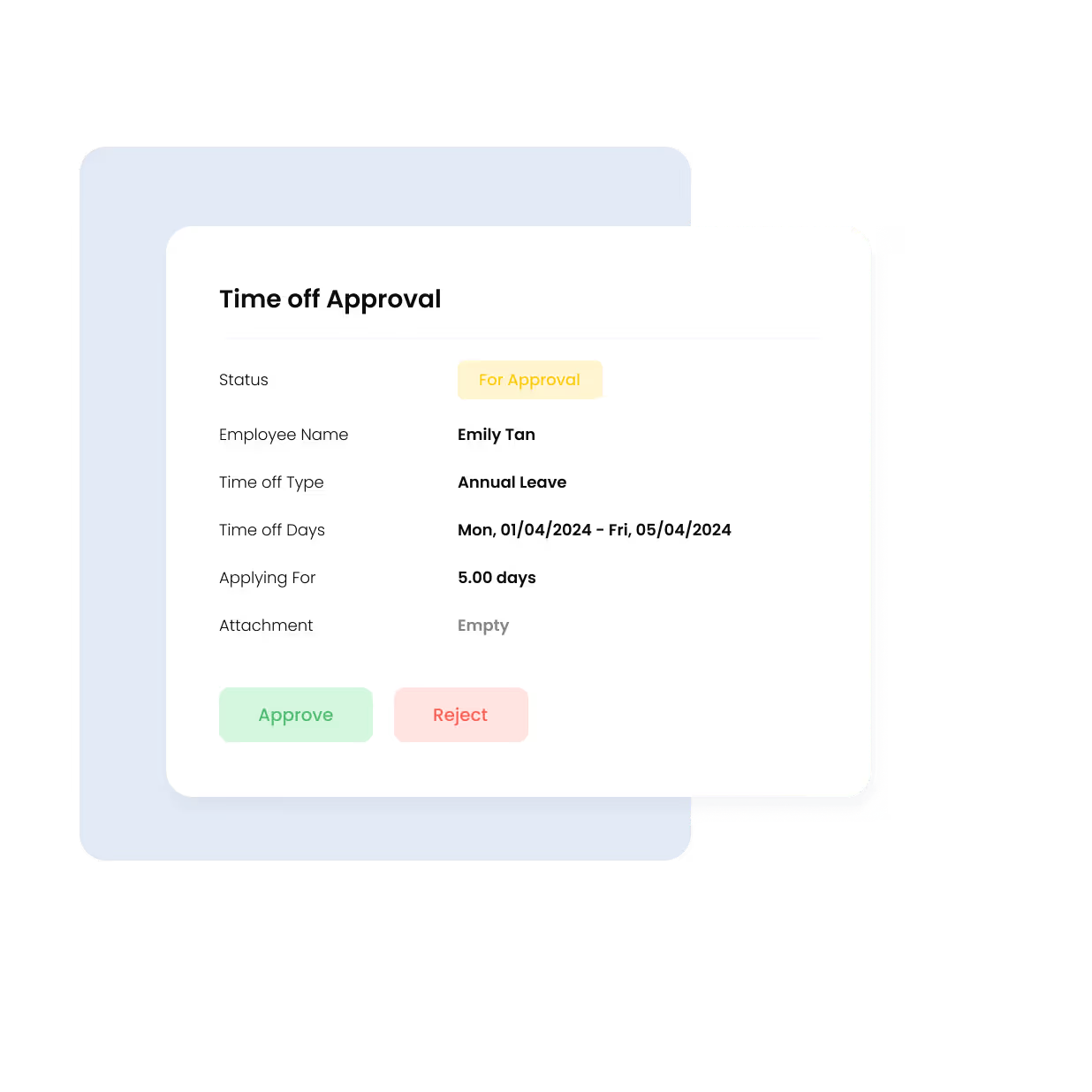
With self-service portals, employees can easily apply for time off by logging into the HR portal. Once submitted, the request is automatically routed to the appropriate manager for approval or rejection; no need for manual HR intervention. This speeds up the process while ensuring requests are handled efficiently and transparently, allowing both employees and HR teams to focus on more important tasks.
Payroll
According to the Future of Payroll Report, organizations with transformative payroll functions are nearly 16 times more likely to report high levels of payroll automation compared to those with transactional functions. This highlights why payroll is often the most automated function within HR teams. Tasks like calculating salaries, deducting taxes, processing benefits, and generating payslips are repetitive and prone to errors when done manually.
Benefits management
Employees are demanding more personalized and flexible benefits. On top of that, HR teams must manage a growing range of options, navigate complex compliance regulations, and handle frequent updates and changes. This creates significant administrative burdens and increases the risk of errors.
Performance management
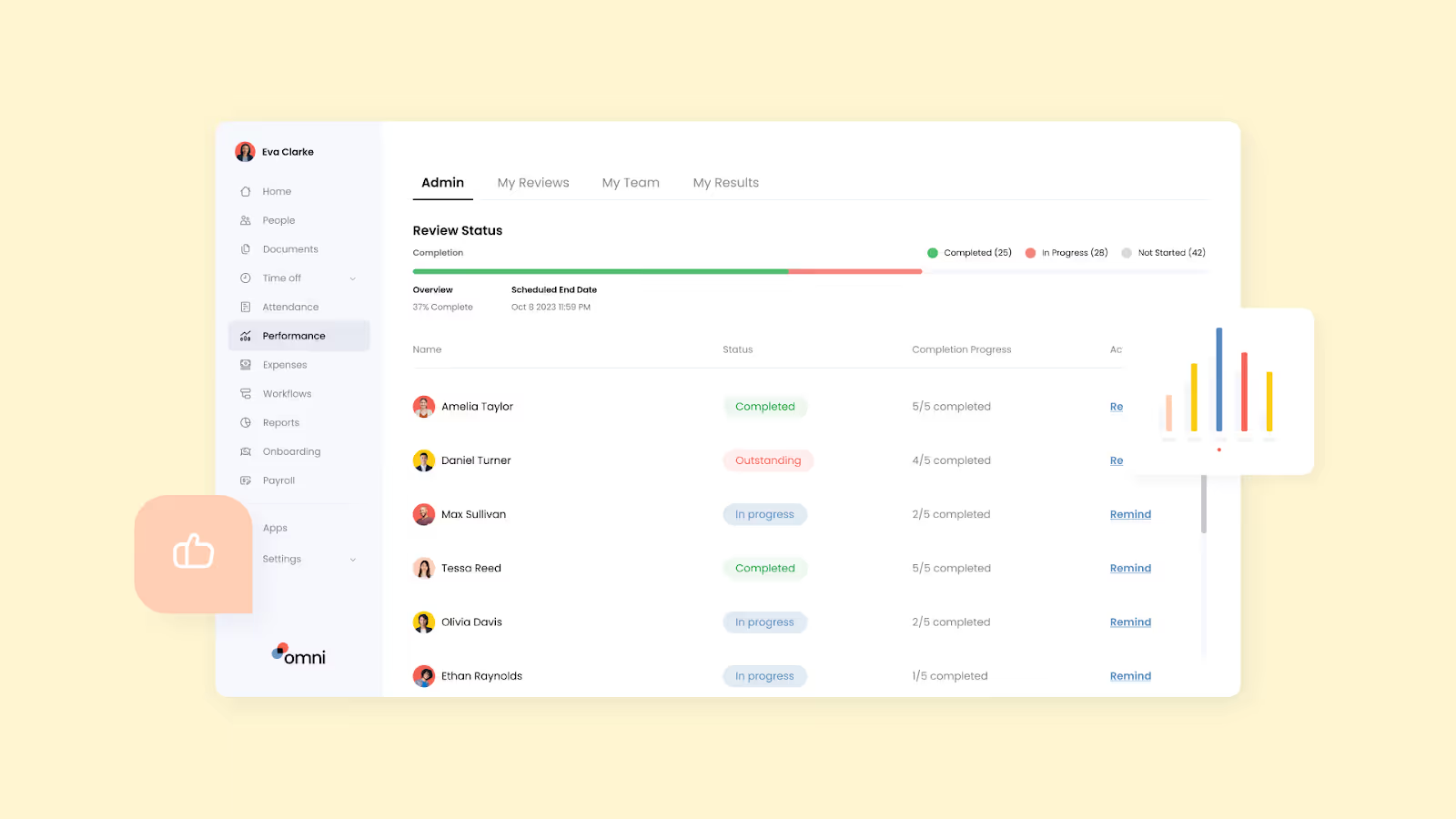
HR teams are tasked with handling performance reviews, tracking goals, and ensuring consistency, all while dealing with growing expectations for timely and personalized feedback. This increases administrative pressure and the potential for errors.
Leave management
It’s one thing to provide generous leave policies to employees; it’s another to manage them effectively. HR teams often struggle with tracking balances, handling overlapping requests, and ensuring compliance, especially across global teams and varying regulations.
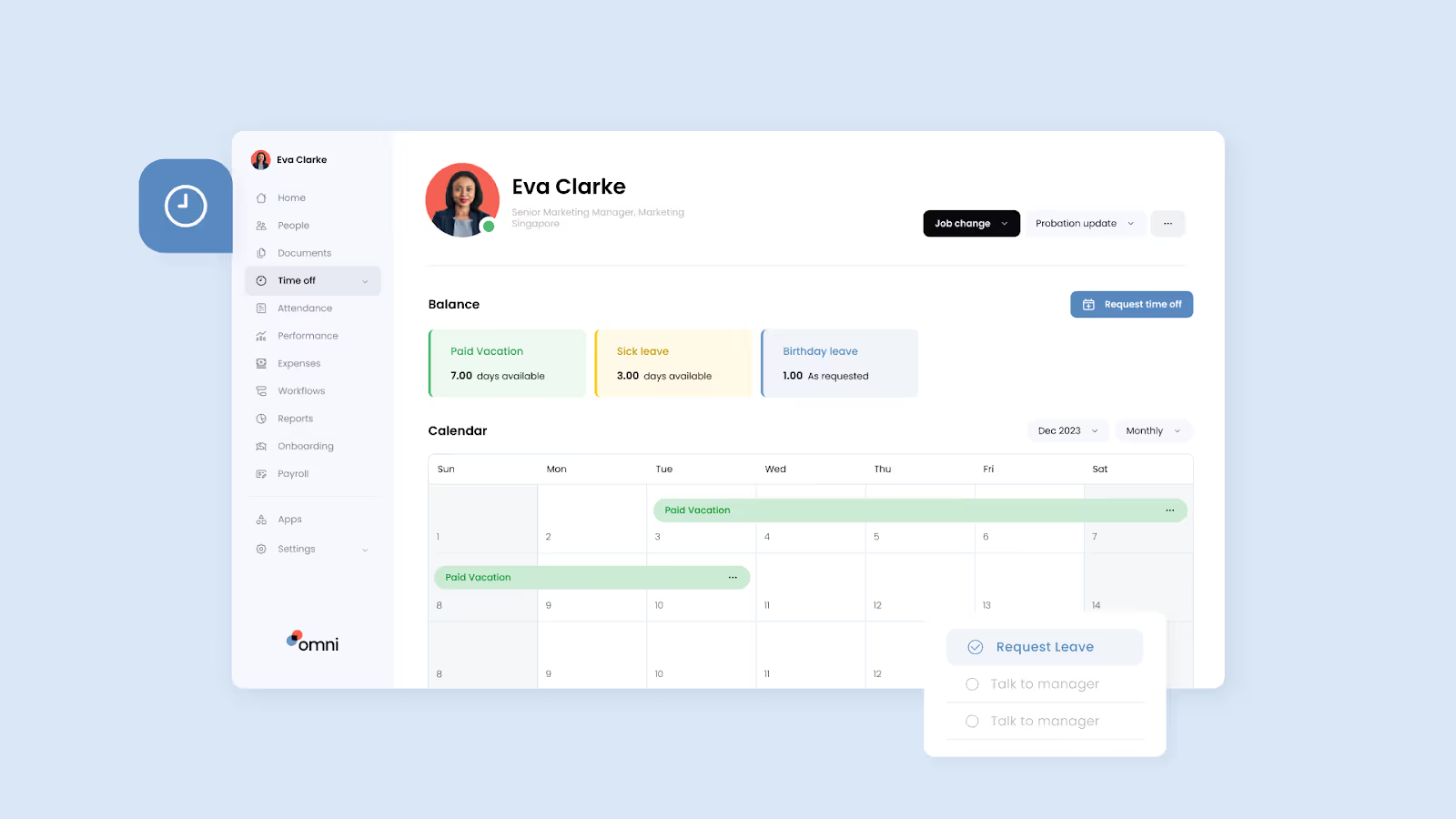
With AI tools for HR like Omni, sharing leave policies, tracking attendance and managing leave requests become faster and more accurate.
Benefits of HR Automation
- Increased efficiency: Automated workflows reduce manual tasks, allowing HR professionals to allocate time to strategic activities.
- Enhanced accuracy: Automation minimizes human errors in data entry and calculations.
- Improved compliance: Automated systems ensure adherence to regulatory requirements by maintaining accurate records and timely reporting.
- Better employee experience: Streamlined processes lead to quicker responses and improved satisfaction among employees.
- Reduced costs: HR automation significantly reduces administrative overhead by eliminating fragmented systems and manual work.
Take Virtual Internships, for example, who achieved a 60% reduction in HR costs by automating manual processes and streamlining employee lifecycle tasks with Omni. This allowed their HR team to focus more on strategic, high-impact initiatives rather than repetitive admin work.
Read the full story: Omni HR Helps Virtual Internships Cut Global HR Costs 60%
Understanding AI Tools for HR
While automation handles predictable processes, AI HR tech adds an intelligent layer that can analyze patterns, make recommendations, and continuously improve outcomes. Understanding real applications versus hype helps HR leaders make strategic technology investments.
One of the most common AI in HR examples is predicting employee turnover. By analyzing historical data like attendance records, performance trends, and engagement survey responses, AI tools for HR can flag employees at high risk of leaving. This allows HR to intervene early with targeted retention strategies.
Another AI in HR example is automating candidate screening. AI scans resumes, matches qualifications to job requirements, and ranks candidates based on predicted fit. This speeds up hiring and helps reduce bias by focusing on data-driven criteria rather than gut feelings.
In terms of employee engagement, AI tools for HR help to analyze patterns in survey results, internal chat messages, or feedback forms to detect shifts in morale or team sentiment. This real-time insight helps HR address issues before they escalate.
For Omni HR customers, this capability is now live through Mino — ask about headcount trends, attrition signals, DEI benchmarks, or hiring velocity in plain language and get back a fully customised chart or live dashboard in seconds, without leaving the platform or pulling a manual report.
Understanding the difference between impactful AI tools for HR and hype
AI might just be the buzz everyone’s chasing, but in HR, it’s not about being trendy. It’s about impact. With countless AI tools for HR flooding the market, it’s easy to get distracted by shiny features that promise to revolutionize HR overnight. But the real value of AI lies in how it tackles everyday challenges: helping you find the right candidates faster, spot turnover risks before they become losses, and understand employee sentiment in real-time.
What separates useful AI from the hype is clear business impact. Can it save your team hours each week? Improve decision-making? Reduce costly errors? If the answer is yes, then it’s more than just hype; it’s a strategic advantage.
Mino is a concrete example of AI that clears that bar. Built directly into Omni and drawing on unified APAC HR data, it answers workforce questions on demand — no separate analytics tool, no manual exports, no waiting on a report to be built.
Importance of HR Tech That Grows With You
HR systems that grow with you accommodate organizational changes without requiring replacement or major reconfiguration. This adaptability proves particularly valuable during growth phases, restructuring, or expansion into new markets. However, many HR teams make the mistake of investing in rigid solutions that meet current needs but fall short when the business grows or shifts direction.
Flexible vs. rigid HR systems
Flexible platforms outperform rigid systems across several dimensions: they support modular add-ons, integrate easily with other tools, and allow for customization without heavy IT involvement.
Rigid systems, on the other hand, often require complex workarounds, slow down HR processes, and limit the organization’s ability to respond to change quickly. Choosing flexible tech isn’t just about convenience; it’s about building resilience for whatever comes next.
Most HRIS are built to be rigid, forcing organizations to bend their processes to fit the limitations of their software. Omni does the opposite; we designed our platform to mold to your organization’s specific and unique functions, growing and scaling alongside your team and adapting to your evolving needs. As your team gets bigger, Omni keeps up. We fit how you work, not the other way around.
"What drew us to Omni was the flexibility of the platform in terms of all the fields that we want to incorporate to fit our business needs. Omni can serve all the countries that we have and, in the future, our expansion plans as well."
— Lovely Tan, Philippines Country Head of People, Qashier
Support diverse work models
Another reason why choosing AI tools for HR that grow with you matters is the increasing complexity of today’s workforce structure. As organizations scale, they’re managing a blend of full-time, part-time, contract, remote, and international employees, all with different needs and regulations. Without flexible systems, this complexity quickly becomes a burden. Scalable HR tech ensures teams can handle these variations without added friction or risk.
Signs your HR tech is outdated
There are clear warning signs that your HR technology may be holding you back. If your team spends too much time on manual tasks, struggles to keep up with compliance changes, or faces difficulties integrating new tools, your system likely isn’t built for the pace of modern work. Outdated platforms can also lead to poor user experiences, reporting limitations, and reduced agility during periods of growth or change. When you start noticing these signs, it’s a strong signal that it’s time to upgrade to a more flexible, modern HR solution - one that evolves with your business and supports long-term success.
Common warning signs include:
- Manual workarounds: Teams use spreadsheets or shadow systems to compensate for system limitations.
- Integration challenges: Data doesn't flow smoothly between HR and other business systems.
- Limited mobile access: Employees and managers can't complete tasks from mobile devices.
- Lengthy customization timelines: Simple changes require vendor intervention or custom coding.
- Delayed reporting: Real-time insights aren't available when needed for decisions.
- Compliance anxiety: System updates lag behind regulatory changes.
- User frustration: Employees and managers complain about system usability.
Future-Proof Your Business with AI Tools for HR
In an era defined by agility, distributed teams, and rising employee expectations, traditional and rigid HR technologies are no longer suited for today’s workforce. Whether it’s automating routine tasks, gaining real-time workforce insights, or scaling your systems, the AI tools for HR used should empower your team to focus on strategic initiatives, not be bogged down by administrative work.
That’s where Omni comes in. Our all-in-one HR platform frees HR teams from administrative cycles by automating the entire end-to-end employee lifecycle—from recruitment and onboarding to employee engagement and payroll—allowing you to redirect your time to strategic work that drives business growth. And with Mino, our platform becomes conversational — ask your workforce questions and get back charts, trend lines, and live dashboards instantly. No exporting. No waiting.
Powering Asia’s fastest-growing, modern companies, Omni scales alongside your company so you can customize and leverage the system to meet your business exactly where you are—as well as where you’re going.
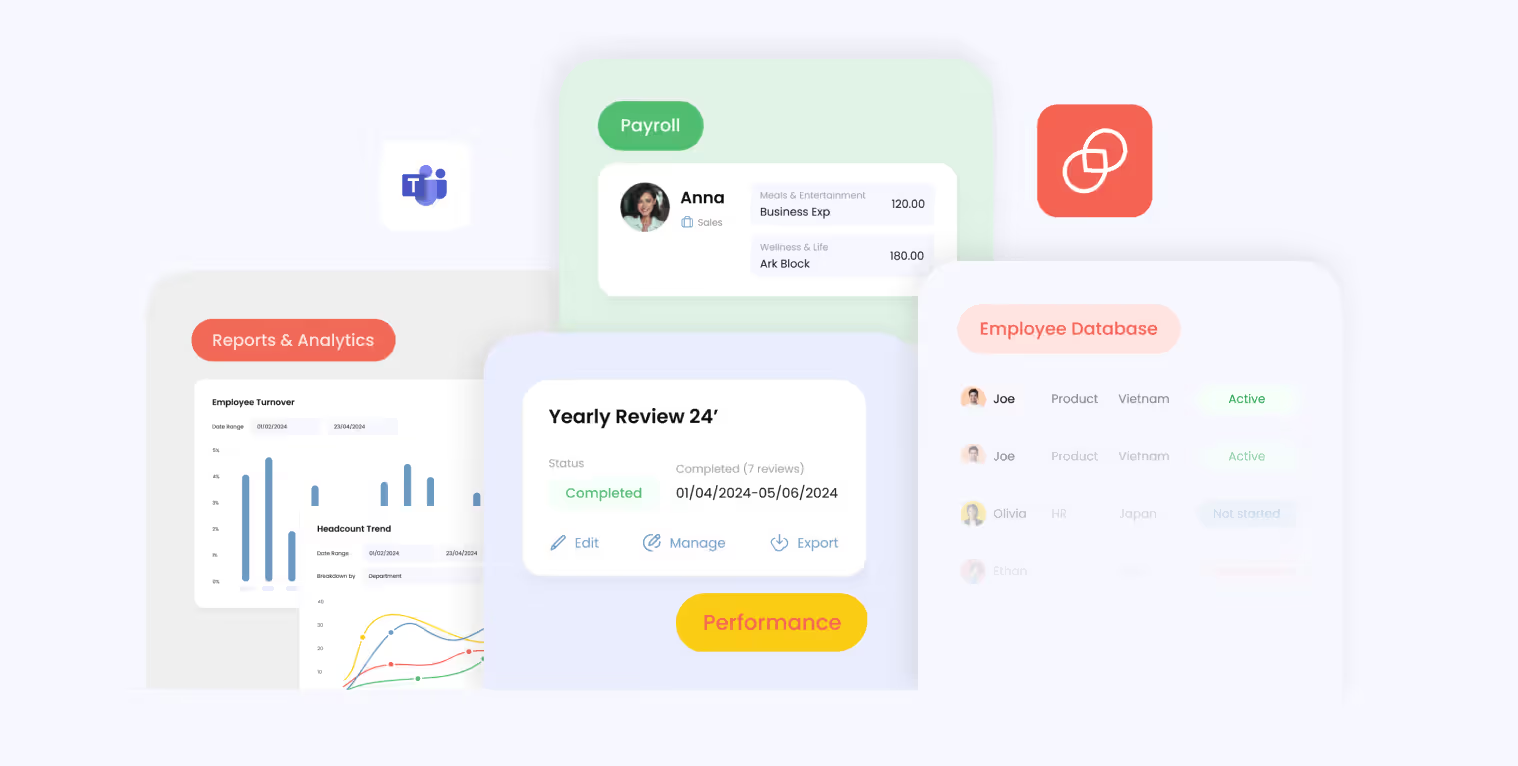
With a full suite of modules to support every aspect of your business, Omni’s platform offers an intuitive and fully customizable platform that integrates with your team’s favorite tools for a seamless and timely adoption. By embracing technologies such as applicant tracking systems, HRIS, and employee management HR tools, HR professionals can enhance their processes, improve outcomes, and create a competitive advantage for their organizations, enhancing efficiency, accuracy, and employee experience within their organizations.
Future-proof your HR operations with a platform that grows with you. Book a product tour with our team today to see Omni in action.