.png)
Summary. Managing distributed teams across borders requires more than spreadsheets. It demands modern IAM tools that protect sensitive HR data, ensure compliance, and streamline onboarding and offboarding. We compare the top identity and access management solutions for global teams, including AWS IAM, Okta, Microsoft Azure AD, and Ping Identity, while showing why Omni HR is the best fit for enterprises in Singapore and Asia. Unlike traditional identity management tools that focus narrowly on IT, Omni combines IAM security tools with HR workflows, multi-country payroll, and Asia-specific compliance, making it one of the most versatile identity and access management vendors. Backed by built-in localization, automation, and dedicated support, Omni helps HR leaders meet every HR compliance checklist SHRM requirement, reduce risks, and scale confidently across regions.
If you’re leading a distributed team today, you’ve probably felt the headache of managing access. One new hire in Singapore, another in Manila, a contractor in India, and suddenly you’re juggling who should (and shouldn’t) see payroll, HR files, or sensitive employee records.
Many companies still patch things together with spreadsheets, and that’s exactly where costly gaps show up: an ex-employee with lingering access or an audit that exposes compliance lapses.
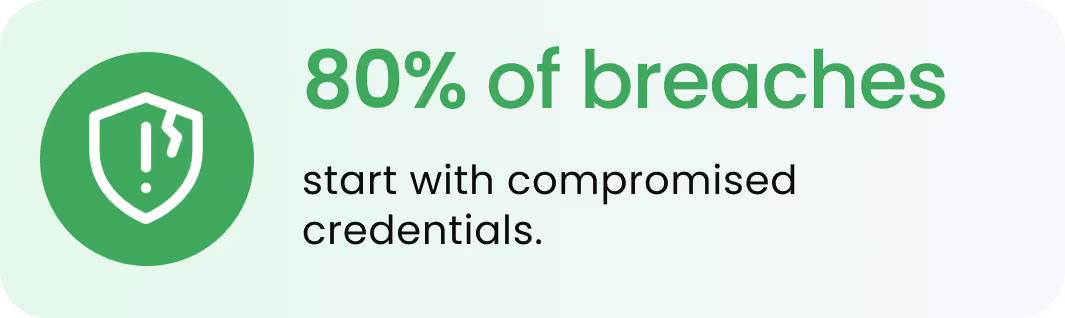
That’s why you need Identity and Access Management (IAM) tools. They don’t just secure logins; the best ones help HR and IT stay aligned, automating onboarding, protecting personal data, and keeping pace with local laws. In fact, nearly 80% of breaches start with compromised credentials, a risk you can’t afford when teams are spread across borders.
In this guide, we’ll look at the five best IAM tools for distributed teams, and why Omni HR stands out as the secure, scalable choice for enterprises across Singapore and Asia.
Why HR-Focused IAM Tools Matter for Distributed Teams
Distributed workforces aren’t just about collaboration; they are about control. Without the right IAM system, sensitive HR data can be exposed, compliance rules ignored, and simple admin tasks like onboarding or offboarding can drag on for days.
Here’s why HR-focused IAM tools are so important for such teams:
- Protecting sensitive HR data: Unauthorized access to employee records, payroll, or employment contracts can trigger breaches and even lawsuits. A good IAM system ensures only the right people see the right data.
- Meeting compliance head-on: From Singapore’s PDPA to SHRM HR compliance checklists, the pressure is real. IAM tools create audit trails and enforce policies so you’re ready for any review or inspection.
- Cutting out inefficiency: Manual spreadsheets and one-off fixes slow everything down. HR-focused IAM automates onboarding and offboarding, integrates with payroll, and removes the burden of constant admin work on your HR personnel.
Top 5 Identity and Access Management Vendors for Distributed Teams
When it comes to IAM solutions, there are many options on the market. Here we compare five leading identity and access management tools suited for global teams, highlighting their key features, HR compliance support, and pricing.
Below is a quick comparison table, followed by a closer look at each vendor:
1. Omni HR
For many HR leaders, managing access across multiple countries, compliance requirements, and systems in a fast-paced environment can be overwhelming. Legacy IAM tools fail to understand the nuances of HR workflows or evolving local employment laws. That’s where Omni comes in.
Our platform combines identity and access management with a modern HR platform, so you get security, compliance, and efficiency all in one place. Instead of needing to juggle multiple vendors, Omni allows you to manage the entire employee lifecycle—from onboarding to offboarding—while staying compliant with regulations.
"Omni excels at being very user-friendly compared to other HRIS; it's one of the more intuitive systems that's really focused on the user side of things. The platform gives you a simplified, clean look that is easy for us as HR to navigate and for our employees to use."
— Arvin S., HR Manager at Newbit
Built for APAC compliance and security
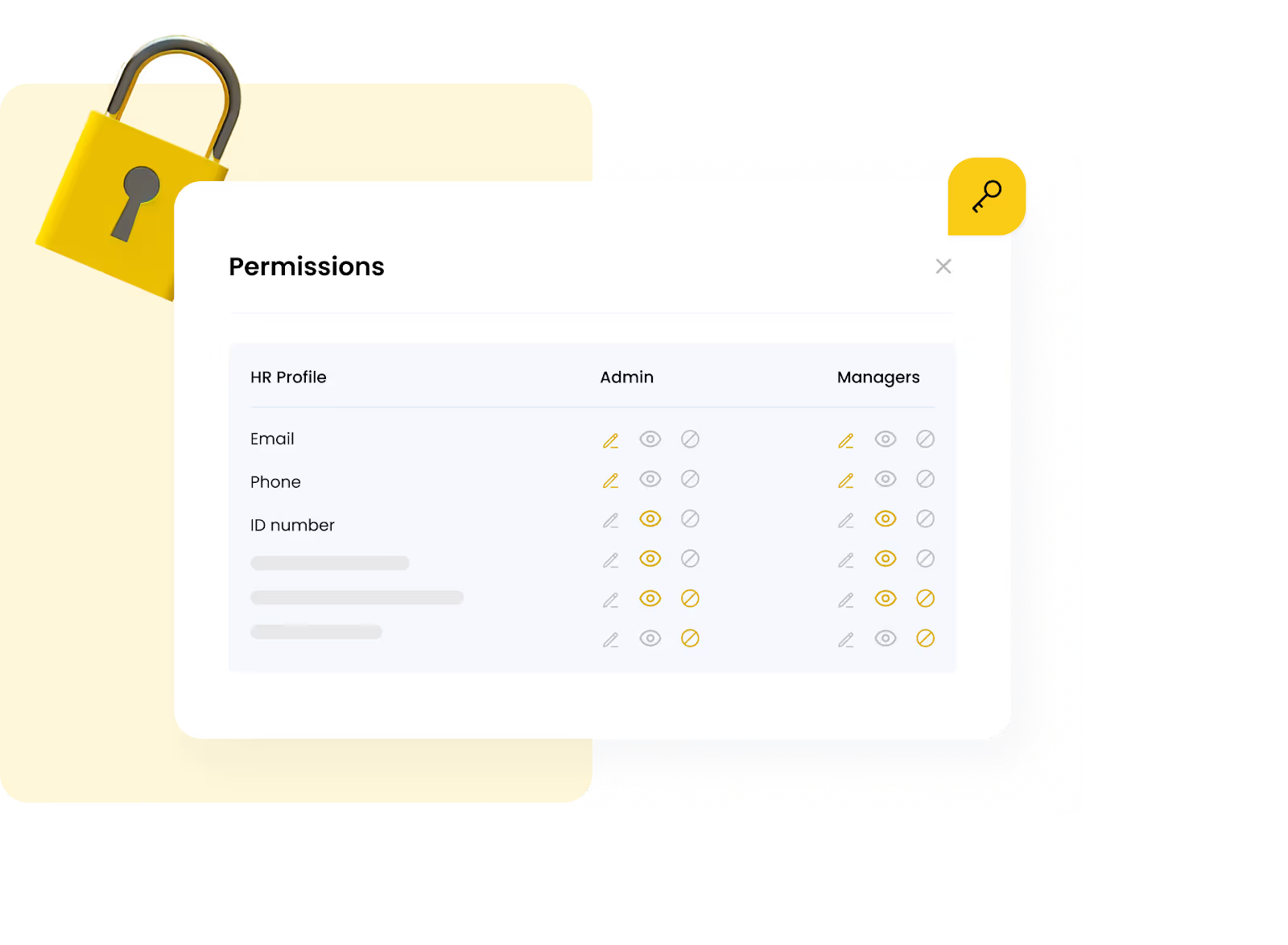
Omni is designed with local data privacy laws, payroll rules, and employment regulations built in from the start.
- Multi-role access controls ensure only HR managers and relevant stakeholders get access to sensitive salary and employee data.
- Customizable workflow automation instantly revokes access when employees complete offboarding.
- Audit logs provide full visibility for compliance checks and investigations.
“We want HR to be innovative. We don't want them to be stuck in a rut and think that this is the only way a function looks like. Omni has evolved to allow HR to play around in the ‘HR software sandbox,’ yet keeping that compliance and governance in the system itself that’s so essential.”
— Wenna Lee, HR Manager at IHRP
Automation that reduces costs and risks
Beyond IAM security tools, Omni shines in operational efficiency for distributed teams. With Omni, each new employee onboarded is automatically provided with their employee account and access according to that person’s role and location.
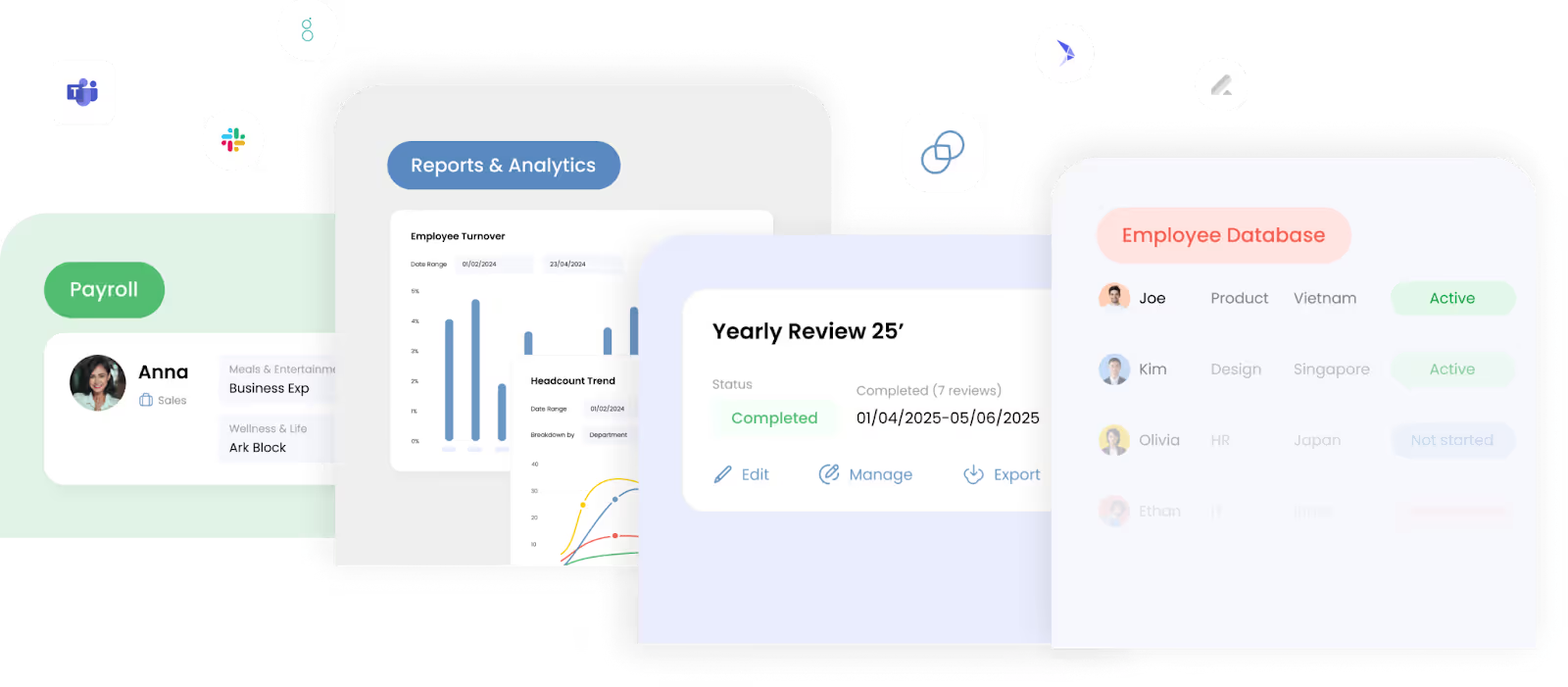
Our platform also integrates seamlessly with core HR functions such as payroll, time-off, performance management, and more, so that when an employee is promoted, transferred to a different department, or switched location, their access rights are updated instantaneously. No manual intervention needed.
This automation saves more than time; it drives measurable impact within your organization. Take Virtual Internships, for example. A pioneering tech firm, Virtual Internships, was able to cut global HR costs by 60% and achieved 75% faster document management while managing teams across 20+ countries. These gains came from removing manual processes and tightening security with Omni’s unified HR platform.
Scalable for multi-country operations
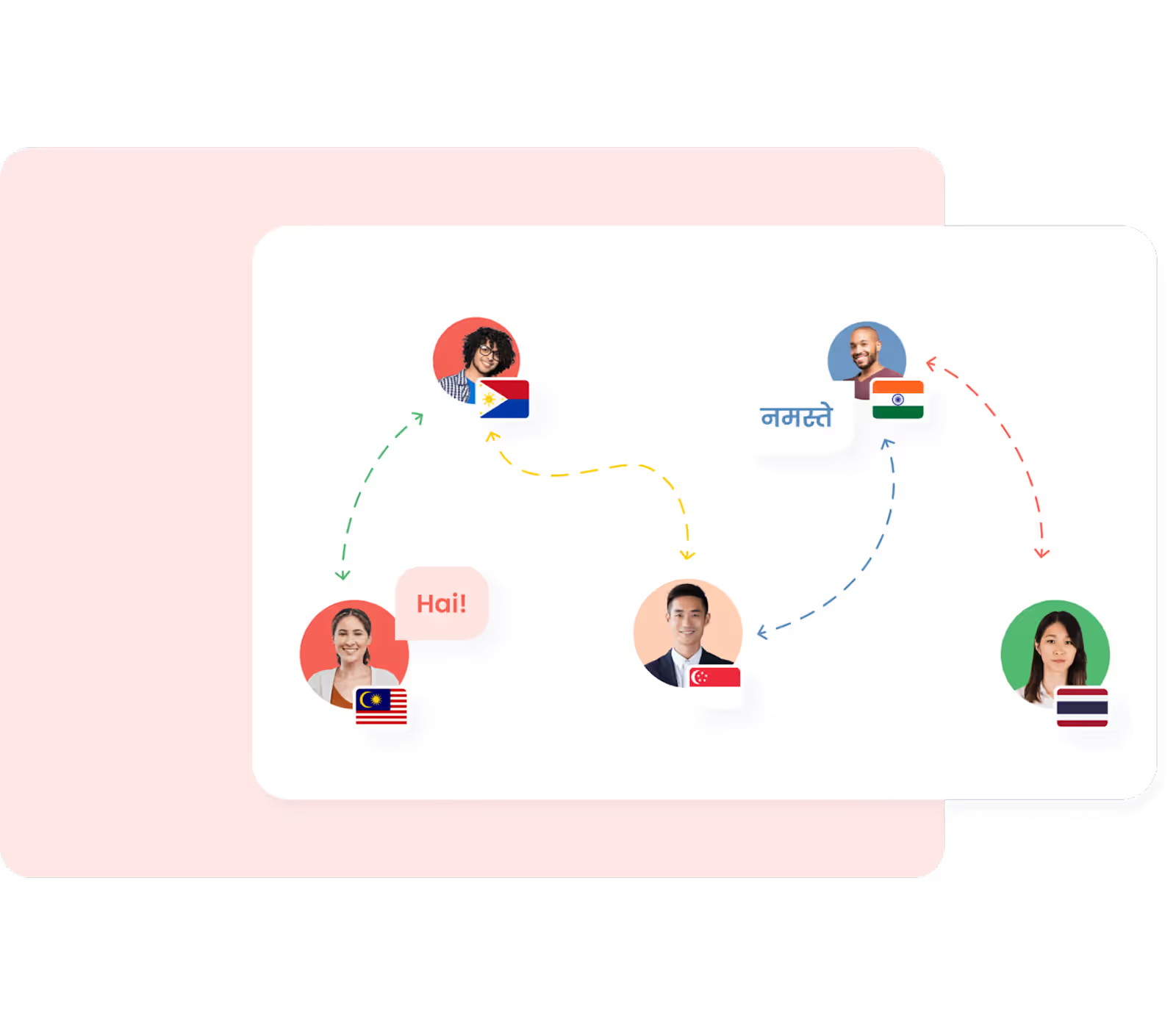
Omni is cloud-based and built to support multi-country operations across Asia, making it ideal for modern, growing companies. Out of the box, our platform offers localization for 190+ countries and 10+ languages, so you can scale seamlessly without needing new tools.
Unlike global vendors who leave you waiting on overseas support desks, our award-winning local customer support and implementation team supports you in your time zone, so your HR team can resolve issues quickly.
“What differentiates Omni is how tailored it is to Southeast Asian market needs. The platform's flexibility and the team’s responsiveness have been crucial in supporting our growth journey.”
— Derek Tan, Head of HR at Milieu Insight
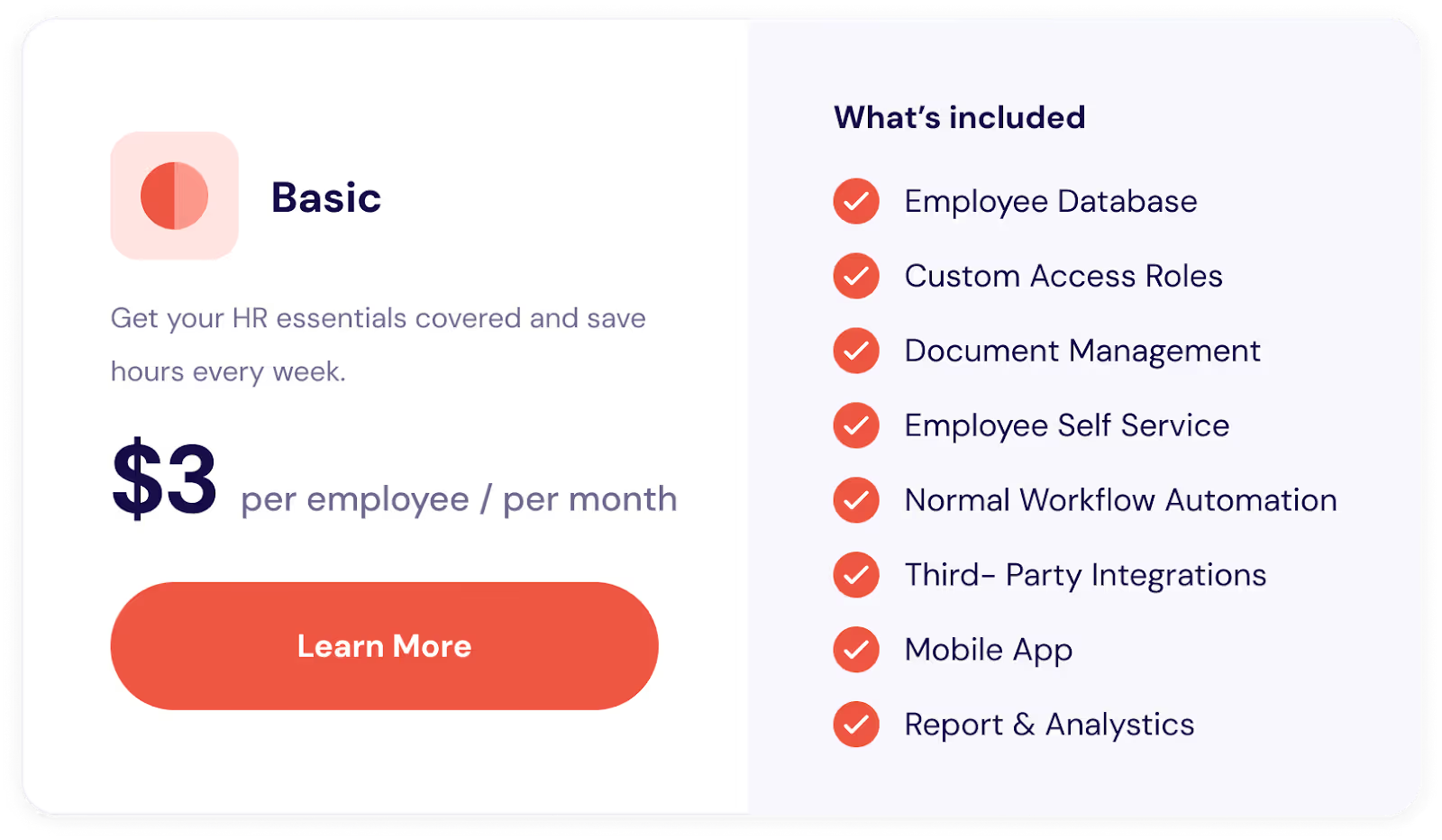
Starting from US$3 per employee per month, book your product tour and learn more about Omni.
2. Scalefusion OneIdP
Scalefusion OneIdP takes a different approach to IAM solution by combining identity management with endpoint control in a single platform. Where most IAM tools focus purely on authentication, OneIdP layers in device context — making access decisions based on both who is logging in and what device they're using.
Unified identity and device management
This integration makes it particularly useful for distributed or BYOD workforces. Key capabilities include:
- Zero Trust access controls tied to user and device posture
- Single sign-on (SSO) across cloud and on-premise apps
- MFA via its own authenticator or third-party apps
- Conditional access based on device compliance status
- Automated provisioning and deprovisioning tied to employee lifecycle events
- Just-in-time admin access for temporary elevated privileges
- Local admin password rotation via OneIdP LAPS
It is worth noting that OneIdP is purpose-built for IT and endpoint security, not HR workflows or regional compliance. For organizations managing remote teams across multiple devices and networks, it fills a gap that traditional IAM tools leave open. For companies primarily looking to manage HR data or payroll access, it's best paired with a dedicated HRIS.
3. AWS IAM
AWS IAM is Amazon’s built-in identity management tool, designed for managing who can use its cloud services. It is mostly used by companies that rely heavily on Amazon’s infrastructure. With IAM, administrators can decide which users, groups, or roles can access specific servers, databases, or resources, and what actions they’re allowed to take.
Flexible access policies
One of AWS IAM’s biggest strengths is flexibility. Admins can:
- Enforce logins only from specific IP addresses
- Limit access by time of day
- Require multi-factor authentication for sensitive actions
It also supports federation and SSO, so employees can log in with their usual company credentials while keeping AWS accounts secure.
That said, AWS IAM is narrow in scope. It’s excellent at protecting AWS resources but doesn’t manage HR systems, payroll, or non-AWS applications. For distributed teams, it’s best seen as one piece of a broader IAM strategy. The upside? It comes included with AWS accounts, so there are no extra licensing fees.
4. Okta
Okta is one of the leading cloud IAM tools built for teams that rely on multiple SaaS apps. With Single Sign-On (SSO), employees log in once and access all their tools like Slack, Workday, and email through a single dashboard. This simplicity reduces password fatigue and improves the employee experience.
Security and lifecycle management
Okta strengthens security with multi-factor authentication and supports IT/HR with lifecycle management. When HR adds a new hire, Okta provisions accounts automatically. When someone leaves, access is revoked across all apps at once, closing common security gaps for distributed teams.
The trade-off: Okta isn’t built for regional compliance out of the box. For companies in Asia, policies like PDPA or HR-specific data rules need to be configured manually.
Still, with thousands of integrations and affordable pricing, Okta is a popular choice for secure, user-friendly IAM tools.
5. Microsoft Azure AD
Microsoft Azure AD (now Entra ID) is Microsoft’s identity management solutions for both its own ecosystem and a wide range of third-party apps. For companies already on Microsoft 365, it offers a seamless way to unify employee logins and centralize details as identity and access management solutions.
Conditional access and security control
A key strength is conditional access. Admins can set rules that react to context such as:
- Requiring MFA when logging in from an unmanaged device
- Blocking logins from risky locations
Combined with detailed sign-in logs and reporting, IT teams gain strong visibility and compliance-ready controls. Premium tiers add governance tools like Access Reviews and just-in-time admin access.
Where Azure AD falls short is HR specificity—it doesn’t come with labor law or data retention rules preloaded. These need to be configured separately
On the upside, pricing is flexible: a basic version is bundled with Microsoft 365, while advanced plans start around $6 per user per month.
6. Ping Identity
Ping Identity is a long-standing IAM provider, often chosen by enterprises with complex or hybrid IT setups. Its platform offers secure single sign-on, multi-factor authentication, directory services, and adaptive access, all of which can be tailored to a company’s needs.
Strong integration capabilities
Ping’s biggest strength is integration. It bridges older on-premise systems with modern cloud apps, giving employees one-click access across both environments. For distributed teams, this removes the friction of juggling multiple logins and helps IT unify identity management in mixed environments.
Compliance and policy enforcement
While Ping doesn’t focus specifically on HR, it delivers essential compliance features such as audit logs, access certification workflows, and detailed policy enforcement. Enterprises can configure access so that only specific HR roles can view sensitive databases or employee records.
Must-Have Features for Identity Management Solutions
When you’re comparing IAM tools, the must-have features fall into two buckets: the essentials that every solution should cover, and the advanced ones that future-proof your security and compliance.
Essential Features
- Role-based permissions: Employees only see what’s relevant to their job. This cuts out unnecessary access and lowers the chance of mistakes or misuse.
- Audit trails & reporting: Every login, change, or permission grant should be logged. These records aren’t just for IT; they’re also important for HR compliance reviews and audits.
- Automated onboarding & offboarding: Accounts should be created or revoked instantly. No delays for new hires, no risk of ex-employees retaining access.
- HR & payroll integration: IAM should link with your HRIS or payroll so that role changes, promotions, or exits automatically update access rights. Better still, get an all-in-one platform like Omni that gives you access to all.
Advanced Features
- AI-powered threat detection: This goes beyond static rules by spotting unusual behavior, like a login from an unexpected location, and flagging it before it escalates.
- Adaptive authentication: Balances security and usability by only stepping up requirements (like MFA) when risk is high.
- Mobile & BYOD support: Distributed teams often use personal devices. IAM should make that access secure without creating friction.
- Multi-language support: If you’re managing teams across Asia or beyond, employees should be able to use the IAM system in their own language. It boosts adoption and reduces errors.
Identity and Access Management Solutions Evaluation Matrix
Choosing IAM tools for a distributed workforce requires weighing several factors. Here’s a quick evaluation matrix of criteria to consider and red flags to watch out for:
Key evaluation criteria
- Security and compliance: Your IAM should cover the basics; multi-factor authentication, encryption, and role-based permissions that keep sensitive HR and payroll data safe.
- Audit and reporting: A strong tool makes it easy to see who accessed what and when, so you’re always ready for HR or regulatory audits.
- Scalability and integration: The system should grow as your business grows, and connect smoothly with HRIS, payroll, and IT systems to avoid silos.
At the same time, knowing what to avoid can save you from investing in identity management tools that create more problems than they solve.
Red flags
- Lack of local insight: Be cautious of global tools that don’t account for regional requirements like Singapore’s Singpass, Malaysia’s MyKad, Hong Kong’s iAM Smart, or Thailand’s Digital ID framework. Without this, businesses risk regulatory non-compliance, employee access delays, and integration failures.
- Weak HR compliance features: If the system can’t automate onboarding, offboarding, or enforce data rules, it creates gaps in access control, higher chances of unauthorized access, and inefficiencies for HR and IT teams.
- Limited audit and MFA: Sparse logging or outdated authentication methods are signs that the system can’t keep up with the modern IAM security tools. That leaves businesses exposed to undetected breaches, failed compliance audits, and weakened identity management practices.
The right IAM tools strike the balance. The best solutions are secure, compliant, and easy for HR and IT teams to manage, reducing risk while improving operational efficiency.
Frequently Asked Questions
1. What are IAM tools, and why are HR-focused IAM solutions important for distributed teams?
IAM tools manage digital identities and control who has access to which systems. HR-focused IAM goes a step further; it connects access directly to HR data, so onboarding, promotions, and exits are handled securely and automatically.
For distributed teams, this means fewer risks of ex-employees keeping access, and smoother compliance across borders.
2. How do IAM tools support HR compliance in Singapore and Asia?
They enforce local rules on data access and create detailed audit logs important for IAM regulations like Singapore’s PDPA. They also automate offboarding, role changes, and data protection workflows, helping HR teams prove compliance without drowning in manual checks.
3. Can AWS IAM or Okta meet multi-jurisdiction HR compliance requirements?
Not fully on their own. AWS IAM is excellent for cloud security, and Okta is great for SSO and lifecycle management, but neither is tailored to Asia’s labor laws. You’d need extra setup or complementary tools. Platforms like Omni HR are built with local compliance in mind from the start.
4. What features should I prioritize when evaluating HR IAM tools or solutions?
Look for role-based access controls, audit trails, automated onboarding/offboarding, and integration with HRIS/payroll. If you’re planning to scale, advanced features like adaptive authentication, mobile security, and multi-language support become very important.
5. How do I measure ROI from IAM tools deployment?
ROI usually comes from three places: fewer security incidents (avoiding costly breaches), less manual admin work (IT and HR save hours every week), and faster employee onboarding (new hires are productive sooner). Some companies have cut HR costs by nearly half through IAM automation.
Why Asian Enterprises Choose Omni HR
Omni stands out as the top choice for enterprises in Asia seeking IAM tools, combining HR-focused access management with built-in compliance for diverse local regulations.
Unlike legacy IAM tools, Omni brings security and HR operations together in a centralized, scalable platform tailored for the complexities of growing, multi-country organizations.

Why top HR leaders trust Omni:
- Centralized, secure, and scalable platform to manage the full employee lifecycle. Backed by AES-256 encryption and ISO 27001 certifications (same as what banks use).
- Multi-country support with compliance automation for payroll, leave, and HR data.
- Coverage in 190+ countries and support 10+ languages, ready for regional and global expansion.
- Multi-currency payroll automation including SGD, MYR, HKD, and more.
- Dedicated regional account managers for smooth onboarding and responsive support.
- Mobile-first self-service app so employees and managers can handle HR tasks on the go.
- Scalable pricing starting at just US$3 per employee per month. Find the perfect pricing plan for your needs.
For HR leaders across Asia, Omni is the trusted identity and access management vendor for you to simplify compliance and scale with confidence. Book a demo with our team today to learn more.
.avif)


.avif)