.png)
Summary. In 2025, businesses exploring the best learning management system options will encounter many strong contenders, from top LMS platforms like TalentLMS, iSpring, and Absorb, to open-source systems such as Moodle and enterprise-grade solutions like Blackboard. These best LMS platforms excel at large-scale corporate training, but for SMEs, they often come with steep costs, complex features, and siloed data. That’s why growing companies are turning to Omni: a smarter, more cost-effective alternative that combines the essentials of the best LMS software — onboarding, compliance, and HR training tracking — with the power of an all-in-one HR system. With localized compliance for APAC businesses, scalability built in, and pricing starting at just US$3 per employee per month, Omni may be the best LMS for small business alternative, giving you everything you need from an LMS e learning platform without the unnecessary complexity of traditional top LMS systems.
To remain competitive, businesses are doubling down on what truly drives growth: their people. This has led to a significant surge in the adoption of LMS platforms as companies, even small ones, recognize the critical need for structured employee training, continuous upskilling, and streamlined compliance tracking. The importance of a well-trained, knowledgeable workforce cannot be overstated.
But a crucial question often arises for smaller businesses: Do you truly need full-fledged LMS platforms? The reality for many SMEs is that they lack a dedicated Learning & Development (L&D) team or the substantial volume of custom course content required to justify the high cost and complexity of a traditional LMS subscription. These powerful LMS platforms, while excellent for large corporations with complex training needs, can feel like overkill for a team of 50 people. The challenge isn't a lack of desire to train, but rather a need for a solution that is simple, cost-effective, and aligned with their core business operations.
In this article, we’ll explore the best learning management system options available for SMEs in 2025, from the best LMS software to hybrid solutions. We'll examine the key features, pricing, and ideal use cases for each platform, helping you determine whether specialized LMS platforms or a powerful, all-in-one HRIS is the best LMS for small businesses.
Learn more: How to Build an Employee Development Program
The Role of LMS Platforms for SMEs
For small and medium-sized businesses, the decision to invest in LMS platforms is driven by several factors. At the core, it's about making your workforce smarter, more productive, and more compliant. The benefits of LMS platforms for an SME are multifaceted and have a direct impact on the bottom line.
Why SMEs are exploring LMS platforms
The primary motivations for SMEs to explore LMS platforms often include:
- Streamlined onboarding: A structured training process enables new hires to get up to speed faster. Instead of a senior employee dedicating hours to one-on-one training, an LMS provides a consistent, self-paced curriculum that ensures every new team member receives the same foundational knowledge and skills.
- Compliance and risk mitigation: Many industries have mandatory training and certifications. LMS platforms stand in as a powerful HR training tracking software that automates these processes, sends reminders for renewals, and maintains an auditable record of who has completed what. This is critical for avoiding regulatory fines and legal issues.
- Scalable training: As a business grows, manual training methods become unsustainable. LMS platforms allow companies to create training content once and deliver it to dozens or even hundreds of employees simultaneously, ensuring a uniform quality of instruction.
- Employee engagement and retention: Offering opportunities for professional development shows employees that the company is invested in their growth. This can significantly boost morale and is a key factor in improving employee retention, which is far more cost-effective than constant hiring and retraining.
Typical challenges faced by SMEs
While the benefits are clear, SMEs often run into significant hurdles when trying to implement LMS platforms at full scale. The challenges are not just about budget; they are about practicality and resources.
- Cost and complexity: Many enterprise-grade LMS software solutions are priced for large corporations. They come with a hefty price tag and a long implementation process that requires a dedicated team, which most small businesses simply don't have. The "bells and whistles" of advanced features often go unused, making the investment difficult to justify.
- Content creation and management: Top LMS systems are only as good as their content. Creating high-quality, engaging training modules from scratch is a massive undertaking. SMEs may not have the internal expertise, time, or budget to develop a vast library of courses, leading to an underutilized platform.
- Integration issues: A standalone LMS often exists in a silo, separate from other critical business systems like payroll, performance management, or time tracking. This creates inefficiencies and requires manual data entry, defeating the purpose of automation.
Best Learning Management System for SMEs in 2025
For SMEs that have determined a dedicated learning management system is the right fit, the market offers a diverse range of powerful and user-friendly LMS platforms. The best LMS platforms are those that strike a balance between robust features, ease of use, and a pricing model that scales with your business, not against it. Whether you’re looking for the best LMS for small business, the best LMS for corporate training, or scalable HR training tracking software, here are the top LMS systems for 2025.
TalentLMS
TalentLMS is one of the best LMS platforms for SMEs thanks to its cloud-based simplicity and intuitive design. It is ideal for quick deployment without a steep learning curve, making it a great LMS for small business training programs.
Key features:
- Intuitive course creation: Drag-and-drop builder for courses with videos, docs, and presentations.
- Gamification: Badges, points, and leaderboards to boost engagement.
- eCommerce functionality: Sell and manage paid courses easily.
- Analytics: Detailed reports on learner progress and compliance.
Pricing:
- Starts at $119/month for 1–40 users.
- Free plan for up to 5 users and 10 courses.
iSpring Learn
iSpring Learn is a powerful and versatile LMS, often lauded for its seamless integration with the iSpring Suite authoring tool. This makes it a great choice for companies that need to create high-quality, interactive content in-house. It’s one of the best learning management systems for course development, delivery, and tracking.
Key features:
- Advanced authoring tool: Build quizzes, simulations, and video courses.
- Mobile learning: Courses available offline with a mobile app.
- Performance tracking: Aligns learning with a competency matrix.
- Detailed analytics: Customizable ROI and performance reports.
Pricing:
- From $6.64 per user/month (billed annually, min. 100 users).
Absorb LMS
Absorb LMS is an enterprise-grade platform with powerful AI features, making it one of the top LMS platforms for businesses with complex training needs.
Key features:
- AI-powered learning: Personalized learning paths and recommendations.
- Smart administration: Automated enrollment and course assignments.
- Extended enterprise: Excellent for partner and customer training.
- Global support: Multi-language and robust integrations.
Pricing:
- Custom pricing
Moodle
Moodle is the most iconic open-source LMS in the world, known for its flexibility and community-driven support. It is ideal for SMEs with IT expertise looking for the best LMS software on a budget.
Key features:
- Free and open source: No licensing costs.
- Highly customizable: Endless plugins and personalization.
- Strong community: Support, resources, and shared tools.
- Extensive features: Quizzes, forums, assignments, wikis, and more.
Pricing:
- Free self-hosted.
- MoodleCloud plans from $160/year for up to 50 users.
Blackboard
Blackboard remains one of the top LMS systems in both education and corporate training, offering a feature-rich platform for large organizations.
Key features:
- Mobile access: Native app for learning anywhere.
- Collaborative tools: Virtual classrooms, discussions, and file sharing.
- Accessibility: Designed to meet diverse learner needs.
- Integrations: Compatible with student info systems and content providers.
Pricing:
- Custom enterprise pricing.
SkyPrep
SkyPrep is a simple, intuitive, and highly adaptable LMS e-learning platform that simplifies training management.
Key features:
- Effortless course creation: Upload and deliver content easily.
- White-labeling: Fully branded experience.
- Compliance training: Automated reminders and certification.
- Integrations: Connects with Salesforce, ADP, Zapier, and more.
Pricing:
- Custom quotes based on active users.
Coassemble
Coassemble is one of the most collaborative LMS platforms available, designed for teams that want to co-create interactive training.
Key features:
- Collaborative authoring: Multiple team members can create courses.
- AI-powered content generation: Turn documents into interactive training.
- Mobile-friendly design: Optimized for all devices.
- Cost-effective: Pricing based on creators, not learners.
Pricing:
- Free plan for one creator.
- Paid plans from $50/month for five creators.
Kallidus Learn
A strong choice among learning management system providers UK, Kallidus Learn integrates training with performance management, offering a holistic approach to employee growth.
Key features:
- Integrated learning & performance: Links skills with career progression.
- Social learning: Forums, boards, and collaboration tools.
- Compliance reporting: Audit-ready reports for regulated industries.
- Off-the-shelf content: Large library of ready-made courses.
Pricing:
- Custom annual plans, starting from ~£300/month.
Do You Really Need an LMS Platform?
This is the pivotal question for many small and medium-sized business owners. The answer depends entirely on the specific needs of your organization.
When an LMS platform makes sense
A dedicated learning management system is the right choice when:
- Learning is your core business: If your company is in the business of selling training or creating e-learning content for external clients, choosing the best learning management system is essential.
- You have a large, diverse workforce: For businesses with hundreds of employees and a wide range of roles that require distinct, specialized training paths, top LMS platforms provide the necessary structure and customization.
- You have a dedicated L&D team: If you have the personnel to manage the system, develop content, and analyze learning data, you can maximize the value of an advanced platform.
When an HRIS is enough
For the vast majority of SMEs, the truth is that a powerful, all-in-one HRIS is a smarter, more practical solution.
- Focus on core HR functions: Most SMEs' training needs revolve around essential functions like onboarding, compliance tracking, and policy dissemination. An integrated HRIS can handle these tasks efficiently alongside payroll, leave management, and employee records.
- Efficiency and cost savings: Instead of paying for two separate systems— clunky, underused LMS platforms and a separate HR system—an HRIS consolidates everything into a single, cost-effective platform. This simplifies your tech stack and reduces administrative burden.
- Data consolidation: A single system allows for a holistic view of your employees. You can easily link training completion to performance reviews, track the skills of your workforce, and ensure everyone is aligned with company goals without having to juggle data between multiple platforms.
Why Omni’s Integrated HR Platform Can Be the Smarter Move
For many SMEs, the complexity and cost of a standalone LMS e learning platform may not align with their actual needs. Traditional learning management system providers often design their tools for large corporations with complex training needs, resulting in higher costs, clunky interfaces, and features that smaller teams rarely use.
But if your priority is onboarding, policy dissemination, compliance training, and HR training tracking software, then investing in one of the so-called top LMS platforms may not align with your actual needs. This is where Omni comes in.
With Omni, you get the functionality you need from the best LMS for small businesses without the complexity of managing yet another system. By integrating training management directly into your HR software, Omni becomes a smarter, leaner, and more cost-efficient alternative to traditional LMS platforms.
Training tracking without complexity
Instead of needing a separate system, Omni allows you to manage training directly within your core HR software. Upload Standard Operating Procedures (SOPs), safety manuals, compliance guides, or onboarding checklists, then assign and track them with ease.
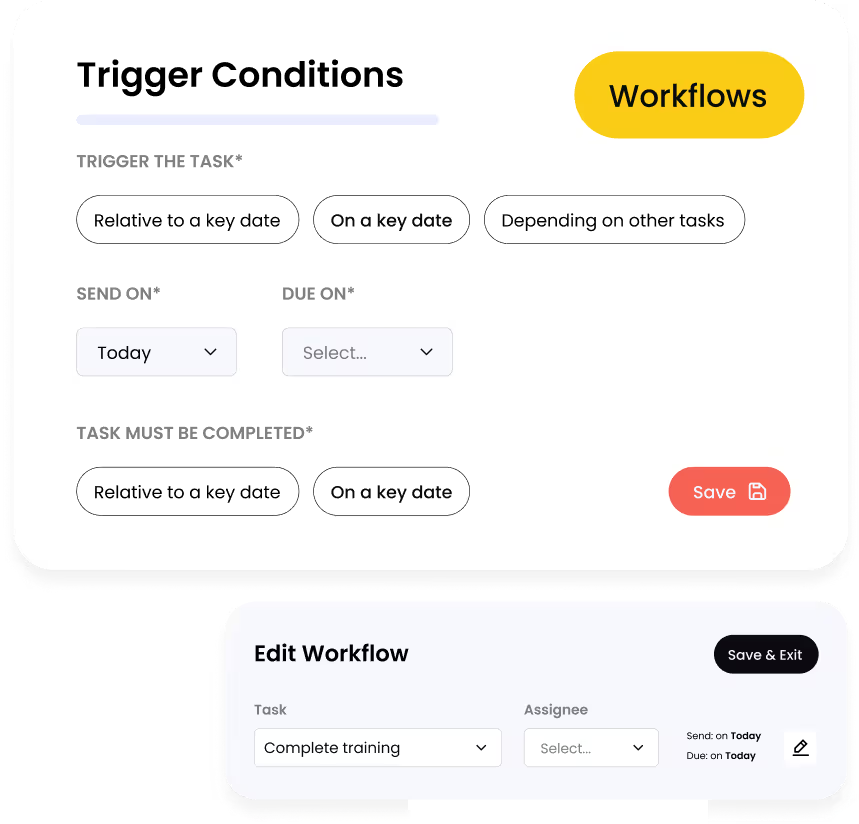
Key benefits:
- Track training completion with automated reminders.
- Link training progress to employee records in a centralized database.
- Generate audit-ready reports in minutes for compliance purposes.
- Connect training data with payroll, leave, and performance management.
Instead of working with multiple tools, SMEs get a single source of truth with Omni, making it the best LMS software alternative for businesses that value simplicity and efficiency.
Centralized HR database
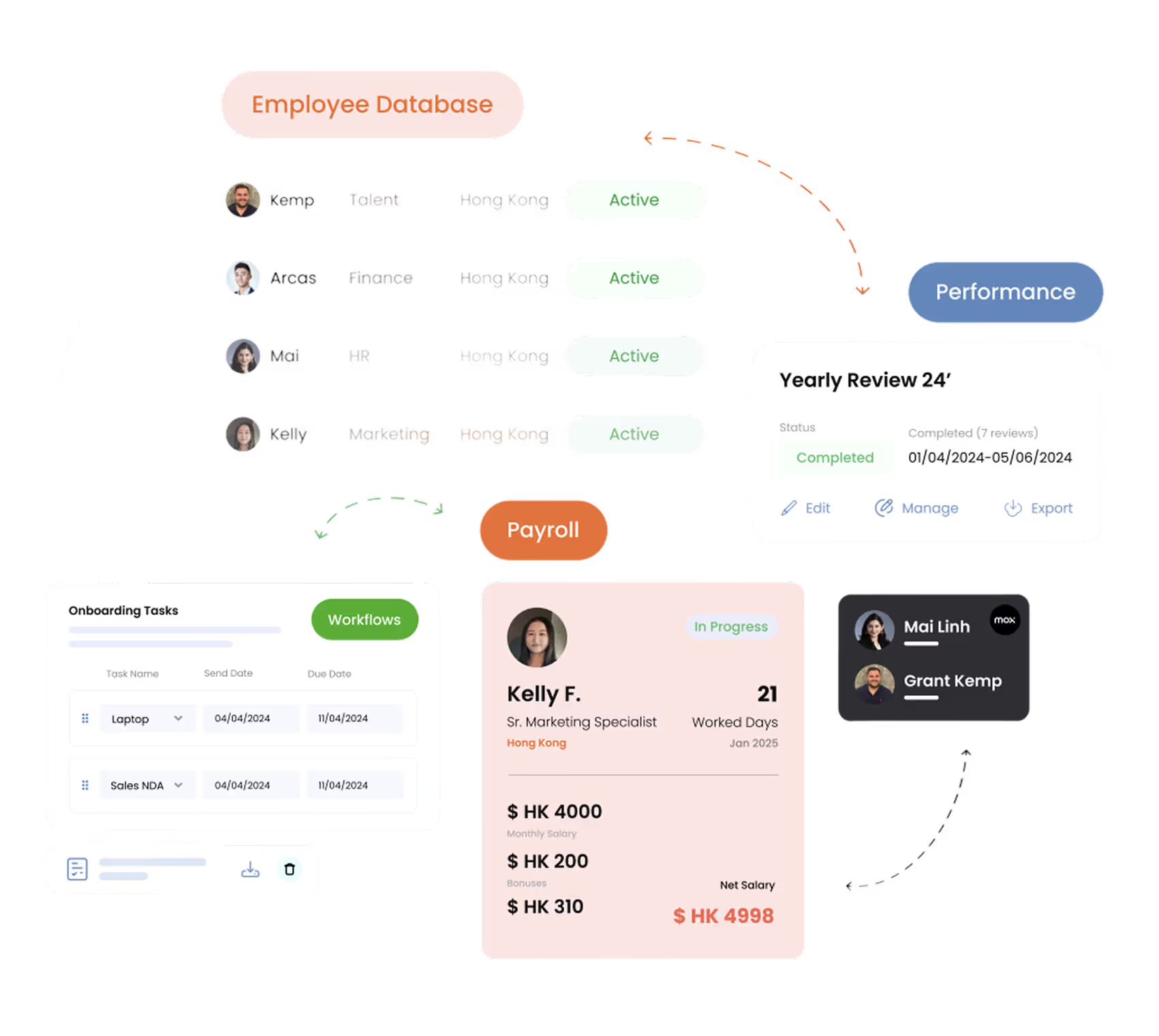
Unlike standalone LMS systems, Omni integrates directly into the employee lifecycle. Managers can review performance reviews, leave history, and training completion side by side, all in one place.
This unified approach gives SMEs the visibility that larger enterprises enjoy with the best LMS platforms, but in a much more agile and cost-friendly way.
Smarter cost savings
Traditional top LMS systems often come with expensive licenses and unused features.
Omni takes a different approach with flexible and transparent pricing, starting at just US$3 per employee per month.
With Omni, you’ll receive:
- Core HR and training management from day one.
- Scalable functionality as business needs evolve.
- Lower costs by eliminating duplicate tools.
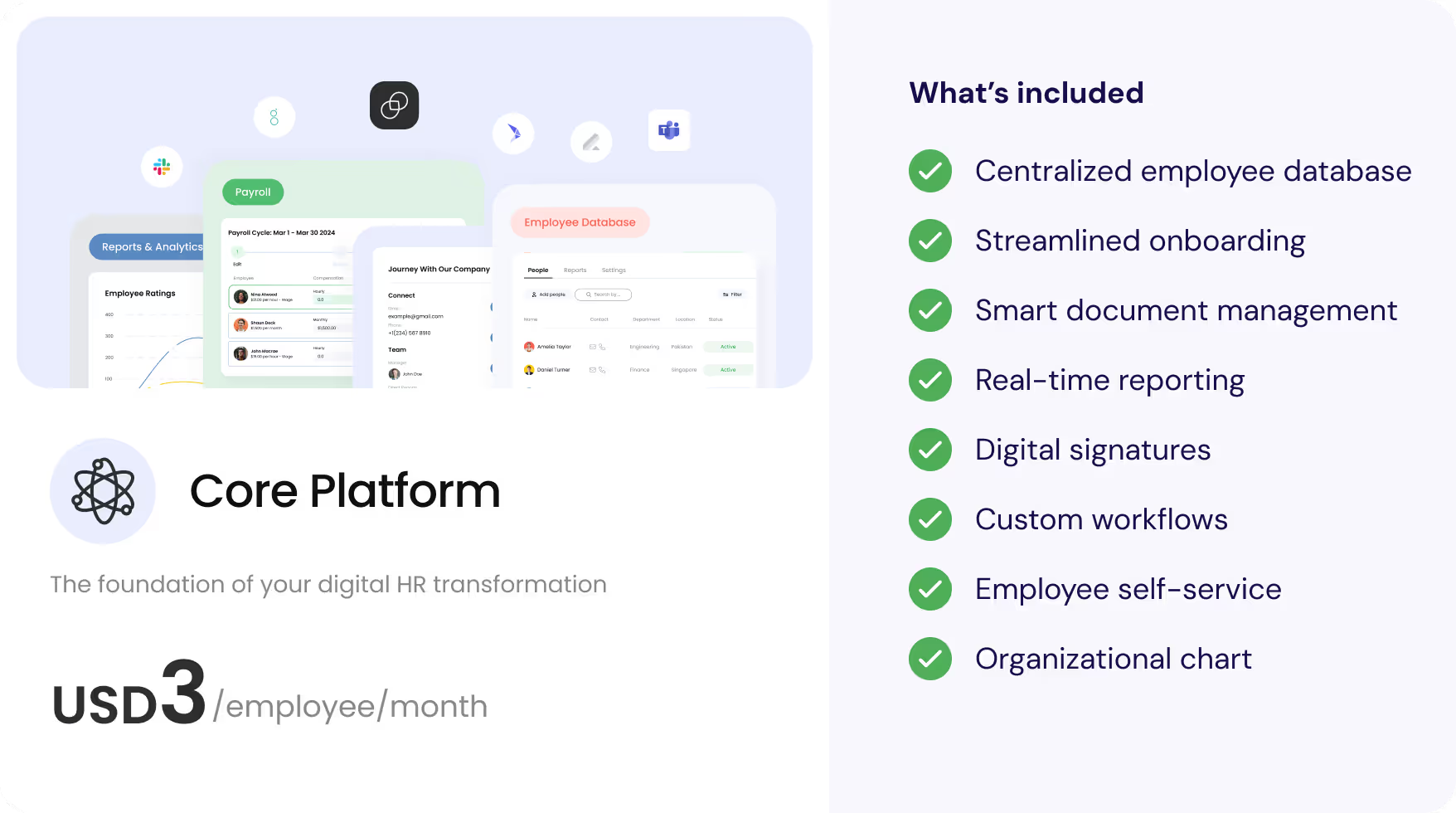
This makes Omni one of the best LMS for corporate training alternatives for growing SMEs who want to be smart with their budgets.
SEA-specific advantage
What truly sets Omni apart from global learning management system providers is our localization. Built for APAC businesses, Omni integrates seamlessly with statutory requirements like CPF in Singapore, EPF in Malaysia, and PhilHealth in the Philippines, something even top LMS platforms may overlook.
Get my free compliance calculators
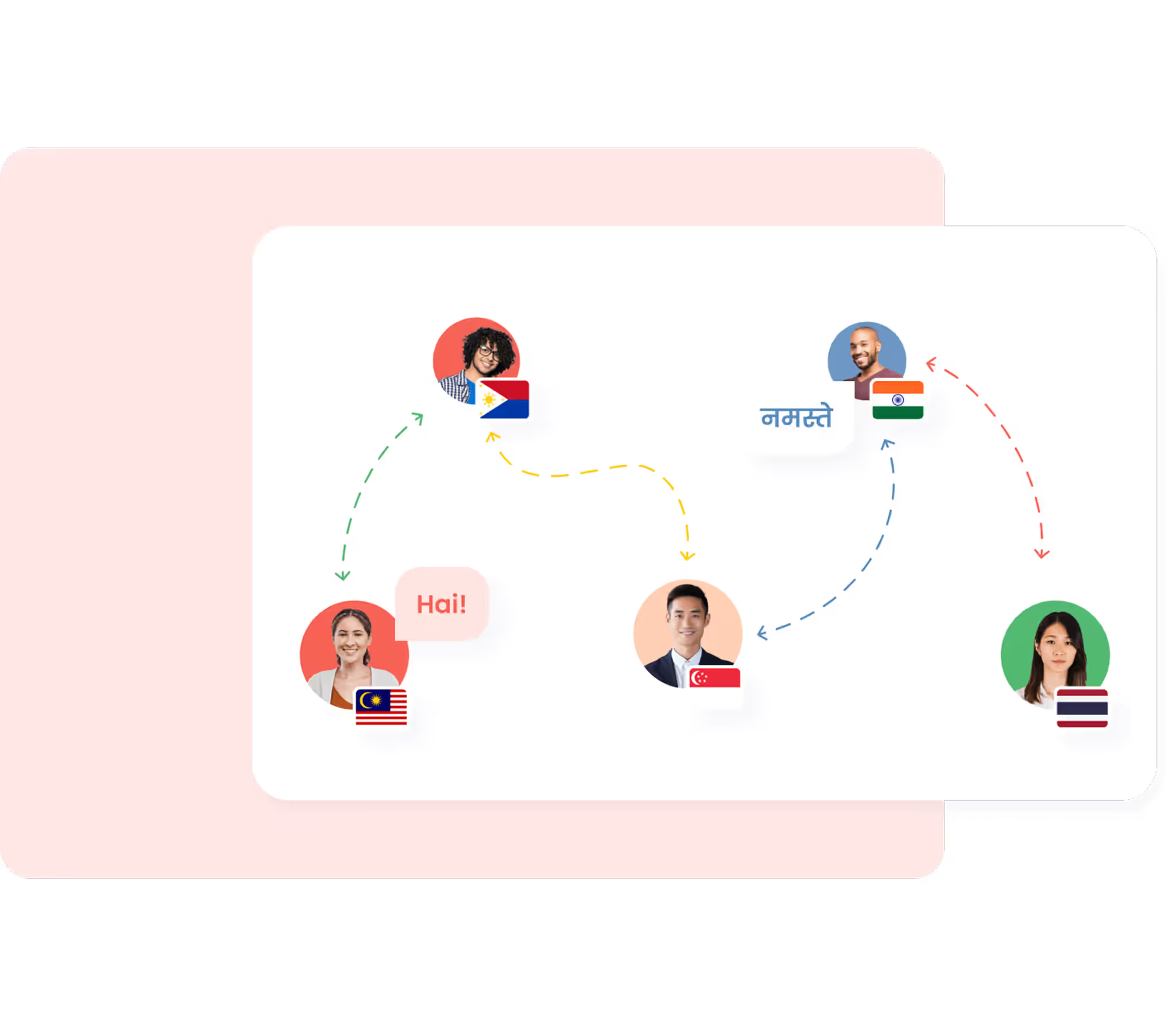
This means your training data isn’t just centralized but also compliance-ready for potential regional audits and regulatory changes.
“We want HR to be innovative. We don't want them to be stuck in a rut and think that this is the only way a function looks. Omni has evolved to allow HR to play around in the ‘HR software sandbox,’ yet keeping that compliance and governance in the system itself that’s so essential.”
— Wenna Lee, HR Manager at IHRP
Bottom line
If you are comparing the best learning management system providers or exploring top LMS platforms globally, ask yourself: Do you really need the full-fledged platform?
For SMEs focused on growth, compliance, and efficient onboarding, Omni offers everything you need in one place, combining HR training tracking software with the power of an integrated HR platform.
Omni is the best LMS for small businesses alternative because it’s more than just an LMS platform; it’s a smarter way to manage your people, compliance, and growth. Book a demo with our team today to learn more.
.png)


.png)