.png)
Summary. Modern HR teams in Singapore are moving beyond intuition to embrace HR analytics software Singapore that turns raw workforce data into actionable insights for better talent retention, productivity, and compliance with PDPA and MOM regulations. From defining clear objectives and cleansing your data to configuring dashboards that track key metrics like attrition rates, CPF contribution accuracy, and cost per hire, successful implementation demands meticulous planning and strong vendor support. With pre-built local compliance reports, secure integrations to payroll and HRIS, and dedicated onboarding, Omni empowers HR leaders to demonstrate ROI, mitigate compliance risks, and make confident, data-driven decisions that drive sustainable growth.
The modern HR team is expected to do more than just manage people; it's expected to deliver strategic insights. This shift underscores the growing necessity of HR analytics software, a powerful tool for transforming raw data into actionable intelligence. However, for HR managers and decision-makers in Singapore, the journey from selecting a vendor to a successful rollout can seem daunting, especially with unique local compliance demands like the PDPA.
This guide is designed to demystify the implementation of HR analytics software Singapore. We'll provide actionable, localized guidance, reinforcing the confidence that with the right plan and vendor support, establishing a robust analytics framework is not only manageable but essential. Paired with Omni’s HR analytics, you can turn these best practices into a reality, backed by local expertise and an implementation approach designed for Singapore’s unique landscape.
Importance of HR Analytics Software Singapore
In Singapore relying on intuition or anecdotal evidence for HR decisions is no longer enough. For HR managers and decision-makers, implementing HR analytics software Singapore isn't just a trend; it's a strategic imperative that offers tangible benefits and addresses unique local challenges.
Here's why HR analytics software is so critical for businesses in Singapore today:
Data-driven decision-making: Singapore prides itself on innovation and efficiency. HR analytics empowers you to move from subjective judgments to objective, data-backed insights. Instead of guessing why the attrition rate is high, you can pinpoint specific departments, roles, or even manager behaviors contributing to the issue. This allows for more effective resource allocation and strategic talent management.
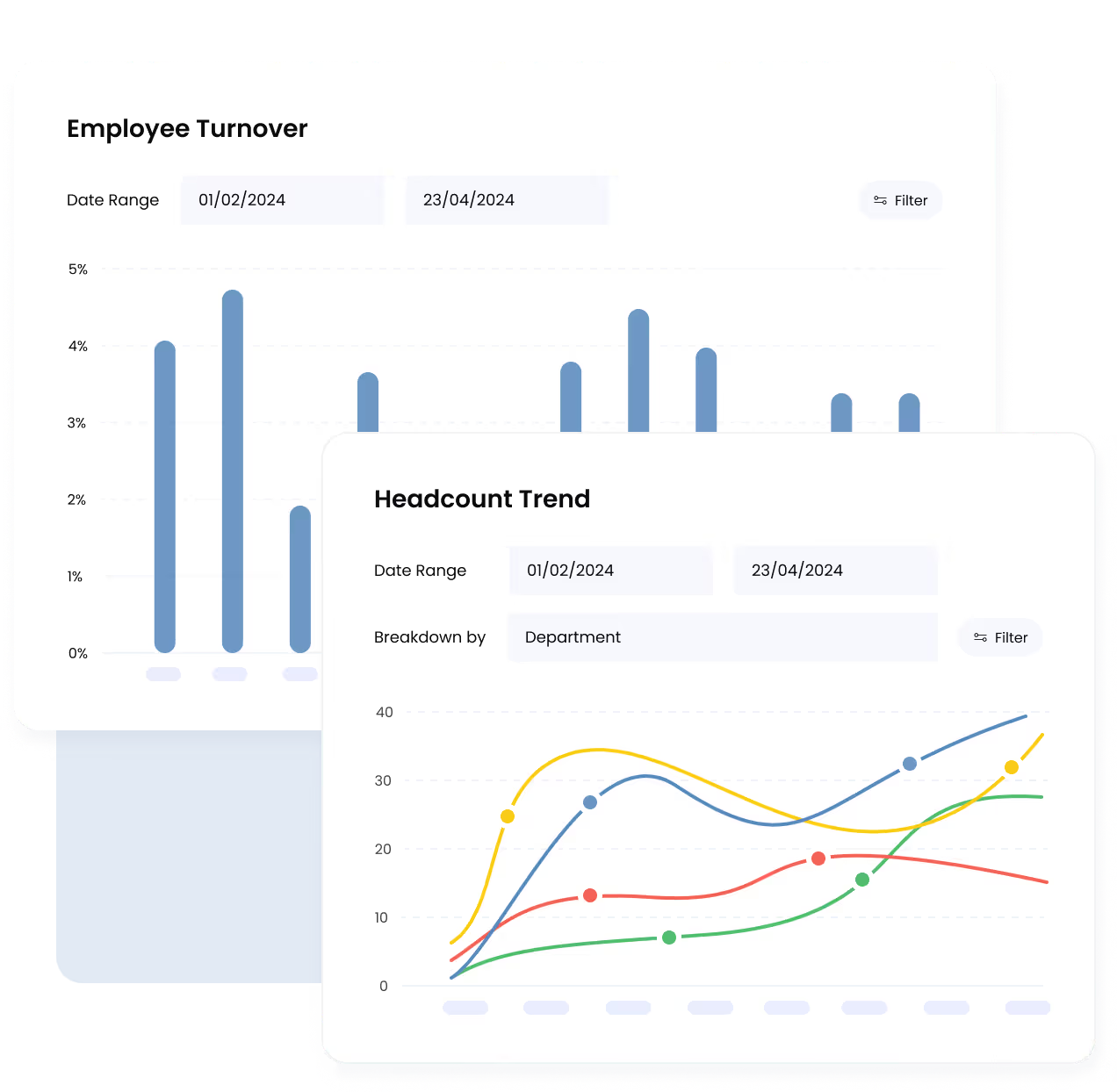
Omni’s analytics capabilities combine intuitive visual dashboards, configurable reporting, and pre-built templates designed for HR teams. You can monitor KPIs such as absenteeism trends or turnover rates with a few clicks, drilling down into team-level insights without relying on IT support.
“Our attrition has reduced by 20% since implementing Omni, and our recent employee survey highlighted that our employee net promoter score grew by double digits within a year.”
— Tengku Mohaizad, Group Head of HR Asia, Inspire Brands Asia
See how: Inspire Brands Asia Boosts Retention with Omni
Optimizing talent acquisition & retention: In a city-state where talent is a key competitive advantage, attracting and retaining the best employees is paramount. HR analytics helps you understand which recruitment channels yield the best candidates, analyze the effectiveness of your onboarding process, and identify flight risks before they become a problem. For example, you can track the ROI of different recruitment campaigns or analyze employee tenure patterns within specific departments.
Enhancing employee productivity & engagement: Understanding what drives productivity and employee engagement among your Singaporean workforce can lead to targeted interventions. Analytics can reveal patterns in performance, highlight areas for upskilling, and measure the impact of employee well-being initiatives, directly contributing to a more motivated and efficient team.
“By analyzing attendance data in Omni, we can pinpoint potential triggers for low employee morale, such as workplace stress, lack of recognition, or poor work-life balance.”
— Rhoanne Therese Jamelo, HR Generalist at ScaleForge
Read how: ScaleForge Gains Real-Time Employee Insights in Minutes with Omni
Ensuring compliance & mitigating risk: Singapore has robust regulations, including the Employment Act, PDPA and various other labor laws. HR analytics software Singapore, when properly configured, can help monitor compliance metrics, flag potential risks related to working hours, leave entitlements, or diversity metrics, and ensure your data handling adheres strictly to PDPA requirements. This proactive approach is vital for avoiding costly penalties.
Demonstrating HR's ROI: For CFOs and COOs, HR is increasingly expected to demonstrate its value. HR analytics provides the concrete data needed to show the return on investment (ROI) of HR initiatives, whether it's the cost-effectiveness of training programs, the impact of engagement on productivity, or the savings from reduced attrition. This elevates HR from a cost center to a strategic business partner.
Read next: How Does HR Contribute to Business Success? Strategies for Growth
Why Implementation Process Matters
Implementing HR analytics software Singapore isn't just about installing a new tool; it's about transforming how your HR function operates and impacts business strategy. A well-executed implementation is crucial because it directly ensures the integrity and accuracy of your HR data. Without meticulous data migration and validation, your insights will be flawed, leading to unreliable reports and poor decision-making. This foundational step is especially vital in Singapore, where data accuracy is critical for compliance and strategic talent management.
Beyond data, the implementation process significantly drives user adoption. Even the most powerful software yields no value if your HR team and managers aren't trained, comfortable, and confident using it. A structured rollout with proper training and support minimizes resistance, maximizes utilization, and helps you quickly realize the return on investment you expect. This also minimizes operational disruption; a haphazard implementation can throw off critical processes like payroll or onboarding, causing chaos rather than efficiency.
Crucially, a diligent implementation safeguards your organization against compliance risks. Integrating a new system, particularly one handling sensitive employee data, demands strict adherence to regulations like Singapore's PDPA. A thoughtful implementation ensures data privacy protocols are embedded from day one, mitigating vulnerabilities and protecting your business from costly penalties and reputational damage. In essence, the implementation process is where your HR analytics strategy truly comes to life, turning your investment into a reliable and invaluable asset.
Steps for Implementing HR Analytics Software Singapore
A successful HR analytics software Singapore implementation is a strategic project that requires careful planning and execution. Follow these steps to ensure a smooth rollout and maximize your return on investment in Singapore:
Step 1: Define objectives and key metrics.
- Clarify business goals: Before touching any software, clearly articulate what business problems you want HR analytics to solve. Are you aiming to reduce attrition, optimize recruitment costs, improve employee engagement, or ensure compliance with specific Singaporean labor laws (e.g., overtime under the Employment Act)?
- Identify key metrics: Translate your business goals into specific, measurable HR metrics. For example, if reducing attrition is the goal, your KPIs might include voluntary turnover rate, average tenure, or exit interview sentiment.
- Stakeholder alignment: Involve key stakeholders (e.g., C-suite, finance, department heads) to get their input on what insights they need from HR data. This ensures buy-in and future utilization of the analytics.
Step 2: Data audit and preparation.
- Inventory existing data sources: Identify all places where HR data currently resides (e.g., HRIS, payroll system, spreadsheets, performance review documents, attendance logs).
- Assess data quality: Conduct a thorough audit of your current data. Are there inconsistencies, missing information, or outdated records? Data cleansing is a critical, often underestimated, step. Flawed data leads to flawed insights.
- Data mapping: Understand how data points from different sources will map to the new HR analytics system.
- PDPA compliance review: Ensure all data you plan to use is collected, stored, and will be processed in compliance with Singapore's PDPA. This includes obtaining necessary consents if new data uses are introduced.
Step 3: Vendor collaboration and system configuration.
- Implementation team: Work closely with your chosen HR analytics software Singapore vendor's implementation team. They are your experts in getting the system set up.
- Data integration strategy: Decide on the method of data integration. Will it be automated (API-driven) or require manual uploads? Automated integration is highly recommended for real-time insights and reduced errors.
- Configuration for the Singapore context: Configure the software to reflect Singapore's specific HR practices, reporting requirements (e.g., for CPF, IRAS), and any unique benefits structures. Customize dashboards and reports to display relevant local metrics.
- Security & access control: Set up robust user roles and permissions, ensuring only authorized personnel have access to sensitive HR data, in strict adherence to PDPA principles.
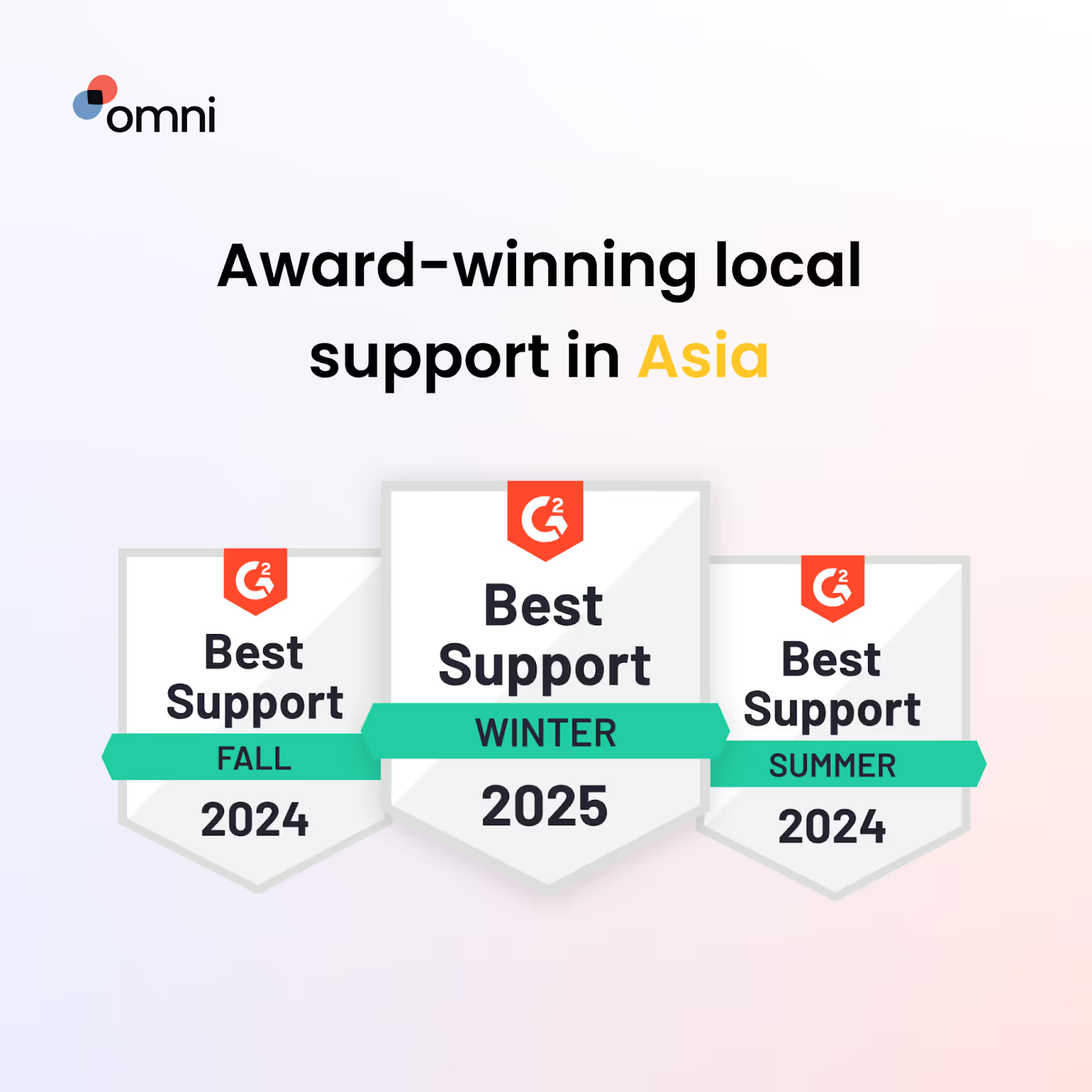
Omni makes the entire process easier with our award-winning support and guided implementation approach, including a dedicated customer success manager, interactive onboarding, and an extensive help desk to ensure everyone from HR specialists to department heads can confidently leverage HR analytics software Singapore, setting you up for success right from the start.
Step 4: Data migration and validation.
- Pilot migration: Consider a pilot migration with a small subset of your data to test the process and identify any issues before a full migration.
- Execute full migration: Transfer your cleansed and mapped HR data into the new analytics software.
- Rigorous validation: This is a crucial step. After migration, thoroughly validate the data in the new system. Compare reports and individual data points with your old system to ensure accuracy and completeness. Do your headcount numbers match? Is average tenure calculated correctly? Are salary bands correctly reflected?
Step 5: Training and user adoption.
- Tailored training programs: Develop and deliver targeted training programs for different user groups (e.g., HR specialists, managers, executives). Training should focus on how to use the software, interpret data, and apply insights to decision-making.
- Create champions: Identify early adopters and internal champions who can help promote the new system and support their colleagues.
- Resource library: Provide accessible resources like user manuals, FAQs, and quick guides.
- Communication plan: Clearly communicate the benefits of the new system and how it will enhance their roles. Emphasize that HR analytics isn't about surveillance but about empowerment and better decisions.
Relevant reading: 18 Communication Barriers in the Workplace
Singapore-Specific Considerations
Implementing HR analytics software in Singapore isn't just about general best practices; it requires a keen understanding of the local regulatory and business environment. These considerations are vital for ensuring compliance, accuracy, and, ultimately, the success of your data-driven HR initiatives:
PDPA (Personal Data Protection Act) compliance
Singapore's PDPA governs the collection, use, and disclosure of personal data. When implementing HR analytics software, you must ensure that all employee data is handled in strict accordance with these regulations.
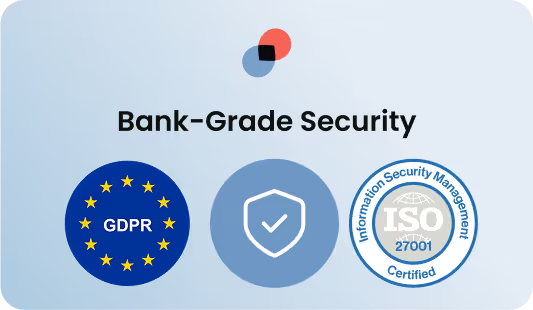
With Omni, data protection isn’t an afterthought. Our platform is built on robust security controls, including AES-256 encryption and ISO 27001 certification, providing you additional assurance that sensitive HR records are protected.
These safeguards include:
- Granular role-based access controls to limit who can view or modify data.
- Audit logs to track access and changes.
- Configurable data retention policies to align with PDPA requirements.
This level of security helps you confidently meet regulatory obligations while earning employee trust.
MOM (Ministry of Manpower) compliance
The Ministry of Manpower sets the regulations for employment practices in Singapore, including working hours, overtime, leave entitlements, and fair employment practices. Your HR analytics software Singapore should be able to track and report on metrics that demonstrate compliance with these MOM regulations. This includes the ability to generate reports on employee demographics for the Occupational Employment Dataset (OED) if required or track adherence to the Employment Act regarding statutory leave and rest days.
Integration with local HR platforms
For seamless data flow and accurate insights, your HR analytics software needs to integrate effectively with other local HR systems commonly used in Singapore. This includes your payroll system (which handles central provident fund, skills development levy, and other statutory contributions), time and attendance systems, and potentially government platforms for e-submission.
Common Singapore metrics to consider
Beyond universal HR metrics, certain KPIs are particularly relevant or have a unique local context in Singapore. Your HR analytics software Singapore should be able to track and present these effectively.
Key examples:
- CPF contribution accuracy rate: Percentage of payrolls with correct CPF calculations and submissions.
- Average time-to-hire in Singapore: Specifically tracking the efficiency of local recruitment efforts.
- Absenteeism rate by reason (e.g., MC, childcare leave): Analyzing local leave patterns and compliance with specific leave types.
- Foreign vs. local workforce ratio: Tracking the balance of your workforce in line with local hiring policies (e.g., Fair Consideration Framework).
- Cost per hire: Analyzing recruitment costs tailored to the local market.
- Employee engagement score: Gauging morale and satisfaction within your Singapore team, factoring in local cultural nuances.
These specific metrics help you identify trends unique to the Singaporean labor market, optimize local HR strategies, and ensure adherence to national manpower objectives.
Common Mistakes to Avoid When Implementing HR Analytics Software Singapore
Even with the best intentions, the journey to data-driven HR can be fraught with pitfalls. Being aware of these common mistakes can help you navigate challenges and ensure a successful HR analytics software implementation in Singapore:
Failing to establish robust data governance policies
Data governance is the framework of policies, procedures, and responsibilities that ensures the accuracy, consistency, integrity, and security of your data. A common mistake is to assume the software alone will solve data quality issues or manage access.
Without clear rules on how data is collected, stored, updated, and accessed, your analytics will be unreliable. This includes defining data ownership, establishing data dictionaries, and setting standards for data entry.
Not fully aligning with business needs
Implementing HR analytics software Singapore without a clear understanding of your overarching business objectives is a recipe for wasted investment. A significant mistake is to focus purely on HR metrics without connecting them to strategic business outcomes.
For example, simply tracking turnover rate is less impactful than analyzing its correlation with project delays or customer satisfaction. The software should answer critical business questions, not just generate reports for HR's sake.
Ignoring employee data privacy
This is perhaps the most critical mistake, especially in Singapore. Neglecting the nuances of the Personal Data Protection Act (PDPA) during implementation can lead to severe penalties, loss of employee trust, and reputational damage. This means failing to:
- Obtain proper consent for data collection and its intended use for analytics.
- Implement appropriate security safeguards (encryption, access controls) to protect sensitive employee personal data.
- Establish clear data retention and disposal policies in line with PDPA requirements.
- Have a clear data breach notification plan.
- Ensure any cross-border data transfers adhere to PDPA's transfer limitation obligation.
What to Look for in a HR Analytics Software Singapore Vendor
Selecting the right HR analytics software Singapore vendor is a pivotal decision, especially when operating within Singapore's unique regulatory and business environment. Beyond just powerful features, the vendor itself plays a crucial role in your implementation success. Here’s what discerning HR managers and decision-makers in Singapore should prioritize:
Local support
Having access to local support is invaluable. This means the vendor has a dedicated team or a strong presence in Singapore that understands the nuances of the local market, including specific business practices, cultural communication styles, and the intricacies of the Singaporean workforce.
Omni provides local support teams and dedicated customer support managers who guide you through every stage of implementation, from configuration to compliance. This means help is always available within your time zone and that your queries are resolved quickly by specialists who are acquainted with Singapore HR requirements and regulations.
Pre-built dashboards for Singapore compliance
A strong HR analytics vendor for Singapore should offer pre-built dashboards and reports specifically tailored to local compliance requirements and common Singaporean HR challenges. This includes ready-to-use templates for tracking CPF contributions and analyzing leave types mandated by the Employment Act (like childcare leave), monitoring workforce demographics for reporting (e.g., to MOM) and assessing salary benchmarks against local market data.
Strong integration capabilities
Your HR analytics software Singapore needs to seamlessly connect with your existing HR ecosystem in Singapore. This includes robust integration with your payroll system (whether it's a global provider with local capabilities or Singapore-specific payroll software) and your core HRIS.
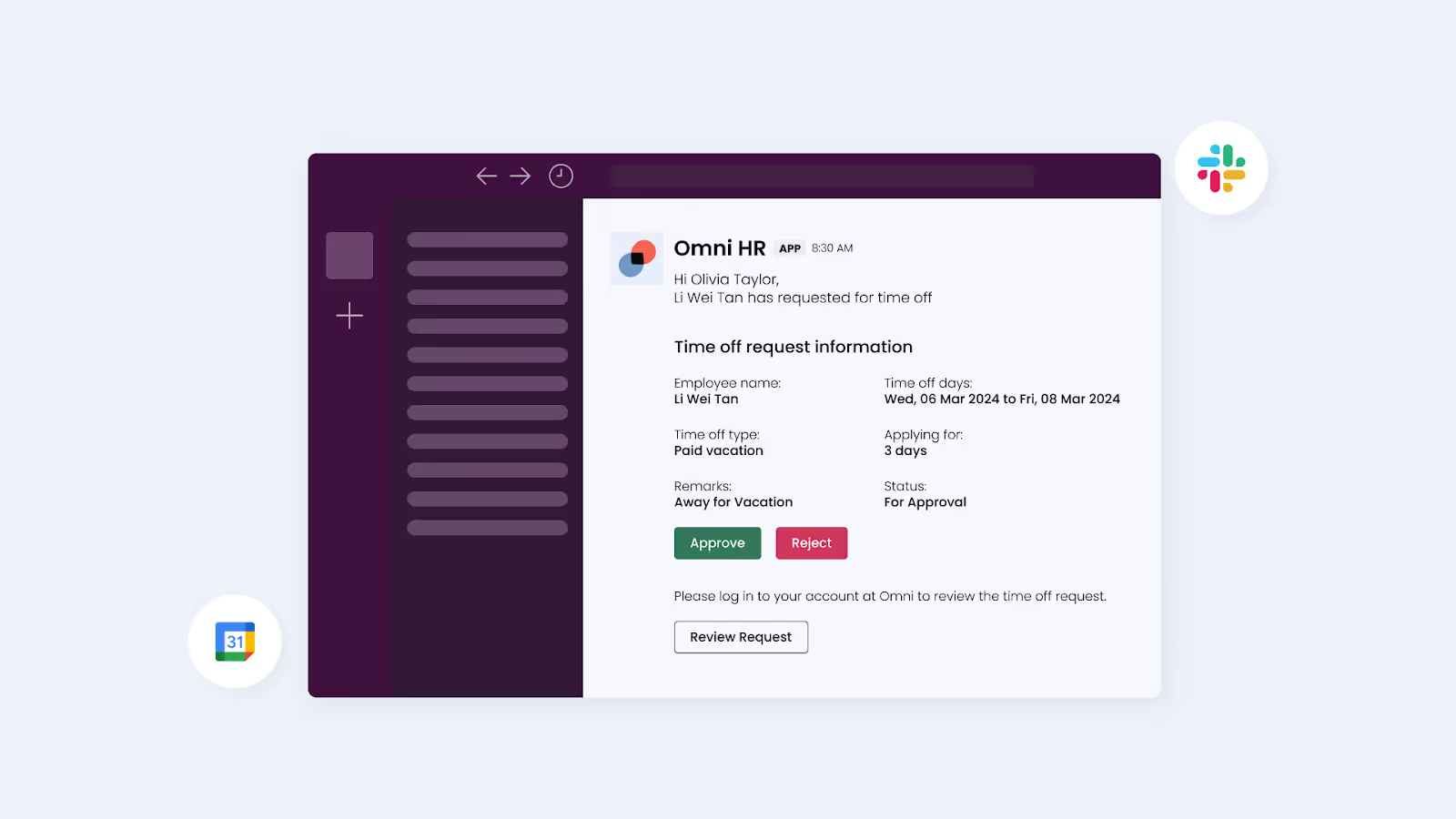
Omni offers pre-built integrations with popular tools such as Xero, Slack, Microsoft Teams, and more, ensuring your attendance, payroll, and performance data flow automatically into a unified analytics hub. This eliminates the need for manual data entry and provides a comprehensive, real-time view of your workforce.
Customer success onboarding support
The quality of the vendor's onboarding support can make or break your implementation. Look for a vendor that provides a structured onboarding process, dedicated customer success managers, comprehensive training for your HR team, and ongoing guidance on how to maximize the software's value.
Omni’s dedicated support team extends beyond technical setup with a personalized implementation program, in-app guided tours, and an extensive resource library to help your team quickly become confident users. This approach not only accelerates time to value but also empowers HR teams to fully leverage HR analytics for smarter, data-driven decisions.
“The onboarding experience was awesome. The support team was answering really fast; the structure of onboarding was very helpful with templates and clear steps. Omni even reminded us about deadlines and handled things like uploading public holiday calendars for all our countries.”
— Andrei Perevalovi, Head of People Products at Virtual Internships
Explore how: Virtual Internships Cuts Global HR Costs by 60% with Omni
Turn Your HR Data into Actionable Insights With Omni
HR metrics and analytics have become an integral part for growing organizations in Singapore. With the right HR analytics software, Singapore HR teams can move beyond basic reporting to uncover insights needed to drive strategic initiatives, whether that means reducing employee attrition, optimizing the cost of recruitment, or demonstrating ROI to leadership.
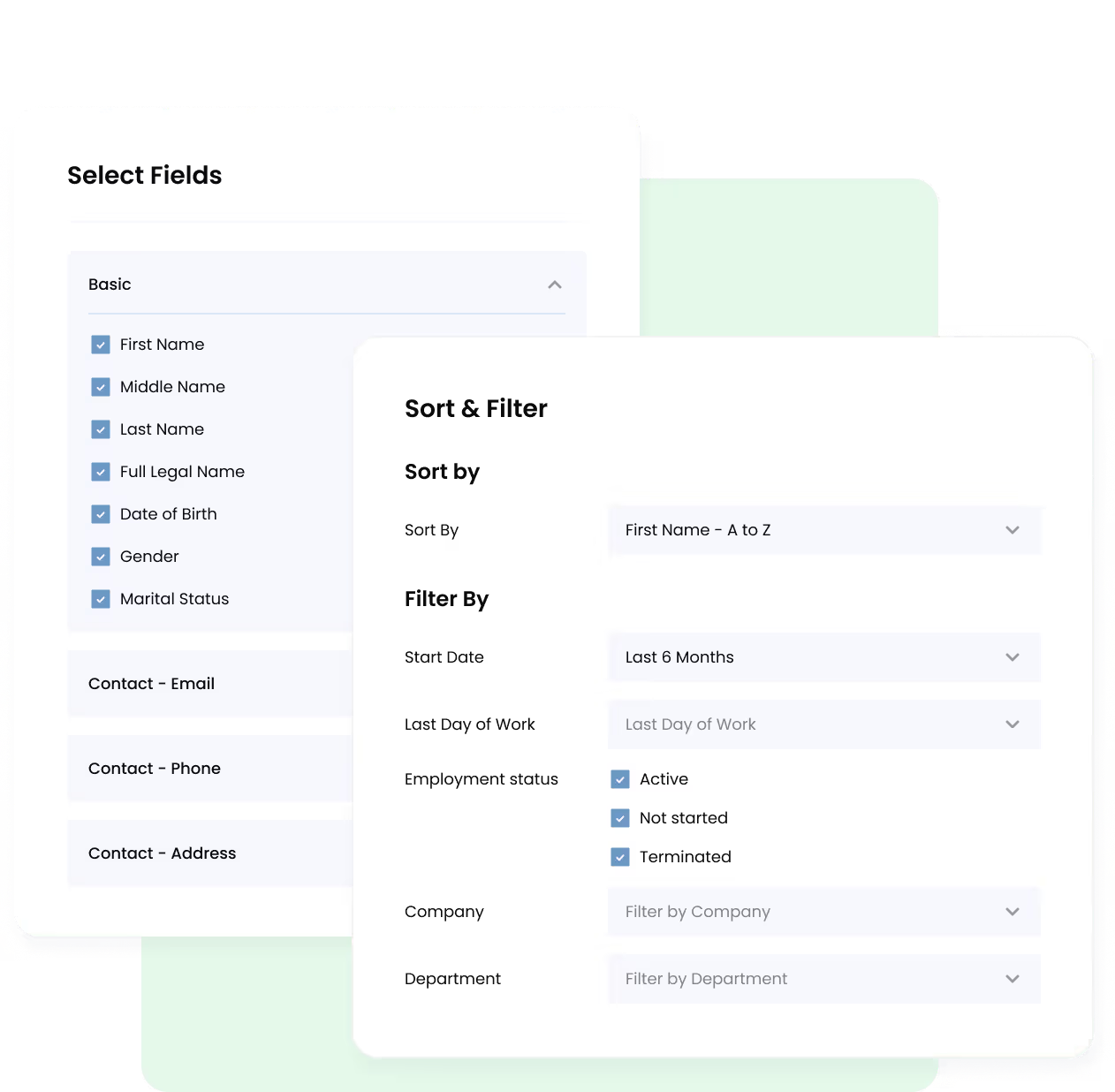
Omni’s all-in-one HR platform is purposefully designed to help companies confidently implement data-driven HR practices. From real-time analytics and exportable reports to integrations with your payroll and leave management systems, Omni makes it easy to consolidate data across your entire organization. This not only minimizes manual calculation errors but also ensures your reporting stays compliant with local regulations such as the Employment Act and PDPA.
Visual graphs and configurable dashboards allow you to quickly track and calculate metrics such as employee turnover trends by department and engagement levels across segments. These capabilities empower HR teams to monitor workforce performance over time and make timely strategic initiatives before they become challenges.
See how companies like Milieu Insight have implemented Omni’s HR analytics software Singapore to drive workforce engagement and gain visibility into key HR metrics without compromising compliance and productivity.
Join the 83% of Omni customers who have unlocked actionable insights within their first quarter of implementation. Book a demo with our team today and discover how Omni’s HR analytics software Singapore can help you build a data-driven HR foundation tailored to your unique needs.
.png)


.png)