.png)
Summary. Staying compliant with medical leave entitlement Singapore is essential for HR teams in 2025, especially with stricter MOM audits and penalties. Employees who’ve served at least 3 months are entitled to up to 14 days of paid sick leave and up to 60 days of hospitalization leave annually (inclusive of sick leave), provided they submit valid MCs from approved medical professionals. Hospitalization leave applies even without overnight stays if certified by a hospital doctor. Leave entitlements are pro-rated for those with under 6 months of service. To avoid payroll errors and non-compliance, HR should implement best practices such as validating MCs, automating leave calculations, syncing leave data with payroll, and using an HRIS to monitor entitlements and patterns. Tools like Omni help automate tracking, integrate leave with payroll, and ensure real-time compliance, giving HR full visibility while reducing admin work.
Staying on top of medical leave Singapore policies in 2025 are as good as an HR practice, as they’re important. With tighter MOM medical leave audits and stronger penalties for non-compliance, as an employer, you must fully understand statutory entitlements, documentation requirements, and best practices.
Getting this right means safeguarding your employee’s health, avoiding legal exposure, and maintaining payroll accuracy and we’re here to break it all down in this article.
Understanding Medical Leave Entitlement and Sick Leave Singapore
Every employer in Singapore is required to provide paid medical leave to eligible employees. However, specific entitlements and conditions can often lead to confusion. To stay compliant and support your workforce fairly, it’s important to understand how medical leave entitlement works, especially the distinction between sick leave and hospitalization leave.
Under the Employment Act, employees who have served at least three months with the employer and are certified unfit for work by a government- or company-approved doctor are entitled to:
- Up to 14 days of paid outpatient sick leave per year.
- Up to 60 days of paid hospitalization leave per year, which includes the 14 days of outpatient sick leave.
This means the maximum combined entitlement is 60 days per year. For example, if an employee uses 4 days of outpatient sick leave, they would have up to 56 days of hospitalization leave remaining, assuming they haven’t used any other sick leave days.
Although employees start accruing medical leave Singapore from their first day, they are only entitled to take paid medical leave after completing three continuous months of service. There is also no legal requirement to provide paid medical leave before this, but many employers chose to do so as a goodwill gesture.
Now, here’s where most HR teams often trip up: hospitalization leave isn’t just about being warded. It also encompasses time off for day surgery or recovery at home, as long as it’s certified by the hospital doctor. Similarly, if a specialist issues a medical certificate (MC) stating that the employee needs two weeks of bed rest post-operation, that too counts as hospitalization leave Singapore, even if said employee wasn’t admitted into the hospital overnight.
Certification, Eligibility and Medical Leave Singapore Limits
To apply medical leave Singapore policies fairly and stay compliant with the MOM sick leave entitlement framework, HR teams need to be clear on three things: who qualifies, what documentation is required, and how much leave an employee is actually entitled to.
When is medical leave claimable?
An employee becomes eligible for paid medical leave Singapore only after completing at least three months of continuous service. Before that, there’s no statutory requirement to provide paid sick leave, although some companies choose to offer it on a goodwill or contractual basis.
Once the three-month mark is crossed, leave is pro-rated until the sixth month. After six months, the employee is entitled to the full allocation under the Employment Act, as highlighted above.
Requirements for MCs and hospital certificates
Under Singapore sick leave entitlement rules, employees must provide a valid medical certificate issued by a:
- Registered doctor or dentist (for outpatient sick leave), or
- Hospital doctor with admitting rights (for hospitalization leave)
To be claimable, the MC must clearly state that the employee is unfit for work and specify the duration of leave for proper leave management. For hospitalization leave Singapore, documentation may also include discharge memos or bed rest instructions, even if the employee wasn’t warded overnight. What matters is that the certificate comes from a qualified hospital doctor and confirms the medical necessity of extended rest.
Who qualifies, and how much leave is given?
Your employee qualifies for paid medical leave Singapore if:
- They’re covered under the Employment Act
- They’ve completed at least three months of service
- They provide valid medical documentation
- They inform the employer within 48 hours of being absent
Employees who meet these conditions are entitled to the full MOM sick leave entitlement (pro-rated if under six months). For new hires or during probation, it’s common practice for HR to track pro-rated leave based on completed months.
What are the differences between sick leave and hospitalization leave Singapore?
While both are part of an employee’s medical leave entitlement, sick leave and hospitalization leave serve different purposes and are treated differently under the law. Knowing when each applies is key to staying compliant with sick leave entitlement Singapore rules and avoiding incorrect leave deductions.
Here’s how they compare:
Now that you know the basic difference, let’s go practical. If your employee visits a polyclinic with a high fever and is issued a 2-day MC by the attending doctor. Because they weren’t admitted to a hospital, this counts as outpatient sick leave under the statutory sick leave entitlement Singapore.
The 2 days are deducted from her 14-day outpatient sick leave entitlement and also contribute toward the 60-day total cap for medical leave Singapore in the calendar year, as outlined by the Ministry of Manpower (MOM).
Best Practices for HR Teams to Track Medical Leave Singapore
Tracking medical leave Singapore accurately is not just about staying compliant with MOM regulations but also about building employee trust, maintaining fair practices and preventing misuse. Here are four best practices your HR team should implement and how Omni HR can help you streamline each step:
Require valid medical certificates
Always ensure that MCs are issued by registered doctors, dentists, or hospital specialists in Singapore. This protects the company from invalid claims and ensures all sick or hospitalization leave is properly documented.
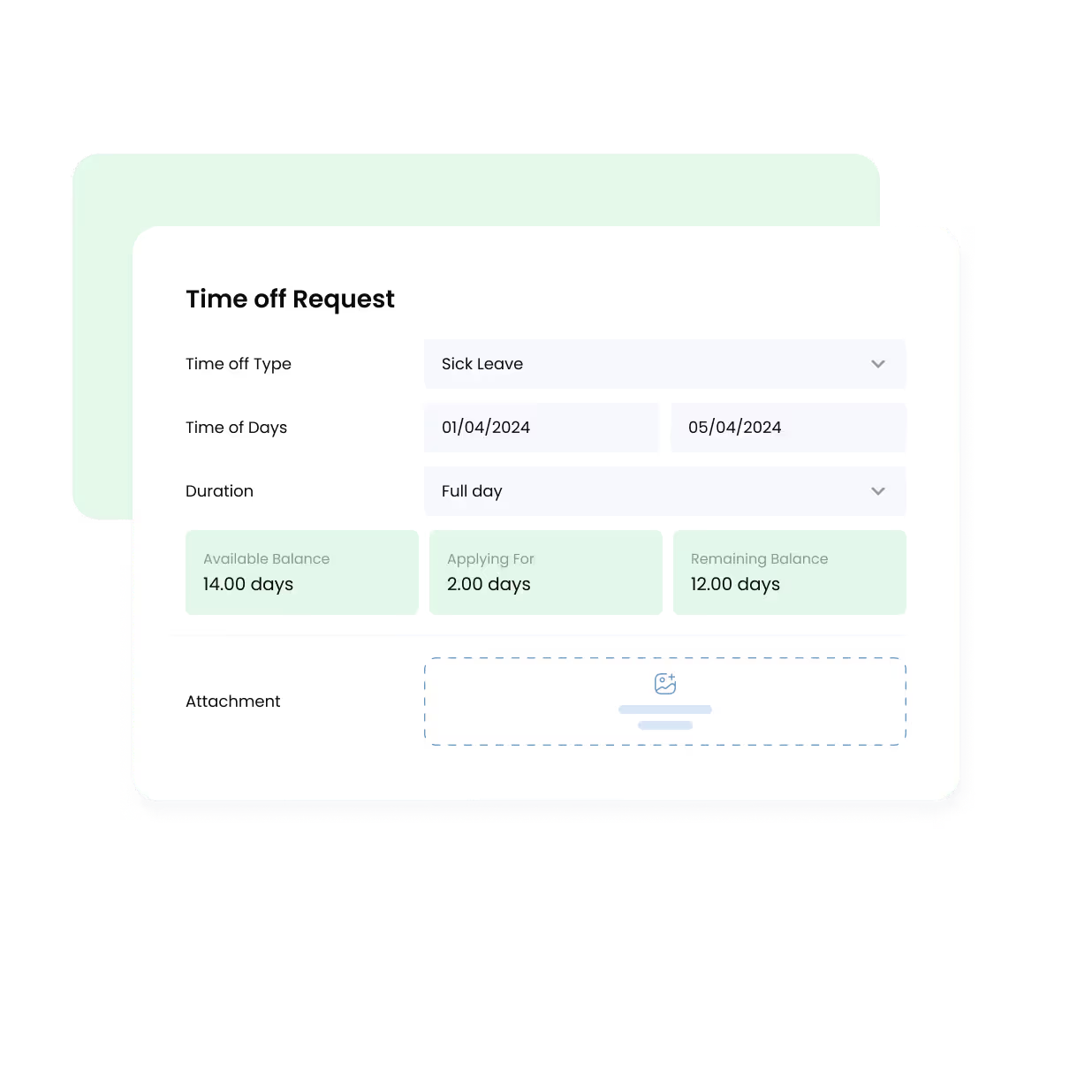
Omni’s leave management lets employees upload MCs directly into their leave requests, allowing HR to easily validate, store, and retrieve certificates, especially during MOM audits or internal reviews.
Automate leave calculations
Use HR or payroll systems to automatically track pro-rated entitlements based on service duration. This reduces human error and keeps your policies aligned with MOM sick leave entitlement requirements. With Omni, medical leave Singapore entitlements are automatically calculated based on employee start dates and service duration, fully aligned with local regulations. Leave balances also update in real-time, reducing admin overhead.
Sync leave data with payroll
Approved medical leave Singapore should be reflected accurately in salary payouts, especially for monthly-rated employees. It also ensures medical reimbursements, like those from polyclinic visits, are processed without delay.

Omni’s integrated leave and payroll modules ensure approved medical leave Singapore reflected accurately in payroll runs. No double entry is needed, as leave records auto-sync with payroll to reduce discrepancies and simplify audit trails.
Use an HRIS to manage entitlements
A reliable HRIS helps HR teams monitor remaining leave balances, enforce caps, and flag any unusual sick leave patterns. It also centralizes MC records and simplifies reporting during audits or MOM inspections.
Built for modern teams, Omni’s all-in-one software gives HR full visibility into leave trends, usage patterns, and balances across the workforce. Set rules for medical leave entitlement, generate reports, and spot employee burnout patterns like frequent medical leave Singapore applications so you can take preventive action early.
Simplify Medical Leave Singapore with Omni
Navigating medical leave Singapore efficiently requires HR professionals to invest in modern leave management systems and processes.
Omni’s time-off management capabilities help managers and HR teams swiftly navigate employee leave management. Omni’s platform allows you to approve leave applications on the go and keep track of who’s in and out of the office with at-a-glance scheduling.
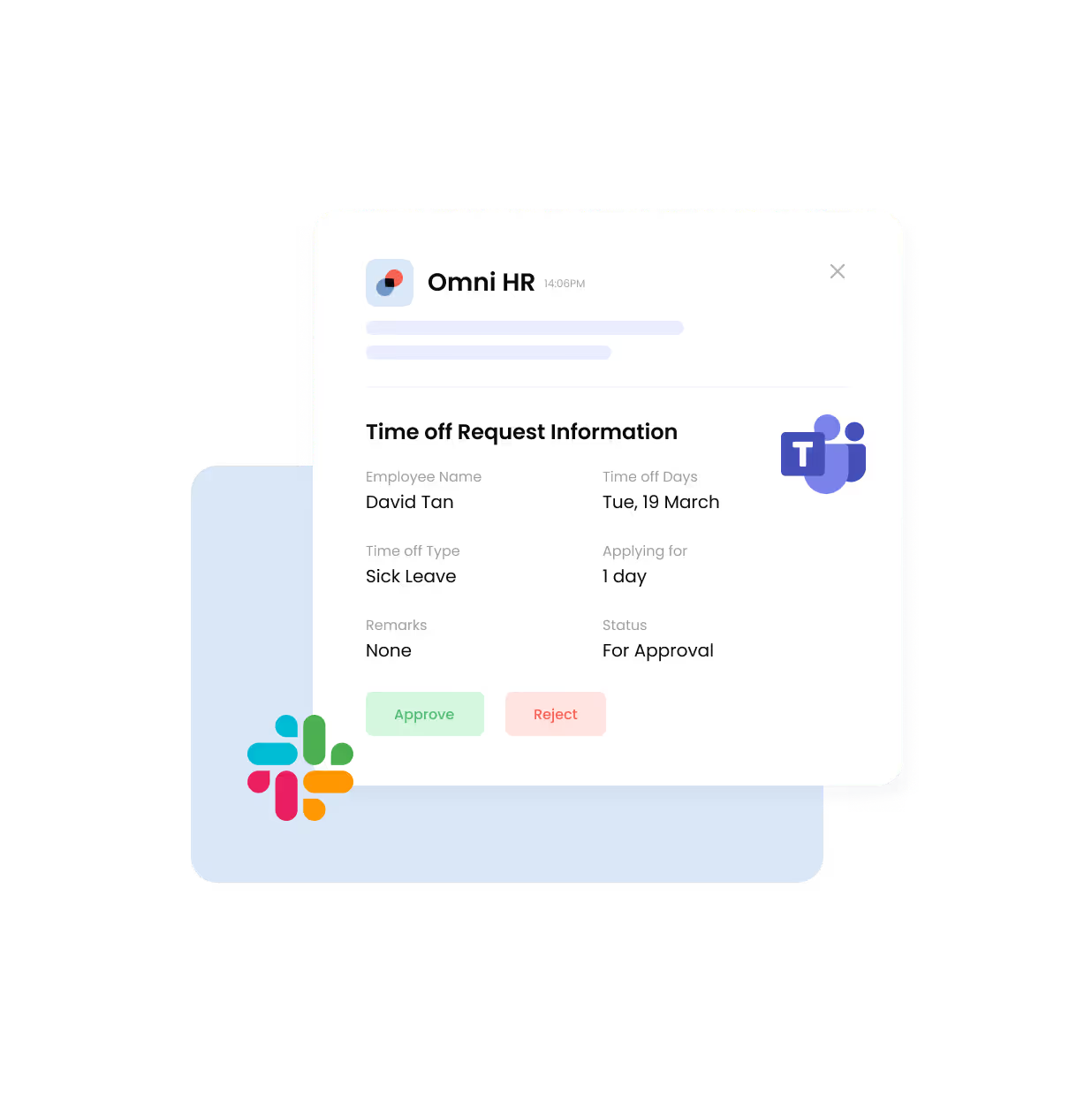
Our employee self-service portal enables employees to submit their time-off requests, which are automatically routed to the appropriate manager thanks to customizable approval workflows. Omni's user-friendly mobile application further simplifies the process, allowing employees to apply for time-off requests on the go.
For further leave management ease, Omni seamlessly integrates with common work tools such as Slack, enabling managers to manage time-off approvals with a simple push of a button. With automated calculations, employees and managers can easily view leave balances in real time and track how many vacation days they have left without having to go through HR.
Our localized solutions and interconnected system merge your medical leave Singapore management efforts with payroll processing, facilitating automatic, accurate calculations and compliance with local regulations for various regions.
Start your 7-day free trial today!
If you’re ready to take your leave management to the next level, book a demo with us today. We’ll walk you through our platform’s capabilities and demonstrate how Omni can transform your leave management processes, saving you time, reducing administrative burdens, and enhancing overall efficiency.
.png)


.png)