












Managing a modern workforce means navigating a landscape filled with specialized terminology. Whether you're setting up your first HR department or expanding your team across multiple countries, understanding HR terminology helps you make informed decisions and communicate effectively with your team.
This comprehensive HR glossary brings together essential terms every HR professional, business owner, and people leader should know. From compensation structures to talent management strategies, we've compiled the definitions you need to confidently lead your team and grow your business.
#
13th Month Pay
A mandatory or customary additional payment made to employees, typically at year-end, equivalent to one month's salary. Common in many Asia-Pacific countries, including the Philippines, Singapore, and Indonesia.
13th Month Salary
An additional month's wages paid to employees at the end of the year, often required by local labor laws in APAC regions as a form of employee benefit.
360-Degree Feedback
A performance review method that gathers input from multiple sources, including supervisors, peers, direct reports, and sometimes customers, to provide comprehensive feedback on an employee's performance.
360-Degree Feedback Surveys
Structured questionnaires used to collect comprehensive performance feedback from multiple sources, including supervisors, peers, direct reports, and sometimes customers, providing a complete view of an employee's strengths and development areas.
401(k) Compliance
Adherence to US federal regulations governing employer-sponsored retirement savings plans, including contribution limits, non-discrimination testing, and reporting requirements.
A
Abilene Paradox
A situation where a group makes a collective decision that contradicts the individual preferences of its members, often due to a desire to avoid conflict or rock the boat.
Absence Management
The process of tracking, monitoring, and managing employee absences, including sick leave, vacation time, and other time off, to maintain productivity and comply with labor regulations.
Absconding
When an employee leaves the organization without proper notice or informs their employer, essentially abandoning their position.
Absolute Ratings
A performance evaluation method where managers assign specific values on a fixed scale to assess individual employee behavior or performance independently of others.
Absenteeism Policy
A formal policy outlining attendance expectations, procedures for reporting absences, types of leave available, and consequences for excessive absenteeism.
Adoption Leave
Time off granted to employees who are adopting a child, allowing them to bond with their new family member and complete necessary legal processes.
ADDIE Model
An instructional design framework used in learning and development that stands for Analysis, Design, Development, Implementation, and Evaluation.
Adverse Impact
Employment practices that appear neutral but disproportionately affect protected groups, potentially leading to discrimination claims even without intent.
Affinity Bias
The unconscious tendency to favor people who share similar backgrounds, interests, or characteristics with ourselves.
Ageism
Discrimination against individuals based on their age, which can affect both older workers facing stereotypes about adaptability and younger employees perceived as inexperienced.
Agile HR
An approach to organizing and executing HR functions that emphasizes flexibility, responsiveness, and iterative improvements to meet evolving business needs.
Agile Performance Management
A continuous, collaborative approach to employee evaluation that replaces annual reviews with frequent check-ins and real-time feedback.
AIS (Automated Integration System)
An electronic system implemented by IRAS (Inland Revenue Authority of Singapore) that enables employers to submit employment income information digitally, streamlining tax filing and reducing manual submissions.
Anti-Discrimination Laws
Legal protections that prohibit unfair treatment of individuals based on protected characteristics such as race, gender, age, religion, disability, or national origin.
Applicant Screening
The systematic process of reviewing and evaluating job applications to identify candidates who meet the position's requirements.
Applicant Tracking System (ATS)
Software that manages the recruitment process from job posting through candidate selection, automating tasks like résumé screening and interview scheduling.
Application Completion Rate
A recruitment metric measuring the percentage of candidates who finish the application process after starting it.
Appraisal
A formal meeting between an employee and their manager to discuss job performance, achievements, and areas for development.
Appraisal Letter
Written documentation from HR acknowledging and praising an employee's performance during a specific period.
Apprenticeship
A structured training program combining on-the-job learning with classroom instruction to develop skills in a specific trade or profession.
Assessment Centres
Evaluation sessions where candidates complete various exercises and simulations designed to assess their suitability for a role or organization.
Attendance Policy
Guidelines establishing expectations for employee punctuality, presence at work, and procedures for requesting time off.
Attrition
The gradual reduction in workforce size through voluntary resignations, retirements, or deaths without immediate replacement.
Attrition Rate
The percentage of employees who leave an organization over a specific period, calculated by dividing departures by average headcount.
B
Back Pay
Compensation owed to an employee for work performed in a previous period, often due to payroll errors or retroactive pay adjustments.
Background Check
Verification of a candidate's employment history, education, criminal record, and other relevant information to confirm accuracy and assess suitability.
Background Verification
The process organizations use to validate information provided by candidates during the hiring process.
Balanced Scorecard
A strategic management tool that tracks organizational performance across multiple perspectives, including financial, customer, internal processes, and learning and growth.
Basic Salary
The fixed amount of money an employee receives before any additions like bonuses, allowances, or deductions.
Behavioral Competency
An evaluation of an employee's character traits and behaviors that contribute to job performance and organizational success.
Behaviorally Anchored Rating Scale (BARS)
A performance appraisal method that combines qualitative and quantitative assessments by anchoring rating scales to specific behavioral examples.
Bell Curve
A normal distribution curve used in performance management to categorize employees across a spectrum from low to high performers.
Benchmarking
Comparing your organization's HR practices, metrics, or processes against industry standards or competitors to identify improvement opportunities.
Bereavement Leave
Paid or unpaid time off granted to employees following the death of a family member or loved one.
BIR Form 2307
A Certificate of Creditable Tax Withheld at Source issued by the Philippines Bureau of Internal Revenue, documenting the amount of taxes withheld from payments made to suppliers, contractors, or employees.
Biweekly Pay
A payment schedule where employees receive their wages every two weeks, resulting in 26 pay periods per year.
Bonus
Additional financial compensation beyond regular salary, typically tied to individual, team, or company performance.
Boomerang Employees
Former employees who return to work for the same organization after leaving for another opportunity.
BPJS Kesehatan
Indonesia's national health insurance program that employers must contribute to on behalf of their employees.
BPJS Ketenagakerjaan
Indonesia's social security program covering workplace accidents, old age benefits, and death benefits for employees.
Broadbanding
A compensation structure that consolidates multiple salary grades into broader bands, providing flexibility in pay progression and lateral movement.
Bumping
Allowing senior employees whose positions are eliminated to take other positions in the organization, potentially displacing less senior staff.
Burnout
A state of physical, emotional, and mental exhaustion caused by prolonged workplace stress, leading to reduced productivity and well-being.
Business Process Outsourcing (BPO)
Contracting specific business functions to third-party service providers to reduce costs and access specialized expertise.
Boundaryless Organization
An organizational structure that minimizes hierarchical barriers and functional silos to promote innovation and collaboration.
C
Candidate Experience
The overall impression job seekers form about your organization throughout the recruitment process, from initial contact through onboarding.
Career Break
An extended period away from employment, typically for personal reasons, family care, or professional development.
Career Lattice
A non-linear career progression model allowing employees to move horizontally, vertically, or diagonally to develop diverse skills and experiences.
Career Path
The sequence of positions an employee moves through as they progress and grow within an organization.
Change Management
A structured approach to transitioning individuals, teams, or entire organizations from their current state to a desired future state.
Churn Rate
The percentage of employees or customers who leave an organization during a specific period.
Coaching
A developmental process where a coach helps an individual improve specific skills or achieve particular goals through guidance and feedback.
Common Law Employee
A worker whose employer controls what work is done and how it's performed, distinguishing them from independent contractors.
Compa Ratio
A metric comparing an employee's actual salary to the midpoint of their salary range, indicating their position within the pay band.
Compassionate Leave
Time off provided to employees to handle personal or family emergencies beyond standard bereavement situations.
Compensation and Benefits (C&B)
The total package of financial and non-financial rewards organizations provide to employees in exchange for their work.
Compensation Package
The complete offer of salary, benefits, and perks provided to an employee.
Compensation Philosophy
An organization's guiding principles for how it structures, manages, and communicates employee pay and benefits.
Compensatory Off (Comp Off)
Paid leave granted to employees as compensation for working on holidays, weekends, or beyond regular hours.
Competency
A combination of knowledge, skills, behaviors, and attitudes that enables effective job performance.
Competency-Based Pay
A compensation system that rewards employees based on their demonstrated skills and capabilities rather than job title alone.
Competency Mapping
The process of identifying and defining the specific competencies required for successful performance in a role.
Confirmation Letter
Official documentation confirming an employee has successfully completed their probationary period and is now a permanent employee.
Confidentiality Agreement
A legal contract preventing employees from disclosing proprietary or sensitive company information.
Constructive Dismissal
A situation where an employer creates working conditions so intolerable that the employee feels forced to resign.
Contingent Worker
Employees hired on a temporary, project-based, or contract basis rather than as permanent staff.
Contractor
An independent worker hired to complete specific projects or tasks without being classified as an employee.
Cost of Living Adjustment (COLA)
Periodic salary increases designed to help employees maintain purchasing power in the face of inflation.
Cost Per Hire
The total cost associated with filling a position, including advertising, recruiter fees, interview expenses, and onboarding costs.
Cost to Company (CTC)
The total amount an employer spends on an employee annually, including salary, benefits, taxes, and other employment costs.
CPF (Central Provident Fund)
Singapore's comprehensive social security savings scheme, where both employers and employees make mandatory monthly contributions toward retirement, healthcare, and housing needs.
Cross-Functional Team
A group composed of members from different departments who collaborate on a shared goal or project.
Culture Add
A hiring philosophy that seeks candidates who bring new perspectives and skills to enhance company culture, rather than simply fitting existing culture.
Culture Change
The process of transforming an organization's culture to better align with its mission, vision, and strategic goals.
Customer-Centric Culture
An organizational culture that prioritizes understanding and meeting customer needs in all business decisions.
D
Data Privacy Act
Legislation protecting individuals' personal information and regulating how organizations collect, store, and use personal data.
Decentralized Payroll
A payroll structure where different departments or regional offices manage their own payroll processes independently.
Deferred Compensation
Pay or benefits earned in one period but paid to employees in a future period, often for tax advantages or retention purposes.
Delayering
Reducing the number of management levels in an organization to create flatter structures and faster decision-making.
Digital HR
The transformation of HR processes through cloud-based, mobile-first, and data-driven technologies to improve efficiency and effectiveness.
Digital Nomad
A professional who works remotely while traveling, leveraging technology to perform their job from various locations worldwide.
Disciplinary Action
Steps taken by an organization to address employee misconduct or performance issues.
Disciplinary Procedure
A formal process for handling workplace rule violations, typically involving warnings and escalating consequences.
Discretionary Benefits
Non-mandatory perks and benefits employers choose to offer beyond legal requirements to attract and retain talent.
Disparate Treatment
Intentional discrimination where individuals are treated differently based on protected characteristics like race or gender.
Diversity, Equity, Inclusion, and Belonging (DEIB)
An integrated approach to creating workplaces where all employees feel valued, respected, and able to contribute fully.
Downshifting
Choosing to reduce work responsibilities or complexity to achieve better work-life balance or pursue personal priorities.
Dysfunctional Turnover
When high-performing employees leave an organization at a higher rate than average or poor performers.
E
EDLI (Employee Deposit Linked Insurance)
An insurance scheme in India that provides life insurance coverage to employees contributing to the Employee Provident Fund.
E-Recruitment
Using web-based software and online platforms to manage the recruitment process from job posting to candidate selection.
Emerging Work Models
Innovative approaches to structuring work, including flexible arrangements, hybrid models, and new employment relationships.
Employee Assistance Program (EAP)
Workplace programs providing confidential support services to help employees manage personal or work-related challenges.
Employee Assessments
Structured evaluations of employee skills, performance, potential, or personality characteristics.
Employee Benefits
Non-wage compensation provided to employees, including health insurance, retirement plans, and paid time off.
Employee Benefits Administration
Managing and overseeing the various benefit programs offered to employees, ensuring compliance and effective communication.
Employee Clearance
The final settlement process, when an employee leaves, including returning company property and receiving pending payments.
Employee Database
A centralized system for storing and managing employee information, including personal details, employment history, and performance records.
Employee Empowerment
Giving employees authority and resources to make decisions and take ownership of their work.
Employee Engagement
The emotional commitment employees have to their organization and its goals, leading to discretionary effort and better performance.
Employee Experience
The sum of all interactions an employee has with their employer throughout the employee lifecycle.
Employee Helpdesk
A support system providing employees with assistance for HR-related questions, IT issues, or workplace concerns.
Employee Journey Management
Mapping and optimizing the complete employee experience from recruitment through offboarding.
Employee Life Cycle
The stages an employee progresses through during their time with an organization, from attraction to exit and beyond.
Employee Lifetime Value (ELTV)
The projected total value an employee will contribute to the organization throughout their tenure.
Employee Listening Strategy
A systematic approach to gathering and acting on employee feedback through various channels and touchpoints.
Employee Misclassification
Incorrectly categorizing workers as independent contractors when they should be classified as employees, or vice versa.
Employee Net Promoter Score (eNPS)
A metric measuring how likely employees are to recommend their organization as a great place to work.
Employee Onboarding
The process of integrating new hires into the organization, covering orientation, training, and cultural assimilation.
Employee Orientation
The initial introduction providing new employees with essential information about their role, the company, and workplace policies.
Employee Referral Program
An initiative encouraging current employees to recommend qualified candidates for open positions, often with incentive rewards.
Employee Relations
Activities focused on maintaining positive relationships between the organization and its employees.
Employee Resource Group (ERG)
Voluntary, employee-led groups formed around shared characteristics or life experiences that support inclusion and community.
Employee Retention
Strategies and initiatives designed to keep valuable employees from leaving the organization.
Employee Satisfaction
The extent to which employees are content with their jobs and workplace experience.
Employee Self-Service (ESS)
Technology allowing employees to access and manage their HR information independently, such as updating personal details or requesting leave.
Employee Stock Purchase Plan (ESPP)
A benefit allowing employees to purchase company stock, often at a discounted price.
Employee Turnover
The rate at which employees leave an organization and are replaced by new hires.
Employee Value Proposition (EVP)
The unique set of benefits and experiences an organization offers to employees in return for their skills and contributions.
Employer Branding
How an organization positions itself as an employer of choice to attract and retain top talent.
Employer of Record (EOR)
A third-party organization that becomes the legal employer for workers in another country, handling compliance, payroll, and HR administration.
Employer Value Proposition
See Employee Value Proposition (EVP).
Employment Agreement
A formal contract outlining the terms and conditions of employment between employer and employee.
Employment Contract
A legally binding document defining the employment relationship, including role, compensation, and responsibilities.
Employment History
A record of an individual's previous jobs, positions held, and length of service with various employers.
Employment of Foreign Manpower Act (EFMA)
Singapore legislation governing the employment of foreign workers, including work pass requirements and employer obligations.
Employment Status
An individual's classification as an employee, contractor, or other worker type, determining their rights and benefits.
eNPS
See Employee Net Promoter Score.
Enterprise Resource Planning (ERP)
Integrated software systems managing core business processes, including HR, finance, and operations.
Enterprise Social Network
Internal social platforms enabling employees to communicate, collaborate, and share knowledge across the organization.
EPF (Employees Provident Fund)
Malaysia's mandatory savings scheme requiring both employer and employee contributions to provide retirement benefits and financial security for workers.
Equity (Stock)
Ownership interest in a company, often offered to employees as part of compensation packages.
Equity Compensation
Providing employees with company ownership through stock options, restricted stock units, or other equity instruments.
Equity Theory
A motivation theory suggesting employees compare their input-to-outcome ratios with others and seek fairness.
Ex Gratia Payment
A voluntary payment made by an employer beyond legal obligation, often as a goodwill gesture during severance.
Exercising Stock Options
The act of purchasing company shares at the predetermined strike price specified in an employee stock option.
Exit Interview
A structured conversation with departing employees to understand their reasons for leaving and gather feedback.
Expatriate
An employee working abroad on a long-term assignment, typically with enhanced compensation and support.
F
Factor Comparison
A job evaluation method comparing positions across factors like skill, responsibility, and working conditions to determine relative value.
Five Factor Model
A personality theory identifying five core traits: openness, conscientiousness, extraversion, agreeableness, and neuroticism.
Fixed-Term Employment
Employment contracts with a specified end date or tied to the completion of a particular project.
Flexible Work
Work arrangements offering employees choice in where, when, or how they work to balance professional and personal needs.
Flexible Working Arrangements
Policies allowing variations in work schedules, locations, or structures to accommodate employee preferences.
Floating Holidays
Paid days off employees can use at their discretion rather than on predetermined company holidays.
Forced Ranking
A performance management system requiring managers to distribute employees across performance categories in predetermined percentages.
Foreign Worker Levy
A fee employers in countries like Singapore pay the government for the right to hire foreign workers.
Form 12B
An Indian income tax form that employees submit to their employer showing income and tax paid at their previous employer.
Form 12C
An Indian income tax form used for reporting tax-related information to the Income Tax Department.
Formalization
The extent to which an organization relies on rules, procedures, and written documentation to govern employee behavior.
Fringe Benefits
Non-wage compensation provided to employees beyond their standard salary, including perks like health insurance, retirement plans, gym memberships, company cars, meal allowances, and other benefits designed to enhance the overall employee value proposition and improve retention.
Full-Time Employee (FTE)
An employee working the standard number of hours considered full-time by the organization or local laws, typically 35-40 hours weekly.
Functional Job Analysis
A systematic method for gathering detailed information about job requirements, duties, and necessary qualifications.
G
Gamification
Applying game-design elements like points, badges, and leaderboards to HR processes to increase engagement and motivation.
Garden Leave
A period after resignation where an employee remains employed and paid but is not required or allowed to work.
Gender Divide
Differences in opportunities, treatment, or outcomes between men and women in the workplace or society.
Generation X
The demographic cohort born roughly between the early 1960s and early 1980s, currently in mid-career or leadership positions.
Generation Z
The demographic cohort born between the late 1990s and early 2010s, now entering the workforce with different expectations and digital fluency.
GIG Economy
An economic model characterized by short-term contracts and freelance work rather than traditional permanent employment.
Global Contractor
An independent worker hired to perform services across international borders without becoming a formal employee.
Global Core HR
HR systems designed to manage employees across multiple countries while accommodating local regulations and practices.
Global Employment Solution
Services and platforms that enable organizations to hire, manage, and pay employees in countries where they lack a local entity.
Global Payroll
Systems and processes for managing compensation across multiple countries with varying currencies, tax systems, and regulations.
Golden Handcuffs
Financial incentives or contractual arrangements that make it costly or difficult for employees to leave an organization.
Graphic Rating Scale
A performance evaluation method using predetermined scales to rate employees on specific job-related criteria.
Gratuity
A lump-sum payment made to employees upon retirement or resignation after a minimum period of service, common in many Asian countries.
Grievance
A formal complaint an employee raises about working conditions, treatment, or perceived violations of employment terms.
GRPI Model
A team effectiveness framework examining Goals, Roles and Responsibilities, Processes, and Interpersonal relationships.
Gross Misconduct
Serious employee misbehavior that may justify immediate dismissal without notice, such as theft, violence, or severe insubordination.
Gross Salary
Total earnings before any deductions like taxes, insurance, or retirement contributions.
Group Mentoring
A mentoring arrangement where one or more mentors guide multiple mentees simultaneously, fostering peer learning.
H
Hawthorne Effect
The phenomenon where people modify their behavior when they know they're being observed or studied.
Headcount
The total number of employees in an organization or department at a given time.
Headcount Planning
The strategic process of determining the optimal number and type of employees needed to achieve business objectives.
Hierarchy of Needs
Maslow's theory categorizing human needs into five levels: physiological, safety, belonging, esteem, and self-actualization.
Hiring Freeze
A temporary halt on recruiting new employees, typically implemented to control costs during challenging periods.
Hiring Process Flowchart
A visual representation mapping each step of the recruitment process from job requisition to onboarding.
Horn Effect
Cognitive bias where one negative characteristic disproportionately influences overall perception of a person.
HR Analytics
See People Analytics.
HR Audit
A comprehensive review of HR policies, practices, and procedures to ensure compliance, efficiency, and alignment with business goals.
HR Automation
Using technology to streamline and automate repetitive HR tasks, freeing time for strategic work.
HR Business Partner (HRBP)
HR professionals who work closely with business leaders to align people strategy with organizational objectives.
HR Chatbot
AI-powered virtual assistants that handle routine HR inquiries and tasks through conversational interfaces.
HR Consulting
Specialized advisory services helping organizations optimize their HR strategies, processes, and systems.
HR Generalist
An HR professional with broad knowledge across multiple HR functions, rather than specializing in one area.
HR Management Software (HRMS)
Technology platforms that automate and integrate core HR processes like recruitment, payroll, and performance management.
HR Operating Models
The organizational structure and approach HR uses to deliver services and value to the business.
HR Scorecard
A measurement system tracking HR metrics and their impact on organizational performance.
HR Service Management (HRSM)
Applying service management principles to HR delivery, emphasizing employee experience and efficient service provision.
HR Software
Technology solutions designed to support various HR functions and processes.
HR Tech Stack
The collection of software tools and platforms an organization uses to manage its HR functions.
HRIS (Human Resources Information System)
Software for collecting, storing, and managing employee data and supporting core HR processes.
Human Capital Analytics
See People Analytics.
Human Capital Management (HCM)
The strategic approach to managing people as valuable organizational assets through integrated systems and processes.
Human Capital ROI
A metric measuring the return on investment from spending on employees, comparing revenue to people costs.
Human Resource Information System
See HRIS.
Human Resource Management (HRM)
The strategic approach to managing people in organizations to maximize employee performance and achieve business objectives.
Human Resource Management System (HRMS)
Comprehensive software suites managing multiple HR functions, including payroll, benefits, time tracking, and performance.
Human Resource Outsourcing (HRO)
Contracting external providers to handle specific HR functions or entire HR operations.
Hybrid Work
A work model combining remote and office-based work, allowing employees flexibility in where they perform their duties.
I
Incentive Pay
Additional compensation tied to achieving specific goals, targets, or performance metrics.
Inclusion
Creating an environment where all employees feel valued, respected, and able to fully participate and contribute.
Inclusive Communication
Communication practices ensuring all employees feel heard and can access information regardless of background or ability.
Induction
The initial process of introducing new employees to the organization's culture, policies, and procedures.
Informal Communication
Unofficial communication channels and conversations that occur naturally among employees outside formal structures.
Intercultural Competence
The ability to effectively interact and work with people from different cultural backgrounds.
Intergroup Development
Interventions designed to improve cooperation and reduce conflict between different groups within an organization.
Internal Equity
Fairness in compensation when comparing similar roles and responsibilities within the same organization.
International Employment Law
Legal regulations governing employment relationships across borders, including contracts, rights, and obligations.
Internship
Temporary positions offering practical work experience to students or recent graduates, often unpaid or low-paid.
Interview-to-Hire Ratio
The average number of interviews conducted to make one successful hire.
Interview Rubric
A structured scoring tool with predetermined criteria used to consistently evaluate candidates across interviews.
IRAS (Inland Revenue Authority of Singapore)
Singapore's tax authority responsible for administering and collecting taxes, including corporate tax, personal income tax, and goods and services tax.
J
Job Break
See Career Break.
Job Characteristics Model
A framework identifying five core job dimensions that influence work motivation: skill variety, task identity, task significance, autonomy, and feedback.
Job Classification
Grouping similar positions into categories for purposes of compensation, career progression, or organizational structure.
Job Description
A document outlining the duties, responsibilities, qualifications, and expectations for a specific position.
Job Dissatisfaction
A state where employees feel unhappy or unfulfilled in their roles, often leading to disengagement or turnover.
Job Evaluation
Systematically determining the relative worth of different jobs within an organization to establish fair compensation structures.
Job Shadowing
On-the-job learning where an individual observes and learns from a more experienced colleague performing their work.
K
KETS (Kartu Elektronik Tenaga Kerja)
Indonesia's electronic labor card used to track workforce data and employment information.
Key Performance Indicators (KPIs)
Measurable values demonstrating how effectively an organization or individual is achieving key objectives.
Key Result Areas (KRAs)
Major outcomes or responsibilities an employee is expected to deliver in their role.
Knowledge Management
Systematically capturing, organizing, and sharing organizational knowledge to improve decision-making and efficiency.
Knowledge, Skills, and Abilities (KSAs)
The competencies required to successfully perform a job, often used in hiring and development planning.
L
Labor Laws
Legal regulations governing the employer-employee relationship, including wages, working conditions, and employee rights.
Learning Agility
The ability to quickly learn from experience and apply that learning to new or unfamiliar situations.
Learning and Development (L&D)
Organizational efforts to improve employee skills, knowledge, and capabilities through training and development programs.
Letter of Termination
A formal document notifying an employee that their employment is being ended, including reasons and effective date.
LHDN (Lembaga Hasil Dalam Negeri)
The Inland Revenue Board of Malaysia, the government agency responsible for administering and collecting direct taxes, including individual and corporate income tax.
M
Management by Objectives (MBO)
A performance management approach where managers and employees jointly set specific, measurable goals.
Management Styles
Different approaches leaders use to direct, motivate, and manage their teams.
Management Training
Programs designed to develop leadership skills and management capabilities in current or aspiring managers.
Market Culture
An organizational culture emphasizing competition, achievement, and measurable results.
Matrix Organization
A structure where employees report to both functional managers and project or product managers, creating dual reporting lines.
Maternity Leave
Time off provided to mothers before and after childbirth to recover and bond with their new baby.
Mean Wage
The average wage for a position, calculated by dividing total wages by the number of employees.
Mentoring
A developmental relationship where a more experienced person guides and supports someone less experienced.
Merit Pay
Compensation increases based on individual performance rather than seniority or cost-of-living adjustments.
Microaffirmations
Small gestures of respect and inclusion that create a positive, supportive workplace environment.
Micromanagement
An overly controlling management style where supervisors closely monitor and direct every aspect of employees' work.
Millennials
The demographic generation born roughly between 1981 and 1996, now making up a significant portion of the workforce.
Minimum Wage
The lowest hourly rate employers can legally pay workers, set by government regulation.
MPF (Mandatory Provident Fund)
Hong Kong's mandatory retirement savings system requiring both employers and employees to make regular contributions to approved provident fund schemes.
Multi-Rater Feedback
Performance evaluation incorporating input from various sources, including peers, subordinates, and managers.
N
Nepotism
Favoritism shown to relatives in hiring or promotion decisions, regardless of merit or qualifications.
Net Salary
Take-home pay after all deductions like taxes, insurance, and retirement contributions.
Network Organization
A decentralized structure where autonomous units collaborate while maintaining independence.
New Hire Turnover
The percentage of new employees who leave within a specific period, typically within their first year.
Night Shift Differential
Additional compensation paid to employees working night shifts to compensate for working during non-standard hours.
Non-Compete Agreement
A contractual clause preventing employees from working for competitors or starting competing businesses for a specified period after leaving.
Non-Disclosure Agreement (NDA)
A legal contract requiring parties to keep specific information confidential.
O
Objectives and Key Results (OKR)
A goal-setting framework defining what to achieve (Objectives) and how success will be measured (Key Results).
Occupational Stress
Work-related pressure and strain affecting employees' physical and mental well-being.
Offboarding
The process of managing an employee's departure from the organization, including knowledge transfer and exit procedures.
Offer Letter
A formal document extending a job offer to a candidate, outlining position details, compensation, and terms.
Offshoring
Relocating business operations or hiring workers in another country to reduce costs or access specialized talent.
Onboarding
See Employee Onboarding.
Organization Chart
A visual diagram showing the structure of an organization and reporting relationships between positions.
Organizational Change
Significant alterations to an organization's structure, processes, culture, or strategy.
Organizational Culture
The shared values, beliefs, and behaviors that shape how work gets done in an organization.
Organizational Development (OD)
Planned, systematic changes to improve organizational effectiveness and employee well-being.
Organizational Restructuring
Significantly changing an organization's structure, often involving consolidation, expansion, or realignment of departments.
Orientation
See Employee Orientation.
Outsourcing
Contracting external providers to handle business functions previously performed internally.
Overtime Pay
Additional compensation paid to non-exempt employees for working beyond standard hours, typically at a higher rate.
P
Pag-IBIG Fund
The Philippines' Home Development Mutual Fund providing housing loans and savings programs to workers.
Paid Holidays
Designated days off where employees receive regular pay without working, such as national holidays.
Paid Time Off (PTO)
A policy combining vacation, sick leave, and personal days into a single bank of time off.
Parental Leave
Time off for new parents to care for and bond with their newborn or newly adopted child.
Paternity Leave
Leave granted to fathers following the birth or adoption of a child.
Payroll
The process of calculating and distributing employee compensation, including salaries, wages, bonuses, and deductions.
Payroll Audit
A systematic review of payroll processes and records to ensure accuracy and compliance.
Payroll Outsourcing
Contracting external providers to handle payroll processing and administration.
Payroll Software
Technology that automates payroll calculations, tax compliance, and payment distribution.
Payroll System
The integrated processes and tools used to manage employee compensation.
Payslip
A document detailing an employee's earnings, deductions, and net pay for a specific period.
People Analytics
Using data analysis and statistical methods to inform HR decisions and improve workforce outcomes.
People Operations
A modern approach to HR emphasizing employee experience, data-driven decisions, and operational efficiency.
PEP (Productivity and Innovation Credit Scheme)
A Singapore government initiative providing tax benefits and cash payouts to encourage businesses to invest in productivity improvements, innovation, and employee training. [Note: This was previously known as PIC - Productivity and Innovation Credit]
Performance Appraisal
A formal evaluation of an employee's job performance against established objectives and standards.
Performance Coaching
One-on-one guidance focused on improving specific aspects of an employee's performance.
Performance Improvement
Efforts to enhance employee effectiveness through training, feedback, and support.
Performance Improvement Plan (PIP)
A structured document outlining performance issues and steps an employee must take to improve.
Performance Management
The continuous process of setting expectations, monitoring progress, providing feedback, and developing employees.
Performance Management Cycle
The recurring phases of planning, monitoring, reviewing, and rewarding performance.
Performance Planning
Setting clear objectives and expectations at the beginning of a performance period.
Personal Data Protection Act (PDPA)
Data privacy legislation, particularly in Southeast Asian countries like Singapore, governing how organizations handle personal information.
PhilHealth
The Philippines' national health insurance program providing medical coverage to citizens and residents.
Probationary Arrangements
Terms and conditions applying to employees during their initial trial period.
Probationary Period
An initial employment phase during which new hires are evaluated before permanent status is granted.
Professional Development Plan (PDP)
A structured roadmap outlining an employee's career goals and the steps to achieve them.
Professional Employer Organization (PEO)
A firm providing comprehensive HR services to client companies, acting as a co-employer for administrative purposes.
Promotion Rate
The frequency at which employees advance to higher positions within an organization.
Proximity Bias
The tendency to favor employees who are physically present or nearby over remote workers.
Psychometric Test
Assessments measuring psychological attributes like personality, cognitive ability, or aptitude.
PTO
See Paid Time Off.
Q
Qualifying Life Event
Significant life changes allowing employees to modify their benefits outside regular enrollment periods.
Quality Management
Systems ensuring products, services, and processes meet established standards of excellence.
Queen Bee Syndrome
When women in leadership positions treat other women less favorably than they treat men.
R
Recruitment
The process of identifying, attracting, and selecting candidates to fill job vacancies.
Recruitment Funnel
A framework tracking candidates through each stage of the hiring process from awareness to hire.
Recruitment ROI
The return on investment from recruitment activities, comparing hiring costs to the value new employees bring.
Recruitment Software
Technology platforms streamlining the hiring process from job posting to candidate selection.
Redundancy
Termination due to elimination of a position rather than employee performance, often due to restructuring or economic conditions.
Relieving Letter
A document issued upon an employee's departure confirming their last working day and that they have no outstanding obligations.
Remote Hiring Solution
Tools and strategies for recruiting and onboarding employees who work remotely.
Remote Work
Work performed outside the traditional office environment, typically from home or other locations.
Remote Work Policy
Guidelines governing how, when, and under what conditions employees can work remotely.
Remote-First Company
Organizations designed with remote work as the default rather than an accommodation.
Remuneration
Total compensation, including salary, benefits, and other financial rewards.
Request for Proposal (RFP)
A document inviting vendors to submit proposals for providing specific products or services.
Restricted Holidays
Optional holidays employees can choose to observe based on personal preferences or cultural practices.
Retention Strategy
Initiatives designed to keep valuable employees engaged and committed to the organization.
Retirement Pay
Financial compensation provided to employees upon retirement, either mandated by law or offered as a benefit.
Retroactive Pay
Compensation adjustments applied to past pay periods, typically to correct errors or implement backdated changes.
Revenue Per FTE
Total organizational revenue divided by the number of full-time equivalent employees.
Reverse Mentoring
A program where junior employees mentor senior leaders, often on topics like technology or cultural trends.
Rewards and Recognition
Programs acknowledging and celebrating employee contributions and achievements.
Right to Manage
The authority of leadership to make decisions about how the organization is operated.
Risk Management
Identifying, assessing, and mitigating potential threats to organizational objectives.
Roster Management
Planning and managing employee work schedules and shifts.
Rotational Training
Development programs where employees rotate through different roles or departments to build diverse skills.
S
Sabbatical Leave
Extended time off, often several months, for rest, personal development, or special projects.
Salary Range Penetration
Where an employee's salary falls within their designated pay range, expressed as a percentage.
Seasonal Employment
Temporary work during periods of peak demand, such as holidays or harvest seasons.
Selection Ratio
The ratio of candidates hired to total applicants, indicating selectivity in hiring.
Sensitivity Training
Programs designed to increase awareness of diversity and reduce prejudice and bias.
Shared Parental Leave (SPL)
Leave that can be shared between parents following the birth or adoption of a child.
Situational Leadership
A flexible leadership approach adjusting style based on the situation and team members' development levels.
Skill Gap
The difference between skills employees currently have and skills needed for organizational success.
Skills Development Levy (SDL)
A mandatory fee paid by Singapore employers to fund national workforce training and development.
Skills Gap Analysis
Systematically identifying gaps between current workforce capabilities and future requirements.
Social Collaboration
Using social technologies and networks to facilitate teamwork and knowledge sharing.
Social HR
Leveraging social media platforms for HR functions like recruitment, engagement, and employer branding.
Social Networking
Building professional relationships and communities through online platforms.
Social Recruitment
Using social media channels and networks to attract and engage potential candidates.
Social Security Act
Legislation establishing social insurance programs providing benefits for retirement, disability, and death.
SOCSO (Social Security Organization)
Malaysia's social insurance scheme protecting employees against work-related accidents, occupational diseases, disability, and death, funded through employer and employee contributions.
Software as a Service (SaaS)
Cloud-based software delivery model where applications are accessed via the internet rather than installed locally.
Source of Hire
The channel or method through which a successful candidate first learned about a job opportunity.
SSS (Social Security System)
The Philippines' social insurance program protecting workers and their families against disability, sickness, maternity, old age, death, and other contingencies through mandatory contributions.
Staffing
The process of finding, recruiting, and deploying the right people in the right roles.
Staffing Plan
A strategic document outlining current and future workforce needs and how to meet them.
Statutory Employee
Workers who meet specific criteria qualifying them for certain employment benefits and protections under the law.
Stock Grants
Company shares given to employees as compensation, typically vesting over time.
Strategic HRM
Aligning human resource management with organizational strategy to achieve business objectives.
Strategic Initiatives
Planned actions designed to achieve specific strategic goals and drive organizational progress.
Strategic Planning
The process of defining organizational direction and making decisions on resource allocation.
Succession Planning
Identifying and developing internal candidates to fill key leadership positions in the future.
Summary Dismissal
Immediate termination of employment without notice due to serious misconduct.
Supplemental Pay
Additional compensation beyond base salary, such as bonuses, commissions, or overtime.
Suspension
Temporary removal from work duties, typically with or without pay, pending investigation or as disciplinary action.
Synchronous Communication
Real-time communication where participants interact simultaneously, like video calls or instant messaging.
System Changeover
Transitioning from one HR system or process to another.
Systemic Discrimination
Organizational policies or practices that unintentionally disadvantage specific groups.
T
Take Home Pay
See Net Salary.
Talent Acquisition
Strategic approach to identifying, attracting, and hiring the people an organization needs to achieve its goals.
Talent Management
Integrated strategies for attracting, developing, retaining, and optimizing workforce capabilities.
Talent Management Software
Technology platforms supporting talent management processes from recruitment through development and succession.
Talent Mapping
Analyzing current workforce capabilities and identifying gaps to inform recruitment and development strategies.
Talent Pipeline
A pool of qualified candidates ready to fill positions when they become available.
Tangible Rewards
Physical or monetary incentives that have clear, measurable value.
Tax
Mandatory financial charges imposed by the government on income, property, or transactions.
Tax Identification Number (TIN)
A unique number assigned to individuals for tax filing and reporting purposes.
Tax Residency
The country where an individual is considered a resident for tax purposes, determining their tax obligations.
Taxable Income
The portion of gross income subject to taxation after allowable deductions and exemptions.
Team Building
Activities and initiatives designed to improve collaboration, trust, and effectiveness among team members.
Telecommuting
Working from a location other than the traditional office, typically from home.
Termination of Employment
The end of the employment relationship, whether voluntary (resignation) or involuntary (dismissal).
Time Off Request Form
A document employees use to formally request approved absences from work.
Time to Hire
The number of days between when a candidate enters the hiring process and when they accept an offer.
Total Compensation
The complete value of all financial and non-financial rewards an employee receives.
Total Compensation Statement
A document showing the full value of an employee's compensation package beyond just salary.
Total Quality Management (TQM)
A comprehensive management approach focused on continuous improvement and customer satisfaction.
Total Remuneration
See Total Compensation.
Total Rewards
The complete package of financial and non-financial benefits employees receive in exchange for their work.
Training and Development
Structured learning experiences designed to improve employee skills, knowledge, and performance.
Training Needs Analysis (TNA)
Systematically identifying skill gaps and determining what training is required.
Transformational Leadership
A leadership style focused on inspiring and motivating teams through vision and personal example.
Transitional Employment
Temporary work arrangements helping individuals re-enter the workforce or transition between roles.
Travel and Expense Management
Systems and policies for managing business travel bookings, expenses, and reimbursements.
Tripartite Alliance for Fair and Progressive Employment Practices (TAFEP)
Singapore organization promoting fair employment practices and harmonious workplace relations.
Turnover
See Employee Turnover.
U
Unconscious Bias
Implicit attitudes or stereotypes that affect decisions and actions without conscious awareness.
Undue Hardship
Excessive difficulty or expense that would excuse an employer from making reasonable accommodations.
Unfair Dismissal
Termination that violates employment law or the employment contract.
Unified Payroll
A centralized system managing payroll across multiple locations or countries from a single platform.
V
Vacation Accrual
The gradual accumulation of paid time off based on hours worked or length of service.
Variable Pay
Compensation that fluctuates based on performance, results, or other criteria rather than being fixed.
Vesting
The schedule or process by which employees earn full ownership rights to employer-provided benefits like stock options or retirement contributions.
Virtual Employee
Workers who perform their duties entirely remotely, without a physical office presence.
Virtual HR
HR services and support delivered through digital channels rather than in-person interactions.
Virtual Stock Option Plans
Phantom equity plans that provide cash bonuses tied to company stock performance without granting actual shares.
Voice of the Employee (VoE)
Structured processes for gathering and understanding employee opinions, concerns, and suggestions.
Voluntary Benefits
Optional employee-paid benefits offered through the employer, such as supplemental insurance or legal services.
Volunteer Time Off (VTO)
Paid time off specifically designated for employees to engage in volunteer or community service activities.
W
Wage Drift
The difference between base wages and total compensation due to overtime, bonuses, and other additions.
Wellness Programs
Initiatives promoting employee health and well-being through fitness activities, health screenings, and lifestyle education.
Work from Anywhere
Policies allowing employees to work from any location globally, not just from home.
Work Visa
Legal authorization for foreign nationals to work in a specific country.
Work-Life Balance
The equilibrium between professional responsibilities and personal life priorities.
Workation
Combining work and vacation by working remotely from a vacation destination.
Workforce Analysis
Examining workforce data to understand current capabilities and inform future planning.
Workforce Management
Processes for optimizing employee scheduling, time tracking, and labor allocation.
Workforce Planning
Strategic process of ensuring the organization has the right people with the right skills at the right time.
Working from Home (WFH)
Performing job duties from one's residence rather than commuting to an office.
Working Hours
The designated times employees are expected to be available and performing work duties.
Workplace Bullying
Repeated unreasonable behavior directed at an employee that creates health and safety risks.
Wrongful Termination
Dismissal that violates employment law, contractual agreements, or public policy.
Y
Yield Ratio
The percentage of candidates who successfully advance from one stage of the hiring process to the next.
Z
Zoom Fatigue
Mental exhaustion resulting from excessive video conferencing and virtual meetings.
Building Your HR Foundation with Omni
Understanding HR terminology is just the first step. Successfully implementing these concepts requires the right tools and systems. Omni provides a modern, flexible HR platform specifically designed for Asia-based teams navigating the complexities of multi-country operations.
Whether you're building your HR function from scratch or looking to optimize existing processes, having a comprehensive HR glossary at your fingertips helps you make informed decisions and communicate effectively with your team.
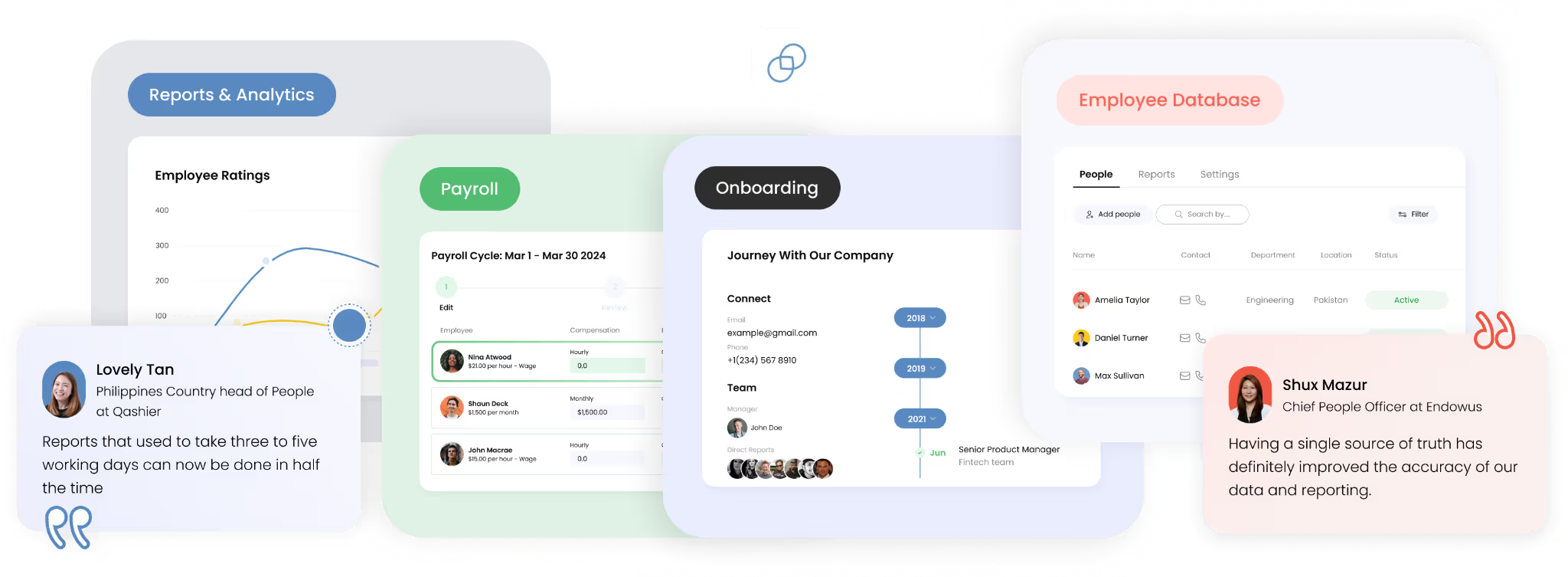
Ready to see how Omni can help you put these HR concepts into practice? Schedule a demo to learn how our platform simplifies HR management across borders while maintaining the localization your business needs.

Managing a modern workforce means navigating a landscape filled with specialized terminology. Whether you're setting up your first HR department or expanding your team across multiple countries, understanding HR terminology helps you make informed decisions and communicate effectively with your team.
This comprehensive HR glossary brings together essential terms every HR professional, business owner, and people leader should know. From compensation structures to talent management strategies, we've compiled the definitions you need to confidently lead your team and grow your business.
#
13th Month Pay
A mandatory or customary additional payment made to employees, typically at year-end, equivalent to one month's salary. Common in many Asia-Pacific countries, including the Philippines, Singapore, and Indonesia.
13th Month Salary
An additional month's wages paid to employees at the end of the year, often required by local labor laws in APAC regions as a form of employee benefit.
360-Degree Feedback
A performance review method that gathers input from multiple sources, including supervisors, peers, direct reports, and sometimes customers, to provide comprehensive feedback on an employee's performance.
360-Degree Feedback Surveys
Structured questionnaires used to collect comprehensive performance feedback from multiple sources, including supervisors, peers, direct reports, and sometimes customers, providing a complete view of an employee's strengths and development areas.
401(k) Compliance
Adherence to US federal regulations governing employer-sponsored retirement savings plans, including contribution limits, non-discrimination testing, and reporting requirements.
A
Abilene Paradox
A situation where a group makes a collective decision that contradicts the individual preferences of its members, often due to a desire to avoid conflict or rock the boat.
Absence Management
The process of tracking, monitoring, and managing employee absences, including sick leave, vacation time, and other time off, to maintain productivity and comply with labor regulations.
Absconding
When an employee leaves the organization without proper notice or informs their employer, essentially abandoning their position.
Absolute Ratings
A performance evaluation method where managers assign specific values on a fixed scale to assess individual employee behavior or performance independently of others.
Absenteeism Policy
A formal policy outlining attendance expectations, procedures for reporting absences, types of leave available, and consequences for excessive absenteeism.
Adoption Leave
Time off granted to employees who are adopting a child, allowing them to bond with their new family member and complete necessary legal processes.
ADDIE Model
An instructional design framework used in learning and development that stands for Analysis, Design, Development, Implementation, and Evaluation.
Adverse Impact
Employment practices that appear neutral but disproportionately affect protected groups, potentially leading to discrimination claims even without intent.
Affinity Bias
The unconscious tendency to favor people who share similar backgrounds, interests, or characteristics with ourselves.
Ageism
Discrimination against individuals based on their age, which can affect both older workers facing stereotypes about adaptability and younger employees perceived as inexperienced.
Agile HR
An approach to organizing and executing HR functions that emphasizes flexibility, responsiveness, and iterative improvements to meet evolving business needs.
Agile Performance Management
A continuous, collaborative approach to employee evaluation that replaces annual reviews with frequent check-ins and real-time feedback.
AIS (Automated Integration System)
An electronic system implemented by IRAS (Inland Revenue Authority of Singapore) that enables employers to submit employment income information digitally, streamlining tax filing and reducing manual submissions.
Anti-Discrimination Laws
Legal protections that prohibit unfair treatment of individuals based on protected characteristics such as race, gender, age, religion, disability, or national origin.
Applicant Screening
The systematic process of reviewing and evaluating job applications to identify candidates who meet the position's requirements.
Applicant Tracking System (ATS)
Software that manages the recruitment process from job posting through candidate selection, automating tasks like résumé screening and interview scheduling.
Application Completion Rate
A recruitment metric measuring the percentage of candidates who finish the application process after starting it.
Appraisal
A formal meeting between an employee and their manager to discuss job performance, achievements, and areas for development.
Appraisal Letter
Written documentation from HR acknowledging and praising an employee's performance during a specific period.
Apprenticeship
A structured training program combining on-the-job learning with classroom instruction to develop skills in a specific trade or profession.
Assessment Centres
Evaluation sessions where candidates complete various exercises and simulations designed to assess their suitability for a role or organization.
Attendance Policy
Guidelines establishing expectations for employee punctuality, presence at work, and procedures for requesting time off.
Attrition
The gradual reduction in workforce size through voluntary resignations, retirements, or deaths without immediate replacement.
Attrition Rate
The percentage of employees who leave an organization over a specific period, calculated by dividing departures by average headcount.
B
Back Pay
Compensation owed to an employee for work performed in a previous period, often due to payroll errors or retroactive pay adjustments.
Background Check
Verification of a candidate's employment history, education, criminal record, and other relevant information to confirm accuracy and assess suitability.
Background Verification
The process organizations use to validate information provided by candidates during the hiring process.
Balanced Scorecard
A strategic management tool that tracks organizational performance across multiple perspectives, including financial, customer, internal processes, and learning and growth.
Basic Salary
The fixed amount of money an employee receives before any additions like bonuses, allowances, or deductions.
Behavioral Competency
An evaluation of an employee's character traits and behaviors that contribute to job performance and organizational success.
Behaviorally Anchored Rating Scale (BARS)
A performance appraisal method that combines qualitative and quantitative assessments by anchoring rating scales to specific behavioral examples.
Bell Curve
A normal distribution curve used in performance management to categorize employees across a spectrum from low to high performers.
Benchmarking
Comparing your organization's HR practices, metrics, or processes against industry standards or competitors to identify improvement opportunities.
Bereavement Leave
Paid or unpaid time off granted to employees following the death of a family member or loved one.
BIR Form 2307
A Certificate of Creditable Tax Withheld at Source issued by the Philippines Bureau of Internal Revenue, documenting the amount of taxes withheld from payments made to suppliers, contractors, or employees.
Biweekly Pay
A payment schedule where employees receive their wages every two weeks, resulting in 26 pay periods per year.
Bonus
Additional financial compensation beyond regular salary, typically tied to individual, team, or company performance.
Boomerang Employees
Former employees who return to work for the same organization after leaving for another opportunity.
BPJS Kesehatan
Indonesia's national health insurance program that employers must contribute to on behalf of their employees.
BPJS Ketenagakerjaan
Indonesia's social security program covering workplace accidents, old age benefits, and death benefits for employees.
Broadbanding
A compensation structure that consolidates multiple salary grades into broader bands, providing flexibility in pay progression and lateral movement.
Bumping
Allowing senior employees whose positions are eliminated to take other positions in the organization, potentially displacing less senior staff.
Burnout
A state of physical, emotional, and mental exhaustion caused by prolonged workplace stress, leading to reduced productivity and well-being.
Business Process Outsourcing (BPO)
Contracting specific business functions to third-party service providers to reduce costs and access specialized expertise.
Boundaryless Organization
An organizational structure that minimizes hierarchical barriers and functional silos to promote innovation and collaboration.
C
Candidate Experience
The overall impression job seekers form about your organization throughout the recruitment process, from initial contact through onboarding.
Career Break
An extended period away from employment, typically for personal reasons, family care, or professional development.
Career Lattice
A non-linear career progression model allowing employees to move horizontally, vertically, or diagonally to develop diverse skills and experiences.
Career Path
The sequence of positions an employee moves through as they progress and grow within an organization.
Change Management
A structured approach to transitioning individuals, teams, or entire organizations from their current state to a desired future state.
Churn Rate
The percentage of employees or customers who leave an organization during a specific period.
Coaching
A developmental process where a coach helps an individual improve specific skills or achieve particular goals through guidance and feedback.
Common Law Employee
A worker whose employer controls what work is done and how it's performed, distinguishing them from independent contractors.
Compa Ratio
A metric comparing an employee's actual salary to the midpoint of their salary range, indicating their position within the pay band.
Compassionate Leave
Time off provided to employees to handle personal or family emergencies beyond standard bereavement situations.
Compensation and Benefits (C&B)
The total package of financial and non-financial rewards organizations provide to employees in exchange for their work.
Compensation Package
The complete offer of salary, benefits, and perks provided to an employee.
Compensation Philosophy
An organization's guiding principles for how it structures, manages, and communicates employee pay and benefits.
Compensatory Off (Comp Off)
Paid leave granted to employees as compensation for working on holidays, weekends, or beyond regular hours.
Competency
A combination of knowledge, skills, behaviors, and attitudes that enables effective job performance.
Competency-Based Pay
A compensation system that rewards employees based on their demonstrated skills and capabilities rather than job title alone.
Competency Mapping
The process of identifying and defining the specific competencies required for successful performance in a role.
Confirmation Letter
Official documentation confirming an employee has successfully completed their probationary period and is now a permanent employee.
Confidentiality Agreement
A legal contract preventing employees from disclosing proprietary or sensitive company information.
Constructive Dismissal
A situation where an employer creates working conditions so intolerable that the employee feels forced to resign.
Contingent Worker
Employees hired on a temporary, project-based, or contract basis rather than as permanent staff.
Contractor
An independent worker hired to complete specific projects or tasks without being classified as an employee.
Cost of Living Adjustment (COLA)
Periodic salary increases designed to help employees maintain purchasing power in the face of inflation.
Cost Per Hire
The total cost associated with filling a position, including advertising, recruiter fees, interview expenses, and onboarding costs.
Cost to Company (CTC)
The total amount an employer spends on an employee annually, including salary, benefits, taxes, and other employment costs.
CPF (Central Provident Fund)
Singapore's comprehensive social security savings scheme, where both employers and employees make mandatory monthly contributions toward retirement, healthcare, and housing needs.
Cross-Functional Team
A group composed of members from different departments who collaborate on a shared goal or project.
Culture Add
A hiring philosophy that seeks candidates who bring new perspectives and skills to enhance company culture, rather than simply fitting existing culture.
Culture Change
The process of transforming an organization's culture to better align with its mission, vision, and strategic goals.
Customer-Centric Culture
An organizational culture that prioritizes understanding and meeting customer needs in all business decisions.
D
Data Privacy Act
Legislation protecting individuals' personal information and regulating how organizations collect, store, and use personal data.
Decentralized Payroll
A payroll structure where different departments or regional offices manage their own payroll processes independently.
Deferred Compensation
Pay or benefits earned in one period but paid to employees in a future period, often for tax advantages or retention purposes.
Delayering
Reducing the number of management levels in an organization to create flatter structures and faster decision-making.
Digital HR
The transformation of HR processes through cloud-based, mobile-first, and data-driven technologies to improve efficiency and effectiveness.
Digital Nomad
A professional who works remotely while traveling, leveraging technology to perform their job from various locations worldwide.
Disciplinary Action
Steps taken by an organization to address employee misconduct or performance issues.
Disciplinary Procedure
A formal process for handling workplace rule violations, typically involving warnings and escalating consequences.
Discretionary Benefits
Non-mandatory perks and benefits employers choose to offer beyond legal requirements to attract and retain talent.
Disparate Treatment
Intentional discrimination where individuals are treated differently based on protected characteristics like race or gender.
Diversity, Equity, Inclusion, and Belonging (DEIB)
An integrated approach to creating workplaces where all employees feel valued, respected, and able to contribute fully.
Downshifting
Choosing to reduce work responsibilities or complexity to achieve better work-life balance or pursue personal priorities.
Dysfunctional Turnover
When high-performing employees leave an organization at a higher rate than average or poor performers.
E
EDLI (Employee Deposit Linked Insurance)
An insurance scheme in India that provides life insurance coverage to employees contributing to the Employee Provident Fund.
E-Recruitment
Using web-based software and online platforms to manage the recruitment process from job posting to candidate selection.
Emerging Work Models
Innovative approaches to structuring work, including flexible arrangements, hybrid models, and new employment relationships.
Employee Assistance Program (EAP)
Workplace programs providing confidential support services to help employees manage personal or work-related challenges.
Employee Assessments
Structured evaluations of employee skills, performance, potential, or personality characteristics.
Employee Benefits
Non-wage compensation provided to employees, including health insurance, retirement plans, and paid time off.
Employee Benefits Administration
Managing and overseeing the various benefit programs offered to employees, ensuring compliance and effective communication.
Employee Clearance
The final settlement process, when an employee leaves, including returning company property and receiving pending payments.
Employee Database
A centralized system for storing and managing employee information, including personal details, employment history, and performance records.
Employee Empowerment
Giving employees authority and resources to make decisions and take ownership of their work.
Employee Engagement
The emotional commitment employees have to their organization and its goals, leading to discretionary effort and better performance.
Employee Experience
The sum of all interactions an employee has with their employer throughout the employee lifecycle.
Employee Helpdesk
A support system providing employees with assistance for HR-related questions, IT issues, or workplace concerns.
Employee Journey Management
Mapping and optimizing the complete employee experience from recruitment through offboarding.
Employee Life Cycle
The stages an employee progresses through during their time with an organization, from attraction to exit and beyond.
Employee Lifetime Value (ELTV)
The projected total value an employee will contribute to the organization throughout their tenure.
Employee Listening Strategy
A systematic approach to gathering and acting on employee feedback through various channels and touchpoints.
Employee Misclassification
Incorrectly categorizing workers as independent contractors when they should be classified as employees, or vice versa.
Employee Net Promoter Score (eNPS)
A metric measuring how likely employees are to recommend their organization as a great place to work.
Employee Onboarding
The process of integrating new hires into the organization, covering orientation, training, and cultural assimilation.
Employee Orientation
The initial introduction providing new employees with essential information about their role, the company, and workplace policies.
Employee Referral Program
An initiative encouraging current employees to recommend qualified candidates for open positions, often with incentive rewards.
Employee Relations
Activities focused on maintaining positive relationships between the organization and its employees.
Employee Resource Group (ERG)
Voluntary, employee-led groups formed around shared characteristics or life experiences that support inclusion and community.
Employee Retention
Strategies and initiatives designed to keep valuable employees from leaving the organization.
Employee Satisfaction
The extent to which employees are content with their jobs and workplace experience.
Employee Self-Service (ESS)
Technology allowing employees to access and manage their HR information independently, such as updating personal details or requesting leave.
Employee Stock Purchase Plan (ESPP)
A benefit allowing employees to purchase company stock, often at a discounted price.
Employee Turnover
The rate at which employees leave an organization and are replaced by new hires.
Employee Value Proposition (EVP)
The unique set of benefits and experiences an organization offers to employees in return for their skills and contributions.
Employer Branding
How an organization positions itself as an employer of choice to attract and retain top talent.
Employer of Record (EOR)
A third-party organization that becomes the legal employer for workers in another country, handling compliance, payroll, and HR administration.
Employer Value Proposition
See Employee Value Proposition (EVP).
Employment Agreement
A formal contract outlining the terms and conditions of employment between employer and employee.
Employment Contract
A legally binding document defining the employment relationship, including role, compensation, and responsibilities.
Employment History
A record of an individual's previous jobs, positions held, and length of service with various employers.
Employment of Foreign Manpower Act (EFMA)
Singapore legislation governing the employment of foreign workers, including work pass requirements and employer obligations.
Employment Status
An individual's classification as an employee, contractor, or other worker type, determining their rights and benefits.
eNPS
See Employee Net Promoter Score.
Enterprise Resource Planning (ERP)
Integrated software systems managing core business processes, including HR, finance, and operations.
Enterprise Social Network
Internal social platforms enabling employees to communicate, collaborate, and share knowledge across the organization.
EPF (Employees Provident Fund)
Malaysia's mandatory savings scheme requiring both employer and employee contributions to provide retirement benefits and financial security for workers.
Equity (Stock)
Ownership interest in a company, often offered to employees as part of compensation packages.
Equity Compensation
Providing employees with company ownership through stock options, restricted stock units, or other equity instruments.
Equity Theory
A motivation theory suggesting employees compare their input-to-outcome ratios with others and seek fairness.
Ex Gratia Payment
A voluntary payment made by an employer beyond legal obligation, often as a goodwill gesture during severance.
Exercising Stock Options
The act of purchasing company shares at the predetermined strike price specified in an employee stock option.
Exit Interview
A structured conversation with departing employees to understand their reasons for leaving and gather feedback.
Expatriate
An employee working abroad on a long-term assignment, typically with enhanced compensation and support.
F
Factor Comparison
A job evaluation method comparing positions across factors like skill, responsibility, and working conditions to determine relative value.
Five Factor Model
A personality theory identifying five core traits: openness, conscientiousness, extraversion, agreeableness, and neuroticism.
Fixed-Term Employment
Employment contracts with a specified end date or tied to the completion of a particular project.
Flexible Work
Work arrangements offering employees choice in where, when, or how they work to balance professional and personal needs.
Flexible Working Arrangements
Policies allowing variations in work schedules, locations, or structures to accommodate employee preferences.
Floating Holidays
Paid days off employees can use at their discretion rather than on predetermined company holidays.
Forced Ranking
A performance management system requiring managers to distribute employees across performance categories in predetermined percentages.
Foreign Worker Levy
A fee employers in countries like Singapore pay the government for the right to hire foreign workers.
Form 12B
An Indian income tax form that employees submit to their employer showing income and tax paid at their previous employer.
Form 12C
An Indian income tax form used for reporting tax-related information to the Income Tax Department.
Formalization
The extent to which an organization relies on rules, procedures, and written documentation to govern employee behavior.
Fringe Benefits
Non-wage compensation provided to employees beyond their standard salary, including perks like health insurance, retirement plans, gym memberships, company cars, meal allowances, and other benefits designed to enhance the overall employee value proposition and improve retention.
Full-Time Employee (FTE)
An employee working the standard number of hours considered full-time by the organization or local laws, typically 35-40 hours weekly.
Functional Job Analysis
A systematic method for gathering detailed information about job requirements, duties, and necessary qualifications.
G
Gamification
Applying game-design elements like points, badges, and leaderboards to HR processes to increase engagement and motivation.
Garden Leave
A period after resignation where an employee remains employed and paid but is not required or allowed to work.
Gender Divide
Differences in opportunities, treatment, or outcomes between men and women in the workplace or society.
Generation X
The demographic cohort born roughly between the early 1960s and early 1980s, currently in mid-career or leadership positions.
Generation Z
The demographic cohort born between the late 1990s and early 2010s, now entering the workforce with different expectations and digital fluency.
GIG Economy
An economic model characterized by short-term contracts and freelance work rather than traditional permanent employment.
Global Contractor
An independent worker hired to perform services across international borders without becoming a formal employee.
Global Core HR
HR systems designed to manage employees across multiple countries while accommodating local regulations and practices.
Global Employment Solution
Services and platforms that enable organizations to hire, manage, and pay employees in countries where they lack a local entity.
Global Payroll
Systems and processes for managing compensation across multiple countries with varying currencies, tax systems, and regulations.
Golden Handcuffs
Financial incentives or contractual arrangements that make it costly or difficult for employees to leave an organization.
Graphic Rating Scale
A performance evaluation method using predetermined scales to rate employees on specific job-related criteria.
Gratuity
A lump-sum payment made to employees upon retirement or resignation after a minimum period of service, common in many Asian countries.
Grievance
A formal complaint an employee raises about working conditions, treatment, or perceived violations of employment terms.
GRPI Model
A team effectiveness framework examining Goals, Roles and Responsibilities, Processes, and Interpersonal relationships.
Gross Misconduct
Serious employee misbehavior that may justify immediate dismissal without notice, such as theft, violence, or severe insubordination.
Gross Salary
Total earnings before any deductions like taxes, insurance, or retirement contributions.
Group Mentoring
A mentoring arrangement where one or more mentors guide multiple mentees simultaneously, fostering peer learning.
H
Hawthorne Effect
The phenomenon where people modify their behavior when they know they're being observed or studied.
Headcount
The total number of employees in an organization or department at a given time.
Headcount Planning
The strategic process of determining the optimal number and type of employees needed to achieve business objectives.
Hierarchy of Needs
Maslow's theory categorizing human needs into five levels: physiological, safety, belonging, esteem, and self-actualization.
Hiring Freeze
A temporary halt on recruiting new employees, typically implemented to control costs during challenging periods.
Hiring Process Flowchart
A visual representation mapping each step of the recruitment process from job requisition to onboarding.
Horn Effect
Cognitive bias where one negative characteristic disproportionately influences overall perception of a person.
HR Analytics
See People Analytics.
HR Audit
A comprehensive review of HR policies, practices, and procedures to ensure compliance, efficiency, and alignment with business goals.
HR Automation
Using technology to streamline and automate repetitive HR tasks, freeing time for strategic work.
HR Business Partner (HRBP)
HR professionals who work closely with business leaders to align people strategy with organizational objectives.
HR Chatbot
AI-powered virtual assistants that handle routine HR inquiries and tasks through conversational interfaces.
HR Consulting
Specialized advisory services helping organizations optimize their HR strategies, processes, and systems.
HR Generalist
An HR professional with broad knowledge across multiple HR functions, rather than specializing in one area.
HR Management Software (HRMS)
Technology platforms that automate and integrate core HR processes like recruitment, payroll, and performance management.
HR Operating Models
The organizational structure and approach HR uses to deliver services and value to the business.
HR Scorecard
A measurement system tracking HR metrics and their impact on organizational performance.
HR Service Management (HRSM)
Applying service management principles to HR delivery, emphasizing employee experience and efficient service provision.
HR Software
Technology solutions designed to support various HR functions and processes.
HR Tech Stack
The collection of software tools and platforms an organization uses to manage its HR functions.
HRIS (Human Resources Information System)
Software for collecting, storing, and managing employee data and supporting core HR processes.
Human Capital Analytics
See People Analytics.
Human Capital Management (HCM)
The strategic approach to managing people as valuable organizational assets through integrated systems and processes.
Human Capital ROI
A metric measuring the return on investment from spending on employees, comparing revenue to people costs.
Human Resource Information System
See HRIS.
Human Resource Management (HRM)
The strategic approach to managing people in organizations to maximize employee performance and achieve business objectives.
Human Resource Management System (HRMS)
Comprehensive software suites managing multiple HR functions, including payroll, benefits, time tracking, and performance.
Human Resource Outsourcing (HRO)
Contracting external providers to handle specific HR functions or entire HR operations.
Hybrid Work
A work model combining remote and office-based work, allowing employees flexibility in where they perform their duties.
I
Incentive Pay
Additional compensation tied to achieving specific goals, targets, or performance metrics.
Inclusion
Creating an environment where all employees feel valued, respected, and able to fully participate and contribute.
Inclusive Communication
Communication practices ensuring all employees feel heard and can access information regardless of background or ability.
Induction
The initial process of introducing new employees to the organization's culture, policies, and procedures.
Informal Communication
Unofficial communication channels and conversations that occur naturally among employees outside formal structures.
Intercultural Competence
The ability to effectively interact and work with people from different cultural backgrounds.
Intergroup Development
Interventions designed to improve cooperation and reduce conflict between different groups within an organization.
Internal Equity
Fairness in compensation when comparing similar roles and responsibilities within the same organization.
International Employment Law
Legal regulations governing employment relationships across borders, including contracts, rights, and obligations.
Internship
Temporary positions offering practical work experience to students or recent graduates, often unpaid or low-paid.
Interview-to-Hire Ratio
The average number of interviews conducted to make one successful hire.
Interview Rubric
A structured scoring tool with predetermined criteria used to consistently evaluate candidates across interviews.
IRAS (Inland Revenue Authority of Singapore)
Singapore's tax authority responsible for administering and collecting taxes, including corporate tax, personal income tax, and goods and services tax.
J
Job Break
See Career Break.
Job Characteristics Model
A framework identifying five core job dimensions that influence work motivation: skill variety, task identity, task significance, autonomy, and feedback.
Job Classification
Grouping similar positions into categories for purposes of compensation, career progression, or organizational structure.
Job Description
A document outlining the duties, responsibilities, qualifications, and expectations for a specific position.
Job Dissatisfaction
A state where employees feel unhappy or unfulfilled in their roles, often leading to disengagement or turnover.
Job Evaluation
Systematically determining the relative worth of different jobs within an organization to establish fair compensation structures.
Job Shadowing
On-the-job learning where an individual observes and learns from a more experienced colleague performing their work.
K
KETS (Kartu Elektronik Tenaga Kerja)
Indonesia's electronic labor card used to track workforce data and employment information.
Key Performance Indicators (KPIs)
Measurable values demonstrating how effectively an organization or individual is achieving key objectives.
Key Result Areas (KRAs)
Major outcomes or responsibilities an employee is expected to deliver in their role.
Knowledge Management
Systematically capturing, organizing, and sharing organizational knowledge to improve decision-making and efficiency.
Knowledge, Skills, and Abilities (KSAs)
The competencies required to successfully perform a job, often used in hiring and development planning.
L
Labor Laws
Legal regulations governing the employer-employee relationship, including wages, working conditions, and employee rights.
Learning Agility
The ability to quickly learn from experience and apply that learning to new or unfamiliar situations.
Learning and Development (L&D)
Organizational efforts to improve employee skills, knowledge, and capabilities through training and development programs.
Letter of Termination
A formal document notifying an employee that their employment is being ended, including reasons and effective date.
LHDN (Lembaga Hasil Dalam Negeri)
The Inland Revenue Board of Malaysia, the government agency responsible for administering and collecting direct taxes, including individual and corporate income tax.
M
Management by Objectives (MBO)
A performance management approach where managers and employees jointly set specific, measurable goals.
Management Styles
Different approaches leaders use to direct, motivate, and manage their teams.
Management Training
Programs designed to develop leadership skills and management capabilities in current or aspiring managers.
Market Culture
An organizational culture emphasizing competition, achievement, and measurable results.
Matrix Organization
A structure where employees report to both functional managers and project or product managers, creating dual reporting lines.
Maternity Leave
Time off provided to mothers before and after childbirth to recover and bond with their new baby.
Mean Wage
The average wage for a position, calculated by dividing total wages by the number of employees.
Mentoring
A developmental relationship where a more experienced person guides and supports someone less experienced.
Merit Pay
Compensation increases based on individual performance rather than seniority or cost-of-living adjustments.
Microaffirmations
Small gestures of respect and inclusion that create a positive, supportive workplace environment.
Micromanagement
An overly controlling management style where supervisors closely monitor and direct every aspect of employees' work.
Millennials
The demographic generation born roughly between 1981 and 1996, now making up a significant portion of the workforce.
Minimum Wage
The lowest hourly rate employers can legally pay workers, set by government regulation.
MPF (Mandatory Provident Fund)
Hong Kong's mandatory retirement savings system requiring both employers and employees to make regular contributions to approved provident fund schemes.
Multi-Rater Feedback
Performance evaluation incorporating input from various sources, including peers, subordinates, and managers.
N
Nepotism
Favoritism shown to relatives in hiring or promotion decisions, regardless of merit or qualifications.
Net Salary
Take-home pay after all deductions like taxes, insurance, and retirement contributions.
Network Organization
A decentralized structure where autonomous units collaborate while maintaining independence.
New Hire Turnover
The percentage of new employees who leave within a specific period, typically within their first year.
Night Shift Differential
Additional compensation paid to employees working night shifts to compensate for working during non-standard hours.
Non-Compete Agreement
A contractual clause preventing employees from working for competitors or starting competing businesses for a specified period after leaving.
Non-Disclosure Agreement (NDA)
A legal contract requiring parties to keep specific information confidential.
O
Objectives and Key Results (OKR)
A goal-setting framework defining what to achieve (Objectives) and how success will be measured (Key Results).
Occupational Stress
Work-related pressure and strain affecting employees' physical and mental well-being.
Offboarding
The process of managing an employee's departure from the organization, including knowledge transfer and exit procedures.
Offer Letter
A formal document extending a job offer to a candidate, outlining position details, compensation, and terms.
Offshoring
Relocating business operations or hiring workers in another country to reduce costs or access specialized talent.
Onboarding
See Employee Onboarding.
Organization Chart
A visual diagram showing the structure of an organization and reporting relationships between positions.
Organizational Change
Significant alterations to an organization's structure, processes, culture, or strategy.
Organizational Culture
The shared values, beliefs, and behaviors that shape how work gets done in an organization.
Organizational Development (OD)
Planned, systematic changes to improve organizational effectiveness and employee well-being.
Organizational Restructuring
Significantly changing an organization's structure, often involving consolidation, expansion, or realignment of departments.
Orientation
See Employee Orientation.
Outsourcing
Contracting external providers to handle business functions previously performed internally.
Overtime Pay
Additional compensation paid to non-exempt employees for working beyond standard hours, typically at a higher rate.
P
Pag-IBIG Fund
The Philippines' Home Development Mutual Fund providing housing loans and savings programs to workers.
Paid Holidays
Designated days off where employees receive regular pay without working, such as national holidays.
Paid Time Off (PTO)
A policy combining vacation, sick leave, and personal days into a single bank of time off.
Parental Leave
Time off for new parents to care for and bond with their newborn or newly adopted child.
Paternity Leave
Leave granted to fathers following the birth or adoption of a child.
Payroll
The process of calculating and distributing employee compensation, including salaries, wages, bonuses, and deductions.
Payroll Audit
A systematic review of payroll processes and records to ensure accuracy and compliance.
Payroll Outsourcing
Contracting external providers to handle payroll processing and administration.
Payroll Software
Technology that automates payroll calculations, tax compliance, and payment distribution.
Payroll System
The integrated processes and tools used to manage employee compensation.
Payslip
A document detailing an employee's earnings, deductions, and net pay for a specific period.
People Analytics
Using data analysis and statistical methods to inform HR decisions and improve workforce outcomes.
People Operations
A modern approach to HR emphasizing employee experience, data-driven decisions, and operational efficiency.
PEP (Productivity and Innovation Credit Scheme)
A Singapore government initiative providing tax benefits and cash payouts to encourage businesses to invest in productivity improvements, innovation, and employee training. [Note: This was previously known as PIC - Productivity and Innovation Credit]
Performance Appraisal
A formal evaluation of an employee's job performance against established objectives and standards.
Performance Coaching
One-on-one guidance focused on improving specific aspects of an employee's performance.
Performance Improvement
Efforts to enhance employee effectiveness through training, feedback, and support.
Performance Improvement Plan (PIP)
A structured document outlining performance issues and steps an employee must take to improve.
Performance Management
The continuous process of setting expectations, monitoring progress, providing feedback, and developing employees.
Performance Management Cycle
The recurring phases of planning, monitoring, reviewing, and rewarding performance.
Performance Planning
Setting clear objectives and expectations at the beginning of a performance period.
Personal Data Protection Act (PDPA)
Data privacy legislation, particularly in Southeast Asian countries like Singapore, governing how organizations handle personal information.
PhilHealth
The Philippines' national health insurance program providing medical coverage to citizens and residents.
Probationary Arrangements
Terms and conditions applying to employees during their initial trial period.
Probationary Period
An initial employment phase during which new hires are evaluated before permanent status is granted.
Professional Development Plan (PDP)
A structured roadmap outlining an employee's career goals and the steps to achieve them.
Professional Employer Organization (PEO)
A firm providing comprehensive HR services to client companies, acting as a co-employer for administrative purposes.
Promotion Rate
The frequency at which employees advance to higher positions within an organization.
Proximity Bias
The tendency to favor employees who are physically present or nearby over remote workers.
Psychometric Test
Assessments measuring psychological attributes like personality, cognitive ability, or aptitude.
PTO
See Paid Time Off.
Q
Qualifying Life Event
Significant life changes allowing employees to modify their benefits outside regular enrollment periods.
Quality Management
Systems ensuring products, services, and processes meet established standards of excellence.
Queen Bee Syndrome
When women in leadership positions treat other women less favorably than they treat men.
R
Recruitment
The process of identifying, attracting, and selecting candidates to fill job vacancies.
Recruitment Funnel
A framework tracking candidates through each stage of the hiring process from awareness to hire.
Recruitment ROI
The return on investment from recruitment activities, comparing hiring costs to the value new employees bring.
Recruitment Software
Technology platforms streamlining the hiring process from job posting to candidate selection.
Redundancy
Termination due to elimination of a position rather than employee performance, often due to restructuring or economic conditions.
Relieving Letter
A document issued upon an employee's departure confirming their last working day and that they have no outstanding obligations.
Remote Hiring Solution
Tools and strategies for recruiting and onboarding employees who work remotely.
Remote Work
Work performed outside the traditional office environment, typically from home or other locations.
Remote Work Policy
Guidelines governing how, when, and under what conditions employees can work remotely.
Remote-First Company
Organizations designed with remote work as the default rather than an accommodation.
Remuneration
Total compensation, including salary, benefits, and other financial rewards.
Request for Proposal (RFP)
A document inviting vendors to submit proposals for providing specific products or services.
Restricted Holidays
Optional holidays employees can choose to observe based on personal preferences or cultural practices.
Retention Strategy
Initiatives designed to keep valuable employees engaged and committed to the organization.
Retirement Pay
Financial compensation provided to employees upon retirement, either mandated by law or offered as a benefit.
Retroactive Pay
Compensation adjustments applied to past pay periods, typically to correct errors or implement backdated changes.
Revenue Per FTE
Total organizational revenue divided by the number of full-time equivalent employees.
Reverse Mentoring
A program where junior employees mentor senior leaders, often on topics like technology or cultural trends.
Rewards and Recognition
Programs acknowledging and celebrating employee contributions and achievements.
Right to Manage
The authority of leadership to make decisions about how the organization is operated.
Risk Management
Identifying, assessing, and mitigating potential threats to organizational objectives.
Roster Management
Planning and managing employee work schedules and shifts.
Rotational Training
Development programs where employees rotate through different roles or departments to build diverse skills.
S
Sabbatical Leave
Extended time off, often several months, for rest, personal development, or special projects.
Salary Range Penetration
Where an employee's salary falls within their designated pay range, expressed as a percentage.
Seasonal Employment
Temporary work during periods of peak demand, such as holidays or harvest seasons.
Selection Ratio
The ratio of candidates hired to total applicants, indicating selectivity in hiring.
Sensitivity Training
Programs designed to increase awareness of diversity and reduce prejudice and bias.
Shared Parental Leave (SPL)
Leave that can be shared between parents following the birth or adoption of a child.
Situational Leadership
A flexible leadership approach adjusting style based on the situation and team members' development levels.
Skill Gap
The difference between skills employees currently have and skills needed for organizational success.
Skills Development Levy (SDL)
A mandatory fee paid by Singapore employers to fund national workforce training and development.
Skills Gap Analysis
Systematically identifying gaps between current workforce capabilities and future requirements.
Social Collaboration
Using social technologies and networks to facilitate teamwork and knowledge sharing.
Social HR
Leveraging social media platforms for HR functions like recruitment, engagement, and employer branding.
Social Networking
Building professional relationships and communities through online platforms.
Social Recruitment
Using social media channels and networks to attract and engage potential candidates.
Social Security Act
Legislation establishing social insurance programs providing benefits for retirement, disability, and death.
SOCSO (Social Security Organization)
Malaysia's social insurance scheme protecting employees against work-related accidents, occupational diseases, disability, and death, funded through employer and employee contributions.
Software as a Service (SaaS)
Cloud-based software delivery model where applications are accessed via the internet rather than installed locally.
Source of Hire
The channel or method through which a successful candidate first learned about a job opportunity.
SSS (Social Security System)
The Philippines' social insurance program protecting workers and their families against disability, sickness, maternity, old age, death, and other contingencies through mandatory contributions.
Staffing
The process of finding, recruiting, and deploying the right people in the right roles.
Staffing Plan
A strategic document outlining current and future workforce needs and how to meet them.
Statutory Employee
Workers who meet specific criteria qualifying them for certain employment benefits and protections under the law.
Stock Grants
Company shares given to employees as compensation, typically vesting over time.
Strategic HRM
Aligning human resource management with organizational strategy to achieve business objectives.
Strategic Initiatives
Planned actions designed to achieve specific strategic goals and drive organizational progress.
Strategic Planning
The process of defining organizational direction and making decisions on resource allocation.
Succession Planning
Identifying and developing internal candidates to fill key leadership positions in the future.
Summary Dismissal
Immediate termination of employment without notice due to serious misconduct.
Supplemental Pay
Additional compensation beyond base salary, such as bonuses, commissions, or overtime.
Suspension
Temporary removal from work duties, typically with or without pay, pending investigation or as disciplinary action.
Synchronous Communication
Real-time communication where participants interact simultaneously, like video calls or instant messaging.
System Changeover
Transitioning from one HR system or process to another.
Systemic Discrimination
Organizational policies or practices that unintentionally disadvantage specific groups.
T
Take Home Pay
See Net Salary.
Talent Acquisition
Strategic approach to identifying, attracting, and hiring the people an organization needs to achieve its goals.
Talent Management
Integrated strategies for attracting, developing, retaining, and optimizing workforce capabilities.
Talent Management Software
Technology platforms supporting talent management processes from recruitment through development and succession.
Talent Mapping
Analyzing current workforce capabilities and identifying gaps to inform recruitment and development strategies.
Talent Pipeline
A pool of qualified candidates ready to fill positions when they become available.
Tangible Rewards
Physical or monetary incentives that have clear, measurable value.
Tax
Mandatory financial charges imposed by the government on income, property, or transactions.
Tax Identification Number (TIN)
A unique number assigned to individuals for tax filing and reporting purposes.
Tax Residency
The country where an individual is considered a resident for tax purposes, determining their tax obligations.
Taxable Income
The portion of gross income subject to taxation after allowable deductions and exemptions.
Team Building
Activities and initiatives designed to improve collaboration, trust, and effectiveness among team members.
Telecommuting
Working from a location other than the traditional office, typically from home.
Termination of Employment
The end of the employment relationship, whether voluntary (resignation) or involuntary (dismissal).
Time Off Request Form
A document employees use to formally request approved absences from work.
Time to Hire
The number of days between when a candidate enters the hiring process and when they accept an offer.
Total Compensation
The complete value of all financial and non-financial rewards an employee receives.
Total Compensation Statement
A document showing the full value of an employee's compensation package beyond just salary.
Total Quality Management (TQM)
A comprehensive management approach focused on continuous improvement and customer satisfaction.
Total Remuneration
See Total Compensation.
Total Rewards
The complete package of financial and non-financial benefits employees receive in exchange for their work.
Training and Development
Structured learning experiences designed to improve employee skills, knowledge, and performance.
Training Needs Analysis (TNA)
Systematically identifying skill gaps and determining what training is required.
Transformational Leadership
A leadership style focused on inspiring and motivating teams through vision and personal example.
Transitional Employment
Temporary work arrangements helping individuals re-enter the workforce or transition between roles.
Travel and Expense Management
Systems and policies for managing business travel bookings, expenses, and reimbursements.
Tripartite Alliance for Fair and Progressive Employment Practices (TAFEP)
Singapore organization promoting fair employment practices and harmonious workplace relations.
Turnover
See Employee Turnover.
U
Unconscious Bias
Implicit attitudes or stereotypes that affect decisions and actions without conscious awareness.
Undue Hardship
Excessive difficulty or expense that would excuse an employer from making reasonable accommodations.
Unfair Dismissal
Termination that violates employment law or the employment contract.
Unified Payroll
A centralized system managing payroll across multiple locations or countries from a single platform.
V
Vacation Accrual
The gradual accumulation of paid time off based on hours worked or length of service.
Variable Pay
Compensation that fluctuates based on performance, results, or other criteria rather than being fixed.
Vesting
The schedule or process by which employees earn full ownership rights to employer-provided benefits like stock options or retirement contributions.
Virtual Employee
Workers who perform their duties entirely remotely, without a physical office presence.
Virtual HR
HR services and support delivered through digital channels rather than in-person interactions.
Virtual Stock Option Plans
Phantom equity plans that provide cash bonuses tied to company stock performance without granting actual shares.
Voice of the Employee (VoE)
Structured processes for gathering and understanding employee opinions, concerns, and suggestions.
Voluntary Benefits
Optional employee-paid benefits offered through the employer, such as supplemental insurance or legal services.
Volunteer Time Off (VTO)
Paid time off specifically designated for employees to engage in volunteer or community service activities.
W
Wage Drift
The difference between base wages and total compensation due to overtime, bonuses, and other additions.
Wellness Programs
Initiatives promoting employee health and well-being through fitness activities, health screenings, and lifestyle education.
Work from Anywhere
Policies allowing employees to work from any location globally, not just from home.
Work Visa
Legal authorization for foreign nationals to work in a specific country.
Work-Life Balance
The equilibrium between professional responsibilities and personal life priorities.
Workation
Combining work and vacation by working remotely from a vacation destination.
Workforce Analysis
Examining workforce data to understand current capabilities and inform future planning.
Workforce Management
Processes for optimizing employee scheduling, time tracking, and labor allocation.
Workforce Planning
Strategic process of ensuring the organization has the right people with the right skills at the right time.
Working from Home (WFH)
Performing job duties from one's residence rather than commuting to an office.
Working Hours
The designated times employees are expected to be available and performing work duties.
Workplace Bullying
Repeated unreasonable behavior directed at an employee that creates health and safety risks.
Wrongful Termination
Dismissal that violates employment law, contractual agreements, or public policy.
Y
Yield Ratio
The percentage of candidates who successfully advance from one stage of the hiring process to the next.
Z
Zoom Fatigue
Mental exhaustion resulting from excessive video conferencing and virtual meetings.
Building Your HR Foundation with Omni
Understanding HR terminology is just the first step. Successfully implementing these concepts requires the right tools and systems. Omni provides a modern, flexible HR platform specifically designed for Asia-based teams navigating the complexities of multi-country operations.
Whether you're building your HR function from scratch or looking to optimize existing processes, having a comprehensive HR glossary at your fingertips helps you make informed decisions and communicate effectively with your team.

Ready to see how Omni can help you put these HR concepts into practice? Schedule a demo to learn how our platform simplifies HR management across borders while maintaining the localization your business needs.
Full HR & Payroll coverage for Philippines, Singapore, Malaysia, Hong Kong, and Indonesia. Each market has local support teams and built-in compliance features.
Starting at $3/employee/month for core features. Volume-based discounts are available for growing teams. Book a demo for custom pricing.
Enterprise-grade security with ISO 27001, GDPR certifications, and local data residency options.
4 weeks average. Includes free data migration, setup, and team training. No hidden fees.
Built specifically for Asia with local payroll processing, same-day support in Asia time zones, and 40% lower cost than global alternatives.

.png)