

















.png)
Summary. For most HR teams, the volume of workforce data has grown faster than the capacity to act on it. AI analytics changes that equation by automating the collection, cleaning, and analysis of employee data across recruitment, performance management, retention, and payroll, and replacing backward-looking reports with continuous, predictive intelligence. The use cases are clear: identifying attrition risk before an employee disengages, flagging burnout signals across departments, automating resume screening, and generating workforce planning projections grounded in current data rather than last year's headcount. The benefits are real, but so are the constraints. Poor data quality limits the reliability of any model, privacy obligations require active governance, and over-reliance on automation risks eroding the human relationships that HR exists to support. The organisations extracting the most value from AI data analytics in 2026 are those treating it as an extension of human judgement instead of a replacement, built on a foundation of clean, centralised employee data that makes every insight actionable from the moment it surfaces.
HR analytics is the foundation for data-driven decision-making regarding your workforce, ensuring that every decision is made on raw data and not emotions or guesswork. As your workforce grows, so does the volume of data sitting behind every hiring decision, performance review, and attrition risk. The problem for most HR teams isn’t access to the data; it’s having the tools to act on it before it’s too late.
This is where AI analytics shines in 2026, helping HR teams handle administrative work faster and more efficiently. If you have ever wondered how AI data analytics can help your team perform better, then this piece is your best bet. We’ll guide you through artificial analysis for HR, its benefits, challenges, and how you can maximise it for growth.
What are AI analytics for HR?
AI analytics for HR is the use of artificial intelligence to collect, process, and analyse workforce data, surfacing patterns, predicting outcomes, and generating insights that inform better people decisions. In practice, this means automating processes like data collection and entry, trend predictions, employee onboarding, recruitment, employee engagement, and payroll so HR teams can act on signals earlier and with greater confidence.
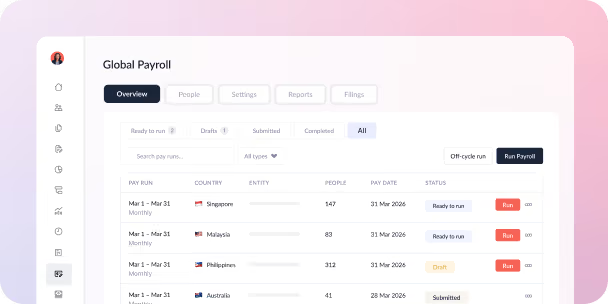
Omni HR's AI agent, Mino, takes this a step further — letting HR teams ask workforce questions in plain language and get back fully customised charts, trend views, or live dashboards in seconds, without exporting data or waiting on manual reports.
Previously, traditional data analysis in HR was tedious and involved manually sifting through tons of employee data either for recognition or appraisal, recruitment, promotion, or performance reviews. Human errors and biases could occur, leading to a decline in employee satisfaction. With AI analytics, these processes are automated - artificial intelligence quickly processes large amounts of employee information from databases to produce well-structured, ready-to-use information, reducing errors while increasing efficiency and productivity.
How do AI analytics work in HR?
AI analytics in HR works similarly to human HR analysts; however, they are faster, more efficient, less prone to error, and improve decision-making in HR management. The process runs in three stages:
Cleaner, faster data collection
AI analytics scours through several databases and HRIS to gather employee data. This includes employee demographics, certifications and degrees, job history, performance review data, and payroll data. Beyond collection, AI analytics cleans up the raw data and ensures consistency and standardization of formats to make understanding and comparison easy.
Early warning signals from workforce patterns
Much more than data collection and integration, AI analytics observes workforce patterns and trends, helping you gain insight and take appropriate business decisions. For example, AI data analytics can identify a drop in employee engagement, performance, and working hours over time, which may signal employee burnout and poor satisfaction. This helps you take appropriate measures, such as personalised 1-on-1 meetings, to handle the situation and reduce employee churn rate.
Predictive insights that inform decisions before problems arise
By identifying patterns and trends, artificial analysis can provide predictive insights and recommendations to help you improve HR processes and workforce management decisions. For example, AI analytics can predict teams or departments at greater risk of burnout, allowing HR teams to provide preventive health measures and ensure employees utilise their leave and rest periods.
"By analyzing attendance data in Omni, we can pinpoint potential triggers for low employee morale, such as workplace stress, lack of recognition, or poor work-life balance."
— Rhoanne Therese Jamelo, HR Generalist at ScaleForge
What are the key use cases of AI analytics in HR?
Recruitment
Artificial analysis helps in recruitment by providing tools like the applicant tracking system, which automates and simplifies tasks ranging from writing job descriptions and job postings to screening resumes, matching candidates, scheduling interviews, and sending follow-up emails.
Using AI analytics, organizations can search through sources beyond the applicant pool, such as LinkedIn profiles, to recommend individuals who might also fit open roles, ensuring HR personnel pick the best talent during each hiring round.
Get my free Interview Scorecard Template
Employee retention
AI analytics is useful in employee retention because it can identify changes, trends, and patterns in employee performance over time. This is vital because HR personnel oversee several employees, and these changes can often go unnoticed until they negatively impact the workforce, leading to quiet quitting or abrupt resignation. When these trends are spotted early, HR teams can take appropriate action to provide support, personalised training, or disciplinary action when necessary, increasing employee satisfaction and helping you retain top talent.
Performance management
Performance management is vital to monitor the learning trajectory of employees, identify their weaknesses, strengths, and opportunities for growth. This includes 1-on-1 meetings, 90-day reviews, and annual reviews - all of which involve significant paperwork and administrative tasks that reduce the time HR teams spend actually on coaching employees. With AI analytics, HR teams can outsource the bulk of that paperwork while focusing on training and development plans.
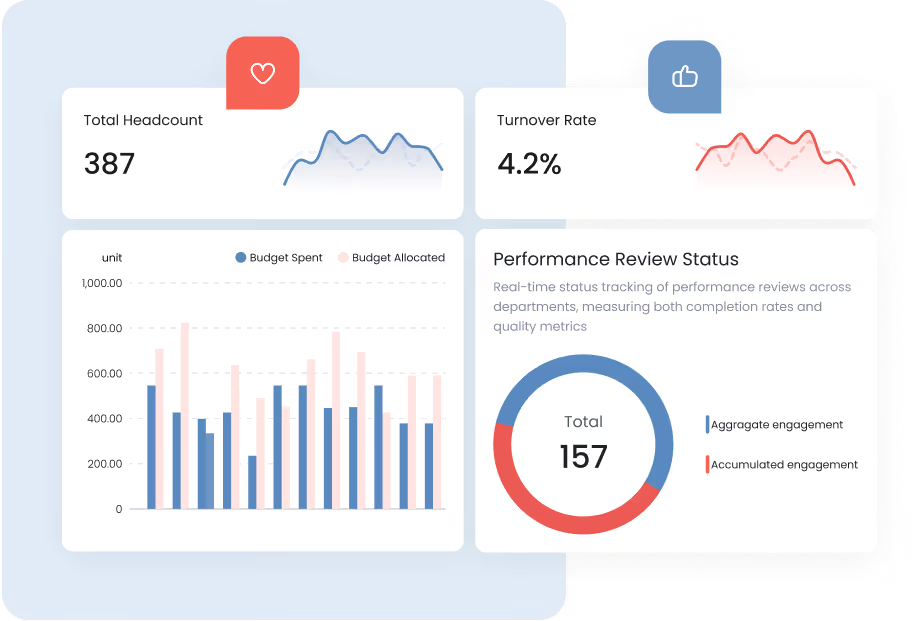
For teams using an HRIS like Omni, performance data, review history, and engagement signals sit in the same system - making it easier than ever to spot patterns across teams and act on them without having to switch between tools. With Mino, that same data becomes conversational — ask about attrition trends by department, flag burnout signals, or pull headcount movements across entities, and get an answer instantly rather than building a report from scratch.
Workforce planning
Using AI data analytics, organizations can make data-based decisions and plans concerning their workforce. Based on available data and observed strengths and weaknesses, employees may be moved to other departments, promoted, or placed on performance improvement plans. Accurate projections can then be made regarding recruitment and hiring needs annually or quarterly.
What are the benefits of AI analytics for HR teams?
AI analytics offer several benefits to HR teams, and some of them include;
Faster decision-making
Unlike traditional systems that involve manual data collection, entry, and analysis, AI analytics increases the ease and speed of accessing clean and structured data, aiding HR teams in making faster decisions. Organizations that can make the right decisions quickly can scale faster.
Improved accuracy
Artificial analysis helps HR teams reduce errors, gaps, and inconsistencies in employee data, whether in payroll or personal details. This improves accuracy and reduces errors in payroll, classification, and attendance compliance issues.
Reduced bias
A key benefit of AI data analytics is its ability to reduce bias. HR personnel are human and may unknowingly fall for recency, proximity, or gender bias, making emotional and suboptimal decisions that affect employees. AI analytics is data-driven, reducing the risk of those biases going unexamined.
Better workforce insights
The most significant advantage of AI data analytics in 2026 for HR teams is access to workforce insights that clearly show employee and productivity trends across departments, enabling stronger decision-making.
For example, artificial analysis may show that a particular department has a high churn rate and help you determine the cause, whether it’s poor onboarding or limited career growth, so you can intervene and provide support wherever necessary.
Strategic HR transformation
Artificial analysis increases the productivity, efficiency, and scope that HR teams can cover. With access to clear data that informs their actions, teams can reduce time spent on paperwork and recurring tasks, enabling them to focus on hiring, training, and managing employee relations.
What challenges should you consider when using AI analytics?
AI data analytics has immense benefits, but it comes with challenges worth knowing about. Understanding them will help you maximise the value of artificial analysis while proactively addressing its limitations.
Data quality directly limits the quality of insights
The quality of your data directly determines the value you can extract from it. When data is poor, fragmented, or inaccurate, even the most advanced AI analytics models struggle to produce meaningful results - insights become unreliable, and the actions based on them risk being ineffective or misleading.
Privacy and compliance require active management
Data privacy and compliance are a major challenge that comes with AI data analytics in 2026, especially for HR teams.
AI analytics is not just about extracting insights, but ensuring it is done within the right frameworks and protocols. Ensure that the tools you employ have strong security protocols like data minimization, audit trails, and vendor risk management. Employees should also have clear visibility into what their data is used for and how it is collected.
Over-reliance on automation creates its own risks
The presence of AI analytics can cause an over-reliance on automation, causing organizations to stall on HR training and development. HR teams may also fall into the trap of overdelegation, leaving employees to chatbots and automation rather than maintaining interpersonal relationships.
Human oversight remains essential
While AI analytics and machine learning algorithms are efficient, they still require human validation. HR teams must possess strong data analysis skills to identify errors, question anomalies, and ensure outputs are accurate and contextually relevant. Without this oversight, flawed data or biased models can lead to misguided insights and poor decision-making.
How is AI data analytics shaping HR in 2026 and beyond?
As AI data analytics grows in 2026 and beyond, more organizations are integrating it into core HR workflows, from recruitment to performance management. This growing shift is moving decision-making from reactive to predictive and prescriptive, allowing HR teams to anticipate challenges, recommend actions, and operate more strategically.
This is already visible in how teams approach specific challenges, using leave and attendance data as an early attrition signal is one practical application covered in more depth in our guide on how to analyse leave data for attrition warning signs.
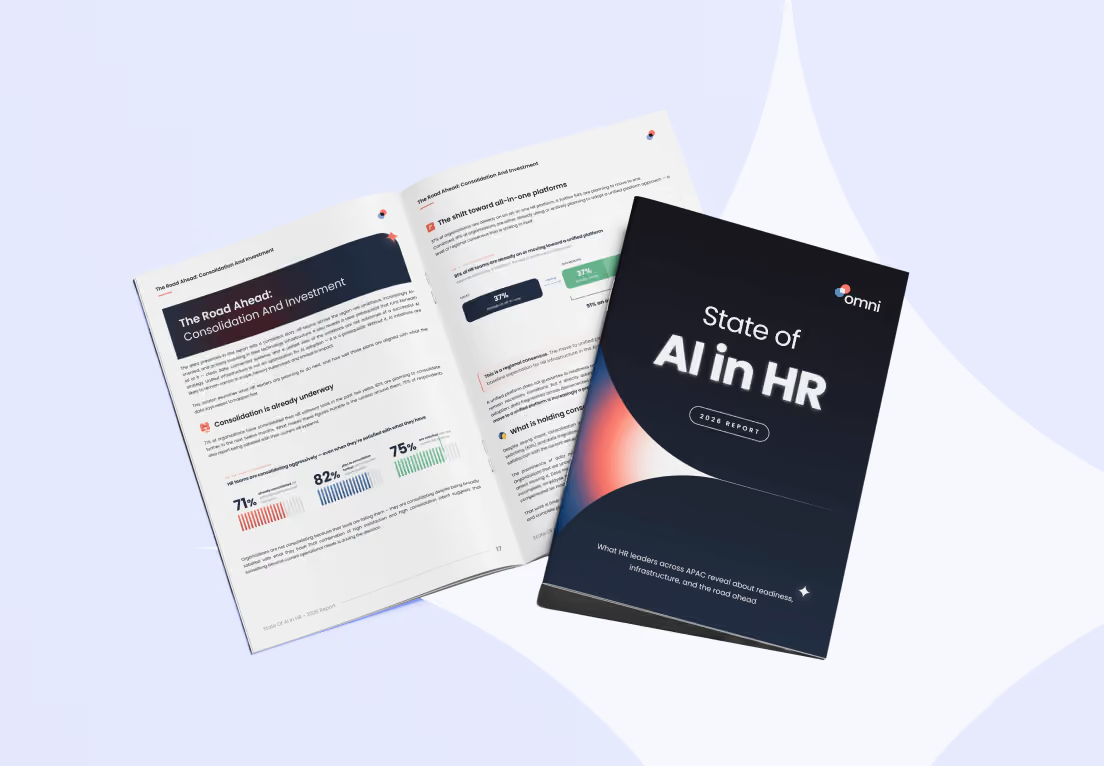
At the same time, automation is simplifying routine HR tasks and freeing teams to focus on higher-value priorities such as talent development and workforce planning. To better understand how AI data analytics is transforming HR and how you can position your organization to maximise its impact, download our State of AI in HR report now!
Start Using AI Analytics Effectively Today
AI analytics is no longer reserved for large enterprises with dedicated data teams. For HR teams of any size, the ability to move from manual reporting to predictive analytics is now within reach - and the organizations building that capability today are the ones making faster, more confident people decisions.
The starting point is simpler than it sounds. Clean, centralised employee data is the foundation, and the right HRIS gives you this base from day one. From there, AI analytics does the heavy lifting by surfacing patterns, flagging risks, and freeing your HR teams to focus on the work that actually matters.
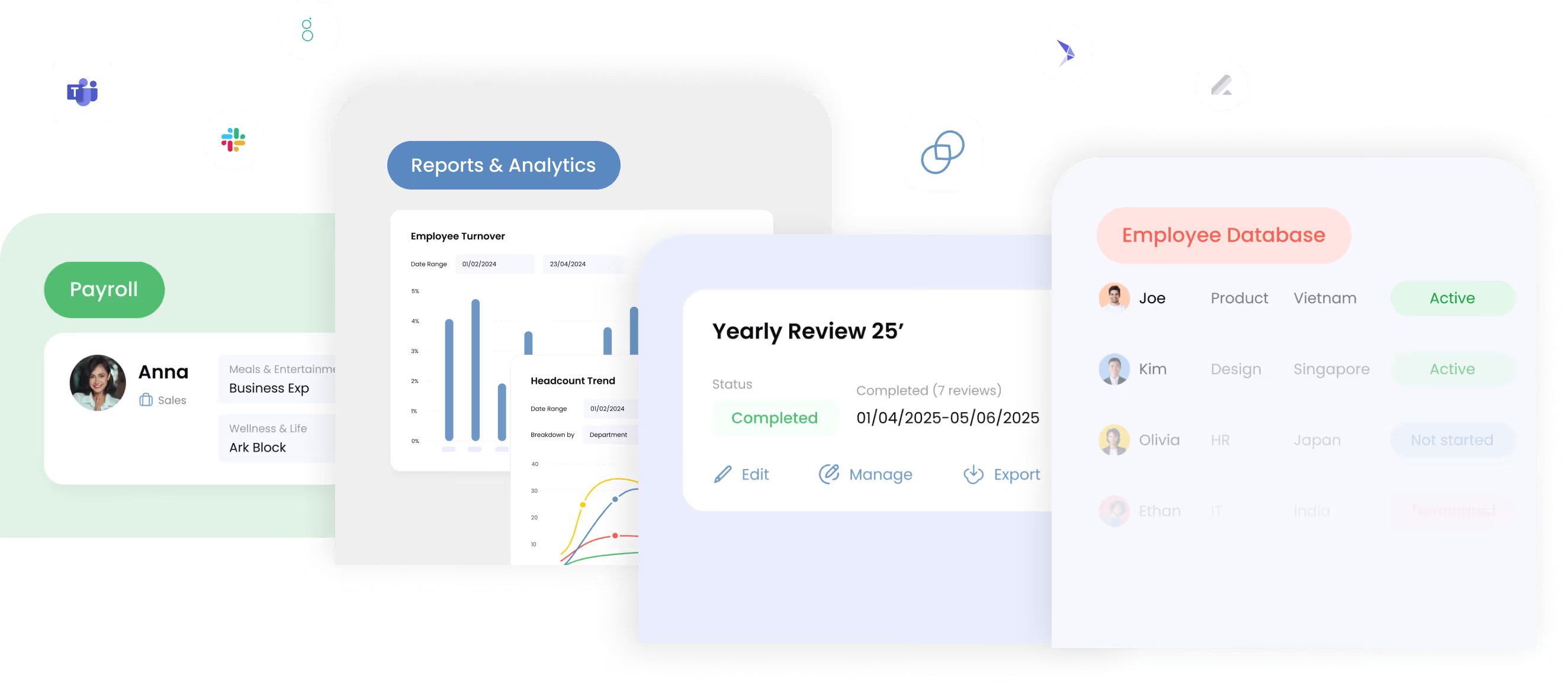
At Omni, we built our platform to give HR teams in Asia exactly that - the data infrastructure, automated workflows, and workforce insights needed to make AI data analytics work in practice, not just in theory. And now we've taken it further: Mino, Omni's AI agent, is built directly into the platform and lets you ask your workforce questions in plain language — headcount trends, attrition signals, hiring velocity — and get back charts, trend lines, and live dashboards instantly. No exporting. No waiting.
See how this can work for your team by booking a product with us, or download our State of AI in HR report to learn more about how AI is reshaping HR across APAC.
Frequently Asked Questions
AI analytics in HR is the use of artificial intelligence to collect, analyse, and interpret workforce data across functions like recruitment, performance management, retention, and payroll. It helps HR teams identify patterns, predict outcomes, and make faster, more accurate people decisions. Platforms like Omni centralise that data in one place, giving your team the clean foundation that AI analytics needs to produce reliable insights.
Traditional HR analytics involves manually collecting and analysing data, typically producing backward-looking reports that reflect what has already happened. AI analytics automates that process, runs continuously, and generates predictive insights, flagging risks and opportunities before they become visible through conventional reporting.
Artificial analysis in HR refers to the application of AI-powered techniques to examine workforce data and extract meaningful insights. This includes identifying performance trends, predicting attrition risk, automating compliance checks, and surfacing recommendations that help HR teams act proactively rather than reactively.
AI data analytics improves HR decision-making by replacing manual, time-intensive reporting with continuous, automated analysis. Instead of waiting for a quarterly review to spot a retention risk or a skills gap, HR teams get real-time signals they can act on immediately. With Omni, performance data, engagement signals, and workforce trends sit in one system, so the insights are always current and actionable.
Small HR teams often benefit most from AI analytics because it extends what a lean team can realistically monitor and act on. Rather than replacing headcount, it amplifies it by handling the data layer so your team can focus on the human side of HR. Omni is built with exactly this in mind, giving growing teams in Asia the data infrastructure and automated workflows to operate at a level that would otherwise require a much larger team.
Artificial analysis can automate data collection and cleaning, resume screening, candidate matching, performance trend analysis, attrition risk scoring, payroll accuracy checks, and routine compliance reporting, freeing HR teams to focus on higher-value work that requires human judgment. Omni's automated workflows handle many of these tasks out of the box, reducing the manual load from day one.
The main risks are poor data quality leading to unreliable outputs, privacy and compliance exposure from handling employee data, over-reliance on automation at the expense of human relationships, and insufficient oversight to catch model errors. Each is manageable with the right governance and tooling in place — Omni's audit trails, role-based access controls, and PDPA-compliant data handling are designed to address these concerns directly.



.avif)
.avif)