
























.png)
Summary. US companies hiring international contractors face growing contractor compliance risks, from misclassification penalties to tax issues and legal exposure. Ensuring contractor compliance requires clear classification, proper documentation, and accurate reporting, including tracking contractor 1099 obligations for US workers. Using contract compliance management software like Omni HR centralizes onboarding, document collection, payment workflows, and audit-ready recordkeeping, giving HR, finance, and legal teams real-time visibility and control. With automated reminders, integrated tax forms, and a standardized global contractor policy framework, Omni empowers businesses to scale global contractor programs confidently, reduce compliance gaps, and streamline cross-border hiring and payments.
US companies are hiring more international contractors than ever before. But getting contractor compliance wrong can lead to serious problems: misclassification penalties, tax issues, and legal risks that could have been avoided.
A clear compliance framework protects your business and makes it easier to scale your global contractor program. Whether you're hiring your first international contractor or managing dozens across multiple countries, understanding the basics of contractor compliance is essential.
Avoid Compliance Pitfalls While Scaling Global Teams
International contractors bring real advantages: specialized skills, cost savings, and the ability to move fast. But the benefits come with responsibilities.
Without proper compliance controls, you face contractor 1099 classification disputes, tax penalties, violations of local employment laws, and reputation damage. One contractor complaint or one audit can uncover problems that spread across your entire contractor program.
A consistent contractor compliance process isn't optional anymore. It's the foundation that lets you scale globally without increasing your legal risk. The companies that get this right use systematic workflows and contract compliance management software that grows with them.
Learn more: How to Pay and Hire Independent Contractors Worldwide
Why Contractor Compliance Matters
For Employers & HR
When you don’t have the right system in place for managing contractors, you face misclassification problems. If authorities decide the contractor's 1099 status should be classified as an employee, you are liable for back taxes, penalties, benefits, and potential employment claims.
Beyond classification, you need to handle tax withholding correctly and comply with local labour laws where your contractors live.
A well-designed contractor 1099 compliance framework lets you scale. Instead of solving the same problems repeatedly for each new country, you build repeatable systems that work across borders. Your HR team spends less time chasing paperwork and more time on strategic work.
Read more: Benefits of Employee vs Contractor: What Fast-Growing Teams Should Know
For contractors
Contractors benefit too. When you document their status properly and issue the right tax forms, they understand their obligations. They can plan for taxes and avoid surprises. Clear processes build trust and make ongoing relationships smoother.
For business growth
Contractor compliance programs enable growth. When your HR and finance teams know every contractor 1099 follows documented standards from classification through final payment, you eliminate bottlenecks. Hiring decisions move faster. Contract compliance management software becomes essential infrastructure, just like your payroll system.
Contractor Compliance Essentials
Worker classification
A key pillar of contractor compliance is correctly determining whether a worker should be treated as an employee or a contractor 1099.
In the US, agencies such as the IRS and the Department of Labor primarily assess the degree of control you have over the individual’s work.
- If you dictate how, when, and where the work is performed, the worker is likely an employee.
- If the individual has autonomy over methods, schedule and tools, and operates as an independent business, they are more likely to be classified as a contractor 1099.
Red flags for misclassification:
- Providing the worker with core equipment, tools, or software.
- Requiring fixed work hours or mandating an onsite location.
- Restricting the contractor from taking on work with other clients or competitors.
- Supervising, training, or managing them in the same way as employees.
- Embedding them into employee teams with similar responsibilities, workflows, or performance expectations.
Correct classification matters because it determines tax obligations, reporting requirements, payroll treatment, benefits eligibility, and which documents or processes must be enforced through your contract compliance management software.
US documentation and tax forms
The documentation you collect depends on whether your contractor is a US person or not, and where the work is performed.
US-based contractors (citizens, residents, US entities):
- Collect Form W-9 before making any payment.
- The W-9 captures their taxpayer identification number (TIN).
- If you pay $600 or more during the year, issue Form 1099-NEC by 31 January.
- File a copy with the IRS.
Foreign contractors working outside the US:
- Collect Form W-8BEN (individuals) or Form W-8BEN-E (entities)
- These forms certify the contractor’s foreign status.
- You generally do not issue a 1099 for foreign contractors performing all work outside the US.
- The income is considered foreign-sourced, so US reporting requirements typically do not apply.
Missing or incorrect forms lead to compliance issues, such as backup withholding (the IRS may require you to withhold 24% of payments) and penalties for failing to file information returns. A structured workflow, often supported by contract compliance management software, helps prevent these gaps.
Payment and tax source rules
Where the work is performed determines tax treatment. If a foreign contractor does all work outside the US, the payment is foreign-sourced, and US withholding and reporting generally do not apply.
But watch for these situations:
- A foreign contractor travels to your US office to perform work = the income becomes US-sourced, and withholding may apply.
- A US citizen contractor working abroad = still treated as US-sourced income, so a 1099 is required.
- Tax treaty benefits may reduce withholding obligations but require valid W-8 documentation.
Understanding source-of-income rules is essential to avoid costly contractor compliance mistakes.
Local labour law or “permanent establishment” risk
Even when a worker is correctly classified as a contractor 1099 for US purposes, two additional international risks matter:
Local labour law: Each country has its own employment tests. A relationship that is clearly “contractor” under US rules may be viewed as "employment" under local law. Some countries presume employment or grant contractors rights similar to employees—notice periods, termination protections, social insurance obligations, or data protection requirements.
Permanent establishment (PE): Engaging contractors abroad can inadvertently create a taxable presence. If contractors have the authority to bind your company, maintain an office, or perform core business functions, local authorities may determine that you have a PE. This can require foreign tax registration, local filings, and potentially result in double taxation.
Contract and payment process management
Every compliant contractor engagement starts with a solid written agreement that includes:
- Scope of work and deliverables
- Payment terms
- Intellectual property ownership (work-for-hire)
- Confidentiality obligations
- A clear statement that the relationship is independent, not employment
Beyond the contract, you need reliable systems for onboarding, secure document storage of W-9 and W-8 forms, and agreements, plus accurate payment records and a complete audit trail. Manual processes and scattered files create compliance gaps that surface during audits, another reason many teams rely on contract compliance management software for end-to-end oversight.
Steps to Build a Scalable Contractor Compliance Process
1. Design your contractor policy
Document when contractor engagement is appropriate and what approvals you need. Create a classification checklist based on IRS factors (behavioral control, financial control, relationship type) that managers complete before hiring.
This checklist can act as a documented reason for your classification decision. If authorities later challenge it, you have evidence to back up the classification.
2. Onboard documentation
Create a standard onboarding workflow that collects all required documents before the first payment. Minimum requirements:
- Contractor agreement
- Form W-9 or W-8BEN/W-8BEN-E (depending on US/foreign status)
- Any country-specific forms
Contract compliance management software eliminates manual follow-up. Automated workflows send form requests, track submission status, validate taxpayer identification numbers, flag missing signatures, and prevent payment until documentation is complete.
3. Create compliant contracts
Your contractor compliance agreements should include language that establishes independent contractor status and protects your intellectual property. Beyond legal requirements, contracts should set clear expectations about deliverables, timelines, and payment. Consider template contracts for different engagement types (short-term project, ongoing retainer, specialized consulting) that legal has pre-approved. Templates reduce review time while ensuring consistent language.
4. Define payment workflow
Contractor payments should be separate from employee payroll. This reinforces the independent nature of the relationship. Document your payment approval workflow: who reviews invoices against contract terms, how you verify deliverables, what payment timing you've committed to, and how you track cumulative payments toward contractor 1099 thresholds.
5. Integrate with contract compliance management software
Fragmented systems create risk. Contractor data in spreadsheets, contracts in DocuSign, payments in accounting software, tax forms in folders, no single source of truth exists. Modern contract compliance management software integrates with your existing HR and payroll platforms. Integration lets finance see contractor status before processing payments, HR monitor contract renewals, and legal access documents during audits without requesting files from multiple departments.
6. Monitor local and global rules annually
Contractor compliance isn't one-and-done. Tax rules change. Jurisdictions update classification tests. New case law interprets existing standards. Schedule annual reviews of your contractor compliance framework. Check whether your classification criteria, contract templates, tax form collection, and documentation storage still meet current requirements. For foreign contractors, monitor changes in local labour law, permanent establishment guidance in countries where you have contractor concentration, and tax treaty updates.
7. Audit readiness and record keeping
The real test of contractor compliance comes during audits—IRS reviews, state unemployment tax audits, or misclassification claims.
Your ability to produce complete documentation determines the outcome. Audit-ready records include:
- Classification analysis
- Signed contractor agreements
- Forms W-9/W-8BEN with valid TINs
- Payment records matched to invoices and contract terms
- Forms 1099 filed when required
- Documentation of exceptions or unique circumstances
Contract compliance management software creates automatic audit trails. Every form collection, document signature, and payment is logged with timestamps. Audit response becomes a simple data export instead of a weeks-long scramble.
Best Practices for Managing Foreign and 1099 Contractor Compliance
Communicate clearly
Contractor compliance starts with clear communication. When engaging a new contractor, explain their employment classification, the documentation required, payment procedures, and expected tax obligations.
Many compliance failures happen because contractors don't understand their role, or companies fail to collect the proper forms. For US companies, this includes ensuring Form W-9 or W-8BEN/W-8BEN-E is completed correctly. Clear guidance not only prevents mistakes but also builds trust and strengthens ongoing contractor relationships.
Use a consistent global contractor-compliance framework
You don’t need different contractor compliance processes for every country. While local requirements vary, the core framework should be consistent: classification analysis, written agreement, documentation collection, payment processing, and record retention.
Consistency enables scalable contractor compliance. When HR teams follow the same structured process for contractors in Singapore, Hong Kong, or anywhere else, it reduces errors and helps standardize contractor 1099 management across borders.
Leverage contract compliance management software
Manual contractor compliance doesn't scale. Spreadsheets, email threads, and calendar reminders may work temporarily, but can pose a risk as your contractor programs grow.
Contract compliance management software centralizes the entire lifecycle. From onboarding workflows that collect and validate forms, automated reminders for contract renewals, and integrated payment processing that flags missing documentation, it eliminates manual tracking and ensures your contractor compliance processes are accurate, auditable, and consistent.
Avoid treating contractors as mini-employees
Misclassification is one of the most common contractor compliance pitfalls. Avoid requiring contractors to attend all-hands meetings, participate in employee performance reviews, use company equipment, or follow fixed schedules.
Focus on deliverables and outcomes, not hours worked. Giving contractors autonomy over how and when they complete work strengthens your contractor 1099 classification and reduces potential tax and legal liabilities.
Evaluate engagement models: local entity, EOR, or compliant contractor
For senior roles, long-term assignments, or concentrated activity in a single country, assess whether a contractor relationship is the right model.
Options include establishing a local legal entity, using an Employer of Record (EOR) service, or maintaining a compliant independent contractor model.
Each option balances cost, control, and contractor compliance requirements, including tax, labor law, and permanent establishment risks.
Learn more: Global Employer of Record (EOR): A Comprehensive Guide
Keep audit logs, version control of forms, and onboarding status dashboards
Contractor compliance audits focus on documentation accuracy. Beyond collecting contracts and forms, you need proof of when documents were submitted, who approved them, and that they were complete at the time.
Contract compliance management software with detailed audit logs, timestamped records, and dashboards ensures your HR and finance teams can respond confidently to audits, track contractor 1099 thresholds, and maintain regulatory compliance.
Monitor local and US rules regularly
Contractor compliance isn’t and shouldn’t be a one time task. Tax laws, IRS guidance, and local labour regulations change frequently. Regularly review contractor classification, contracts, and documentation to maintain ongoing contractor compliance.
For US companies hiring foreign contractors, this includes checking income-source rules, tax treaty benefits, and country-specific reporting obligations.
Streamline Contractor Compliance with Omni
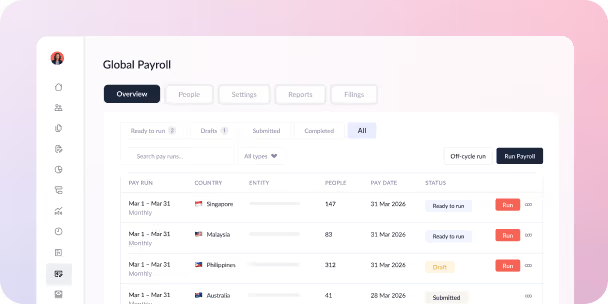
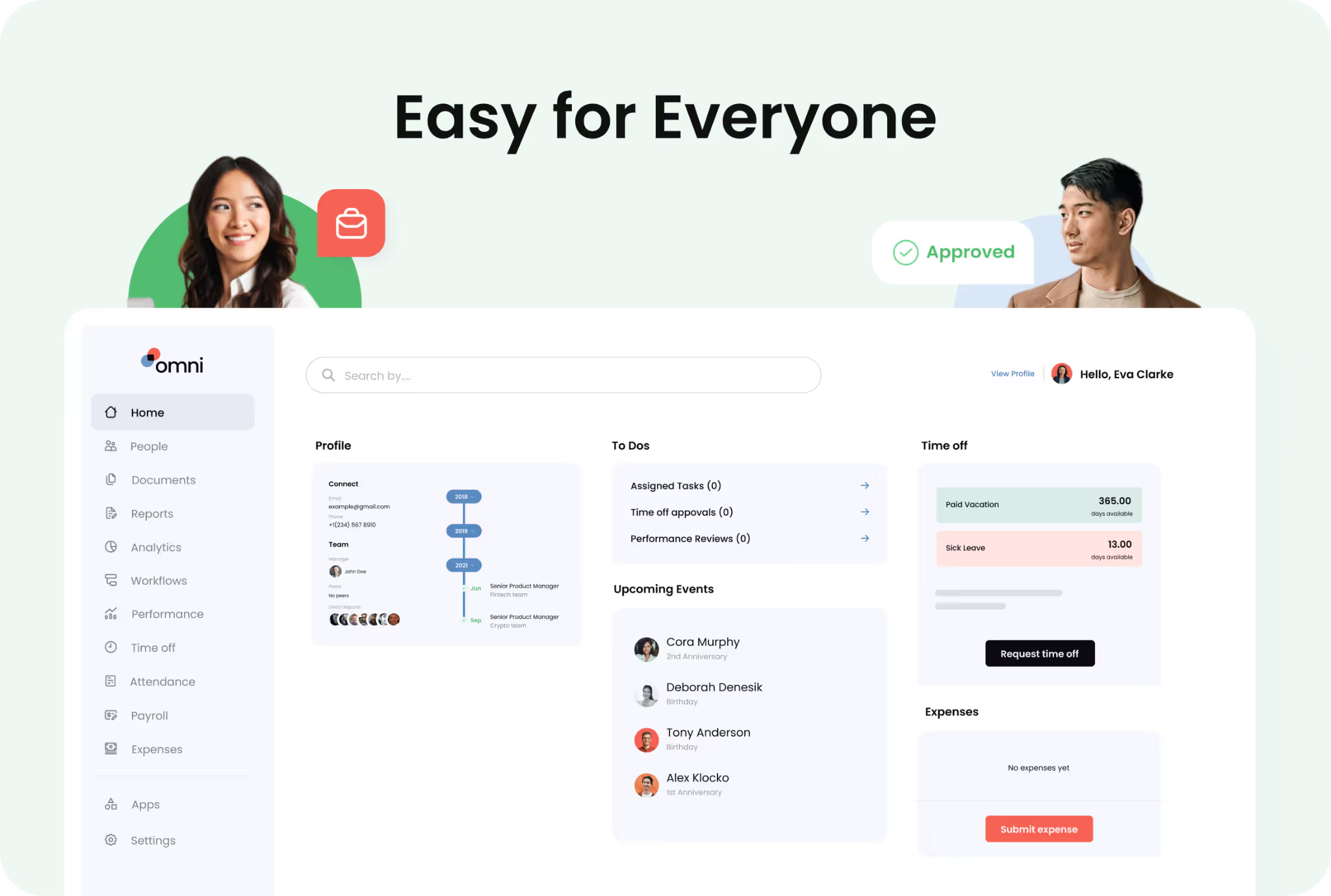
Omni centralizes contractor compliance and onboarding in one platform.

Collect, store, and manage essential documents like W-9s, W-8BENs, and signed agreements with automated workflows, ensuring every step of your contractor compliance process is completed accurately and efficiently.
Track contractor 1099 status in real time, from contract signing to payment approval, with automated reminders and a completed audit trail. This gives HR, finance, and legal teams full visibility and control, reducing the risk of misclassification, tax penalties, or compliance gaps.
Omni also integrates seamlessly with your existing HR and payroll systems so that contractor payments and compliance data flow effortlessly between your tech stack.
Say goodbye to a fragmented, country-by-country process and replace it with a standardized global contractor policy framework. By using a contract compliance management software like Omni, your teams can enforce consistent workflows, maintain audit-ready records, and scale globally without risk.
Book a demo with us today and see how we can empower your business to hire and pay contractors anywhere in the world confidently and compliantly.
Frequently Asked Questions
1. What is contractor compliance?
Contractor compliance refers to the policies, processes, and documentation that ensure independent contractor relationships meet legal, tax, and regulatory requirements. This includes correct worker classification, proper tax forms (like 1099s for US contractors), compliant contracts, and audit-ready record keeping.
Tools like Omni HR’s contract compliance management software helps centralize these processes, giving HR and finance teams a unified platform to manage all compliance obligations efficiently.
2. When do I need to issue a 1099 for a contractor?
You must issue a contractor 1099 form (Form 1099-NEC) when you pay $600 or more in a tax year to a US person for services. The form must be delivered to the contract by 31 January and filed with the IRS.
Using Omni HR, you can automate reminders and document tracking to ensure all contractor 1099s are issued on time, reducing the risk of penalties or errors.
3. What role does contract compliance management software play?
Contract compliance management software automates and streamlines workflows that are difficult to scale manually. Instead of tracking contractors in spreadsheets or storing W-9/W-8BEN forms across emails and shared drives, software like Omni HR centralizes contractor documentation, onboarding workflows, and payment approvals and audit trails.
This ensures consistent contractor compliance, reduces misclassification, and makes audits faster and simpler.
4. How can I avoid misclassification risk when hiring foreign contractors?
Avoiding misclassification starts with a thorough classification analysis using IRS factors (behavioral, financial, and relationship control). Best practices include:
- Documenting your classification rationale before work begins.
- Using independent contractor agreements that clearly define autonomy, deliverables, payment terms, and intellectual property ownership.
- Avoiding employee-like treatment: do not provide equipment, enforce fixed schedules, integrate contractors into employee teams, or conduct performance reviews.
- For foreign contractors, review local labour laws, as relationships deemed “contractor” under US rules may be considered “employee” elsewhere. Consider consulting local legal counsel for high-risk or long-term engagements.
Omni HR ensures all documentation, agreements, and classification decisions are captured in real-time, timestamped, and audit-ready, helping US companies maintain contractor compliance even across multiple countries.



.avif)
.avif)