.png)
Summary. As Asia-Pacific faces rising disengagement, HR leaders are rethinking outdated performance appraisal and evaluation practices. In 2025, performance enablement is emerging as the people-first answer to traditional performance management. Unlike backward-looking reviews, this modern approach supports continuous growth with real-time feedback, agile goal setting, and coaching. With a strong performance enablement framework, companies foster engagement, agility, and retention, especially in hybrid work environments. By understanding the performance enablement definition and embracing employee performance enablement, HR teams can better support development. Tools like Omni make it easy to operationalize employee enablement and build scalable, future-ready performance systems.
Why HR Needs to Rethink Performance in 2025
Performance enablement is not a new concept in the workplace; however, it is becoming increasingly popular in 2025 as a response to the limitations of traditional performance management. Traditional methods like annual performance appraisal and evaluation are falling short in a world where speed, adaptability, and employee expectations are changing fast.
Disengagement is going up
In Asia Pacific, employee engagement remains a concern, with only 58% of employees feeling engaged and 17% actively disengaged, which greatly affects efficiency and growth. Clearly, old-school performance systems aren't working, and people feel that.
Shifting from management to enablement
Only 20% of employees say their performance is managed in a way that truly motivates them to excel. Even among CHROs, just 2% believe their systems work as intended. That’s why the momentum behind the performance enablement framework is hard to ignore; it's the people-first antidote to outdated evaluation.
Rise of hybrid and remote work
With distributed teams, there's a greater need for systems that support autonomy, visibility, and trust. Performance enablement tools and frameworks give managers better ways to support their team without micromanaging.
Skills over job titles
Companies are becoming agile. They want people who can grow into new roles or adapt quickly to change. Performance enablement supports this with learning opportunities, career lathing and mentorship.
Learn more: How to Build an Employee Development Program
Understanding Performance Enablement
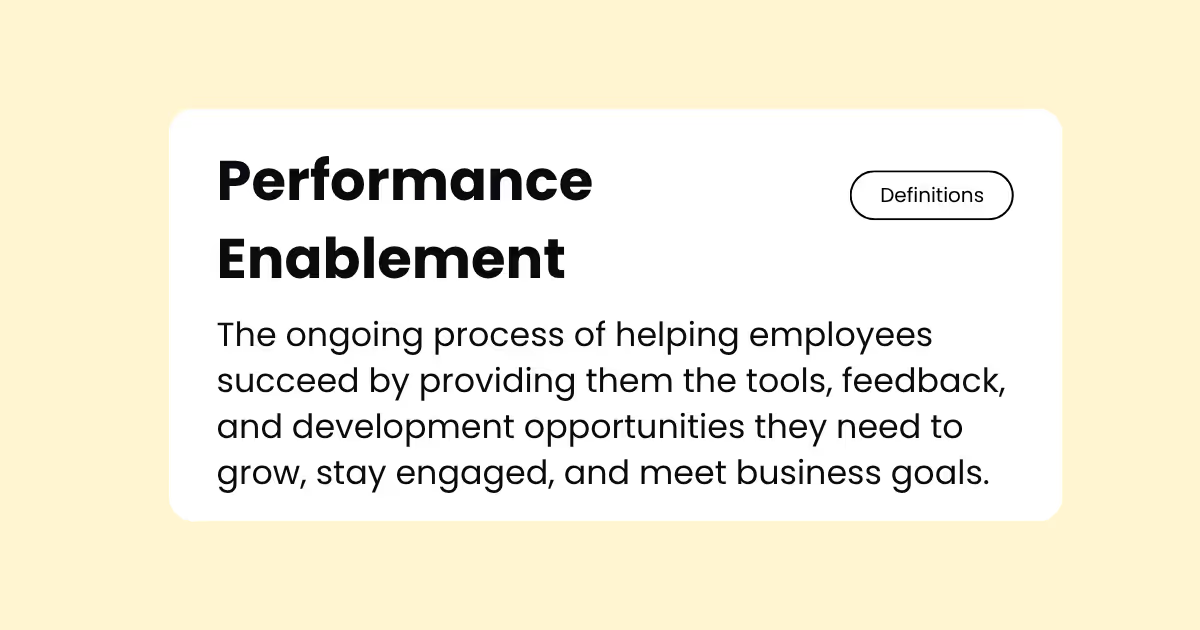
Performance enablement is a continuous, strategic approach to helping employees do their best work by giving them the clarity, tools, feedback, and support they need to succeed.
Unlike traditional performance management, which looks backward and focuses on evaluation, this performance enablement definition is forward-looking. It creates the right conditions for growth by connecting each person’s development to the company’s goals.
This approach is closely tied to employee enablement, which is about removing barriers and making it easier for people to perform well. By focusing on employee enablement, companies can improve engagement, boost productivity, and stay agile. It also assists employees in learning new skills, adapting to change, and remaining motivated, resulting in improved outcomes for both individuals and businesses.
Performance Enablement vs. Traditional Performance Management
Traditional performance management focuses on past performance through infrequent performance appraisal and evaluation sessions, often leaving employees disengaged and unsure of how to grow.
In contrast, performance enablement is forward-looking. It emphasizes continuous support, agile goal-setting, and real-time feedback to help employees thrive, not just survive. This modern approach turns performance into a shared, evolving process that boosts engagement, clarity, and long-term growth. Here’s a table that summarizes their differences.
Key Pillars of a Performance Enablement Framework
With the support of a robust performance enablement framework, businesses can transition from outdated performance reviews to a more proactive, growth-oriented strategy. These four pillars work together to create a culture where people feel empowered to do their best work and keep improving.
1. Regular check-ins
The first pillar of a performance enablement framework is performing regular check-ins. These frequent, informal conversations between managers and employees could occur weekly, biweekly, or monthly. During this time, both manager and employee are encouraged to have open and honest discussions, ask for feedback or hear each other’s views on existing tasks and projects or wider company goals.
These check-ins help build trust and psychological safety, so employees feel comfortable raising concerns early. They also create space to spot blockers, adjust priorities, and stay aligned, strengthening relationships and keeping momentum going.
Learn more: How to Give Constructive Feedback: 3 HR Experts in Asia Weigh in
2. Goal alignment
Another key pillar in our performance enablement framework is goal alignment, ensuring every employee’s objectives are clearly connected to team and company priorities. This alignment is more than just productivity; it’s about creating purpose. When employees know what to focus on and how their work contributes to a larger mission, they’re more motivated to deliver. Clear goals also help people prioritize better and stay accountable, which naturally leads to more meaningful, focused work.
But meaningful alignment does not just happen on its own. It requires thoughtful conversations between managers and employees that are grounded in trust, empathy, and shared goals. That’s why these discussions should be approached with care: managers must prioritize the employee’s growth and well-being, while employees should come in open to exploration and feedback.
When done right, goal alignment becomes a powerful enabler of long-term performance and engagement instead of just an item to check off the list.
3. Coaching and development
As mentioned, employee development lies at the heart of performance enablement. This is why ongoing support and skill-building tailored to each employee’s growth are crucial.
Coaching helps people stretch beyond their current roles and think more strategically. It sends a strong message that the company is invested in them, not just their output. This kind of support builds confidence, loyalty, and long-term potential.
4. Ongoing feedback loops
The final pillar of our performance enablement framework is continuous feedback.
Instead of relying on traditional annual reviews, this approach encourages timely feedback from managers, peers, and even self-reflection. When feedback becomes part of everyday conversations, it creates a culture of learning, builds confidence, and reduces the fear of failure. It normalizes growth and helps employees improve, little by little, without the pressure and anxiety of everything hinging on a once-a-year evaluation.
Why Performance Enablement is Crucial for Today’s Workforce
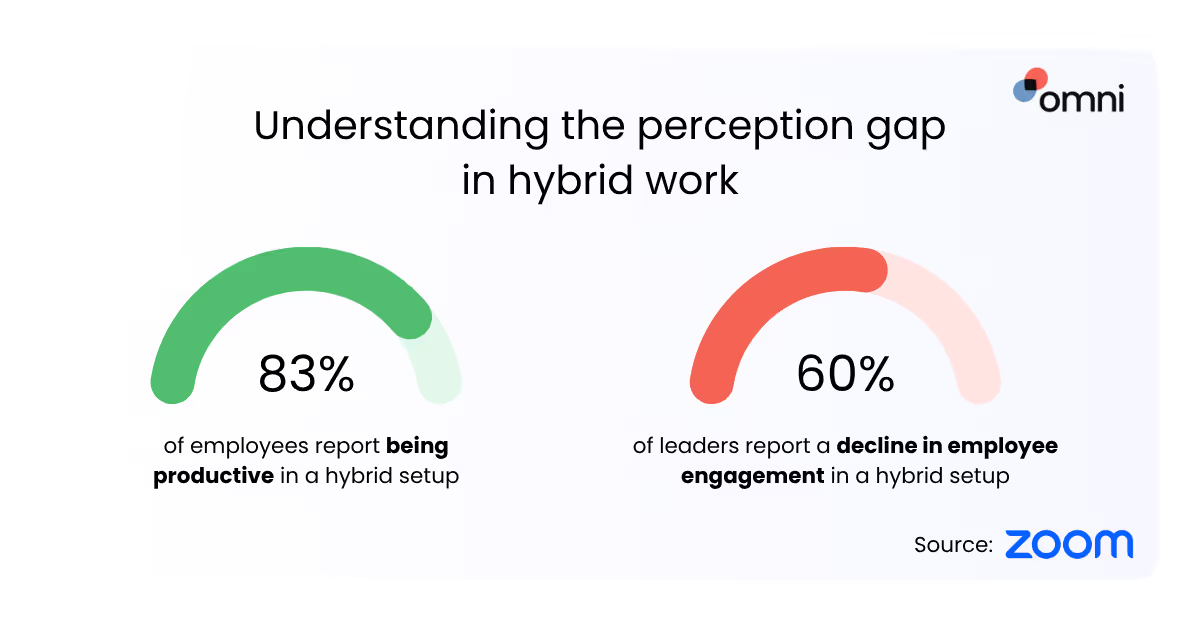
Hybrid work has become the norm in APAC, with 84% of organizations adopting flexible models, according to a recent Zoom survey. While 83% of employees report higher productivity in a hybrid setup, nearly 60% of leaders in the region have reported a decline in employee engagement as a result.
Clearly, this shift brings a new set of challenges: reduced visibility, inconsistent communication, and the risk of employees feeling disconnected or unsupported. That’s where employee enablement comes in. Performance enablement ensures visibility through regular 1-on-1 meetings and real-time feedback so efforts and outcomes are seen, regardless of where work happens.
Furthermore, with the right environment, tools, and resources, you can unlock an employee’s potential, not just in terms of performance, but psychologically as well. When people feel equipped to do their jobs well, they begin to believe in their own capabilities. This builds self-efficacy, confidence, and intrinsic motivation, the kind that drives long-term growth and satisfaction. When employees receive consistent feedback, have clear goals, and know they’re supported by their managers, they feel seen, valued, and capable. That sense of progress and recognition isn’t just good for morale; it’s a psychological boost that strengthens their commitment to their role.
This kind of support creates a deep emotional connection to the workplace, which directly impacts attrition and retention. People are far more likely to stay in environments where they feel safe to grow, trusted to perform, and encouraged to improve. In fact, LinkedIn’s 2024 Workplace Learning Report found that 94% of employees would stay longer at a company that invests in their development. Performance enablement fosters that kind of loyalty by turning the workplace into a space where people don’t just work but thrive.
Employee performance enablement encourages upskilling by creating a culture of continuous growth. Instead of waiting for gaps to appear, it proactively identifies opportunities for employees to stretch their skills through coaching, feedback, and personalized development. This not only keeps teams adaptable and future-ready but also empowers individuals to grow with the business, boosting both engagement and retention.
Using HR Software to Drive Performance Enablement

Performance reviews shouldn’t be daunting or disconnected. With a performance enablement approach, they become a powerful tool for boosting employee engagement, even for your global team. When reviews are embedded within an ongoing employee enablement framework, you provide valuable learning opportunities that align individual progress with business goals.
Omni’s customizable performance enablement tools feature allows managers to design structured, people-first review processes. With tailored performance review templates, real-time tracking, and actionable insights all in one centralized platform, managers can turn every review conversation into a strategic opportunity for growth and development.
Our automated features allow teams to schedule reviews, track submissions, and send reminders without HR intervention. Plus, our preset templates further guide teams on facilitating fair, consistent, and future-focused conversations.
Join the 83% of Omni customers who have unlocked new, actionable insights after using our performance management module, and book your product tour today!
.png)


.png)