


















.png)
Summary. The best HR software for fintech companies clears a security gate before AI features matter: SOC 2 Type II or ISO 27001 certification, documented data residency, and native APAC statutory payroll. We compare 10 platforms against that bar first, then rank AI and automation depth only for the ones that pass it.
Fintech companies buy HR software differently than most mid-market teams. A fintech's own customers, often banks, payment processors, or enterprise clients, run vendor security assessments before signing. That same scrutiny gets applied internally: if your HR platform holds employee bank details, national ID numbers, and payroll data without SOC 2 or ISO 27001 backing, it becomes the weakest link in your own security story.
At the same time, most fintech companies scaling across APAC markets are managing managing five or more statutory payroll frameworks: Singapore's CPF (Central Provident Fund), Malaysia's EPF (Employees Provident Fund), the Philippines' SSS (Social Security System), Indonesia's BPJS (Badan Penyelenggara Jaminan Sosial, the national social security agency), and Hong Kong's MPF (Mandatory Provident Fund) with lean HR teams, often two or three people supporting several hundred employees across multiple entities. AI and automation matter here, but only once the security and compliance foundation is verified. A platform that automates payroll across five countries faster is not an improvement if it does so on infrastructure your compliance team wouldn't approve.
Learn more: 8 Ways for FinTechs to Get HR Right
In this guide, security is the gate and AI or automation is the differentiator. We only evaluate AI and automation depth for platforms that meet a documented security baseline (SOC 2 Type II, ISO 27001, or equivalent, plus clear data residency).
Note: Omni HR is included in this list. We built this comparison and hold ourselves to the same criteria as every other provider.
How We Evaluated HR Software for Fintech Companies
Fintech buyers can't evaluate HR software the way a generic mid-market company would. We assessed each platform on five criteria, with security treated as a gate rather than one factor among many:
A platform that fails the security and compliance requirement isn't evaluated further on AI or automation depth in this guide, regardless of how capable those features are elsewhere in the market.
Quick Comparison: Best Payroll and HR Software for Fintech Companies
*G2 ratings as of July 2026. Security certifications should also be confirmed directly with each vendor's trust or security page, as certification status changes from time to time.
The 10 Best HR and Payroll Software Platforms for Fintech Companies
1. Omni HR
G2 rating: 4.7/5 (High Performer, Easiest to Use, Best Support)
Security: ISO 27001 certified (via Prescient Security), SOC 2 Type II complete, AES-256 encryption at rest and in transit, hosted on AWS
APAC coverage: Singapore, Malaysia, Indonesia, the Philippines, Hong Kong, Australia, Thailand, Vietnam, Taiwan, and other supported APAC markets.
Best for: Fintech companies headquartered in or primarily operating across APAC that need compliance-grade security, multi-country statutory payroll, and AI workforce analytics in one platform rather than stitched-together point solutions.
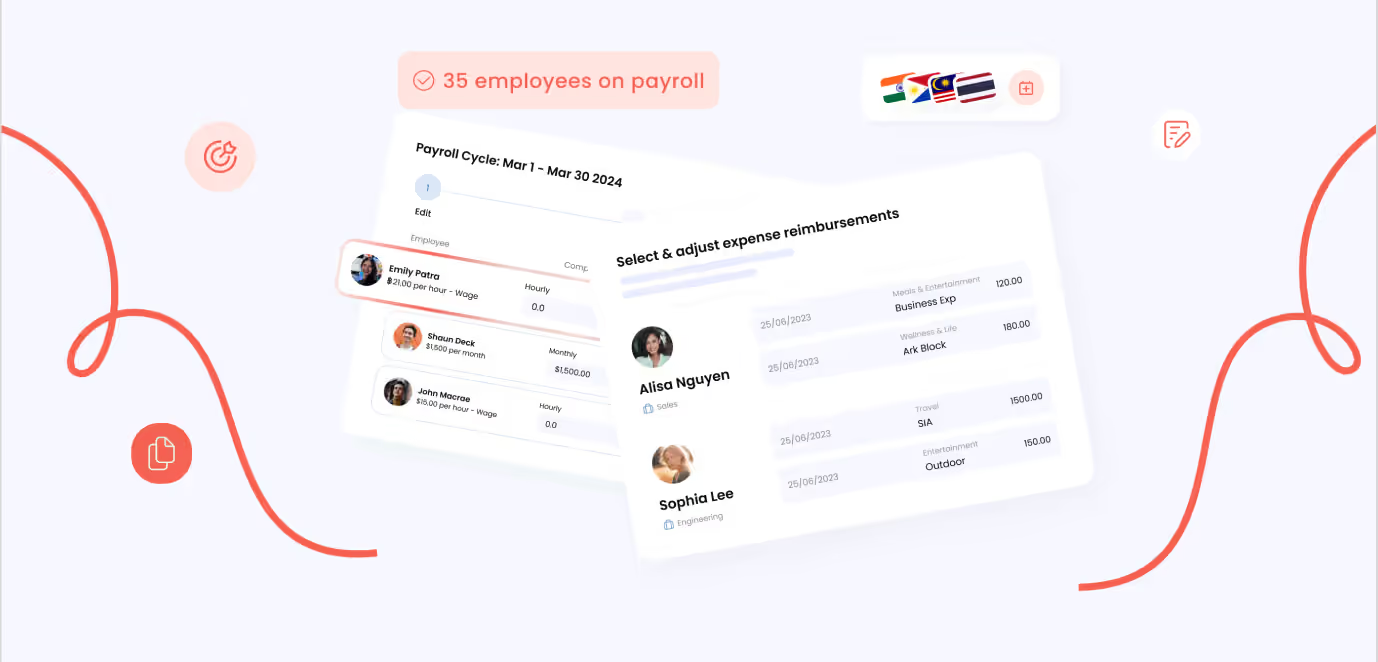
We built Omni HR specifically for Asia-Pacific, and fintech companies are one of our fastest-growing segments precisely because our security architecture was designed for scrutiny from day one, not retrofitted after a customer's vendor assessment flagged a gap.
Our AI differentiator, Mino, reads your data schema rather than your employee records. When a fintech HR lead asks Mino a question, the agent constructs a database query, runs it through Omni's existing access controls, and only passes the result to the language model for synthesis. Raw PII such as salaries, bank details, and national ID numbers never leave Omni's infrastructure to reach a third-party model.
For fintech companies whose own products are held to PDPA (Personal Data Protection Act), MAS Technology Risk Management guidelines, or equivalent regional standards, this architectural choice matters more than a feature list. Read our technical deep dive on Mino.
What it handles:
- Multi-country payroll with native CPF, EPF, SSS, MPF handling
- Conversational workforce analytics via Mino, built on schema-aware queries rather than raw data transmission
- AI-powered workflow automation for onboarding, leave, and approvals
- Employee self-service, performance management, recruitment (ATS), and expense management
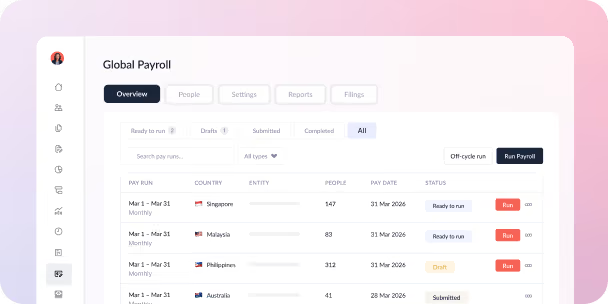
- Centralized reporting across every APAC entity in one view
Omni HR customers report measurable results: SleekFlow, a fintech-adjacent customer engagement platform, reduced payroll processing time by 40% after consolidating HR across four countries, while Qashier slashed payroll processing time by 75%
Honest limitation:
Mino currently covers core employee data, job records, and expense data; payroll analytics queries are on the roadmap but not yet fully in scope for AI queries. Our footprint is APAC-specific, so fintechs needing HR coverage in Latin America or EMEA within the same contract will need a second vendor for those regions.
2. Rippling
G2 rating: 4.8/5
Security: SOC 2 Type II
APAC coverage: Global platform with partner-supported APAC coverage; limited native Southeast Asia statutory payroll
Best for: Fintech companies with a US or global headquarters that want a unified employee operations platform combining HR, payroll, IT, and finance.
Rippling's core differentiation is its unified HR, IT, payroll, and finance platform. For fintech companies, that means employee onboarding can automatically provision payroll, devices, software access, and identity management from a single workflow, reducing manual work across HR and IT teams.
What it handles:
- AI-powered workflow automation across HR, IT, payroll, and finance
- Cross-functional reporting connecting headcount, payroll, software, and spend
- Identity and device lifecycle management
- Payroll and employee operations in one platform
Honest limitation:
Rippling's native statutory payroll support for Southeast Asia is less comprehensive than APAC-focused providers. Organizations running payroll in Singapore, Malaysia, or the Philippines should confirm local compliance capabilities before adopting the platform.
3. Deel
G2 rating: 4.8/5
Security: SOC 2 Type II, ISO 27001 certified
APAC coverage: Strong Employer of Record (EOR) coverage across APAC; native statutory payroll varies by country
Best for: Fintech companies hiring distributed engineering, product, or operations teams across multiple countries without maintaining local entities.
Deel has evolved from an EOR platform into a broader global workforce platform. Its AI capabilities now span hiring, payroll, compliance, and HR operations, making it well suited to fintechs expanding internationally without building local entities.
What it handles:
- Deel AI for HR, payroll, and compliance assistance
- Global payroll across 150+ countries
- AI-assisted compliance and employment document generation
- Employer of Record and contractor management
- Cross-border hiring and workforce administration
Honest limitation:
Deel's primary strength is global hiring and EOR rather than native statutory payroll. Fintechs with established legal entities in markets like Singapore or Malaysia should evaluate whether local payroll functionality meets their compliance requirements.
4. HiBob
G2 rating: 4.5/5
Security: SOC 2 Type II
APAC coverage: Payroll through integration partners; no native Southeast Asia statutory payroll
Best for: Mid-market fintech companies prioritizing employee engagement, analytics, and modern HR workflows.
HiBob focuses on workforce engagement and people analytics, making it attractive to fintech companies competing for technical talent and seeking stronger workforce insights.
What it handles:
- InsightsIQ workforce analytics
- DecisionIQ AI-assisted people recommendations
- Automated workflows across onboarding, performance, and compensation
- Employee engagement benchmarking and reporting
Honest limitation:
HiBob relies on payroll integrations rather than native payroll processing. Organizations with statutory payroll requirements across APAC will typically need a separate payroll provider.
5. Darwinbox
G2 rating: 4.4/5
Security: ISO 27001 certified
APAC coverage: Strong coverage across India, Indonesia, Malaysia, Vietnam, and broader Southeast Asia
Best for: Enterprise fintech organizations with significant operations across India and Southeast Asia.
Darwinbox has established itself as one of the leading enterprise HCM platforms originating from Asia, with AI capabilities designed for regional enterprises managing complex workforces.
What it handles:
- Darwinbox AI Assistant for employee self-service
- HiringX AI-powered recruitment and candidate matching
- Darwinbox Sense workforce analytics and attrition insights
- Payroll and compliance management across supported APAC markets
Honest limitation:
Darwinbox primarily targets enterprise organizations with custom implementations. Smaller fintech companies may find implementation complexity and pricing higher than mid-market alternatives.
6. Employment Hero
G2 rating: 4.4/5
Security: SOC 2 certified
APAC coverage: Native Australia and New Zealand support with expanding Singapore and Malaysia capabilities
Best for: Australian and New Zealand fintech companies expanding into Southeast Asia.
Employment Hero is well suited to ANZ-based fintech companies, combining payroll, HR, and recruitment with an expanding suite of AI-powered features.
What it handles:
- Hero AI across HR workflows
- SmartMatch AI recruitment recommendations
- Payroll anomaly detection
- AI-powered employee engagement insights
- End-to-end HR, payroll, leave, and performance management
Honest limitation:
While Employment Hero continues expanding across Southeast Asia, organizations should verify statutory payroll coverage for each country before implementation.
7. Papaya Global
G2 rating: 4.5/5
Security: SOC 2 Type II, ISO 27001 certified
APAC coverage: Global payroll platform; statutory payroll capabilities vary by country
Best for: Fintech companies managing multinational payroll alongside finance and treasury operations.
Papaya Global specializes in global payroll orchestration, helping multinational organizations centralize payroll operations, payments, and compliance.
What it handles:
- AI-powered global payroll orchestration
- Workforce payments across multiple countries
- Compliance monitoring
- Centralized payroll reporting
- Integration with finance and treasury systems
Honest limitation:
Payroll functionality and statutory compliance vary across APAC markets. Organizations should confirm local payroll capabilities for each country they operate in.
8. Oyster HR
G2 rating: 4.4/5
Security: SOC 2 Type II
APAC coverage: Employer of Record coverage across APAC; no native multi-country statutory payroll
Best for: Early-stage fintech companies making their first international hires across APAC.
Oyster is designed for companies hiring internationally before establishing local legal entities, making it popular with early-stage fintechs entering new markets.
What it handles:
- AI-assisted global hiring
- Compliance guidance
- Contractor classification support
- Employer of Record hiring
- Global benefits administration
Honest limitation:
Oyster focuses on Employer of Record services rather than native payroll for companies with established entities. Organizations with mature APAC operations will often require a dedicated payroll platform.
9. Workday
G2 rating: 4.1/5
Security: SOC 2, ISO 27001 certified
APAC coverage: Global platform with localized support across APAC; native payroll availability varies by country, with certified payroll partners supporting markets where Workday Payroll is not available.
Best for: Large fintech enterprises (typically 1,000+ employees) with complex global HR, finance, and workforce planning requirements that can justify an enterprise-scale implementation.
Workday is one of the most established enterprise HCM platforms globally. Its AI platform, Workday Illuminate, is embedded across HR, finance, planning, recruiting, and learning to help large organizations automate workflows, improve workforce planning, and make data-driven talent decisions.
What it handles:
- Workday Illuminate for AI-powered assistance across HR, Finance, Payroll, Recruiting, and Planning
- Skills inference and talent intelligence using the Workday Skills Cloud
- Workforce planning and scenario modeling through Adaptive Planning
- Employee engagement insights with Workday Peakon Employee Voice
- Enterprise workforce analytics and reporting
Honest limitation:
Workday is designed for large enterprises and typically requires a significant implementation budget, dedicated project resources, and ongoing platform administration. Organizations operating across APAC should also verify country-specific payroll availability, as payroll support varies by market and may rely on certified local partners rather than native Workday Payroll.
10. Gusto
G2 rating: 4.6/5
Security: SOC 2 Type II
APAC coverage: US-focused; no native APAC statutory payroll
Best for: US-headquartered fintech startups beginning to build an international workforce.
Gusto remains one of the most popular HR and payroll platforms for US startups, with AI-powered features that simplify payroll administration and employee support.
What it handles:
- Gusto AI-powered payroll insights
- Automated US payroll tax filing
- Employee onboarding and benefits administration
- Contractor payments for limited international hiring
Honest limitation:
Gusto is designed primarily for the US market. Companies with significant APAC operations will typically require a dedicated regional payroll platform.
How to Choose HR Software for Your Fintech Company
The right platform depends on where your regulatory exposure sits, how many APAC markets you're managing, and whether your HR data needs to meet the same security bar your own product does.
What is HR Software for Fintech Companies?
HR software for fintech companies is human resources and payroll technology built or configured to meet the security, compliance, and audit standards that financial services regulation demands, on top of standard HR functionality like payroll, leave, and performance management.
The distinction matters because fintechs carry regulatory exposure that most HR software wasn't designed around. A fintech's HR platform typically needs to satisfy three additional requirements beyond generic HRIS functionality:
Security certification depth. SOC 2 Type II and ISO 27001 aren't optional extras for a fintech's vendor stack; they're frequently a procurement requirement, since the HR platform holds employee bank account details, national ID numbers, and salary data that mirrors the sensitivity of the fintech's own customer data.
Data residency and architecture transparency. Where employee data is stored, and whether AI features transmit raw records to third-party models, matters more for fintechs operating under regulators like MAS, Singapore's Monetary Authority of Singapore; BNM, Malaysia's Bank Negara Malaysia; BSP, the Philippines' Bangko Sentral ng Pilipinas; OJK, Indonesia's Otoritas Jasa Keuangan (Financial Services Authority); or the HKMA, Hong Kong's Monetary Authority, even though these regulators govern the fintech's financial products rather than its HR stack directly.
Multi-country statutory compliance without fragmentation. Fintechs scaling across APAC markets need CPF, EPF, SSS, BPJS, and MPF handled natively, since fragmented payroll data across multiple point solutions is exactly the kind of gap that undermines both compliance and any AI features built on top of it.
Start With HR Software Built for Fintech's Security Bar
Most HR software treats security certification as a checkbox and AI as the headline feature. For a fintech company, that order is backwards. The platform holding your employees' bank details and salary data needs to meet the same bar your own customers hold you to, before automation or analytics enter the conversation.
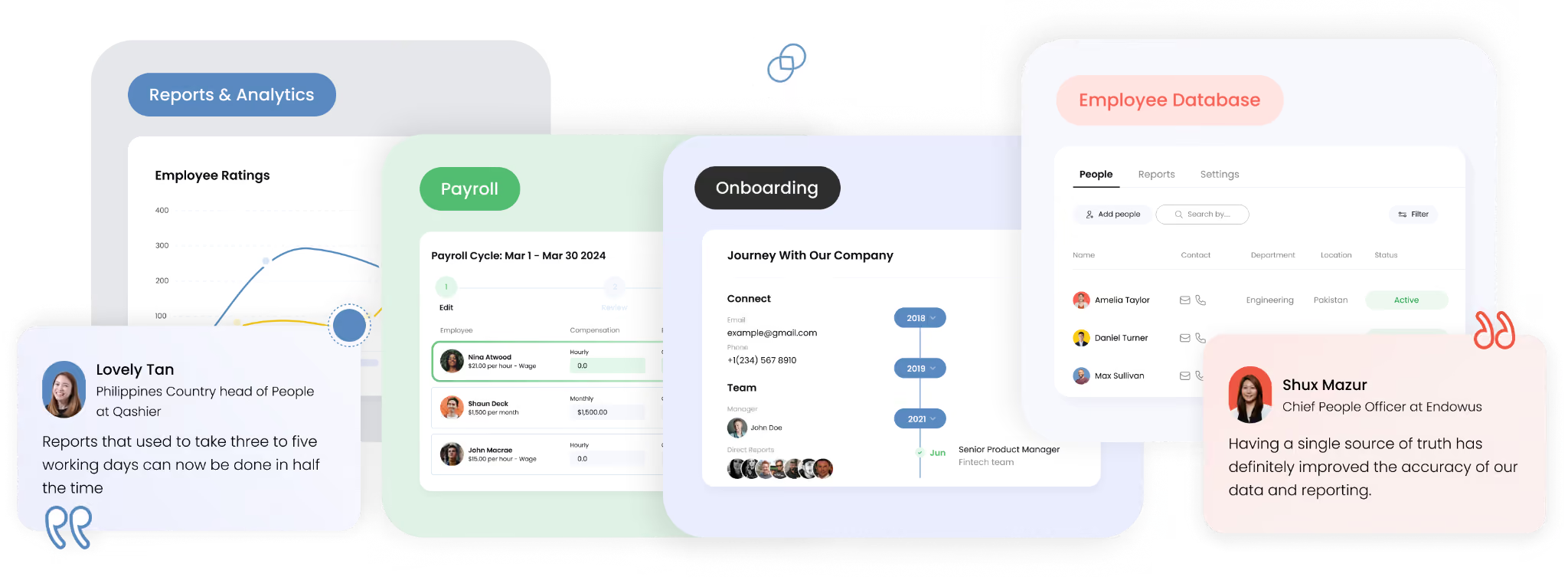
If you're a fintech company operating across Singapore, Malaysia, the Philippines, Indonesia, or Hong Kong, Omni HR combines that security foundation, ISO 27001 certification, SOC 2 Type II completion, AES-256 encryption, with native multi-country statutory payroll and Mino's schema-aware AI architecture.
Book a demo to see how Omni HR's security architecture and multi-country HRIS work together for fintech teams.
Frequently Asked Questions
At minimum, look for SOC 2 Type II completion and ISO 27001 certification, along with documented encryption standards (AES-256 is the current baseline) and clear answers about data residency. If the vendor offers AI features, ask specifically how those features handle raw employee data, whether it's transmitted to third-party language models or processed through a more contained architecture.
The core HR functionality (payroll, leave, performance management) is similar. What differs is the security and compliance bar: fintech companies typically undergo vendor security assessments as part of their own regulatory obligations, and that scrutiny extends to their HR software choice, not just their core financial infrastructure.
EOR platforms work well for fintechs making their first hires in a new APAC market without a local entity. Once a fintech establishes a local entity and scales headcount in that market, native statutory payroll (rather than EOR) typically becomes more cost-effective and gives HR teams more direct system access.
No. These regulators govern the fintech's financial products and services, not its internal HR technology stack directly. That said, many fintechs apply the same security diligence to HR vendors that they apply to other parts of their vendor ecosystem, since employee financial and personal data carries similar sensitivity to customer data.
Choosing a platform based on AI features or pricing before verifying security certification and statutory payroll depth. A platform that's fast to implement but lacks native CPF or EPF handling, or can't show a SOC 2 report, creates compliance and security debt that's expensive to unwind once headcount and data volume grow.



.avif)
.avif)