.png)
Summary. Singapore’s resident population includes over 540,000 Permanent Residents (PRs), making PR CPF contribution management essential for compliance. Singapore PR CPF contributions follow a graduated structure: the PR CPF contribution first year starts lower (employee 5%, employer 4%), the PR 2nd year CPF contribution rate increases (employee 15%, employer 9%), and from Year 3 onward, the Singapore PR CPF percentage matches citizen rates (employee 20%, employer 17%). Contributions apply only for wages above the Singapore PR minimum salary of S$50, up to a cap of S$8,000 per month. HR platforms like Omni HR simplify this process by automating PR CPF contribution calculations, maintaining records, and allowing employees to access payslips to track their Singapore PR CPF contribution 1st year and ongoing PR CPF contributions.
The total resident population of Singapore as of June 2024 was approximately 4.18million, consisting of about 3.64 million citizens and 544,900 Permanent Residents (PRs). The PR population grew by 1.2% since June 2023. With PRs forming a significant part of Singapore’s workforce, employers need to manage PR CPF contributions properly.
However, managing payroll for Singapore PRs requires understanding the unique graduated PR CPF contribution structure, which differs significantly from that of Singapore citizens. For HR professionals and payroll managers, getting PR CPF contribution rates right is crucial for compliance and accurate take-home pay calculations.
This comprehensive guide breaks down everything you need to know about Singapore PR CPF contributions, from PR CPF contribution first year graduated rates through full contribution requirements, ensuring your organization stays compliant while supporting your PR employees during their transition. Whether you’re an HR professional or payroll manager, understanding Singapore PR CPF contribution requirements can help you avoid costly errors and build trust with your workforce.
What is PR CPF Contribution and Why It Matters
Overview of the CPF Scheme
The Central Provident Fund (CPF) serves as Singapore's comprehensive social security system, providing retirement savings, healthcare coverage, and housing financing for residents. While the scheme operates similarly for both citizens and PRs, the contribution structure for PRs follows a graduated approach in their first two years to help ease the adjustment to lower take-home pay.
How PR CPF contributions differ from Singapore citizens
The key difference lies in the graduated contribution structure. Unlike Singapore citizens, who contribute at full rates immediately, PR CPF contributions start lower and increase over time:
- Year 1: Reduced rates for both employer and employee
- Year 2: Intermediate rates as a transition period
- Year 3 onwards: Full rates matching Singapore citizens
This graduated system recognizes that new PRs need time to adjust their financial planning around the CPF deduction structure.
Learn more: Annual Wage Supplement in Singapore: CPF Contributions and How to Calculate Your AWS Salary
Why it matters for HR and new PRs
For HR professionals, understanding PR CPF contribution rates is essential for accurate payroll setup, ensuring correct deductions from day one. Managing Singapore PR CPF contributions also involves take-home pay calculations to help PRs understand their net salary changes, employer cost planning for budgeting varying PR CPF contribution rate obligations, and compliance management to avoid penalties for incorrect Singapore PR CPF contributions.
For new PRs, the graduated PR CPF system provides financial breathing room while building long-term retirement savings. However, understanding Singapore PR CPF contribution requires careful planning to understand how take-home pay will change over the three-year PR CPF contribution rate transition period. Use our free CPF calculator for instant, accurate results.

PR CPF Contribution Rates Over the Years
Year 1: Getting started with graduated rates
During the first year of PR status, employees contribute 5% of their salary to CPF, while employers contribute 4%. This Singapore PR CPF contribution 1st year structure applies to employees aged 55 and below, creating a total PR CPF contribution rate of 9% compared to the standard 37% for Singapore citizens. The PR CPF contribution first-year graduated approach significantly reduces the initial impact on take-home pay.
Year 1 contribution breakdown:
During the first year, employees contribute 5% of their ordinary wages while employers contribute 4% of the employees’ ordinary wages. This creates a total Singapore PR CPF contribution of 1st year of 9% of ordinary wages, significantly lower than the standard rates for Singapore citizens.
Graduated rate impact on net salary
For a PR earning S$5,000 ordinary wages in their first year:
- Employee CPF deduction: S$250 (5%)
- Employer contribution: S$200 (4%)
- Net take-home pay: S$5,000 - S$250 = S$4,750
- Total CPF: S$250 + S$200 = S$450
This graduated approach means Singapore PR CPF contribution 1st year results in significantly higher take-home pay compared to what they'll receive in subsequent years, allowing for financial adjustment.
Opt-in option for full rates
Both the employer and the employee who is in the first two years of PR status can jointly apply to contribute to CPF at a higher rate. This opt-in provision allows PRs who prefer to maximize their CPF savings immediately rather than following the graduated schedule.
Year 2: Transition rates and calculations
In the second year, the PR CPF contribution rate increases to 15% for employees, with employers contributing 9%. This PR 2nd year CPF contribution rate represents a significant jump from the PR CPF contribution first year rates, requiring careful communication with affected employees about their changing Singapore PR CPF obligations.
Year 2 contribution breakdown:
In the second year, employees contribute 15% of their ordinary wages, while employers contribute 9% of their ordinary wages. This PR 2nd year CPF contribution rate results in a total Singapore PR CPF contribution of 24% of ordinary wages, representing a significant increase from the first year PR CPF rates.
Graduated rate impact on net salary
For a PR earning S$5,000 ordinary wages in their second year:
- Employee CPF deduction: S$750 (15%)
- Employer contribution: S$450 (9%)
- Net take-home pay: S$5,000 - S$750 = S$4,250
- Monthly reduction vs Year 1: S$4,750 - S$4,250 = S$500
This S$6,000 (S$500 x 12 months) annual reduction in take-home pay requires proactive communication and financial planning support to avoid employees being caught off guard.
Common employer confusion and how to avoid errors:
The transition from Year 1 to Year 2 rates often creates payroll errors. Common mistakes include:
- Failure to update rates exactly 12 months after the PR status starts.
- Manual calculation errors on larger deductions.
- Not preparing employees for reduced take-home pay.
Year 3 onwards: Alignment with Singapore citizens
From the third year of PR status, contributions align with standard Singapore citizen rates. For employees aged 55 and below, employees contribute 20% of their ordinary wages while employers contribute 17% of their ordinary wages, creating a total contribution of 37% of ordinary wages.
Singapore PR CPF percentage and employer obligations:
Once PRs reach full contribution rates in the third year, the Singapore PR CPF percentage matches citizen requirements exactly. As of 1 January 2026, the CPF monthly salary ceiling is set at S$8,000, meaning Singapore PR CPF contribution calculations apply only to the first S$8,000 of monthly wages. This Singapore PR CPF ceiling affects all PR CPF contribution rate calculations regardless of the employee's year of PR status.
Graduated rate impact on net salary
For a PR earning S$5,000 ordinary wages in their third year:
- Employee CPF deduction: S$1,000 (20%)
- Employer contribution: S$850 (17%)
- Net take-home pay: S$5,000 - S$1,000 = S$4,000
- Monthly reduction vs Year 1: S$4,750 - S$4,000 = S$750
- Annual reduction: S$750 x 12 = S$9,000
By Year 3, PRs contribute at the same rates as citizens, meaning annual take-home pay is lower than in the first year (by S$9,000) due to higher CPF contributions.
Key Employer Obligations for PR CPF Contributions
When to start deducting
CPF contributions for PRs begin the month after they receive their PR status. The graduated contribution schedule starts from the grant date, not the employment start date. This means an employee who becomes a PR mid-employment will see their CPF deductions change immediately in the following month's payroll.
Contribution deadlines and late payment penalties
As an employer, you are required to make CPF contributions at the monthly rates stated in the Central Provident Fund Act. Monthly contributions are due by the 14th of the following month, with late payment penalties including interest charges for overdue contributions. Some employer categories also have additional quarterly submission and reporting requirements.
Singapore PR minimum salary thresholds and CPF contribution eligibility
For Singapore PRs, the PR CPF contribution rules are similar to those for citizens, but with some key differences:
- Below S$50 per month: No Singapore PR CPF contribution is required if the employee’s monthly wage is below the Singapore PR minimum salary of S$50.
- S$50 to S$750 per month: PR CPF contributions apply, but at the graduated PR CPF contribution rate based on your PR year. Employers contribute at the same structure as for citizens, but the rates are lower for new PRs.
- Above S$750 to S$8,000 per month: The same graduated rates apply until wages reach the CPF ceiling.
- At or above S$8,000 per month: Full Singapore PR CPF contribution rates apply, regardless of whether it’s your PR CPF contribution first year or later years.
To summarize, the PR CPF percentage rates increase as your PR status matures, and contributions are only required when wages meet the minimum of S$50 or more.
Tips for Managing New PR CPF Contributions
Communicating net salary impact clearly
Transparency about CPF’s three-year progression helps PRs plan. Instead of generic explanations, share year-over-year take-home pay projections and CPF benefit summaries, such as retirement, housing, and healthcare.

With Omni’s employee self-service portal, employees can access their payslips anytime. They can get a clear breakdown and track their contributions across the first-year graduated rate, second-year transition, and full-rate periods, building trust in payroll accuracy.
Keeping accurate employment records
Keeping accurate employment records is essential for Singapore PR CPF contribution compliance.
You need to maintain the PR grant date along with all supporting documents that prove when your employee received permanent resident status. Your employment contracts should be updated to clearly show the CPF obligations and contribution schedules. All payroll records must demonstrate that you applied the correct rates for each employee based on their PR timeline. If any employees choose to opt in for full contribution rates during their first two years, you must keep these election forms and related documentation on file.
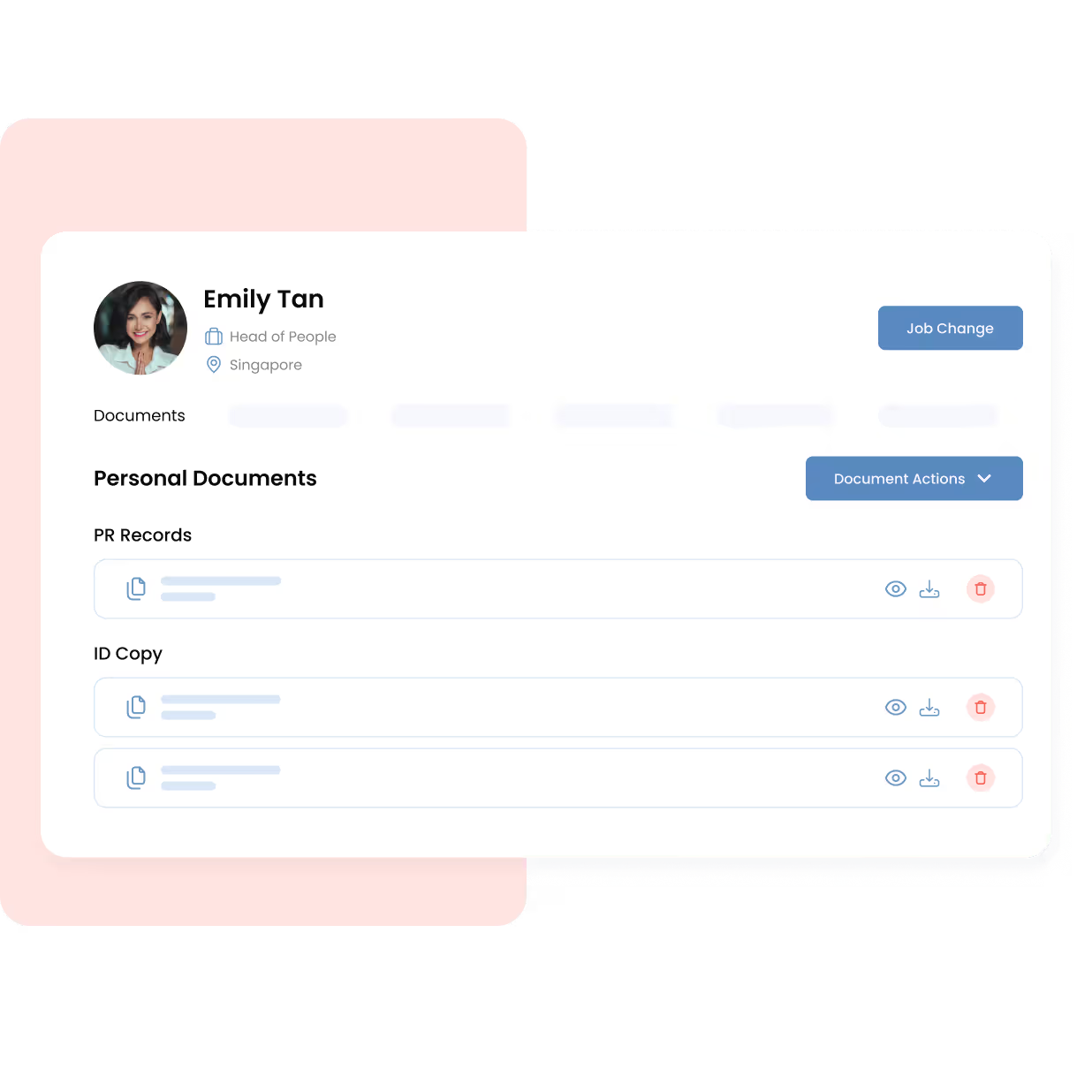
Omni's employee database and document management module streamlines this process by centralizing critical information like PR grant dates, contribution rate changes, and supporting documents.
Automating rate changes with onboarding & workflows
Keeping track of when CPF rates increase can be confusing, whereby missing it can risk under- or over-contributing to CPF for your PR employees.
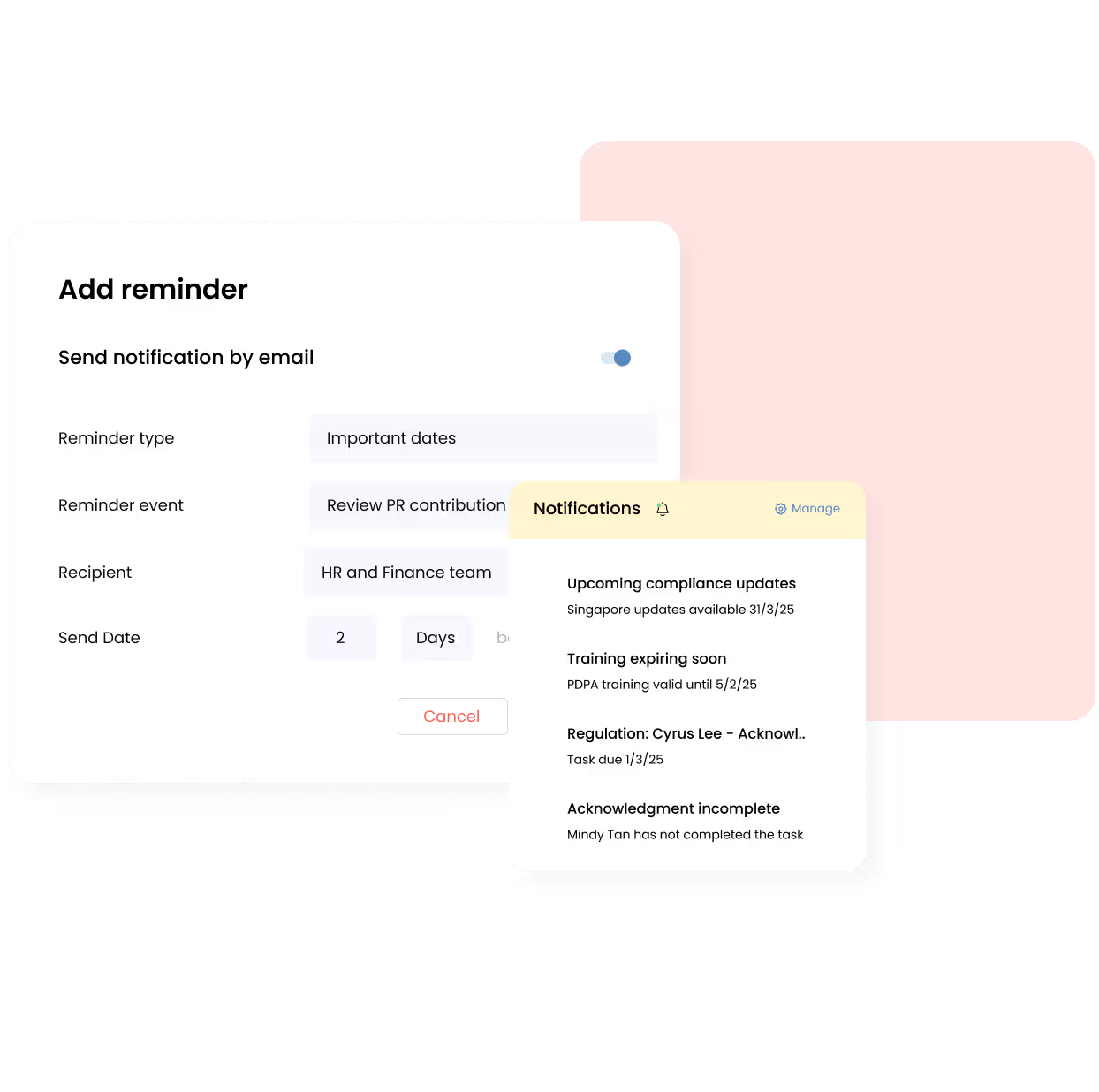
Omni’s automated workflows and reminders can be customized to trigger at key milestones such as PR approval dates and rate change dates. When the time comes, HR teams can get alerts, employees will be notified about their upcoming net pay changes due to the changes in PR CPF contribution rates, and the updated rates can be set to sync directly to payroll.
Manage Payroll for Singapore PRs Accurately with Omni
Whether you’re welcoming your first PR hire or expanding your team, Omni ensures compliance with PR CPF contribution rules since day one.
Omni’s payroll module helps HR avoid CPF compliance mistakes by:
- Applying the right PR CPF contribution rate based on PR status and timeline.
- Schedule reminders with automated workflows and generate payroll reports for IRAS and CPF submissions.
- Centralized document management stores necessary data like work permits, employment contracts, and important documentation to simplify CPF opt-ins for full contribution rates.
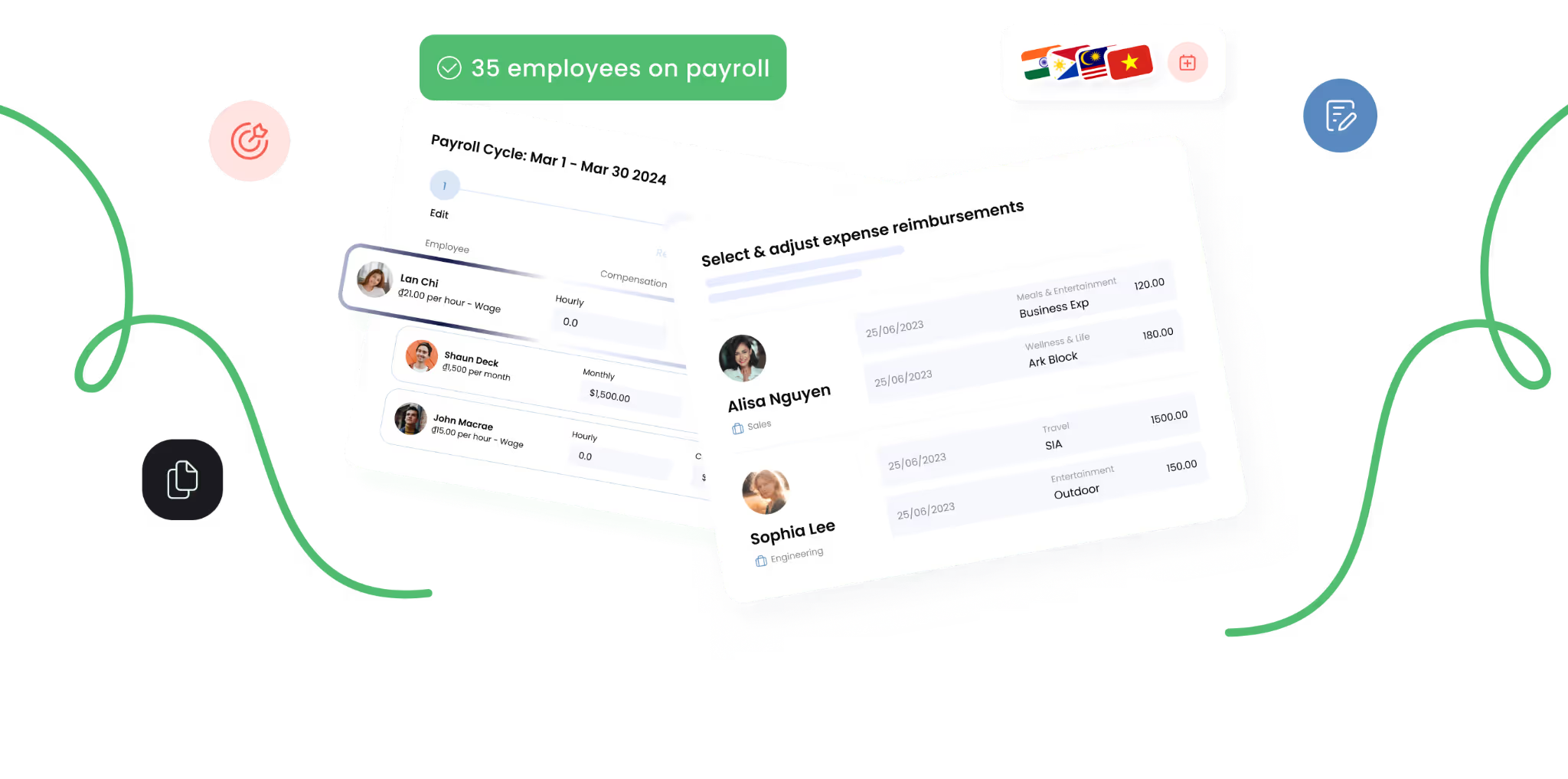
"Payroll calculations that used to take three to five working days can now be done in half the time with Omni."
— Tengku Mohaizad, Group Head of HR Asia at Inspire Brands Asia
With Omni, you can confidently manage PR payroll without manual tracking or compliance risk. Book your product tour and explore with our team how you can simplify your Singapore PR payroll processing today.
.png)


.png)