Vietnam Employment Law 2026: 5 Updates HR Leaders Must Know

8
min Read
8
min Read
Save this article for future use
Download PDF

Summary. Vietnam law is evolving rapidly in 2026, bringing significant updates to employment law that affect hiring, payroll, labor reporting, and foreign worker regulations. Key reforms include digital labor contracts, regional minimum wage increases, broader unemployment benefits, recognition of practical work experience, and simplified work permit processes. For HR teams navigating Vietnam labor law, these changes mean modernizing workflows, centralizing employee data, and ensuring compliance at every step. Tools like Omni HR and payroll solutions can help organizations manage documentation, automate payroll, and track workforce compliance efficiently, allowing HR leaders to stay ahead of regulatory changes while focusing on employee experience and strategic growth.

The Vietnam law is ever-evolving and 2026 will witness major change in its employment law. Keeping up with these changes in Vietnam labor law is a priority to companies operating within the country or those considering.

Gradually, the Vietnamese government has been modernizing its regulatory framework in order to facilitate an increasing, globally linked economy. These reforms touch upon the very aspects of signing employment contracts, the organization of wages, and even employment of foreign professionals.

For the HR teams that handle compliance, hiring, payroll and workforce planning, the message is simple: Vietnam labor law is at a new stage that is oriented towards digitalisation, transparency and better workforce supervision. Early adapting organizations will prevent the risks of compliance and maintain smooth work schedules.

Below are five key updates shaping employment law in Vietnam in 2026, along with the practical implications HR teams need to prepare for.

Understanding Vietnam Employment Law in 2026

Before diving into specific reforms, here’s a broader direction of Vietnam law.

The government is introducing a more modern employment law framework designed to reflect how organisations actually operate today, particularly in a digital and globally connected labor market. 

Several major themes define the 2026 regulatory changes:

  • A new employment policy framework replacing older labor provisions
  • A strong regulatory focus on digital labor contracts and documentation
  • Minimum wage adjustments across multiple regional zones
  • Reforms affecting foreign labor and work permit processes

Collectively, these changes indicate a very obvious pattern, that the Vietnam labor law is becoming more systematic, more computerized, and more open. 

To HRs, it involves checking internal procedures in hiring and payrolls, to make sure that they align with the current demands as per Vietnam law.

Update #1: Electronic Labor Contracts and Digital Compliance

One of the most transformative developments in Vietnam law is the move toward fully digital labor contracts.

Under Decree 337/2025, Vietnam is introducing a centralised digital system for labor contracts. Beginning 1 July 2026, all electronic contracts of employment are to be signed and kept via an official government system.

The regulation will improve compliance supervision and minimize conflicts regarding employment conditions. The contracts will now be required to contain digital signatures and anti-fraud authentication, which will make sure that the employer and employees are well identified.

The transition can also be seen as a wider trend towards digital governance in the sphere of labor laws in Vietnam, as the employment records can be efficiently monitored and checked by the concerned authorities.

HR implications:

HR teams will need to rethink how employment documentation is handled like:

  • Updating contract templates to align with the digital system requirements
  • Migrating employment documentation to compatible digital platforms
  • Ensuring HR systems can support government-approved electronic signatures
  • Training HR staff on the new digital contract submission workflows

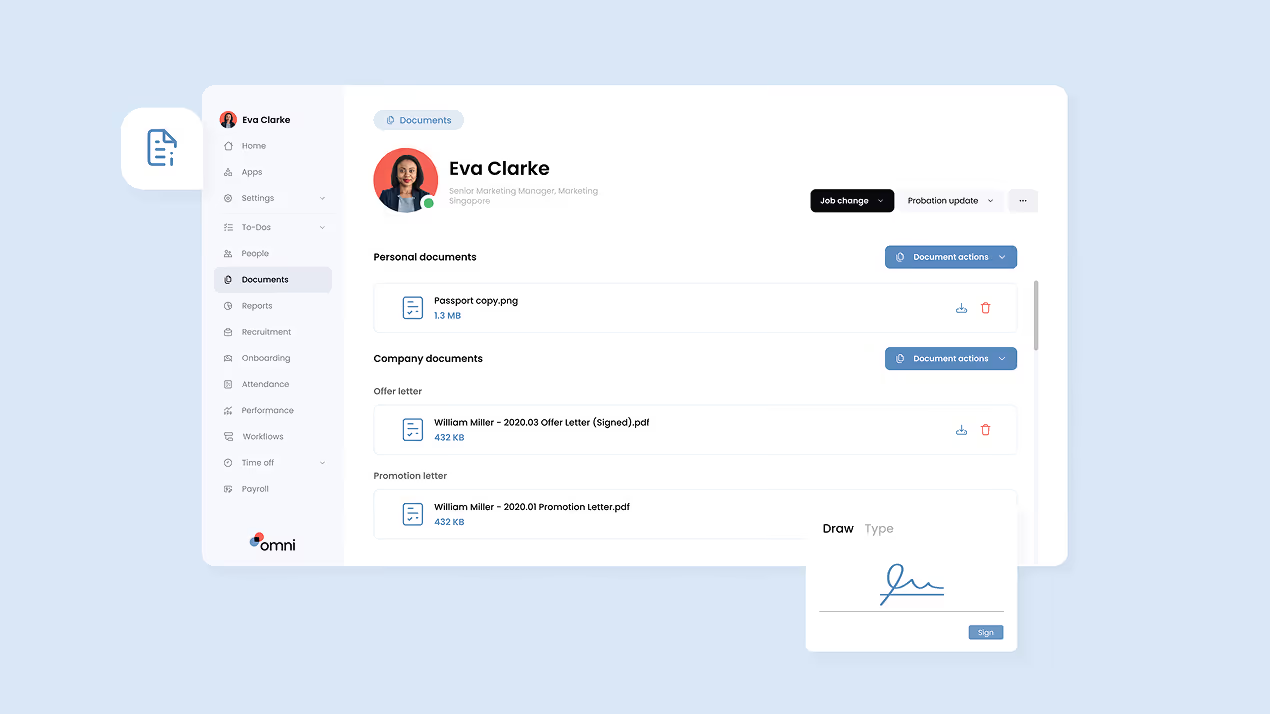
Companies that still rely heavily on manual documentation or fragmented HR systems may find this transition challenging. Omni’s document management system helps streamline the shift by providing secure, centralized storage and structured access to employment documents, ensuring HR teams can manage contracts and supporting records more efficiently.
vietnam law

Update #2: Employment Law Implementation and Labor Reporting

Another major change comes through Decree 318/2025, which provides guidance on implementing the updated Vietnam law.

This decree focuses heavily on labor registration procedures and workforce reporting obligations. Under the new Vietnam law, employers are now required to submit more detailed labor force data, which involves information about employees status, contract and labor force variability.

The intended aim is to provide transparency and get employers to abide by the requirements of Vietnam labor law with regard to employment records and labor management.

These reforms show ease to the regulators in monitoring labor market activity. To employers, they bring a new dimension of accountability on the issue of workforce reporting.

HR implications:

This update will influence the way HR departments operate and report on the workforce data. Organizations should:

  • Check the labor registration procedures against new reporting standards.
  • Make sure the HR systems are able to capture and track the information of employees.
  • Alignment of HR, payroll and compliance teams with documentation needs.
  • Be ready to face more labor inspections and data verification.

Practically, it implies that the data on the workforce cannot be scattered throughout the spreadsheets or disintegrated systems any more. Firms should have a well-organized record that assists them in reporting to the regulatory authorities according to the Vietnam law.

Update #3: New Employment Law Framework (Effective 1 Jan 2026)

The new Employment Law framework took effect on 1 January 2026. This Vietnam law modernizes various areas of the employment law, especially concerning the labor force protection, employment transparency, and the benefits eligibility.

Key changes include: 

  • Widening unemployment insurance benefits, giving more workers access in case of job loss.
  • Recognition of practical work experience as a valid measure of skills, especially in industries where experience outweighs formal qualifications.
  • Greater transparency in employment terms (e.g., SHUI), ensuring employees are fully aware of roles, responsibilities, and benefits.

HR implications:

HR leaders should review existing policies to ensure they align with updated employment law requirements. This can include:

  • Checking eligibility for unemployment insurance.
  • Modifying job descriptions and employee documentation.
  • Updating internal HR policies to reflect new labor protections.
  • Improving performance and development reporting.

Update #4: Minimum Wage Increases

Minimum wage adjustments are another important update affecting Vietnam labor law in 2026. Vietnam applies a regional minimum wage system, where wage levels vary depending on the economic zone.

New monthly minimum wage (since 1 January 2026):

  • Region I: VND 5,310,000
  • Region II: VND 4,730,000
  • Region III: VND 4,140,000
  • Region IV: VND 3,700,000

These changes reflect rising living costs and economic conditions and can have a profound impact on payroll structures, especially for organizations with a large local workforce.

HR implications:

HR teams should actively assess compensation structures. This may involve:

  • Modifying payroll systems to reflect new wage levels.
  • Reviewing salary scales for roles near the minimum wage level.
  • Adjusting budget forecasts based on new wages.
  • Communicating wage updates to employees.

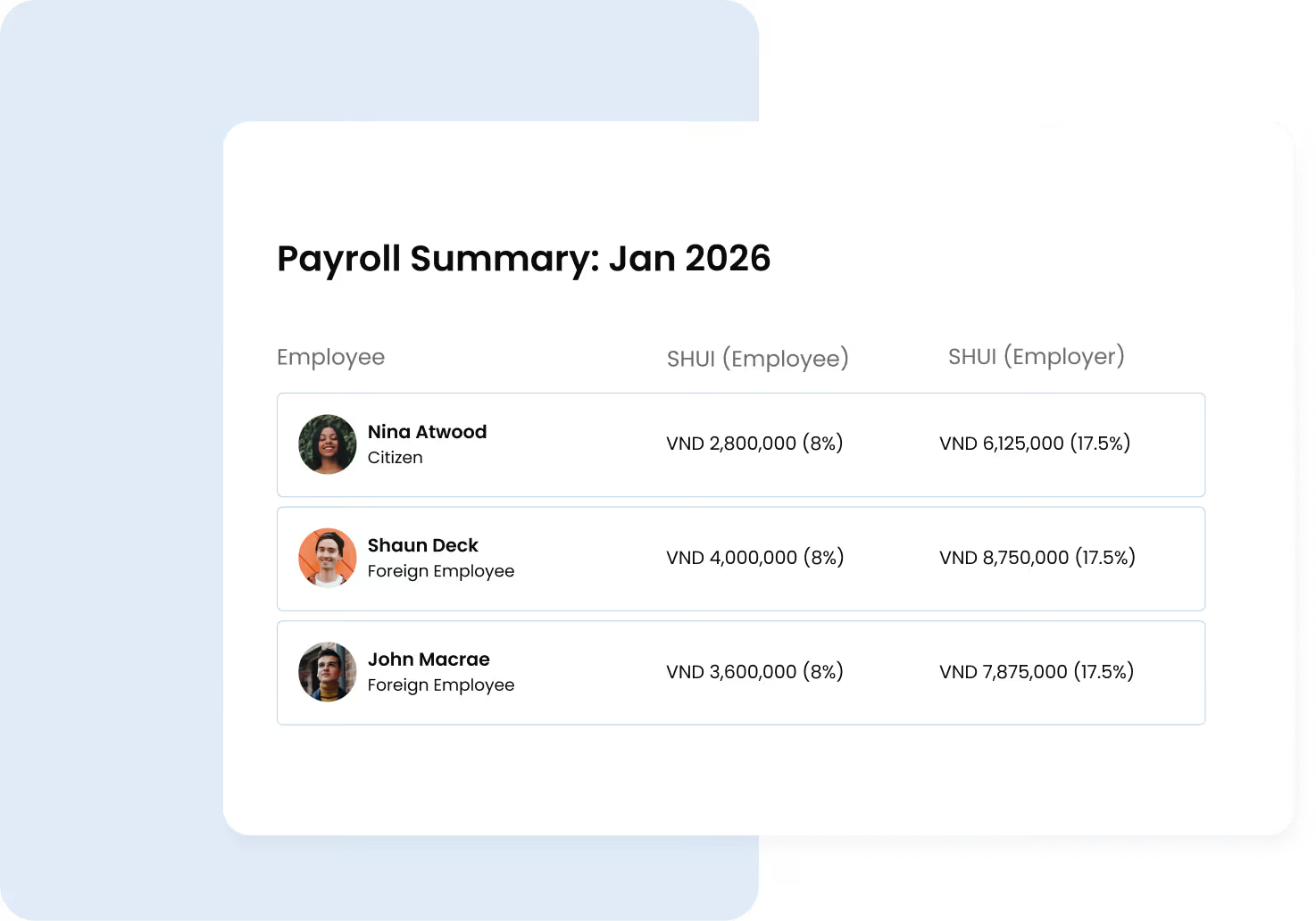
Failure to comply with the correct wage rates may lead to fines under the Vietnam law, so employers must ensure their payrolls are up to date. With Omni’s payroll software or managed payroll services, teams can streamline the transition with automated, compliant payroll management, ensuring HR can process wages accurately, maintain centralized records, and stay up to date with local regulations.
vietnam labor law

Update #5: Foreign Worker and Work Permit Reforms

Vietnam continues to attract international investment, and the government has introduced reforms to support global talent mobility.

The process of acquisition of foreign worker permits is being simplified under Decree 219/2025. The Vietnam law reforms are designed to decrease the administrative slowdown and simplify the process of recruiting specialised foreign professionals by companies.

In other situations, very specialised employees might be exempted from the traditional work permit requirements. This is an indication of the increasing demand to have skills worldwide in areas like technology, production and engineering.

HR implications:

Recruitment processes that are to be reviewed by HR teams dealing with international talent include:

  • Reworking foreign hiring processes to incorporate new permit processes.
  • Checking on work permit exemption eligibility.
  • Making sure that the documentation is made according to the immigration and labor regulations.
  • Arranging legal teams during the process of hiring foreign workers.

This should enable a faster process for acquiring international talent, while ensuring full compliance with Vietnam’s employment law.

What HR Leaders Should Do Next

With several major reforms coming into effect, HR leaders should begin preparing their organisations now. Here are some tips that can help: 

  • Audit and update employment contracts for digital compliance: You should review existing contracts and update them so they meet the new electronic contract requirements under Vietnam law.
  • Ensure HR systems are ready for centralised e‑contract storage: Also make sure your HR platform can securely store and manage digital contracts through the government platform.
  • Align payroll and benefits admin with wage changes: Update payroll systems and salary structures to reflect the new regional minimum wage adjustments.
  • Review foreign talent onboarding processes: Enhance the hiring and onboarding processes to match the new foreign worker and work permit processes.

Ensuring HR Compliance in Vietnam with Omni HR

Keeping up with regulatory changes across multiple markets can be challenging, especially as Vietnam’s employment law continues to evolve. Companies can simplify compliance by using modern HR tools like Omni HR, which help centralize employee data, payroll, and documentation workflows in one secure platform.

employment law

With digital contracting, workforce reporting, and compliance tracking built in, HR teams can stay on top of regulatory requirements without slowing down daily operations. For organizations managing teams in Vietnam, the right HR system makes compliance easier and more efficient, freeing HR leaders to focus on workforce development, employee experience, and strategic planning.

Schedule my product tour

The Vietnam law is ever-evolving and 2026 will witness major change in its employment law. Keeping up with these changes in Vietnam labor law is a priority to companies operating within the country or those considering.

Gradually, the Vietnamese government has been modernizing its regulatory framework in order to facilitate an increasing, globally linked economy. These reforms touch upon the very aspects of signing employment contracts, the organization of wages, and even employment of foreign professionals.

For the HR teams that handle compliance, hiring, payroll and workforce planning, the message is simple: Vietnam labor law is at a new stage that is oriented towards digitalisation, transparency and better workforce supervision. Early adapting organizations will prevent the risks of compliance and maintain smooth work schedules.

Below are five key updates shaping employment law in Vietnam in 2026, along with the practical implications HR teams need to prepare for.

Understanding Vietnam Employment Law in 2026

Before diving into specific reforms, here’s a broader direction of Vietnam law.

The government is introducing a more modern employment law framework designed to reflect how organisations actually operate today, particularly in a digital and globally connected labor market. 

Several major themes define the 2026 regulatory changes:

  • A new employment policy framework replacing older labor provisions
  • A strong regulatory focus on digital labor contracts and documentation
  • Minimum wage adjustments across multiple regional zones
  • Reforms affecting foreign labor and work permit processes

Collectively, these changes indicate a very obvious pattern, that the Vietnam labor law is becoming more systematic, more computerized, and more open. 

To HRs, it involves checking internal procedures in hiring and payrolls, to make sure that they align with the current demands as per Vietnam law.

Update #1: Electronic Labor Contracts and Digital Compliance

One of the most transformative developments in Vietnam law is the move toward fully digital labor contracts.

Under Decree 337/2025, Vietnam is introducing a centralised digital system for labor contracts. Beginning 1 July 2026, all electronic contracts of employment are to be signed and kept via an official government system.

The regulation will improve compliance supervision and minimize conflicts regarding employment conditions. The contracts will now be required to contain digital signatures and anti-fraud authentication, which will make sure that the employer and employees are well identified.

The transition can also be seen as a wider trend towards digital governance in the sphere of labor laws in Vietnam, as the employment records can be efficiently monitored and checked by the concerned authorities.

HR implications:

HR teams will need to rethink how employment documentation is handled like:

  • Updating contract templates to align with the digital system requirements
  • Migrating employment documentation to compatible digital platforms
  • Ensuring HR systems can support government-approved electronic signatures
  • Training HR staff on the new digital contract submission workflows

Companies that still rely heavily on manual documentation or fragmented HR systems may find this transition challenging. Omni’s document management system helps streamline the shift by providing secure, centralized storage and structured access to employment documents, ensuring HR teams can manage contracts and supporting records more efficiently.

vietnam law

Update #2: Employment Law Implementation and Labor Reporting

Another major change comes through Decree 318/2025, which provides guidance on implementing the updated Vietnam law.

This decree focuses heavily on labor registration procedures and workforce reporting obligations. Under the new Vietnam law, employers are now required to submit more detailed labor force data, which involves information about employees status, contract and labor force variability.

The intended aim is to provide transparency and get employers to abide by the requirements of Vietnam labor law with regard to employment records and labor management.

These reforms show ease to the regulators in monitoring labor market activity. To employers, they bring a new dimension of accountability on the issue of workforce reporting.

HR implications:

This update will influence the way HR departments operate and report on the workforce data. Organizations should:

  • Check the labor registration procedures against new reporting standards.
  • Make sure the HR systems are able to capture and track the information of employees.
  • Alignment of HR, payroll and compliance teams with documentation needs.
  • Be ready to face more labor inspections and data verification.

Practically, it implies that the data on the workforce cannot be scattered throughout the spreadsheets or disintegrated systems any more. Firms should have a well-organized record that assists them in reporting to the regulatory authorities according to the Vietnam law.

Update #3: New Employment Law Framework (Effective 1 Jan 2026)

The new Employment Law framework took effect on 1 January 2026. This Vietnam law modernizes various areas of the employment law, especially concerning the labor force protection, employment transparency, and the benefits eligibility.

Key changes include: 

  • Widening unemployment insurance benefits, giving more workers access in case of job loss.
  • Recognition of practical work experience as a valid measure of skills, especially in industries where experience outweighs formal qualifications.
  • Greater transparency in employment terms (e.g., SHUI), ensuring employees are fully aware of roles, responsibilities, and benefits.

HR implications:

HR leaders should review existing policies to ensure they align with updated employment law requirements. This can include:

  • Checking eligibility for unemployment insurance.
  • Modifying job descriptions and employee documentation.
  • Updating internal HR policies to reflect new labor protections.
  • Improving performance and development reporting.

Update #4: Minimum Wage Increases

Minimum wage adjustments are another important update affecting Vietnam labor law in 2026. Vietnam applies a regional minimum wage system, where wage levels vary depending on the economic zone.

New monthly minimum wage (since 1 January 2026):

  • Region I: VND 5,310,000
  • Region II: VND 4,730,000
  • Region III: VND 4,140,000
  • Region IV: VND 3,700,000

These changes reflect rising living costs and economic conditions and can have a profound impact on payroll structures, especially for organizations with a large local workforce.

HR implications:

HR teams should actively assess compensation structures. This may involve:

  • Modifying payroll systems to reflect new wage levels.
  • Reviewing salary scales for roles near the minimum wage level.
  • Adjusting budget forecasts based on new wages.
  • Communicating wage updates to employees.

Failure to comply with the correct wage rates may lead to fines under the Vietnam law, so employers must ensure their payrolls are up to date. With Omni’s payroll software or managed payroll services, teams can streamline the transition with automated, compliant payroll management, ensuring HR can process wages accurately, maintain centralized records, and stay up to date with local regulations.

vietnam labor law

Update #5: Foreign Worker and Work Permit Reforms

Vietnam continues to attract international investment, and the government has introduced reforms to support global talent mobility.

The process of acquisition of foreign worker permits is being simplified under Decree 219/2025. The Vietnam law reforms are designed to decrease the administrative slowdown and simplify the process of recruiting specialised foreign professionals by companies.

In other situations, very specialised employees might be exempted from the traditional work permit requirements. This is an indication of the increasing demand to have skills worldwide in areas like technology, production and engineering.

HR implications:

Recruitment processes that are to be reviewed by HR teams dealing with international talent include:

  • Reworking foreign hiring processes to incorporate new permit processes.
  • Checking on work permit exemption eligibility.
  • Making sure that the documentation is made according to the immigration and labor regulations.
  • Arranging legal teams during the process of hiring foreign workers.

This should enable a faster process for acquiring international talent, while ensuring full compliance with Vietnam’s employment law.

What HR Leaders Should Do Next

With several major reforms coming into effect, HR leaders should begin preparing their organisations now. Here are some tips that can help: 

  • Audit and update employment contracts for digital compliance: You should review existing contracts and update them so they meet the new electronic contract requirements under Vietnam law.
  • Ensure HR systems are ready for centralised e‑contract storage: Also make sure your HR platform can securely store and manage digital contracts through the government platform.
  • Align payroll and benefits admin with wage changes: Update payroll systems and salary structures to reflect the new regional minimum wage adjustments.
  • Review foreign talent onboarding processes: Enhance the hiring and onboarding processes to match the new foreign worker and work permit processes.

Ensuring HR Compliance in Vietnam with Omni HR

Keeping up with regulatory changes across multiple markets can be challenging, especially as Vietnam’s employment law continues to evolve. Companies can simplify compliance by using modern HR tools like Omni HR, which help centralize employee data, payroll, and documentation workflows in one secure platform.

employment law

With digital contracting, workforce reporting, and compliance tracking built in, HR teams can stay on top of regulatory requirements without slowing down daily operations. For organizations managing teams in Vietnam, the right HR system makes compliance easier and more efficient, freeing HR leaders to focus on workforce development, employee experience, and strategic planning.

Schedule my product tour

No items found.
No items found.
Which countries do you support?

Full HR & Payroll coverage for Philippines, Singapore, Malaysia, Hong Kong, and Indonesia. Each market has local support teams and built-in compliance features.

How does pricing work as we scale?

Starting at $3/employee/month for core features. Volume-based discounts are available for growing teams. Book a demo for custom pricing.

How do you handle security?

Enterprise-grade security with ISO 27001, GDPR certifications, and local data residency options.

How long is implementation?

4 weeks average. Includes free data migration, setup, and team training. No hidden fees.

What makes Omni different from global HR platforms?

Built specifically for Asia with local payroll processing, same-day support in Asia time zones, and 40% lower cost than global alternatives.