.png)
Summary. Technology has reshaped the global workforce by enabling companies to hire and collaborate remotely, leading many US businesses to engage independent contractors in Asian markets for their flexibility, scalability, and cost-effectiveness. These contractors provide access to world-class talent at lower rates while reducing expenses tied to full-time employees such as benefits, payroll taxes, and office costs. However, managing and paying independent contractors requires careful attention to legal classification, tax compliance, and secure, efficient payment processes. Traditional methods like wire transfers and PayPal often create hidden costs through fees and exchange rates, prompting companies to adopt specialized platforms like Omni. Designed for Asian contractor management, Omni offers automated compliance, transparent pricing, faster payments, and contractor-friendly tools that streamline international operations and transform contractor management into a competitive advantage.
Independent contractor payroll is the process of managing payments, tax documentation, and compliance obligations for workers who provide services as self-employed individuals rather than employees — including across multiple countries and currencies. Technology has disrupted the way we conceive of a workforce. No longer are companies bound to a traditional employer/employee relationship—now, with the flexibility to hire and collaborate remotely, companies are more frequently turning to independent contractors to tackle projects dynamically. For US companies, this means tapping into skilled contractor talent across Asia, where world-class expertise meets cost-effective rates.
And while this model has many advantages, it also comes with a handful of pitfalls your organization will want to avoid, chief among them contractor payments. Whether you are paying independent contractors across multiple Asian countries, understanding the right processes, compliance requirements and cost-effective payment methods is crucial.
In this guide, we’re going to walk you through everything you need to know about paying contract workers, including employment status, taxes, and methods of payment. But before we dive in, let’s define what exactly we mean by an “independent contractor.”
Read next:Contractor Payroll Services Guide | Paying International Contractors Guide | Benefits of Employee vs Contractor
What is an independent contractor?
An independent contractor is a self-employed individual or entity that provides services to a business without being considered an employee. They operate independently, have control over their work, and are responsible for their own taxes and benefits.
Why hire independent contractors?
Engaging independent contractors can offer several advantages for your organization, particularly with the pace and pressure inherent to today’s economy. For US businesses, independent contractors, especially those based in high-talent and cost-effective Asian markets, provide strategic advantages that go beyond simple cost savings.
Here are some key reasons why companies choose to work with independent contractors:
Flexibility
Independent contractors provide flexibility to scale your workforce up or down based on project demands and business needs. This is particularly beneficial for businesses with fluctuating workloads or seasonal variations. US companies can leverage time zone differences when hiring Asian contractors, enabling round-the-clock productivity for critical projects.
Cost-effectiveness
Hiring independent contractors can potentially reduce overhead costs associated with full-time employees, such as:
- Benefits: You typically don't have to provide fringe benefits like health insurance, retirement plans, or paid time off to independent contractors. For US companies, this means avoiding the cost of health insurance, 401(k) matching, paid leave, and other benefits that could add 30-40% to total compensation costs.
- Payroll taxes: You don't have to withhold or pay payroll taxes (Social Security, Medicare, etc.) for independent contractors. US employers potentially save 7.65% in FICA taxes for each independent contractor versus a full-time employee.
- Office space and equipment: Independent contractors typically work remotely and use their own equipment, reducing the need for office space and associated costs.
- Platform and payment costs: The contractor management platform you choose can significantly impact total costs. For US companies hiring contractors primarily in Asian markets, premium rates of US$49-US$99 per contractor per month don’t make financial sense. Look for platforms priced appropriately for Asian markets, typically around US$15 per month per contractor to maximize your cost advantages.
Learn more: Benefits of Employee vs Contractor: What Fast-Growing Teams Should Know
Scalability
Independent contractors allow you to quickly scale your workforce to meet the demands of a growing business without the lengthy process of hiring full-time employees. You can easily adjust your workforce size based on project needs and market fluctuations, providing agility and responsiveness to changing business demands. US startups and tech companies benefit from this when building development teams across Philippines or India, where they can onboard senior-level talent within days rather than months.
How to determine if a worker is an independent contractor or employee?
Correctly classifying workers is crucial for legal and tax compliance. Misclassifying an employee as an independent contractor can lead to penalties, back taxes, and legal issues. In the US, the IRS and Department of Labor use specific tests to determine worker classification, and violations can lead to significant financial penalties and legal liability. When hiring independent contractors in Asia, proper classification becomes even more critical.
Here's a breakdown of the key factors to consider:
1. Behavioral control:
- Instructions: Does your organization control or have the right to control what the worker does and how they do their job? Employees typically receive detailed instructions and supervision, while independent contractors have more autonomy over their work methods.
- Training: Do you provide training to the worker on how to do the job? Training is more common in an employer-employee relationship.
2. Financial Control:
- Investment: Does the worker have a significant investment in their own equipment, tools, or supplies? Independent contractors often invest in their own business infrastructure.
- Expenses: Does the worker incur unreimbursed expenses related to their work? Independent contractors typically cover their own expenses.
- Opportunity for profit or loss: Can the worker realize a profit or loss based on their work? Independent contractors have the potential for both profit and loss, while employees typically receive a fixed salary or wage.
3. Type of Relationship:
- Written contracts: Is there a written contract that clearly defines the relationship as an independent contractor agreement? While not conclusive, a written contract can be an indicator of an independent contractor relationship. It’s important for US companies to ensure that contracts specify governing law and include clear independence clauses to avoid misclassification risks.
- Benefits: Does the company provide employee benefits, such as health insurance, paid time off, or retirement plans? These benefits are typically not offered to independent contractors.
- Permanency: Is the relationship between the worker and the company ongoing and indefinite, or is it project-based or for a specific duration? Independent contractor relationships are often temporary or project-based.
What are the types of independent contractors?
Independent contractors can be classified into different categories based on their relationship with the hiring company and the nature of their work. Here are some common types:
Independent or self-employed contractors
These contractors are hired directly by the company and typically work independently, without any intermediary. They have complete control over their work, including how, when, and where they perform their services. They often work with multiple clients simultaneously, managing their own workload and schedule.
Example: A freelance writer who is hired directly by a company to create content for their website.
Read next: Building a Global Team: A Step-by-Step Guide
Subcontractors
These contractors are hired by a primary contractor to perform a specific portion of a larger project. They may have less control over their work compared to independent contractors, as they need to coordinate with the primary contractor and adhere to project specifications.
Subcontractors often possess specialized skills or expertise in a particular area, such as plumbing, electrical work, or software development.
Example: A construction company hires a subcontractor to handle the electrical wiring for a new building project.
Agency contractors
These contractors are employed by a staffing agency or recruitment firm and are assigned to work for a client company on a temporary or project basis. The agency handles administrative tasks such as payroll, taxes, and benefits, while the client company manages the contractor's day-to-day work.
Agency contractors provide flexibility for businesses that need to quickly scale their workforce or fill temporary staffing needs.
Example: A marketing agency provides a contractor to a company to manage their social media campaigns for a specific period.
What are the pay structures for independent contractors?

When it comes to paying independent contractors, there are several different pay structures you can use. The best option will depend on the nature of the work, the length of the engagement, and the preferences of both the contractor and the company. Here are some common pay structures:
Project fee
This is a common structure where the contractor agrees to complete a specific project or deliverable for a fixed fee. It's essential to have a clear scope of work and defined deliverables outlined in a contract to avoid disputes later. For larger projects, you can break down the payment into milestones based on the completion of specific phases or deliverables.
Retainer
This structure involves paying the contractor a fixed monthly or quarterly fee to provide ongoing services or be available for work on an as-needed basis. Retainers provide predictable costs for the company and a steady income stream for the contractor.
It's important to define the scope of services included in the retainer agreement and any limitations on the number of hours or tasks the contractor will perform.
Time and materials
This structure involves paying the contractor an hourly rate for their time, plus reimbursement for any expenses incurred in performing the work. Accurate tracking of time and expenses is crucial for this pay structure. This approach provides flexibility for projects with evolving scopes or where it's difficult to estimate the total cost upfront.
How to Pay Independent Contractors: Payment Methods Compared
Paying independent contractors involves more than just handing over a check. It's essential to choose a payment method that is secure, efficient, and compliant with relevant regulations. For US companies paying independent contractors across Asia, the choice of payment method can impact both your costs and contractor satisfaction. Hidden fees, unfavorable exchange rates, and slow processing times can eat away the cost savings you achieve by hiring in Asian markets.
Here are some common options:
Bank transfers
This is a common and convenient method where you transfer funds directly from your company's bank account to the contractor's bank account. Bank transfers are generally secure and efficient, with funds typically arriving within 1-2 business days domestically, though international transfers to Asian countries can take 3-5 business days and incur significant transaction fees. However, bank transfers provide a clear record of payment, making it easy to track expenses and maintain financial records.
Paper checks
While less common in today's digital age, paper checks are still a viable option, particularly for smaller payments or when dealing with contractors who prefer this method.
However, paper checks can be impractical for international contractors in Asia due to processing delays, currency conversion challenges, and high banking fees. There's also a risk of checks getting lost or stolen, so it's important to ensure they are mailed securely.
International money orders or wire transfers
For international contractors, money orders or wire transfers can be used to send payments across borders. Be aware of potential fees and exchange rate fluctuations associated with these methods as it can significantly impact contractor take-home pay, especially for smaller payments. Wire transfers are generally secure but can take several days to process. For US companies paying multiple contractors across Asian markets, these per-transfer fees can quickly add up to thousands of dollars annually.
PayPal
PayPal is a popular online payment platform that allows you to send and receive money electronically. It's a convenient and relatively fast way to pay contractors, especially for smaller payments or international transactions.
It is worth noting that PayPal charges fees for certain transactions, so be sure to factor those into your costs as it can become substantial when dealing with a distributed team.
SWIFT transfers
SWIFT transfers are used for international bank-to-bank transfers, facilitating payments to contractors in different countries. They are generally secure but can be more expensive than other methods, with fees charged by both sending and receiving banks.
For US companies paying contractors in Asia, SWIFT transfers can typically cost up to US$35-$50 per transaction and can take up to 3-5 business days, making them inefficient for regular independent contractor payments.
Cryptocurrency
Some businesses and contractors are starting to use cryptocurrency for payments, particularly for international transactions. Be aware of the volatility of cryptocurrency values and any relevant regulations governing its use for payments.
Omni
For US companies building contractor teams across Asia, Omni offers a specialized contractor management platform designed for managing and paying international contractors cost-effectively and efficiently.
Omni streamlines payments to independent contractors across 30+ Asian countries. For US companies looking to hire in Asian markets, Omni provides specialized features at just US$15 per month per contractor, a fraction of what premium Western platforms typically charge.
Key benefits:
- Cost-effective pricing that matches Asian markets.
- Faster payments where contractors receive funds within 48 hours.
- Transparent pricing with no per-transaction fees or unfavorable exchange rate markups that eat into your contractor earnings.
- Automated compliance with built-in tax form generation, local tax requirement tracking, and audit-ready documentation for US IRS requirements.
- Contractor friendly features such as USD wallets, virtual cards, and payment tracking.
Omni ensures compliance with local tax laws across all Asian markets while automating payroll processing, providing a secure and efficient way to pay your independent contractors.
Read more: How to Pay and Hire Independent Contractors Worldwide
Steps to Pay Independent Contractors
Paying independent contractors involves more than just transferring funds. To ensure compliance, avoid legal issues, and maintain a positive working relationship, it's essential to follow a structured process. For US companies hiring in Asia, this process becomes even more critical to manage compliance requirements in both the US and each contractor’s local jurisdiction.
Here's a step-by-step guide:
1. Classify the worker.
Before you even begin the payment process, ensure you have correctly classified the worker as an independent contractor. Misclassification can lead to severe legal and financial consequences.
US companies should be particularly careful when hiring international contractors, ensuring that contracts clearly establish independence and include proper governing law clauses.
2. Determine the appropriate payment methods.
Consider the contractor's preferred payment method and choose an option that is convenient for both parties. Select a payment method that is suitable for the frequency and amount of payments. For US companies with multiple contractors in Asian markets, choosing a specialized contractor management platform can help save thousands in transaction fees compared to using PayPal, wire transfers, or traditional payment methods.
3. Understand the tax implications.
In most jurisdictions, you'll need to report payments to independent contractors to tax authorities. You generally don't have to withhold income tax from payments to independent contractors, but it's essential to understand the specific tax requirements in your location.
For US companies hiring foreign contractors:
- Form W-8BEN is required from each foreign contractor to document their non-US status and claim any applicable tax treaty benefits.
- No US tax withholding is generally required for services performed outside the US by foreign contractors, but proper documentation is needed.
- Understand tax treaties between the US and Asian countries to prevent double taxation.
4. Consider currency exchange rates.
If you're paying international contractors in a different currency, be aware of currency exchange rate fluctuations. Agree on a currency conversion method with the contractor and ensure you use a reliable and transparent service for currency exchange. Many US companies pay Asian contractors in USD, which contractors often prefer for stability. Platforms that offer USD wallets allow contractors to hold and access USD directly, eliminating currency conversion fees and delays.
5. Clearly document everything.
Have a written independent contractor agreement that clearly outlines the scope of work, payment terms, and other relevant details. Maintain detailed records of all invoices, receipts, and payment transactions. If you're reimbursing the contractor for expenses, ensure you have proper documentation to support those reimbursements.
6. Ensure security through every step.
Use secure payment methods to protect against fraud and unauthorized access. Implement cybersecurity measures to protect your financial systems and prevent unauthorized access to sensitive data.
Look for platforms with ISO certifications, bank-grade encryption, and AWS infrastructure for maximum protection when managing sensitive contractor and payment information.
Learn more: How HRIS Supports Employee Data Management
The Hidden Costs of Managing Contractors Across Asia
As US companies increasingly discover the advantages of hiring contractors in Asian markets, one critical factor often gets overlooked: the platform and payment costs that can silently erode your cost savings.
Why platform costs matter for US companies hiring independent contractors in Asia
As highlighted previously, Western-based platforms may overcharge on premiums as they treat hiring in both Western and Asian markets the same. That’s why it’s important to look for platforms that matches the market pricing. When you are already paying lesser in cost-effective markets, your platform costs should also reflect that reality.
Payment friction costs more than money
Beyond platform fees, traditional payment methods can also create hidden costs through:
- Wire transfer fees
- Exchange rate markups
- Processing delays
- Compliance exposure
Adopting platforms that are purpose built for Asian contractor management
For US companies that are serious about building efficient Asian independent contractor teams, specialized platforms can offer:
- Pricing that matches your actual hiring markets
- Automated US tax compliance
- Fast payments
- No hidden transaction fees
- Contractor-friendly features
The right platform transforms contractor management from a cost center into a competitive advantage.
Make Fast and Compliant Payments with Omni
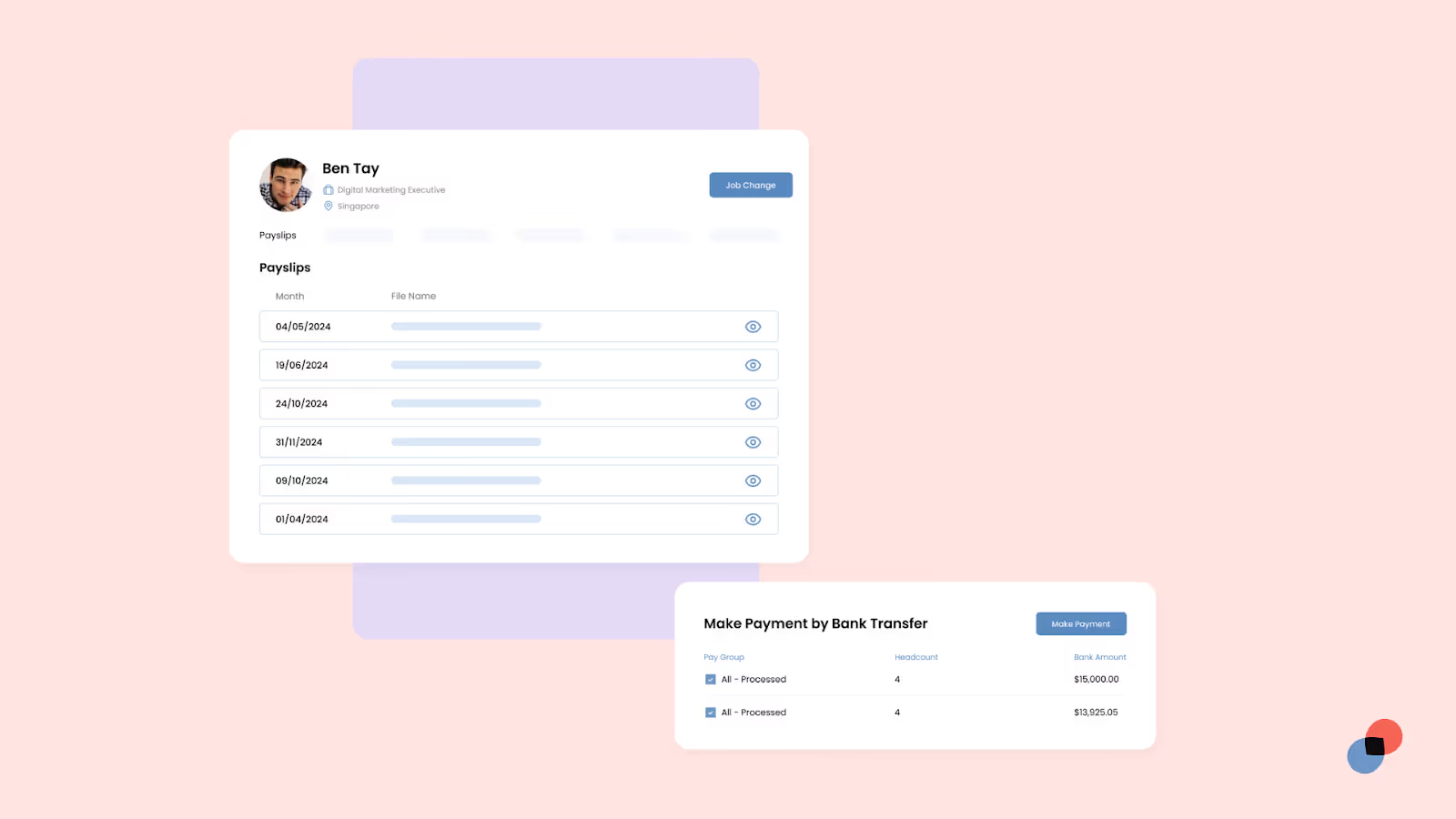
Affordable, functional, and purpose-built for US companies hiring contractors across Asia, Omni is the contractor management partner your business can rely on.
Omni’s tailored solution starts at just US$15 per month per contractor, giving you everything you need without the inflated pricing of Western-focused platforms.
Why US companies choose Omni:
- Pricing that matches your market.
- Automated US tax compliance with tax form generation, automated deadline reminders, and audit-ready documentation.
- Lighting-fast payments within 48 hours and contractors gain access to USD wallets, virtual cards, eliminating the 3-5 day delays that come with traditional payment methods.
- Transparent pricing with no hidden fees so you know exactly what you are paying for. Discover a pricing plan that works for you.
- Multi-country compliance handled automatically with tracking on local tax requirements, regulatory changes, and compliance obligations in all 30+ Asian countries.
- ISO 27001 certification and AES-256 encryption ensure that financial data and contractor information are well protected.
Beyond contractor payments
If you are managing both employees and contractors in multiple countries, Omni’s comprehensive HR solution handles it all in one platform. With payroll features like local currency support, automated tax calculations, and instant payroll reports, HR teams can simplify both employee and independent contractor payments while ensuring compliance.
With secure and centralized records, HR teams can swiftly access independent contract agreements, W-8BEN forms, and essential documents that further support your payroll processes.
Most US companies switch to Omni in less than 48 hours. Let us handle the transition so that you can focus on what matters most: your people.
Book a demo with our team today and see how Omni can transform contract payments for US companies hiring across Asia, saving you time, cutting costs, and enhancing overall efficiency for your team.
Frequently Asked Questions
ndependent contractor payroll is the process of managing payments and compliance for self-employed workers who provide services to your business without being employed by it. Unlike employee payroll, it doesn't involve tax withholding or statutory contributions in most cases — but it does require correct worker classification, the right tax documentation (such as W-9 or W-8BEN), agreed payment terms, and accurate record-keeping for audit purposes.
Employees receive a salary or wage with tax withheld at source, and employers contribute to statutory funds like CPF, EPF, or Social Security on their behalf. Independent contractors invoice for work completed, manage their own taxes, and are generally not entitled to employee benefits. The employer's obligation is to collect correct documentation, pay agreed amounts on time, and report payments to tax authorities where required.
In the US, you must file Form 1099-NEC if you pay a US-based independent contractor $600 or more in a tax year. For foreign contractors, Form 1099 is generally not required, but collecting and retaining Form W-8BEN is essential to document their foreign status. Requirements vary by country — always verify reporting obligations for both your jurisdiction and the contractor's.
The most common structures are project fee (fixed amount for a defined deliverable), retainer (recurring monthly fee for ongoing availability), and time and materials (hourly rate plus expense reimbursement). The right structure depends on the nature of the work and the contractor's preferences. All structures should be documented in a written contractor agreement before work begins.
Use a platform that handles multi-currency payments, collects and stores tax documentation (W-8BEN, W-9, local equivalents), tracks compliance requirements per jurisdiction, and generates audit-ready records automatically. For APAC-focused teams, look for built-in support for CPF, EPF, SSS, and other regional statutory frameworks. Omni supports independent contractor payroll across multiple countries from $15/contractor/month.
Misclassification can result in back taxes, penalties, and legal liability in both your jurisdiction and the contractor's. The IRS and Department of Labor in the US, and equivalent authorities in Singapore, Malaysia, and the Philippines, all actively enforce correct classification. Document your classification decision using the IRS behavioral, financial, and relationship-type tests at the start of every engagement.
.avif)


.avif)