


















.png)
Summary. When managing employee travel expenses, companies in Singapore typically choose between reimbursing actual costs or paying a per diem allowance, a fixed daily rate that simplifies tracking and reduces manual paperwork. A per diem helps businesses save time and maintain fairness, but it also requires careful compliance with IRAS per diem guidelines to avoid tax risks. With travel expenses becoming a growing cost driver, efficient management of the Singapore per diem is key to ensuring transparency, accuracy, and compliance. Understanding per diem meaning, coverage, and tax treatment helps HR teams streamline travel policies and strengthen financial governance, all of which can be made easier with automated tools like Omni, which centralizes per diem tracking, documentation, and payroll integration for seamless compliance.
When it comes to covering employees’ business travel expenses, companies typically have these options:
- Reimburse actual expenses submitted through an expense report
- Pay a per diem allowance
The per diem allowance offers more efficiency. Rather than reimbursing employees for every expense receipt, you pay them a fixed daily rate. This approach reduces paperwork, saves accounting time, and eliminates repetitive tasks like collecting receipts or reviewing expense claims.
However, managing travel expenses effectively is more important than ever. A Singapore Business Review study found that local companies lose around S$473 million annually due to manual processes, including travel and expense reporting routines.
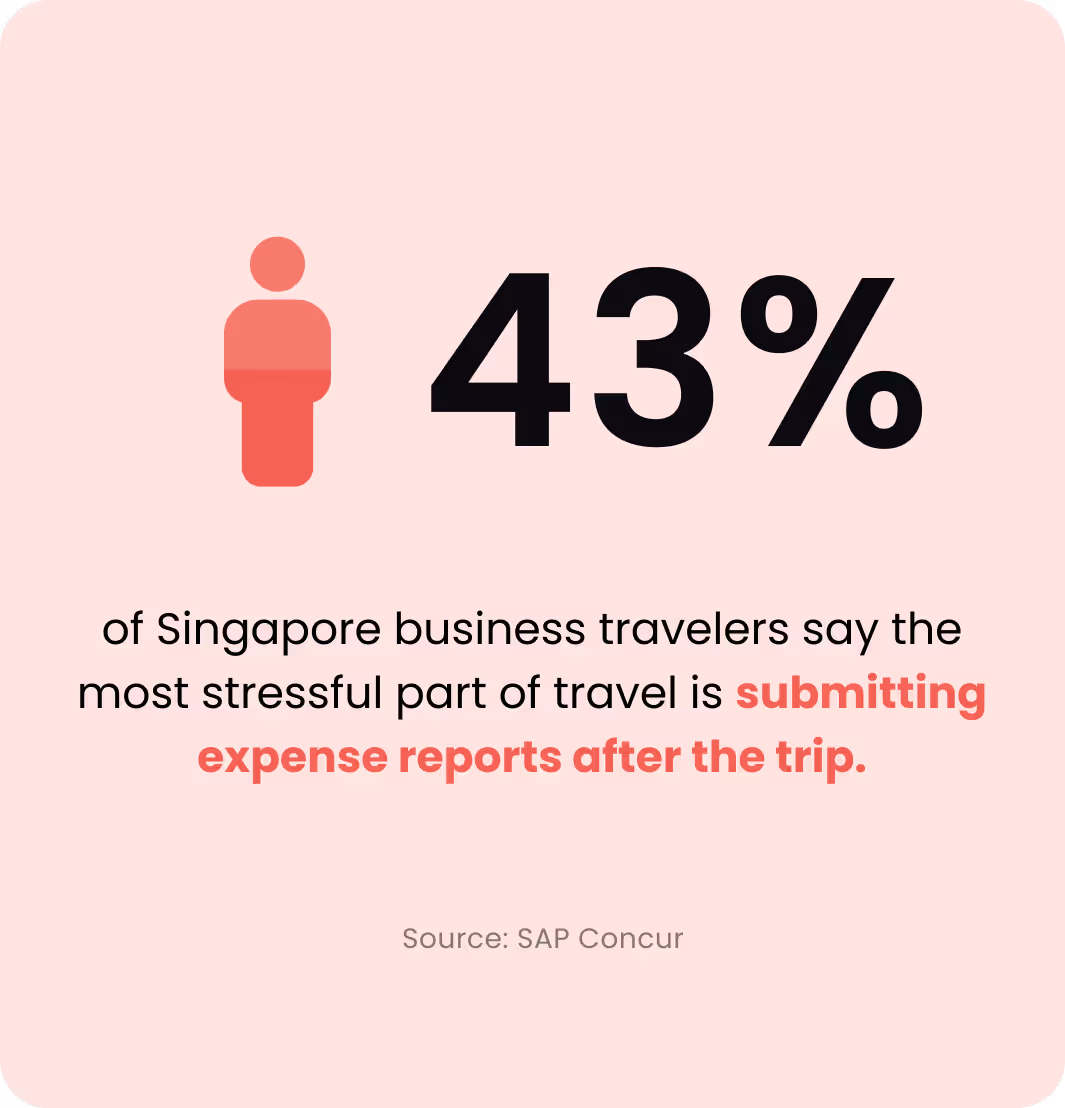
Meanwhile, a SAP Concur survey revealed that 43% of Singapore business travellers find submitting expense reports after trips the most stressful part of business travel. These figures highlight how outdated, manual reimbursement systems not only drain productivity but can potentially impact employee experience.
Per diem allowances help address these pain points, but they aren’t always straightforward, especially in Singapore, where the maximum allowed amounts differ depending on travel location and the Inland Revenue Authority of Singapore (IRAS) guidelines. Exceed the IRAS per diem acceptable rate, and your company could face tax liabilities or non-compliance penalties.
So, what exactly counts as the Singapore per diem allowance, and how is it treated for tax purposes?
This guide provides the much-needed answer. Below, we cover how IRAS classifies per diem payments, how to manage them compliantly, and how HR tools like Omni integrate the allowance policy into your payroll workflows for easier tracking and better compliance.
Per Diem Allowance Essentials
What is per diem allowance?
Per diem is a Latin term that translates to "per day." In business, it refers to a daily allowance paid to employees to cover expenses incurred during work-related trips, such as attending client meetings, training, or conferences.
Also known as a scale rate payment, it typically covers expenses, such as meals, transport, and other incidental costs like laundry and communication. The allowance rates often vary by destination and reflect the cost of living in each country or city.
While employers in Singapore aren’t legally required under the Employment Act to provide this allowance, many do so to ensure fair compensation for traveling employees. To manage this effectively, companies are encouraged to:
- Follow reasonable market rates.
- Define allowances clearly in travel policies or employment contracts.
- Be transparent about travel expense policies.
What per diem covers and what it doesn’t
Typically, IRAS per diem covers:
- Meals (breakfast, lunch, and dinner)
- Local transportation (taxis, buses, or trains)
- Incidental expenses (laundry, tips, and Wi-Fi)
The following payments aren’t under the allowance and are not taxable:
- Overseas accommodation
- Overseas airport transfers (e.g, travel to and from international airports)
- Travelling expenses between cities for work purposes
- Entertainment expenses (e.g, team-building activities, client dinners, or other entertainment costs during the business trip)
How acceptable rates work
IRAS per diem acceptable rates are only for income tax purposes. They serve as a benchmark for taxable and non-taxable allowances, and not as a mandatory amount that employers must pay their employees.
Each year, IRAS reviews and publishes updated per diem rates for various destinations. These rates are typically released in December and take effect from 1 January of the following year. As the standard of living differs across regions, the IRAS per diem acceptable rate varies accordingly.
To stay up-to-date on 2025 acceptable rates and subsequent years, always consult the acceptable rates for per diem allowance published on the IRAS official website.
Tax treatment under IRAS
Per diems are not considered part of an employee’s income. So, if the allowance is less than or equal to the IRAS per diem acceptable rate, it’s not taxable. However, if your company pays a per diem allowance above the IRAS per diem acceptable rate, the excess amount is taxable and must be reported in Form IR8A.
For example, if an employee travels to Australia, and the IRAS per diem acceptable rate for 2025 is S$135 per day, but your company pays S$150 per day, then the additional allowance is taxable. That is, S$150 - S$135 = S$25.
Additionally, some travel expense reimbursements are not taxable. According to the IRAS, here’s how payments and expenses incurred overseas are treated for tax purposes:
Proposing higher per diem rates to IRAS if justified
When you pay employees a per diem allowance that is higher than the IRAS acceptable rate, IRAS considers the extra amount taxable, unless you can justify why the higher rate is reasonable.
If you believe your higher rate is fair due to genuine business reasons such as higher cost of living in certain cities, inflation, or industry benchmarks, IRAS allows you to submit a proposal for review. They may consider updating the official acceptable rates in future years.
Here’s what you need to do:
- Email your proposed rates to taxqueries@iras.gov.sg for review.
- Attach credible evidence such as a cost-of-living report or other relevant data (e.g., from a consulting firm or government source). IRAS will not accept claims based solely on employees’ personal feedback or anecdotal experience.
- For the current tax year, you still need to report the amount exceeding IRAS per diem’s acceptable rate in your employee’s Form IR8A. This ensures compliance until IRAS officially reviews and approves any new rates.
Importance of Per Diem Allowance in Singapore
Per diem allowance is more than just a casual daily allowance. It’s a practical tool that helps businesses manage travel expenses fairly and transparently while offering these perks:
- Simplified expense management: No more long hours spent processing claims and receipts. IRAS per diem boosts productivity and eases the administrative workload for HR and finance teams.
- Fairness and transparency: This allowance ensures that all employees traveling for work get fair compensation, regardless of their destination. Employees know what they’ll receive and don’t need to dip into personal funds during business trips.
- Better budget control: Fixed daily rates make it easier to predict and manage travel costs more accurately. This proactive approach prevents overspending or unexpected reimbursement claims.
- IRAS compliance: IRAS provides clear guidelines on taxable travel allowance. Understanding these rules helps companies avoid tax penalties, stay compliant, and maintain clean financial records.
How to Create Company Policy for Per Diem Allowance
A well-documented internal policy prevents misunderstandings and ensures consistency and transparency across all departments. It also serves as a vital reference for compliance checks and internal audits.
Here’s what to include in it:
- Scope of coverage: Specify what the allowance covers, such as meals, local transport, and Internet expenses. Accommodation expenses should not be included in the allowance. They should be prepaid by the company or reimbursed separately upon submission of receipts.
- Eligibility: State who qualifies for per diem. For example, all full-time employees on approved official assignments may be eligible, while independent contractors or temporary staff can be included only under certain conditions.
- Duration: Specify when the allowance starts and ends (e.g., upon departure or arrival at the destination) and conditions for extended stays.
- Rates: Determine per diem allowance rates for each destination based on IRAS acceptable rates. Only adjust if justified by business needs, special travel requirements, or cost-of-living differences.
- Supporting documentation: While employees may not need to submit receipts for per diem expenses, they should retain travel itineraries, tickets, or approval forms to verify the trip’s purpose and duration. This supports audits and encourages responsible spending.
- Exceptions and special approvals: Clearly outline how to handle special requests, such as extended stays, high-cost destinations, or special dietary needs. Specify whether these should be approved in writing or verbally.
Read next: Travel Policy for the Remote-First Workplace
Best Practices for Managing Per Diem Allowance
1. Identify travel categories
Group business trips into categories such as local, regional, and international so you can set appropriate per diem rates that align with IRAS guidelines. When defining categories, consider factors such as travel purpose, destination cost, or trip duration. Doing so ensures your rates reflect real expenses, support budgeting goals, and reduce confusion among employees regarding entitlements for different travel types.
2. Integrate with payroll, expense management systems, or all-in-one HRIS
Set up your per diem allowance policy in your payroll or HR systems, like Omni, to automate tracking, payment, and compliance reporting. Your HR system should automatically record the number of travel days, destinations, and allowance rates paid to reduce manual work and errors. Automation ensures employees receive accurate allowances based on their travel details while maintaining proper records for tax and audits, especially for payments that exceed IRAS per diem acceptable rates.
Read next: The How-To Guide: Choosing Expense Management Software
3. Communicate your internal policy
Clearly communicate all per diem rules to ensure employees understand how the allowance works and what’s expected during business trips. Use multiple channels, such as onboarding sessions, employee handbooks, internal memos, and HR platforms, to reinforce the message.
For example, employees should know that per diem allowance doesn’t cover every expense, and if actual costs exceed the allowance, they may need reimbursement or pay out of pocket. Transparent communication reduces confusion, promotes compliance, and builds employee trust in company operations.
4. Review annually
Economic conditions such as inflation, exchange rates, and rising travel costs can affect the effectiveness of your Singapore per diem rates. It’s crucial to review your allowance policy annually to maintain fairness, competitiveness, and compliance with IRAS per diem standards. It also helps you assess how well the policy works, gather employee feedback, and refine internal systems for better efficiency.
Why Per Diem Allowance Management Matters
Proper per diem allowance management is essential for every business. For HR teams and employers, it ensures payments align with IRAS per diem regulations and reduces the risk of under-reporting or tax penalties. Setting clear and consistent allowance rates also helps companies forecast travel expenses more accurately. This structured approach reduces the administrative workload for HR and frees up time for more strategic initiatives, rather than manually reviewing countless receipts and claims.
For employees, clear per diem allowance management brings confidence and predictability. Knowing whether their allowance is taxable or not helps them plan better and avoid unexpected out-of-pocket costs. Additionally, when employees know their allowances are determined objectively based on destination and duration, it builds their confidence in your company’s policies and prevents disputes arising from perceived unfairness.
Ultimately, effective per diem management supports business growth. Standardized rates and automated tracking help companies manage budgets properly, reduce accounting errors, and uncover opportunities to improve travel spending. It also enhances employer branding. When employees see that your organization prioritizes fairness and compliance, it boosts satisfaction, performance, and turns them into ambassadors of your company culture.
Simplify Per Diem Allowance Compliance with Omni
As HR teams in Singapore deal with evolving IRAS rules and travel expenses, manual processes and spreadsheets can easily lead to errors or non-compliance. Omni’s all-in-one HR platform helps modern, growing businesses automate and streamline per diem allowance and expense management, ensuring you never miss reimbursements and stay compliant with local regulations.
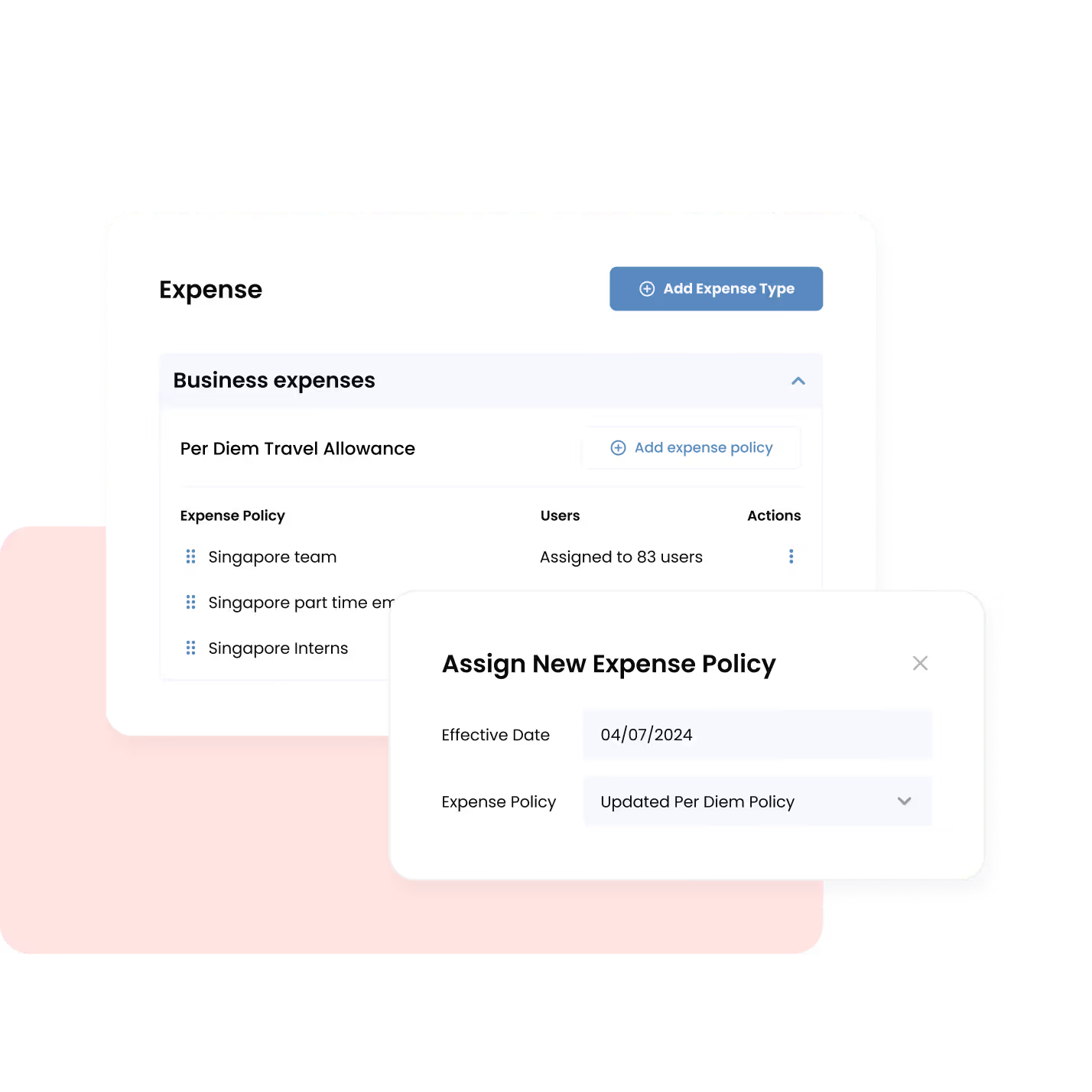
With Omni’s expense management and document tracking, HR teams can easily:
- Customize travel policies to match company and IRAS per diem requirements.
- Automate approvals and reimbursements with workflow automation, minimizing manual follow-ups.
- Store supporting documents and receipts in a centralized document management system with expiry tracking and multi-role access controls.
- Generate instant reports to support audits or justify rates when engaging with IRAS.
Built for scalability and consistent employee experience, Omni goes beyond compliance. With an easy-to-use interface, mobile app, and multi-country support, HR teams can effectively manage the regional workforce all in one place. Our award-winning support works based on your time zone, ensuring timely compliance guidance and assistance whenever and wherever you need it.

Book a demo today and learn how you can bring transparency, compliance, and efficiency to your travel allowance management with Omni.



.avif)
.avif)