APAC Compliance Guide for BPO HR Teams

13
min Read
13
min Read
Save this article for future use
Download PDF

Summary. Navigating BPO compliance across the Asia-Pacific (APAC) region requires a comprehensive and nuanced approach due to the region’s diverse and constantly evolving regulatory landscape. Key compliance areas include employment contracts, data privacy, labor laws, cross-border considerations, employee rights and benefits, and taxation and compensation. BPO HR teams must carefully manage varying requirements across jurisdictions, addressing challenges such as differing data protection laws, termination procedures, payroll obligations, and statutory benefits. Critical strategies for maintaining compliance involve establishing clear frameworks, implementing robust monitoring systems, conducting regular audits, and providing ongoing staff training. Organizations must leverage technology such as Omni HR, maintain detailed documentation, and collaborate closely with legal teams to effectively manage BPO compliance across all markets.

Accounting for almost half of global GDP, the Asia-Pacific (APAC) region remains one of the most attractive markets for global expansion. But for Business Process Outsourcing (BPO) HR teams managing multi-country client accounts and high-volume workforces, operating across the region presents significant compliance risks.

Handling employment contracts, payroll, benefits, and employee data across multiple APAC jurisdictions is complex. Each country enforces its own labor laws regarding statutory contributions, taxation, termination procedures, and data privacy. A misstep in one market can result in financial penalties, reputational damage, and even disrupt client operations.

From established economies like Singapore to fast-growing markets such as Indonesia and Vietnam, regulatory requirements vary widely and change frequently. For BPO organizations operating across several APAC markets, maintaining consistency while adapting to local regulations is a delicate balancing act.

In this guide, we’ll break down the core BPO compliance areas HR teams must prioritize across APAC with actionable insights to help you manage risks and operate confidently across borders.

Key BPO HR Compliance Areas

Staying compliant with APAC’s diverse labor laws requires careful consideration from BPO HR teams on these key areas:

1. Employment contracts and HR policies

Drafting compliant contracts 

Each APAC country has specific rules governing the drafting of employment contracts, and BPO HR teams must ensure that contract clauses comply with each jurisdiction’s regulations. Singapore’s Employment Act outlines requirements for working hours, employment terms, annual leave, and termination conditions, while Malaysia’s Employment Act 1955 provides similar provisions. In Indonesia, the Manpower Law (No. 13 of 2003) primarily governs employment relationships. 

As these rules vary by jurisdiction, BPO HR teams must carefully tailor employment contracts to local laws while meeting client expectations and avoiding regulatory penalties.

Standardization vs. customisation

For BPO compliance in APAC markets, balancing standardization and customization is essential. Standardization helps create consistent templates, policies, and frameworks across delivery centers, improving efficiency and reducing complexity. However, customisation is still vital, as employment terms such as probation periods, termination notice, statutory benefits, working hours, and leave entitlements vary widely by country. 

For example, termination and severance pay clauses in Thailand must align with the Labor Protection Act. The key to creating a balance is to standardize core principles such as ethics, data protection, and performance management while customizing legally sensitive clauses to meet each jurisdiction’s statutory requirements.

2. Data privacy 

Data privacy is a growing concern across APAC. Weak compliance practices expose companies to cybersecurity threats, such as fraudulent transactions, data breaches, and ransomware. PT security reports that in 2024, the most frequently targeted Asian countries were Thailand (27%), Vietnam (21%), and Singapore (20%).

As governments strengthen data protection laws, BPO HR teams must navigate a complex and evolving regulatory environment while considering:

Cross-border data transfer

While frameworks such as the European Union’s General Data Protection Regulation (GDPR) provide a general standard for safeguarding data, APAC countries each have their own data protection rules. For example, Singapore's Personal Data Protection Act (PDPA), China's Personal Information Protection Law (PIPL), and Indonesia's Personal Data Protection Law (UU PDP). Each country sets specific rules governing how personal data can be collected, processed, and transferred across borders, and HR teams must adhere to these rules to ensure BPO compliance.

Employee data management

BPOs operating across multiple APAC markets must implement robust safeguards when managing employee and client information. This includes setting encryption protocols, access controls, and secure HR information systems that align with both international standards and local laws. HR teams should also closely monitor where data is collected, stored, and processed to ensure BPO compliance with country-specific privacy regulations and contractual obligations with clients.

Best practices

  • Restrict access to sensitive employee and client data through role-based access controls so only authorized staff can view or modify information.
  • Use encrypted, centralized HR systems to manage data securely, reduce manual errors, and maintain BPO compliance across multiple jurisdictions.
  • Conduct regular data security audits in line with the Cyber Security Agency of Singapore (CSA) or similar national regulators.
  • Obtain explicit employee consent for data processing, where required by law, such as under Singapore’s PDPA and China’s PIPL.
bpo compliance

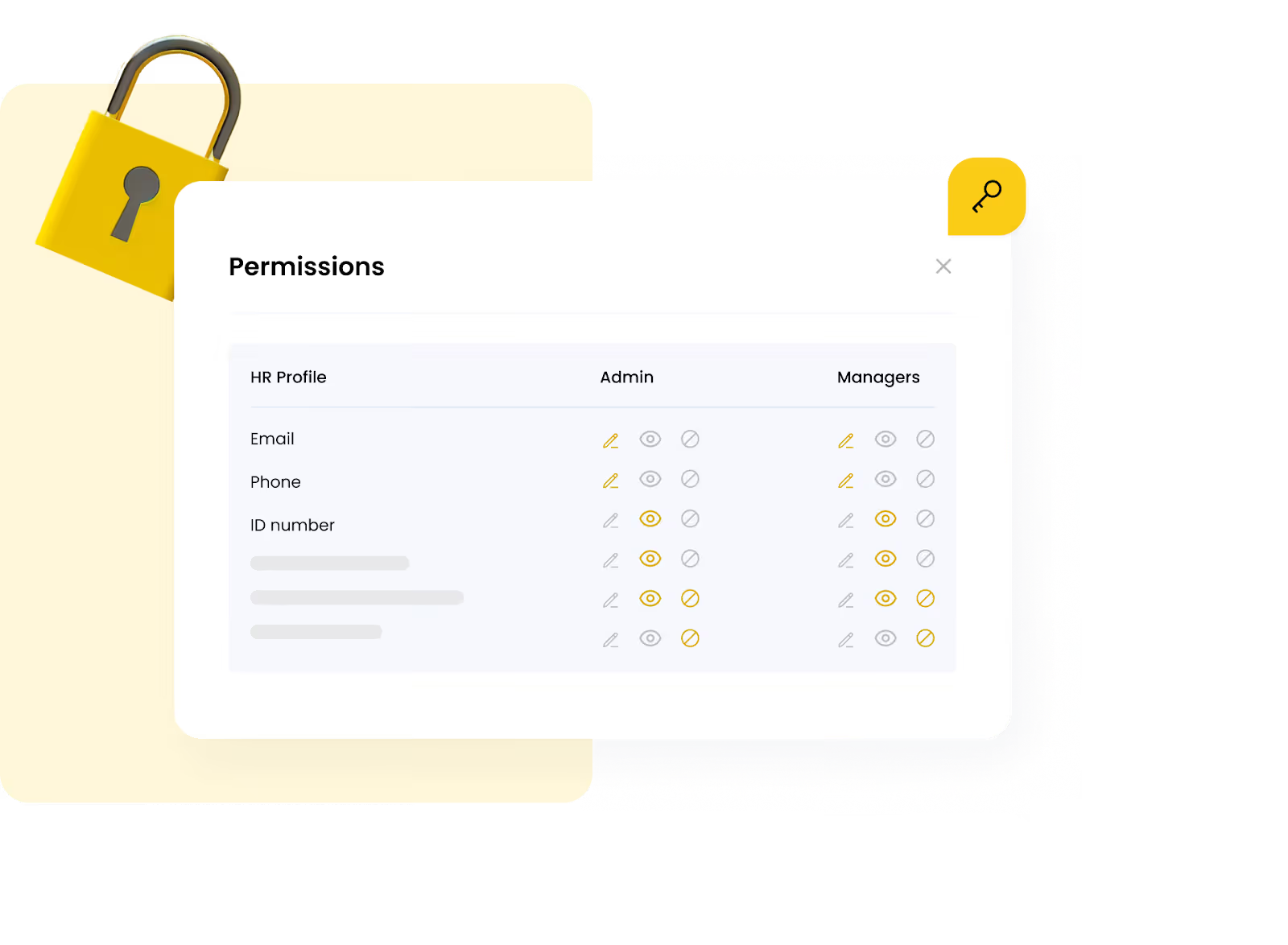
Omni HR’s bank-grade AES-256 encryption and ISO 27001-certified data centers help BPO HR teams meet data privacy requirements across multiple APAC jurisdictions. Additionally, our role-based access control allows you to restrict who can see what, ensuring confidentiality.

3. Labor laws

Dispute resolution

Understanding labor dispute mechanisms is essential for BPO compliance across APAC. Each country follows its own legal process for resolving workplace conflicts. For example, Vietnam’s Labor Code outlines dispute settlement procedures, while in Japan, labor tribunals or courts typically resolve workplace disputes. In the Philippines, the National Labor Relations Commission (NLRC) is responsible for resolving labor disputes.

Mediation and arbitration

Alternative conflict resolution methods also vary across the region. Countries such as Malaysia and Thailand commonly rely on mediation to resolve workplace disputes, while Hong Kong prioritizes arbitration. Ensure your HR team understands the preferred approach in the APAC country where you operate to ensure BPO compliance and handle disputes effectively.

Conflict prevention tips

  • Set clear expectations, ensure fair workload distribution, and enforce transparent performance management processes.
  • Establish clear grievance procedures and promote open communication, while considering cultural nuances.
  • Train managers in conflict de-escalation and monitor complaint patterns to identify grievances early, before they escalate into disputes.

4. Cross-border compliance

International tax regulations

Assess whether your business activities create a taxable presence in another APAC country. Also, understand double taxation treaties and cross-border tax implications of compensation structures, such as bonuses or employee stock options. Misalignment with local tax regulations can trigger audits, back taxes, steep fines, and reputational risk for your organization.

Work visa requirements

Countries like Japan, South Korea, and Australia have complex visa requirements, eligibility criteria, and sponsorship obligations for expatriate employees. Failure to secure the correct work permits and visa renewals on time can result in fines, deportation, or blacklisting of your company from sponsoring foreign workers.

Relevant reading: Singapore Work Permits and Visas: A Global Employer Guide

Data transfer regulations

BPO HR teams must comply with data transfer regulations when moving employee information across borders, such as the PDPA in Singapore and the PIPL in China.

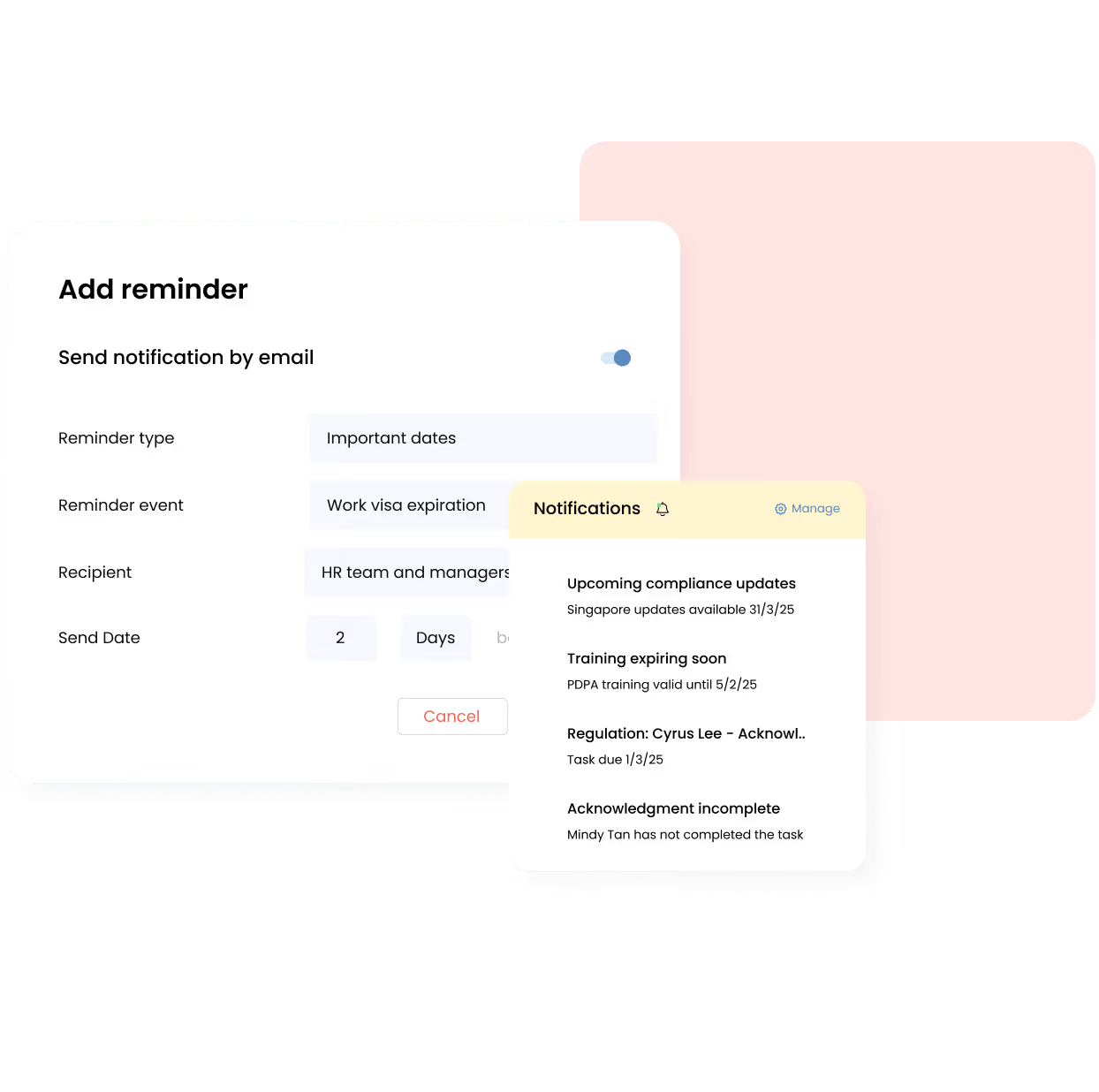
Strong coordination between headquarters and local HR teams is essential to reduce regulatory risk and maintain clear compliance visibility across the region. Centralized HR platforms like Omni HR with automated deadline tracking can help BPO teams stay ahead of visa expirations, tax filing deadlines, and cross-border transfer requirements.
bpo compliance

5. Employee rights and benefits

Compensation structures

Each country in APAC has its own minimum wage rules, overtime regulations, and mandatory leave entitlements. Understanding these requirements is crucial to avoid underpayment, non-compliance penalties, and employee disputes when managing cross-border payroll.

Employee benefits compliance

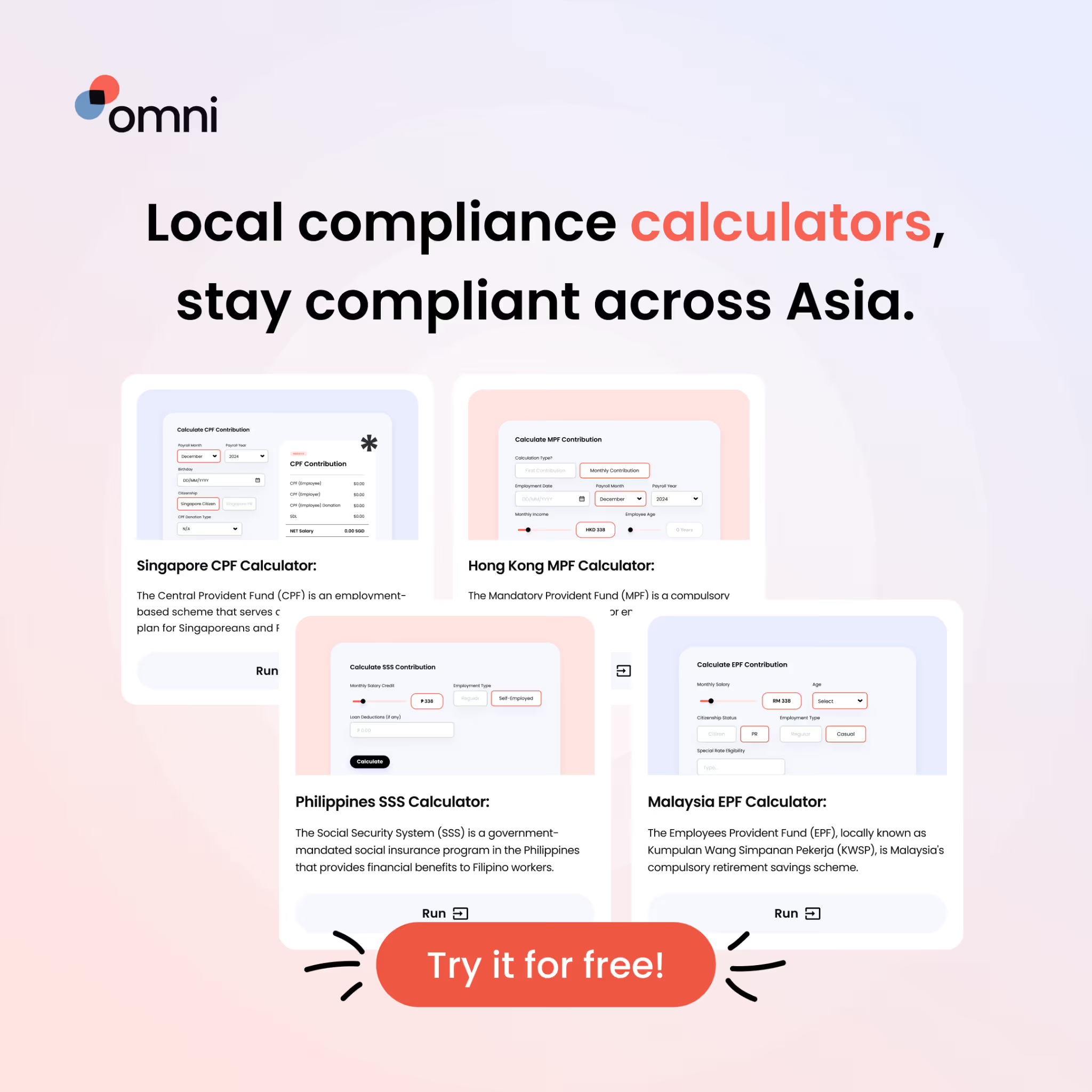
Ensure BPO compliance with mandatory healthcare, pensions, and social security contributions.  Examples include Singapore's Central Provident Fund (CPF), Malaysia’s Employees' Provident Fund (EPF), Hong Kong’s Mandatory Provident Fund (MPF), Thailand’s Provident Fund, and the Philippines’ Social Security System (SSS).
bpo compliance

Also, consider countries such as China, where exemptions may apply to foreign employees from countries with bilateral social security agreements to prevent double contributions.

Anti-discrimination and diversity

Implement workplace policies that comply with anti-discrimination laws, such as Australia's Equal Opportunity Act or Singapore’s Workplace Fairness Act, to promote diversity and inclusion and create a fair work environment. 
Read next: Singapore's Workplace Fairness (Dispute Resolution) Bill Explained

6. Taxation, remuneration, and compensation compliance

In 2024, about 11,000 employers on the IRAS’ Auto-Inclusion Scheme (AIS) missed the filing deadline. To avoid similar cases while operating across the APAC region, consider:

Tax implications

Employee tax obligations vary significantly across APAC. Each country applies different income tax rates, social security contributions, and fringe benefits. The same role may result in different net pay across countries, making it critical for HR teams to carefully plan payroll, budgeting, and compensation packages to ensure BPO compliance.

Payroll compliance

Each country has its own payroll withholding rules, reporting deadlines, and statutory obligations. Ensure your team adheres to each country's guidelines and specific tax laws to avoid audits, penalties, or reputational damage.

Variable pay structures

Variable pay, including performance incentives and shift allowances, is common in BPOs. These components are typically tied to individual, team, or client-based performance metrics and rotating schedules. For BPO HR teams across the APAC region, it’s essential to structure these elements to comply with local labor laws, including overtime rates and minimum wage thresholds.

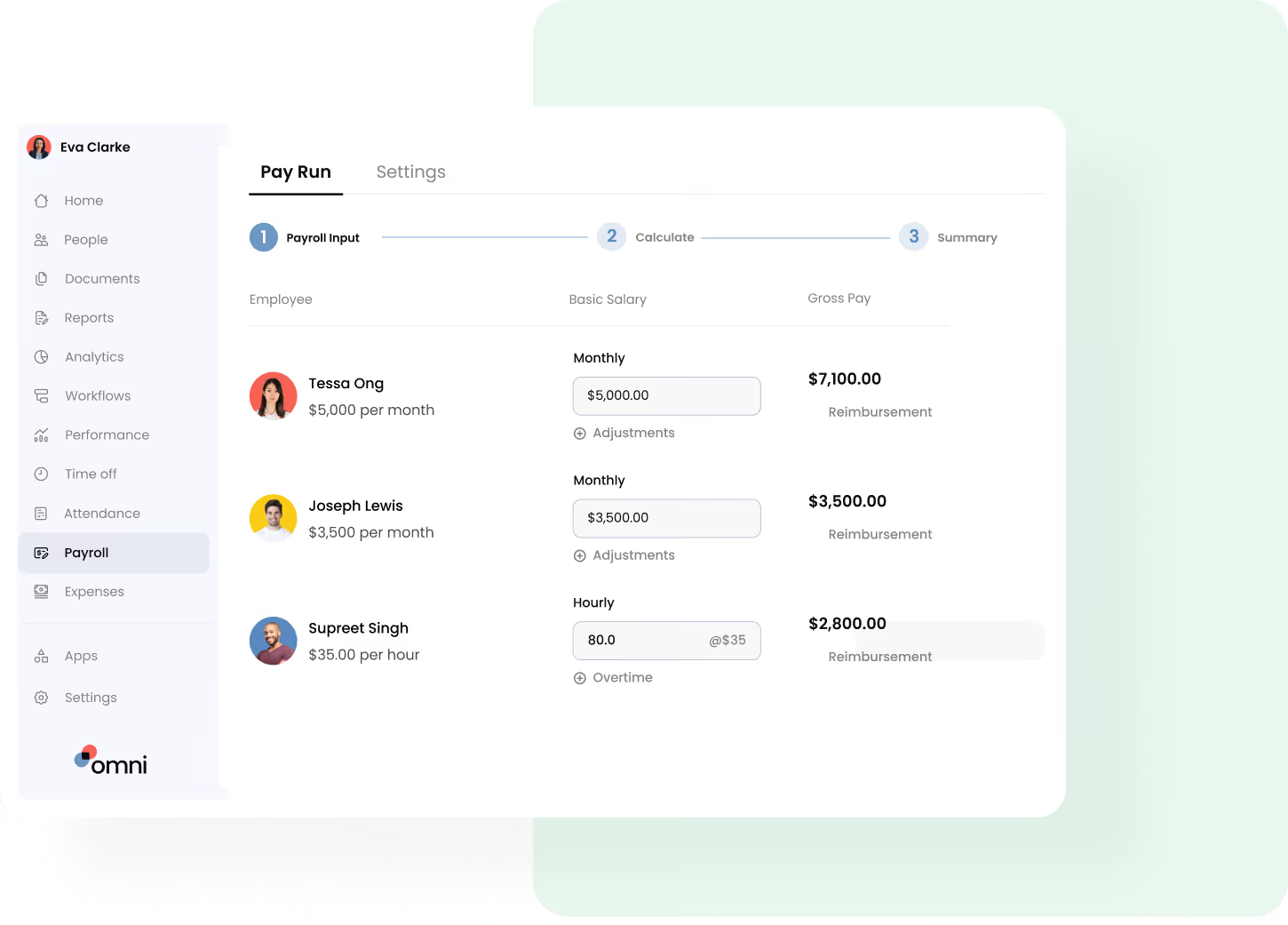
Omni’s automated payroll workflows and compliance reporting capabilities help BPO teams manage multi-country payroll accurately, flagging any discrepancies, tracking statutory deadlines, and maintaining audit-ready documentation across all APAC markets.
bpo compliance


Tips on Monitoring and Reporting BPO HR Compliance

BPO compliance in APAC requires HR teams to adopt a proactive approach to monitoring and reporting. Below, we explore practical strategies to consider:

Establish a clear compliance framework

Develop a comprehensive compliance framework that outlines key areas, such as employment contracts, payroll accuracy, statutory contributions, and data protection. Document all processes and procedures to ensure consistency and ease of execution. Additionally, clearly define roles and responsibilities within the HR department so everyone understands their duties and how to meet BPO compliance requirements.

Implement a robust monitoring system

Adopt a centralized HR Information System (HRIS) with built-in compliance features to automate tracking and reporting of contract renewals, visa expirations, tax filings, and statutory contributions. These tools maintain organized records, monitor HR processes, and identify potential compliance gaps through analytics and reporting.

Complement your HRIS with data loss prevention (DLP) tools to safeguard sensitive employee data against unauthorized access or cyberattacks. Measures include encryption, biometric authentication, firewalls, and role-based access controls. Additionally, implement thorough background checks and screening systems to ensure BPO compliance with local and international data privacy regulations.

Conduct regular audits and assessments

Schedule periodic internal audits to evaluate the effectiveness of your compliance programs and identify areas for improvement. Regular audits help spot discrepancies before they escalate into penalties or legal disputes. Ensure all audits are structured, documented, and aligned with local labor laws and company-wide compliance standards. In addition, hire independent auditors to conduct external reviews to catch details your team may have missed. External audits provide objectivity and credibility to the process.

Maintain accurate and detailed reports

Proper record-keeping of all HR-related activities, including employment contracts, payroll data, and compliance processes, is essential for BPO HR compliance across APAC. Comprehensive and accurate documentation of employment contracts, payroll calculations, and tax withholdings creates a clear compliance trail, particularly valuable during regulatory inspections or client audits. 

To streamline documentation, use a centralized HR tool like Omni’s document management to track and manage all employee data and compliance activities efficiently.

Develop effective reporting mechanisms

Establish clear reporting channels to promptly identify, communicate, and address all BPO compliance risks. This includes reporting payroll discrepancies, policy violations, visa expirations, data breaches, or employee grievances. Use dashboards and visual tools to present compliance data, metrics, and updates clearly to management. This ensures that potential issues are quickly visible and actionable.

Provide ongoing training and education

Regular training helps reduce errors arising from outdated policies or inconsistent practices. Conduct periodic sessions for HR, payroll staff, and employees on relevant BPO compliance topics, and provide access to online resources and training materials. Ensure all training programs are tailored to the organization's specific needs and the regulatory environment.

Ongoing education keeps teams informed about changes in labor laws, payroll regulations, and internal procedures.

Stay informed and adapt

In APAC, where regulations can shift rapidly due to labor reforms, tax updates, or immigration policy changes, regular monitoring is key for BPO compliance. Actively track government announcements and industry updates in each jurisdiction. Additionally, regularly review and update compliance policies, employment contracts, and internal procedures to reflect these regulatory changes and prevent penalties.

Learn more: Stay Ahead with Omni: Key HR Compliance Updates in Asia Q2 2026

BPO HR Compliance Best Practices

BPO compliance isn't just a legal necessity but a core part of building a successful business across APAC. To maintain efficiency and mitigate risk, follow these best practices:

Training HR staff on compliance matters

While not every employee needs to be an expert in every compliance area, foundational knowledge is essential. Use digital platforms to deliver interactive training sessions on compliance topics, incorporating role‑plays, quizzes, and real-life scenarios. Interactive methods make BPO compliance concepts memorable, strengthen understanding, and ensure HR staff are actively engaged in the learning process.

Encouraging a culture of compliance

Compliance is an ongoing process that requires continuous attention. Maintain employee awareness by clearly and consistently communicating internal policies and regulatory changes. Also, reinforce learning through newsletters, webinars, or a dedicated HR compliance portal. 

Combining formal training with regular updates promotes a culture of compliance and continuous learning.

Partnering with legal and compliance teams to reduce risk

Managing BPO compliance across APAC involves complex, multi-layered labor laws that your internal HR team may not be fully equipped to handle. In such cases, partner with external legal and compliance experts who have in-depth knowledge of regional nuances. These specialists can help identify regulatory risks, interpret local labor laws, and spot potential compliance gaps more effectively than internal teams alone.

Optimize HR processes

Leverage HR technology to automate compliance-related tasks, such as payroll calculations, background checks, data management, and reporting. Automation reduces the risk of human error and ensures accuracy and consistency across high-volume operations.

Ensure all HR policies and procedures are properly documented, accessible to all employees, and incorporated into new hire orientations. This helps employees understand their rights and responsibilities and provides clear channels for reporting noncompliance.

Finally, regularly review and optimize HR processes to identify areas for improvement, adapt to regulatory changes, and maintain ongoing BPO compliance across all APAC operations.

Leverage Omni for BPO HR Compliance

With all the complexities of BPO HR compliance, where regulatory requirements span multiple client accounts and APAC jurisdictions and are constantly evolving, Omni stands out as the comprehensive HRIS solution designed for the unique challenges faced by BPO organizations. With bank-grade AES-256 encryption, ISO 27001-certified data centers, and end-to-end encryption, our platform provides a robust security infrastructure essential for protecting sensitive employee and client data at scale. 

Why modern BPO HR teams choose Omni

Omni’s automated workflows and centralized document management system help BPO HR teams maintain compliance across multiple regulatory frameworks, from Singapore’s Employment Act to Australia’s Fair Work Act. Through features like automated compliance reporting, customizable access controls, and consent management capabilities, Omni transforms complex BPO compliance requirements into manageable, streamlined processes. 

For BPO organizations looking to scale while maintaining regulatory compliance across high-volume, multi-country operations, Omni offers more than just an HRIS platform; we provide a strategic partnership that supports your growth while safeguarding your organization and your clients against compliance risks. As testified by our customers across the region, Omni’s customizable platform adapts to your unique operational needs while ensuring consistent HR compliance standards across all markets. 

bpo compliance

Accounting for almost half of global GDP, the Asia-Pacific (APAC) region remains one of the most attractive markets for global expansion. But for Business Process Outsourcing (BPO) HR teams managing multi-country client accounts and high-volume workforces, operating across the region presents significant compliance risks.

Handling employment contracts, payroll, benefits, and employee data across multiple APAC jurisdictions is complex. Each country enforces its own labor laws regarding statutory contributions, taxation, termination procedures, and data privacy. A misstep in one market can result in financial penalties, reputational damage, and even disrupt client operations.

From established economies like Singapore to fast-growing markets such as Indonesia and Vietnam, regulatory requirements vary widely and change frequently. For BPO organizations operating across several APAC markets, maintaining consistency while adapting to local regulations is a delicate balancing act.

In this guide, we’ll break down the core BPO compliance areas HR teams must prioritize across APAC with actionable insights to help you manage risks and operate confidently across borders.

Key BPO HR Compliance Areas

Staying compliant with APAC’s diverse labor laws requires careful consideration from BPO HR teams on these key areas:

1. Employment contracts and HR policies

Drafting compliant contracts 

Each APAC country has specific rules governing the drafting of employment contracts, and BPO HR teams must ensure that contract clauses comply with each jurisdiction’s regulations. Singapore’s Employment Act outlines requirements for working hours, employment terms, annual leave, and termination conditions, while Malaysia’s Employment Act 1955 provides similar provisions. In Indonesia, the Manpower Law (No. 13 of 2003) primarily governs employment relationships. 

As these rules vary by jurisdiction, BPO HR teams must carefully tailor employment contracts to local laws while meeting client expectations and avoiding regulatory penalties.

Standardization vs. customisation

For BPO compliance in APAC markets, balancing standardization and customization is essential. Standardization helps create consistent templates, policies, and frameworks across delivery centers, improving efficiency and reducing complexity. However, customisation is still vital, as employment terms such as probation periods, termination notice, statutory benefits, working hours, and leave entitlements vary widely by country. 

For example, termination and severance pay clauses in Thailand must align with the Labor Protection Act. The key to creating a balance is to standardize core principles such as ethics, data protection, and performance management while customizing legally sensitive clauses to meet each jurisdiction’s statutory requirements.

2. Data privacy 

Data privacy is a growing concern across APAC. Weak compliance practices expose companies to cybersecurity threats, such as fraudulent transactions, data breaches, and ransomware. PT security reports that in 2024, the most frequently targeted Asian countries were Thailand (27%), Vietnam (21%), and Singapore (20%).

As governments strengthen data protection laws, BPO HR teams must navigate a complex and evolving regulatory environment while considering:

Cross-border data transfer

While frameworks such as the European Union’s General Data Protection Regulation (GDPR) provide a general standard for safeguarding data, APAC countries each have their own data protection rules. For example, Singapore's Personal Data Protection Act (PDPA), China's Personal Information Protection Law (PIPL), and Indonesia's Personal Data Protection Law (UU PDP). Each country sets specific rules governing how personal data can be collected, processed, and transferred across borders, and HR teams must adhere to these rules to ensure BPO compliance.

Employee data management

BPOs operating across multiple APAC markets must implement robust safeguards when managing employee and client information. This includes setting encryption protocols, access controls, and secure HR information systems that align with both international standards and local laws. HR teams should also closely monitor where data is collected, stored, and processed to ensure BPO compliance with country-specific privacy regulations and contractual obligations with clients.

Best practices

  • Restrict access to sensitive employee and client data through role-based access controls so only authorized staff can view or modify information.
  • Use encrypted, centralized HR systems to manage data securely, reduce manual errors, and maintain BPO compliance across multiple jurisdictions.
  • Conduct regular data security audits in line with the Cyber Security Agency of Singapore (CSA) or similar national regulators.
  • Obtain explicit employee consent for data processing, where required by law, such as under Singapore’s PDPA and China’s PIPL.
bpo compliance

Omni HR’s bank-grade AES-256 encryption and ISO 27001-certified data centers help BPO HR teams meet data privacy requirements across multiple APAC jurisdictions. Additionally, our role-based access control allows you to restrict who can see what, ensuring confidentiality.

3. Labor laws

Dispute resolution

Understanding labor dispute mechanisms is essential for BPO compliance across APAC. Each country follows its own legal process for resolving workplace conflicts. For example, Vietnam’s Labor Code outlines dispute settlement procedures, while in Japan, labor tribunals or courts typically resolve workplace disputes. In the Philippines, the National Labor Relations Commission (NLRC) is responsible for resolving labor disputes.

Mediation and arbitration

Alternative conflict resolution methods also vary across the region. Countries such as Malaysia and Thailand commonly rely on mediation to resolve workplace disputes, while Hong Kong prioritizes arbitration. Ensure your HR team understands the preferred approach in the APAC country where you operate to ensure BPO compliance and handle disputes effectively.

Conflict prevention tips

  • Set clear expectations, ensure fair workload distribution, and enforce transparent performance management processes.
  • Establish clear grievance procedures and promote open communication, while considering cultural nuances.
  • Train managers in conflict de-escalation and monitor complaint patterns to identify grievances early, before they escalate into disputes.

4. Cross-border compliance

International tax regulations

Assess whether your business activities create a taxable presence in another APAC country. Also, understand double taxation treaties and cross-border tax implications of compensation structures, such as bonuses or employee stock options. Misalignment with local tax regulations can trigger audits, back taxes, steep fines, and reputational risk for your organization.

Work visa requirements

Countries like Japan, South Korea, and Australia have complex visa requirements, eligibility criteria, and sponsorship obligations for expatriate employees. Failure to secure the correct work permits and visa renewals on time can result in fines, deportation, or blacklisting of your company from sponsoring foreign workers.

Relevant reading: Singapore Work Permits and Visas: A Global Employer Guide

Data transfer regulations

BPO HR teams must comply with data transfer regulations when moving employee information across borders, such as the PDPA in Singapore and the PIPL in China.

Strong coordination between headquarters and local HR teams is essential to reduce regulatory risk and maintain clear compliance visibility across the region. Centralized HR platforms like Omni HR with automated deadline tracking can help BPO teams stay ahead of visa expirations, tax filing deadlines, and cross-border transfer requirements.

bpo compliance

5. Employee rights and benefits

Compensation structures

Each country in APAC has its own minimum wage rules, overtime regulations, and mandatory leave entitlements. Understanding these requirements is crucial to avoid underpayment, non-compliance penalties, and employee disputes when managing cross-border payroll.

Employee benefits compliance

Ensure BPO compliance with mandatory healthcare, pensions, and social security contributions.  Examples include Singapore's Central Provident Fund (CPF), Malaysia’s Employees' Provident Fund (EPF), Hong Kong’s Mandatory Provident Fund (MPF), Thailand’s Provident Fund, and the Philippines’ Social Security System (SSS).

bpo compliance

Also, consider countries such as China, where exemptions may apply to foreign employees from countries with bilateral social security agreements to prevent double contributions.

Anti-discrimination and diversity

Implement workplace policies that comply with anti-discrimination laws, such as Australia's Equal Opportunity Act or Singapore’s Workplace Fairness Act, to promote diversity and inclusion and create a fair work environment. 
Read next: Singapore's Workplace Fairness (Dispute Resolution) Bill Explained

6. Taxation, remuneration, and compensation compliance

In 2024, about 11,000 employers on the IRAS’ Auto-Inclusion Scheme (AIS) missed the filing deadline. To avoid similar cases while operating across the APAC region, consider:

Tax implications

Employee tax obligations vary significantly across APAC. Each country applies different income tax rates, social security contributions, and fringe benefits. The same role may result in different net pay across countries, making it critical for HR teams to carefully plan payroll, budgeting, and compensation packages to ensure BPO compliance.

Payroll compliance

Each country has its own payroll withholding rules, reporting deadlines, and statutory obligations. Ensure your team adheres to each country's guidelines and specific tax laws to avoid audits, penalties, or reputational damage.

Variable pay structures

Variable pay, including performance incentives and shift allowances, is common in BPOs. These components are typically tied to individual, team, or client-based performance metrics and rotating schedules. For BPO HR teams across the APAC region, it’s essential to structure these elements to comply with local labor laws, including overtime rates and minimum wage thresholds.

Omni’s automated payroll workflows and compliance reporting capabilities help BPO teams manage multi-country payroll accurately, flagging any discrepancies, tracking statutory deadlines, and maintaining audit-ready documentation across all APAC markets.

bpo compliance


Tips on Monitoring and Reporting BPO HR Compliance

BPO compliance in APAC requires HR teams to adopt a proactive approach to monitoring and reporting. Below, we explore practical strategies to consider:

Establish a clear compliance framework

Develop a comprehensive compliance framework that outlines key areas, such as employment contracts, payroll accuracy, statutory contributions, and data protection. Document all processes and procedures to ensure consistency and ease of execution. Additionally, clearly define roles and responsibilities within the HR department so everyone understands their duties and how to meet BPO compliance requirements.

Implement a robust monitoring system

Adopt a centralized HR Information System (HRIS) with built-in compliance features to automate tracking and reporting of contract renewals, visa expirations, tax filings, and statutory contributions. These tools maintain organized records, monitor HR processes, and identify potential compliance gaps through analytics and reporting.

Complement your HRIS with data loss prevention (DLP) tools to safeguard sensitive employee data against unauthorized access or cyberattacks. Measures include encryption, biometric authentication, firewalls, and role-based access controls. Additionally, implement thorough background checks and screening systems to ensure BPO compliance with local and international data privacy regulations.

Conduct regular audits and assessments

Schedule periodic internal audits to evaluate the effectiveness of your compliance programs and identify areas for improvement. Regular audits help spot discrepancies before they escalate into penalties or legal disputes. Ensure all audits are structured, documented, and aligned with local labor laws and company-wide compliance standards. In addition, hire independent auditors to conduct external reviews to catch details your team may have missed. External audits provide objectivity and credibility to the process.

Maintain accurate and detailed reports

Proper record-keeping of all HR-related activities, including employment contracts, payroll data, and compliance processes, is essential for BPO HR compliance across APAC. Comprehensive and accurate documentation of employment contracts, payroll calculations, and tax withholdings creates a clear compliance trail, particularly valuable during regulatory inspections or client audits. 

To streamline documentation, use a centralized HR tool like Omni’s document management to track and manage all employee data and compliance activities efficiently.

Develop effective reporting mechanisms

Establish clear reporting channels to promptly identify, communicate, and address all BPO compliance risks. This includes reporting payroll discrepancies, policy violations, visa expirations, data breaches, or employee grievances. Use dashboards and visual tools to present compliance data, metrics, and updates clearly to management. This ensures that potential issues are quickly visible and actionable.

Provide ongoing training and education

Regular training helps reduce errors arising from outdated policies or inconsistent practices. Conduct periodic sessions for HR, payroll staff, and employees on relevant BPO compliance topics, and provide access to online resources and training materials. Ensure all training programs are tailored to the organization's specific needs and the regulatory environment.

Ongoing education keeps teams informed about changes in labor laws, payroll regulations, and internal procedures.

Stay informed and adapt

In APAC, where regulations can shift rapidly due to labor reforms, tax updates, or immigration policy changes, regular monitoring is key for BPO compliance. Actively track government announcements and industry updates in each jurisdiction. Additionally, regularly review and update compliance policies, employment contracts, and internal procedures to reflect these regulatory changes and prevent penalties.

Learn more: Stay Ahead with Omni: Key HR Compliance Updates in Asia Q2 2026

BPO HR Compliance Best Practices

BPO compliance isn't just a legal necessity but a core part of building a successful business across APAC. To maintain efficiency and mitigate risk, follow these best practices:

Training HR staff on compliance matters

While not every employee needs to be an expert in every compliance area, foundational knowledge is essential. Use digital platforms to deliver interactive training sessions on compliance topics, incorporating role‑plays, quizzes, and real-life scenarios. Interactive methods make BPO compliance concepts memorable, strengthen understanding, and ensure HR staff are actively engaged in the learning process.

Encouraging a culture of compliance

Compliance is an ongoing process that requires continuous attention. Maintain employee awareness by clearly and consistently communicating internal policies and regulatory changes. Also, reinforce learning through newsletters, webinars, or a dedicated HR compliance portal. 

Combining formal training with regular updates promotes a culture of compliance and continuous learning.

Partnering with legal and compliance teams to reduce risk

Managing BPO compliance across APAC involves complex, multi-layered labor laws that your internal HR team may not be fully equipped to handle. In such cases, partner with external legal and compliance experts who have in-depth knowledge of regional nuances. These specialists can help identify regulatory risks, interpret local labor laws, and spot potential compliance gaps more effectively than internal teams alone.

Optimize HR processes

Leverage HR technology to automate compliance-related tasks, such as payroll calculations, background checks, data management, and reporting. Automation reduces the risk of human error and ensures accuracy and consistency across high-volume operations.

Ensure all HR policies and procedures are properly documented, accessible to all employees, and incorporated into new hire orientations. This helps employees understand their rights and responsibilities and provides clear channels for reporting noncompliance.

Finally, regularly review and optimize HR processes to identify areas for improvement, adapt to regulatory changes, and maintain ongoing BPO compliance across all APAC operations.

Leverage Omni for BPO HR Compliance

With all the complexities of BPO HR compliance, where regulatory requirements span multiple client accounts and APAC jurisdictions and are constantly evolving, Omni stands out as the comprehensive HRIS solution designed for the unique challenges faced by BPO organizations. With bank-grade AES-256 encryption, ISO 27001-certified data centers, and end-to-end encryption, our platform provides a robust security infrastructure essential for protecting sensitive employee and client data at scale. 

Why modern BPO HR teams choose Omni

Omni’s automated workflows and centralized document management system help BPO HR teams maintain compliance across multiple regulatory frameworks, from Singapore’s Employment Act to Australia’s Fair Work Act. Through features like automated compliance reporting, customizable access controls, and consent management capabilities, Omni transforms complex BPO compliance requirements into manageable, streamlined processes. 

For BPO organizations looking to scale while maintaining regulatory compliance across high-volume, multi-country operations, Omni offers more than just an HRIS platform; we provide a strategic partnership that supports your growth while safeguarding your organization and your clients against compliance risks. As testified by our customers across the region, Omni’s customizable platform adapts to your unique operational needs while ensuring consistent HR compliance standards across all markets. 

bpo compliance
No items found.
No items found.
Which countries do you support?

Full HR & Payroll coverage for Philippines, Singapore, Malaysia, Hong Kong, and Indonesia. Each market has local support teams and built-in compliance features.

How does pricing work as we scale?

Starting at $3/employee/month for core features. Volume-based discounts are available for growing teams. Book a demo for custom pricing.

How do you handle security?

Enterprise-grade security with ISO 27001, GDPR certifications, and local data residency options.

How long is implementation?

4 weeks average. Includes free data migration, setup, and team training. No hidden fees.

What makes Omni different from global HR platforms?

Built specifically for Asia with local payroll processing, same-day support in Asia time zones, and 40% lower cost than global alternatives.