





















.png)
Summary. Fintech companies hiring internationally need employer of record (EOR) providers that meet a stricter security bar, including SOC 2 Type II and ISO 27001 certification, not just payroll compliance. Six providers, Omni HR, Deel, Remote, Rippling, Oyster, and Pebl, are scored on security certifications, compliance depth, hiring flexibility, and pricing from US$249 to US$699 monthly. Fintech buyers must verify an EOR's security credentials before signing, since a cheaper provider lacking SOC 2 or ISO 27001 can fail vendor-risk review regardless of cost. Omni HR holds SOC 2 and ISO 27001 certification, operates owned entities across Singapore, Malaysia, the Philippines, Indonesia, and Hong Kong, and automates statutory contributions like Central Provident Fund (CPF) with audit-ready reporting.
Why EOR Selection is Different for FinTech Companies
Choosing fintech EOR services isn't the same exercise as choosing an employer of record for a typical services or tech company expansion. Fintech hiring carries three pressures most generalist EOR comparisons don't account for:
Security due diligence before headcount. Fintechs are frequently required by their own regulators, banking partners, or enterprise customers to vet the security posture of every vendor that touches employee or operational data. An EOR that can't produce a SOC 2 Type II report or ISO 27001 certification often fails procurement before pricing is even discussed.
Read more: How HRIS Supports Compliance and Risk Management for FinTechs
Specialized, senior hires over bulk volume. Fintech EOR use cases tend to be compliance officers, risk analysts, and senior engineers hired one or two at a time in a new market, not 50-person delivery teams. Contract flexibility for deferred compensation, non-competes, and role-specific clauses matters more than bulk-onboarding speed.
Regulator-adjacent employment nuance. A large share of fintech hiring sits in markets with their own financial regulators such as the Monetary Authority of Singapore, Bank Negara Malaysia, the Bangko Sentral ng Pilipinas and the Hong Kong Monetary Authority, where local employment law intersects with sector-specific expectations around confidentiality, licensing-adjacent roles, and data handling.
With that in mind, we evaluated leading EOR providers against the criteria below, specifically for how they hold up against fintech's security and compliance bar rather than generic international hiring.
Note: Omni HR is included in this list — we built this comparison, and we hold ourselves to the same criteria as every other provider on it.
Five Criteria for Evaluating FinTech EOR Services
Comparison Table: FinTech EOR services
*Pricing reflects published rates as of July 2026. EOR pricing can vary by country and headcount - confirm directly with each provider before budgeting.
The Best FinTech EOR Services in 2026
Omni HR
Best for: Fintechs with hiring concentrated in APAC
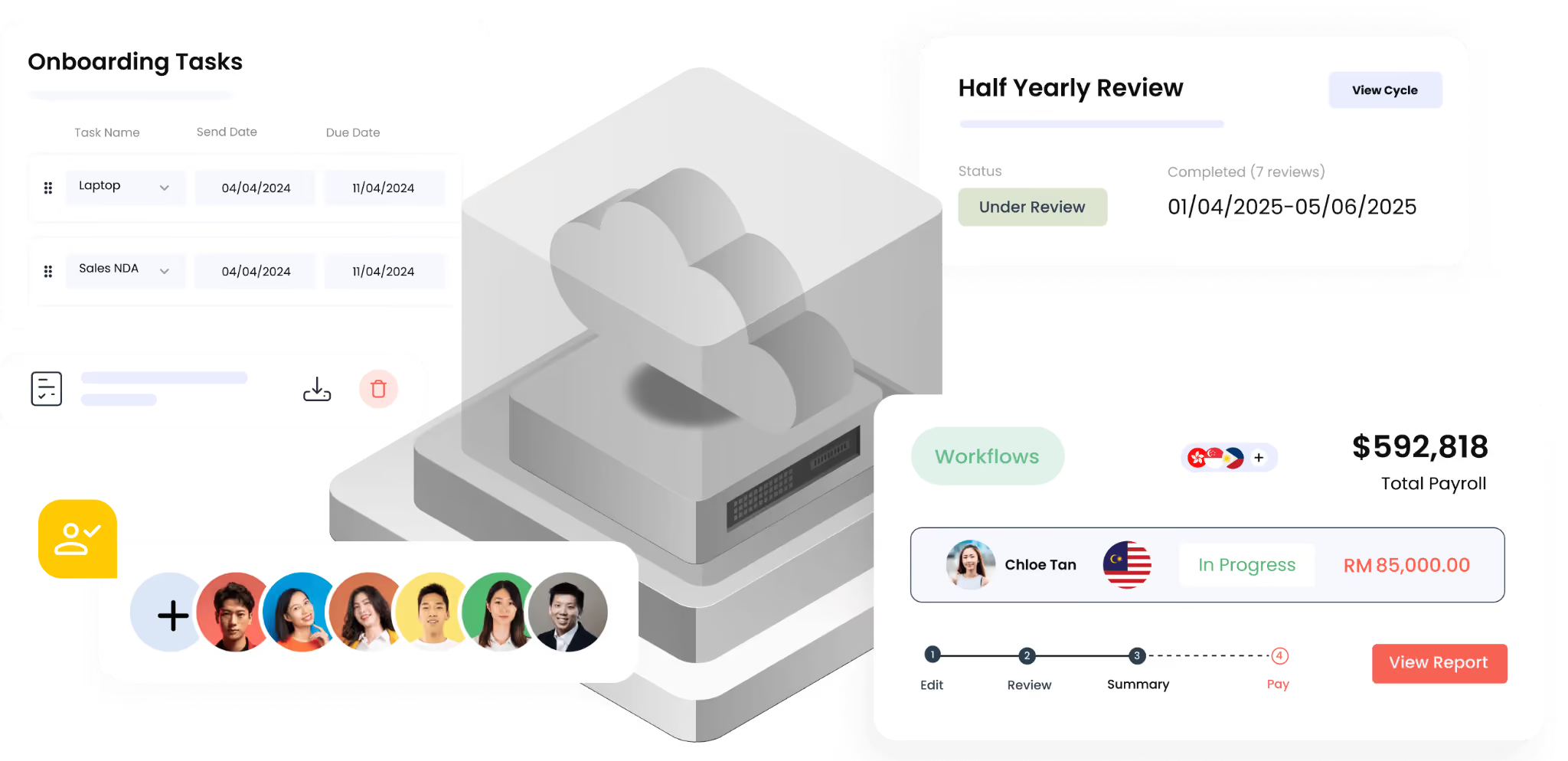
Omni HR works with regulated financial and payments companies in the region, including Reap, Endowus, Ajaib, and Qashier, giving us direct, hands-on experience with the compliance expectations fintech HR teams carry into vendor selection.
- Entity model: Owned entities across core APAC markets, with expanding regional coverage
- Compliance depth: Localized payroll and statutory compliance, including CPF, EPF, SOCSO, SSS, PhilHealth, and Pag-IBIG, plus audit-ready reporting built for compliance reviews
- Security posture: SOC 2 certified, ISO 27001 certified, GDPR compliant, and AES-encrypted data
- Platform fit: HRIS-first approach that keeps EOR employees in the same system as payroll, attendance, and performance data, useful for fintechs that need a single audit trail rather than data spread across vendors
- Pricing: From US$249 per employee/month
- Watch out: Regional focus means fintechs hiring extensively outside APAC will need a provider with broader global coverage alongside.
Deel
Best for: Fintechs scaling across many countries on a single platform
- Entity model: Extensive owned-entity network supplemented by local partners where required
- Coverage: 150+ countries
- Security posture: SOC 1, SOC 2, SOC 3, ISO 27001 certified, GDPR compliant, AES-256 encryption at rest
- Strength: Mature global compliance infrastructure with fast onboarding and broad international hiring capabilities
- Pricing: From US$599 per employee/month
- Watch out: The employment model varies by country, so fintech compliance and legal teams should confirm whether Deel uses its own entity or a local partner in each hiring location before signing.
Remote
Best for: Fintechs prioritizing a single, consistent employment model over the broadest possible country coverage
- Entity model: 100% owned legal entities across its supported countries
- Security posture: SOC 2 Type II, ISO 27001 certified, GDPR compliant, with published enterprise security documentation
- Strength: A consistent owned-entity model can simplify compliance reviews by reducing reliance on third-party employment partners
- Pricing: From US$599 per employee/month
- Watch out: Remote's country coverage is smaller than providers that combine owned entities with partner networks. If you're planning to hire across a wide range of countries, confirm coverage before committing.
Rippling
Best for: Fintechs that want EOR bundled with HR, payroll, IT, and device management in one platform
- Platform fit: Unified platform connecting HR, payroll, identity management, software provisioning, and device management—ideal for fintechs where HR and IT work closely on employee onboarding and access control
- Entity model: Hybrid model using local partners for EOR services
- Security posture: SOC 2, ISO 27001, and CSA STAR Level 2 certified
- Pricing: Custom pricing
- Watch out: Understand which services Rippling delivers directly versus through local partners, as support processes and compliance responsibilities may differ by country.
Oyster
Best for: Fintechs that value transparent pricing and compliance-focused global hiring
- Entity model: Combination of owned entities and trusted local partners across 120+ countries
- Security posture: Published security documentation, GDPR compliant, with optional Oyster Shell contractor misclassification protection
- Strength: Transparent published pricing with no onboarding fees, plus optional compliance protection for contractor classification
- Pricing: From US$699 per employee/month
- Watch out: Oyster's published pricing sits at the premium end of the market, although it includes compliance-focused services that some providers offer as optional add-ons.
Pebl (formerly Velocity Global)
Best for: Enterprises managing complex global hiring with legal and compliance support
- Entity model: 65 owned entities supported by a global partner network covering 185+ countries
- Security posture: Enterprise compliance program supported by a strategic legal partnership with Baker McKenzie
- Strength: Strong compliance expertise for organizations navigating complex international employment and regulatory requirements
- Pricing: From US$399 per employee/month
- Watch out: While Pebl has broad global coverage, organizations should confirm whether hiring in each country is supported through an owned entity or a local partner, as the employment model varies by market.
What is an EOR for fintech companies?
An employer of record (EOR) for fintech companies is a third-party organization that becomes the legal employer of a fintech's staff in a country where the fintech has no registered entity — sometimes described as fintech EOR services or employer of record fintech arrangements.
The EOR:
- Issues compliant employment contracts
- Runs local payroll and statutory contributions
- Manages termination under local labor law
- Carries the legal employer liability for that jurisdiction
The fintech, meanwhile, retains full control over the employee's day-to-day work, reporting lines, and performance management. This is a distinct question from whether the fintech itself is licensed to operate — an EOR employs staff, it does not license or regulate the fintech's core financial business.
EOR Compliance FinTech: What “Compliant” Actually Means For Regulated FinTechs
1. Employment-law compliance
This is the same obligation any EOR carries for any client: correctly classified employment contracts, accurate statutory contributions (CPF in Singapore, EPF/SOCSO in Malaysia, SSS/PhilHealth/Pag-IBIG in the Philippines, BPJS in Indonesia), and lawful termination handling. Every provider in this comparison meets this baseline.
2. Data-security and vendor-risk compliance
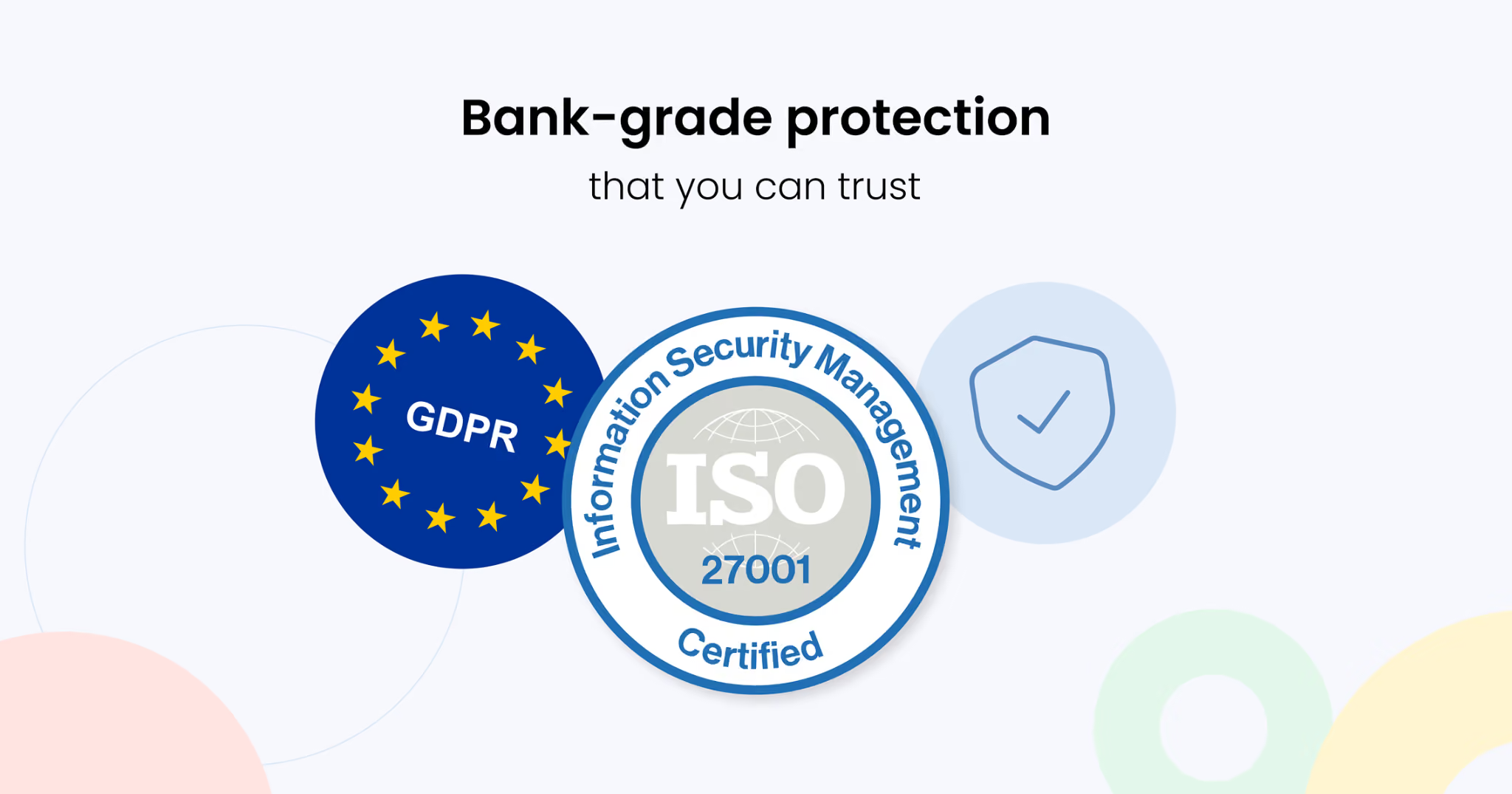
Because fintechs handle regulated financial data and are themselves subject to scrutiny from regulators, banking partners, and enterprise customers, their vendor-risk teams typically require the EOR to demonstrate its own security posture: SOC 2 Type II reporting, ISO 27001 certification, encryption standards, and data residency commitments. This is the layer that trips up fintech buyers who shop for EOR the same way a generalist company would — a provider can be fully compliant on payroll and statutory contributions while lacking the security documentation a fintech's own procurement process demands.
One clarification worth stating plainly: engaging an EOR does not confer, extend, or substitute for a financial services license. If a fintech needs a payments license, e-money license, or banking license to operate in a new market, an EOR does not provide that, it only handles the employment relationship for staff hired there. Fintechs expanding into newly regulated activity should treat EOR selection and financial licensing as two separate workstreams.
EOR vs. Entity vs. PEO for FinTech
The trigger for a fintech to move from EOR to entity is usually regulatory, not headcount-driven the way it is for a BPO. If a fintech company is pursuing its own license in a market, that licensing process typically requires a local entity anyway — at which point the EOR relationship should be seen as a bridge, not a permanent solution.
Ready to see how Omni HR handles EOR for fintech in APAC? Book a demo with our team today.
Frequently Asked Questions
Published starting prices among the providers in this comparison range from roughly US$249 to US$699 per employee/month as of July 2026. For fintechs specifically, price shouldn't be the deciding factor on its own — a lower-priced provider that lacks SOC 2 or ISO 27001 certification can fail internal vendor-risk review regardless of cost, which makes it unusable for a regulated fintech no matter how competitive the rate is.
A PEO (professional employer organization) is a co-employment arrangement, typically used for domestic hiring — for example, a US-based fintech adding US employees. An EOR becomes the sole legal employer in a country where fintech has no entity, which is what makes it the relevant model for hiring compliance officers, engineers, or other staff in a new international market.
Beyond standard employment compliance, fintech buyers should specifically confirm: SOC 2 Type II and ISO 27001 certification, data residency and encryption standards, contract flexibility for deferred compensation and non-competes, and whether the provider uses owned entities or local partners in the markets that matter most to the hire.
Common ones include setup or onboarding fees charged on top of the per-employee rate, currency conversion fees, minimum-commitment terms, and add-on costs for benefits administration or background checks that aren't included in the published starting price. Confirm the fully loaded monthly cost per employee before comparing providers on list price alone.
No. An EOR handles the employment relationship — contracts, payroll, statutory compliance, and termination — for staff hired in a given country. It does not grant, extend, or substitute for a payments license, e-money license, banking license, or any other financial services authorization. Licensing is a separate process from EOR-based hiring, and fintechs expanding into newly regulated activity should treat the two as separate workstreams.
Practices vary by provider, which is exactly why it's worth confirming directly rather than assuming. At minimum, look for SOC 2 Type II reporting, ISO 27001 certification, encryption of data at rest (commonly AES-256), and GDPR alignment. Some providers publish this in detail on a dedicated security or trust page; others require asking during procurement.



.avif)
.avif)