How Omni HRIS Makes Succession Planning Actionable

11
min Read
11
min Read
Save this article for future use
Download PDF

Summary. Succession planning tools help HR teams identify high-potential employees, assess readiness, and build future-ready leadership pipelines. By centralizing employee data, tracking competencies, and mapping career paths, organizations can make succession planning in HRM actionable and measurable. Talent management tools like Omni HR support the succession planning process by providing dashboards, analytics, and workflow tracking, while prebuilt succession planning templates help streamline development and internal mobility.

Leadership transitions can happen quickly. And without clear successors for critical roles, even stable businesses can face disruption. Succession planning helps organizations prepare for these transitions by ensuring key positions are filled rapidly and confidently. It identifies high-potential employees and provides them with the training and development opportunities they need to grow and succeed.
succession planning tools

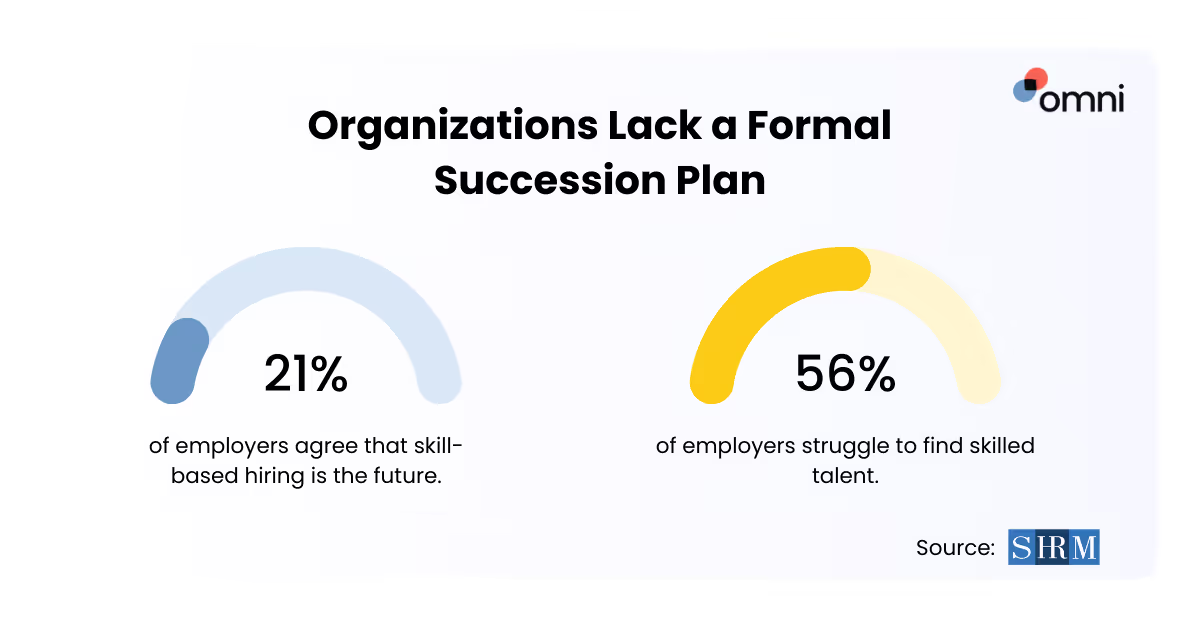
But despite its importance, many companies still don’t have a formal approach in place. A SHRM survey reports that only 21% of HR professionals reported having a formal succession plan, while 56% had none at all.

For many organizations, the challenge isn’t a lack of awareness; it’s the time and resources required to create an effective plan. This is where succession planning tools come in. These platforms help companies identify, prepare, and develop employees who’ll fill critical roles in the organization in the future. In this guide, we explore why succession planning tools matter, the key features to look for when choosing one, and how tools like Omni HR can support more efficient succession planning.

Get your free succession planning template 

Understanding Succession Planning Tools

Succession planning tools are systems designed to help organizations identify high-potential employees, assess readiness for future roles, and support leadership continuity. By providing structure and visibility into internal talent, these platforms reduce hiring risks and align workforce planning with long-term business goals.

Not every role requires a formal succession planning process. HR leaders and managers use succession planning tools to map out career paths, spot performance gaps, and train the best talent to ensure smooth transitions when key employees resign, retire, or move on.

Organizations that invest in succession planning are better equipped to adapt to change, retain knowledge, and promote a culture of growth. As a result, succession planning in HRM helps businesses minimize disruptions and maintain operational stability by offering these perks:

  • Centralize employee and role data: Instead of relying on fragmented tools and spreadsheets, these tools bring all employee data, including performance history, competencies, and career progression, into a single, structured system. This gives HR teams real-time visibility into talent readiness, skill gaps, and potential successors for crucial roles.
  • Map competencies, readiness levels, and career paths: Succession planning tools define role-specific skill requirements and assess employees against consistent benchmarks using pre-set performance evaluations and development milestones. They link current capabilities with future role expectations, showing who’s ready now and those who’ll be ready later after proper training.
  • Provide dashboards, analytics, and reporting: Succession planning software turns complex talent data into clear, actionable insights through intuitive dashboards and customizable reports. This enables HR teams and business leaders to support strategic workforce planning, monitor succession progress over time, and make informed decisions without relying on manual reporting or disconnected data sources.

Read next: Improve Employee Performance Through Strategic Project Management

Why Succession Planning Tools Matter

Succession planning software helps organizations prepare for leadership and talent transitions before they become business risks. These tools bring structure and visibility to the succession planning process, ensuring that businesses are not caught off guard by sudden resignations or retirements that can hinder operations or decision-making.

However, succession planning in HRM goes beyond simply identifying successors; it must also be actionable and measurable. This is where traditional methods like spreadsheets and manual tracking often fall short, especially for growing or large organisations. When succession planning relies on inadequate tools, the process can lose credibility, leading employees to perceive it as subjective or unfair, ultimately eroding trust in leadership.

With nearly half of surveyed HR leaders seeing succession planning as a top priority, robust succession planning tools and talent management tools have become essential. These platforms help teams operationalize, track, and optimize succession efforts. They centralize data, track readiness levels, and flag talent gaps in real time. This proactive approach allows HR teams and business leaders to continuously update plans as the organization evolves, rather than treating succession planning as a one-off exercise.

Beyond risk mitigation, succession planning tools support employee development and retention. They clearly map career paths and development needs, signalling to high-potential employees that the organization is invested in their growth. This transparency strengthens internal mobility and builds a stronger leadership pipeline aligned with long-term business goals.

Additional reading: The 15 Leadership Qualities of Impactful Managers

Why Modern HR Teams Need Purpose-Built Tools

Workforce expectations are shifting drastically. With 81% of global companies shifting to skills-based hiring, companies must rethink how they hire talent, structure teams, and develop skills to stay agile.

For HR leaders, manual processes can make it harder to manage distributed teams and gain visibility into skills, readiness, and performance history. Purpose-built succession planning tools help surmount these challenges by consolidating data in a single place and a consistent format. This improves data accuracy and also provides real-time insights into employee performance and potential successors.

Additionally, these tools often integrate seamlessly with performance, learning, and organizational planning systems, empowering HR teams to identify trends and develop employees. Through these perks, purpose-driven tools help companies build internal talent pipelines, support proactive leadership continuity, and reduce turnover, especially in key roles.

Key Features to Look For in Succession Planning Software

With so many succession planning tools on the market, choosing the right one can be overwhelming. To simplify your decision, use this checklist of key features that also doubles as a buying guide:

  • Talent & role mapping: The tool should centralize employee profiles and combine competencies, performance histories, role hierarchies, skills, and readiness indicators. It should allow you to define critical roles, create customizable succession frameworks aligned with your business needs, and provide real-time updates to avoid outdated succession plans.
  • Succession planning templates: Your succession planning software should include prebuilt templates for readiness scoring. It should also support creating visual career paths and individual development plans tied to skill gaps and future roles.
  • Integration with talent management tools: The software should seamlessly integrate with existing HR and talent management tools, including performance, learning, and career development systems. This ensures data consistency, accuracy, and a unified approach to workforce planning. 
  • Scenario planning & what-if models: Great succession planning tools should support modeling different scenarios, including growth, attrition, and role changes. It should also evaluate the impact of leadership transitions across multi-location or global teams, so your team isn’t taken unawares.
  • Reporting & analytics: Robust succession planning tools provide dashboards, analytics, and customizable reports that highlight trends, skills gaps, and succession coverage. This supports data-driven decision-making and helps HR teams communicate insights to leadership effectively.
  • User experience: Great succession planning tools have intuitive dashboards and user-friendly interfaces that require minimal training for HR and non-HR users alike. A user-friendly experience encourages faster adoption and consistent usage across your organization.

How Omni HR Helps Support Succession Planning

Centralised people data and role visibility
talent management tools

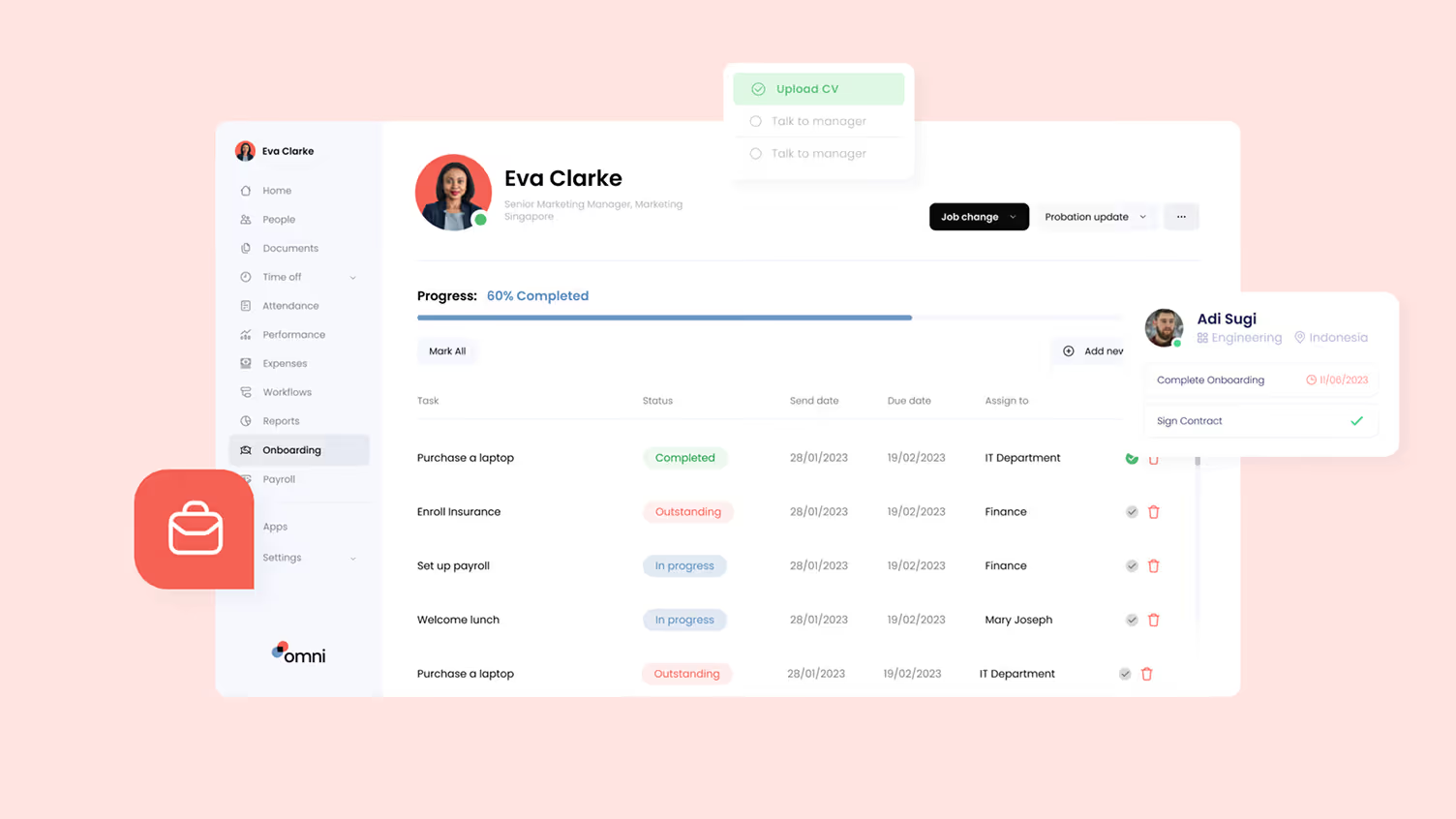
Omni unifies employee information, roles, competencies, and performance histories in a single platform. By removing data silos, HR teams and managers gain cross-team visibility, assess high-potential employees, and map career paths more effectively. 

Analytics and scenario planning dashboards 
succession planning software

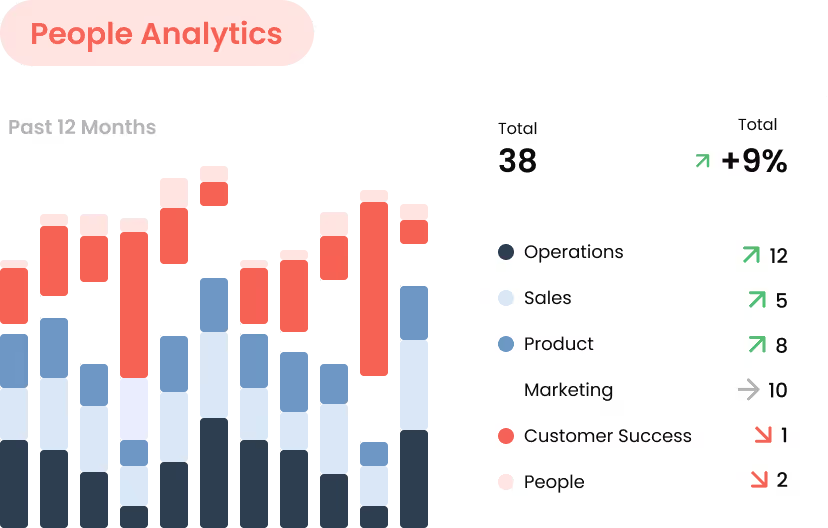
Real-time dashboards and analytics provide predictive insights into leadership gaps, skill coverage, and workforce trends, allowing managers to prepare proactively for key role vacancies.

Workflow automation and collaboration tools
succession planning process

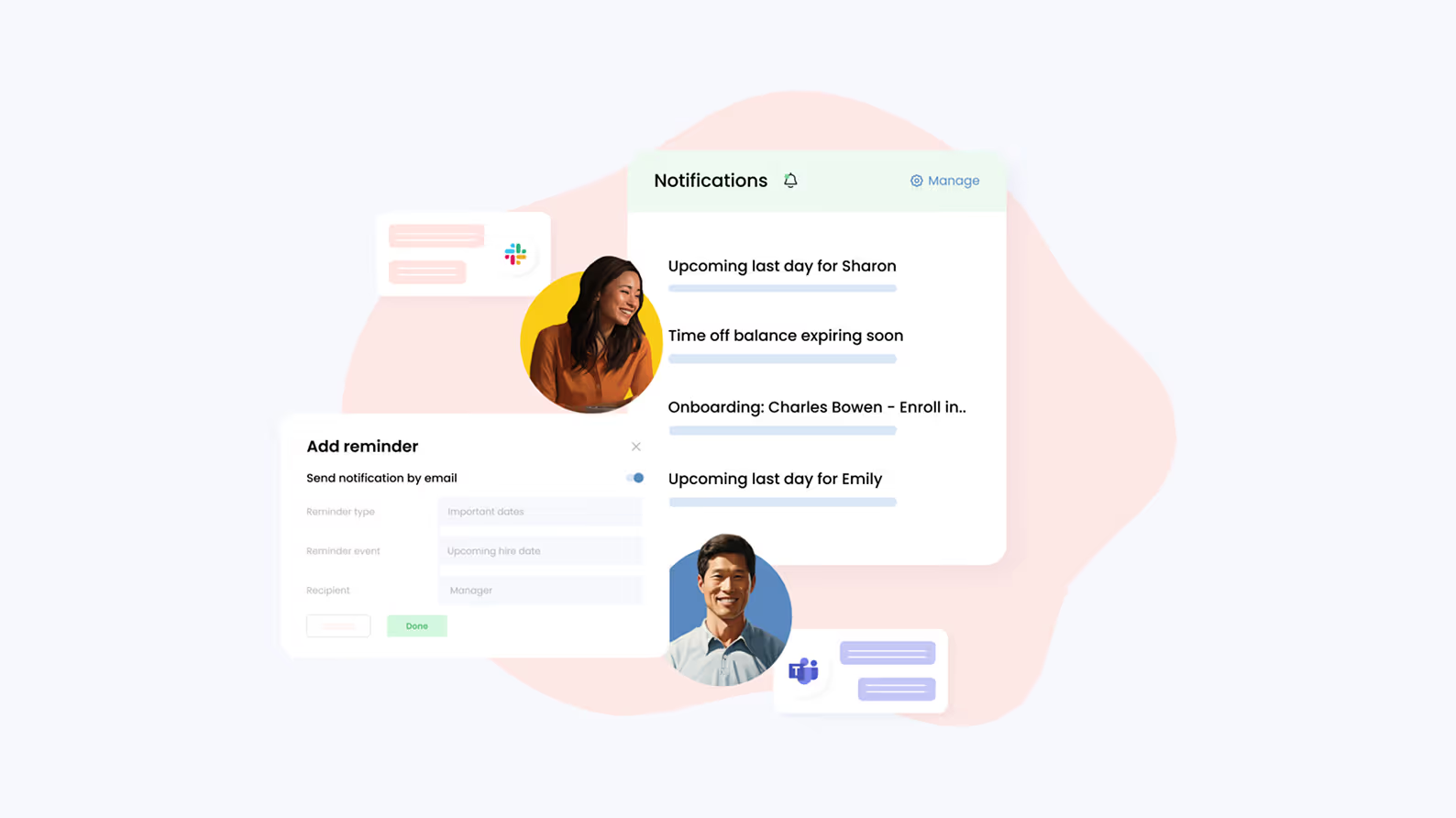
Automated alerts, reminders, and shared dashboards make it easy for HR, managers, and executives to monitor progress and keep plans up to date. Task-tracking and collaboration tools ensure that development activities are completed on schedule.

Outcome-oriented impact

By combining data visibility, templates, analytics, and workflows, Omni HR helps organizations build future-ready talent pipelines, make the succession planning process actionable and measurable, and align talent development with broader HR strategy. It also supports internal mobility, strengthens leadership pipelines, and drives employee growth.

Succession Planning Tool Comparison

When evaluating succession planning tools, it’s important to understand which platforms provide dedicated functionality and which can support the succession planning process within your broader HR operations. Here’s a look at the top succession planning tools:

Omni HR

Omni HR is an all-in-one talent management tool that helps support succession planning in HRM by centralizing employee data, performance insights, and development tracking.

Instead of managing succession manually, Omni enables HR teams to leverage a unified platform to make data-driven talent decisions and manage internal pipelines effectively.

How Omni supports the succession planning process:

  • Centralized employee records: Job history, tenure, compensation, and performance data in one place.
  • Customizable performance review cycles: Assess performance and leadership potential using structured templates.
  • Real-time reporting and analytics: Identify high performers, analyze readiness, and spot skill gaps.
  • Goal setting and 1-on-1 tracking: Monitor development and align employees with growth plans.
  • Workflow automation: Track training milestones, promotion readiness, and development actions.
  • Seamless integrations: Connect with ATS, payroll, accounting, and communication tools for accurate talent data.
"Omni has helped us improve our HR processes immensely, especially when it comes to our employee management and performance evaluations. Now, we're able to easily and quickly make updates and change the review process as needed, ensuring efficiency and accuracy for a more objective evaluation of our workforce."
— Roxanne McGovern, Chief Culture Officer at NightOwl Consulting

Omni HR combines the features of talent management tools and succession planning software, making it easier to implement a structured succession planning template and maintain visibility over leadership pipelines as your organization scales.

Try Omni for free

Workday HCM

Workday is a succession planning tool that lets you identify critical roles, nominate candidates, assess readiness, and create succession plans for long-term success. Its features include:

  • Auto-generated alerts and notifications to help you monitor the health of your plans.
  • Periodic feedback and regular check-ins to drive engagement and enhance the strength of your workforce
  • Gain visibility into talent strengths, behaviors, productivity, skills, and aspirations, to understand their potential and capabilities and achieve strategic planning through reporting and analytics. 
  • Easily assess individuals and fill vacant positions with top internal, external, and contingent candidates, all from your browser or mobile device.
  • Eliminate costly integrations with core HCM, compensation, recruiting, workforce planning, and talent systems.

Cornerstone OnDemand

Cornerstone OnDemand is a talent management tool that helps you prepare your organization for success by identifying top talent and creating growth paths. It supports self-driven skill development to find internal candidates through these features quickly:

  • View employees in a configurable grid, with robust filters and intuitive color-coding options, to easily identify high-potential talent and low performers.
  • See key employee succession metrics, such as performance, successors, impact of loss, potential, and probability of loss via a configurable dashboard.
  • Define forms and workflows to capture relevant succession information about employees from their managers throughout the year.
  • Create attribute-based searches based on resume data and filter within manually created collections of employees based on your talent searches.
  • Improve engagement and help employees achieve their career goals by charting their career progression.
  • AI-powered learning for upskilling teams and discovering development opportunities for career mobility.

Deel

Deel is a global HR platform focused on payroll, compliance, and workforce management. While it is not a dedicated succession planning tool, it can help support your succession planning in HRM through:

  • Performance reviews and feedback to identify high-potential employees.
  • Development plan tracking for successors.
  • Learning resources and role guidance to support employee upskilling.
  • Retention and engagement tools to ensure top talent stays aligned with your succession planning objectives.

Deel complements your succession planning process by providing insights that inform internal mobility and readiness decisions, particularly for globally distributed teams.

Remote

Remote is a global HR platform for hiring, paying, and managing international employees and contractors. While not a dedicated succession planning software, Remote helps support the succession planning process by:

  • Providing workforce reporting to track team composition and skill coverage.
  • Maintaining centralized employee records to identify potential successors.
  • Offering role and contract management to map responsibilities and succession gaps.
  • Supporting recruitment for roles that internal development cannot fill.
  • Tracking compensation and tenure data to assess readiness for leadership or critical roles.

Remote is ideal for organizations managing an international workforce, providing operational data that supports succession planning in HRM.

Choose Tools That Activate Your Succession Planning Strategy

Effective succession planning turns strategy into action. By leveraging succession planning tools and talent management software, HR teams gain visibility, centralize data, and stay proactive rather than reactive when preparing for leadership transitions.
succession planning in hrm

Omni HR supports this shift by making the succession planning process actionable and measurable. Get started by booking your product tour with our team to learn more. If you’re not ready for full automation, download our free succession planning template to streamline your succession efforts today!
Leadership transitions can happen quickly. And without clear successors for critical roles, even stable businesses can face disruption. Succession planning helps organizations prepare for these transitions by ensuring key positions are filled rapidly and confidently. It identifies high-potential employees and provides them with the training and development opportunities they need to grow and succeed.

succession planning tools

But despite its importance, many companies still don’t have a formal approach in place. A SHRM survey reports that only 21% of HR professionals reported having a formal succession plan, while 56% had none at all.

For many organizations, the challenge isn’t a lack of awareness; it’s the time and resources required to create an effective plan. This is where succession planning tools come in. These platforms help companies identify, prepare, and develop employees who’ll fill critical roles in the organization in the future. In this guide, we explore why succession planning tools matter, the key features to look for when choosing one, and how tools like Omni HR can support more efficient succession planning.

Get your free succession planning template 

Understanding Succession Planning Tools

Succession planning tools are systems designed to help organizations identify high-potential employees, assess readiness for future roles, and support leadership continuity. By providing structure and visibility into internal talent, these platforms reduce hiring risks and align workforce planning with long-term business goals.

Not every role requires a formal succession planning process. HR leaders and managers use succession planning tools to map out career paths, spot performance gaps, and train the best talent to ensure smooth transitions when key employees resign, retire, or move on.

Organizations that invest in succession planning are better equipped to adapt to change, retain knowledge, and promote a culture of growth. As a result, succession planning in HRM helps businesses minimize disruptions and maintain operational stability by offering these perks:

  • Centralize employee and role data: Instead of relying on fragmented tools and spreadsheets, these tools bring all employee data, including performance history, competencies, and career progression, into a single, structured system. This gives HR teams real-time visibility into talent readiness, skill gaps, and potential successors for crucial roles.
  • Map competencies, readiness levels, and career paths: Succession planning tools define role-specific skill requirements and assess employees against consistent benchmarks using pre-set performance evaluations and development milestones. They link current capabilities with future role expectations, showing who’s ready now and those who’ll be ready later after proper training.
  • Provide dashboards, analytics, and reporting: Succession planning software turns complex talent data into clear, actionable insights through intuitive dashboards and customizable reports. This enables HR teams and business leaders to support strategic workforce planning, monitor succession progress over time, and make informed decisions without relying on manual reporting or disconnected data sources.

Read next: Improve Employee Performance Through Strategic Project Management

Why Succession Planning Tools Matter

Succession planning software helps organizations prepare for leadership and talent transitions before they become business risks. These tools bring structure and visibility to the succession planning process, ensuring that businesses are not caught off guard by sudden resignations or retirements that can hinder operations or decision-making.

However, succession planning in HRM goes beyond simply identifying successors; it must also be actionable and measurable. This is where traditional methods like spreadsheets and manual tracking often fall short, especially for growing or large organisations. When succession planning relies on inadequate tools, the process can lose credibility, leading employees to perceive it as subjective or unfair, ultimately eroding trust in leadership.

With nearly half of surveyed HR leaders seeing succession planning as a top priority, robust succession planning tools and talent management tools have become essential. These platforms help teams operationalize, track, and optimize succession efforts. They centralize data, track readiness levels, and flag talent gaps in real time. This proactive approach allows HR teams and business leaders to continuously update plans as the organization evolves, rather than treating succession planning as a one-off exercise.

Beyond risk mitigation, succession planning tools support employee development and retention. They clearly map career paths and development needs, signalling to high-potential employees that the organization is invested in their growth. This transparency strengthens internal mobility and builds a stronger leadership pipeline aligned with long-term business goals.

Additional reading: The 15 Leadership Qualities of Impactful Managers

Why Modern HR Teams Need Purpose-Built Tools

Workforce expectations are shifting drastically. With 81% of global companies shifting to skills-based hiring, companies must rethink how they hire talent, structure teams, and develop skills to stay agile.

For HR leaders, manual processes can make it harder to manage distributed teams and gain visibility into skills, readiness, and performance history. Purpose-built succession planning tools help surmount these challenges by consolidating data in a single place and a consistent format. This improves data accuracy and also provides real-time insights into employee performance and potential successors.

Additionally, these tools often integrate seamlessly with performance, learning, and organizational planning systems, empowering HR teams to identify trends and develop employees. Through these perks, purpose-driven tools help companies build internal talent pipelines, support proactive leadership continuity, and reduce turnover, especially in key roles.

Key Features to Look For in Succession Planning Software

With so many succession planning tools on the market, choosing the right one can be overwhelming. To simplify your decision, use this checklist of key features that also doubles as a buying guide:

  • Talent & role mapping: The tool should centralize employee profiles and combine competencies, performance histories, role hierarchies, skills, and readiness indicators. It should allow you to define critical roles, create customizable succession frameworks aligned with your business needs, and provide real-time updates to avoid outdated succession plans.
  • Succession planning templates: Your succession planning software should include prebuilt templates for readiness scoring. It should also support creating visual career paths and individual development plans tied to skill gaps and future roles.
  • Integration with talent management tools: The software should seamlessly integrate with existing HR and talent management tools, including performance, learning, and career development systems. This ensures data consistency, accuracy, and a unified approach to workforce planning. 
  • Scenario planning & what-if models: Great succession planning tools should support modeling different scenarios, including growth, attrition, and role changes. It should also evaluate the impact of leadership transitions across multi-location or global teams, so your team isn’t taken unawares.
  • Reporting & analytics: Robust succession planning tools provide dashboards, analytics, and customizable reports that highlight trends, skills gaps, and succession coverage. This supports data-driven decision-making and helps HR teams communicate insights to leadership effectively.
  • User experience: Great succession planning tools have intuitive dashboards and user-friendly interfaces that require minimal training for HR and non-HR users alike. A user-friendly experience encourages faster adoption and consistent usage across your organization.

How Omni HR Helps Support Succession Planning

Centralised people data and role visibility

talent management tools

Omni unifies employee information, roles, competencies, and performance histories in a single platform. By removing data silos, HR teams and managers gain cross-team visibility, assess high-potential employees, and map career paths more effectively. 

Analytics and scenario planning dashboards 

succession planning software

Real-time dashboards and analytics provide predictive insights into leadership gaps, skill coverage, and workforce trends, allowing managers to prepare proactively for key role vacancies.

Workflow automation and collaboration tools

succession planning process

Automated alerts, reminders, and shared dashboards make it easy for HR, managers, and executives to monitor progress and keep plans up to date. Task-tracking and collaboration tools ensure that development activities are completed on schedule.

Outcome-oriented impact

By combining data visibility, templates, analytics, and workflows, Omni HR helps organizations build future-ready talent pipelines, make the succession planning process actionable and measurable, and align talent development with broader HR strategy. It also supports internal mobility, strengthens leadership pipelines, and drives employee growth.

Succession Planning Tool Comparison

When evaluating succession planning tools, it’s important to understand which platforms provide dedicated functionality and which can support the succession planning process within your broader HR operations. Here’s a look at the top succession planning tools:

Omni HR

Omni HR is an all-in-one talent management tool that helps support succession planning in HRM by centralizing employee data, performance insights, and development tracking.

Instead of managing succession manually, Omni enables HR teams to leverage a unified platform to make data-driven talent decisions and manage internal pipelines effectively.

How Omni supports the succession planning process:

  • Centralized employee records: Job history, tenure, compensation, and performance data in one place.
  • Customizable performance review cycles: Assess performance and leadership potential using structured templates.
  • Real-time reporting and analytics: Identify high performers, analyze readiness, and spot skill gaps.
  • Goal setting and 1-on-1 tracking: Monitor development and align employees with growth plans.
  • Workflow automation: Track training milestones, promotion readiness, and development actions.
  • Seamless integrations: Connect with ATS, payroll, accounting, and communication tools for accurate talent data.
"Omni has helped us improve our HR processes immensely, especially when it comes to our employee management and performance evaluations. Now, we're able to easily and quickly make updates and change the review process as needed, ensuring efficiency and accuracy for a more objective evaluation of our workforce."
— Roxanne McGovern, Chief Culture Officer at NightOwl Consulting

Omni HR combines the features of talent management tools and succession planning software, making it easier to implement a structured succession planning template and maintain visibility over leadership pipelines as your organization scales.

Try Omni for free

Workday HCM

Workday is a succession planning tool that lets you identify critical roles, nominate candidates, assess readiness, and create succession plans for long-term success. Its features include:

  • Auto-generated alerts and notifications to help you monitor the health of your plans.
  • Periodic feedback and regular check-ins to drive engagement and enhance the strength of your workforce
  • Gain visibility into talent strengths, behaviors, productivity, skills, and aspirations, to understand their potential and capabilities and achieve strategic planning through reporting and analytics. 
  • Easily assess individuals and fill vacant positions with top internal, external, and contingent candidates, all from your browser or mobile device.
  • Eliminate costly integrations with core HCM, compensation, recruiting, workforce planning, and talent systems.

Cornerstone OnDemand

Cornerstone OnDemand is a talent management tool that helps you prepare your organization for success by identifying top talent and creating growth paths. It supports self-driven skill development to find internal candidates through these features quickly:

  • View employees in a configurable grid, with robust filters and intuitive color-coding options, to easily identify high-potential talent and low performers.
  • See key employee succession metrics, such as performance, successors, impact of loss, potential, and probability of loss via a configurable dashboard.
  • Define forms and workflows to capture relevant succession information about employees from their managers throughout the year.
  • Create attribute-based searches based on resume data and filter within manually created collections of employees based on your talent searches.
  • Improve engagement and help employees achieve their career goals by charting their career progression.
  • AI-powered learning for upskilling teams and discovering development opportunities for career mobility.

Deel

Deel is a global HR platform focused on payroll, compliance, and workforce management. While it is not a dedicated succession planning tool, it can help support your succession planning in HRM through:

  • Performance reviews and feedback to identify high-potential employees.
  • Development plan tracking for successors.
  • Learning resources and role guidance to support employee upskilling.
  • Retention and engagement tools to ensure top talent stays aligned with your succession planning objectives.

Deel complements your succession planning process by providing insights that inform internal mobility and readiness decisions, particularly for globally distributed teams.

Remote

Remote is a global HR platform for hiring, paying, and managing international employees and contractors. While not a dedicated succession planning software, Remote helps support the succession planning process by:

  • Providing workforce reporting to track team composition and skill coverage.
  • Maintaining centralized employee records to identify potential successors.
  • Offering role and contract management to map responsibilities and succession gaps.
  • Supporting recruitment for roles that internal development cannot fill.
  • Tracking compensation and tenure data to assess readiness for leadership or critical roles.

Remote is ideal for organizations managing an international workforce, providing operational data that supports succession planning in HRM.

Choose Tools That Activate Your Succession Planning Strategy

Effective succession planning turns strategy into action. By leveraging succession planning tools and talent management software, HR teams gain visibility, centralize data, and stay proactive rather than reactive when preparing for leadership transitions.

succession planning in hrm

Omni HR supports this shift by making the succession planning process actionable and measurable. Get started by booking your product tour with our team to learn more. If you’re not ready for full automation, download our free succession planning template to streamline your succession efforts today!

No items found.
No items found.
Which countries do you support?

Full HR & Payroll coverage for Philippines, Singapore, Malaysia, Hong Kong, and Indonesia. Each market has local support teams and built-in compliance features.

How does pricing work as we scale?

Starting at $3/employee/month for core features. Volume-based discounts are available for growing teams. Book a demo for custom pricing.

How do you handle security?

Enterprise-grade security with ISO 27001, GDPR certifications, and local data residency options.

How long is implementation?

4 weeks average. Includes free data migration, setup, and team training. No hidden fees.

What makes Omni different from global HR platforms?

Built specifically for Asia with local payroll processing, same-day support in Asia time zones, and 40% lower cost than global alternatives.